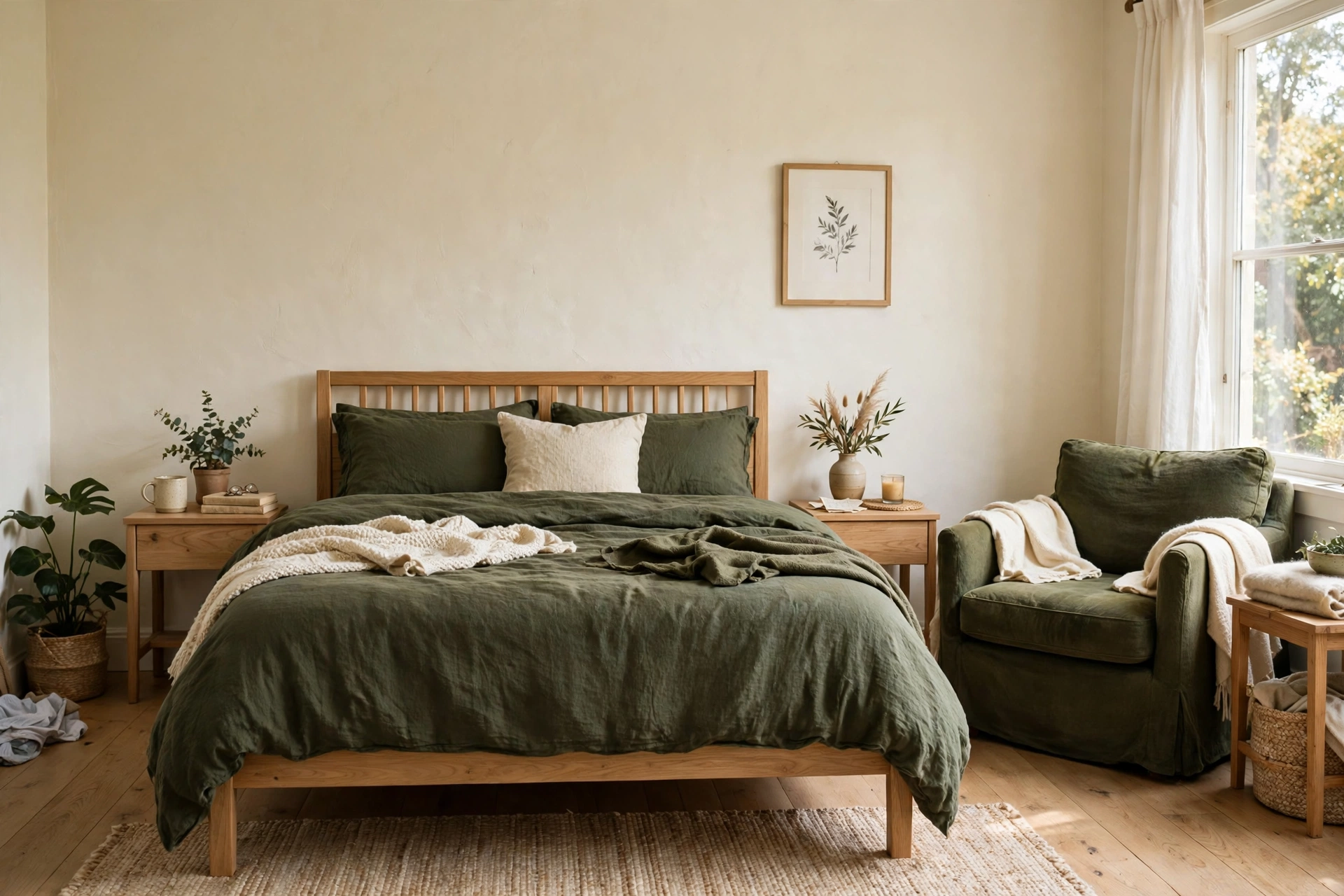
What Size Furniture Fits a Medium Bedroom? Max Sizes for 120 to 180 Sq Ft Rooms
The direct answer on medium bedroom furniture sizes is this: in a room between 120 and 180 sq ft, a queen bed fits everywhere with room to spare, a king bed fits properly only from about 144 sq ft up, and the caps that matter most are a 60 inch wide dresser, a 72 inch wide wardrobe, a 48 inch desk at the small end, and a 9 by 12 ft rug at the large end. The original check behind every number below is a clearance budget worked out for two real rooms, an 11 by 12 ft room at the small end and a 12 by 14 ft room at the large end, so you can copy the one that matches your floor instead of trusting a label that says “queen set” and means nothing.
What medium bedroom furniture sizes work from 120 to 180 sq ft?
Start with the room, not the catalog. Measure wall to wall, then mark every door swing, closet door, radiator, outlet, and window that furniture cannot block. A standard interior door needs its full swing arc, about 30 inches (76 cm), kept clear, and in a room this size that arc can eat a whole corner. Tape every footprint on the floor before you buy anything, including the walkways. Walk through carrying laundry, open the closet doors, pull a dresser drawer all the way out. Tape is free and it finds the problems a product photo hides.
Here is the whole band at a glance. The small end is an 11 by 12 ft room (132 sq ft) and the large end is a 12 by 14 ft room (168 sq ft). Rooms below 120 sq ft follow tighter caps, covered by the max furniture sizes for a small bedroom guide, and this post picks up exactly where that one stops.
| Piece | Small end (120 to 144 sq ft) | Large end (144 to 180 sq ft) |
|---|---|---|
| Bed | Queen 60 by 80 in (152 by 203 cm); king only with 18 in nightstands | King 76 by 80 in (193 by 203 cm) with full 24 in nightstands |
| Nightstand | 18 to 24 in wide, 16 to 18 in deep (46 to 61 cm, 41 to 46 cm) | 24 in wide, 18 in deep (61 by 46 cm) |
| Dresser | 60 in wide by 20 in deep at most (152 by 51 cm) | 60 in wide by 20 in deep at most (152 by 51 cm) |
| Wardrobe | 72 in wide by 24 in deep at most (183 by 61 cm) | 72 in wide by 24 in deep at most (183 by 61 cm) |
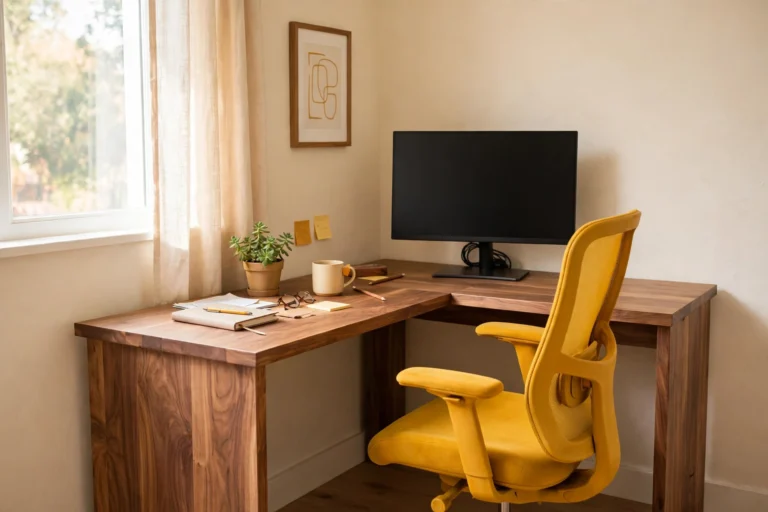
| Desk | 48 in wide by 24 in deep at most (122 by 61 cm) | 60 in wide by 30 in deep at most (152 by 76 cm) |
| Rug | 8 by 10 ft (2.4 by 3.0 m) | 9 by 12 ft (2.7 by 3.7 m); 10 by 14 ft does NOT fit |
| Reading chair | Skip it, or one 26 in armless chair (66 cm) only | One chair, 30 in wide by 32 in deep (76 by 81 cm) |
| Bench at the foot | Skip it | 54 in wide by 18 in deep at most (137 by 46 cm) |
The clearance figures here are the widely published designer guidelines, not building code, and they are worth memorizing. Keep 30 to 36 inches (76 to 91 cm) for a main walkway, never less than 24 inches (61 cm) for a side path, and at least 24 inches (61 cm) of clear space on each side of the bed. Leave 36 inches (91 cm) in front of a dresser or wardrobe so drawers and doors open fully. The 11×13 bedroom layout ideas on this site sit in the middle of this band and show these maximums inside three finished plans.
How big can the bed be? The queen-everywhere, king-at-the-top-end rule
Direct answer: A queen bed fits at both ends of this band with proper clearances. A king bed fits comfortably only at the large end; at the small end it fits only if you shrink the nightstands and give up the reading chair and the bench.
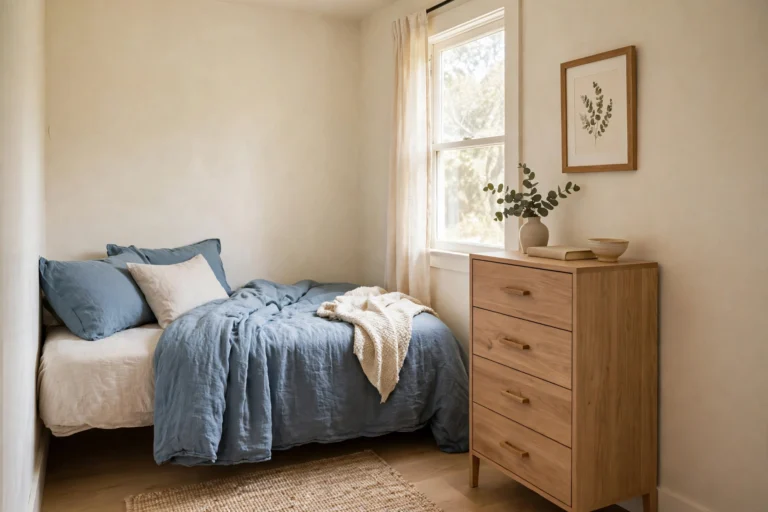
That is why medium bedroom furniture sizes start with the bed wall, not the bed. At the small end, an 11 by 12 ft room gives you a 132 inch wall. A queen bed at 60 inches leaves 36 inches on each side, which is a generous side path and room for a full 24 inch nightstand with space to spare. Add the nightstands and the math still works: 24 plus 60 plus 24 equals 108 inches, leaving 24 inches spare on that wall. At the foot, 144 minus 80 leaves 64 inches, and a 20 inch deep dresser on the opposite wall still leaves a 44 inch walkway, which is more than the 36 inches a dresser needs.
Best for: a queen bed at the small end, a king bed at the large end. Main advantage: the queen leaves the whole room usable, while the king at the large end still leaves 34 inches on each side. Watch out for: the king at the small end. A king at 76 inches on the same 132 inch wall leaves only 28 inches on each side, and with 18 inch nightstands the wall run becomes 18 plus 76 plus 18, which is 112 inches, leaving just 20 inches spare. It works, but it is the maximum, not a comfortable fit, and it leaves no room for anything else on that wall. Verdict: queen up to about 144 sq ft, king from about 144 sq ft up, and never a California king at the small end, since its 84 inch length eats the foot clearance first.
My opinion, stated plainly: the king bed is overrated for rooms under 144 sq ft, not because it is a bad bed but because it belongs in a bigger room. In an 11 by 12 ft room it turns every other decision into a compromise, smaller nightstands, no bench, a tighter rug, and it still only buys 8 inches of sleep width per person over a queen. Spend that floor on a dresser that actually closes and a walkway you do not have to sidestep through.
The two worked rooms: 11 by 12 ft versus 12 by 14 ft
Direct answer: In an 11 by 12 ft room the depth budget leaves a 44 inch walkway past the dresser and caps the rug at 8 by 10 ft. In a 12 by 14 ft room the same budget leaves a 68 inch walkway and allows a 9 by 12 ft rug with a bench at the foot. That 36 sq ft buys a king bed and a dressing zone, not a bigger dresser.
Here is the small end, worked out. The room is 132 inches by 144 inches. Across the width: a queen bed at 60 inches, flanked by two 24 inch nightstands, totals 108 inches, leaving 24 inches spare on the bed wall. Along the length: the 80 inch bed plus a 20 inch dresser on the opposite wall totals 100 inches, leaving 44 inches of walkway between the foot of the bed and the dresser front, which clears the 36 inches a dresser needs with 8 inches to spare. The rug is 8 by 10 ft: on the 132 inch wall it leaves 18 inches of bare floor on each side, and along the length it leaves 12 inches at each end. The desk, if you need one, goes on the remaining wall at 48 by 24 inches, and only if the walkway past it stays at 30 inches.
Here is the large end, worked out. The room is 144 inches by 168 inches. Across the width: a king bed at 76 inches, flanked by two 24 inch nightstands, totals 124 inches, leaving 20 inches spare on the bed wall, and 34 inches of clear space on each side of the bed itself. Along the length: the 80 inch bed plus a 20 inch dresser totals 100 inches, leaving 68 inches, which holds an 18 inch bench at the foot and still leaves a 50 inch walkway. The rug grows to 9 by 12 ft, which leaves 18 inches of bare floor on each side and 12 inches at each end. That is the neat proof that the rug should grow with the room: the same 9 by 12 ft rug in the 11 by 12 ft room would leave only 12 inches on the sides and crowd the ends, while in the 12 by 14 ft room it fits properly.
The plans that use these sizes in full rooms are covered by the 11×13 bedroom layout ideas on this site, which sits in the middle of this band, and by the 10×10 bedroom layout ideas for the room below it, while the next band up is shown in the 13×16 bedroom layout ideas and in the large bedroom furniture sizes guide. Read the sizes first, then pick the plan, not the other way around.
Dresser, wardrobe, and desk: the pieces that quietly break bedrooms
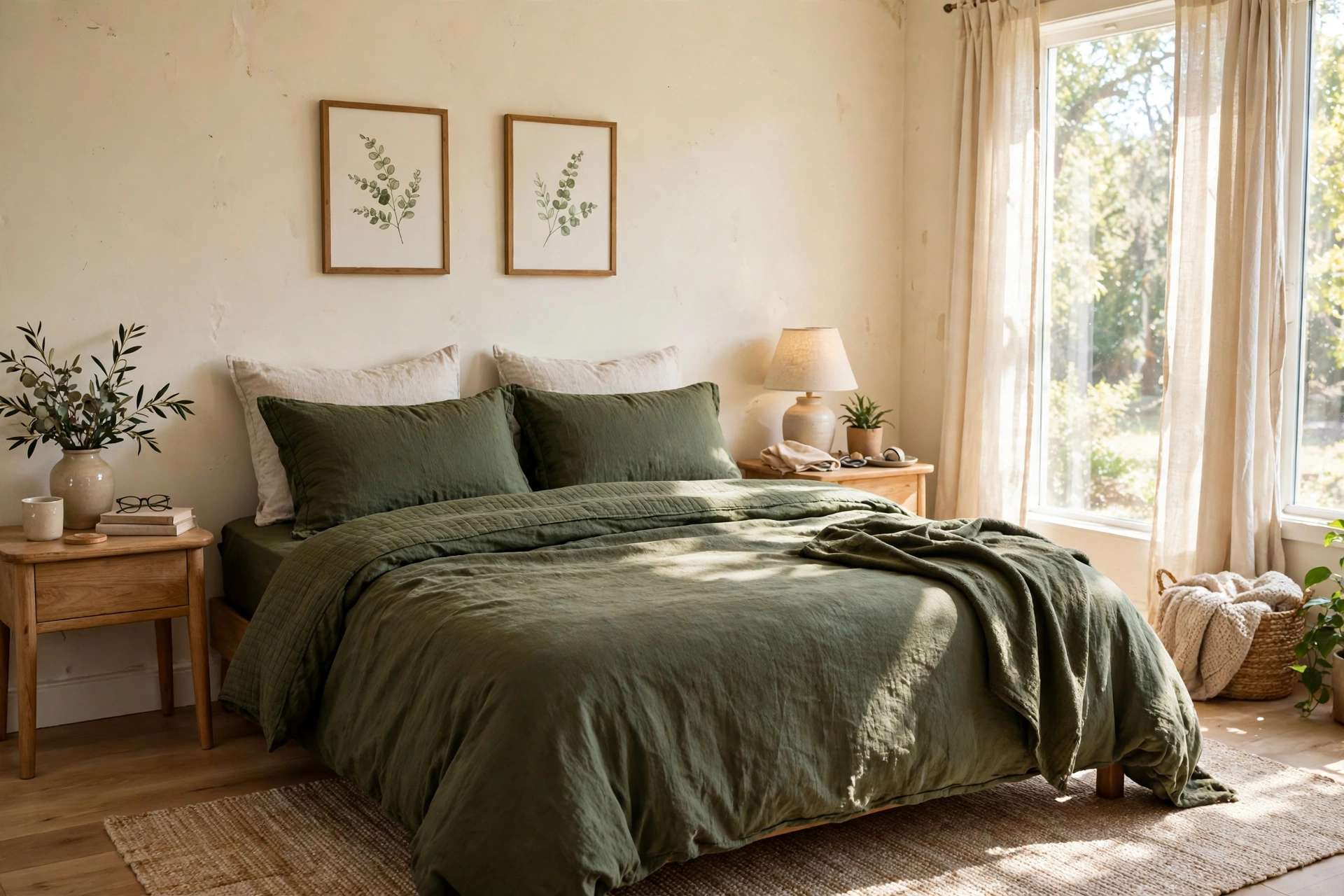
Direct answer: Cap the dresser at 60 inches wide and 20 inches deep at both ends, cap the wardrobe at 72 inches wide and 24 inches deep, and cap the desk at 48 inches at the small end and 60 inches at the large end.
The dresser is the piece that quietly breaks bedrooms. A 72 inch dresser sounds only slightly bigger than a 60 inch one, and it quietly eats 12 inches of wall that the door swing or the desk needed, while its drawers still need the same 36 inches of clear space in front. Depth matters just as much: a dresser deeper than 20 inches pushes its drawer front into the walkway, and in the small-end room that walkway is only 44 inches to begin with. The wardrobe rule is the same shape: 72 inches wide is the maximum that leaves a usable wall beside it, and 24 inches deep is the standard that still lets sliding doors or hinged doors open without blocking the path. A bed size by room size guide makes the same clearance point in general terms, recommending 24 to 30 inches clear on each side of the bed, and the band numbers here turn it into a buying rule: check width, depth, and drawer clearance before you order, not after delivery.
Best for: a six-drawer dresser at 60 by 20 inches, a wardrobe at 72 by 24 inches with sliding doors at the small end. Main advantage: both pieces hold a full wardrobe without becoming the biggest thing in the room. Watch out for: hinged wardrobe doors at the small end, which need their full swing arc kept clear and can steal the walkway. Verdict: sliding doors at the small end, hinged doors only at the large end where the walkway survives them.
Then comes the trap no size table covers, and it is the most original warning in this post. A 10 by 14 ft rug sounds generous at the large end and it is wrong here, because in a 12 by 14 ft room it leaves 12 inches of bare floor on the sides but runs wall to wall at the ends, zero clearance, which reads as wall-to-wall carpet and catches door swings. A rug size guide for beds shows the same subtraction for a 12 by 14 ft room and reaches the same verdict: 9 by 12 ft is the honest maximum. Size the rug by subtraction, not by ambition: room inches minus twice a 12 inch bare-floor margin, compared against standard rug sizes. Measure the smallest doorway, hallway turn, and stairwell the furniture must travel through, and compare it with the largest single box or module the piece ships as. A king bed that fits the room perfectly can still fail to arrive there if the box does not fit through the front door. Split-box and flat-pack frames solve this, and they are worth choosing on purpose in a medium bedroom, not as a compromise.

What medium bedroom furniture sizes cost (as of November 2026)
Most of this post costs nothing, because it is measuring, not shopping. If you do need the pieces that make the sizes work, these are checked market prices from listings live in November 2026, not personal receipts. A queen platform frame runs $130 to $180 in checked listings. A pair of nightstands runs $100 to $200 in checked listings. A dresser runs $150 to $300 in checked listings. A low-pile 8 by 10 ft rug runs $86 to $170 in checked listings. Budget extra for the king frame and the 9 by 12 ft rug at the large end, since both are bigger pieces and cost more than their small-end versions. Everything else, the tape, the measuring, the moving, is time, not money.
| Item | Checked price, as of November 2026 | Notes |
|---|---|---|
| Queen platform frame, 60 by 80 in (152 by 203 cm) | $130 to $180 | Checked November 2026 listings; king frame costs more |
| Nightstand pair, 18 to 24 in (46 to 61 cm) wide | $100 to $200 | Checked November 2026 listings |
| Dresser, 60 by 20 in (152 by 51 cm) | $150 to $300 | Checked November 2026 listings |
| Low-pile 8 by 10 ft rug (2.4 by 3.0 m) | $86 to $170 | Checked November 2026 listings; 9 by 12 ft costs more |
| Total for the four bought pieces (frame, nightstands, dresser, rug) | $466 to $850 | Reuse a desk, wardrobe, and chair you already own |
Time estimate: measuring and taping takes about an hour, checking doorway and box sizes takes half an hour more, and a full rearrange with the rug down takes half a day at most. If a piece needs delivery, add the delivery wait, not more work.
Set it up in an afternoon
- Measure the room wall to wall and note every door swing, closet door, outlet, and radiator.
- Measure the smallest doorway and hallway turn, and check the largest box each piece ships in.
- Tape the bed, nightstands, dresser, wardrobe, desk, rug, and walkway footprints on the floor.
- Walk every route carrying laundry, open every door and drawer, and pull every chair out.
- Place the rug first, with 18 inches of rug past each side of the bed, then the bed, then the storage wall.
- Check the walkway past the dresser with the tape, not by eye, before the dresser goes in.
- Live with it for one evening and move only the piece that annoyed you.
Measure the room wall to wall and note every door swing, closet door, outlet, and radiator.
Measure the smallest doorway and hallway turn, and check the largest box each piece ships in.
Tape the bed, nightstands, dresser, wardrobe, desk, rug, and walkway footprints on the floor.
Walk every route carrying laundry, open every door and drawer, and pull every chair out.
Place the rug first, with 18 inches of rug past each side of the bed, then the bed, then the storage wall.
Check the walkway past the dresser with the tape, not by eye, before the dresser goes in.
Live with it for one evening and move only the piece that annoyed you.
Mistakes to avoid
The biggest mistake is buying the king bed first and fitting the room around it. The bed is the largest piece, so its size decides every other cap, and a king at the small end forces smaller nightstands and no bench. Second is the oversized dresser trap: a 72 inch dresser eats 12 inches of wall the door swing needed, and its drawers still demand 36 inches clear in front. Third is hinged wardrobe doors at the small end, which need their swing arc kept clear. Fourth is the 10 by 14 ft rug in a 12 by 14 ft room, which leaves zero clearance at the ends. Fifth is ordering before measuring the doorway, which is how a perfect king frame ends up stuck in a hallway. Sixth is forgetting the drawer test: open every drawer fully while standing where you will actually stand to use it. Medium bedroom furniture sizes fail when one number is skipped, so check all three before you order: wall length, depth, and doorway width.
What to skip
Skip the matching bedroom suite, since the tall chest and the second dresser are the first things to cut. Skip a California king at the small end, since its 84 inch length eats the foot clearance first. Skip skirted, boxy bed bases, which hide the floor and make the bed read bigger than it measures. Skip layering a second rug under the first, which adds a trip edge and no warmth. Skip an oversized media wall in a room this size, since a wall-mounted screen and a low dresser do the same job with far less bulk. Skip a second reading chair at the small end, since one good chair and a clear walkway beat two chairs and a squeeze.
Can a king bed fit in a 12×14 bedroom?
Yes, a king bed fits a 12 by 14 ft bedroom with proper clearances. A king at 76 inches on the 144 inch wall leaves 34 inches on each side, and with two 24 inch nightstands the wall run totals 124 inches, leaving 20 inches spare. At the foot, 168 minus 80 leaves 88 inches, which holds a dresser and a bench with a walkway to spare. A king does not fit this comfortably below about 144 sq ft, where a queen is the better call.
What size rug fits a 12×14 bedroom?
A 9 by 12 ft rug is the right fit for a 12 by 14 ft bedroom. It leaves 18 inches of bare floor on each side and 12 inches at each end, and it gives 16 inches of rug past each side of a king bed. A 10 by 14 ft rug is too big, since it runs wall to wall at the ends with zero clearance. In the smaller end of this band, an 11 by 12 ft room takes an 8 by 10 ft rug instead.
How much clearance should I leave around a bed?
Leave at least 24 inches of clear space on each side of the bed, 30 to 36 inches for a main walkway you use every day, and 36 inches in front of a dresser or wardrobe so drawers and doors open fully. If any piece pushes a side path below 24 inches, that piece is too big for the room, no matter how good it looks online.
What size dresser fits a medium bedroom?
A dresser up to 60 inches wide and 20 inches deep fits a medium bedroom between 120 and 180 sq ft, at both ends of the band. The cap stays the same at the large end because the extra floor is better spent on the king bed and the walkway, not on a wider dresser. Keep 36 inches clear in front of it so every drawer opens fully.
How this was made: the maximums were computed from room dimensions and widely published clearance guides, with prices checked from listings live in November 2026. No personal testing is claimed, and no piece was bought for this post.
By Wasim