Studio Apartment With No Closet: 7 Storage Systems That Replace One
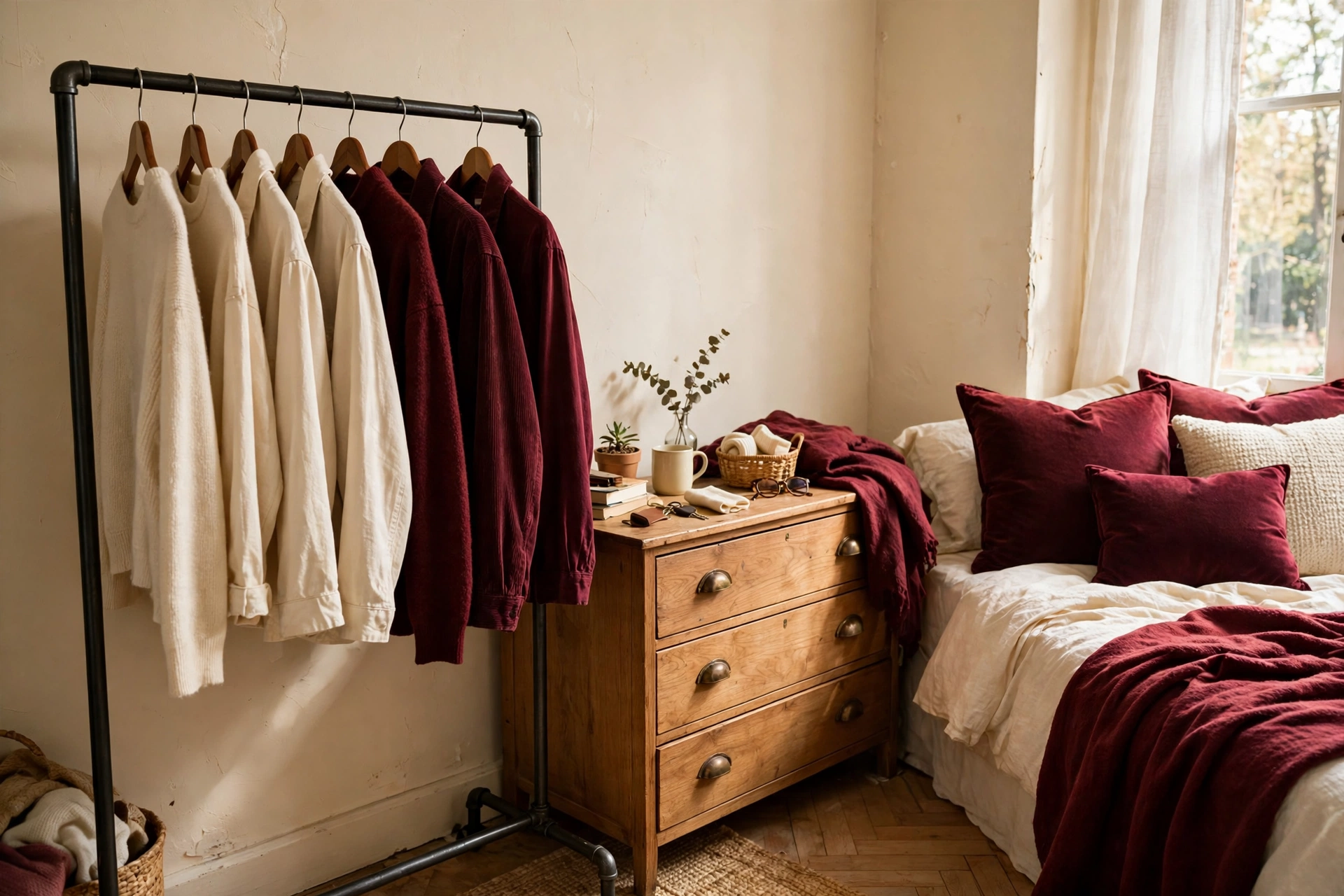
Direct answer: A studio apartment with no closet works when you stop looking for one big replacement and build a small system instead. Give hanging clothes one rail, folded clothes one set of shelves or drawers, and shoes and accessories one home each, and the room stops looking like a laundry pile. The original check in this guide to bedroom storage without a closet is a capacity test you can do before you buy anything. A 48 inch (122 cm) rail holds about 24 hangers at 2 inches (5 cm) each, and two 36 by 18 inch (91 by 46 cm) bins under a queen bed cover 9 sq ft of hidden storage. Count your hanging clothes first, then buy the rail that fits that number. Most no-closet studios feel solved once the hanging clothes have a real address and the folded clothes are out of sight.
How do you store clothes in a studio apartment with no closet?
Start with a count, not a shopping list. Pull every hanging item out and count it. Count your folded stacks too, and your shoes. That count decides the system. A rail that holds 24 hangers will not fix a 60 hanger wardrobe, and a wardrobe cabinet will not fix a pile of folded sweaters with nowhere to fold them.
Next, pick one wall or corner for the clothes zone. It should sit near the bed, not near the front door, so guests do not walk straight into your wardrobe. Keep a clear walkway of at least 30 inches (76 cm) past it. If the zone eats the walkway, shrink the zone, not the walkway. Our guide to studio apartment layout ideas uses the same zone thinking for whole rooms, and it pairs well with the closet systems below.
Finally, sort by how often you wear things. Daily clothes stay on the rail or in the top drawer. Weekly clothes go on the shelf or in the second drawer. Off-season clothes go under the bed in labeled bins. When every item has a frequency address, putting laundry away takes two minutes instead of becoming a chair pile.
What replaces a closet best in a studio apartment with no closet?
No single piece replaces a closet. A closet does three jobs at once. It hangs, it folds, and it hides. The table below rates each system on those three jobs, so you can see why a combination beats any one purchase.
| System | Hangs | Folds | Hides | Floor space | Typical cost |
|---|---|---|---|---|---|
| Freestanding garment rack | Yes | No | No | About 6.7 sq ft for a 48 by 20 inch (122 by 51 cm) rack | $30 to $60 |
| Wardrobe cabinet or armoire | Yes | Some | Yes | 10 to 15 sq ft | $120 to $300 |
| Tall shelving with bins | No | Yes | With bins | 4 to 6 sq ft | $40 to $100 |
| Under-bed bins | No | Yes | Yes | None extra | $15 to $30 a pair |
| Over-door organizer | No | Small items | Partly | None | $15 to $25 |
| Dresser or chest | No | Yes | Yes | 6 to 8 sq ft | $80 to $180 |
| Curtain-hidden nook | Yes | With shelves | Yes | The nook itself | $35 to $80 |
My opinion, plainly: the rack plus under-bed bins combination is underrated, and the big open wardrobe wall is overrated. A rack with a curtain looks tidy in photos and feels fussy every morning, because you fight fabric to reach a shirt. A plain rack, kept to one week’s worth of outfits plus coats, looks intentional and stays easy to use. The rest belongs in bins and drawers, not on display.
7 systems that replace a closet in a studio
1. A freestanding garment rack, kept short
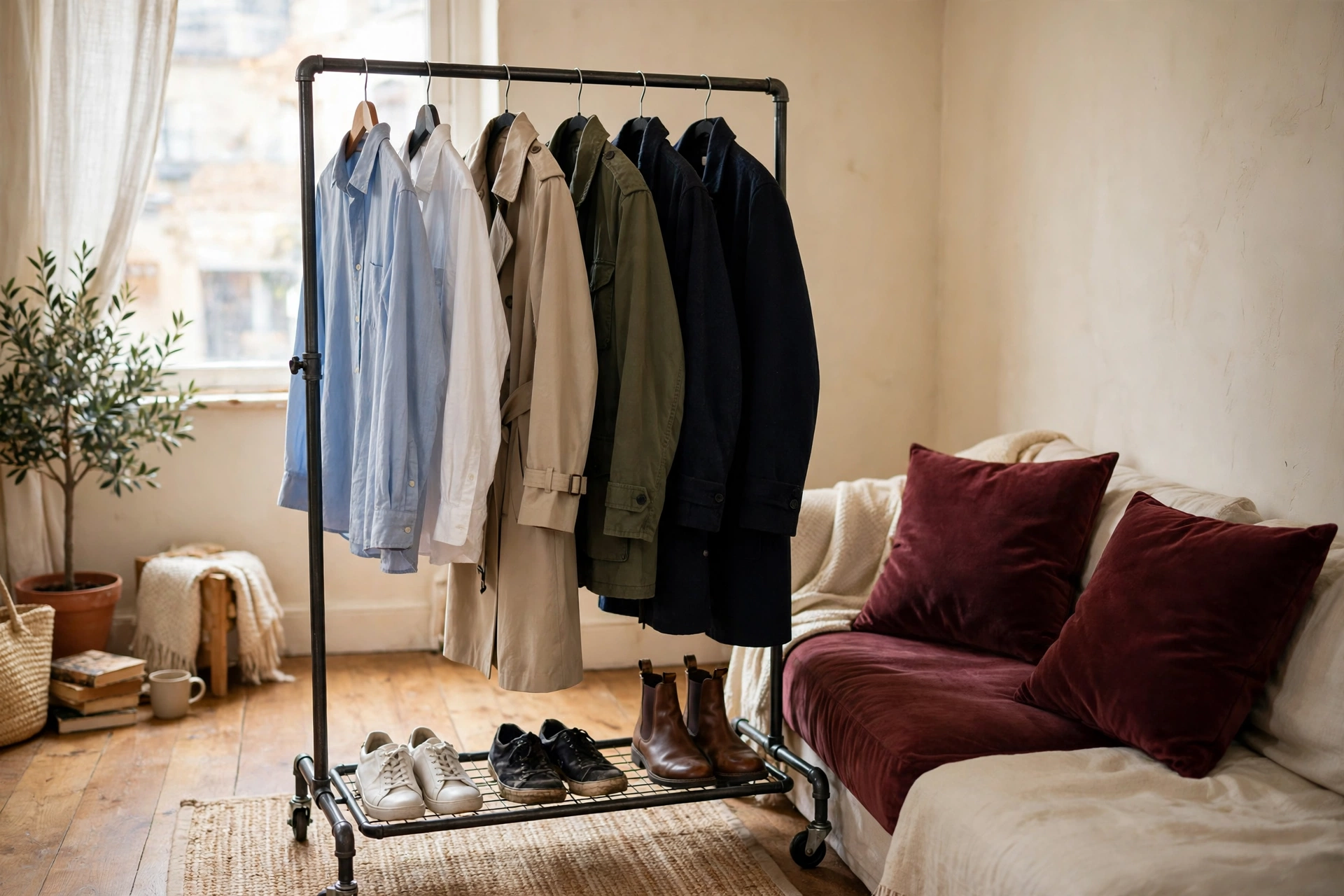
A single rail rack is the closest thing to a closet rod without a closet. Choose a metal frame, not a plastic one, and check the weight rating before you load it. Heavy coats and denim add up fast, and a wobbly rack leans, then tips. Keep the rail to clothes you wear this week, plus your coats. Put a shoe tray or a low basket underneath for shoes, so the floor under the rack earns its space too.
Best for: renters who want hanging space today with zero drilling. Watch out for: dust. Open hanging collects dust, so keep rarely worn pieces in bins, not on the rail. Verdict: buy this first if most of your clothes hang.
2. A wardrobe cabinet with doors
An armoire or wardrobe cabinet is the only system that truly hides everything, and in a studio that matters, because the bedroom is also the living room. Look for a cabinet with both a rail and shelves inside, so hanging and folded clothes share one piece. Measure the door swing and the delivery path first. A cabinet that cannot turn through your hallway is an expensive problem, not a solution.
Best for: studios where the clothes zone faces the living area. Watch out for: depth. Most cabinets run 20 to 24 inches (51 to 61 cm) deep, so they need a real wall, not a leftover gap. Verdict: best single purchase if you have 10 sq ft to spare and hate visible clothes.
3. Tall shelving with matching bins
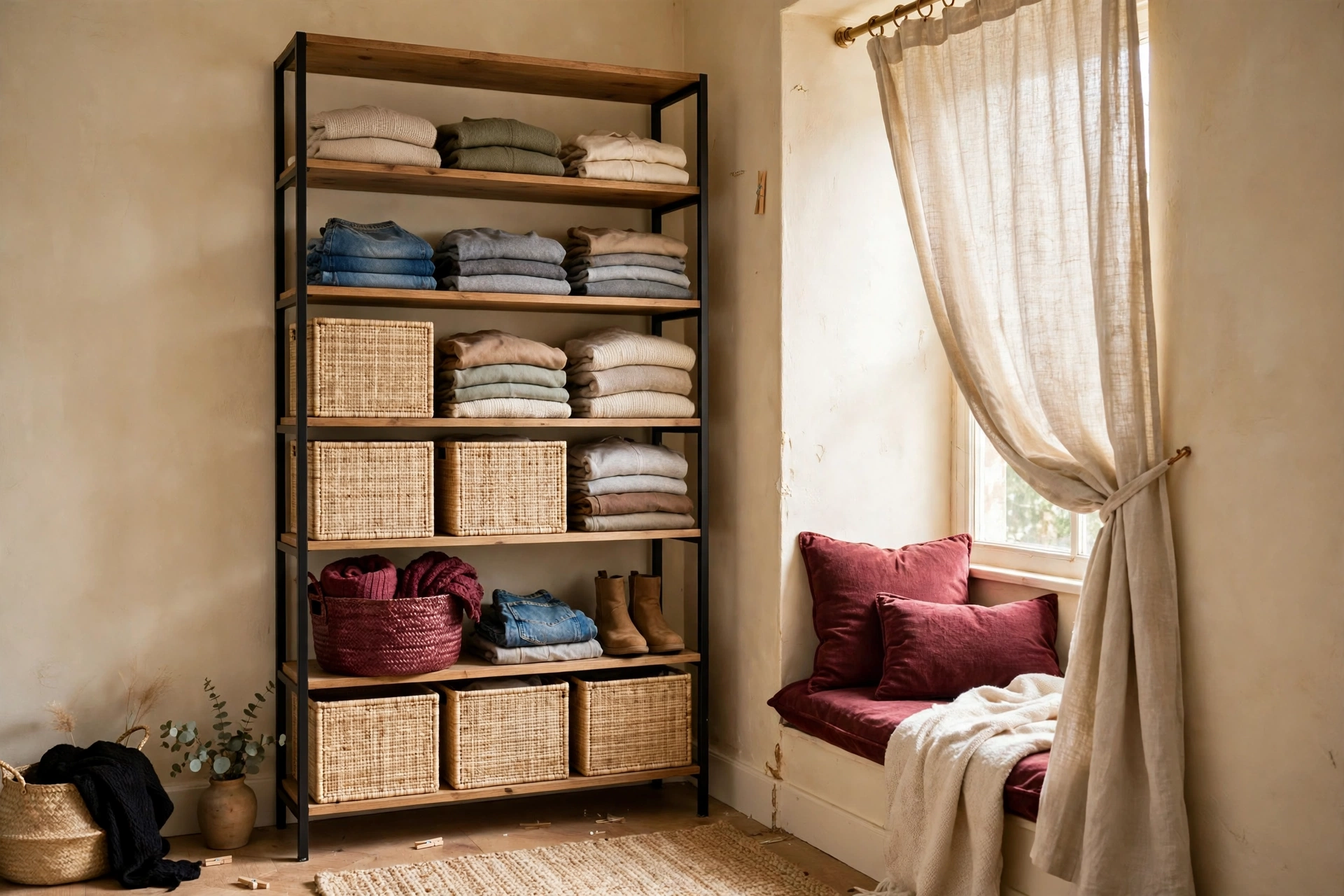
A tall, narrow bookcase turns folded clothes into a tidy wall. Use the same bins all the way down, one category per bin, and label the front of each bin. Folded knits, tees, and jeans stack well on shelves, and bins stop stacks from toppling. Put daily items at waist height, and seasonal items at the top.
Best for: people with mostly folded clothes and a narrow wall. Watch out for: open shelves without bins look messy within a week. The bins are not optional decoration, they are the system. Verdict: the best folded-clothes system for under $100.
4. Under-bed bins as the hidden closet
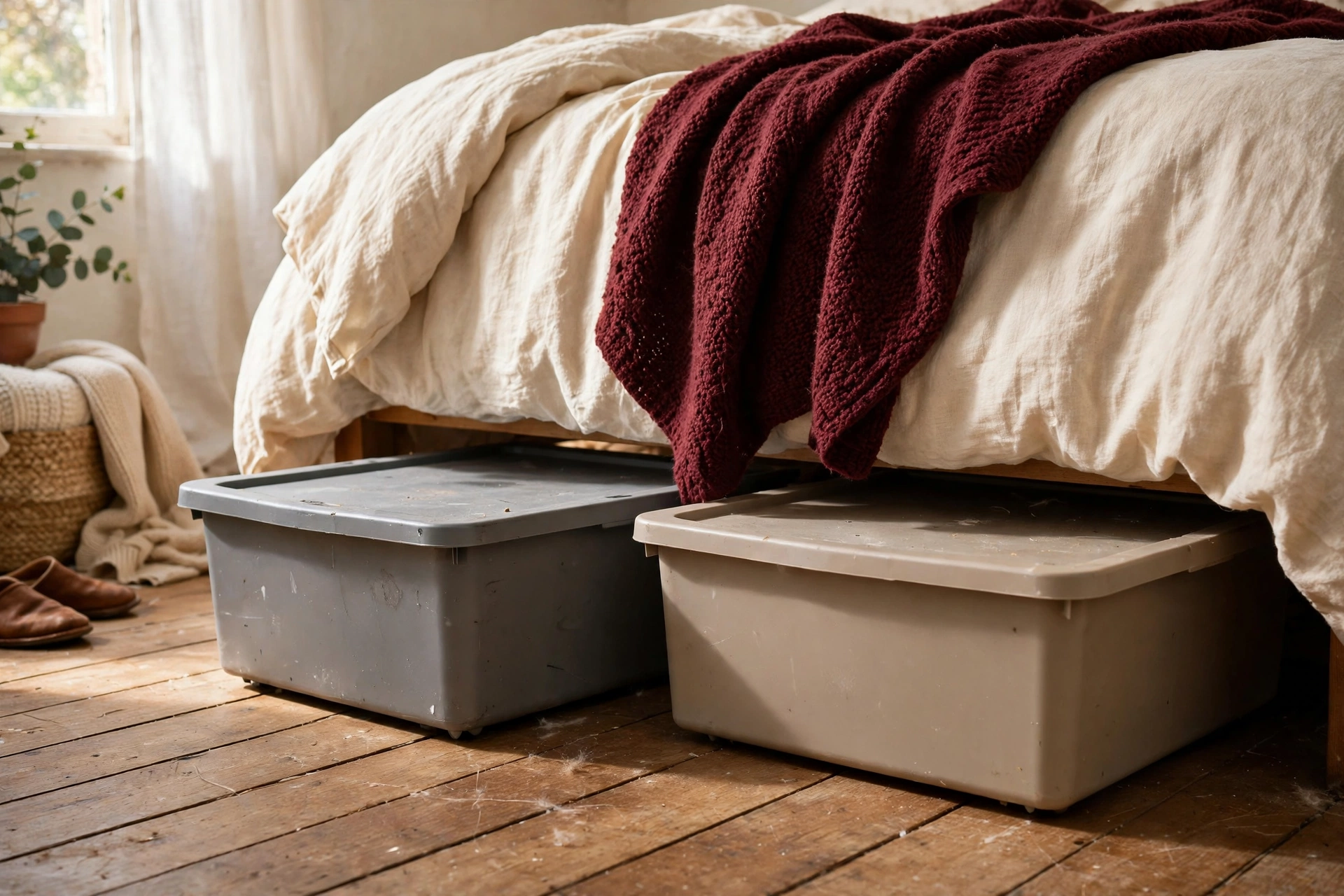
The space under a bed is the largest hidden storage area in most studios, and it costs nothing to use. Low, lidded bins on wheels slide out easily, and clear lids or labels stop the guesswork. Store off-season clothes, spare bedding, and bags here, not daily clothes. Digging under the bed every morning gets old fast.
Best for: off-season and bulky items. Watch out for: measure the clearance first. Bed risers add 3 to 6 inches (8 to 15 cm) of height if your frame sits too low for bins. Verdict: do this in every no-closet studio, even if you buy nothing else. Our under-bed storage ideas guide covers bin sizes and dust control in more detail.
5. Over-door organizers for the small stuff
Shoes, scarves, belts, and bags do not need a closet, they need pockets and hooks. An over-door shoe organizer on the bathroom or entry door holds a surprising amount, and a row of hooks behind the bedroom door handles tomorrow’s outfit and your bag. This system costs little and uses zero floor space, which is why it belongs in every plan.
Best for: accessories and shoes in tight studios. Watch out for: door clearance. Thick organizers can stop a door closing, so check the gap before you buy. Verdict: the best value per inch in this whole guide.
6. A dresser that doubles as a surface
A low dresser gives folded storage and a top surface in one piece, which matters when every surface counts. Use the top for a lamp, a small tray for keys and jewelry, and nothing else. The moment the dresser top becomes a pile, the system breaks. Keep daily smalls in the top drawer, tees and knits in the middle, and denim and hoodies at the bottom, so you open one drawer per outfit.
Best for: folded wardrobes and small studios that need a surface too. Watch out for: wide dressers eat wall space fast. A tall chest fits a narrow wall better than a wide dresser. Verdict: buy a dresser when shelves alone feel too open for your room.
7. A curtain-hidden nook in a dead corner
Some studios have a dead corner, an alcove, or a stretch of wall beside the bed that fits a rail and a shelf but looks unfinished. Hang a ceiling or tension rod across it and add a simple curtain, and you have a closet-shaped nook without building anything. Add one shelf above the rail for bins, and keep the curtain light colored so the corner does not turn into a dark cave. This works best when the nook already exists. Do not try to build a fake room in the middle of an open studio, because it will block light and shrink the room.
Best for: alcoves and dead corners. Watch out for: curtains need washing, and a heavy curtain in a small room feels like a wall. Verdict: a smart fix for a real nook, a bad fix for an open floor.
Build your no-closet zone in one weekend
You do not need a renovation, you need an order of work. Follow these steps in order, and stop when the system holds your actual wardrobe.
Materials list: a garment rack or wardrobe cabinet, two under-bed bins, one over-door organizer, three to five matching shelf bins, labels, a tape measure, and a shoe tray.
- Measure the clothes zone wall, the bed clearance, and every door gap, and write the numbers down.
- Count hanging clothes, folded stacks, shoes, and bags, and sort each pile by how often you wear it.
- Place the hanging system first, on the wall nearest the bed, with a 30 inch (76 cm) walkway clear.
- Put under-bed bins in place for off-season clothes, and label each bin by season.
- Add the folded system, shelves or dresser, beside the hanging system, not across the room.
- Hang the over-door organizer and hooks for accessories, bags, and tomorrow’s outfit.
- Do a one-week test. Anything still on a chair after a week needs a new home or needs to leave the studio.
Time estimate: measuring and sorting takes about an hour, assembly takes two to three hours, and the one-week test costs nothing but honesty.
What does a no-closet system cost?
Prices below are checked market prices as of November 2026, not personal receipts. A heavy-duty freestanding rack with shelves lists at $59.99 at Target, which anchors the rack range below.
| Piece | Typical price | Notes |
|---|---|---|
| Freestanding garment rack | $30 to $60 | Metal frame, check the weight rating |
| Wardrobe cabinet or armoire | $120 to $300 | Doors cost more, and delivery matters |
| Tall shelving unit plus bins | $40 to $100 | Bins included, matching bins matter |
| Under-bed bins, pair | $15 to $30 | Lidded, on wheels if possible |
| Over-door organizer | $15 to $25 | Check door clearance first |
| Dresser or chest | $80 to $180 | Tall chests fit narrow walls |
| Curtain plus rod for a nook | $35 to $80 | Light fabric, washable |
| Starter system total (rack, bins, organizer) | $60 to $115 | Covers hanging, hidden, and small items |
A starter system for $60 to $115 covers most studios. Add a wardrobe cabinet later only if visible clothes still bother you after a month with the starter system.
Mistakes to avoid
Do not buy storage before counting clothes. That is the mistake behind most no-closet chaos, because a beautiful rack cannot hold a wardrobe it was never sized for. Do not keep everything visible. Open storage only looks good when it holds an edited set of clothes, not everything you own. Do not block the walkway with a wardrobe. A studio that is hard to walk through feels smaller no matter how tidy it looks. And do not store daily clothes under the bed. Daily items need to be reachable in seconds, or they migrate to the chair.
What to skip
Skip the giant open wardrobe wall with five rails and a dozen shelves unless you genuinely own that much clothing and love looking at it. Skip matching hangers as a first purchase. Matching hangers look nice, but they do not add storage, and the money buys a bin that does. Skip ceiling-hung rails in a rental unless your lease clearly allows them. They look clever, they damage ceilings, and they are hard to remove cleanly. Our guide on how to divide a studio apartment without walls covers dividers that keep light and floor space, which pairs well with keeping the clothes zone compact.
Renter caveat: check the lease first
Before you drill anything, even a single shelf, check your lease for wall mounting, anchor, and repair clauses. Freestanding racks, cabinets, bins, and over-door organizers need no permission in most leases, which is why this guide leads with them. If you do want a wall shelf, ask your landlord in writing, note the permission, and photograph the wall before and after. Deposit risk stays low when nothing is drilled, and rises with every hole, so save drilling for the one shelf you truly need, not the whole system. For the full renter angle, our renter-friendly closet organization guide covers deposit-safe closet fixes in more depth.
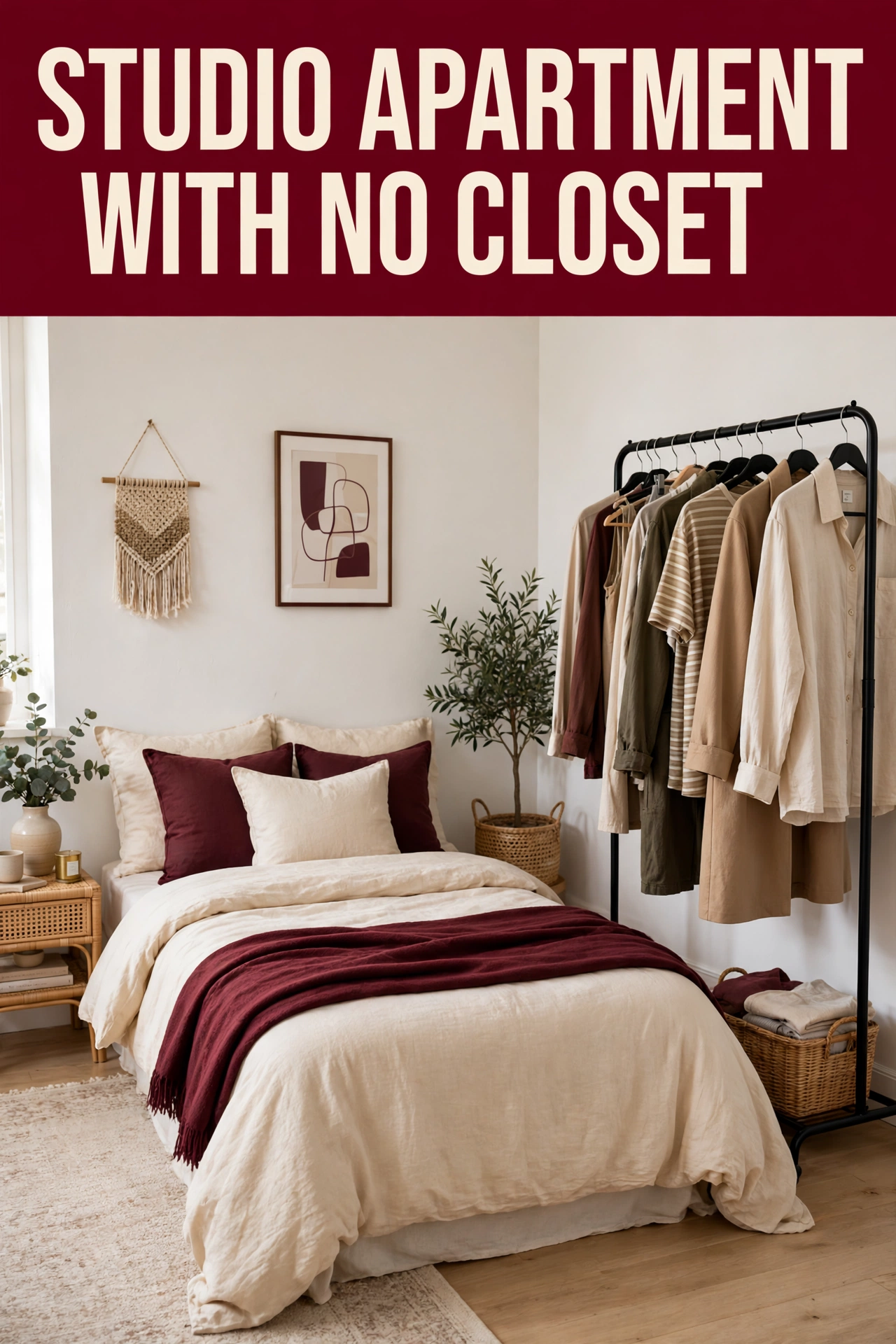
How do I store clothes in a studio apartment with no closet?
Count hanging and folded clothes first, then give each group its own system. A garment rack handles hanging clothes, shelves or a dresser handle folded clothes, and under-bed bins handle off-season clothes. One system per group keeps the room tidy without a built-in closet.
What can I use instead of a closet in a studio apartment?
A freestanding garment rack, a wardrobe cabinet with doors, tall shelving with bins, and under-bed bins together replace a closet. The rack covers hanging, the shelves or dresser cover folding, and the cabinet or bins cover hiding. Most studios need two or three of these, not all of them.
How do I hide clothes in a studio apartment with no closet?
Use doors and lids. A wardrobe cabinet hides hanging clothes behind doors, lidded under-bed bins hide off-season clothes, and matching bins on shelves hide folded stacks. Keep only one week’s outfits visible on the rack, and rotate the rest out of sight.
How many clothes should I keep on a rack in a small studio?
Keep about 20 to 30 hanging items on a 48 inch (122 cm) rail, which is what the rail comfortably holds at 2 inches (5 cm) per hanger. Coats count too, so if coats take 8 hangers, daily clothes get about 16 to 22. Store the rest folded or under the bed, and rotate seasonally.
How this was made
This guide was written from live search results for no-closet studio storage, a checked retailer price for a freestanding rack, and capacity math computed from standard rail and bin sizes. No product was tested and no purchase is claimed.