The January Declutter Challenge: 30 Small Tasks That Clear a Small Home in a Month
Direct answer
The january declutter challenge is simple: one small task a day for 30 days, each capped at 15 minutes, each aimed at one drawer, one shelf, or one surface, never a whole room. This version is built for a small flat with no garage, no attic, and no spare room to hide sorting piles in. The original element here is the math: 25 task days at 15 minutes each comes to 375 minutes, about 6 hours and 15 minutes of actual work across the whole month, plus one donation drop-off trip. That is the full cost of a visibly clearer home, spread so thin you barely notice it, and it follows naturally from a new year home reset plan.
How does the january declutter challenge work in a small flat?
It works on zones, not rooms. A room is too big for 15 minutes in a small home, because pulling everything out of a wardrobe fills the only bedroom you have. A zone, one shelf of that wardrobe, one kitchen drawer, the top of one bedside table, is finishable. Set a timer, sort only that zone, and stop when it rings. Four catch-up days are built in, on days 7, 14, 21, and 28, so a missed day never means a failed challenge. Day 29 is the donation exit day, when every filled bag leaves the flat, and day 30 is a short final reset of your busiest surface.
What does the january declutter challenge cost, and how long does it take?
Almost nothing. Most people already own everything this challenge needs. Prices below were checked against live listings in October 2026, and they are market prices, not a receipt for anything bought for this article.
| Item | Checked price (October 2026) | Notes |
|---|---|---|
| Large trash bags, 30 gallon, 68 count | $15 to $22 | Glad ForceFlex, listed at $15.18 on offer against a usual $22 |
| Donation boxes | $0 to $31 | $0 reusing delivery boxes; about $31 for a 15 pack of small 16 in x 10 in x 10 in (41 cm x 25 cm x 25 cm) moving boxes if you buy new |
| Phone timer | $0 | The timer already on your phone is the only tool that matters |
| Total kit | $15 to $53 | Most readers will spend $15 to $22, on bags alone |
Time estimate: 25 task days x 15 minutes = 375 minutes, plus roughly 30 minutes for the day 29 donation drop-off, so about 6 hours and 45 minutes in total across January. Miss days and use the catch-ups, and the total stays the same.
What should you buy before the january declutter challenge starts?
Buy almost nothing, and buy it before day 1 so you never stall mid-task:
- One box or roll of large trash bags, 30 gallon (114 liter) size, so a full drawer clear-out fits in one bag.
- One sturdy bag or box by the front door as the donation exit point, emptied only on day 29.
- A small basket or tray for things that belong in another room, so they do not become a new pile on the floor.
- A marker and a few labels, or just masking tape, for the donation box and any “decide later” box.
- A phone timer, set to 15 minutes, every single day. This is the whole system.
Do not buy storage bins first. Sort first, measure what is left, and only then decide whether a bin solves a real problem.
The steps: how to run each day
Follow the same six steps every day, whatever the zone:
- Pick the named zone for that day, and nothing wider. One shelf, not the whole cupboard.
- Set the timer for 15 minutes and put the trash bag, the donation bag, and the relocate basket beside you.
- Take items out one at a time and sort them into four piles: keep here, move elsewhere, donate, or dispose and recycle.
- Put the keepers straight back, grouped with similar things, with room to take one out and put it back.
- Move donations to the exit bag by the door at once, so they never drift back onto a shelf.
- When the timer rings, stop. Close the zone, even if it is not perfect. An unfinished zone beats an exploded room every time.
Pick the named zone for that day, and nothing wider. One shelf, not the whole cupboard.
Set the timer for 15 minutes and put the trash bag, the donation bag, and the relocate basket beside you.
Take items out one at a time and sort them into four piles: keep here, move elsewhere, donate, or dispose and recycle.
Put the keepers straight back, grouped with similar things, with room to take one out and put it back.
Move donations to the exit bag by the door at once, so they never drift back onto a shelf.
When the timer rings, stop. Close the zone, even if it is not perfect. An unfinished zone beats an exploded room every time.
The 30-day calendar: what happens each week?
Here is the calendar in full, in our own zone order. Task days total 25, catch-up days are days 7, 14, 21, and 28, day 29 is the donation exit, and day 30 is the final reset.
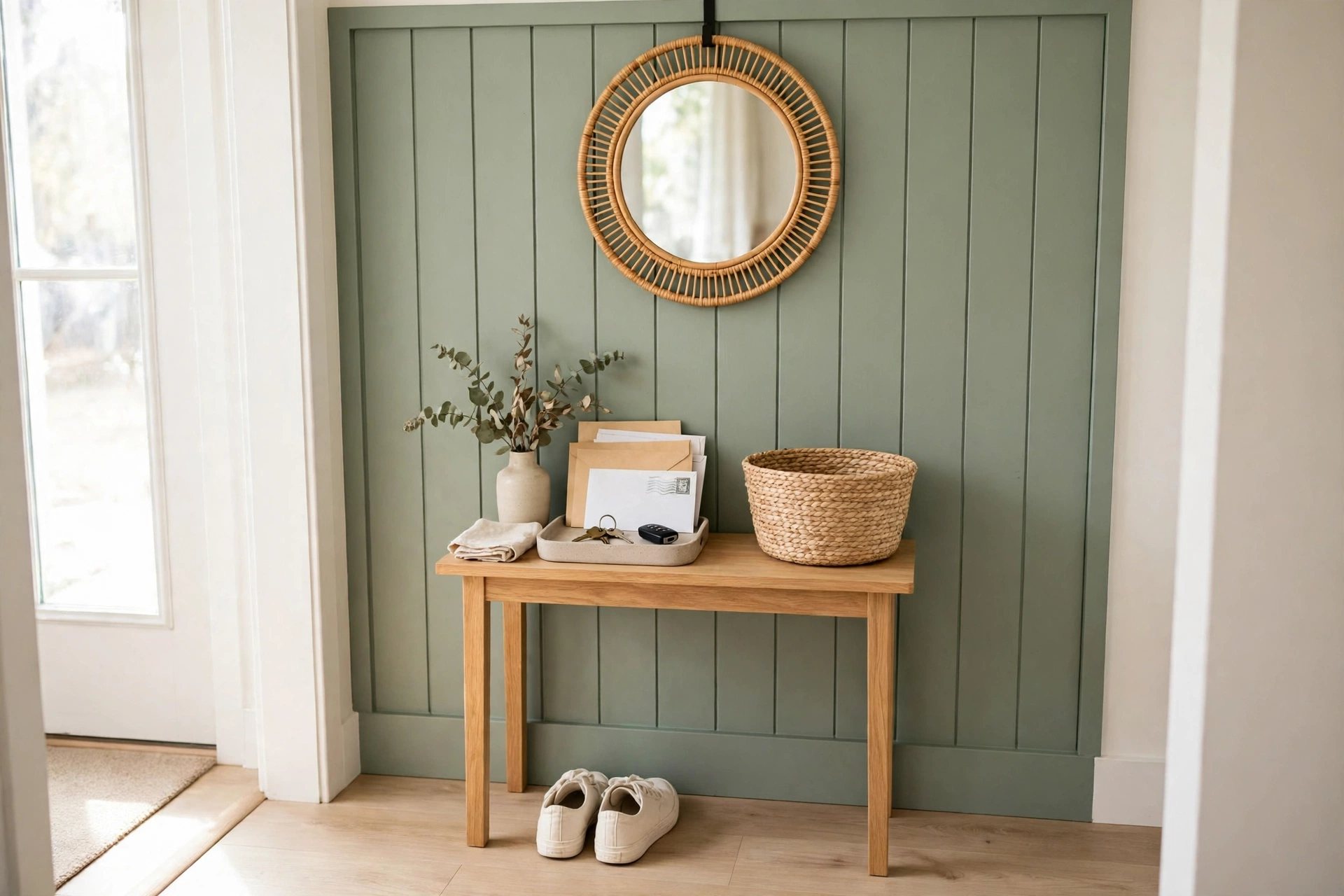
Week 1, days 1 to 6: entry and everyday surfaces. Day 1, the entry landing spot for keys and mail. Day 2, one junk drawer. Day 3, one fridge door shelf. Day 4, the bathroom counter. Day 5, one kitchen counter section. Day 6, shoes by the door. Best for: fast visible wins. Watch out for: starting with the hardest drawer in the house. Start easy on purpose.
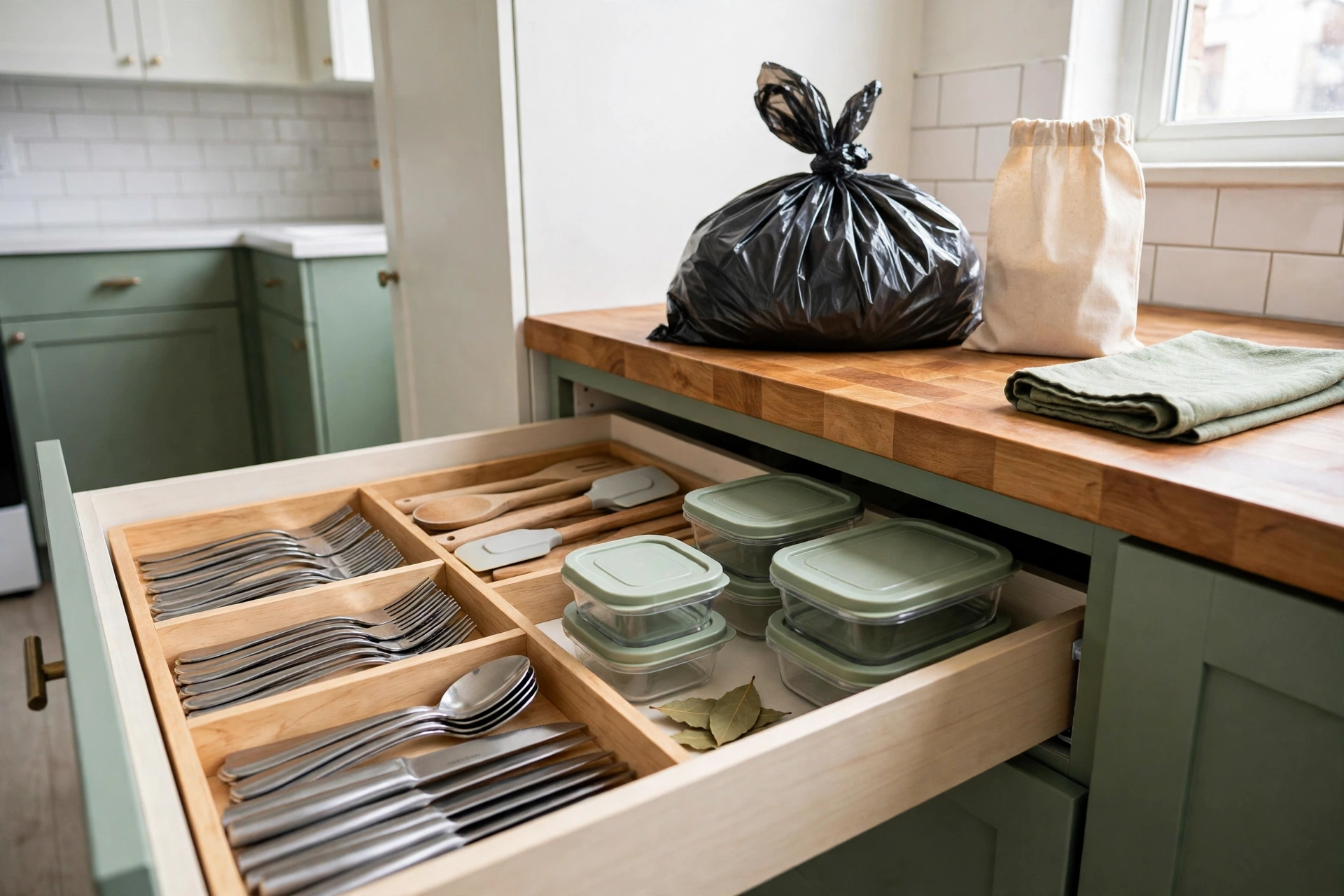
Week 2, days 8 to 13: kitchen and food zones. Day 8, one utensil drawer. Day 9, one shelf of mugs. Day 10, food containers matched with their lids. Day 11, one pantry shelf only. Day 12, the under-sink cabinet. Day 13, the cleaning supplies corner. Best for: kitchens, where duplicates hide in every drawer. Watch out for: keeping broken containers “just in case.” A lid with no container is trash.
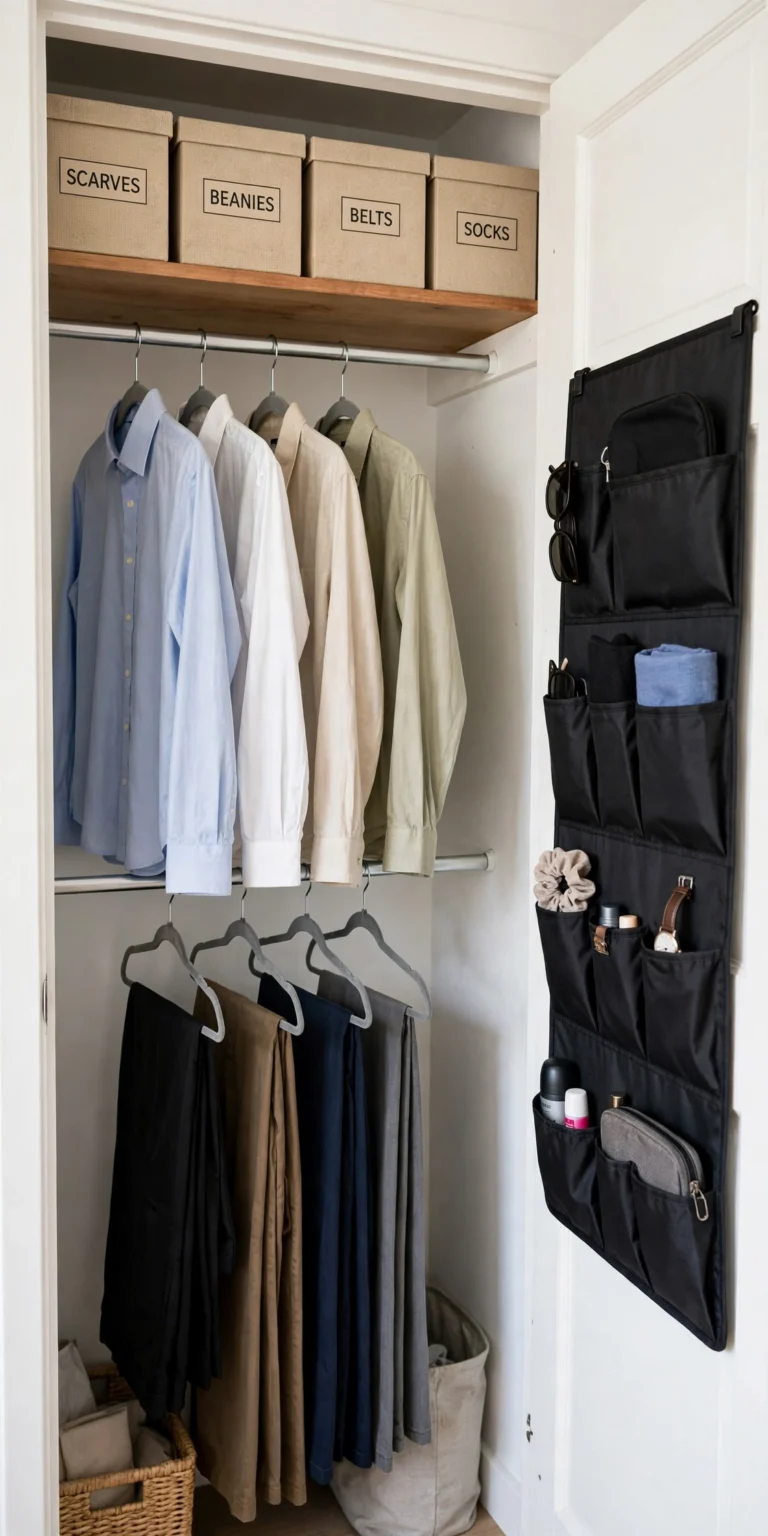
Week 3, days 15 to 20: bedroom and closet. Day 15, the bedside table. Day 16, one wardrobe shelf. Day 17, one section of hanging clothes. Day 18, one linen shelf. Day 19, bags and totes. Day 20, the laundry corner. Best for: the room where clutter costs you sleep. Watch out for: trying on everything. Judge clothes by whether you wore them in the last year.
Week 4, days 22 to 27: living room, paper, and digital. Day 22, one living room surface. Day 23, one shelf of books and magazines. Day 24, cables and chargers for devices you no longer own. Day 25, one paper pile of mail and receipts. Day 26, phone photos and downloads. Day 27, one storage bin or basket, emptied and re-decided, keeping only storage that actually fits a small home. Best for: the invisible clutter, paper and cables, that quietly eats surfaces. Watch out for: the paper pile expanding. Stop when the timer rings, even if papers remain.
Day 29: donation exit day. Take every filled donation bag out of the flat, to a charity shop, a collection point, or a scheduled pickup. Check what the organization accepts first, and do not leave bags in a shared hallway. A donation bag still sitting by your door on February 1 is not decluttering, it is relocation.

Day 30: final reset. Spend 15 minutes on your busiest surface and set a 15 minute daily reset habit: keys and mail to the entry spot, dishes off the counter, one bag out per week from now on. That is the whole maintenance plan.
A note for renters and shared flats: do not toss anything the landlord owns, like fitted shelves or appliance manuals that came with the flat, and agree shared-space clear-outs with flatmates first. Your zone is your stuff, not the household’s.
Mistakes to avoid during the challenge
Four errors sink more attempts than laziness ever does. First, emptying a whole room to sort one drawer. In a flat, that turns your only living space into a sorting warehouse, and the timer runs out mid-chaos. Second, skipping the timer because “this one will be quick.” It will not be, and the timer is what keeps a 15 minute task from eating your evening. Third, keeping a “decide later” box with no review date. Write day 28 on it and decide then, or it is just a new clutter container. Fourth, putting hazardous items in the regular trash. Old paint, solvents, batteries, and expired medicines need special handling, and the US EPA guidance on household hazardous waste explains what counts and how to find a local collection option.
What to skip
Skip buying matching bins before you start, because bins preserve piles you have not yet decided about. Skip counting items, like “get rid of 30 things on day 30,” because counting turns a calm habit into a scavenger hunt. Skip the garage and attic days that house-sized calendars include, since you do not have them, and skip decluttering someone else’s belongings, sentimental boxes, and paperwork archives in the same month. Those need their own time, not a 15 minute slot.
Questions, answered
Do I have to complete the challenge in exactly 30 days?
No. The 30 day shape is structure, not a test. If it takes you 40 days because life got in the way, the flat does not know the difference. Use the catch-up days, skip a day without guilt, and pick up at the next task. Finishing late beats quitting early.
How long does each day’s task take?
15 minutes, by design. That is the cap, not a minimum. Some zones, like a bedside table, take 8 minutes, and that is fine. If a zone is bigger than 15 minutes, take one section of it and stop when the timer rings.
What do I do with the things I declutter?
Donations go in the exit bag by the door and leave on day 29, so they never creep back onto shelves. Trash and recycling go out the same day you sort them. For anything hazardous, like old paint, batteries, or solvents, check your local collection rules before binning it, and the EPA household hazardous waste guidance is a solid starting point for what counts.
Can I do this challenge in a small apartment with no storage room?
Yes, and this calendar was written for exactly that home. Every task is one micro-zone, the donation exit bag lives by the front door instead of in a spare room, and there is no staging area step anywhere in the plan. If your flat is a studio, pick the smaller half of each zone and use the catch-up days freely.
How this challenge was put together
This calendar was written from scratch for small flats, with its own zone order and day list, after checking what the top ranking challenge pages cover and where they assume a house with a garage. Prices were checked against live listings in October 2026, and no test, measurement, or personal purchase is claimed anywhere in this article. The time budget, 375 minutes across 25 task days, is simple arithmetic from the 15 minute daily cap, not a timed experiment.