Under-Bed Storage Ideas: 11 Ways to Use Your Biggest Forgotten Space
Quick math: a queen bed covers about 33 square feet of floor. In a small bedroom, that’s often a third of the room — sitting there doing nothing. Under-bed storage is the highest-value upgrade in our small bedroom organization ideas for exactly that reason. But “shove some boxes under there” isn’t a system. These 11 ideas turn the space under your bed into storage that stays organized, stays clean, and actually gets used.
1. Measure your clearance first (the step everyone skips)
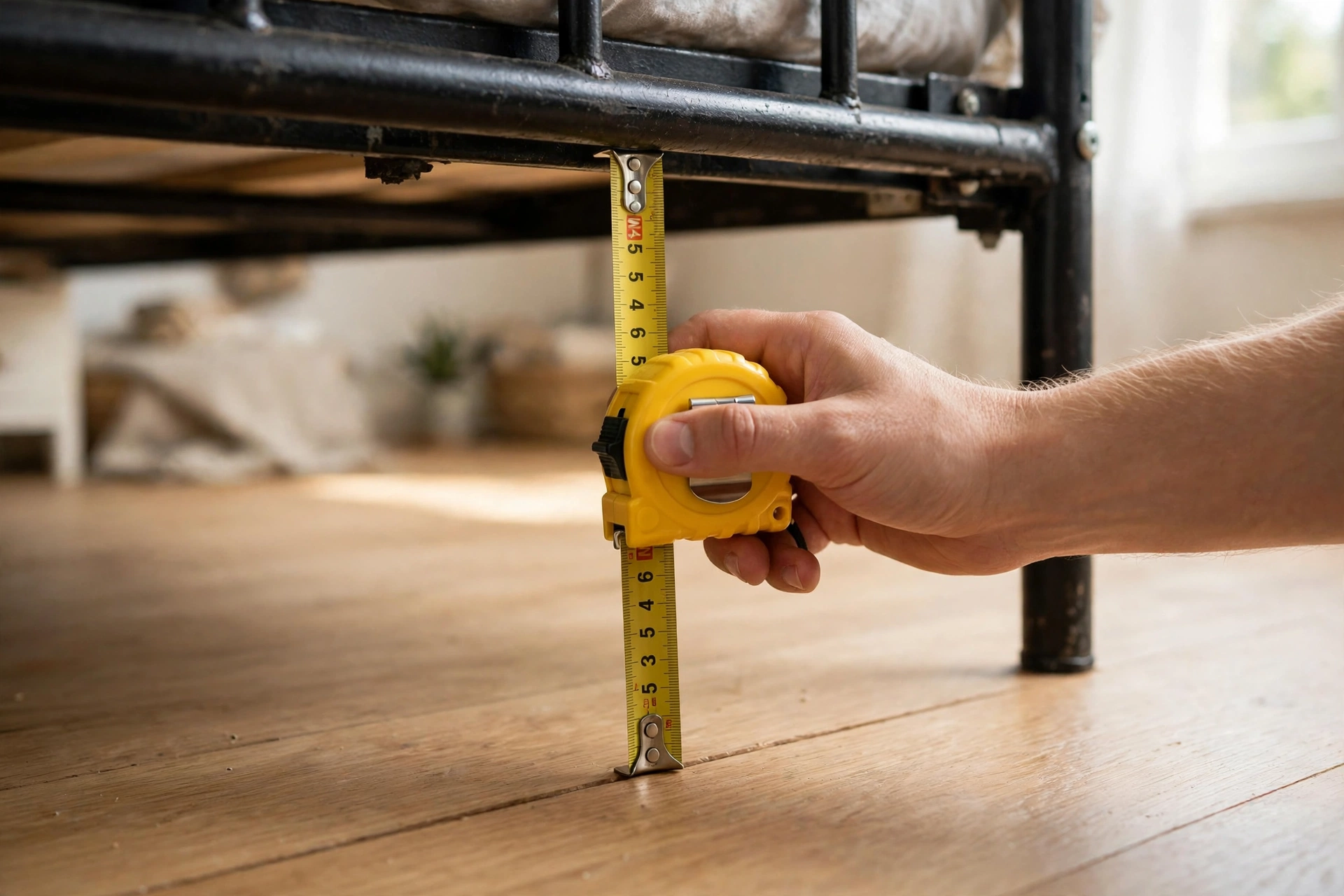
Before buying anything, measure the gap between the floor and the bed frame’s lowest rail — not the mattress, the frame. Most beds offer 5 to 8 inches; storage beds and risers offer more. Write the number down. A bin that’s half an inch too tall is a bin that lives in the hallway forever, quietly judging you.
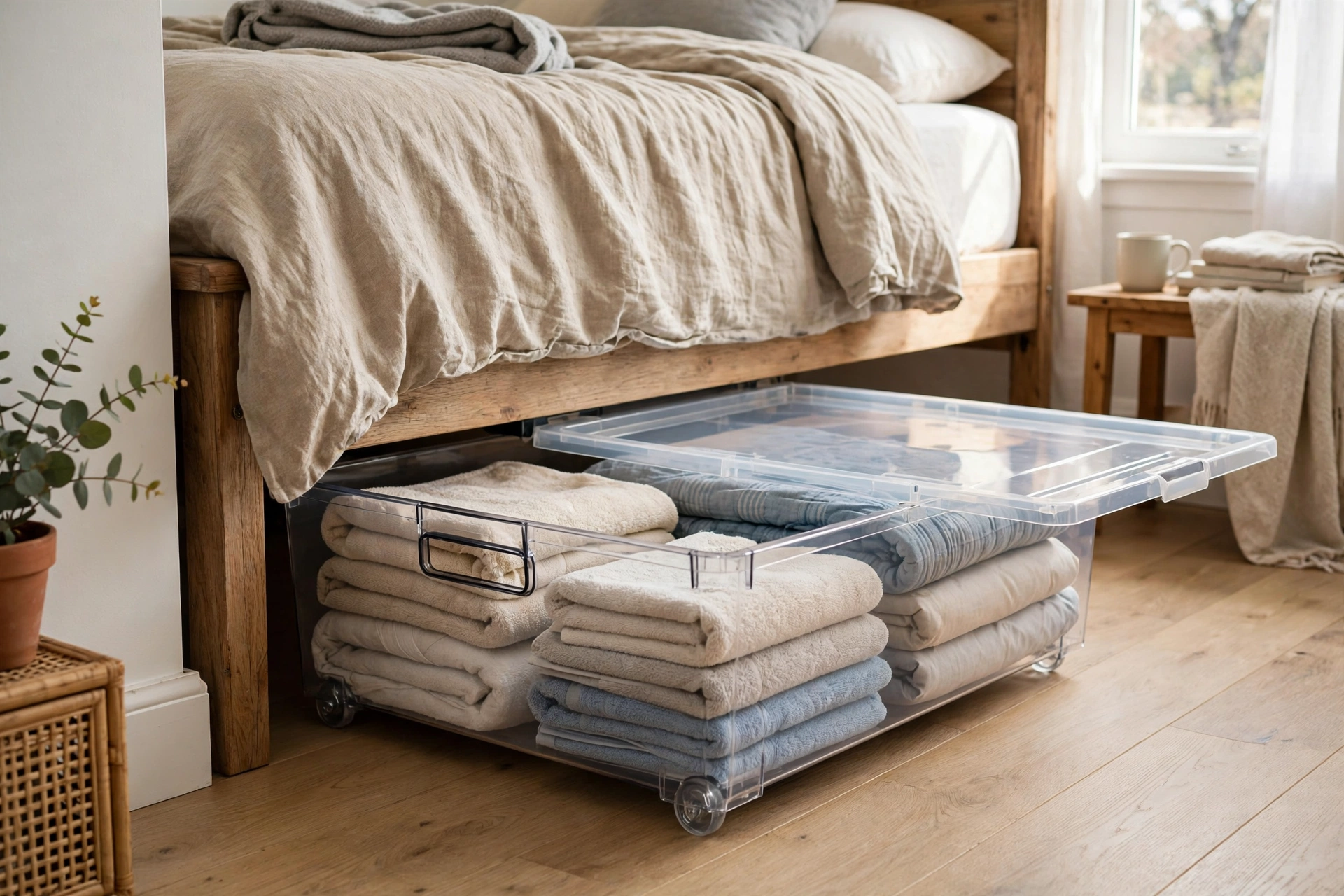
2. Low-profile rolling bins for things you reach monthly
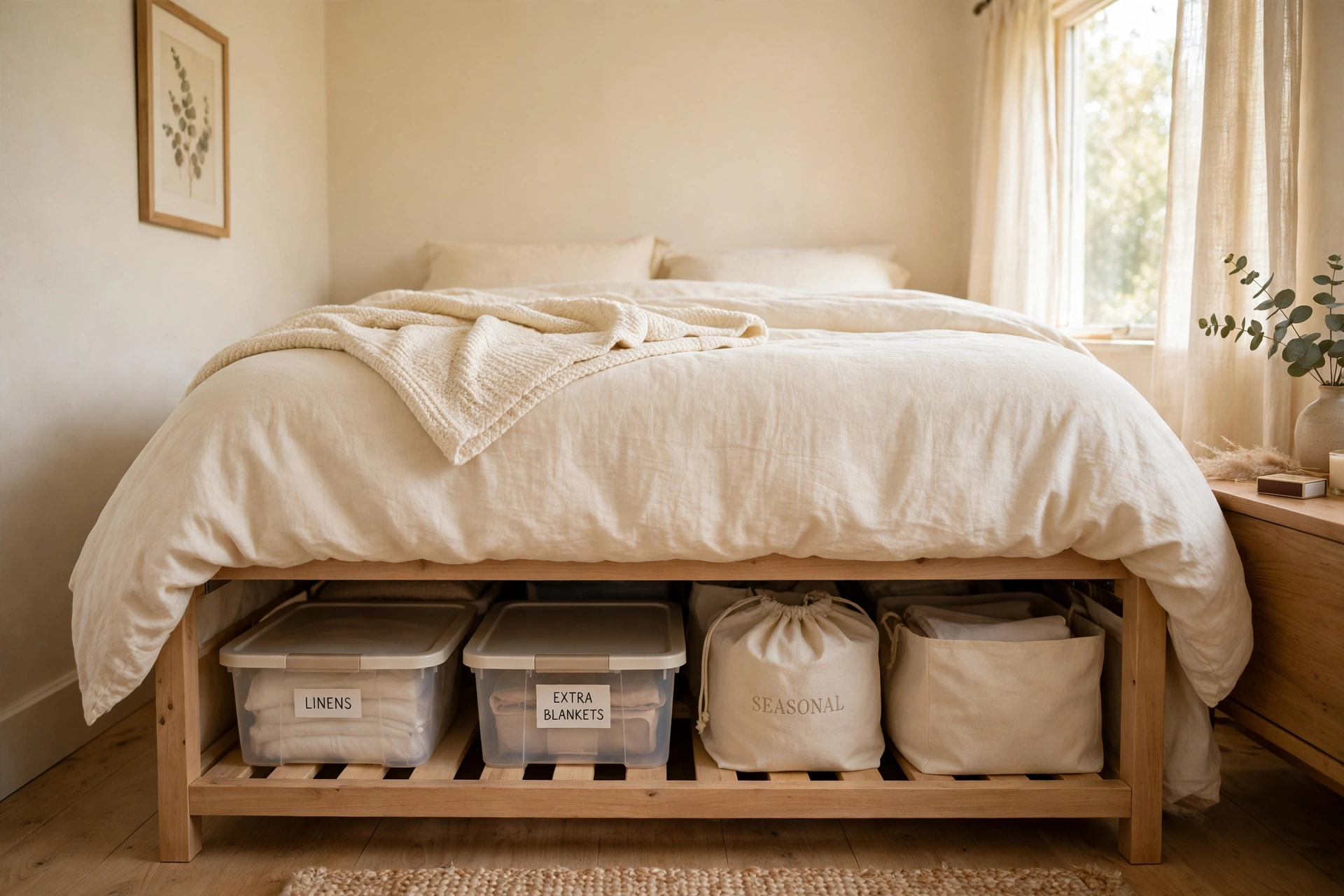
For items you need every few weeks — spare towels, the guest bedding, your gym bag overflow — hard bins with wheels win. They slide out without a wrestling match, the lids keep dust off, and clear sides mean you can see what’s inside before dragging the wrong one out. Again.
3. Zippered fabric bags for off-season clothes
Soft fabric bags with zippers flex into awkward gaps that rigid bins can’t use, and they’re gentle on sweaters and coats. They hold a surprising amount — a winter wardrobe for one person fits in two. Tuck a cedar block or lavender sachet in each; off-season clothes should come back smelling like clothes, not like storage.

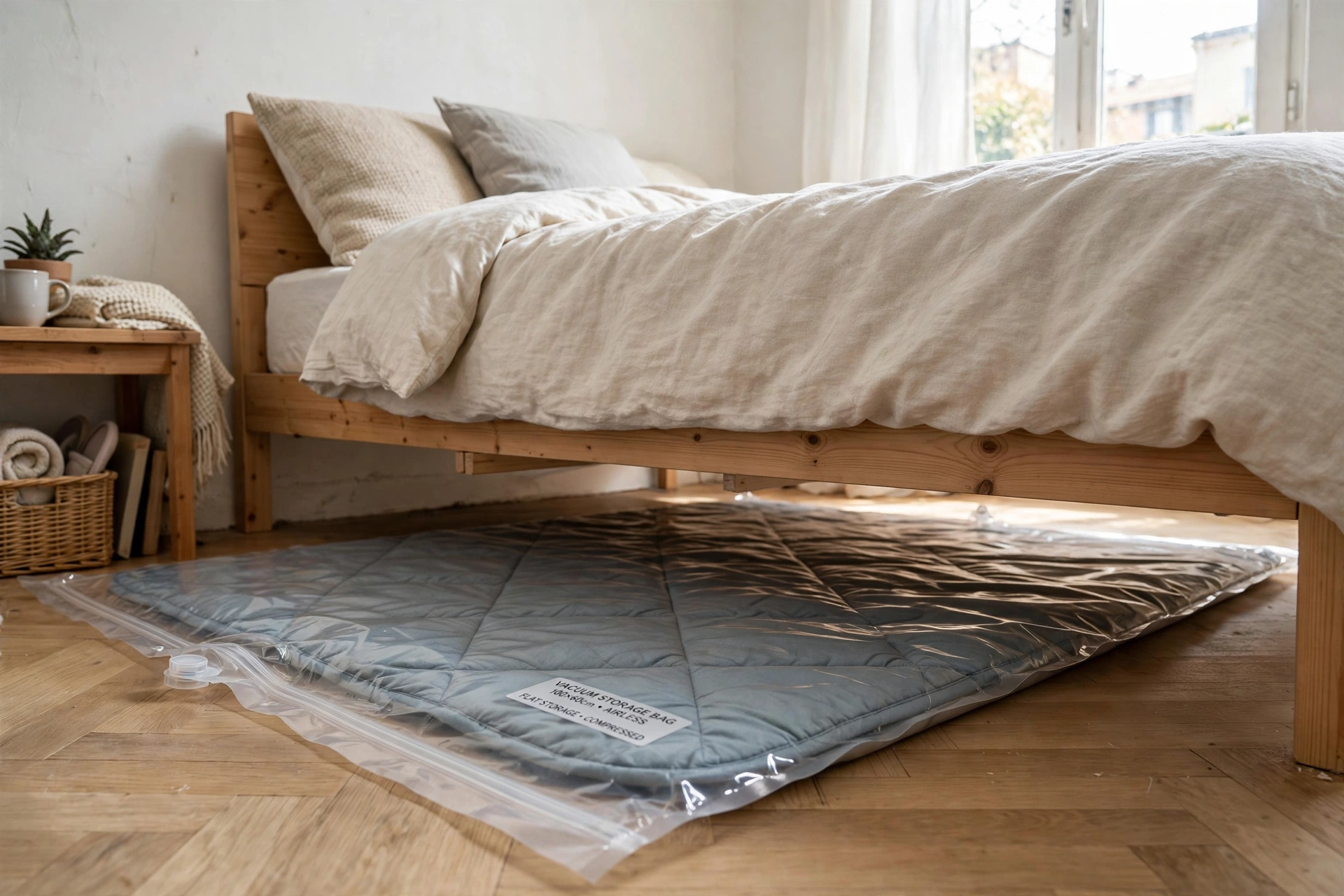
4. Vacuum bags for the truly bulky stuff
Comforters, spare duvets and winter coats are mostly air. Vacuum bags shrink them to a flat slab that slides under any bed with 4 inches of clearance. The rule from experience: only vacuum what you won’t touch for at least a season — re-inflating and re-sealing every month gets old fast.
5. An under-bed shoe organizer for the shoe overflow
Shoes breed by the door and migrate everywhere. A flat under-bed shoe organizer with divided cells corrals 12 to 16 pairs in dead space, heels and all. Keep the two pairs you wear daily by the door; the rest live under the bed, out of the visual noise.

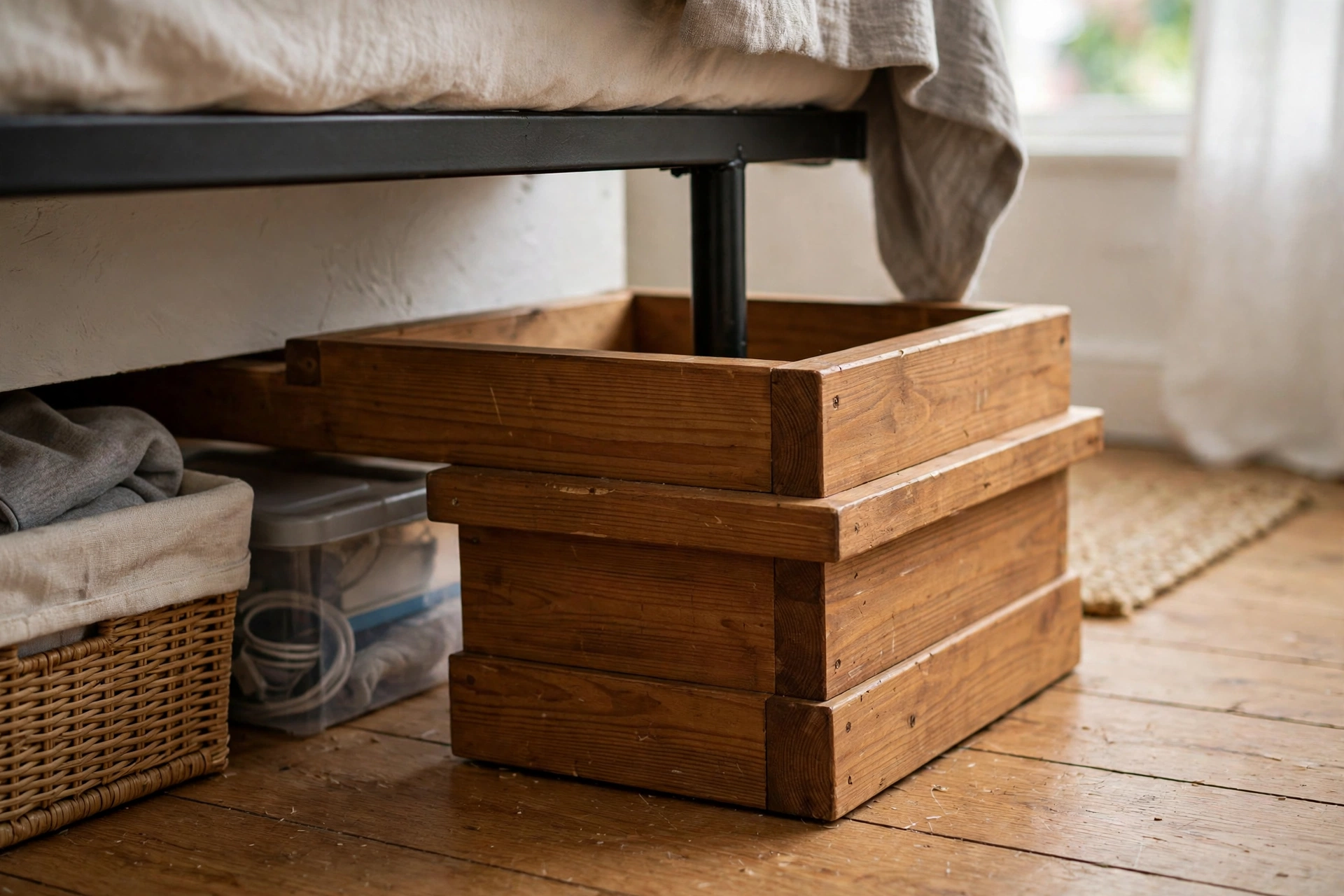
6. Bed risers: buy yourself 4–6 extra inches
If your clearance measures under 5 inches, a set of bed risers is the cheapest “renovation” in this entire niche — usually under $20, installed in ten minutes, no tools. Those extra inches are the difference between flat bags only and proper bins. Just check the risers are rated for your bed frame’s style and total weight, sleepers included.
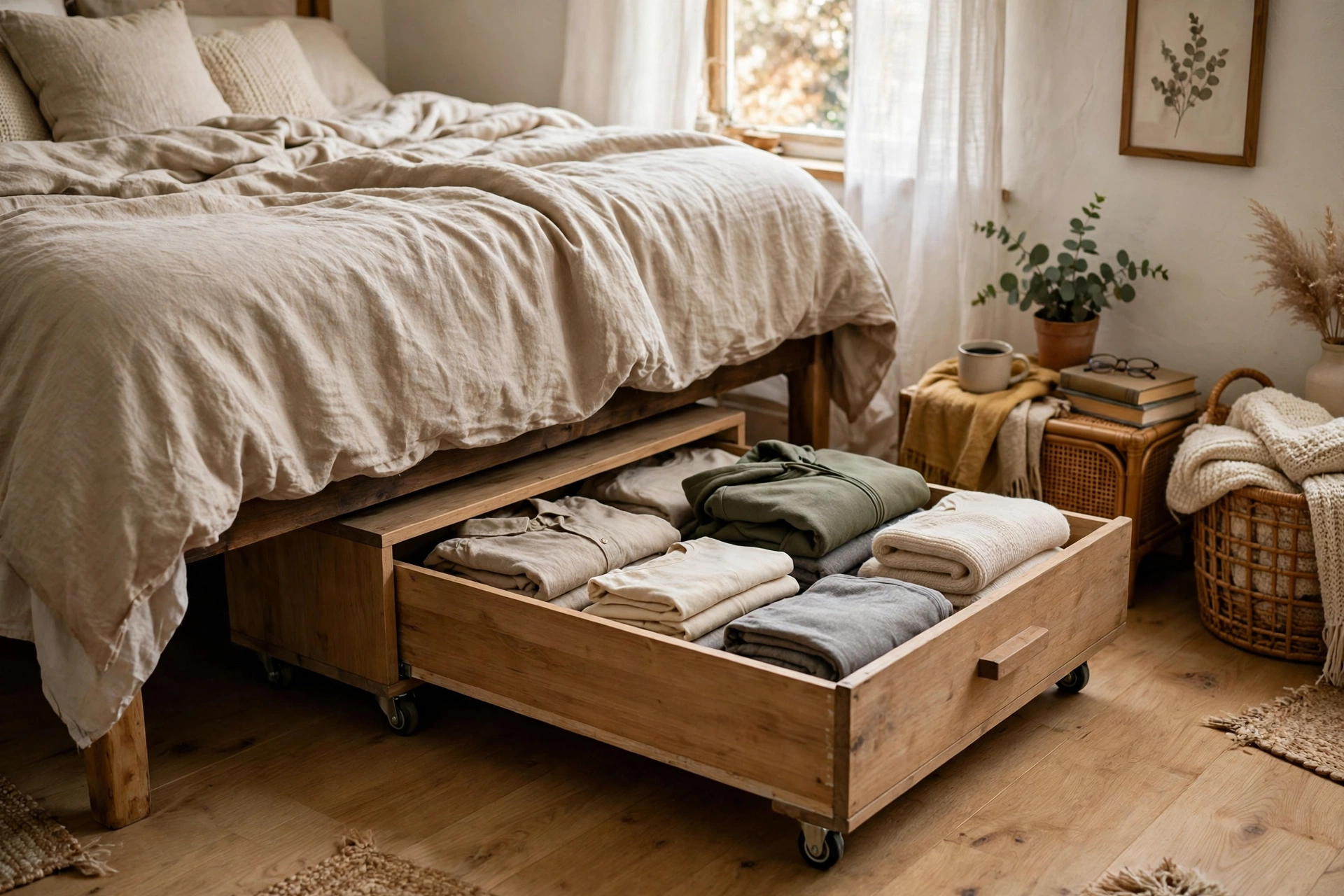
7. If you open it weekly, drawers beat bins
Bins are for monthly access. If you’ll open it every week — kids’ clothes in a shared room, work uniforms, craft supplies — a low drawer unit on casters (or a storage bed frame, when budget allows) saves your patience. Be honest about access frequency before choosing; the wrong container is why under-bed systems get abandoned.
8. Zone it and label it, even down there
Divide the under-bed into zones by side or by category: left side bedding, right side off-season clothes, for example. Label each bin on the short end that faces out. It sounds excessive until the first time you pull exactly the right bin on the first try, in the dark, half asleep.

9. Store bedding under the bed it belongs to
Spare sheets for your bed live under your bed. Guest bedding lives under the guest bed (or the sofa bed’s nearest flat space). It sounds obvious, yet most people store all the linens in one faraway closet and play the guessing game at every change. Storing by location ends that permanently.
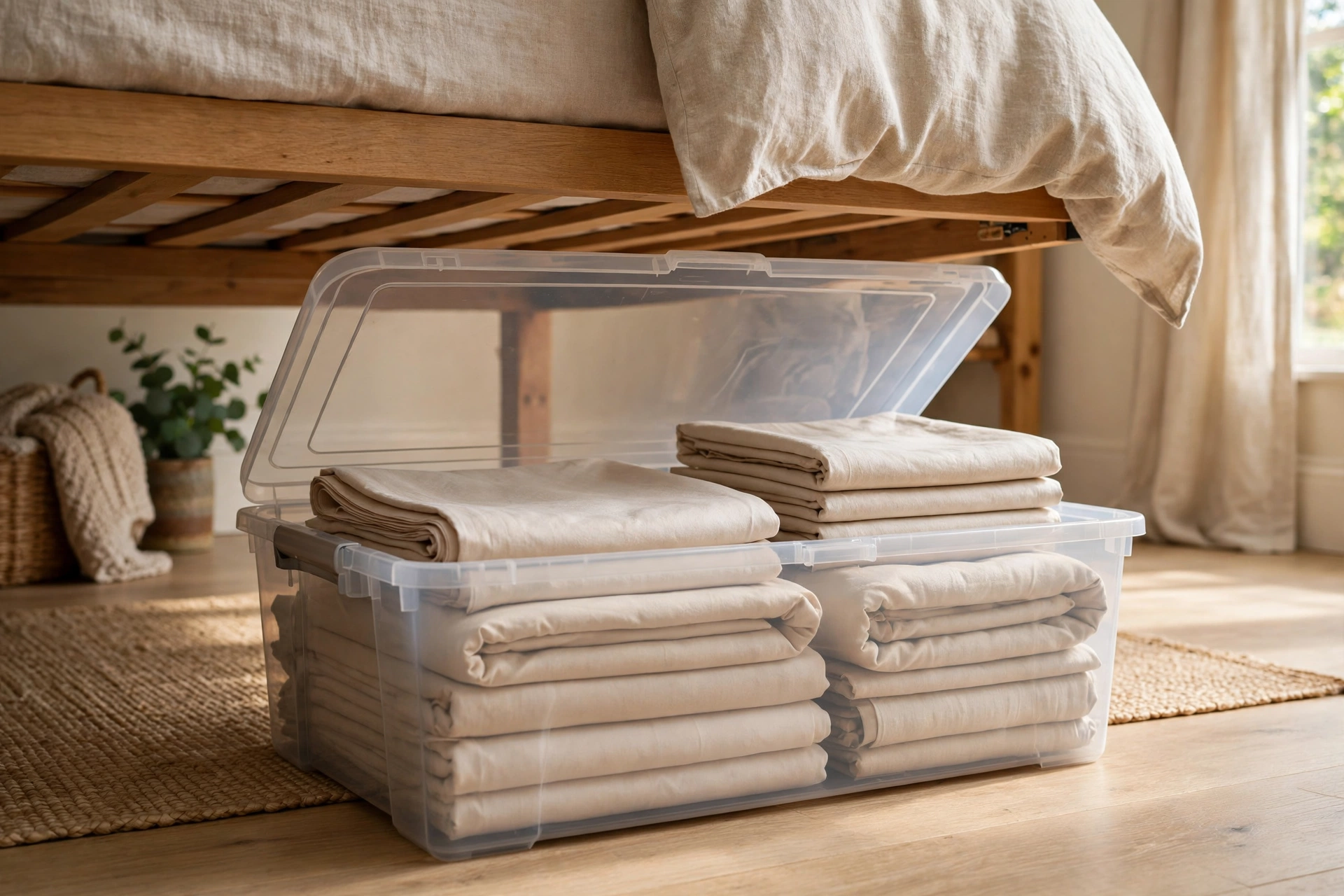
10. Have a dust strategy, not a dust surprise
Under-bed storage collects dust — that’s physics, not failure. Lidded bins and zippered bags are the first line of defense. The second: choose containers you can wipe or wash, and run a flat duster or robot vacuum under there monthly. If pulling a bin out triggers a dust cloud, the container is wrong, not the idea.

11. What NOT to store under the bed
Skip: very heavy items like book collections (hard to pull, hard on floors), important documents and photos (water and dust risk), anything you need daily (you’ll stop bending for it), and food of any kind — including the emergency chocolate. Especially the emergency chocolate. Under-bed is for textiles, shoes, luggage and seasonal gear; keep it that way and the system stays clean.
Where to start (if this feels like a lot)
Three moves, one afternoon:
- Measure your clearance and write it down (#1)
- Add risers if you’re under 5 inches (#6)
- Put off-season clothes in zippered bags on one side, spare bedding in a lidded bin on the other (#3, #9)
That’s a working system. Wheels, labels and zones are upgrades you can layer on later.
Under-Bed Storage FAQs
How much storage space is under a bed?
A queen bed covers about 33 square feet. With 6 to 8 inches of clearance, that’s roughly 16 to 22 cubic feet of storage — about the size of a medium closet — hiding under the bed you already own.
How do I keep under-bed storage dust-free?
Use lidded bins and zippered bags rather than open containers, choose wipeable or washable materials, and run a flat duster or robot vacuum under the bed monthly. The lid is 90 percent of the battle.
Are under-bed drawers better than bins?
For things you open every week, yes — drawers slide easier and feel less like storage. For monthly or seasonal items, lidded bins are cheaper, lighter and keep dust out better.
What should you not store under a bed?
Heavy items like book collections, important documents and photos (water and dust risk), food, and anything you need daily. Under-bed storage works best for textiles, shoes, luggage and seasonal items.
Keep Organizing
Under-bed sorted? Our small bedroom organization ideas cover the rest of the room, wall to wall. Browse everything in small-space organization ideas, and catch new guides on the blog every week.
Shopping for the bins themselves? Our best under-bed storage bins comparison picks a winner for every budget and bed height.