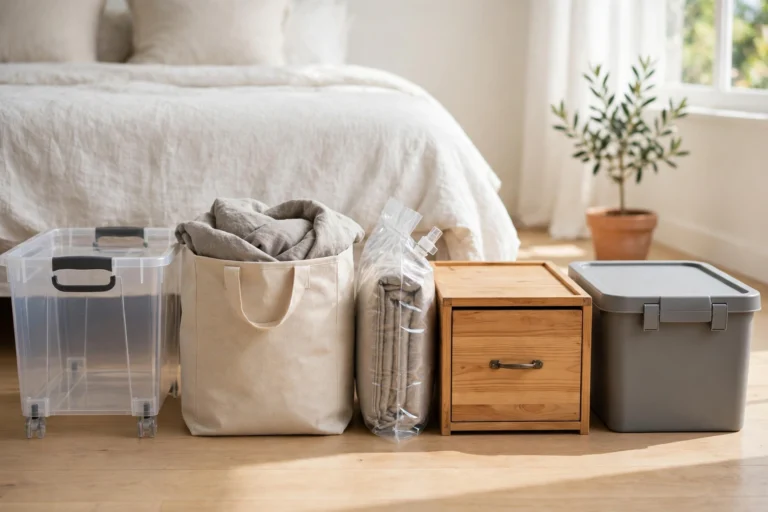
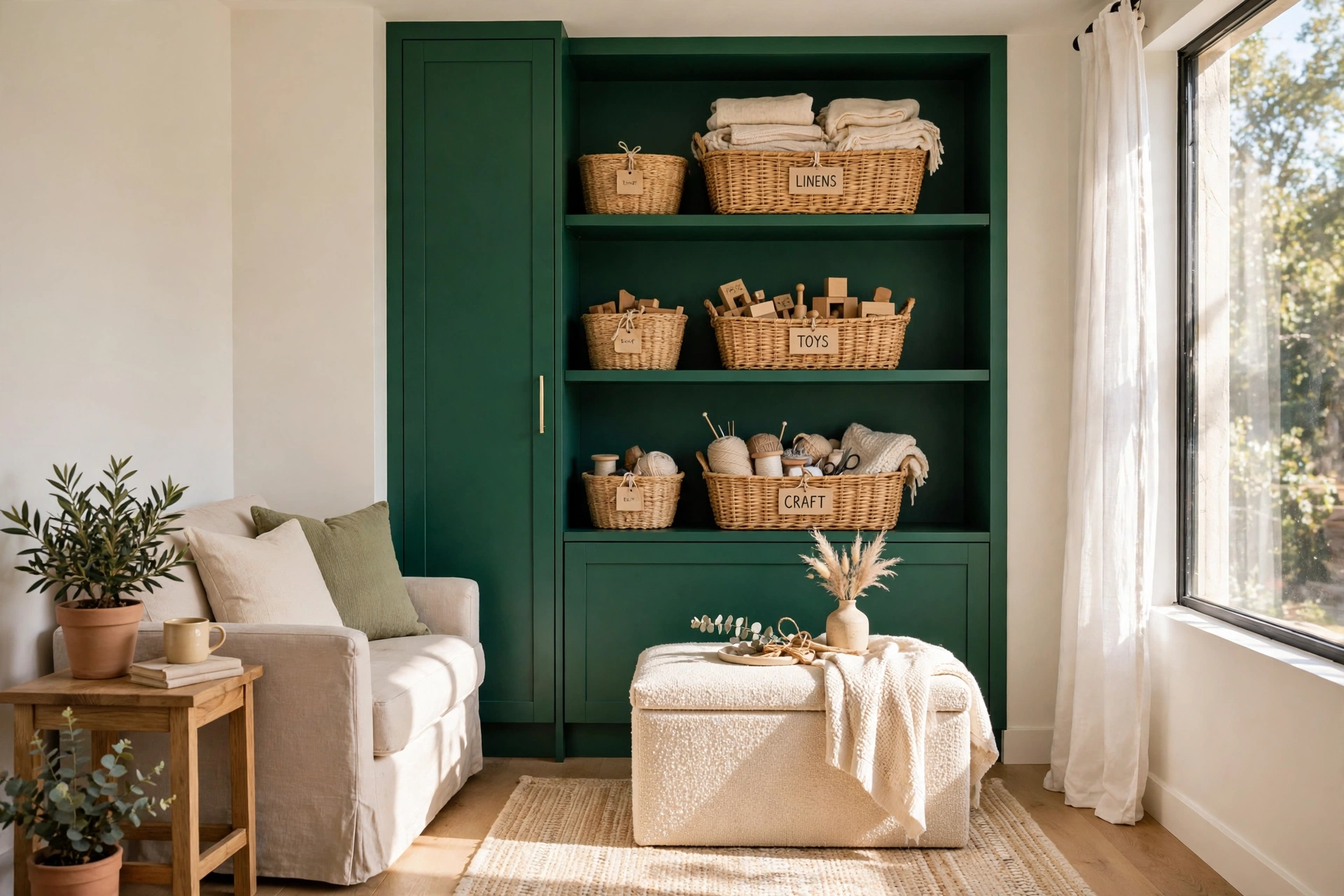
Small Space Storage Guide: How to Buy Storage That Actually Fits a Small Home
This small space storage guide answers one question: what storage should you actually buy for a small home, and in what order? The direct answer is short. Measure first, buy one piece that solves your biggest daily mess, and only then buy matching containers to fit it. Most small homes do not need more storage. They need storage that fits the space, the stuff, and the way you live.
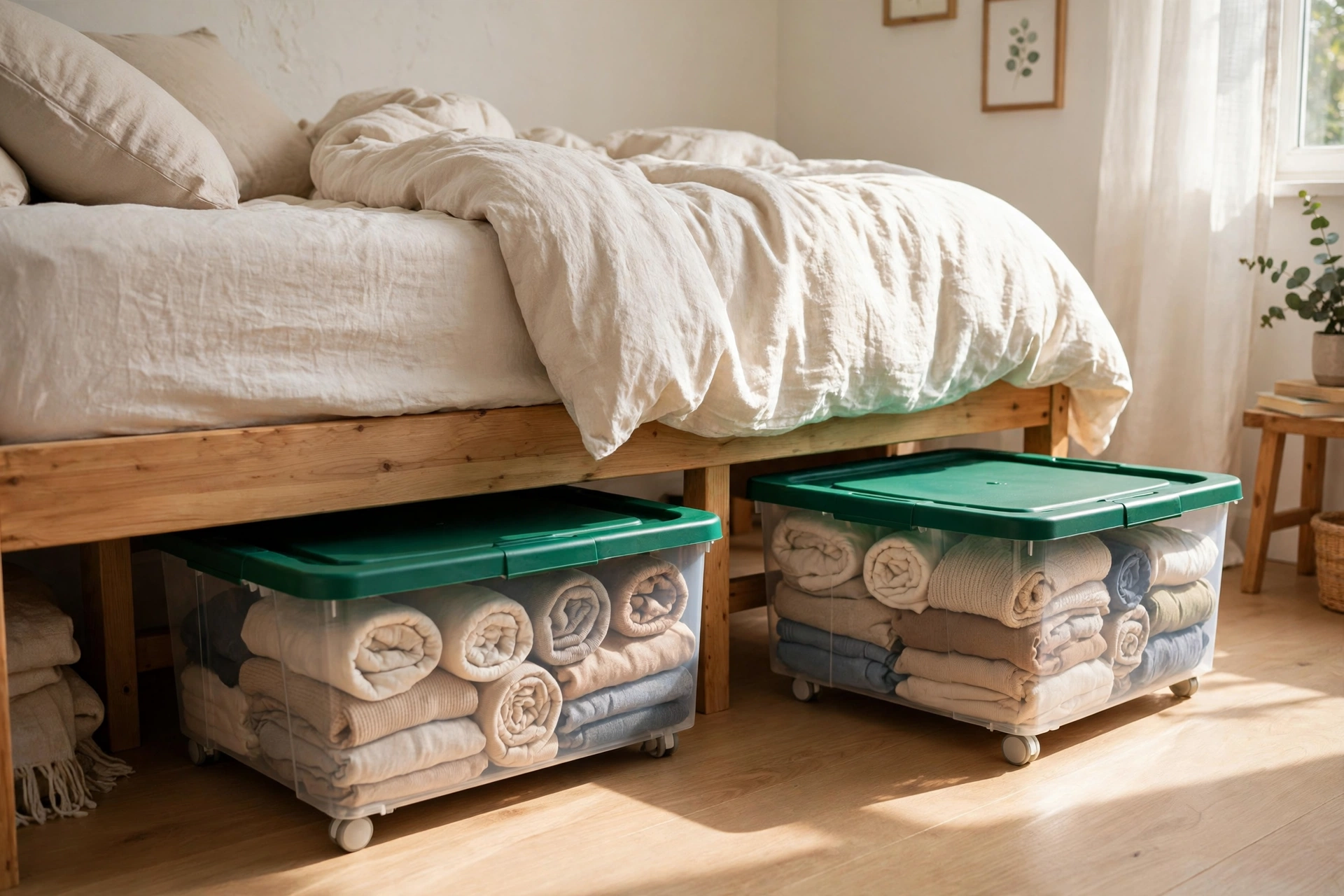
Here is the original math behind this guide. Take a standard queen bed, 60 inches by 80 inches (152 cm by 203 cm), with 7 inches (18 cm) of clearance underneath. Multiply length by width by clearance and you get about 19.4 cubic feet (0.56 cubic metres) of hidden space. That is a whole closet worth of volume sitting under a bed most people never use well. Shallow wheeled boxes, no taller than 6 inches (15 cm), turn that volume into storage you can actually pull out and reach. Deep boxes fail here, because anything at the bottom becomes an archive you never touch.
How this guide was made: it compares the storage families this site has already tested in words, adds measurement rules from live buying guides, and computes the capacity math above from standard bed dimensions. No hands-on product testing is claimed, and no product is rated from a test that never happened.
How to use this small space storage guide
Start with the measure section, not with a shopping cart. Then use the hub map below to jump to the deep dive for your worst spot. Each link goes to a full post on this site, so this guide stays a map and the linked posts do the detailed work. Buy in the order in the buy order section, not in the order a store suggests, because stores sell containers first and solutions second.
The honest opinion up front: the storage industry wants you to buy containers before you know what goes in them. That is backwards, and it is why so many small homes own a shelf of empty bins and still have clutter on every surface. I have found that one well fitted piece beats five pretty bins every time. Buy the furniture or the system first, then buy containers measured to fit it.
The hub map: every storage post on this site, grouped
Start with containers. Our stackable bins we compared post tests six bin types for closets, pantries, and small spaces, and our guide to natural baskets and organizers covers bamboo, rattan, and woven options for rooms where plastic looks wrong. For hidden space, our under bed storage ideas post finds the forgotten volumes in a small home, and our under bed bins compared post rates five bin types for that exact job.
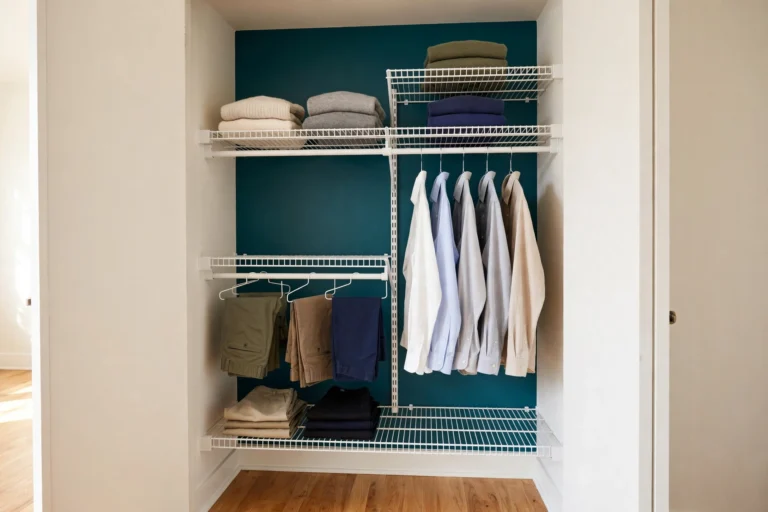
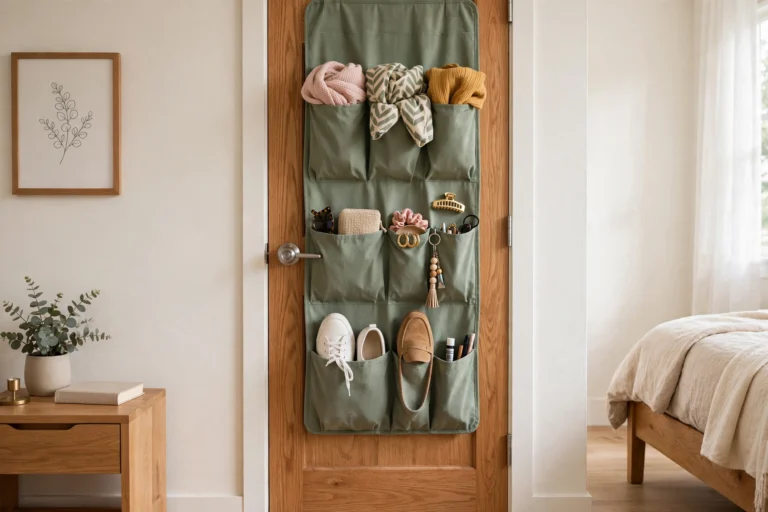
For doors, sinks, and closets, three posts cover the tight spots. Our over the door organizers post rates seven types worth buying and two to skip. Our under sink storage ideas post tames the darkest cabinet in the home. Our reach in closet systems post sizes systems for the standard 4 to 6 foot closet, and it pairs with our small closet organization ideas post for the daily system inside that closet.
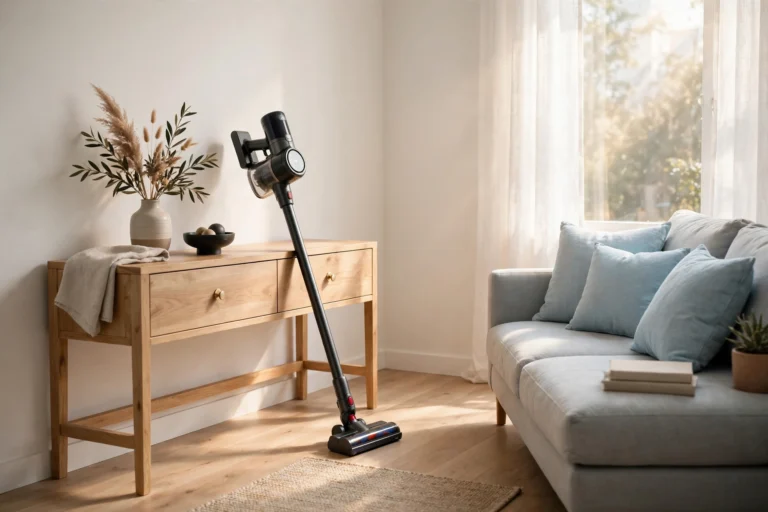
For furniture and appliances, the last group closes the map. Our storage ottoman versus bench post settles which double duty seat actually works in a small room. Our compact vacuums for small apartments post finds cleaners that fit a closet, and our compact dehumidifiers for small apartments post covers damp control, including when a cheap damp trap wins. Finally, our whole home organization system post ties every room together, so use it after this guide if you want the full room by room plan.
Measure first: the five numbers that decide every purchase
Every bad storage purchase I have seen skipped the same step. Nobody measured. So measure these five numbers before you buy anything, and write them on your phone before you open a store app.
First, wall width, measured at two heights, because walls are rarely straight. Second, depth, which is how far the piece sticks into the room. As a rule of thumb from a UK small home storage guide, hallway storage should sit between 25 cm and 35 cm deep (10 to 14 inches), while bedroom storage can run 35 cm to 45 cm deep (14 to 18 inches). Third, height, checked against windowsills, light switches, and radiators. Fourth, clearance in front, because drawers and doors need room to open. Allow 45 cm to 55 cm (18 to 22 inches) in front of a drawer unit, or the drawers will hit furniture every time you pull them. Fifth, delivery access, meaning doorframes, stair turns, and tight corners the piece must pass through.
Three more checks save returns. Check door swing, so a new cabinet does not block a door. Check lid and hinge clearance, so a top loading bin under a shelf can actually open. And check the gap you plan to fill, like the 6 to 8 inch (15 to 20 cm) slot beside a fridge or washer, before you buy a slim rolling cart for it. A cart that is one inch too wide is not a cart. It is a return.

Bins, baskets, and stackables: buy the container last, not first
Bins are the most bought and most wasted storage product in a small home. They work when they fit a shelf, a closet, or a system you already own. They fail when they are bought first and then force you to find a place for them.
Best for: closets, pantries, and shelves where one size repeats. Main advantage: stackable bins turn dead vertical space into usable rows. Watch out for: lids that stop a bin from sliding under a shelf, and bins taller than the shelf opening by half an inch. Verdict: buy stackables only after you know the shelf height, and buy one first to test the fit before you buy the set.
Baskets play a different role. They look good in rooms where storage stays visible, like living rooms and bedrooms, and natural fibres soften a room that plastic hardens. But baskets hide less than closed bins, they collect dust in open weave, and they cost more per litre of storage. Use baskets where you see them every day and closed bins where you do not. Label every closed bin. An unlabeled bin is just a box you will open six times looking for one thing.
Hidden storage: under the bed, behind doors, under the sink
Hidden storage wins in small homes because it adds capacity without adding visual weight. Start under the bed, where the math in the intro already showed about 19 cubic feet waiting. Use shallow wheeled boxes, keep one category per box, and pull the box fully out before you dig. If you have to kneel and fish, the box is too deep or too full.
Behind doors is the second hidden win. Over the door racks hold shoes, cleaning supplies, pantry jars, and accessories in space that was doing nothing. Check two things first: the door must still close without rubbing, and the rack must not swing or rattle every time the door moves. Heavy racks on hollow doors are a bad mix, so keep the load light or pick a door with a solid core.
Under the sink is the hardest hidden spot, because pipes eat the middle of the cabinet. The fix is to work around the pipes, not against them. Use stackable shelves that straddle the pipes, a small turntable for bottles you grab daily, and a door mounted rack for spray bottles. Measure the pipe position before you buy, and leave the trap and shut off valves reachable. A tidy under sink cabinet that blocks the shut off valve is a flood waiting for a plumber.
Closets and furniture that store: systems, ottomans, benches
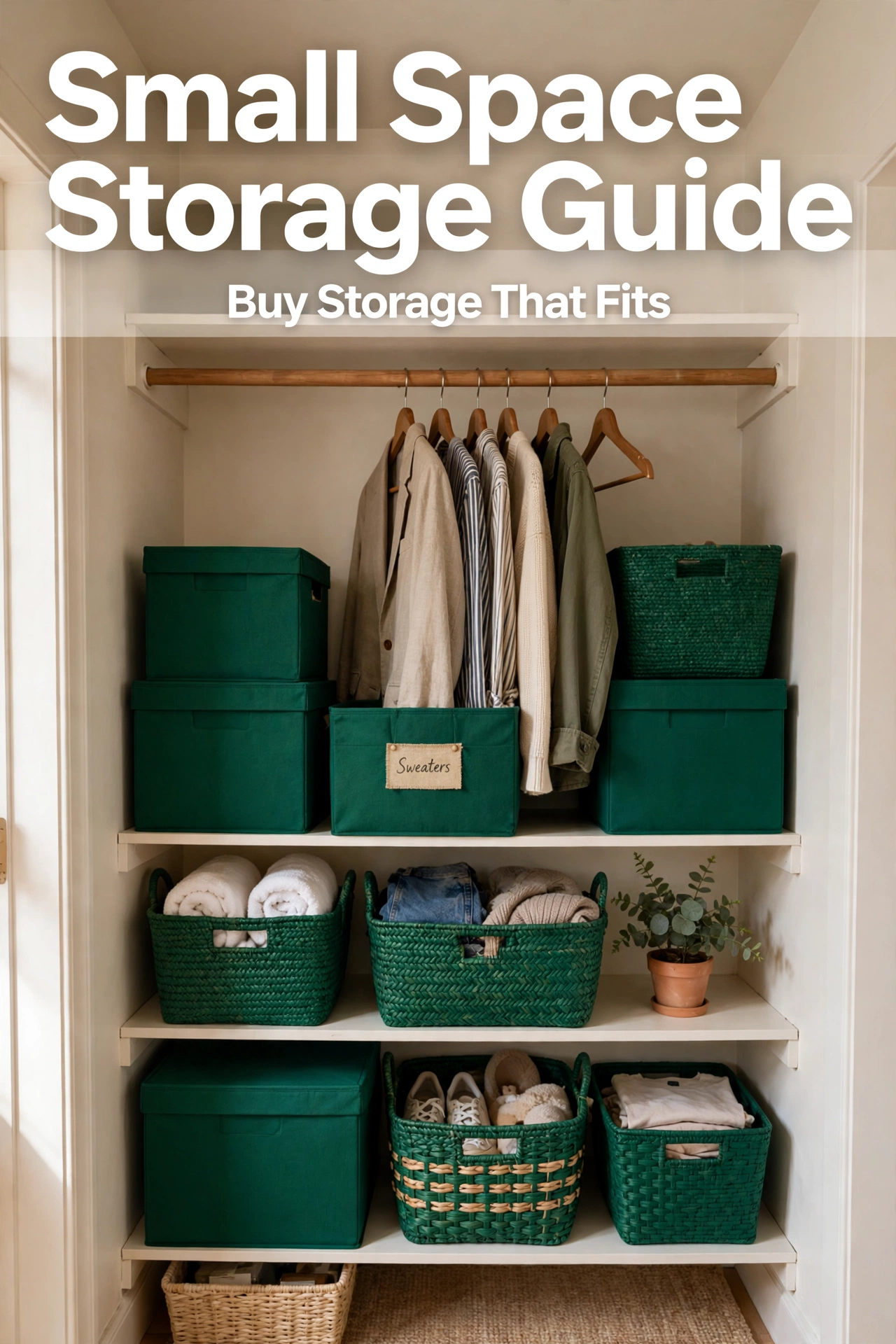
A reach in closet is the best storage buy in many small homes, because it already exists and just needs a better inside. A standard 6 foot (183 cm) closet with a double hang setup gives about 12 feet (366 cm) of hanging rod, which doubles shirts and trousers without touching the floor. Add one shelf above the rods for seasonal bins and one narrow tower for folded clothes, and most small closets stop feeling small. The mistake is buying a full custom system before you know what you hang versus fold. Count your hanging clothes first, then size the rods.
Furniture that stores earns its floor space twice, but only if the storage part is easy to reach. Best for: living rooms and bedrooms where a seat or a table can also hold blankets, games, or shoes. Main advantage: an ottoman or bench hides clutter in plain sight. Watch out for: lids that are heavy, hinges that pinch, and interiors so deep that the bottom layer never gets used. Verdict: pick the ottoman when you want soft seating and blanket storage, and pick the bench when you want a hard surface by the door for bags and shoes. Our ottoman versus bench post works through that choice in full.
One safety rule matters for every tall storage buy. Anchor tall bookcases, dressers, and storage towers to the wall, especially in homes with children. The US Consumer Product Safety Commission urges Americans to anchor TVs and furniture such as bookcases and dressers securely to the wall, and notes that anti-tip kits cost $20 or less. You can read their full guidance on the CPSC Anchor It page. Renters can use no drill adhesive or tension options where the lease forbids holes, but a tall unanchored tower is not worth the risk.

Appliances need homes too: vacuums, dehumidifiers, cleaning gear
Small homes fail on appliance storage because appliances are bought for cleaning, not for fitting anywhere. A vacuum that lives in the middle of a room will annoy you daily, and a dehumidifier with nowhere to drain will sit unused in a corner. So plan the home for the appliance at the same time you buy it.
Best for: stick vacuums and compact canisters that hang or stand in a closet. Main advantage: a vacuum with a wall mount or a slim closet slot gets used more, because getting it out stops being a chore. Watch out for: cord length, dustbin emptying space, and attachments that need their own bag or hook. Verdict: measure the closet slot before you pick the model, not after, and keep attachments on the machine or on one hook beside it.
Dehumidifiers follow the same logic, with one extra check: drainage and airflow. A unit jammed against a wall cannot breathe, and a tank you cannot reach will not get emptied. In a mildly damp room, a small damp trap can win on cost and simplicity, which is why our dehumidifier post names that case honestly. Cleaning gear deserves the same treatment: one caddy or one door rack for sprays and cloths, so cleaning starts with one grab instead of a hunt through three cabinets.
Materials compared: plastic, fabric, bamboo, metal
Material is not just a look. It decides weight, cleaning, durability, and whether the bin survives a damp room or a sunny window.
Plastic. Best for: bathrooms, kitchens, garages, and anywhere wet or dirty. Main advantage: it wipes clean, resists moisture, and costs least per litre. Watch out for: thin plastic that cracks in cold rooms or bows under books, and clear plastic that shows every messy inside. Verdict: the workhorse, best hidden behind doors.
Fabric. Best for: closets and bedrooms where soft bins sit on shelves. Main advantage: light, collapsible, and kind to shelves. Watch out for: fabric that sags when loaded, stains fast, and holds damp smells in a humid room. Verdict: good for clothes and linens, weak for heavy or wet loads.
Bamboo and natural fibre. Best for: visible storage in living rooms and bedrooms. Main advantage: looks warm and designed, and woven baskets breathe. Watch out for: higher cost per litre, dust in open weave, and fibres that dislike constant damp. Verdict: buy for rooms you live in, not for bathrooms or under sinks.
Metal. Best for: rolling carts, utility shelving, and heavy loads. Main advantage: strong, slim, and easy to wipe. Watch out for: rust in damp rooms unless coated, noise on hard floors, and sharp edges on cheap wire racks. Verdict: the best frame material for carts and shelves, less cosy as a visible bin.
Pick one material per zone and repeat it. Mixed plastic, fabric, bamboo, and metal in one closet looks like a clearance sale, even when every piece is good on its own.
What to buy first: a buy order that works in any small home
The buy order in this small space storage guide follows one rule: fix the biggest daily mess first, then move to the next one. Do not buy for every room in one trip.
Step one costs nothing. Edit first, and remove what you no longer use, because storing things you do not need just moves clutter into nicer boxes. Step two is one measuring session, with the five numbers from the measure section written down for each room. Step three is the single worst spot, usually the closet, the entryway, or under the bed. Fix that one spot fully before you start another.
Step four is containers, bought to fit the system you just built, one test piece first. Step five is the second worst spot, and step six is labels and a short reset routine, like five minutes each evening to return things to their homes. A home that resets daily stays tidy on ordinary storage, while a home with perfect bins and no reset habit fills up again in a week.
As a budget guide as of October 2026, plan a starter kit in tiers. Tier one is free: edit, measure, and reuse boxes and jars you already own. Tier two is a single room fix, like one closet system or one set of under bed boxes. Tier three is the whole home pass, room by room, spread over months instead of one weekend. Spreading the spend also spreads the learning, because the second room benefits from what the first room taught you. Check current listings before you buy, because prices and sizes change, and a bin that fit last year may ship in a new size this year.
What to skip
Skip matching bin sets bought before measuring, because a set that does not fit is just matching clutter. Skip deep under bed boxes, since depth you cannot reach is depth you cannot use. Skip open shelving for messy categories, because open storage shows every loose item and makes a small room look busy. Skip a tall storage tower with no anchor plan, especially near a child’s room. Skip single use organizers that hold one gadget, when a simple bin or hook does the same job for less.
Skip buying storage for a room you have not edited yet. Editing first often frees a whole shelf, which means the storage you thought you needed was already in your home. And skip the idea that more storage always helps. In a small home, storage helps up to the point where every item has a home. Past that point, extra bins just hide the fact that you own too much for the space.
What is the best storage for a small apartment?
The best storage for a small apartment is the storage that fits your worst spot and your measurements, not one magic product. Start with a closet system or under bed boxes for clothes and linens, add over the door racks for shoes and supplies, and use stackable bins only where shelf height allows them. Measure wall width, depth, height, door swing, and delivery access before you buy anything.
Should I buy bins before I buy furniture?
No, buy bins after you buy the furniture or the system they will live in. It is easier to buy bins once you know the shelf height, depth, and layout of the piece. Bins bought first often arrive too tall, too deep, or too wide, and then you either return them or reshape a room around a bin. Buy one test bin first if you are unsure, then buy the set.
How do I know if I need more storage or better editing?
If the room already has enough storage but still feels crowded, the problem is usually what is being kept, not how much furniture you own. Try editing first: remove what you no longer use, group what is left by category, and see what space frees up. If every remaining item has no home even after editing, then you need more storage, and the measure section tells you what size to buy.
What storage should I buy first for a small space?
Buy for your biggest daily mess first, which is usually the closet, the entryway, or under the bed. Fix that one spot fully, with a system sized from your measurements, before you move to the next room. A single finished spot teaches you what sizes and materials work in your home, and it keeps the rest of the project from turning into a pile of half used bins.
Conclusion
Good storage in a small home is a system, not a shopping trip. Measure the five numbers, edit before you buy, fix the worst spot first, and buy containers last to fit the system. Use this small space storage guide as the map, and use the linked posts when a single spot needs a deep dive. A small home does not need more bins. It needs the right piece, in the right size, in the right place, and a five minute reset that keeps it working.