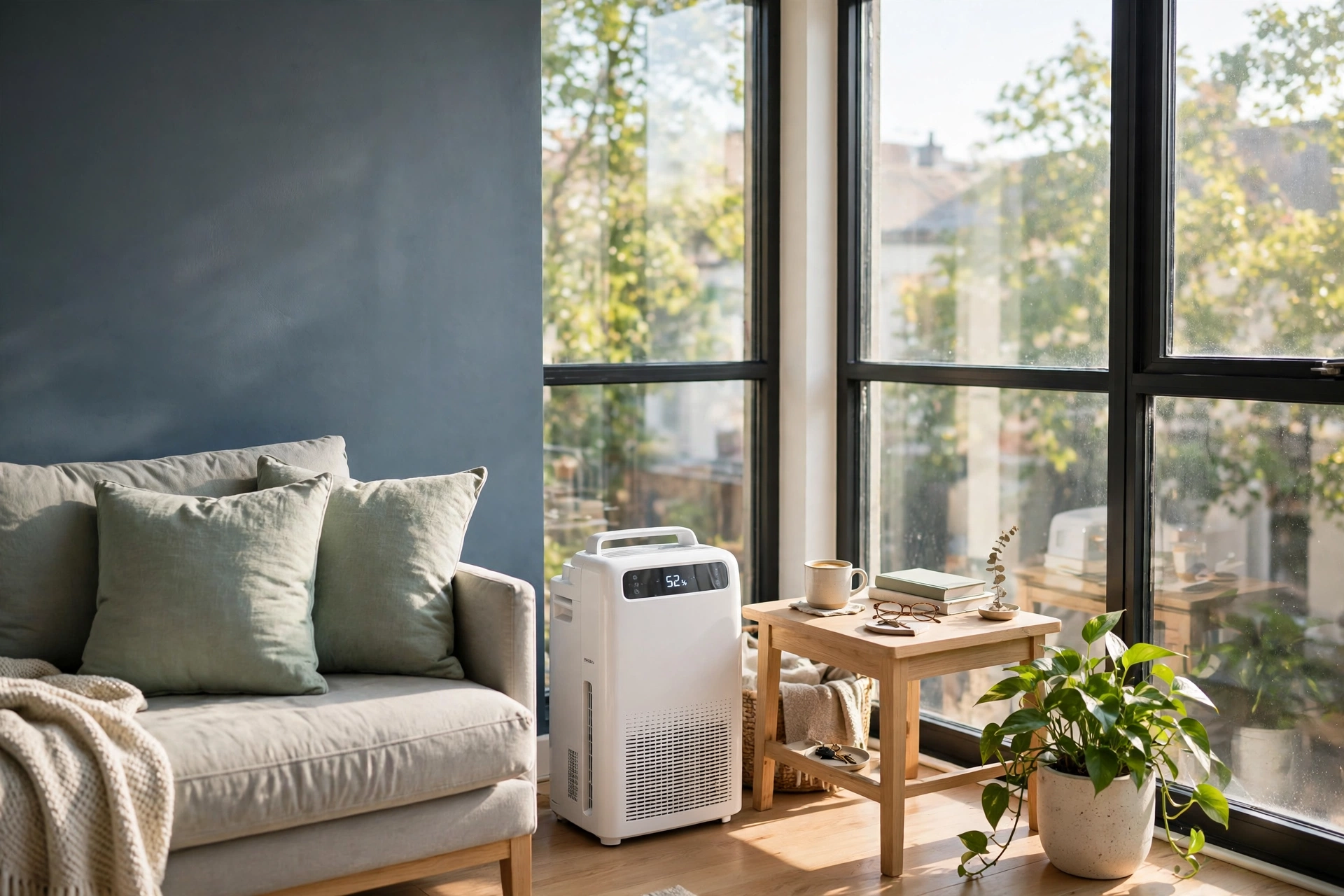
Best Dehumidifier for Small Apartments: 7 Compact Picks (and When a $13 Damp Trap Wins)
If your windows weep every morning, your towels never quite dry, and there’s a faint musty smell you can’t place, you don’t have a cleaning problem — you have a humidity problem. And in a small apartment, it shows up fast, because there’s nowhere for all that moisture to go.
The short answer: for most small apartments, the best dehumidifier is a 20–30 pint compressor unit with a humidistat, sized to your dampest room — not the cheapest mini you can find, and not a 50-pint beast built for a basement. Damp traps have their place, but it’s a wardrobe, not a living room. Below are the 7 compact picks that actually fit small spaces, the sizing math, the running costs, and the honest limits — prices as of October 2026.
Dehumidifier vs Damp Trap: The Short Answer
Both pull moisture out of the air. After that, they barely resemble each other.
| Electric dehumidifier | Damp trap (moisture absorber) | |
|---|---|---|
| How it works | Fan pulls air over cold coils (compressor) or a drying rotor (desiccant); water collects in a tank | Calcium chloride crystals absorb vapor passively; water drips into a tub |
| Extraction | 10–30 litres a day | A few hundred ml over weeks |
| Power | Yes, 250–700W while running | None |
| Noise | 28–47 dB | Silent |
| Cost | $50–$250 | $10–$15 per tub |
| Best for | Whole rooms, drying laundry, real condensation | Wardrobes, cupboards, under-sink cabinets |
A damp trap is a sponge. A dehumidifier is a pump. Cooking, showering, breathing overnight and drying a load of washing release litres of water into the air every single day — a passive tub in the corner cannot keep up with that. Damp traps win only where the space is tiny, enclosed and powerless. Everywhere else, the electric unit wins, and it isn’t close.
How Much Dehumidifier Does a Small Space Need?
Buy by room size, not by brand. The most common mistake in every buying guide I read is undersizing: a too-small unit runs constantly, never reaches its target humidity, and still leaves the windows wet.
- Up to ~500 sq ft (46 sq m) — a damp bedroom or studio: 20–30 pints (10–14 litres) per day.
- 500–1,500 sq ft (46–139 sq m) — a whole small apartment: 30–50 pints.
- A closet, wardrobe or bathroom under 100 sq ft (9 sq m): a mini Peltier unit or a damp trap is enough.
The target matters as much as the size. The US EPA’s mold and moisture guidance says to keep indoor humidity below 60%, ideally between 30% and 50% relative humidity. Buy a $10–$15 hygrometer first and measure for a week — if your place sits at 55% or below, you may not need a machine at all, just better ventilation. If it sits at 65% or higher every morning, you need one, and you need the right size.
One more sizing note: “pints” are measured at warm, humid test conditions (usually 80°F / 27°C and 60% humidity). In a cold British flat or a Canadian apartment in November, a compressor unit extracts far less than its label promises. Cold rooms are where desiccant units earn their keep — more on pick #4 below.
The 7 Compact Picks
1. Best overall for a small room: a 20–22 pint compressor unit
This is the default answer for a reason. A 20–22 pint compressor dehumidifier (Midea’s 22-pint ENERGY STAR model is the usual benchmark, around $200–$230 as of October 2026) covers a bedroom or studio up to about 500 sq ft, has a proper humidistat so it switches itself off at your target, and costs roughly half as much to run as the 50-pint units built for basements. Look for a washable filter, a drain-hose socket for continuous draining, and auto-defrost if your winters get cold. Watch out for: units without a humidistat — they run flat-out forever and waste power.
2. Best mini for a bedroom or closet: a Peltier mini
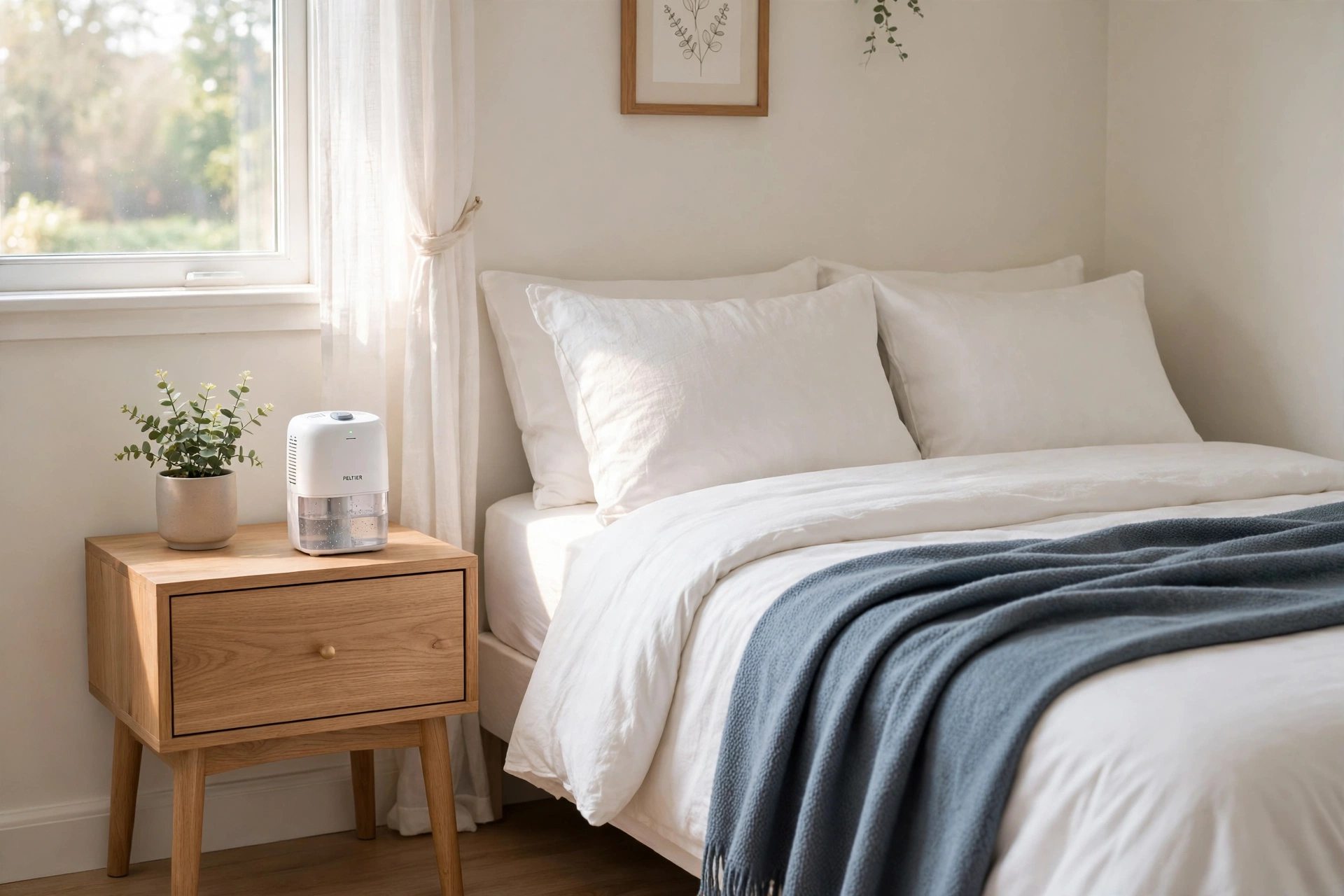
If the damp spot is one small room — a bedroom that fogs up overnight, a closet that smells musty — a Peltier mini like the Pro Breeze Mini (around $70–$90 as of October 2026) is the right tool. It’s about the size of a kettle, pulls roughly 250–500 ml a day, runs at 28–35 dB (quieter than a whisper-quiet conversation), and sips power. Watch out for: the 0.5–1 litre tank needs emptying every day or two in a genuinely damp room, and it will not dry a whole apartment — don’t ask it to.
3. Best for drying laundry indoors: a 12-litre unit with laundry mode
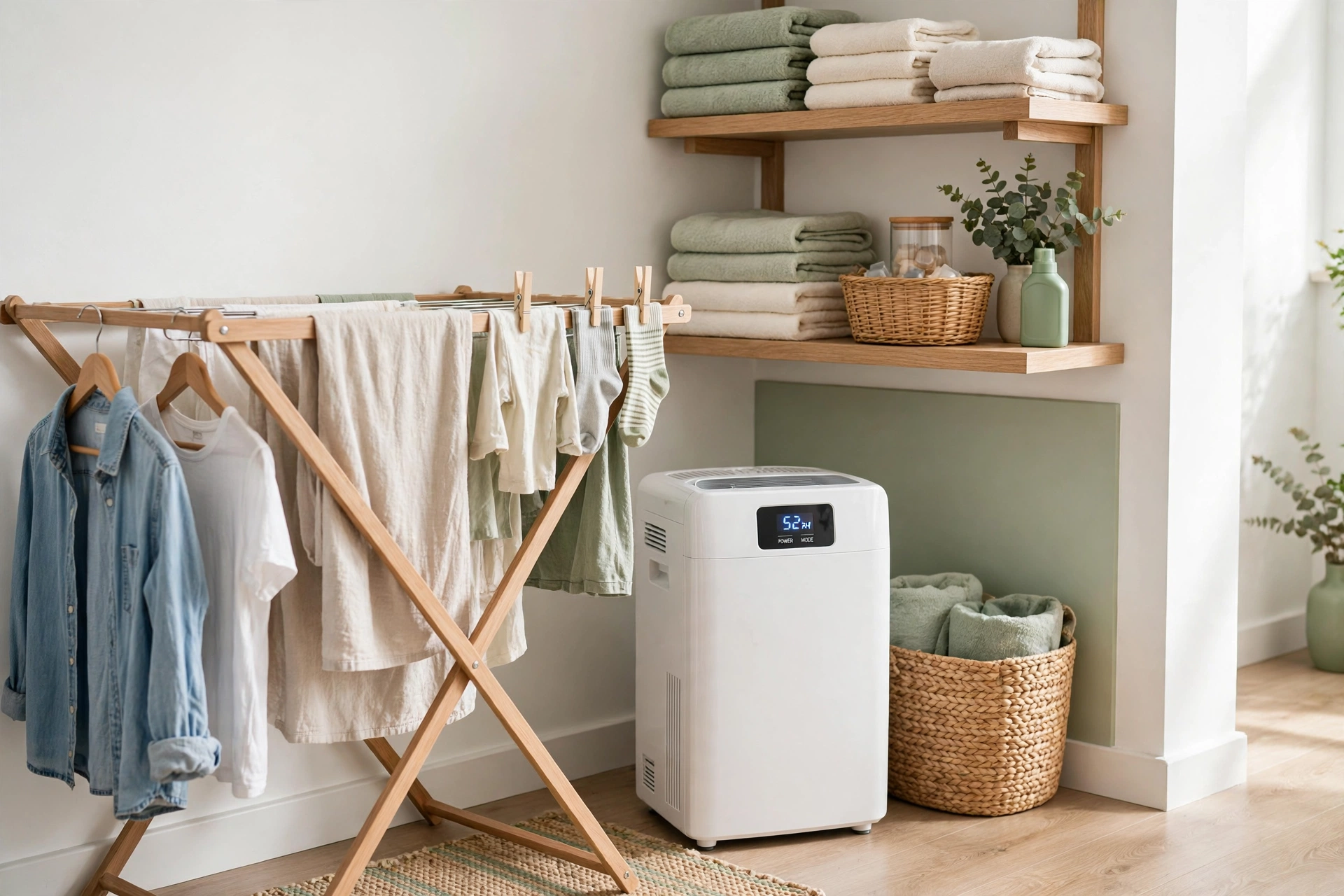
Drying washing inside is the single biggest humidity bomb in a small home, and it’s exactly why drying laundry in a small laundry closet needs a plan, not just a rack. A 12-litre compressor unit with a dedicated laundry mode (Pro Breeze’s 12L at around $140 as of October 2026, or the MeacoDry Arete 12L at around £169) runs its fan hard for a few hours, dries a load in roughly half the time of still air, and stops your clothes picking up that damp smell. Watch out for: laundry mode is loud and power-hungry — run it with the door closed and the timer on, not overnight.
4. Best for cold rooms: a desiccant dehumidifier
Compressor units lose extraction power fast below about 15°C (59°F) — the coils ice up and the machine spends its time defrosting itself. Desiccant units use a drying rotor instead, so they keep working in a cold spare room, an unheated hallway or a chilly basement flat, and they even add a little warmth to the room. Expect to pay $180–$250 as of October 2026 for a compact desiccant model. Watch out for: they use more electricity per litre extracted than a compressor unit in a warm room — buy desiccant for the cold, not for the living room.
5. Best quiet pick for sleeping: a low-decibel compressor with a sleep mode
If the unit lives in your bedroom, noise is the spec that matters. Look for a sleep or night mode under 40 dB and a tank big enough to last the night — the 20-pint class with a quiet mode (Midea’s Cube-style units are the usual example, around $200 as of October 2026) is the sweet spot. Watch out for: quoted decibel figures are measured on the lowest fan speed, which also extracts the least water. Check the noise figure at the speed you’ll actually use.
6. Best budget compressor: a 30-pint value unit
If you want one machine for the whole apartment and you want to spend as little as possible, the 30-pint value class (Vremi’s 30-pint at around $150, or hOmeLabs’ 35-pint at around $180–$200 as of October 2026) is the floor for real whole-flat drying. You get a humidistat, a 1.5-gallon tank and enough extraction for a damp one-bedroom — just without the smart features, the quiet mode or the premium filter. Watch out for: the cheapest units in this class often skip the drain-hose socket, which means emptying a heavy tank every day.
7. Best combo: a dehumidifier with a built-in air purifier
If you’re already buying an air purifier for the same small room, a combo unit saves a whole appliance’s worth of floor space. The MeacoDry Arete One 12L (around £169–£200 as of October 2026) pairs a proper 12-litre dehumidifier with a HEPA filter and laundry mode, and it’s the neatest single-box answer for a small bedroom. It’s the same space-saving logic as the compact vacuum we picked for small apartments — one good machine doing two jobs beats two mediocre ones fighting for floor space. Watch out for: the HEPA filter is a consumable, so check the replacement cost before you fall for the bundle.
Where to Put It (and Where Not To)
Placement is half the performance, and most of it is common sense once you know the rules.
- Put it in the dampest room, not the prettiest one — usually the bedroom or wherever laundry dries.
- Leave 6–12 inches (15–30 cm) of clear space around the air intake and outlet. Pushed against a wall, it suffocates.
- Don’t put it in a closet. It needs air to circulate, and a closet-sized space starves it — that’s what damp traps are for.
- Near the laundry rack if drying indoors is your main problem, and near the worst window if condensation is.
- If it has a drain hose, use it. A gravity hose to a sink or shower drain ends the daily empty-the-tank chore entirely.
- Keep it off the floor in a bathroom. Steam and splashes are its enemy — and the same above-the-fixture shelving logic that works for small bathroom storage tricks applies here: use the walls, keep the floor clear.
Damp Traps: Where They Actually Win
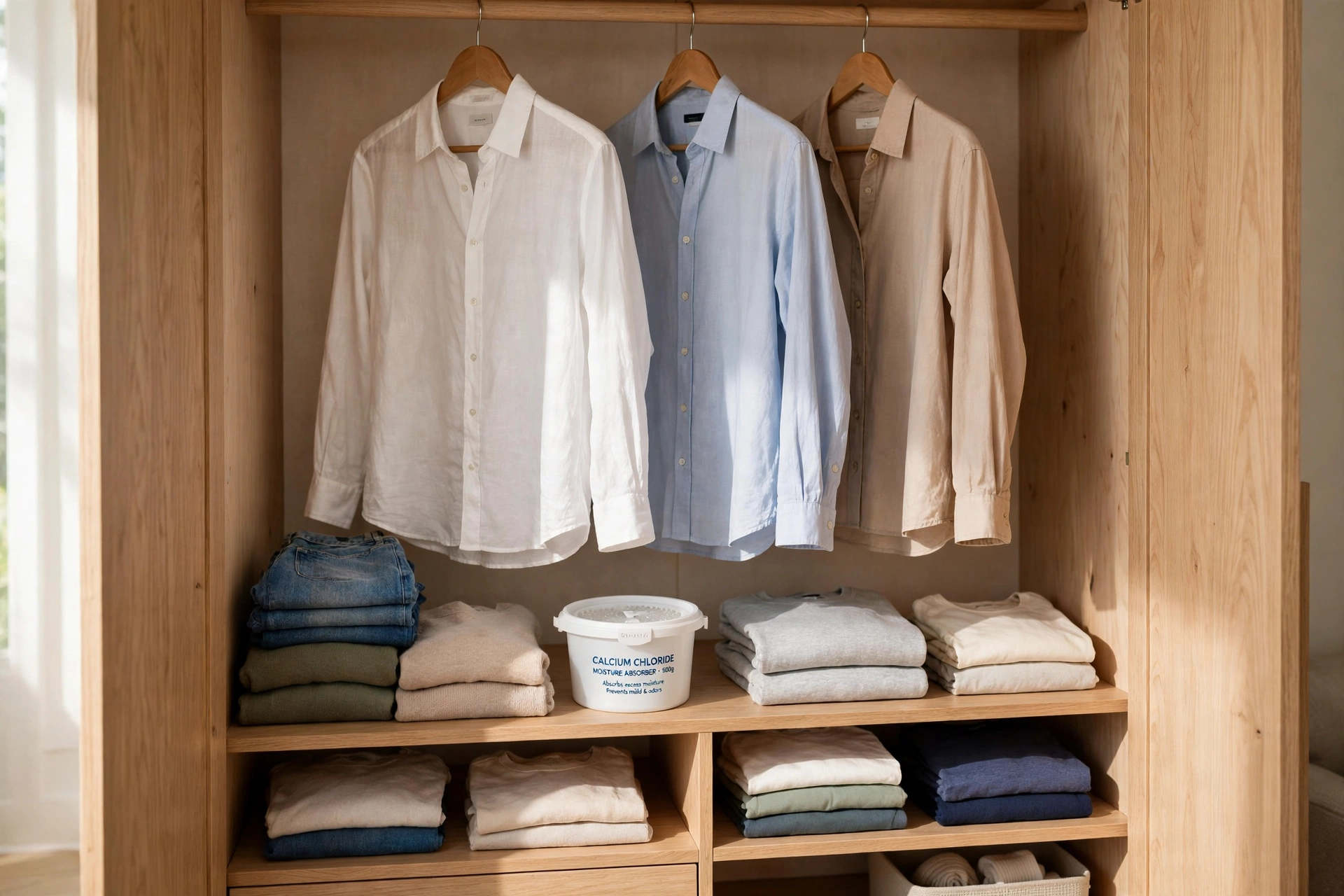
After all that, damp traps still deserve a shelf in the cupboard — literally. A calcium-chloride tub is the right answer in exactly three places: inside a wardrobe (it keeps clothes from smelling musty), inside an under-sink cabinet (where a leak would go unnoticed for weeks), and in a caravan, storage unit or any space with no power socket. They cost $10–$15, last 2–3 months per tub, and need no maintenance beyond swapping them out. Keep them away from children and pets — the collected liquid is a salt solution, not water — and never expect one to dry a room. If a whole room smells damp, a tub in the corner is decoration, not a solution.
Running Costs, Honestly
A dehumidifier is not free to run, and anyone who tells you otherwise is selling one. A 50-pint compressor unit draws roughly 500–700W while running; a 20-pint unit draws roughly 250–300W; a Peltier mini draws under 50W. The trick is that a correctly sized unit with a humidistat doesn’t run all day — it hits 45–50% humidity and switches off. Set the target to 45–50%, not to the lowest number on the dial: chasing 30% just burns electricity for air that feels uncomfortably dry. ENERGY STAR certified models use roughly 15–20% less energy than standard units for the same moisture removed, and over a five-year life the electricity often costs more than the machine — so the certification is worth paying a little extra for, not a gimmick.
What Neither Will Fix
A dehumidifier manages airborne moisture. It does not fix the source of it. If you have a leaking pipe, a failed damp-proof course, penetrating damp through a cracked wall, or rising damp, no machine and no tub will save you — fix the leak first, then dry the room. And a dehumidifier does not kill mold: it only removes the moisture mold needs to grow. Existing mold has to be cleaned off hard surfaces with detergent and water (the EPA’s guidance is explicit on this), and porous materials that are heavily contaminated may need to be thrown away. If the damp patch keeps coming back after you’ve dried the room, that’s not a shopping problem — that’s a building problem, and it’s worth a professional look before you spend another dollar on appliances.
The right setup for most small apartments is simple: one correctly sized compressor unit for the dampest room, a $10 hygrometer to prove it’s working, and a couple of damp traps in the wardrobes. That combination costs less than a single month of running a tumble dryer, and it fixes the problem at its root — which is what organizing your whole home room by room is really about: small systems, in the right places, doing their job quietly.

What size dehumidifier do I need for a small apartment?
For a damp bedroom or studio up to about 500 sq ft (46 sq m), a 20–30 pint unit is the right size. For a whole small apartment up to 1,500 sq ft, go 30–50 pints. Measure first with a $10–$15 hygrometer — if your home sits below 55% humidity, better ventilation may be enough, and no machine will fix an oversized or undersized buy.
Do damp traps actually work?
Yes — but only in small, enclosed spaces. A calcium-chloride damp trap works well in a wardrobe, under-sink cabinet or caravan, where it slowly absorbs moisture over 2–3 months. It cannot cope with whole-room humidity from cooking, showering or drying laundry, because it extracts a few hundred ml over weeks while a room releases litres a day.
Should I leave my dehumidifier on all the time?
No — use the humidistat. Set your target to 45–50% relative humidity and let the machine switch itself off when it gets there. Running flat-out at the lowest setting wastes electricity and dries the air below comfortable levels. The exception is laundry mode, which is designed to run hard for a few hours while clothes dry.
Will a dehumidifier get rid of mold?
No. A dehumidifier removes the moisture that mold needs to grow, which prevents new mold — but it does not kill or remove mold that is already there. Clean existing mold off hard surfaces with detergent and water, dry the area within 24–48 hours, and throw away porous materials that can’t be cleaned. If mold keeps returning, fix the underlying leak or damp source first.