Whole-Home Organization: A Room-by-Room System for Small Houses and Apartments
Organizing a whole home sounds like a month of work. It isn’t — not if you stop treating it as one giant project and start treating it as a system: the same few rules, applied room by room, in the order that gives you momentum instead of exhaustion.
This guide is the map. Each room gets its one job, its biggest win, and a link to the deep guide for that room. Do one room per session, in this order, and a small home organizes itself in about two weeks of short sessions — without buying a single storage product first.
The 5 rules that run the whole system
- One home for every category. If an item type lives in two places, it ends up in neither.
- Store where you use it. Anything that has to travel between rooms eventually just lives on the floor between them.
- Surfaces are not storage. Counters, tables and floors stay clear; storage lives inside furniture and on walls.
- Match the container to the category, then stop buying containers — most “I need more storage” is actually “I need one decided home.”
- Maintain in minutes. A home that needs an hour of upkeep a day will be abandoned by Friday; that’s why the daily layer runs on the 15-minute home reset.
Room 1: The entryway — stop clutter at the door
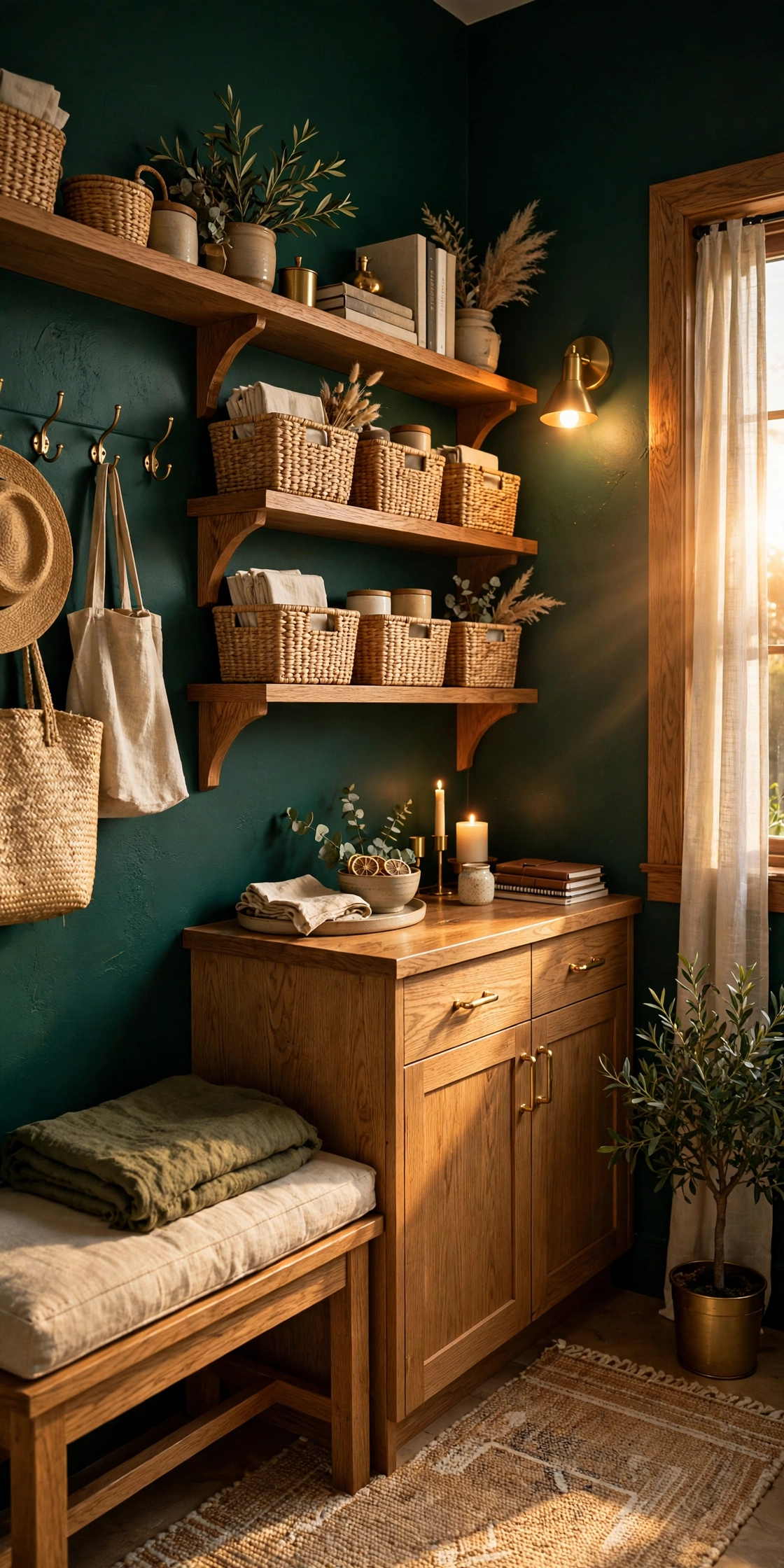
The entryway decides whether clutter enters the home at all. Its one job: catch everything you carry in — keys, mail, shoes, bags — within three steps of the door. A landing strip, a hook rail and one shoe solution do it. The full setup is in our small entryway organization ideas.
Biggest win: shoes. One slim cabinet or bench-with-baskets ends the shoe pile permanently.

Room 2: The kitchen — zones, not cabinets
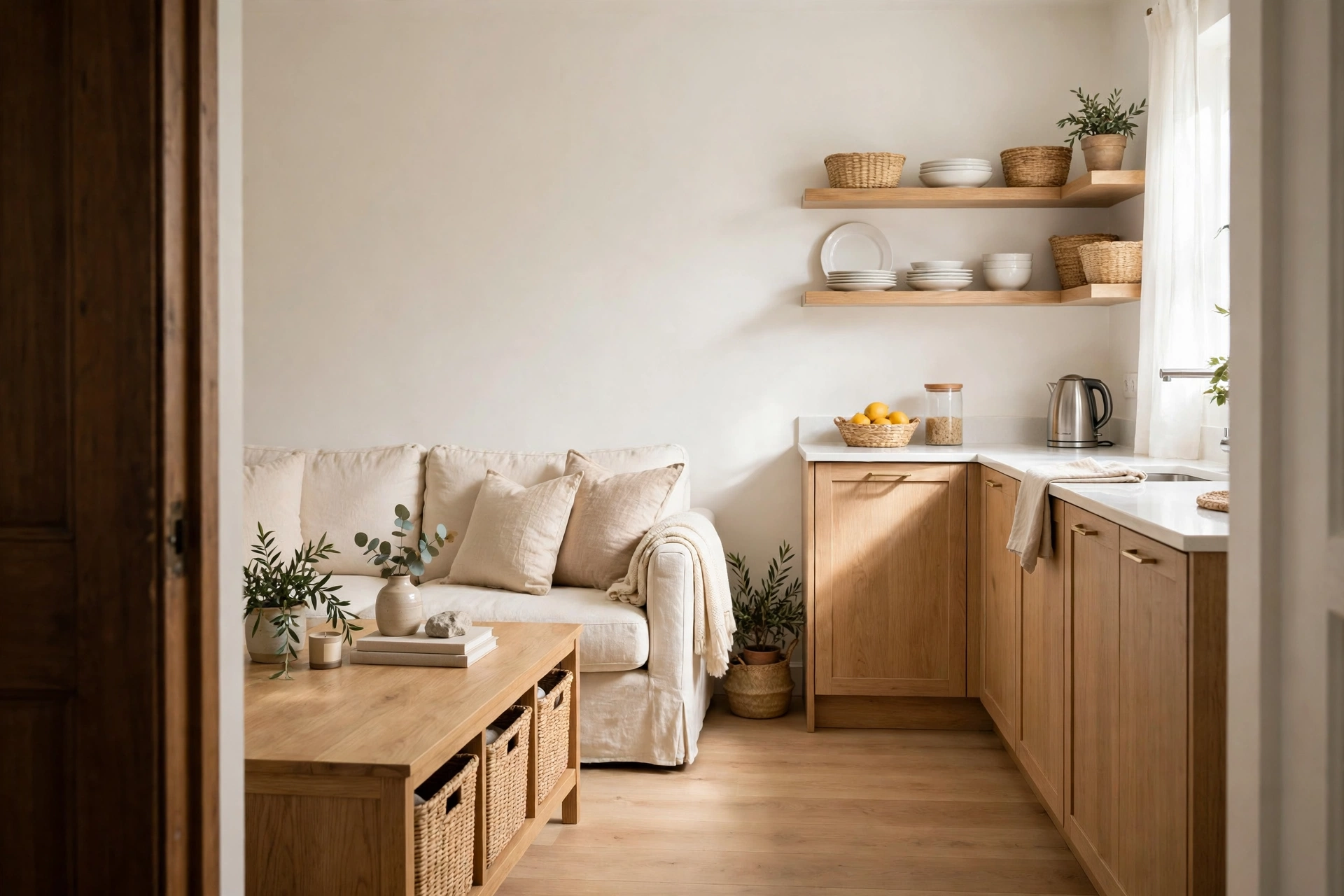
In a small kitchen, organize by task zone (prep, cooking, washing, storing) instead of by cabinet. The constraint most small kitchens share is no pantry — and it’s solvable with door racks, shelf risers and one rolling cart, as the step-by-step in small kitchen organization with no pantry shows.
Biggest win: the counter. One clear work zone changes how the whole kitchen feels.

Room 3: The living room — furniture that stores
The living room holds the home’s shared clutter, so its furniture has to work double: ottomans that swallow blankets, coffee tables with shelves, baskets that match. Layout comes first (where things sit), then organization (where things live) — our small living room layout ideas and small living room organization ideas are the pair to work through.
Biggest win: one lidded ottoman. It’s the room’s overflow valve.
Room 4: The bedroom — calm starts under the bed
A bedroom organizes around sleep and clothes, nothing else. The largest hidden storage in the whole home is under the bed — spare bedding, off-season clothes, the suitcase. The system is in under-bed storage ideas, and the full room pass is in small bedroom organization ideas.
Biggest win: the chair. Every bedroom has one that becomes a wardrobe; a hook rail and a 2-minute nightly reset kill it.
Room 5: The closet — double the rod, halve the chaos
Most closets waste their top third and crowd their rod. A second tension rod, shelf dividers and uniform boxes turn the same closet into twice the storage — the full method is in small closet organization ideas.
Biggest win: one category per shelf, labelled. Finding things fast is what “organized” actually means.

Room 6: The bathroom — vertical or nothing
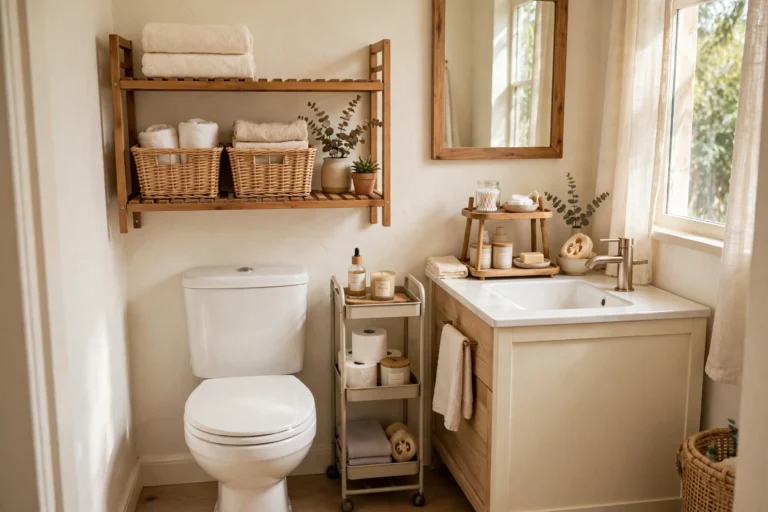
Bathrooms have the least floor and the most small bottles. Everything goes up: over-toilet shelving, door hooks, shower caddies, magnetic strips. The complete set is in small bathroom organization ideas.
Biggest win: the space over the toilet — a whole cabinet’s worth, usually empty.
The order to work in (and why)
Entryway first (stops new clutter), kitchen second (daily pain, daily payoff), living room third, then bedroom, closet, bathroom. One room per session, 30–60 minutes each, declutter before you organize, and organize before you buy anything. If you rent, every system above has a damage-free version — start with the renter-friendly kitchen upgrades approach: nothing drilled, everything reversible.
Six rooms, one system — save this guide for the weekend you start:
Frequently asked questions
Where do I start organizing my whole home?
At the entryway. It stops new clutter at the door, it’s the smallest space, and finishing it in one short session gives you the momentum for the bigger rooms.
How long does whole-home organization take?
For a small home, about six sessions of 30–60 minutes — one per room — spread over one to two weeks. Maintenance after that is minutes a day with a reset routine.
Do I need to buy storage products first?
No. Declutter and assign homes first; most homes need far fewer containers than they expect, and buying first usually means buying the wrong sizes.
How do I keep the whole home organized afterwards?
One rule per room plus a short daily reset. Systems stay organized when putting things away takes seconds and every category has exactly one home.