Storage Ottoman vs Bench: Which One Actually Works in a Small Space?
If your living room or bedroom needs one more seat, one more hiding spot for clutter, and zero extra floor space to spare, you have probably stared at the same two listings: a storage ottoman and a storage bench. They look like cousins, they cost roughly the same, and both promise to solve the problem. They are not the same piece of furniture, though, and picking the wrong one is how a small room ends up with a beautiful box that nobody sits on and nothing fits inside.
The short answer: a storage ottoman wins in most small spaces. It is lower, softer, easier to move, and it does three jobs — footrest, extra seat, and hidden storage — in the footprint of a single cushion. A storage bench wins only when you need a longer seat (at the foot of a bed, along a wall, or in an entryway) or a harder, flatter surface that works as a table. If you can only buy one, buy the ottoman; if you have a long empty wall or a bed that needs a landing strip, buy the bench.
Ottoman vs bench at a glance
| Storage ottoman | Storage bench | |
|---|---|---|
| Typical size | 30–43 in long (76–109 cm), 15–18 in deep (38–46 cm), 15–18 in tall (38–46 cm) | 36–48 in long (91–122 cm), 14–18 in deep (36–46 cm), 17–19 in tall (43–48 cm) |
| Storage | 20–42 gallons (76–159 L) in folding models | 15–30 gallons (57–114 L), often shallower |
| Seats | 1–2 people | 2 people comfortably |
| Best as | Footrest, coffee-table stand-in, extra seat | Bed-end seat, entryway seat, hallway storage |
| Moves easily? | Yes — most are light and some fold flat | Rarely — heavier, and meant to stay put |
| Typical price, as of October 2026 | $25–$90 | $60–$150 |
What a storage ottoman actually is
A storage ottoman is a cushioned box with a lift-off or hinged lid. Most sit 15 to 18 inches (38–46 cm) tall — about knee height — and the lid is the seat. The most useful ones for small rooms are the folding kind: a fabric-covered frame with MDF panels that collapses flat when you don’t need it. That matters more than it sounds. A rigid bench occupies its footprint 365 days a year; a folding ottoman can slide under the bed or behind a door between uses.
Capacity is where ottomans quietly beat benches. The folding bench-style ottomans sold as of October 2026 commonly hold 30 to 42 gallons (114–159 L) — enough for two bulky winter comforters, a full set of board games, or a season’s worth of throw blankets. Smaller round ottomans hold far less, sometimes under 10 gallons, so check the listed volume before you buy, not just the outside dimensions. A good rule from our own testing habit: if the listing doesn’t state gallons or liters, assume the storage is decorative.
IKEA’s rattan PS 2026 ottoman is another real example — Hunker reports its interior holds 21 gallons: https://www.hunker.com/2273608/ikea-ps-ottoman-with-storage/
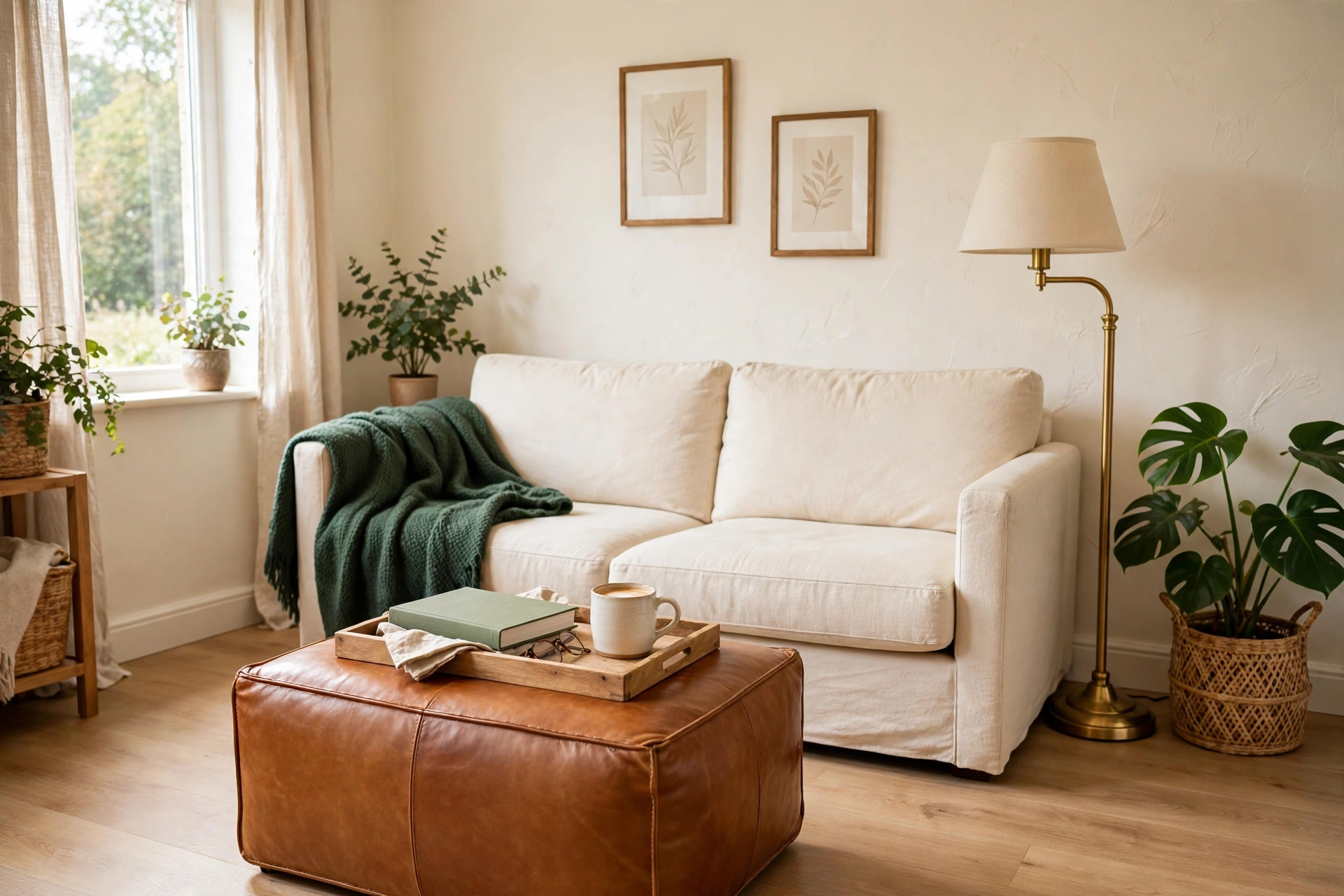
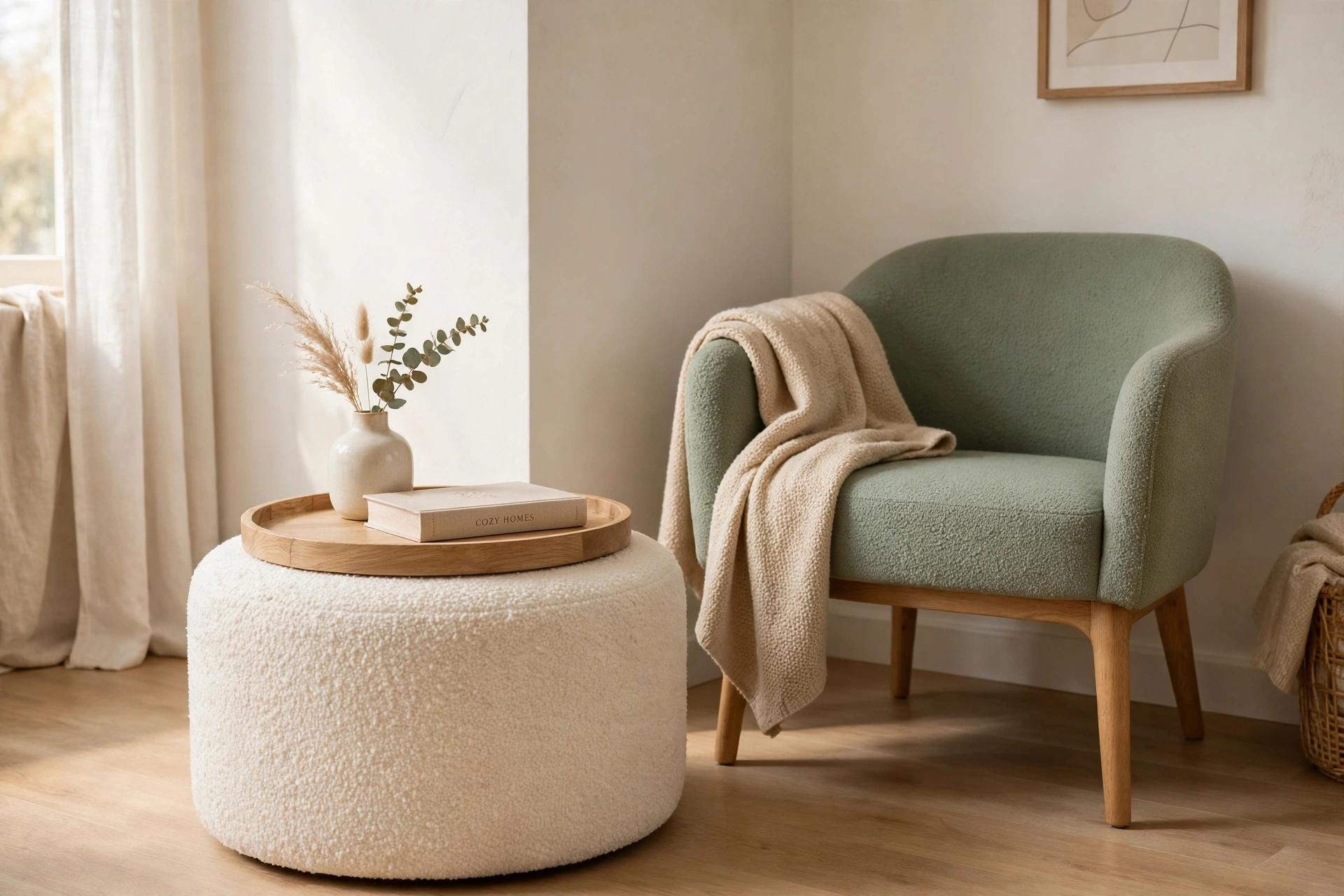
Ottomans also forgive bad layouts. A round one softens a tight corner where a rectangular bench would jut into the walkway, and because the top is padded, it doubles as the extra seat when friends drop by — no bruised shins, no wobble. Put a tray on top and it becomes a coffee table; take the tray off and it’s a footrest again. That flexibility is exactly why it shows up in nearly every one of our small living room organization ideas.
What a storage bench actually is
A storage bench is the longer, firmer sibling. It is built to sit against a wall, at the foot of a bed, or in an entryway, and to look like furniture rather than a cushion that got ambitious. The seat is usually wood or firm foam, which makes it better as a surface: you can set a bag, a book, or a pair of shoes on it without everything sliding off.
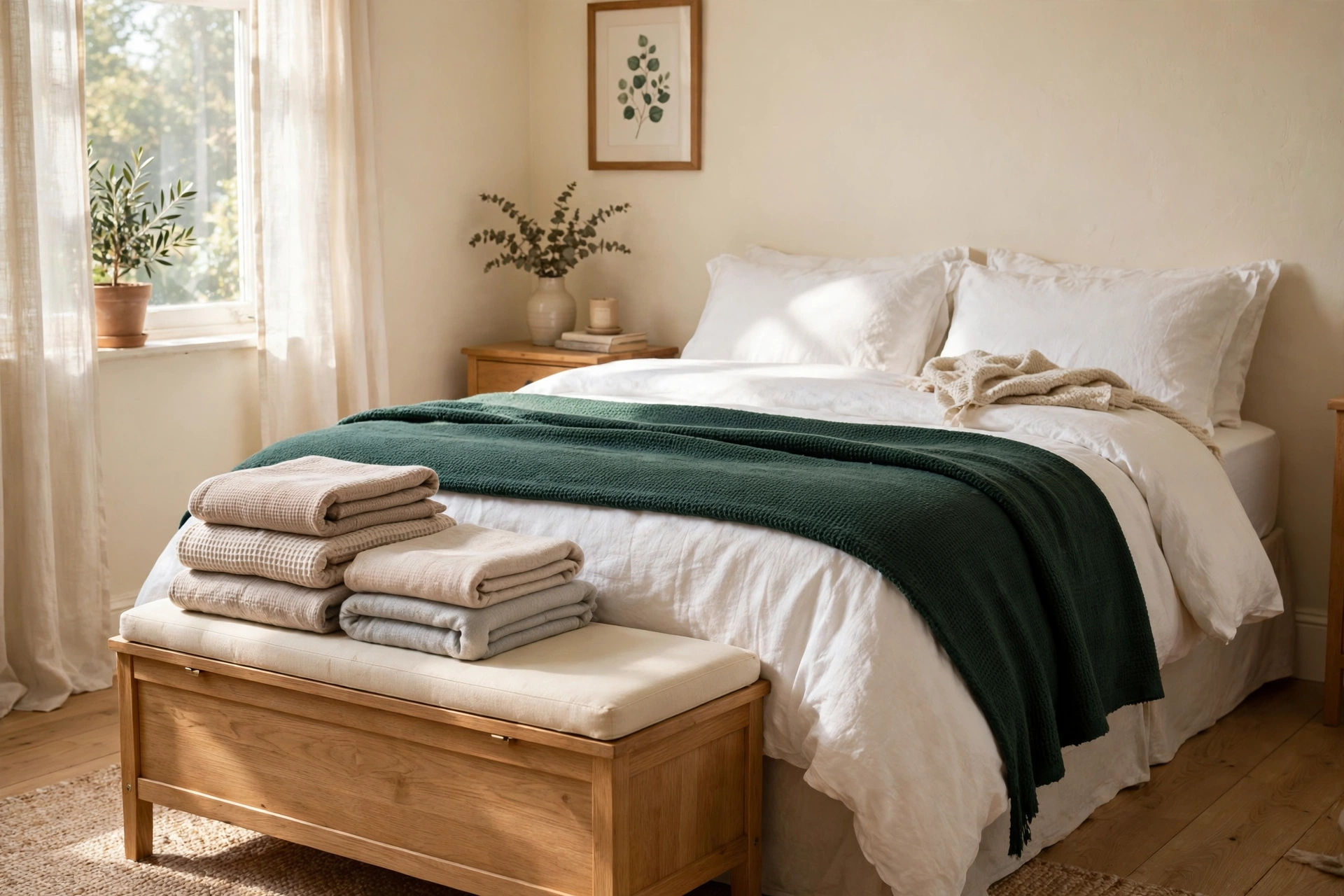
The trade-off is capacity and commitment. Benches are longer but often shallower inside — many hold 15 to 30 gallons (57–114 L) — and they are heavy enough that you won’t move them on a whim. That is fine if the spot is permanent. At the foot of a bed, a bench is genuinely better than an ottoman: it spans the width of the bed, gives you a place to sit while putting on shoes, and hides off-season bedding in one long compartment. IKEA’s newer SKOGSTA bench with storage, for example, measures 47¼ inches (120 cm) long and is tested to hold 243 pounds (110 kg) — a proper piece of furniture, not a collapsible box. (See the details in The Kitchn’s write-up of the SKOGSTA launch: https://www.thekitchn.com/ikea-skogsta-bench-with-storage-23753699)
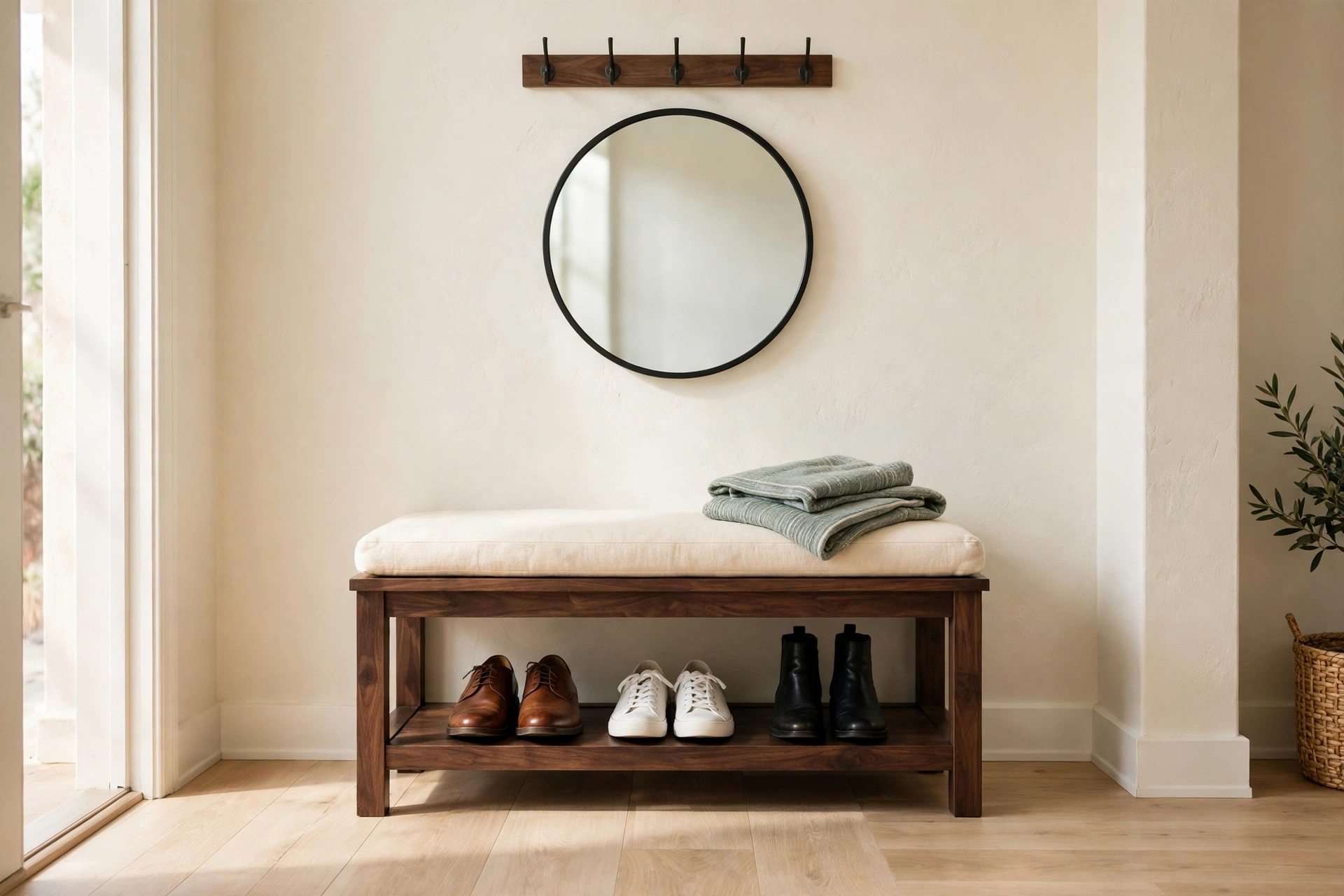
Benches also win in entryways. A bench with an open shelf underneath holds shoes where you can actually reach them, while a closed ottoman forces you to lift the lid every time you come home with muddy shoes. If your entryway is the problem, the bench is the answer — and it pairs naturally with the rest of a tiny entryway setup.
Storage capacity, head to head
Measured honestly, the ottoman usually holds more. Folding ottoman-benches in the 40-inch (102 cm) range hold 30–42 gallons; a wooden bench of the same length holds less because the frame, legs, and shelf eat into the interior. Round and cube ottomans are the exception — pretty, but often under 15 gallons, which is barely two throw blankets.
What matters more than the number is how the storage opens. A hinged lid that stays open while you load it beats a lift-off lid you have to set on the floor. A safety hinge — one that lowers slowly instead of slamming — matters if kids use the piece as a toy box. And a bench with an open lower shelf is better for shoes and bags than a deep closed box, because you can see what’s there. Before you buy either one, decide what will actually live inside it: blankets need depth, shoes need a shelf, remotes and chargers need a shallow tray or a small basket inside the big box. Our stackable storage bins we compared are worth a look if the inside of your ottoman needs its own system rather than one big jumble.
Seating and comfort
If people will sit on it daily, the bench is more comfortable for longer sits — a firm, flat seat at 17 to 19 inches (43–48 cm) is real chair height. An ottoman at 15 inches (38 cm) is a perch, not a chair; fine for ten minutes, tiring for an hour. But for occasional seating — a guest at movie night, a friend perching while you chat — the ottoman is more inviting, because the padded top doesn’t punish anyone who sits on the edge.
Weight capacity is the number sellers exaggerate most. Budget fabric ottomans often list 250 pounds (113 kg); reinforced folding models list 350 to 660 pounds (159–299 kg). Treat the low end as marketing and the high end as the frame’s limit, not the foam’s: a 660-pound frame with thin foam still feels like sitting on plywood after a month. If adults will sit on it every day, look for high-density foam at least 3 inches (8 cm) thick, or buy the bench.
Size: measure first, buy once
This is where most small-space purchases go wrong, so take five minutes with a tape measure before you order anything.
- Walkway clearance: leave at least 30 inches (76 cm) between the piece and the nearest furniture or wall you walk past. A 43-inch (109 cm) ottoman in front of a sofa needs a room that can spare it; in a room under 10 by 10 feet (3 by 3 m), a 30-inch (76 cm) cube or round ottoman is the safer buy.
- Bed-end fit: a bench should be about two-thirds to the full width of your bed and 2 to 3 inches (5–8 cm) shorter than the mattress height, so it reads as part of the bed, not a barricade.
- Coffee-table height: if the ottoman will stand in for a coffee table, its top should sit 1 to 2 inches (2.5–5 cm) below your sofa seat — usually 15 to 17 inches (38–43 cm) tall. Taller than the sofa seat and it stops being a table.
- Door swing and drawers: a bench in a hallway must clear any door that swings toward it, and a deep ottoman must not block a drawer or cabinet door from opening fully.
Measure the spot, then measure the listing — including the depth, which sellers bury at the bottom of the page. A 43-inch ottoman that is 18 inches deep takes up more floor than a 36-inch bench that is 14 inches deep, and in a small room depth is the dimension that eats your walkway.
Price: what to expect, as of October 2026
Prices have stayed fairly flat through 2026, and the tiers are clear. Simple round or cube ottomans run $25–$45. Folding ottoman-benches with real capacity run $40–$90, with the reinforced high-capacity models at the top of that range. Wooden storage benches run $60–$150, with solid-wood models like the SKOGSTA at $149.99 as of October 2026. The cheapest option is rarely the best value here: a $30 ottoman with thin foam and a 250-pound rating will sag within a year, while a $60 folding model with a reinforced frame lasts through several moves. Renters should lean toward the folding ottoman — it packs flat for the next move, which a wooden bench never does.
Which one for which room
- Small living room: ottoman. It is the coffee table, the footrest, and the guest seat in one, and it moves out of the way when you need floor space. Round if the layout is tight, rectangular if it needs to work as a table.
- Bedroom: bench at the foot of the bed if the bed is queen or larger; ottoman if the room is small or the bed is a full or smaller. Either way, keep the blankets you actually rotate in it — not the ones you forgot you owned. Our small bedroom organization ideas cover the rest of the room around it.
- Entryway: bench, with an open shelf for shoes. An ottoman’s lift-off lid is one step too many when your hands are full.
- Studio apartment: ottoman, preferably folding. In one room that has to be everything, the piece that disappears wins — and it can slide behind the sofa to mark the boundary between living and sleeping zones.
- Kids’ rooms and play corners: ottoman with a safety hinge, or a low bench with an open cubby. Avoid heavy lift-off lids little fingers can drop.
What to check before you buy
- Weight rating and frame: MDF panels with metal corner reinforcements beat plain fabric walls. If the listing says “supports up to 250 lbs” and the piece will seat adults daily, step up a tier.
- Lid type: hinged with a safety stay is best; lift-off lids get lost behind furniture; a reversible tray lid turns the ottoman into a real table.
- Fabric: linen-look fabric shows stains; faux leather wipes clean but can feel cold; velvet looks rich and shows every speck of lint. In a house with kids or pets, wipeable wins.
- Feet and floor: hard plastic feet scratch wood floors — add felt pads on day one. Folding ottomans sit flat on the floor, which is gentler on rugs.
- Assembly: most folding ottomans need no tools and set up in under a minute; wooden benches take 20–40 minutes and a screwdriver. If you move often, that difference matters twice a year.
The verdict
Buy the storage ottoman if you want one piece that seats, stores, and disappears — it is the better default for small living rooms, studios, and anyone who moves often. Buy the storage bench if you have a specific long spot for it — the foot of a bed, an entryway wall, a hallway — and you want a firmer seat and a surface that holds its shape. And if you genuinely can’t decide, measure your walkway: under 30 inches of clearance, the ottoman; a long empty wall with nothing on it, the bench. The right piece is the one that fits the room you have, not the room in the listing photo. Once it lands, give it a job in your room-by-room organization system — a piece with no assigned contents becomes a junk drawer with a cushion on top.

Is a storage ottoman or bench better for a small living room?
A storage ottoman is better for most small living rooms. It works as a footrest, an extra seat, and a coffee-table stand-in in one footprint, and folding models can be stored flat when you need the floor back. A bench only wins if you have a long empty wall and want a permanent seat.
How much weight can a storage ottoman hold?
It depends on the frame. Budget fabric ottomans are usually rated around 250 pounds (113 kg), while reinforced folding models list 350 to 660 pounds (159–299 kg). Check the manufacturer’s rating before buying, and remember the foam matters as much as the frame — thin foam feels hard even on a strong frame.
What size storage ottoman fits a small apartment?
For rooms under 10 by 10 feet (3 by 3 m), a 30-inch (76 cm) cube or round ottoman is the safe size. In a larger small living room, a 40 to 43-inch (102–109 cm) rectangular ottoman works as a coffee table if you leave at least 30 inches (76 cm) of walkway around it. Always measure depth as well as length — depth is what eats your walkway.
Can a storage ottoman replace a coffee table?
Yes, if you add a tray. A rectangular ottoman at 15 to 17 inches (38–43 cm) tall with a tray on top holds drinks, remotes, and books as well as a low table, and you can lift the tray off when you want a footrest. Round ottomans and soft-topped cubes need a tray with a rim so things don’t slide off.