Best Natural Storage Baskets & Organizers (Bamboo, Rattan, Woven)
Storage used to mean one thing: a plastic bin. But walk through any well-organized small home in 2026 and you’ll see woven seagrass, rattan, bamboo and linen doing the same jobs — and looking like decor instead of storage. This guide compares the natural materials honestly: what each costs, how long it lasts, where it shines, and where plastic still wins. (Comparing under-bed options specifically? Our best under-bed storage bins guide covers that space type by type.)
Why natural materials took over
Three reasons. They look like furniture, so storage can live in the open in small homes where every inch is visible. They age gracefully — a scuffed rattan basket gains character; a scuffed plastic bin just looks tired. And they feel better to live with: softer edges, warmer textures, none of the chemical smell of cheap plastic. The trade-offs are real too (water, weight limits, price) — those are covered per material below.
Quick comparison
| Material | Typical price (medium basket) | Strength | Water tolerance | Best rooms |
|---|---|---|---|---|
| Seagrass / woven | $12–25 | Light–medium loads | Low | Living room, bedroom |
| Rattan | $20–45 | Medium loads, rigid | Low–medium | Shelves, entryway |
| Bamboo | $15–35 | High for its weight | Medium | Kitchen drawers, bathroom shelves |
| Linen / cotton fabric | $10–20 | Soft goods only | Washable | Closets, kids’ rooms |
| Plastic (for contrast) | $6–15 | High | Total | Garage, under-sink, damp zones |
1. Woven seagrass baskets — best all-round look
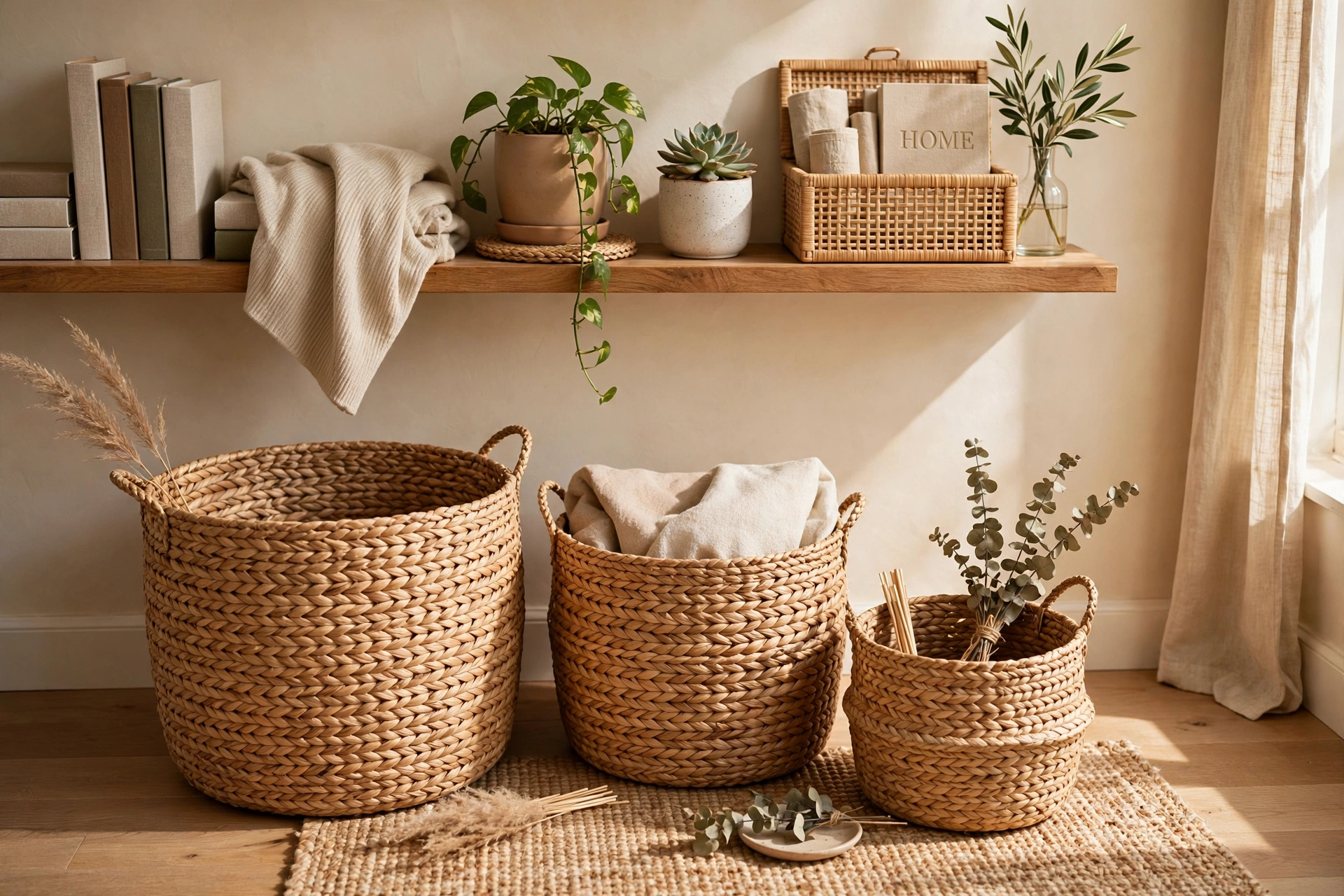
The classic open basket for throws, toys, magazines and the entryway drop zone. Seagrass is light, cheap for its size, and the woven texture hides visual clutter better than any solid bin. Handles matter — woven-in handles outlast stitched ones. Weakness: water. A wet umbrella basket will mildew; line it or choose another material by the door in rainy climates.
2. Rattan baskets — best structure
Rattan keeps its shape, stacks on shelves without slumping, and reads the most “furniture.” It’s the pick for open shelving where the basket IS the drawer. Costs more and cheap rattan splinters — run a hand inside before buying; smooth interior weave means clothes won’t snag. Our closet system uses this family on open shelves for exactly this reason (see the small closet organization ideas).

3. Bamboo organizers — best for drawers & shelves
Bamboo is the workhorse: drawer dividers, utensil trays, shelf risers, spice steps. It’s harder than most woods at this price, shrugs off kitchen splashes better than other naturals, and its clean lines suit modern small kitchens. Expandable bamboo drawer organizers are the single best upgrade for a junk drawer. Weakness: it’s rigid — no squeezing into odd gaps.

4. Linen & cotton fabric boxes — best inside closets
Soft-sided fabric boxes protect clothes, fold flat when empty, and are the only natural option you can toss in the wash. Use them inside wardrobes and on closet shelves where rigid baskets waste corners. They slump when half-empty — keep them filled or choose the versions with rigid inserts. For under-bed soft storage they pair with the fabric bags in our under-bed guide.

5. Where plastic still wins (honesty section)
Under sinks, in damp bathrooms, garages and anywhere leaks happen: sealed plastic is still the right tool. Natural materials in a wet zone will stain, swell or mildew. The smart small home is a mix — natural where you see it, plastic where it’s wet or hidden.
How to choose in 30 seconds
- Visible from the sofa? → seagrass or rattan.
- Inside a drawer or kitchen shelf? → bamboo.
- Inside the closet, holding clothes? → linen/fabric boxes.
- Anywhere damp or leaky? → plastic, without guilt.
Care notes that double their life
Dust with a dry brush monthly; a slightly damp cloth for grime. Keep woven pieces out of direct sun (fades and dries the fibers), and never store them damp. A light mist of water reshapes a squashed seagrass basket — stuff it with towels overnight and it remembers its shape.
Our overall pick
Start with bamboo in the drawers, seagrass in the open, fabric in the closet. That trio covers 90% of small-home storage, looks intentional everywhere, and costs less than one furniture-grade storage unit. Buy one room at a time; matching everything at once is how budgets die.
Going natural with storage? Save these woven beauties for later:

Natural Storage FAQs
Are natural storage baskets durable?
Yes, with the right job. Rattan and bamboo handle daily use for years; seagrass is lighter-duty. They fail early only in damp spots or when chronically overloaded — match the material to the load using the table above.
Can I use woven baskets in the bathroom?
On open shelves for towels and dry goods, yes. Under the sink or anywhere with leaks and standing water, no — choose sealed plastic there and keep naturals in the dry zones.
How do you clean seagrass and rattan baskets?
Dry-brush dust monthly and wipe grime with a slightly damp cloth, then air-dry fully. Never soak them, and keep them out of harsh direct sun, which dries and fades the fibers.
Are natural organizers worth more than plastic?
Where they’re visible, yes — they double as decor and age better. Hidden or wet zones don’t care what the bin looks like, so save the money there and buy plastic.
Keep Organizing
Materials chosen? Put them to work with our small closet organization ideas and the under-bed storage ideas system. Browse all Buying Guides, or see everything new on the blog.