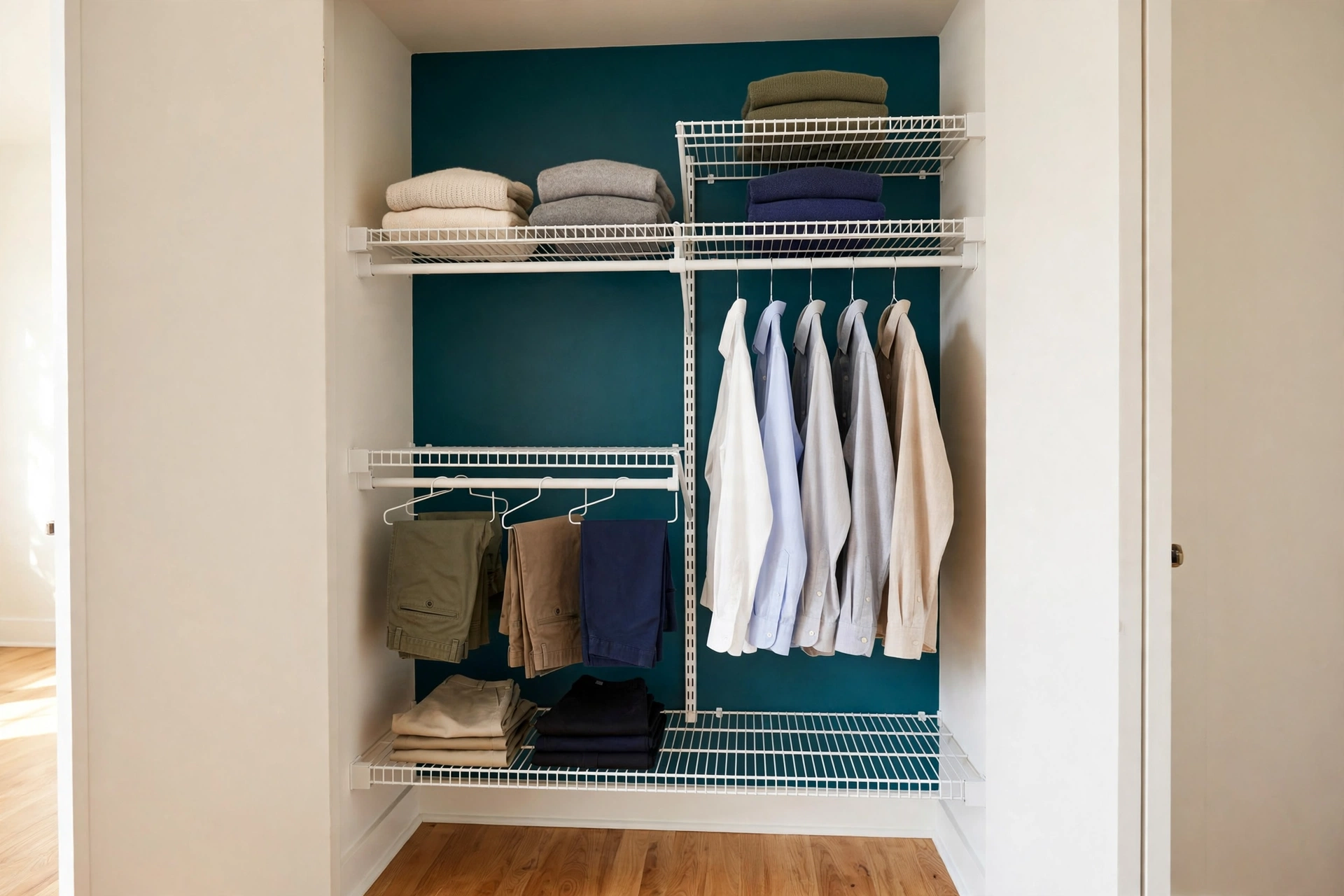
7 Best Reach-In Closet Systems for Small Spaces (That Actually Fit a 4-6 Foot Closet)
Most “best closet system” lists are walk-in lists in disguise. They rank kits by total capacity, which rewards the biggest boxes. That does not help you if your closet is 4 to 6 feet wide with a door that has to close.
So I compared the best reach in closet systems for small spaces on four numbers that actually decide the purchase: depth, door clearance, renter-friendliness, and cost per foot of closet width. Here is the headline finding, computed from live Home Depot prices checked in October 2026. For the same 6-foot reach-in, a ClosetMaid SuperSlide 5636 kit costs about $12.50 per foot of closet width, while a ShelfTrack 2873 kit costs about $23.17 per foot. Same wall, nearly double the price. The cheaper kit is not worse. It just holds less folded storage. That trade-off is the whole post.
I did not install all seven of these in my own closet. Nobody honest can test seven closet systems in a week. What I did do is compare manufacturer specs, live prices, and published review counts, and I say which number each claim comes from. Prices below are U.S. Home Depot listing figures as of October 2026, before tax, delivery, and install.
Measure first: the 4 numbers that decide which reach in closet systems fit
A system fails in a small closet for boring reasons. It is too deep, too wide, or it blocks the door. Measure four numbers before you spend anything.
First, width, wall to wall. Second, depth, back wall to door frame. Third, height, floor to ceiling. Fourth, door swing, where the door lands when it opens. A standard reach-in runs 4 to 8 feet wide, about 24 inches deep, and 8 feet tall. But closets built before 1990 often vary by an inch or two from the framing standard. Measure, do not guess.
Write the numbers on paper and keep them by the laptop while you shop. Kit names lie. A “4 to 6 foot” kit describes a fit range, not the exact shelf size. Your four numbers are the only filter that matters. If you want the full arrange-it-once method for the closet itself, start with our closet organization ideas for the same small space, then come back here to pick the hardware.
The 7 best reach in closet systems for small spaces
I judged the best reach in closet systems by fit first, then by price, because a kit that does not fit a shallow closet is useless at any price. Every pick below fits a 4 to 6 foot reach-in. Each one gets a Best for, a Main advantage, a Watch out for, a Verdict, and a Renter-Friendliness score from 1 to 5. Five means you can take it with you when you move.
1. ClosetMaid ShelfTrack 4-6 ft kit: best overall for small reach-ins
Best for: the standard 4 to 6 foot bedroom closet that needs hanging space and shelves in one kit. Main advantage: it adjusts. The wall track and standards let you move shelves up and down as folded clothes, shoes, and bins change. The SuperSlide rod lets hangers glide the full width without stopping at brackets. The 4 to 6 foot kit gives about 96 inches of hanging space and 144 inches of shelf space, per published specs. It holds a 4.6-star average from more than 1,000 published reviews.
Watch out for: wire shelves need liners for small items, or socks and belts fall through. The included drywall anchors are basic, so use toggle bolts if you miss the studs. Prices run about $119 for the 48-inch kit and about $139 for the 72-inch kit, as of October 2026.
Verdict: the safest first buy for a small reach-in. It is not the prettiest system here, but it is the most forgiving. Renter-Friendliness: 2 out of 5. It mounts to the wall, so it stays with the apartment.
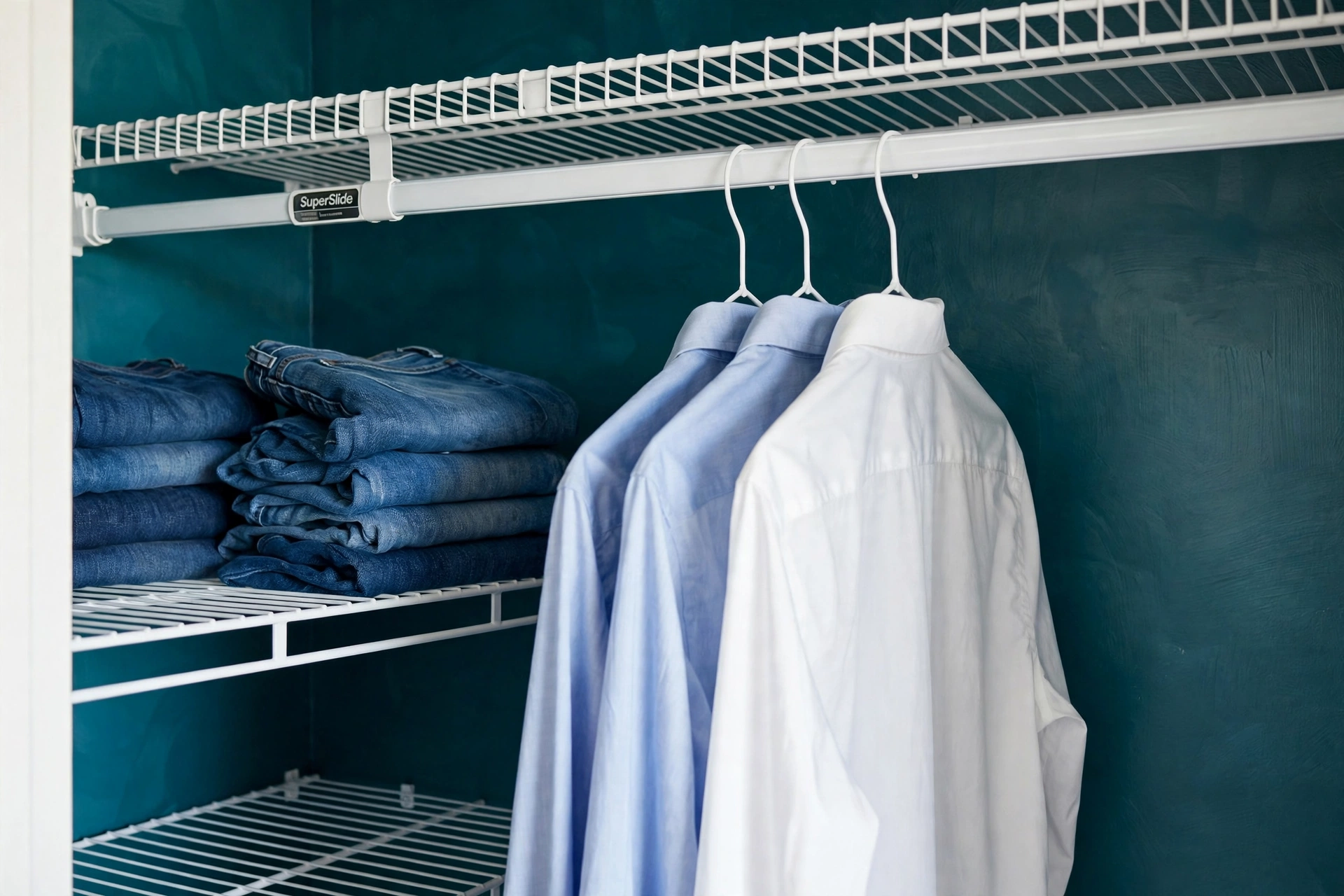
2. Rubbermaid Configurations Deluxe 4-8 ft: best wire system for changing needs
Best for: households whose storage needs change every year. Kids grow, wardrobes rotate, and this kit reconfigures without tools. Main advantage: the telescoping rods slide to fit the wall, and shelves unlock and move in minutes. You get about 22 feet of shelving and 12 feet of hanging space, for under $200. It holds a 4.7-star average from more than 8,000 published reviews.
Watch out for: install is a two-person job on the wider kits, and it holds best when it hits studs. It is wall-mounted, so it is a commitment, not a trial.
Verdict: buy this if you rearrange often and want a system that grows with you. Renter-Friendliness: 2 out of 5.
3. ClosetMaid SuperSlide 5636: best budget pick
Best for: the tightest budget that still wants a real system, not a single rod. Main advantage: price. At about $74.97 as of October 2026, it fits closets from 60 to 96 inches wide and gives a full-width wire setup with hanging rods. That works out to about $12.50 per foot on a 6-foot wall, the lowest cost per foot in this post.
Watch out for: it is fixed-mount, so plan the layout first. Later changes take more effort than on the adjustable ShelfTrack. It gives you hanging capacity first and folded storage second.
Verdict: the best way to spend under $100 on a small closet. Keep about $25 spare for shelf liners and better anchors. Renter-Friendliness: 2 out of 5.
4. ClosetMaid Selectives 5702900 starter kit: best wood-look tower
Best for: a closet that should look like furniture, not a wire rack. Main advantage: the 25-inch laminate tower anchors the wall. It is about 25 inches wide, 14.75 inches deep, and 82.39 inches high, and the kit fits closets from 60 to 120 inches wide. The wide shelves hold stacks of denim, knitwear, and handbags. Price runs about $115 to $129 as of October 2026.
Watch out for: this is laminate, not solid wood, so keep heavy loads reasonable. Drawers cost extra, about $54.98 each, and they can push a budget build past $150 fast. Pair the tower with open rods on each side instead of buying drawers on day one.
Verdict: the best-looking kit under $130, as long as you skip the add-on drawers at first. Renter-Friendliness: 2 out of 5.
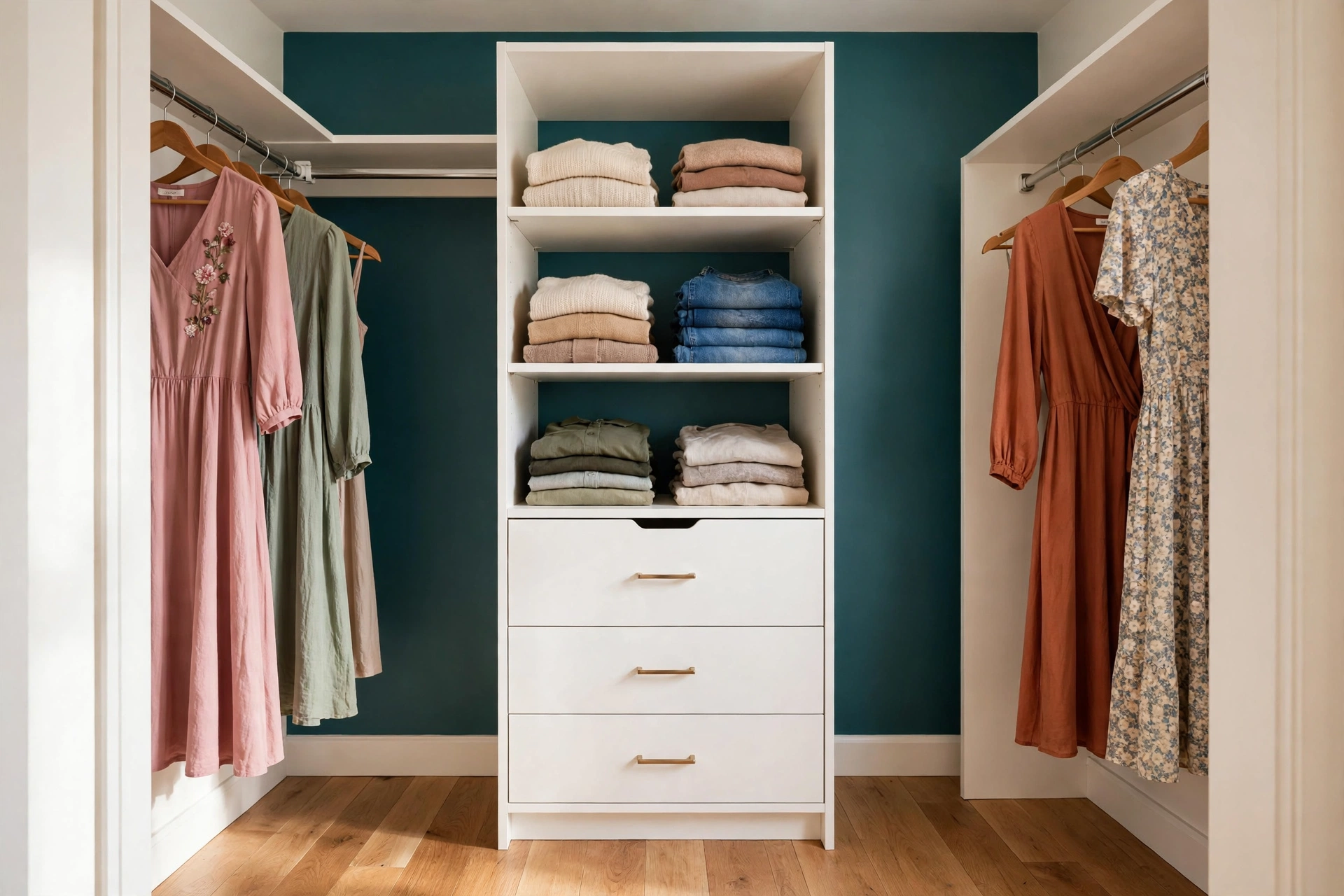
5. IKEA PAX with shallow frame: best built-in look for narrow closets
Best for: a narrow reach-in where a standard-depth system would block the door. Main advantage: the shallow PAX frame is only 13.75 inches deep (35 cm). That leaves the door path clear in closets where a 24-inch system would crowd the opening. The KOMPLEMENT range adds pull-out trays, drawers, and shoe racks that slide out, so you can reach the back without emptying the front.
Watch out for: PAX rewards careful measuring and punishes guessing, so bring your four numbers to the planner. Sliding doors save floor space, but hinged doors need clear floor in front. Price varies by frame and interior, so budget it in the planner before you commit.
Verdict: the most custom-feeling option here, and the only one that truly solves a narrow closet. If you rent, look at the BOAXEL wall track instead. It mounts on a rail, uses no floor frame, and leaves the floor free. Renter-Friendliness: 1 out of 5 for PAX, 2 out of 5 for BOAXEL.
6. Amazon Basics Expandable freestanding organizer: best renter pick
Best for: renters and anyone who cannot drill into walls. Main advantage: zero drilling. The steel frame expands from 57 to 80 inches wide, with 10 shelves and 2 hanging rods. Each shelf holds about 100 pounds. It holds a 4.6-star average from about 17,000 published reviews, and you can take it with you when you move.
Watch out for: it is less stable without the optional wall anchor, and the industrial look does not suit every bedroom. It also eats floor space, so it fits a closet better than a corner of the room.
Verdict: the only pick here that is truly deposit-safe. If your lease bans holes, start here. Renter-Friendliness: 5 out of 5.
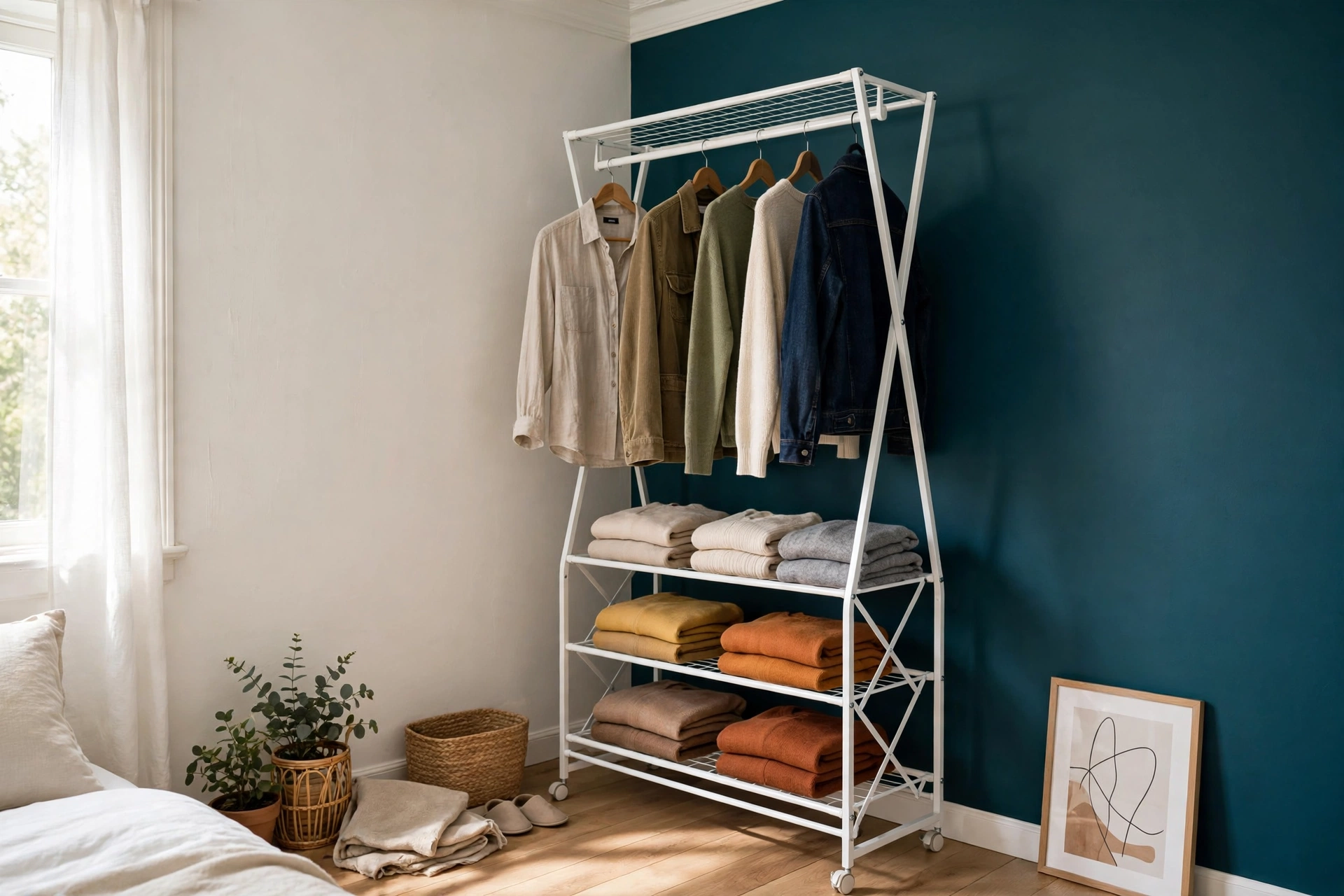
7. VIPEK Classic V6: best heavy-duty freestanding system
Best for: heavy wardrobes, winter coats, and boots that crush lighter racks. Main advantage: capacity. The carbon steel frame holds about 850 pounds in total, with 7 shelves and 4 hanging rods. It configures straight or in an L-shape, which suits corner spaces. It holds a 4.7-star average from about 7,500 published reviews. No drilling is needed.
Watch out for: it is heavy to move once built, and it ships without wheels. The lower rod sits low, so long coats can brush the floor. Measure your longest coat before you buy.
Verdict: the strongest freestanding pick here. Overkill for a light summer wardrobe, and exactly right for a heavy one. Renter-Friendliness: 4 out of 5.
The depth rule the top guides skip: 15 inches beats 24
Here is the number most listicles never mention. Fifteen inches is the closet industry’s most popular reach-in depth, and it is popular for a reason. Hanging capacity is identical at 15, 18, or 24 inches, because clothes hang on the bar at the same width either way. Clothes just stick out about 5 inches at 15-inch depth, which is industry standard.
The difference is what you can see. At 15 inches deep, folded items sit where you can actually see them. At 24 inches, the back half of every shelf goes dark. One more catch: doors only close cleanly in front of full hanging clothes at 24-inch depth. At 15 or 18 inches, doors work in front of shelves and shorter hanging items, but long coats can catch. Check your longest garment against your depth before you order.
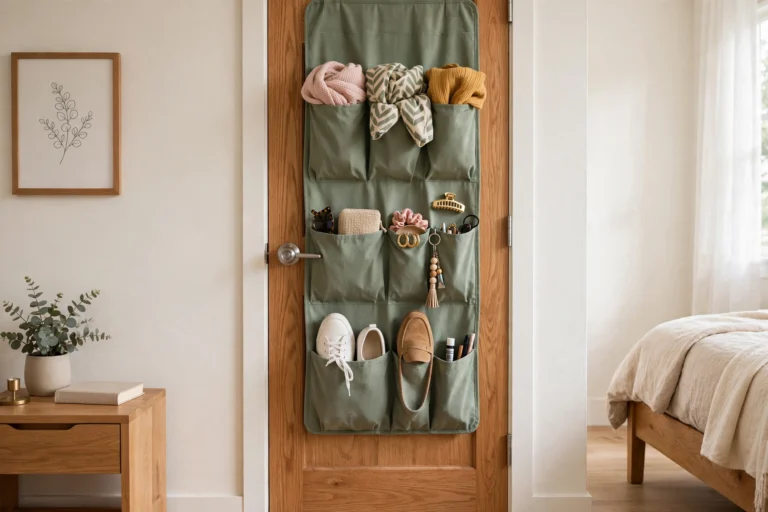
For folded clothes, shelf depth of 12 to 14 inches is standard. Bulky sweaters and large tote bags need 16 to 20 inches. The depth rule comes from the WoodClosets reach-in guide, which lays out the three-zone method this section follows. Top zone above 80 inches for bins and off-season clothes. Middle zone from 40 to 80 inches for hanging. Bottom zone below 40 inches for drawers and shoes. The door itself can carry the overflow with over-the-door organizers that hook on without screws. That layout alone adds about 30 percent capacity over a single hang bar, per the same guide.
What to skip in a small reach-in closet
Skip a wide tower in a 4-foot closet. It eats the wall that hanging clothes need, and the opening feels crowded the day it goes in. A narrow tower or an open-rod layout fits better.
Skip fixed shelves you cannot move. Your wardrobe changes every season, and fixed shelves freeze the closet in its first layout. Adjustable standards cost little more and save a rebuild later.
Skip a 24-inch-deep system in a shallow closet. The shelves look generous on the box, but you lose the back half to shadow, and the doors may not close over long coats.
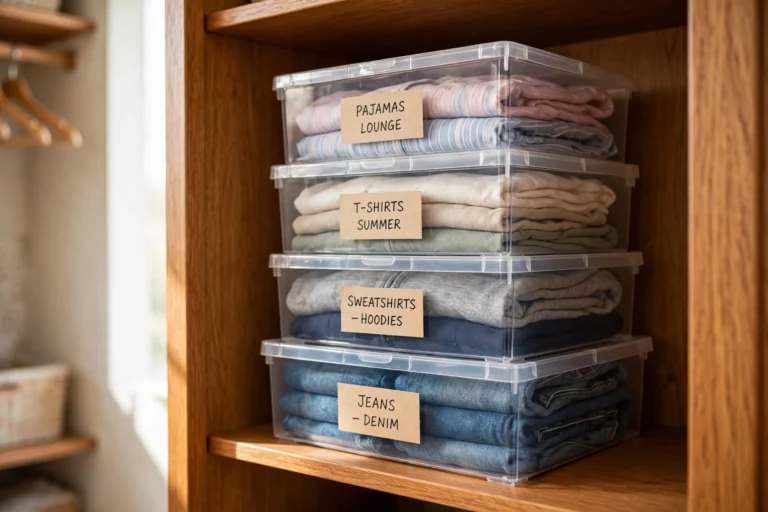
Skip bare wire shelves for small items. Socks, belts, and scarves fall through the gaps. Shelf liners cost a few dollars and fix it. The stackable bins we compared earn their shelf space here, because a bin turns a wire shelf into a solid one.
Skip buying before measuring. A kit’s fit range describes the closet span, not every shelf. The five-minute measure from the top of this post prevents the most common return in this category.
What should the best reach in closet systems cost?
Here is the math for one 6-foot reach-in, using the live Home Depot prices above. Divide the kit price by 6 feet of closet width.
| System | Kit price (Oct 2026) | Cost per foot of closet |
|---|---|---|
| ClosetMaid SuperSlide 5636 | about $74.97 | about $12.50 |
| ClosetMaid Selectives 5702900 | about $115-$129 | about $19.17-$21.50 |
| ClosetMaid ShelfTrack 2873 | about $139 | about $23.17 |
The wire SuperSlide kit costs about half the ShelfTrack kit per foot for the same wall. The ShelfTrack earns the extra money with adjustability and shelf space, not with hanging room. So the honest question is not “which is cheapest” but “do I need the shelves to move later.” If yes, pay the extra $64. If no, bank it.
Budget one more line before checkout. Anchors, shelf liners, and a stud finder run about $25 to $40, and they are not in any kit price above. Prices are U.S. listing figures as of October 2026 and vary by store. Tax, delivery, and install are extra.
The short version
Measure your four numbers first. Width, depth, height, door swing. The best reach in closet systems for a small space is the one that fits your depth, your door, and your lease. Then pick by fit, not by capacity. The ShelfTrack 4-6 ft kit is the best all-rounder for a small reach-in. The SuperSlide 5636 is the best under $100. The Amazon Basics expandable rack is the best pick if you rent and cannot drill. Skip wide towers in narrow closets, skip fixed shelves, and skip any kit you bought before measuring. And if the closet still feels tight after the system goes in, the rest is arrangement, not hardware. Our whole-home organization guide shows how the closet fits into the room-by-room system.
How deep should closet shelves be?
For folded clothes like T-shirts and jeans, a depth of 12 to 14 inches is standard. Bulky sweaters and large tote bags need 16 to 20 inches. For the system itself, 15 inches is the most popular reach-in depth, because hanging capacity stays the same and folded items stay visible.
Will a closet system fit if my reach-in is only 4 feet wide?
Yes. The ClosetMaid ShelfTrack 2087 is built for a 48-inch closet, with two shelves and an adjustable rod layout. In a 4-foot closet, one bay with double-hang rods and a small drawer column roughly doubles what a single rod and shelf hold. Measure the width first, then buy the kit made for that span.
Do I need to remove my old wire shelving first?
Yes. Remove the old wire and patch the wall holes before the new system goes up. Most reach-in installs take 2 to 4 hours with basic tools. Trying to build around old wire leaves brackets in the wrong place and shelves that never sit level.
Is a ready-made or custom closet system better for a small closet?
Ready-made wins for a standard 4 to 8 foot reach-in. It costs less, installs in an afternoon, and the kits above cover every common size. Custom only earns its price when the closet has irregular dimensions or specific needs a kit cannot meet, like a sloped ceiling or an awkward corner. For a typical bedroom closet, ready-made is the right call.