Best Stackable Storage Bins: 6 Types Compared for Closets, Pantries and Small Spaces
Stackable bins sound simple until you’re standing in the aisle (or scrolling at midnight) choosing between forty near-identical plastic boxes. The wrong pick wastes money twice: once on bins that crack, slide or don’t fit your shelves, and again on the replacements. This guide compares the six types worth considering, what each is genuinely best at, and the honest downsides — so you buy once.
How we compare: we judge every type on the same five things — stack stability (does a full stack wobble?), access (can you get into the bottom bin without unstacking everything?), visibility (can you see what’s inside?), footprint fit (standard shelf depths), and cost per litre of storage. Prices below are typical ranges, not affiliate picks — check current prices before you buy, as they move often.
1. Front-opening stackable bins — best for everyday access
Price range: roughly $8–$15 per bin.
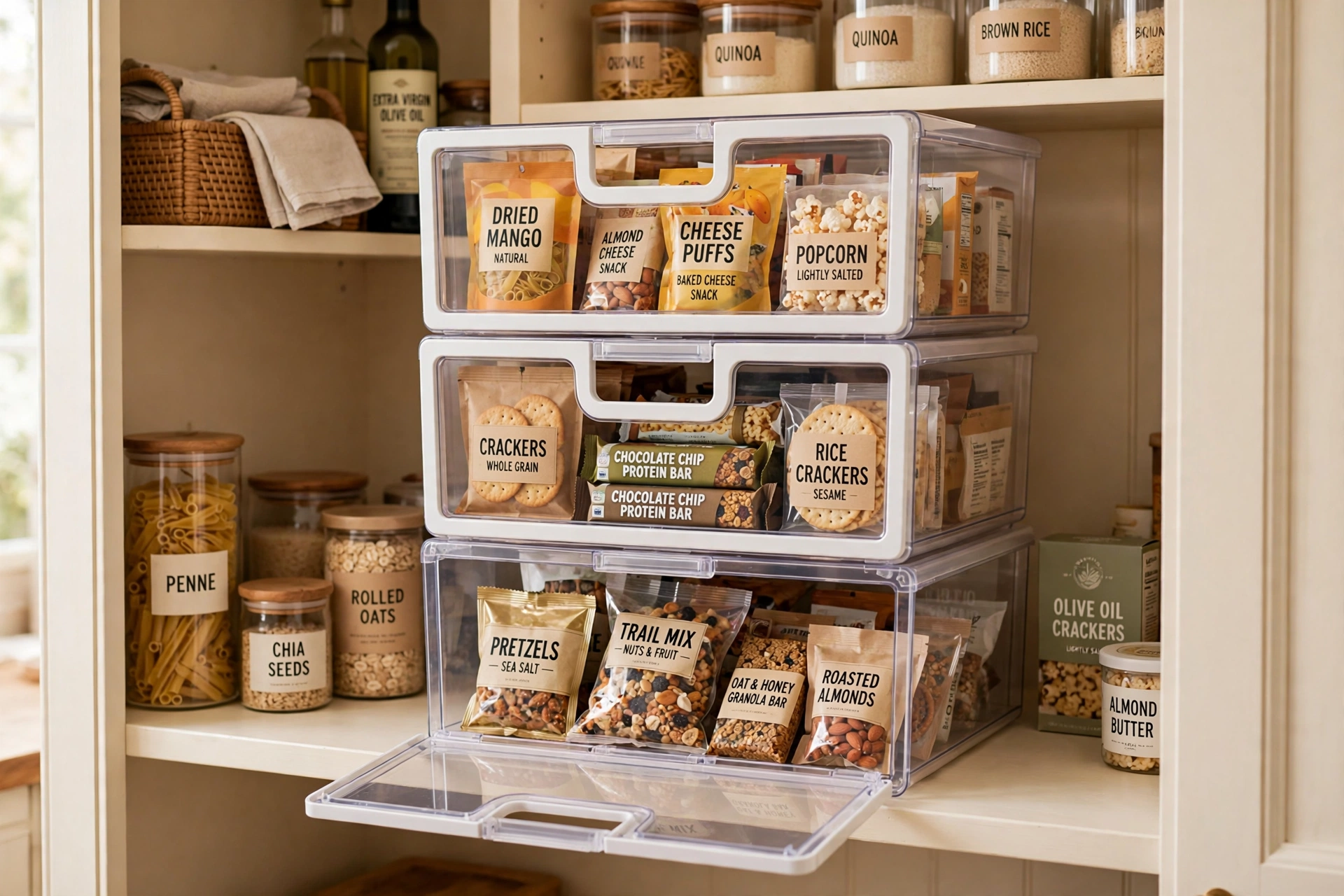
Pros: the angled or door-style front means the bottom bin opens without moving the ones above — the only stackable design that truly works for daily-use items like snacks, cleaning supplies and kids’ things. They interlock, so stacks stay straight.
Cons: the open front holds less and lets in dust; not for long-term storage of fabrics.
Best for: pantries, under-sink cupboards, play areas.
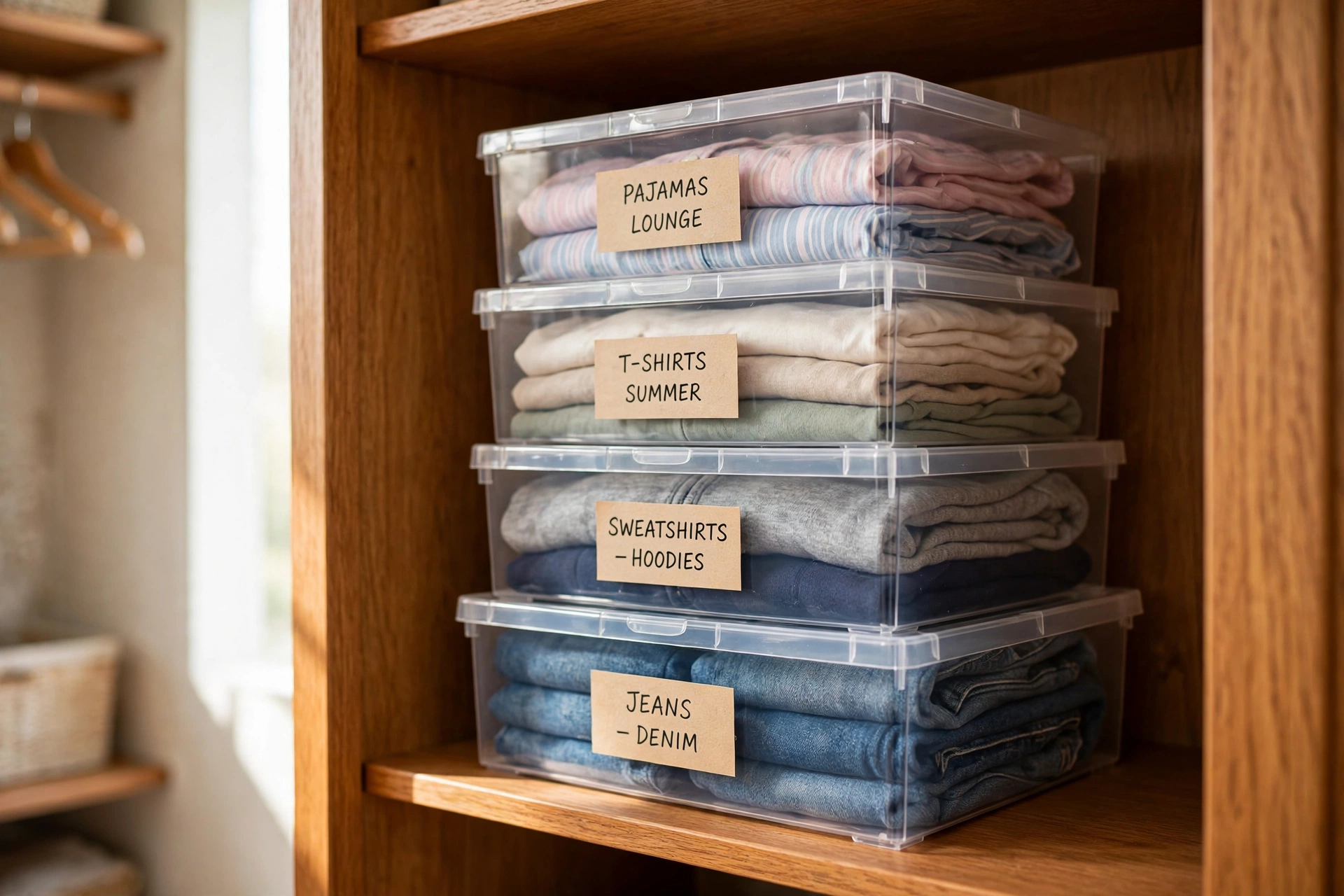
2. Clear lidded stackable boxes — best all-rounders
Price range: roughly $5–$12 per box depending on size.
Pros: you see the contents from three sides, lids keep dust out, and the flat top stacks higher and steadier than any other type. This is the type to standardise on — one system for the whole home, the way the whole-home organization system is built.
Cons: cheap versions crack at the corners; the lid rim is the weak point, so press one in the shop before buying a set.
Best for: closets, seasonal storage, craft and paperwork.
3. Heavy-duty tote bins — best for garages and heavy loads
Price range: roughly $10–$20 per tote.
Pros: thick walls, latching lids, real weight capacity — tools, paint tins, sports gear. They stack four or five high without bowing.
Cons: opaque (label them or you’ll open three to find anything), heavy when full, and too deep for standard closet shelves.
Best for: garages, lofts, utility rooms.
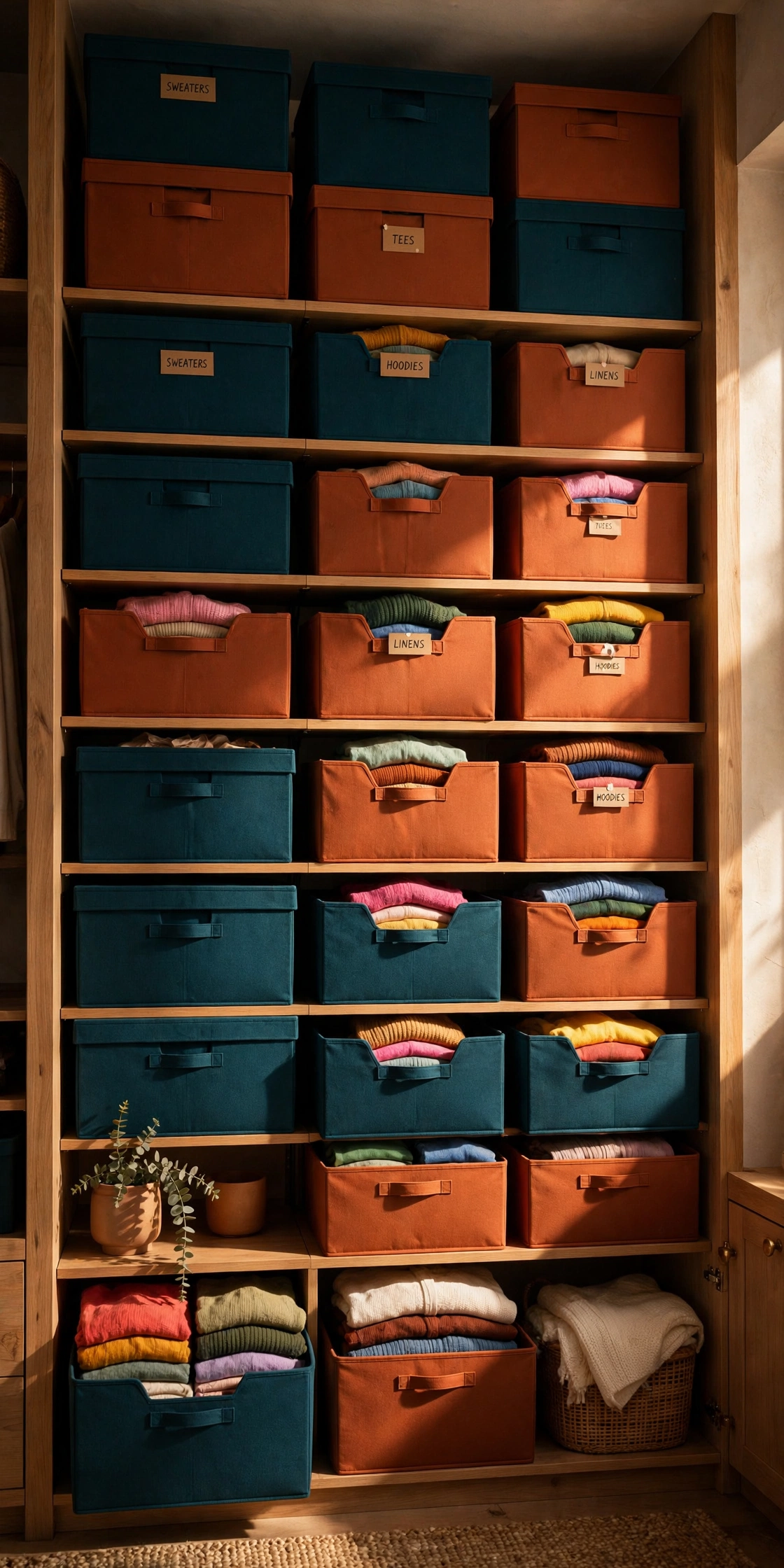
4. Fabric stackable boxes — best for closets and bedrooms
Price range: roughly $6–$14 each, often sold in pairs.
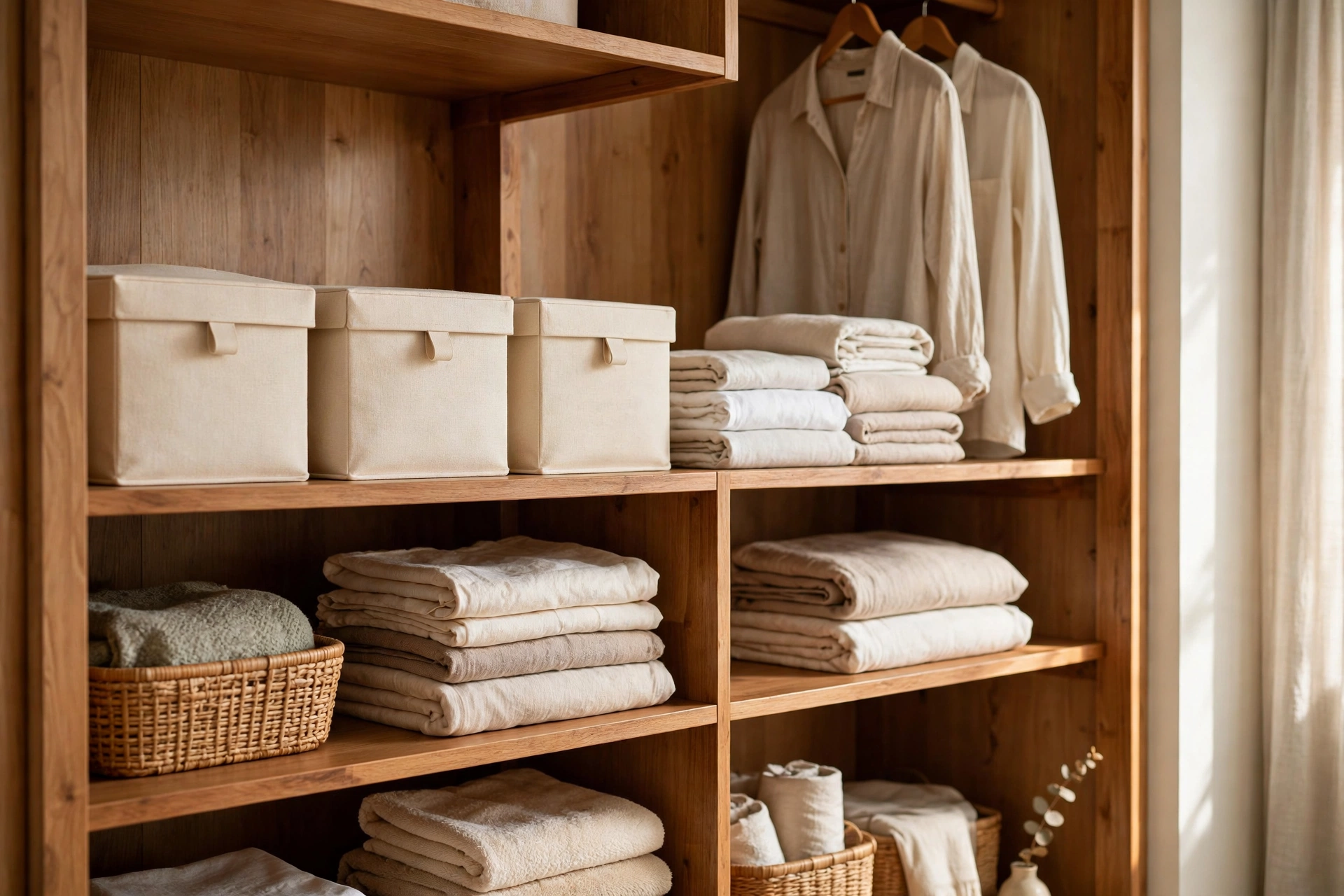
Pros: soft sides mean no scratched shelves, they look like furniture rather than storage, and they fold flat when empty. The natural partner to the systems in our small closet organization ideas — they sit on shelves where plastic looks clinical.
Cons: they don’t truly bear weight — stack two high at most, and only with light contents (clothes, linens). No lid seal against dust compared to plastic.
Best for: open closet shelving, bedroom storage, linens.
5. Stackable drawers — best for small items
Price range: roughly $15–$30 per unit of 2–3 drawers.
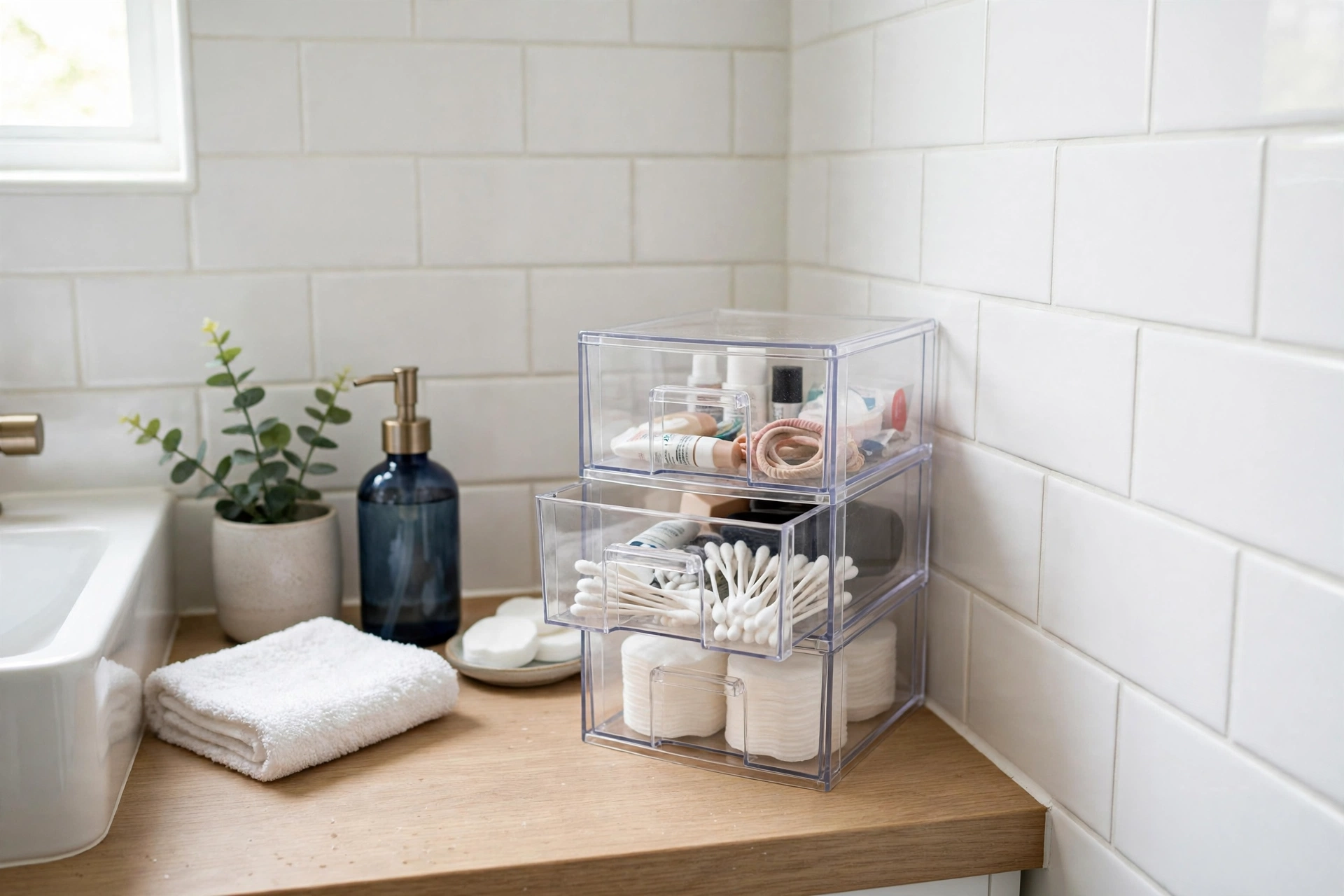
Pros: drawer access without unstacking, perfect for the small stuff that bins swallow — batteries, cables, medicines, makeup. In a bathroom they do the job the small bathroom organization ideas rely on: vertical storage in a footprint the size of a shoebox.
Cons: the worst cost-per-litre on this list; drawers stick on the cheapest models.
Best for: bathrooms, desks, under-sink, hobby supplies.
6. Modular cube bins — best for flexible spaces
Price range: roughly $4–$9 per cube.
Pros: cubes connect and reconfigure — build a tower today, a low bench of storage next month. Light, cheap, and fine for renters who move often.
Cons: the least sturdy type here; wobble grows with height, and odd cube sizes don’t mix across brands.
Best for: dorms, rentals, kids’ rooms, temporary setups.
Which should you buy?
- One system for the whole home: clear lidded boxes (type 2), one size family.
- Daily-access storage (pantry, under-sink): front-opening bins (type 1).
- Closets you can see: fabric boxes (type 4) for shelves, clear boxes above.
- Heavy or garage storage: heavy-duty totes (type 3).
- Tiny-item chaos: stackable drawers (type 5).
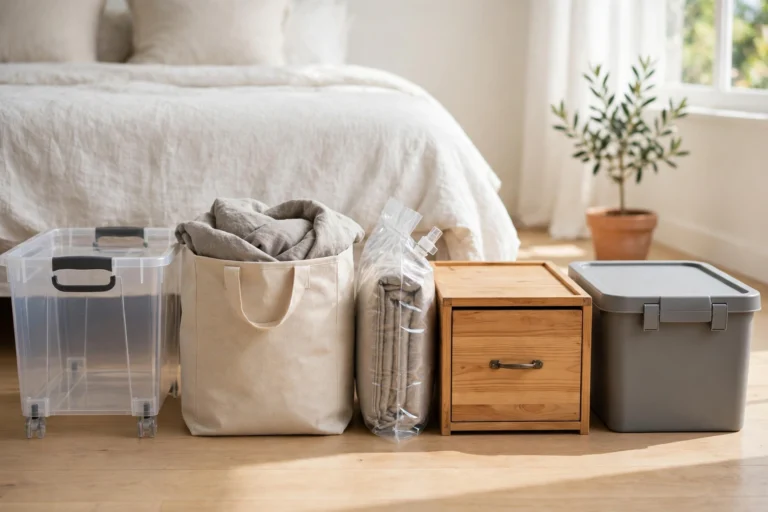
One last measuring rule before any of them: measure your shelf depth and height first, and leave 1 inch (2.5 cm) of clearance — bins are measured by their outer lid, and the lid is always the widest part. The same measure-first habit is what makes under-bed storage work too, if you’re comparing options there as well — our under-bed storage bins comparison uses the same five-point method.
Frequently asked questions
Are stackable bins worth it?
Yes, if you standardise on one type and size family. Stacking turns dead vertical air into storage — most closets gain a third more capacity. Mixed random bins stack badly and waste the space they were meant to save.
How high can you stack storage bins?
Clear lidded boxes and heavy-duty totes: four to five high with the heaviest at the bottom. Fabric boxes: two high maximum. Front-opening bins: three high is the practical limit before the stack leans.
What size stackable bins are best for closets?
Medium boxes around 20–30 litres fit standard 12–16 inch (30–40 cm) deep closet shelves without overhang. Measure your shelf depth first — the lid is the widest part of any bin.
Clear or opaque bins — which is better?
Clear for anything you access monthly or more (finding things fast is the point); opaque or fabric for open shelves where the storage is visible, and for light-sensitive items.