Toy Storage Ideas for a Small Living Room: 10 Systems That Keep the Room Grown-Up
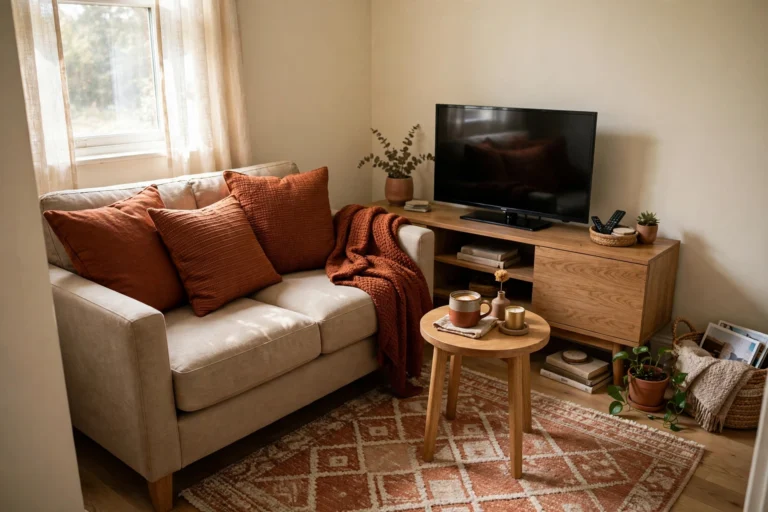
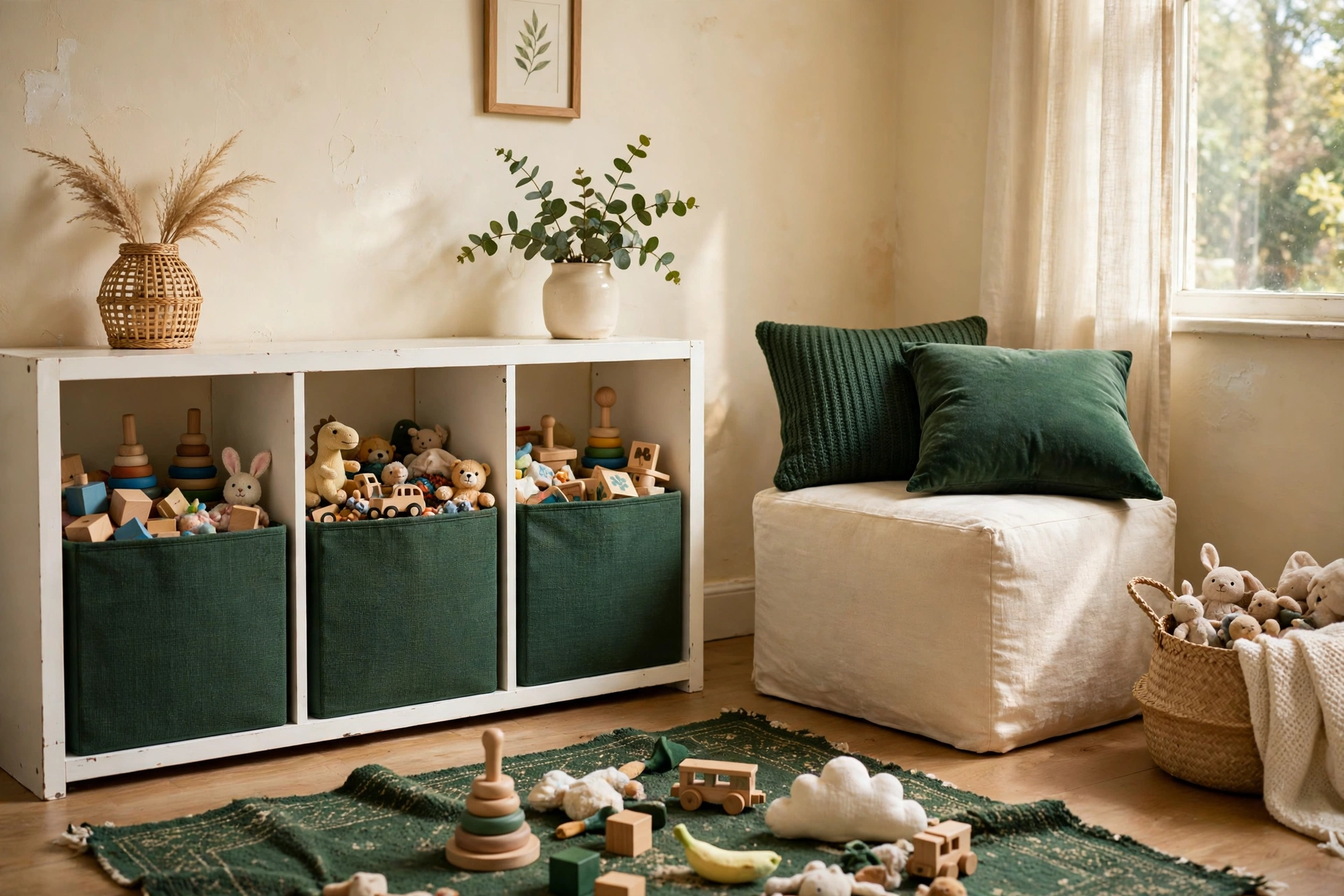
A small living room with kids in it has two jobs, and they fight each other. It has to hold the toys, and it has to feel like a room adults can sit in at 8 pm without a plastic dinosaur staring at them. The fix is not buying more bins. It is a system: closed storage for the bulk, one small zone where play happens, and a rotation habit that keeps the total volume flat. The best toy storage ideas for small living room homes all follow that pattern, and this guide gives you the numbers behind it. A standard laundry basket holds about 1.5 cubic feet, so count your toy baskets before you buy anything, and the starter kit below costs $50.99 at prices checked in November 2026. Ten systems follow, ranked by how well they survive a real week with kids.
What toy storage ideas for small living room setups actually work?
The ones that close. Open bins look tidy in photos and read as clutter in real life, because a living room at rest needs flat, calm surfaces, not a display of every toy your child owns. The working pattern has three moves. First, closed storage for the bulk of the toys, doors and lids doing the hiding. Second, one defined play zone, usually a rug, where toys are allowed to spread. Third, a rotation habit: about a third of the toys out at a time, the rest in a closet or under a bed, swapped every three to four weeks. Everything in this guide is built on those three moves. If a system cannot do all three, it is decoration, not storage.
How much toy storage do you actually need? Start with a laundry basket
Most toy storage ideas for small living room guides skip the math entirely, and that is why people buy the wrong size twice. Measure first. Fill one standard laundry basket with the toys that live in the living room right now. A typical basket is about 18 by 14 by 10 inches (46 by 36 by 25 cm), which is roughly 1.5 cubic feet. Count the baskets. Most families with one young child fill two to four baskets, which is 3 to 6 cubic feet. Two children, or a child with a big building-block habit, usually fill six to eight baskets, which is 9 to 12 cubic feet. That number is your system size. Buy storage to match it, not to match a photo.
| System | Size | Capacity (computed) | What it holds |
|---|---|---|---|
| 11 in fabric cube bin | 11 x 11 x 11 in (28 x 28 x 28 cm) | 0.77 cu ft each | Small toys, cars, craft kits |
| 6-pack of cube bins | 6 bins | 4.6 cu ft | One child’s out-rotation |
| KALLAX 2×4, open cubes | 30 1/8 x 57 5/8 in (77 x 147 cm) | 11.7 cu ft (8 cubes) | A full toy wall, binned or open |
| KALLAX 2×4, with bins | 8 bins inside | 6.2 cu ft | Sorted, closed, kid-reachable |
| Storage ottoman, 43 in | 43 x 14 x 15 in (109 x 36 x 38 cm) | 4.7 cu ft (35 gal) | Stuffed animals, blankets, big soft toys |
| TROFAST low, 6 small boxes | 36 5/8 x 17 3/8 in (93 x 44 cm) | 2.6 cu ft | Sorted small toys, one category per box |
The rotation rule follows from the same math. Keep about a third of the total volume out and store the rest. If your count came to 12 cubic feet, that is 4 cubic feet out, which is one 6-pack of cube bins, and 8 cubic feet stored, which is a closet bin or two under-bed boxes. Swap every three to four weeks, and the room never grows a new toy pile, because the total never grows. The one-shelf rule is the enforcement: the out-rotation lives on one shelf or in one unit. If a toy does not fit the shelf, it rotates out. The limit is the system.
How much floor space should toys take? The 20% rule
A 10 by 12 foot living room is 120 square feet (11.1 sq m). Give toys a 4 by 6 foot rug as their zone, which is 24 square feet, or 20 percent of the floor. That is generous enough for real play and small enough that the room still reads as a living room. The storage furniture that serves the zone should stay small too.
| Piece | Footprint | Share of a 120 sq ft room |
|---|---|---|
| KALLAX 2×4 lying down | 57 7/8 x 15 3/4 in (147 x 40 cm) | 6.3 sq ft |
| Storage ottoman, 43 in | 43 x 14 in (109 x 36 cm) | 4.2 sq ft |
| TROFAST low combination | 36 5/8 x 17 3/8 in (93 x 44 cm) | 4.4 sq ft |
| Play-zone rug, 4 x 6 ft | 48 x 72 in (122 x 183 cm) | 24 sq ft |
One unit plus the rug is the whole footprint. Two big units plus the rug, and the room is a playroom with a sofa in it. If you need more capacity, go vertical on one wall, not wider across the floor. A tall unit against one wall costs no floor space a second unit would, and it keeps the walkways clear, which matters more than it sounds when a toddler is carrying a full bin across the room at speed.
The 10 toy storage ideas for small living room setups, ranked
Here are the ten toy storage ideas for small living room setups, ranked by how well they survive a real week with kids, not by how they photograph on day one.
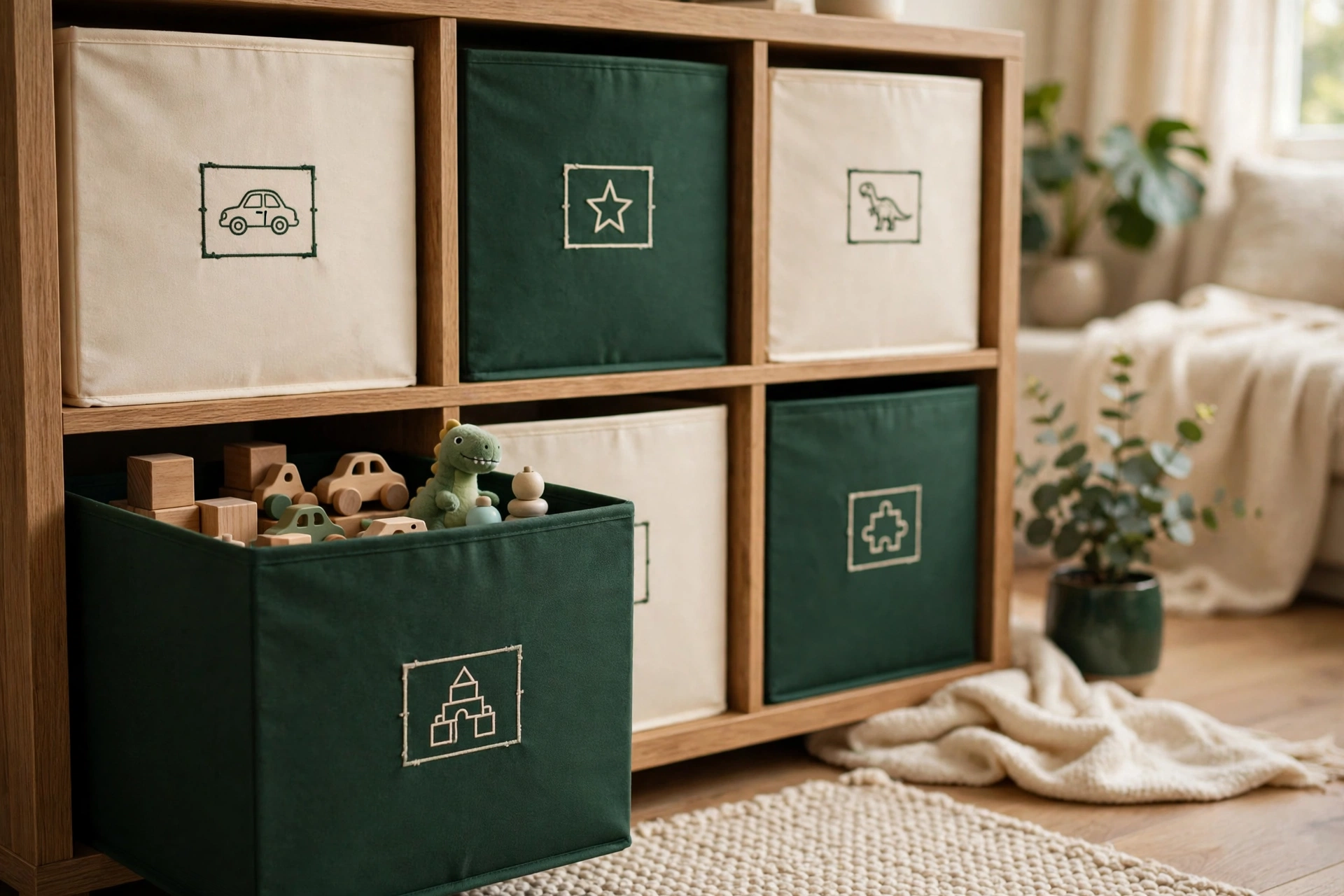
1. A cube shelf with fabric bins. A 2×4 cube unit lying low against the wall, eight cubes, each holding one 11 inch fabric bin. Best for: most families, as the main system. Main advantage: every category gets its own bin, kids can pull a bin out and put it back without help, and the unit doubles as a room divider in a studio. Watch out for: tall cube units tip, so a 4×4 standing upright must be anchored, and open cubes without bins become display shelves for clutter. Verdict: the default. Buy the bins with the shelf, not later. Deposit-Risk: 1/5 with an anchor, 2/5 if you skip it and the landlord notices the holes later.
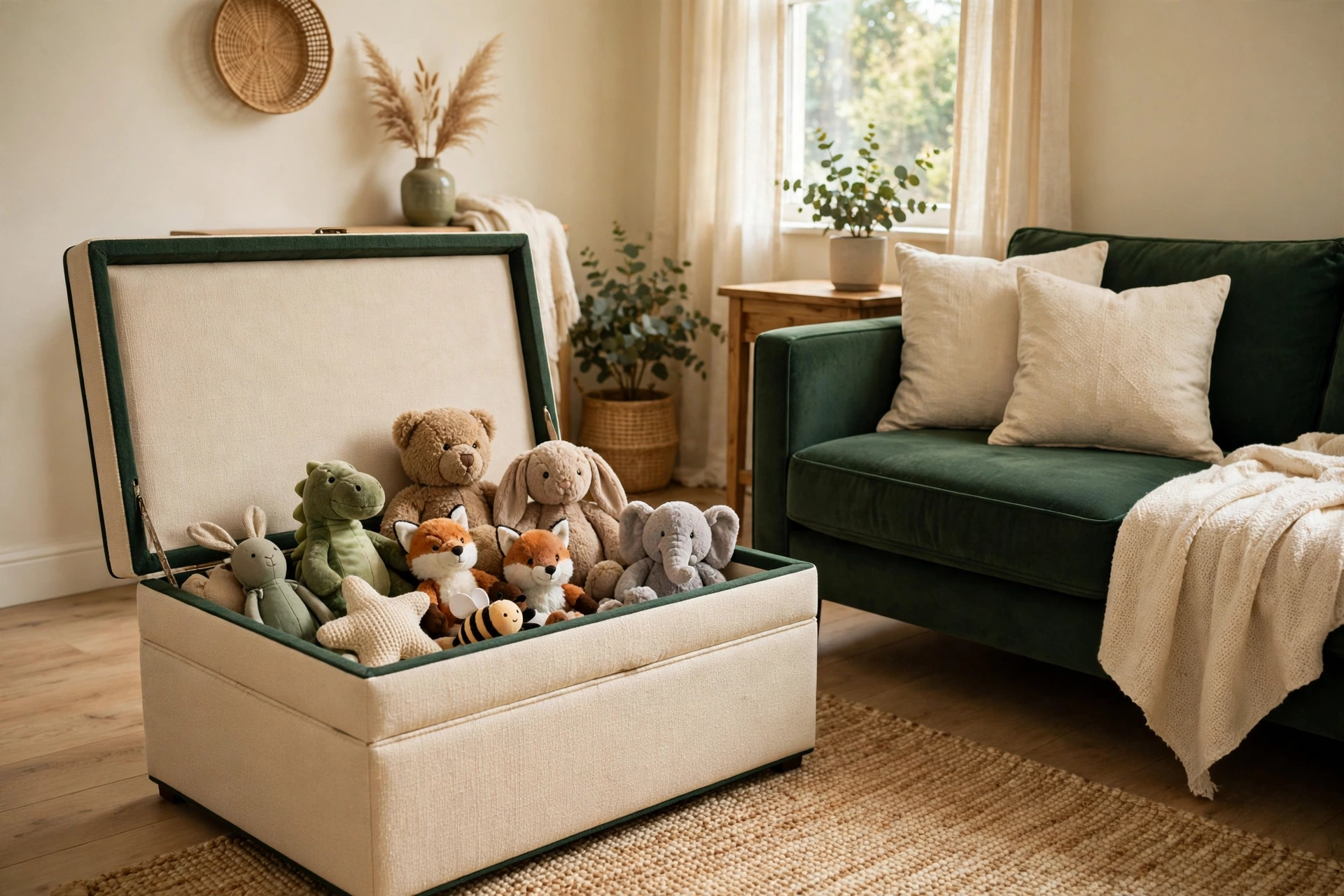
2. A storage ottoman as the toy vault. A 43 inch upholstered ottoman with a lift-off lid, about 4.7 cubic feet inside, which swallows stuffed animals, dress-up clothes, and fort blankets in one sweep. Best for: the fast nightly reset. Main advantage: it is a footrest, extra seating, and a toy box at once, and closing the lid makes the room calm in seconds. A storage ottoman vs bench comparison helps if you are choosing between the two, because a bench seats two and an ottoman hides more. Watch out for: everything lands in one jumble, so small pieces migrate to the bottom, and a heavy lid can pinch small fingers, so pick one with a soft-close hinge or a lift-off lid. Verdict: the best second piece after the cube shelf, and the best first piece if you can only buy one thing. Deposit-Risk: 1/5. It needs no holes at all.
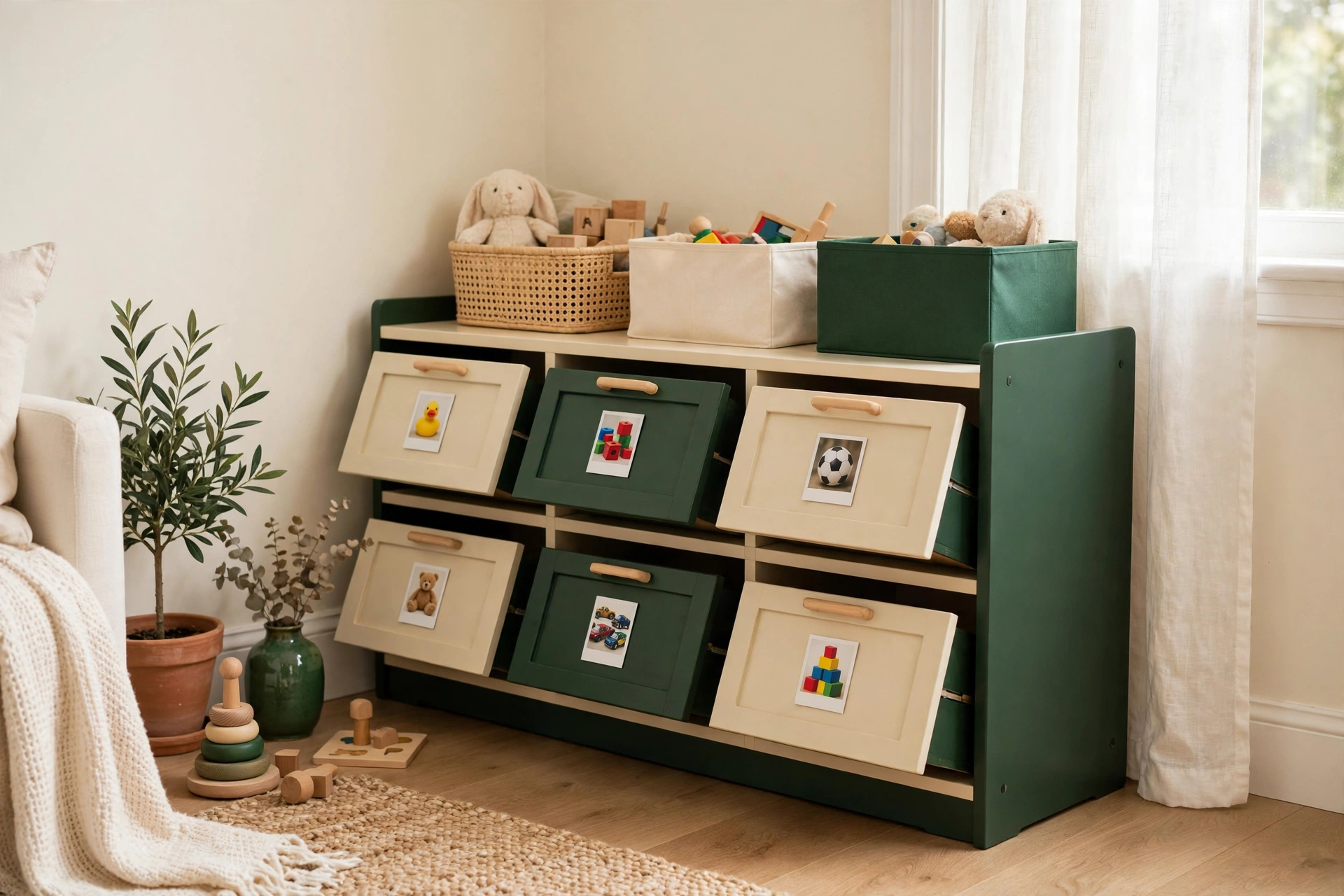
3. A low TROFAST station with picture labels. A low TROFAST combination, 36 5/8 inches wide, with six small boxes, each labelled with a photo of what lives inside. Best for: toddlers and pre-readers. Main advantage: tilted boxes slide out like drawers, small hands can reach everything, and a photo label means a two-year-old can put things back in the right box. Watch out for: the small boxes hold only 0.44 cubic feet each, so this is a sorting station, not the whole system, and it needs a second home for the big soft toys. Verdict: the best system for teaching cleanup, and the one kids actually use without being asked. Deposit-Risk: 1/5.
4. A closed sideboard or TV console section. One section of the sideboard or media console, behind solid doors, assigned to toys in two open-top bins inside. Best for: rooms that must look adult after bedtime. Main advantage: doors closed, the room is calm, and doors open, everything is at kid height. It costs no extra floor space, because the furniture is already there. Watch out for: the section must be low enough for kids to reach, and the bins inside must slide out without catching on the doors. Verdict: the stealth option, and the cheapest, because it reuses furniture you own. Deposit-Risk: 1/5.
5. Lidded baskets on the low bookcase shelf. Two or three large lidded baskets, 15 to 18 inches wide, on the bottom shelf of the bookcase you already have, holding soft toys, balls, and dress-up gear. Best for: small budgets and rooms that already own a bookcase. Main advantage: lids are the whole trick. Closed, the shelf reads as decor. Open, kids can dig freely. Our book storage ideas for small apartments show the same shelf logic applied to books, and the two systems share one unit neatly. Watch out for: woven baskets are the wrong home for tiny pieces, which slip through the weave and vanish, so keep small toys in lidded bins instead. Verdict: the best zero-furniture buy, and the fastest to set up. Deposit-Risk: 1/5.
6. Under-sofa trays for flat toys. Shallow trays about 2 inches high that slide under the sofa, holding puzzles, coloring books, and board games flat. Best for: the toys that never fit in bins. Main advantage: flat toys stay flat, which is the only way puzzles survive, and the trays use dead space nobody else wants. Watch out for: measure the sofa clearance first, because most sofas give you 2 to 4 inches, and a tray that does not slide is a tray that never gets used. Verdict: a small, cheap add-on that solves the one category bins handle badly. Deposit-Risk: 1/5.
7. A rolling craft cart that parks in the closet. A slim three-tier cart beside the sofa during craft time, rolled into a closet after. Best for: art supplies, which are the messiest category in a shared room. Main advantage: everything for a craft session travels in one trip, and the cart disappears when the session ends, so paint and glitter never become permanent living room decor. Watch out for: a cart left out becomes a fourth storage unit, so the rule has to be that it parks in the closet every night, no exceptions. Verdict: the best way to keep crafts in a living room without the living room becoming a craft room. Deposit-Risk: 1/5.
8. A window-seat bench with a hinged top. A low bench, 16 to 18 inches tall, under a window or along a wall, with deep compartments inside for puzzles, train sets, and dress-up clothes. Best for: rooms with a window wall doing nothing. Main advantage: it is seating, storage, and a sunny play spot in one piece, and the lid closes over the mess. Watch out for: fit a soft-close or safety hinge before anything else, because a heavy lid dropping on small fingers is the one real hazard of this design. Verdict: the hardest-working single piece in this list, if your room has the wall for it. Deposit-Risk: 2/5 if it is anchored, 1/5 freestanding.
9. The one-shelf toy library. Exactly one low shelf or cube unit designated as the toy library, with a closet bin of off-duty toys beside it. If a toy does not fit the shelf, it rotates out. Best for: families drowning in volume. Main advantage: the limit is the system, and it forces the rotation habit that every other idea in this guide depends on. The off-duty bin lives in a closet, so the kids closet organization system is the natural partner, and the two stay in sync. Watch out for: the shelf has to be low enough for kids to choose from it themselves, or it becomes a display shelf adults manage. Verdict: not a furniture buy at all, which is the point. It is the rule that makes the furniture work. Deposit-Risk: 1/5.
10. A daily-favorites basket by the sofa. One medium lidded basket as home base, holding the five or so toys in daily use, with everything else in the main system. Best for: the nightly reset. Main advantage: at the end of the day, everything goes in for a two-minute sweep, and the room is done. Kids learn the rule fast, because it is one basket and one place. Watch out for: the basket creeps. If it holds more than the daily favorites, it becomes a second toy pile, so audit it every Sunday and rotate the extras back out. Verdict: the smallest idea here, and the one that saves the most evenings. Deposit-Risk: 1/5.
How to set up the whole system in one afternoon
This is the setup, not a shopping list. One afternoon, about two hours, and the room switches from toy explosion to system.
Materials list: one 2×4 cube unit or one low TROFAST, one 6-pack of 11 inch fabric bins, one storage ottoman, one laundry basket for measuring, picture labels or a marker and tape, one anti-tip anchor kit per tall unit (included in the box with IKEA units), a 4 by 6 foot rug if the room has none.
- Measure the pile. Fill the laundry basket with every toy currently in the living room. Count the baskets. That count, times 1.5 cubic feet, is your total toy volume, and it decides how much storage you buy.
- Sort into three piles. Keep, donate, and toss. Broken toys and toys missing pieces leave the house now, because no storage system fixes volume you do not need.
- Pick the zone. Choose one corner or one wall for the toy zone, and lay the rug there. Toys live on the rug. That boundary is the whole discipline.
- Place the main unit. Put the cube shelf or TROFAST against the zone wall, low and wide, not tall and narrow. Tall units tip. Low units do not.
- Anchor anything tall. If any unit is taller than it is wide, anchor it to a wall stud now, before the bins go in. The safety section below gives you the numbers that make this non-negotiable.
- Bin by category, one bin per type. Blocks, cars, dolls, art supplies, puzzles. One category per bin, and never mix, because a mixed bin is a bin nobody can tidy.
- Label with pictures, then rotate. Tape a photo of the contents to each bin front. Put a third of the toys out, the rest in the closet bin, and set a phone reminder to swap in three weeks. Done.
If you are furnishing one room at a time, this system also fits the wider room plan in our small living room organization ideas, because it adds storage without adding a second room, and it keeps the walkways clear, which is the part guests actually notice.
How high should toy shelves be? Reach by age
Kids can only tidy what they can reach. Put the daily toys where the child can get them without climbing, and the climbing stops, which is the safety point as much as the tidiness point.
| Age | Reach height (rough guide) | What lives there |
|---|---|---|
| 2 to 3 years | Up to 12 in (30 cm) | Bottom shelf only, one open basket, large washable toys |
| 4 to 5 years | Up to 24 in (61 cm) | Bottom two shelves, bins with picture labels |
| 6 years and up | Up to 36 in (91 cm) | Three shelves, small-piece bins with lids |
| Adults only | Above 36 in (91 cm) | Small parts, paint, anything with a choking hazard or a mess |
These are rough guides, not measurements from a study, so measure your own child against the shelf before you load it. If a child has to stand on a lower shelf to reach the top one, the top shelf is too high, and the unit needs anchoring even more urgently, because climbing is what tips furniture.
Anchor it first: the safety step that comes before the pretty bins
Here is the number that decides this section. The US Consumer Product Safety Commission counted about 17,800 emergency-room-treated tip-over injuries a year from 2020 to 2022, and 44 percent of the victims were under 18. From January 2013 to July 2023 it counted 217 reported tip-over deaths, and 71 percent were children, with two-thirds of those deaths in children aged 1 to 3 and a half. Fifteen percent of the deaths happened in living or family rooms. The CPSC’s older line still holds: about one child dies every two weeks from a tip-over. Since September 2023, a federal rule under the STURDY Act requires new clothing storage units to resist tipping under a 60-pound child load. Toy storage is not covered by that rule in the same way, so the anchor is on you.
The rule is simple. Any unit taller than it is wide gets anchored to a wall stud with an anti-tip strap or bracket, before a single toy goes in it. Low, wide units under 30 inches tall are far harder to tip, and they are the renter-safe default. If your lease bans drilling, use low units only, and ask the landlord in writing about one small anchor hole, because most leases allow it with permission, and one patched hole costs far less than a lost deposit or an injured child. The full guidance, including the renter-friendly steps, is on the CPSC Anchor It page. Anchor first, style second, every time.
What does it cost? Prices checked November 2026
Prices checked in November 2026 at US retailers. Prices move, especially in November, so treat these as a realistic budget, not a quote. Wall-anchor hardware comes in the box with IKEA units, so it costs nothing extra.
| Route | Items | Total |
|---|---|---|
| Bins-only starter | 6-pack fabric cube bins 11 in, $16.99 (Amazon, Oct 17, 2026) + SONGMICS storage ottoman 43 in, $34.00 (sale price, Oct 7, 2026) | $50.99 |
| Furniture route | KALLAX 2×4 shelf unit, $79.99 (IKEA US) + 6-pack fabric cube bins, $16.99 + SONGMICS ottoman, $34.00 | $130.98 |
| TROFAST route | TROFAST low combination, $149.99 (IKEA US) + SONGMICS ottoman, $34.00 | $183.99 |
The bins-only route is the honest starting point for most families, because it holds 4.6 cubic feet in the bins plus 4.7 in the ottoman, which is 9.3 cubic feet total, enough for the two-to-four basket pile most living rooms actually have. The furniture route adds the shelf that makes the system permanent, and the TROFAST route is the one to pick if your child is under four and picture labels will do the teaching for you. Time estimate: about two hours to sort, place, bin, and label, plus a 10-minute swap every three to four weeks after that.
Mistakes to avoid
- Buying storage before measuring. A 6-pack of bins holds 4.6 cubic feet. If your pile is 12, you needed the shelf too, and the bins alone just move the pile into prettier boxes.
- Going tall instead of wide. A 4×4 cube unit standing upright holds the same as a 2×4 lying down, but it tips, and it needs an anchor, and it eats the wall. Low and wide wins in a small room every time.
- Skipping the anchor on a tall unit. Children climb. The CPSC numbers above are the reason this is a mistake, not a preference.
- Mixing categories in one bin. A bin with blocks, cars, and puzzle pieces is a bin nobody can tidy, including you. One category per bin, always.
- Leaving the rotation bin in the living room. The off-duty toys have to live somewhere the child cannot see them, or the rotation never happens. Closet, under-bed, anywhere out of sight.
- Forgetting the lid rule. Open bins in a living room read as clutter even when they are sorted. If a bin has no lid or door in front of it, it is display storage, and display storage is for the five prettiest toys, not the whole collection.
What to skip
- Toy hammocks. They look clever in photos, sag under real weight, and drop stuffed animals on the floor at 2 am. A lidded basket does the same job without the drama.
- Open wall shelves for toys. High open shelves are for decor. Toys on them are either unreachable or one bump from the floor.
- A toy box with a heavy hinged lid and no safety hinge. The lid is the hazard. Lift-off lids and soft-close hinges only.
- Matching bin sets in every color. One color, one label style, and the room looks calm. A rainbow of bins is visual noise, which is what you were trying to remove.
- A second ottoman before the first system works. One vault is enough. Fix the rotation habit first, then decide if you need more volume.
A note for renters
Check your lease before you drill for an anchor, and ask in writing. Most leases allow small anchor holes with permission, and the patch at move-out is a dab of filler and a touch of paint. If the answer is no, build the system from low, wide, freestanding pieces only, and skip anything taller than 30 inches. Every idea in this guide except the tall cube unit works with zero holes, and the deposit risk on the whole system is 1 out of 5, which is as low as furniture gets. Keep the receipt for the anchor kit and a photo of the patched wall, because that is the evidence that turns a deposit argument into a non-argument.
Sources
Prices: IKEA US (TROFAST low combination $149.99, KALLAX 2×4 $79.99, listings checked November 2026); Amazon via Verified Price Drops (STORAGE MANIAC 11 in cube bins 6-pack $16.99, as of October 17, 2026); TheStreet (SONGMICS storage ottoman 43 in, 35 gal, $50 list, $34 sale, October 7, 2026). Safety: US Consumer Product Safety Commission, tip-over injury and fatality figures 2020-2022 and January 2013 to July 2023, and the STURDY Act rule effective September 2023, via the CPSC Anchor It page. Product details: IKEA TROFAST US product page, TROFAST storage combination. No affiliate links anywhere in this post.
How do I store toys in a small living room without a playroom?
Use closed storage for the bulk, one rug as the play zone, and a rotation habit. A low cube shelf with fabric bins or a TROFAST station holds the toys, a storage ottoman swallows the soft overflow, and about a third of the toys stay out while the rest wait in a closet bin. Swap every three to four weeks. The room switches back to adult mode in about five minutes each evening.
How many toys should I keep out at once?
About a third of the total. Measure the whole pile in laundry baskets first: a standard basket holds about 1.5 cubic feet, so eight baskets is 12 cubic feet, and a third out is 4 cubic feet, which is one 6-pack of 11 inch cube bins. The rest goes into a closet or under-bed bin until the next swap.
How do I hide toys in my living room?
Put them behind doors and lids, not in open baskets. A closed sideboard section, a storage ottoman with a lift-off lid, or a cube shelf with fabric bins all hide toys completely. Open bins work only for the five or so prettiest toys on display. If everything is visible, the room reads as a playroom, however tidy the bins are.
Do I need to anchor toy storage furniture?
Yes, for anything taller than it is wide. The CPSC counted about 17,800 tip-over injuries a year from 2020 to 2022, and 71 percent of the 217 reported tip-over deaths from 2013 to 2023 were children. Anchor tall units to a wall stud with an anti-tip strap. Low, wide units under 30 inches tall are far harder to tip, and they are the renter-safe choice when drilling is not allowed.