Small Kitchen Spice Organization: 10 Systems That Fit Any Tiny Kitchen
Small kitchen spice organization starts with one home for every jar. Not a prettier rack, not a matching jar set, just one place where every spice lives and one place you look. Most small kitchens fail at spices for a simple reason: the jars split across a drawer, a shelf, and the top of the fridge, so you buy duplicates of what you already own and lose the jar you need while something burns on the stove. This guide fixes that with ten systems matched to the space you actually have, a jar-fit table computed from real jar sizes, and two priced routes checked in November 2026. A typical 20 to 30 jar collection takes 45 to 60 minutes to sort, purge, and load.
Small kitchen spice organization: the one-home rule
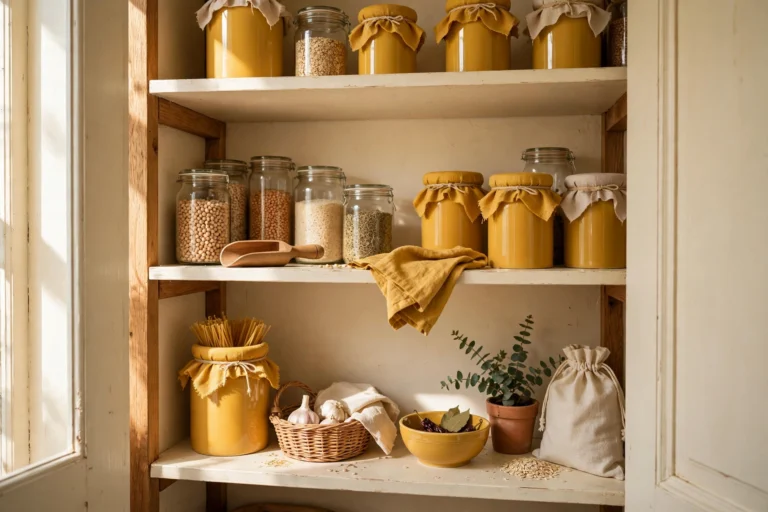
Small kitchen spice organization works when every jar has exactly one home, and you can answer the question “where does the cumin live?” without opening three doors. Start by pulling every spice out of every hiding place: the drawer, the shelf, the top of the fridge, the shopping bag with the duplicate paprika. Wipe the shelf. Then sort into three groups. Daily spices are the ones you reach for most days, like salt, pepper, garlic powder, paprika, and cumin. Weekly spices are the ones you use once or twice a week, like chili powder, oregano, cinnamon, and dried herbs. Rare spices are the special jars for holiday baking or one favorite dish, like cardamom or a curry blend. Daily spices stay where your hand lands first. Weekly spices get a clear spot nearby. Rare spices move to a small box on a higher shelf, out of the way, and if you are organizing a kitchen with no pantry at all, that high shelf is where the reserve box lives instead of a pantry shelf. Sniff each jar as you sort. If a ground spice smells like nothing, it is done, and no rack will save it. Write the date on every jar you keep, so the next purge takes minutes, not an afternoon. The same measure-first habit that works for a small pantry organization ideas plan works here too: measure the drawer, the shelf height, and the jar height before you buy anything, because a spice shelf organizer that is too tall for your cabinet is just a box you cannot close.
10 spice storage systems that fit a tiny kitchen
Here are the ten systems, matched to the space you have rather than the space you wish you had. Pick one as the home for your spices, and use the others only for overflow.
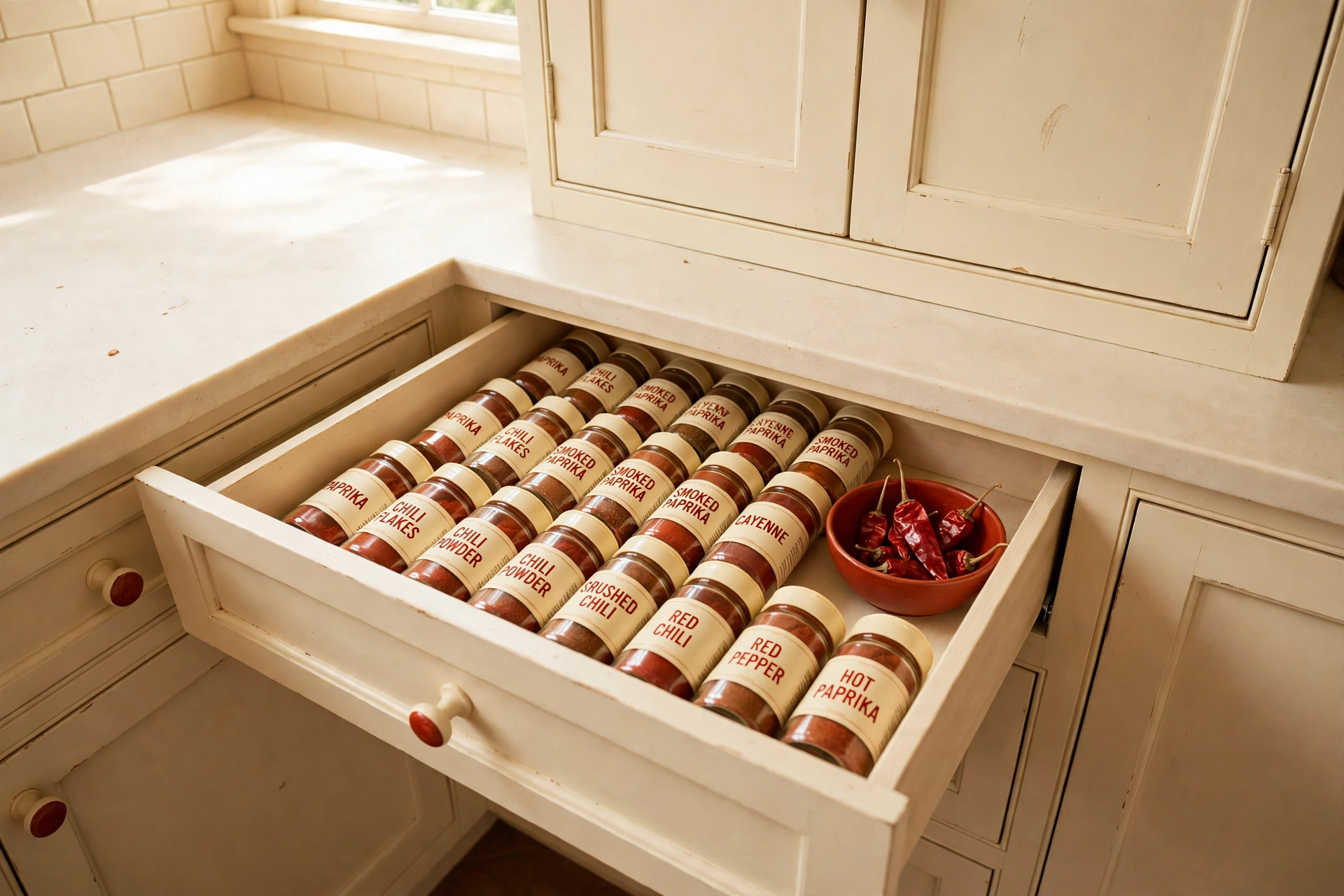
- Stepped drawer insert. Sloped rows hold jars on their sides with labels facing up, so you read every name without moving a jar. Best for: cooks with a spare shallow drawer near the prep area. Watch out for: the drawer must be deep enough for your tallest jar lying down, so measure with the jar, not the drawer front.
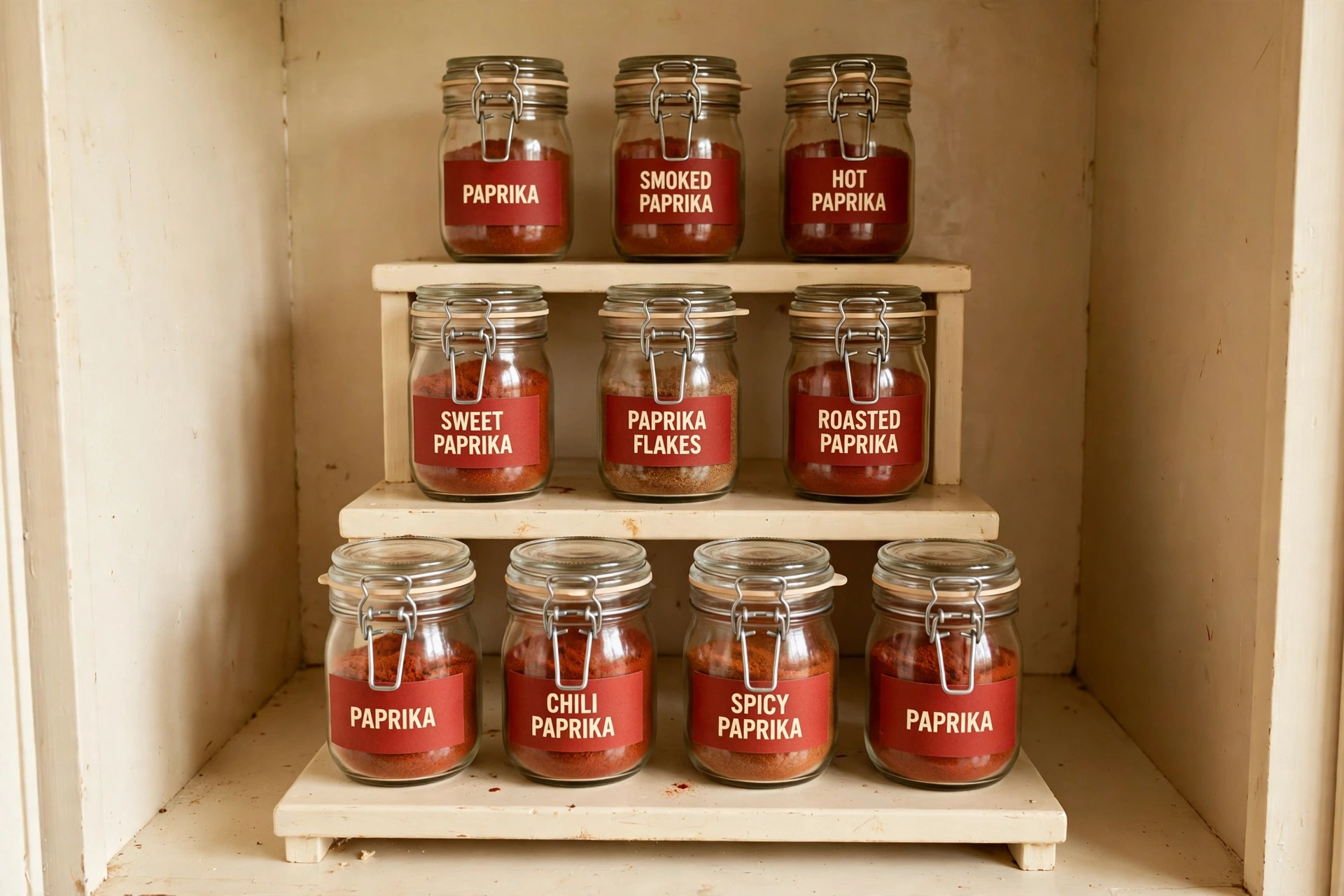
- Tiered shelf inside a cabinet. A three-tier riser lifts the back rows so you can see every jar on a deep shelf. Best for: deep cabinets where jars hide behind each other. Watch out for: the tallest jar must clear the shelf above, so check the height before you buy.
- Inside-door rack. A slim tiered rack on the inside of a cabinet door, one of the over-the-door organizers that earn their keep in small kitchens, uses space that is otherwise completely wasted. Best for: renters, because adhesive strips hold it with no drilling. Watch out for: check the door clearance and the load limit, and keep heavy jars off the door.
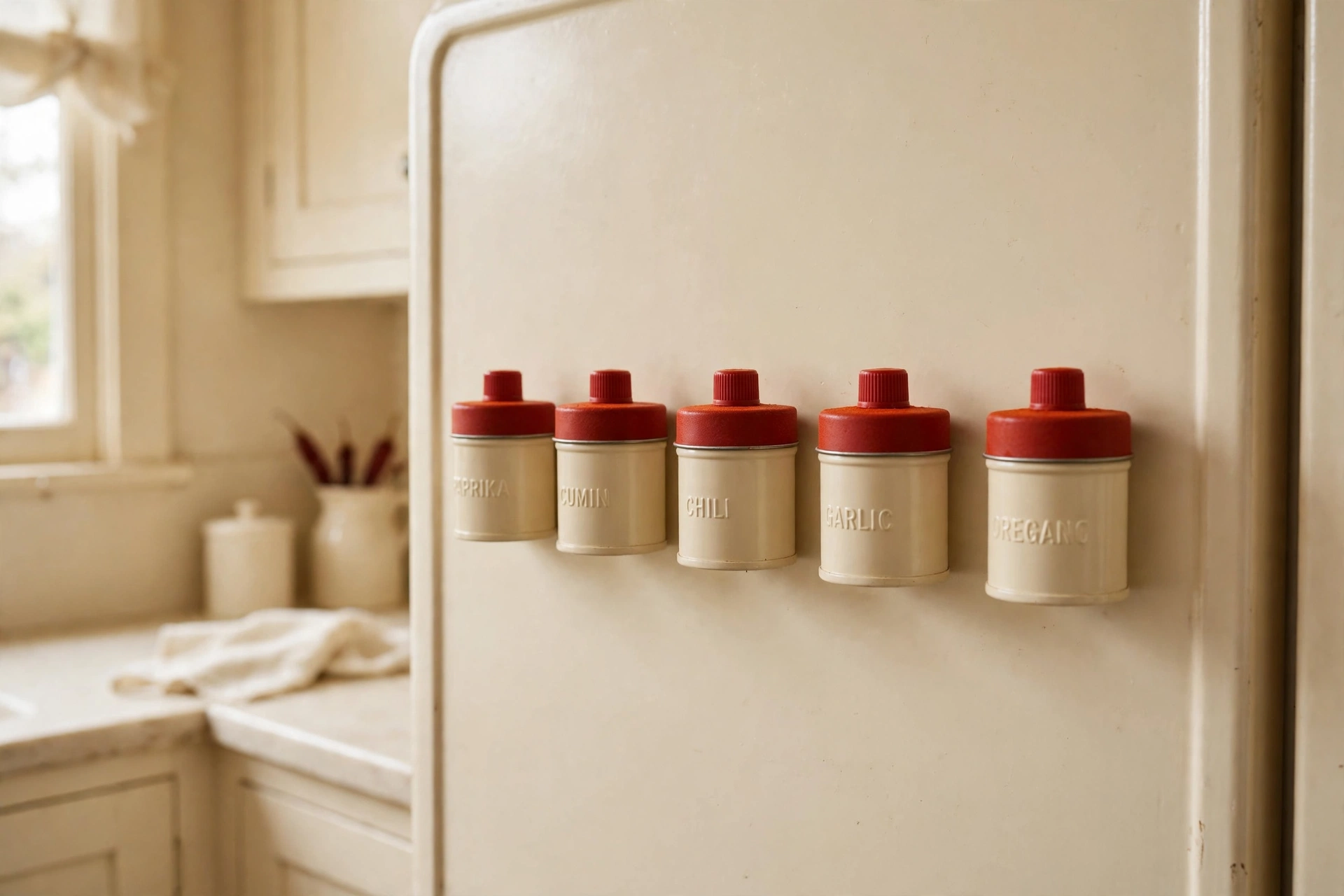
- Magnetic tins on the fridge. Small tins with magnetic bottoms stick to the side of the fridge in a thin flat row, using almost no depth at all. Best for: kitchens with zero spare drawer or shelf space. Watch out for: keep them away from the stove side of the fridge, where heat dries spices out.
- Wall-mounted magnetic strip. A slim strip on an open wall near the stove holds magnetic tins where your hand lands. Best for: daily spices you grab while cooking. Watch out for: it needs a strip of open wall, and adhesive mounting is the renter-safe choice.
- Turntable on a shelf. A 10 in (25 cm) turntable spins a full circle of jars into reach on one small footprint. Best for: deep shelves and pantry corners. Watch out for: round turntables waste the corners of a square shelf, so they suit round spaces better than square ones.
- Slim pull-out between appliances. A narrow 3 to 6 in (8 to 15 cm) pull-out slides into the gap beside the stove or fridge. Best for: kitchens with a dead gap no other storage can use. Watch out for: measure the gap twice, and keep it clear of direct stove heat.
- Countertop caddy for the daily six. A small tray or caddy holds the six to eight jars you use every day, and nothing else. Best for: cooks who hate opening a drawer mid-recipe. Watch out for: it becomes permanent counter clutter the moment a ninth jar joins it, so cap the count.
- Uniform square jars and labels. Decanting into identical square jars with clear labels makes every jar the same size, so they pack flush with no wasted gaps. Best for: anyone whose jars are a mix of tall, short, round, and square. Watch out for: label every jar the day you fill it, because two brown powders look identical a week later.
- Reserve box on a high shelf. A small box holds bulk refills and rare spices above the daily system, and one of the stackable bins we compared makes a good reserve box because it fits the shelf and keeps the refill bags upright. Best for: bulk buyers and holiday bakers. Watch out for: refill the small jars from the big ones once a month, or the reserve box becomes a second junk drawer.
How many spice jars fit? The jar-fit table
How many spice jars fit in your drawer or on your shelf? The answer is simple math, once you know the jar. Plan on a standard jar 2 in (5 cm) wide, and count rows before you buy a rack. A 4-tier drawer insert 12 to 23 in wide holds up to 48 jars, according to the maker’s own listing, which is more than most cooks own. A 10 in (25 cm) turntable holds 6 spice jars. A 14 in (36 cm) three-tier shelf holds 21 jars, seven per tier.
| Space | Width | Jars per row (2 in jars) |
|---|---|---|
| Small drawer | 12 in (30 cm) | 6 |
| Medium drawer | 15 in (38 cm) | 7 |
| Wide drawer | 18 in (46 cm) | 9 |
| Standard shelf | 24 in (61 cm) | 12 |
| 4-tier drawer insert, 12 to 23 in wide | 12 to 23 in (30 to 58 cm) | Up to 48 jars total (maker spec) |
| 10 in turntable | 10 in (25 cm) | 6 jars |
| 14 in 3-tier shelf | 14 in (36 cm) | 21 jars (7 per tier) |
Square jars beat round jars on the same shelf, and the reason is geometry, not opinion. Round jars leave gaps between circles that you cannot use, about 21 percent of the footprint. Square jars sit flush against each other, so the same shelf holds its jars with no wasted gaps, and they stack predictably when you need a second layer. If you are decanting anyway, square glass jars with bamboo lids are the shape to buy. If you are keeping the jars you own, count them in rows of two inches and leave one empty slot for the next jar, so you can add it without rearranging the whole collection.
How to organize spices in a small kitchen, step by step
How to organize spices in a small kitchen comes down to seven steps, and the measuring step matters more than the shopping step. Give the job 45 to 60 minutes for a typical 20 to 30 jar collection.
What you need: uniform jars if you are decanting, labels and a pen, a drawer insert or tiered shelf or magnetic tins (pick one home), a non-slip liner or small tray, and a small reserve box for bulk refills and rare spices.
- Pull every spice out. Empty the drawer, the shelf, the top of the fridge, and the shopping bag. You cannot organize a collection you have not seen whole.
- Purge with a sniff test. Open each jar and smell it. Ground spices that smell like nothing are done. Check dates, toss duplicates into one jar, and recycle empties.
- Sort into daily, weekly, and rare. Daily spices go where your hand lands first. Weekly spices get a clear spot nearby. Rare spices go in the reserve box on a high shelf.
- Measure the spot. Measure the drawer depth, the shelf height, and the door clearance, then test with your tallest jar. The jar-fit table above turns those numbers into a jar count.
- Pick one home. Choose one system from the ten above for the whole collection. Do not split spices across a drawer, a rack, and the top of the fridge. One home means one place to look, every time.
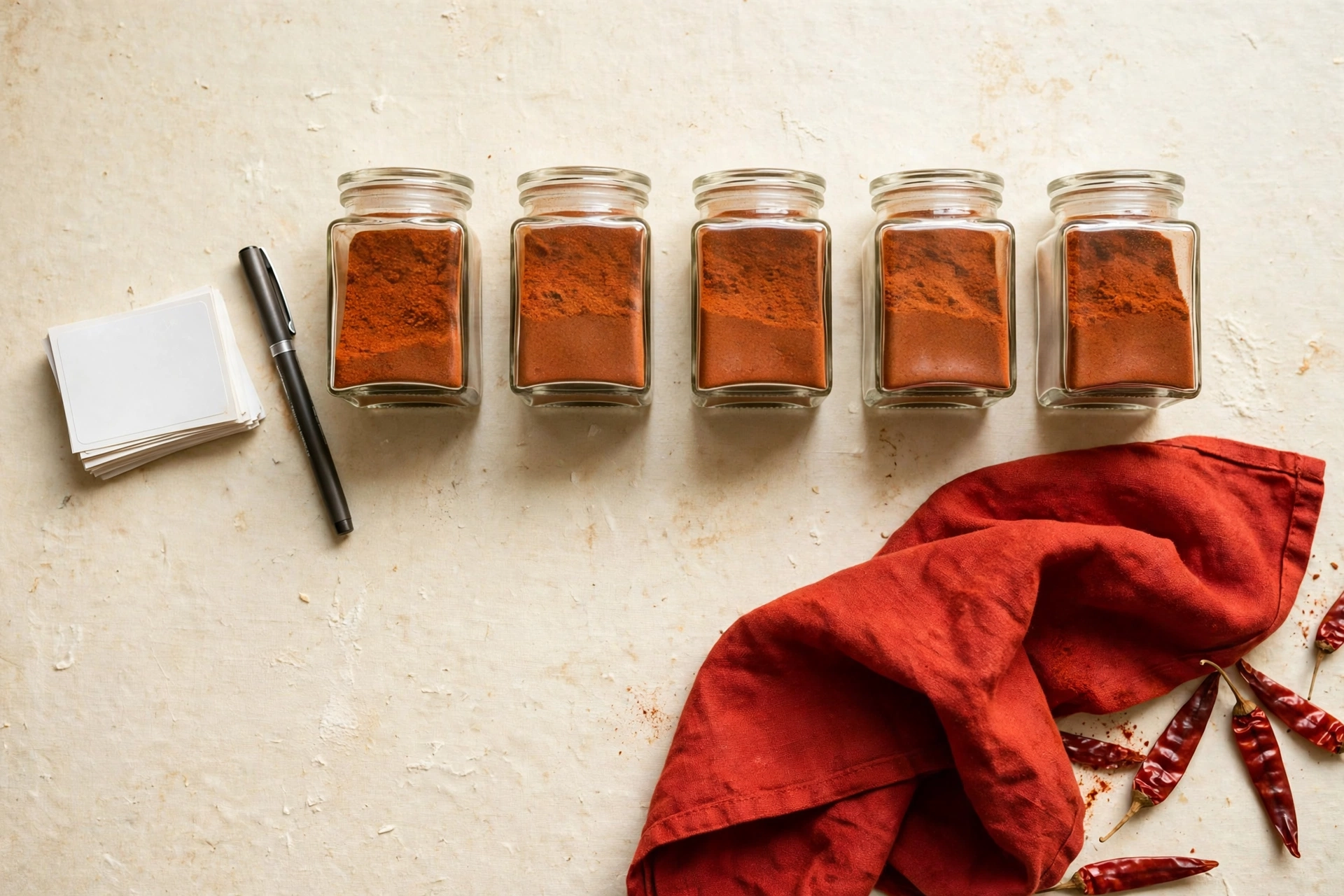
- Decant and label. Move spices into uniform jars if you are decanting, and label every lid or front the same day. Put names on the lids if you look down into a drawer, or on the front if the shelf is at eye level.
- Load by frequency and set a routine. Daily jars in front, weekly behind, rare up high. Refill small jars from bulk once a month, and run the sniff test again every year.
Where spices should never live
Where spices should never live is anywhere hot, damp, or sunny, and the worst spot in most small kitchens is the shelf right above the stove. Spice makers advise keeping spices in tightly closed containers away from heat, moisture, and direct sunlight, and that rule is the whole placement guide in one sentence. Heat dries ground spices out and fades their flavor. Steam from a kettle or dishwasher dampens them and clumps them. Sunlight through a window bleaches color and aroma. Keep jars at least 3 ft (91 cm) from the stove, away from the dishwasher, and out of direct sun. The top of the fridge feels convenient, but it is warm and it vibrates, so it is a bad home for anything you want to keep. A drawer, a cabinet away from the stove, or a shaded shelf all beat a sunny countertop, even if the sunny countertop looks better in a photo. And never measure spices over a steaming pan. The steam goes straight into the jar and clumps the spice inside.
What does it cost to organize spices?
What does it cost to organize spices in a small kitchen? Less than a weekly shop, if you pick one system instead of three. Every price below was checked live in November 2026, and the two routes below are the honest choice most kitchens face: a shelf plus magnetic setup for the renter with no spare drawer, or a drawer insert plus shelf for the cook with a drawer to spare.
| Item | Price, as of November 2026 | Where checked |
|---|---|---|
| Brightroom Shelf Expandable 3 Tier spice rack | $12.00 | Target |
| Garnen Magnetic Spice Rack for Refrigerator, 12 in | $19.99 | Target |
| Budget route total (shelf + magnetic) | $31.99 | |
| SpaceAid Bamboo Spice Drawer Organizer, 4-tier, 12 to 23 in | $34.99 | Target |
| Drawer route total (drawer insert + shelf) | $46.99 |
Two more options worth knowing: a revolving spice rack runs $14.99 at Target, and a 28-jar rack with 386 labels runs $36.99, which suits a cook starting from zero jars. Prices move, so check them again before you buy. The cheapest system of all is free: purge the dead jars, group what is left by frequency, and put the daily six in a tray you already own. A $12 riser plus labels beats a $37 jar set for a cook who already owns twenty jars.
Mistakes to avoid when organizing spices in a small kitchen
Mistakes to avoid start with buying the rack before measuring the spot. A drawer insert that is one inch too wide is a return, not a solution. Do not store spices above the stove, where heat and steam kill flavor in months. Do not split the collection across three spots, because that split is how duplicates happen. Do not keep ground spices for years on the hope they are fine; if they smell like nothing, they taste like nothing. Do not decant without labeling, because two brown powders look identical a week later and one of them is cinnamon. Do not bury jars in a deep drawer under bags of flour. Give spices a shallow tray or a divided section of their own. And do not buy a 48-jar system for a 12-spice cook. The empty slots fill up with jars you do not need, and the collection grows to fit the rack instead of the cooking.
What to skip
Skip the giant countertop revolving rack. It eats a full square foot of counter, wastes the corners of the shelf, and holds jars you rarely touch. Skip the matching 28-jar set when you cook with ten spices; buy the jars you need and spend the rest on fresh spices. Skip magnetic tins on the hot side of the fridge, next to the stove, where heat dries them out. Skip clear jars on an open sunny shelf, because light fades flavor faster than age does. Skip the over-door shoe pocket for spice packets, which tears, spills, and hides everything behind a zip. And skip the advice that says you need a whole spice wall. A small kitchen needs a small system that fits the cooking you actually do, not a display.
Small kitchen spice organization questions, answered
How do I organize spices in a small kitchen with no drawer space?
Use the inside of a cabinet door with an adhesive rack, or magnetic tins on the side of the fridge. Both need no drawer and no drilling. A 10 in turntable on a shelf holds 6 jars if you have a flat surface to spare.
Where is the best place to store spices in a small kitchen?
In a drawer or a cabinet away from heat, moisture, and direct sunlight, at least 3 ft from the stove. A shallow drawer near the prep area is the best home for most cooks, because it hides jars from light and keeps them within reach.
What is the most space-efficient spice container?
Square glass jars. Round jars waste about 21 percent of the shelf footprint as gaps between circles, while square jars sit flush. Uniform jars also stack predictably and make the jar-fit math work.
Do I need matching jars to organize spices?
No. Matching jars help, because uniform sizes pack tighter and labels sit in the same place, but the system matters more than the jars. A purged collection in its original jars, grouped by frequency in one home, beats a matching set split across three spots.
How this was made
Prices in this post were checked live in November 2026. Jar-fit counts were computed from a standard 2 in jar width and the makers’ own listed capacities. Storage guidance follows the spice makers’ heat, light, and moisture rules. This post is guidance, not a record of a test kitchen.