Best Paint Finish for Small Rooms: 7 Picks That Make Tiny Spaces Feel Bigger
The best paint finish for small rooms isn’t one sheen — it’s the right sheen per room. Here’s the short version: eggshell is the best paint finish for small rooms, matte wins when your walls are rough, and satin is the one to reach for when a room needs light and scrubbing. That’s the whole decision in one sentence — but the finish you pick changes how big a room feels, how long the paint lasts, and what a repaint costs you. I ran the numbers before writing this: on the standard gloss scale, matte reflects 5–10 gloss units, eggshell 10–25, and satin 20–35 — and a two-coat repaint of a 10×12 ft (3×3.7 m) bedroom takes about 2 gallons, which is roughly $76 in BEHR Premium Plus eggshell at $37.98 a gallon, as of October 2026. Small rooms punish the wrong finish fast, because every wall is right in front of you. Get it right and the room feels calmer and bigger. Get it wrong and you’ll be staring at every roller mark for years.
What Does Paint Finish Actually Do in a Small Room?
Paint finish — sheen, if you want the proper word — is just how much light the dried paint reflects. That’s it. But in a small room, that one number does three jobs at once: it sets the mood, it hides or exposes your walls’ flaws, and it decides whether you can wipe a mark off or have to repaint the whole wall.
Low-sheen paint scatters light in every direction, so dents, patches, and drywall seams disappear into a soft, even surface. High-sheen paint bounces light back at you, which brightens a dark corner — and spotlights every single imperfection like a gallery light. The trade-off is durability: the shinier the paint, the tougher the film, and the easier it wipes clean. There’s no free lunch here, just a choice about which problem matters more in your room.
One thing worth knowing before you buy: sheen names are marketing words, not legal measurements. One brand’s “pearl” can shine exactly like another brand’s satin. The honest numbers live on the product’s technical data sheet, measured in gloss units at a 60-degree angle. Matte sits around 5–10 gloss units, eggshell 10–25, satin 20–35. If two paints claim to be eggshell, the data sheet settles the argument. B&Q’s paint finish guide lays out the same sheen ladder for UK readers.
Eggshell: The Best Paint Finish for Small Rooms
Eggshell is the default answer for a reason, and honestly, it’s the one I’d hand to most people painting a small room. It has a soft, low glow — think the surface of an actual eggshell — that reads warm without looking shiny. It bounces just enough light around to keep a small room from feeling flat, but not so much that your drywall seams start performing.
Best for: living rooms, bedrooms, dining nooks, and hallways in small homes — basically any wall that gets looked at more than it gets touched.
Main advantage: it’s the middle of everything. It hides minor flaws far better than satin, and it wipes clean far better than matte. A damp microfiber cloth and a drop of dish soap will take off most everyday marks.
Watch out for: it won’t survive daily scrubbing in a kid’s room or a hallway that doubles as a dog run. And touch-ups can flash — a fresh patch sometimes dries a touch lighter than the wall around it.
Verdict: if you only buy one finish for the whole small house, buy eggshell. It’s the best paint finish for small rooms and the safest pick in the entire guide, and it’s the finish most paint brands design their mid-range lines around. The best wall colors for small rooms we rounded up earlier all look their best in this finish, by the way — the color does the talking, the sheen just stays out of the way.
Matte Paint Finish for Small Rooms With Rough Walls
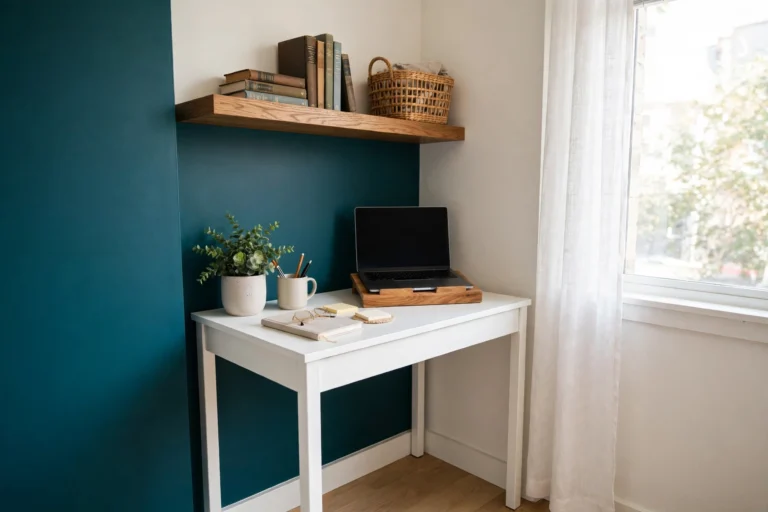
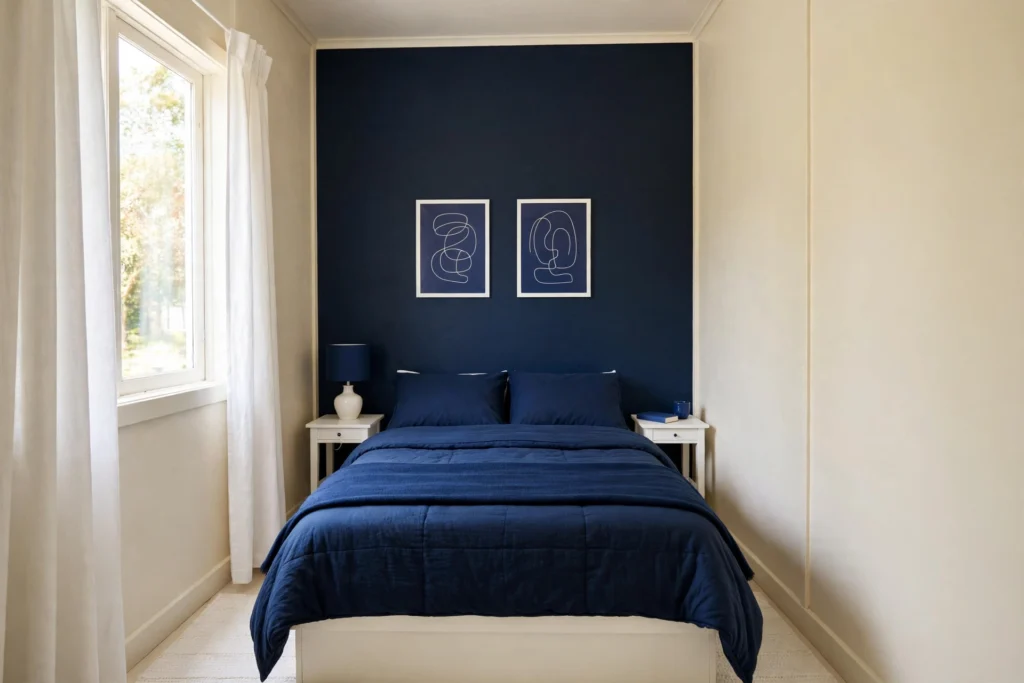
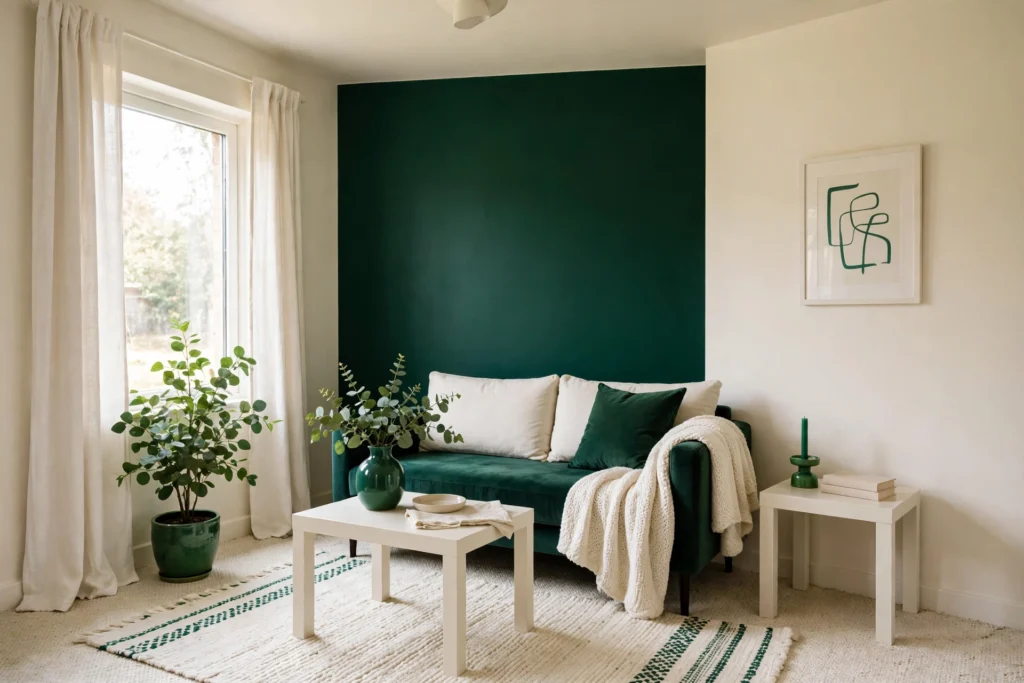
Matte is the finish people either love or have been burned by. It has almost no shine at all, which makes it the best flaw-hider you can buy. Wavy plaster, settled drywall seams, a dozen spackle patches from the last tenant — matte swallows all of it. Deep colors look richer in matte, too, because there’s no glare washing the pigment out. A dark green accent wall in a tiny bedroom looks expensive in matte and cheap in satin.
Best for: adult bedrooms, formal sitting corners, accent walls, and any wall that’s seen better days.
Main advantage: nothing hides imperfections like matte. In a small room where the walls are close enough to inspect, that matters more than in a big one.
Watch out for: standard matte is the hardest finish to clean. Scrub a mark and you can burnish the paint — rub it shiny in one spot, permanently. That’s the classic small-bedroom mistake: beautiful matte walls, one scuffed patch by the light switch, and now you’re repainting the whole wall.
Verdict: matte is underrated for small rooms, but only the washable kind. If the label doesn’t say “washable” or “scrubbable,” don’t put it anywhere a human hand regularly lands. Spend the extra few dollars per gallon on a washable matte line and you get the flaw-hiding without the fear.
Satin Paint Finish: When a Small Room Needs Light and Scrubbing
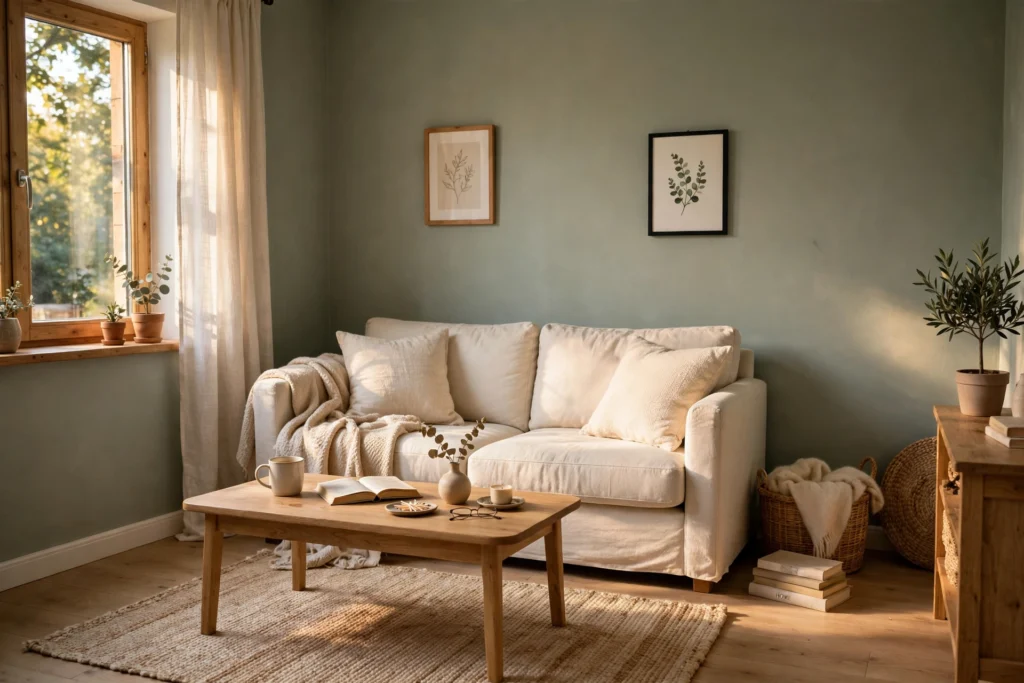
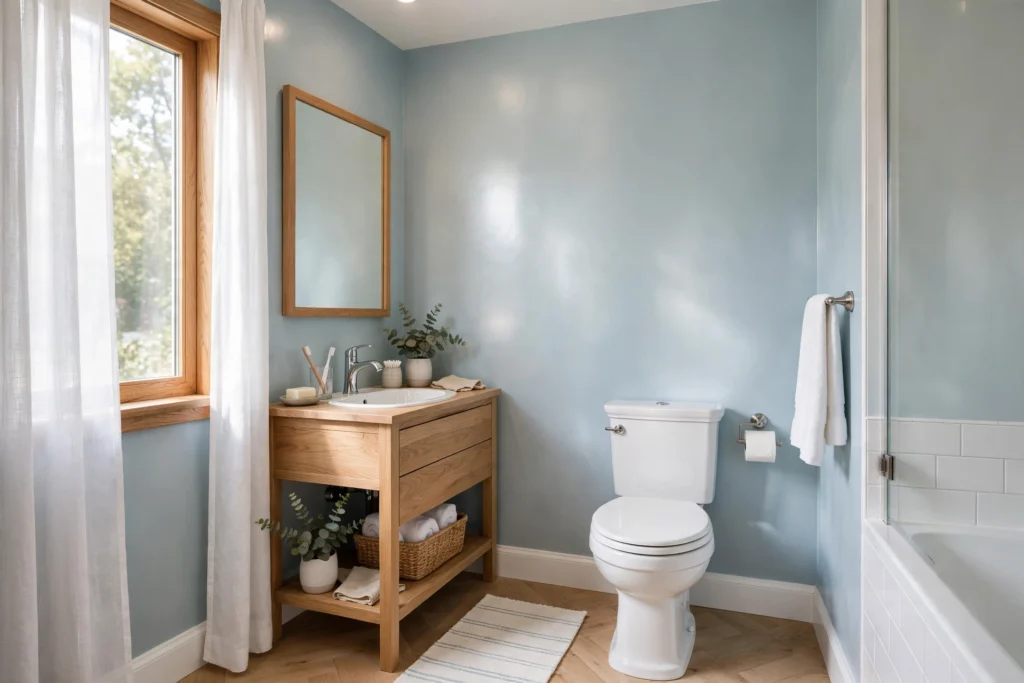
Satin is the extrovert of the group. It has a soft pearl glow, reflects 20–35 gloss units, and bounces light around a room in a way matte simply can’t. In a small, dark room — a north-facing bedroom, a windowless bathroom — that light bounce is real. It’s not magic, and it won’t double your square footage, but it does make a dim corner feel less like a cave.
Best for: small kitchens, bathrooms, kids’ rooms, hallways, and any wall that gets wiped down weekly.
Main advantage: durability. Satin’s tighter resin film resists scuffs, moisture, and repeated washing. It’s the finish that survives a toddler, a dog, and a spaghetti incident in the same week.
Watch out for: satin is brutally honest about your walls. Every patch edge, nail pop, and roller stipple shows. On textured walls — orange peel, knockdown — satin catches the light on every ridge and makes the texture the star of the room. And touch-ups are the hardest of the three finishes; a patch can flash for months.
Verdict: use satin where life happens, not where you sit and stare. In a small room, that usually means the kitchen wall, the bathroom, and the hallway — not the big living-room wall you look at from the sofa. And if your north-facing room feels cold and gray, the paint colors for north-facing rooms matter more than the finish — but satin is the finish that lets those warm colors actually glow.
The Other Finishes Worth Knowing
Flat (for ceilings, always). Flat paint reflects almost nothing, which is exactly what a ceiling wants. It hides every flaw overhead and never throws glare down at you. Don’t use it on walls unless you enjoy repainting. Do use it on the ceiling of every small room you paint — it’s the cheapest way to make a low ceiling disappear. Our ceiling designs for small rooms go further than paint, but flat white on the ceiling is where all of them start.
Semi-gloss (trim and doors only). Semi-gloss is tough, scrubbable, and shiny — wonderful on baseboards, door frames, and cabinet doors, terrible on a whole small wall. It turns every imperfection into a highlight reel. One exception: if you’re painting kitchen cabinets, semi-gloss is the right call, and our step-by-step cabinet painting guide covers exactly which one to buy and how to get it smooth.
Washable matte (the upgrade pick). This is the finish I’d actually put on my own bedroom walls. Premium washable matte lines use ceramic microspheres or cross-linking acrylic binders that resist burnishing, so you get matte’s flaw-hiding and a wipeable surface. It costs $5–$10 more per gallon than standard matte. In a small room, that’s $10–$20 extra for the whole job. Worth it.
Color drenching (the designer move). Paint the walls, trim, and doors the same color, but vary the sheen: satin on the walls, semi-gloss on the trim. The color stays continuous so the room reads bigger, and the subtle sheen shift gives the architecture definition. It’s the single best small-room trick in this guide, and it costs nothing extra — just two cans instead of one.
What Paint Finish for Each Small Room?
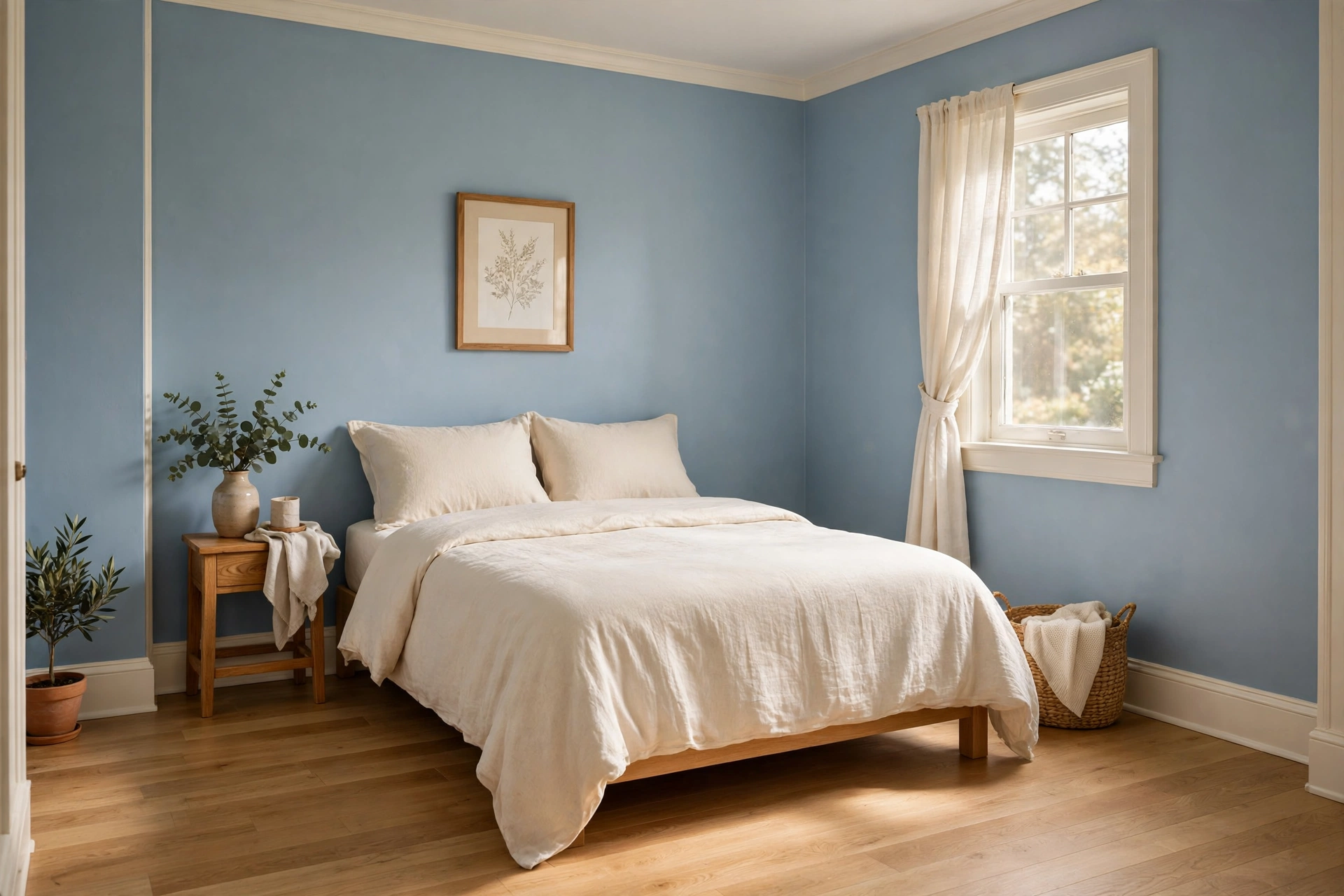
Small bedroom: the best paint finish for small rooms is eggshell on the walls, flat on the ceiling. If the walls are rough, washable matte. If it’s a kid’s room, satin on the lower half or the whole wall — you’ll thank yourself at the first crayon incident. Angi’s bedroom sheen guide lands in the same place: eggshell or matte for bedroom walls, satin for the scuff-prone spots.
Small living room: eggshell, full stop. It’s the room you live in, and eggshell handles the middle ground — guests, pets, the odd scuff — without looking shiny.
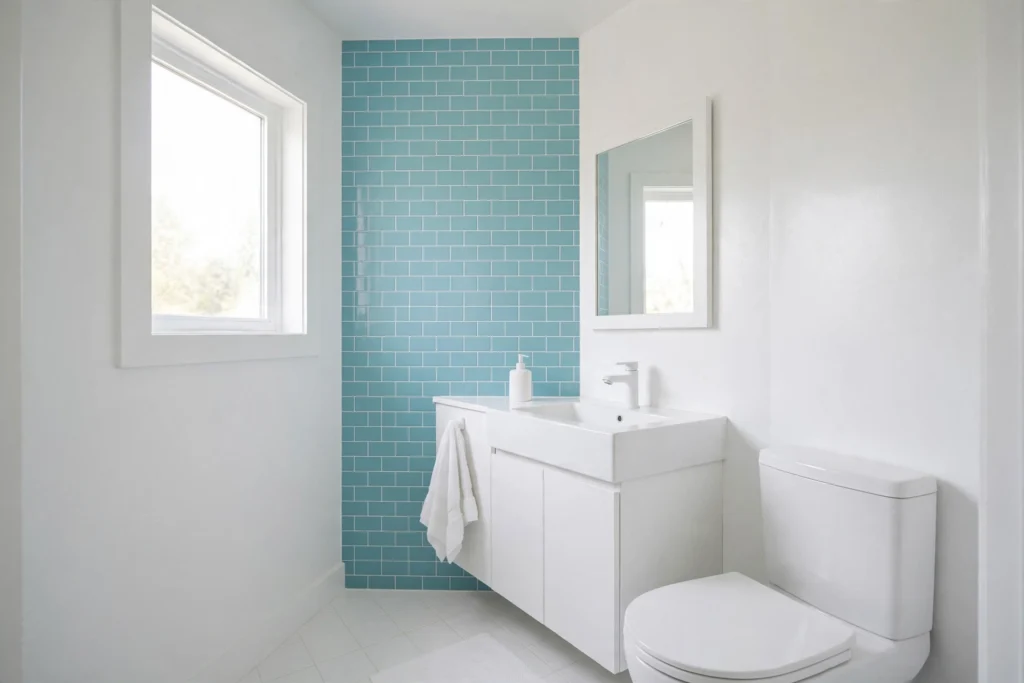
Small bathroom: satin on the walls (moisture is the enemy, and satin resists it), flat on the ceiling unless the ceiling gets steamy, in which case satin there too. Semi-gloss on the door and trim.
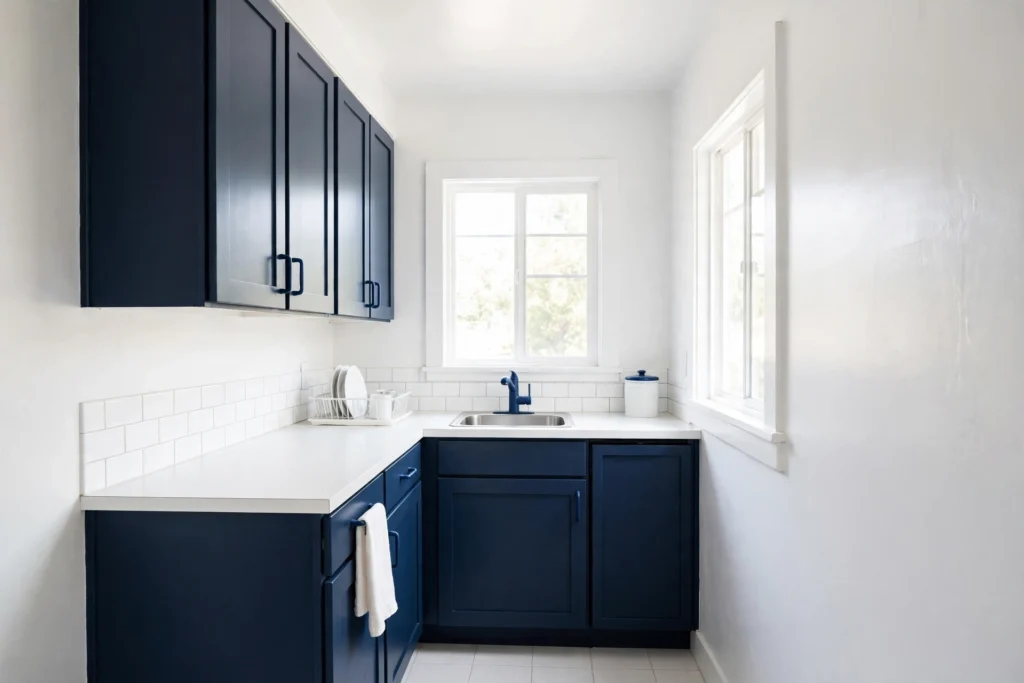
Small kitchen: satin on the walls, semi-gloss on cabinets and trim. Grease and splatter wipe off satin; they stain matte permanently.
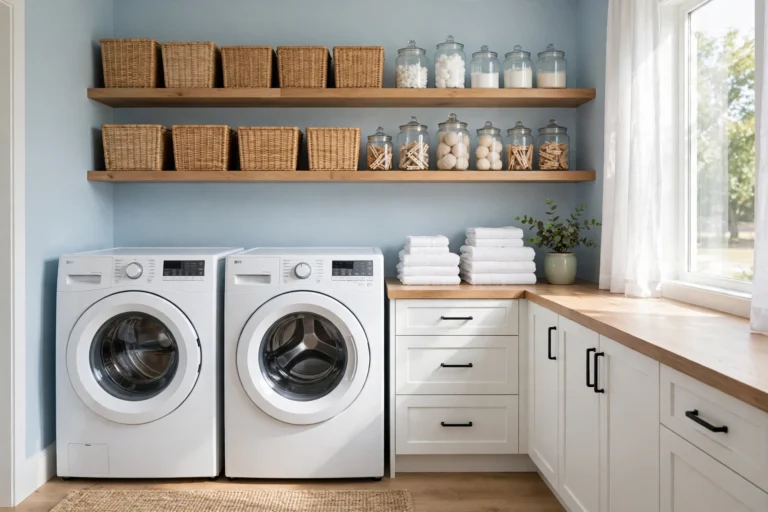
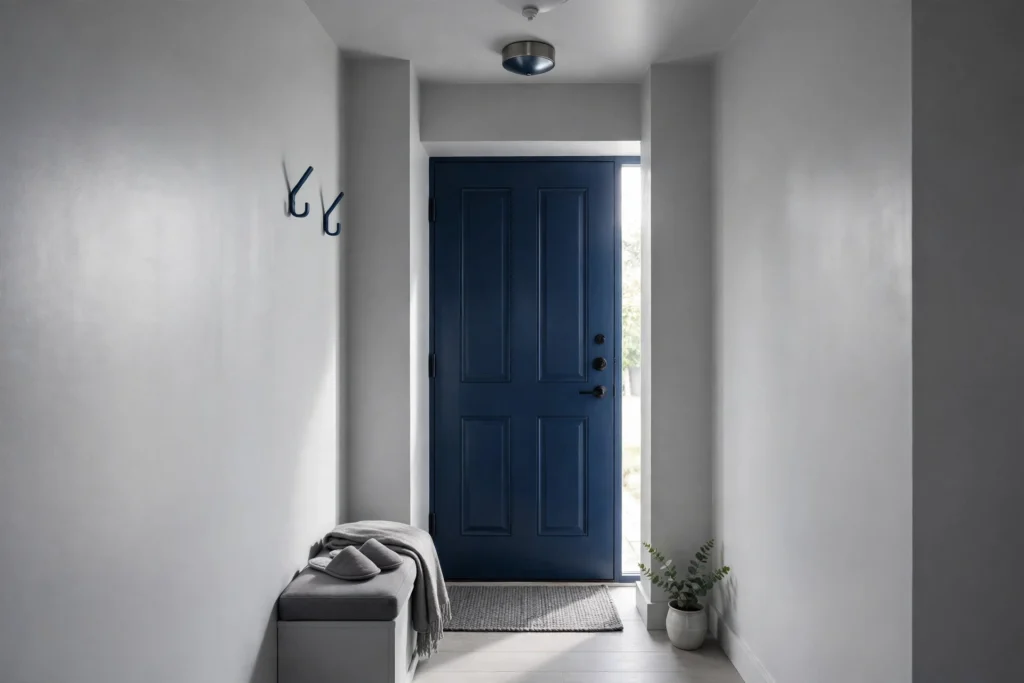
Hallway or entryway: satin or eggshell, depending on traffic. A windowless hallway is the one place satin‘s light bounce genuinely earns its keep — it reflects your artificial light and makes the space feel wider.
What Paint Finish Should You Skip in a Small Room?
High-gloss on walls. Unless your walls are skim-coated to a mirror-smooth Level 5 finish by a professional, high-gloss will show every flaw you own and several you didn’t know about. Save it for a front door or a piece of furniture.
Cheap flat matte in a high-traffic room. This is the most common repaint mistake in small homes. It looks gorgeous for a month, then one scuff by the door turns into a shiny patch, then a repaint. If the budget is tight, buy eggshell instead — it’s only a few dollars more per gallon and it forgives you.
One finish for the whole house. The “buy five gallons of the same thing” shortcut is how small rooms end up with satin living-room walls that glare in the afternoon sun and matte bathroom walls that stain in the steam. Buy per room. The paint store will mix the same color in different sheens for free.
How Much Paint — and Money — Does a Small Room Take?
Here’s the math, because nobody else in this search seems to have done it for a small room specifically. A 10×12 ft (3×3.7 m) bedroom with 8 ft (2.4 m) ceilings has about 350 sq ft (32.5 m²) of wall. One gallon of interior paint covers 350–400 sq ft on smooth, primed walls. So one gallon per coat, two coats for a proper job: 2 gallons total.
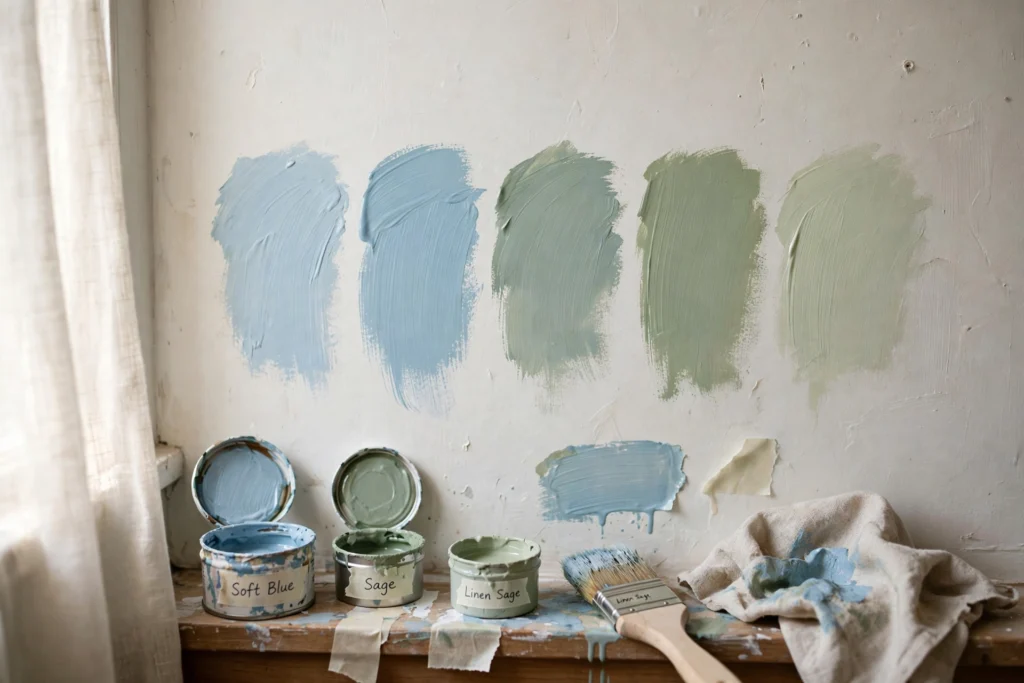
At Home Depot prices as of October 2026, BEHR Premium Plus eggshell runs $37.98 a gallon — so the paint for that bedroom is about $76. Step up to BEHR Ultra ($38–$45 a gallon) and you’re at $76–$90. The premium Dynasty line ($50–$60 a gallon) lands around $100–$120 for the same room. Sample pots run $5–$10 each, and I’d buy two or three before committing — paint the samples on the actual wall, look at them morning and evening, and only then buy gallons. A $15 sample habit beats a $76 repaint every single time.
One more number worth knowing: water-based latex paint dries to the touch in 1–2 hours but takes 14–30 days to fully cure. Don’t wash a freshly painted wall for at least two weeks, whatever the finish. Scrub too early and you’ll damage the film before it’s even finished hardening.

Conclusion
If you remember one thing, remember this. Eggshell is the best finish for most small rooms. It hides small flaws, wipes clean, and never glares.
Use washable matte when your walls are rough. Use satin where life happens: the bathroom, the kitchen, and the hallway. Keep flat on the ceiling, always.
Buy per room, not one finish for the whole house. Test a $5 sample on the real wall before you buy gallons. A small room forgives a lot, but it never forgives the wrong finish.
Frequently Asked Questions
What paint finish makes a room feel larger?
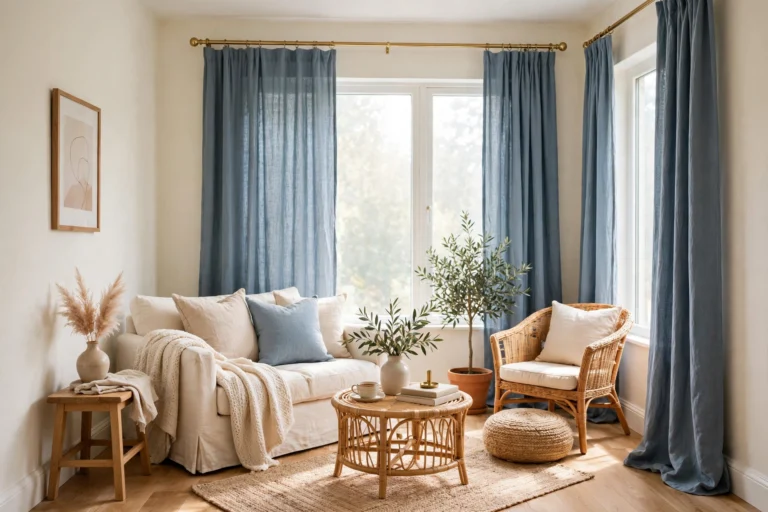
A slightly glossy finish like eggshell or satin helps, because it reflects natural light around the room instead of absorbing it the way flat matte does. The light bounce makes the space feel brighter and more open. That said, finish is the second-biggest lever — the color itself matters more. Light, warm colors in eggshell are the combination that makes the biggest visible difference in a small room.
What is the best paint sheen for a small bedroom?
Eggshell, for most small bedrooms — it hides minor flaws, wipes clean, and doesn’t glare. Choose washable matte if the walls are rough or you want a softer, calmer look, and satin if it’s a kid’s room or the walls get touched constantly. Flat on the ceiling in every case.
Can I use satin paint in a small room with bumpy walls?
You can, but you probably shouldn’t on the big walls. Satin highlights every patch, seam, and texture ridge. If you love satin, use it on the trim, the door, or one smooth accent wall — and keep eggshell or matte on the walls that show the damage. Fix the worst patches with spackle and sanding first, and satin gets a lot more forgiving.
How do different paint sheens affect the color?
The same color looks deeper and more muted in matte and brighter in satin, because the sheen changes how much light reaches your eye. A dark blue in matte reads rich and velvety; the same blue in satin reads brighter and a touch lighter. Always test a sample in the actual sheen you plan to buy — the little chip in the store is the wrong sheen half the time.