
Best Wall Colors for Small Rooms: 9 Shades That Make Space Bigger
Paint is the cheapest square-footage you will ever buy. The right wall color makes a small room feel a foot wider in every direction; the wrong one closes it in like a box. These 9 shades are the ones that reliably make small rooms look bigger — what each does to the light, which rooms it suits, and the curtain pairings for these shades that pull the whole look together. (Planning a full repaint? Start with how to paint kitchen cabinets for under $200 — the same color logic applies to cabinets.)
How color changes a room’s size (30-second version)
Light colors reflect light, so walls visually recede. Warm whites and pale shades bounce daylight deepest into the room. Cool tones (blue-greys, sage) push walls away psychologically — our brains read them as distance. Dark colors break the rules in one specific way: a dark wall behind you blurs the room’s edges, which can make a small room feel cocooned rather than cramped — but only with good light. Keep ceilings lighter than walls and the room gains height for free.
1. Warm white — the never-fail base
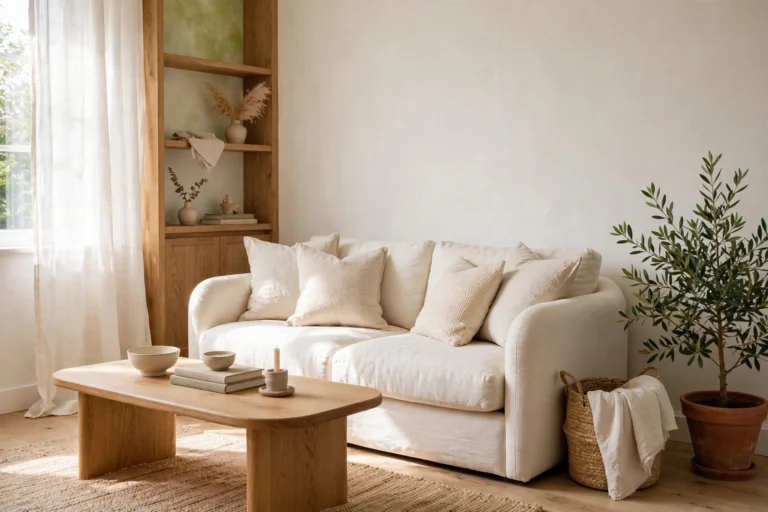
Not stark hospital white: a warm white with a hint of cream or beige. It brightens north-facing rooms that make cool whites look grey and sad, and it pairs with every floor and furniture color you already own. Best for: rentals, living rooms, hallways — anywhere you need one color to just work.
2. Pale greige — grey and beige’s diplomatic child
Greige reads modern like grey but warm like beige, which makes it the safest “not white” for small rooms. It hides scuffs better than white, photographs beautifully, and lets colorful furniture do the talking. Best for: bedrooms and living rooms with mixed wood tones.

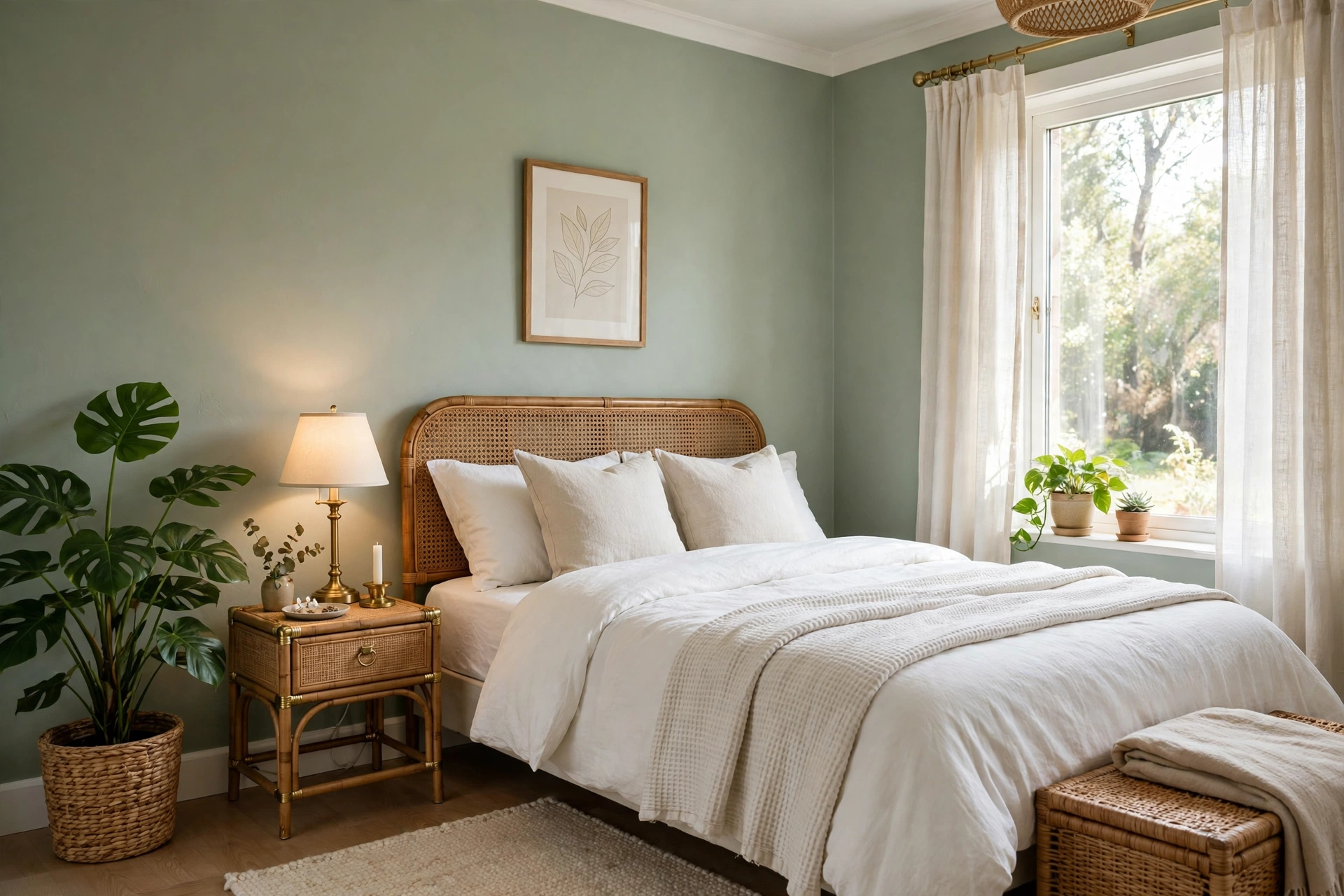
3. Soft sage green — the small-room cheat code
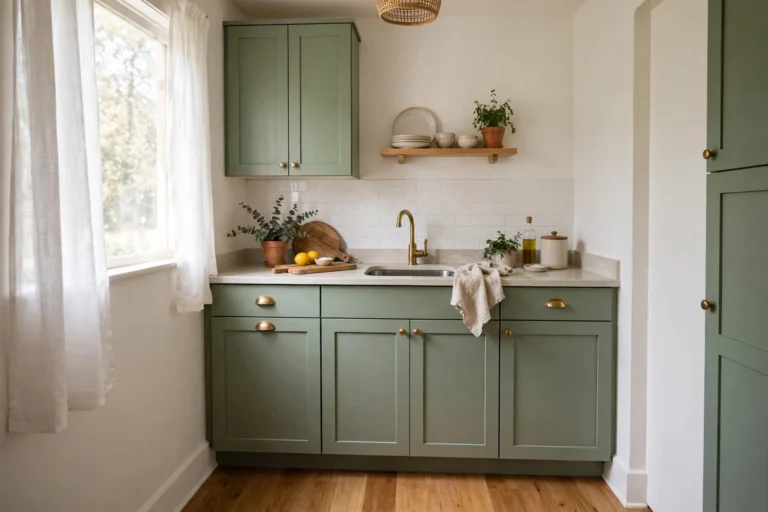
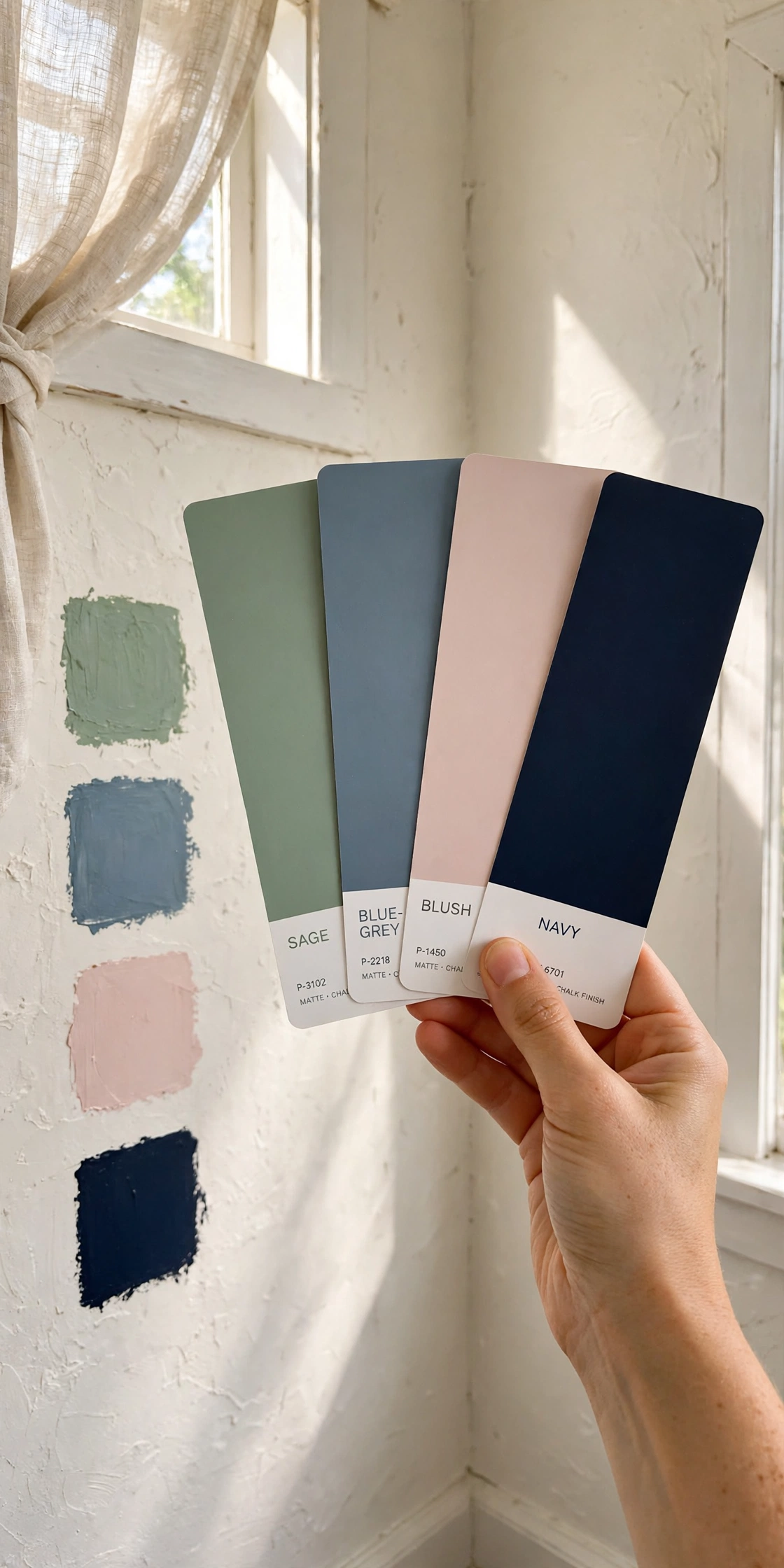
Sage is the color of the moment for a reason: it’s a cool tone (walls recede) with enough warmth to stay cozy, and it makes white trim and natural wood look expensive. In small bedrooms it’s close to unbeatable. Pair with: warm whites, rattan, brass, terracotta accents.
4. Powder blue-grey — instant extra “distance”
Blue-grey is the strongest space-expander on this list: our eyes associate the color with sky and haze, i.e. far away. Tiny bathrooms and small kitchens wear it beautifully, especially with white cabinets or tiles. Keep it pale — deep versions flip from airy to moody (which is a choice, not a mistake, in a bedroom).

5. Blush pale pink — warmth without darkness
A whisper of blush warms a small room the way candlelight does, flattering skin tones and making evenings feel softer. Choose a grey-leaning blush, not a sugary one, and it reads as a sophisticated neutral. Best for: bedrooms, dressing corners, nurseries that must grow up gracefully.

6. Pale butter yellow — the dark-room rescue
For small rooms with one small window, pale yellow manufactures sunshine. It’s the classic fix for basement rooms and north-facing kitchens. Keep saturation low — pastel, not school bus — and balance with white and light wood so it stays fresh, not loud.

7. Light warm grey — the modern neutral
Pure light grey (with warm undertones to dodge the “concrete cell” effect) makes small modern rooms look deliberate and gallery-clean, and it’s the best backdrop for bold art and colorful sofas. Test it in your actual light: greys shift more than any other family between morning and evening.
8. Creamy off-white with a green wink — the designer’s trick
Whites with a drop of green-grey (the family behind many “designer white” recommendations) stay bright but kill the yellow glare cheaper warm whites can have in sunny rooms. Best for: south-facing small rooms that get strong light.
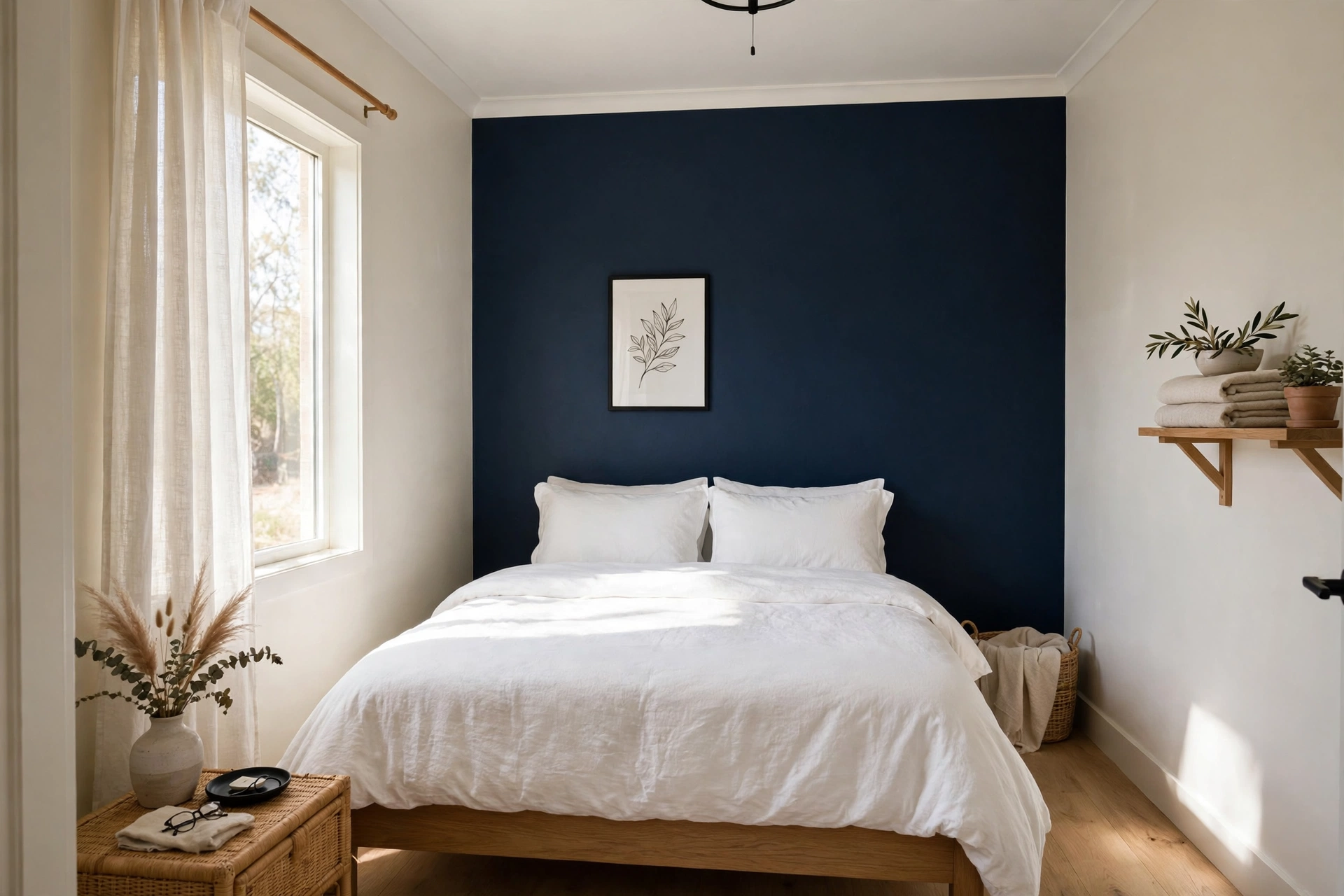
9. One deep accent wall — navy, forest or charcoal (the exception)
Yes, dark colors can work in small rooms — as ONE wall, ideally the wall behind the bed or sofa, with the other three walls pale. The deep wall blurs into shadow, the pale walls reflect, and the contrast makes the room read larger and more designed. Navy and forest green are the forgiving two; charcoal is drama for the confident.
Choosing in your actual room (the swatch ritual)
- Buy 2–3 sample pots of your finalists — never decide from a screen or a chip.
- Paint big swatches (poster-board size) and move them around the room.
- Look at them morning, noon and lamplight; small rooms exaggerate undertone shifts.
- Check against your floor — the floor is the one “color” you can’t easily change, and wall-floor clashes are the #1 reason a good color looks wrong.
The one-sentence summary
When in doubt: warm white everywhere, sage or blue-grey where you want calm, and one deep wall where you want drama. Small rooms don’t need safe colors — they need the right light behavior, and now you know which shades deliver it.
Picking colors? Save these swatches for your next paint run:
Wall Color FAQs
What is the single best wall color for a small room?
A warm white with a hint of cream. It reflects the most light, works in north- and south-facing rooms, and pairs with every floor and furniture color — the safest space-expander there is.
Do dark colors always make a room look smaller?
No. Four dark walls can close a room in, but one deep accent wall (navy, forest, charcoal) with pale walls elsewhere often makes a small room read larger and more designed, because the dark wall visually blurs into shadow.
How do I test a paint color before committing?
Paint poster-board-size swatches with sample pots and move them around the room. Check them in morning, noon and lamplight, and always against your floor — undertones shift through the day and floors are the color you can’t change.
What color should a small room’s ceiling be?
Lighter than the walls — usually a clean white. A lighter ceiling lifts the room visually and adds perceived height for free, whichever shade the walls wear.
Keep Decorating
Colors chosen? Put them to work: our peel-and-stick backsplash guide brings pattern into a small kitchen for under $100, and the cabinet painting guide shows the same shades on cabinets. Browse all Budget DIY Projects, or see everything new on the blog.
Want the designer shades everyone is using this year? Our 2026 colors of the year guide translates all seven for small rooms.
Ready to go the other direction? Our bold paint colors for small rooms shows how navy, emerald and wine shades make tiny rooms feel deeper, not smaller.