9 Ceiling Designs for Small Rooms That Make Low Ceilings Look Designer-Finished
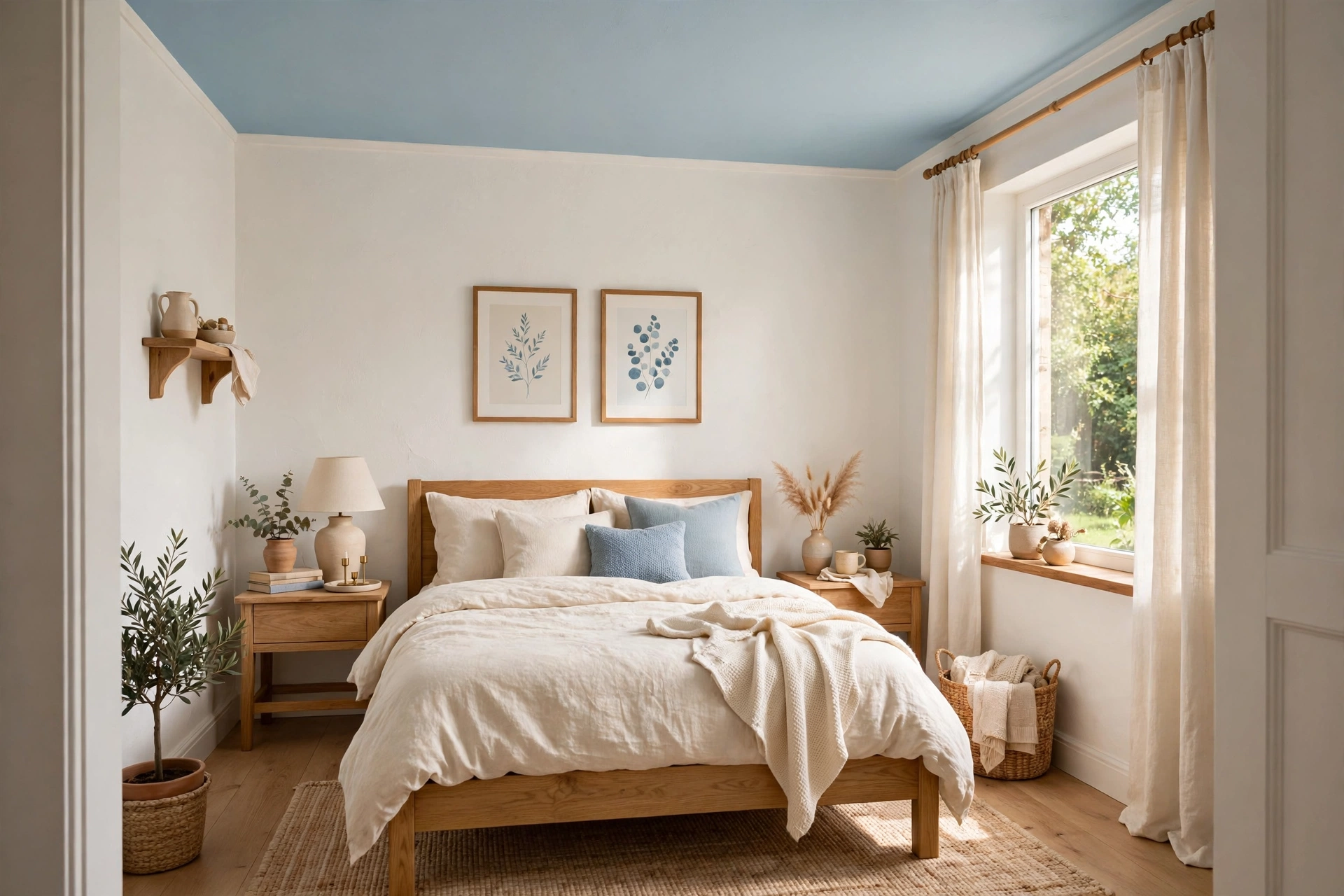
Nobody decorates the ceiling. We pick the paint, hang the curtains, obsess over the sofa — and then leave 120 square feet of flat white nothing overhead. In a small room, that’s a wasted surface and a wasted trick, because the ceiling is the one part of a room you never trip over. My turning point was almost an accident: I painted my bedroom ceiling a soft sky blue on a whim one Sunday, mostly to use up a leftover gallon. The room didn’t get bigger, obviously — but it felt taller, calmer, and finished in a way paint on the walls alone never managed.
Great rooms are built in layers, and the same is true of organizing your whole home room by room — the ceiling is just the layer everyone forgets. These nine ceiling designs all work in genuinely small rooms (think 8-foot ceilings and under 150 square feet), with the measurements and real costs that matter.
1. Paint It a Soft Color and Let It Breathe
The cheapest ceiling design there is: one gallon (3.8 liters) of paint, usually $35–50, and an afternoon. I painted my bedroom ceiling soft sky blue — the old Southern “haint blue” porch-ceiling trick, which was believed to keep insects away but actually just makes a room feel like it opens to the sky. A pale ceiling color — soft blue, warm peach, pale sage — draws the eye upward instead of stopping it at the wall line, and that’s the entire game in a low room.
Flat or matte finish is the move; anything with sheen shows every drywall flaw. If you’re choosing paint colors for a small room, put the ceiling on the shortlist instead of defaulting to “ceiling white” — the ceiling is the fifth wall, and it deserves a vote.
2. Add a Tray Ceiling Detail to a Small Bedroom
A tray ceiling is a recessed center panel with a stepped border — the middle sits a few inches higher than the perimeter, and that shallow depth fools the eye into reading more height. In the US it’s called a tray ceiling; in the UK you’d hear the same term, or it gets described as a dropped-border detail. Either way, it reads as architecture rather than decoration.
For a bedroom under 150 square feet, keep the drop modest: 2–4 inches (5–10 cm) is plenty, and paint the inner tray one shade lighter than the border so the recess glows. Professionally framed and drywalled, expect $500–1,200; the DIY version — a painted border with simple crown molding over the existing flat ceiling — runs under $100 in trim and paint and reads almost as well from a pillow’s distance.
3. Build a Shallow Coffered Grid in a Small Dining Room
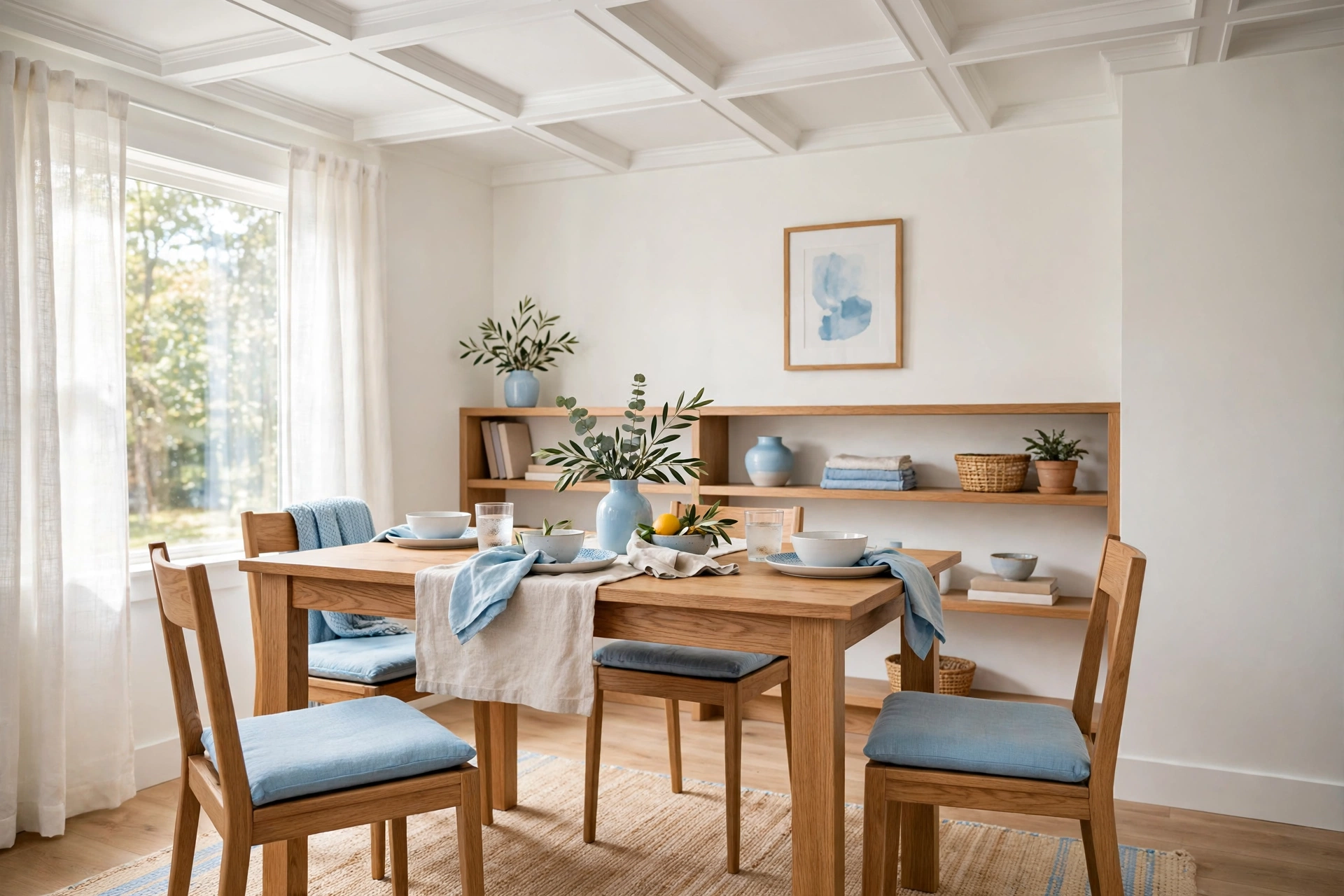
Coffered ceilings used to belong to 12-foot grand rooms and libraries. The small-room version is a shallow grid — beams just 2–3 inches (5–8 cm) deep laid out in a roughly 4×4-foot (120×120 cm) pattern. It gives a small dining room that tailored, finished feel without actually dropping the ceiling, because the beams sit proud of the surface rather than hanging below it.
Keep the beams the same white as the ceiling so they read as texture, not weight. Materials (primed pine strips, paint, caulk) come in under $150 for an 8×10-foot (240×300 cm) room, and the whole grid is a weekend project with a miter saw.
4. Try a Beadboard Ceiling for Instant Cottage Height
Beadboard — those narrow grooved panels — reads as height the way vertical stripes read as slimness. Run the boards toward the window so the lines pull the eye outward, and paint them the same soft white as the walls for one seamless surface that blurs where the wall ends and the ceiling begins.
PVC beadboard panels run about $30–40 per 4×8-foot (120×240 cm) sheet, weigh almost nothing, and go up with construction adhesive over a flat ceiling — no demolition, and friendly to older homes with uneven plaster. In a small bathroom or hallway, it turns a forgettable ceiling into the room’s best feature for the price of a dinner out.
5. Hang Slim Faux Beams, Hung Right
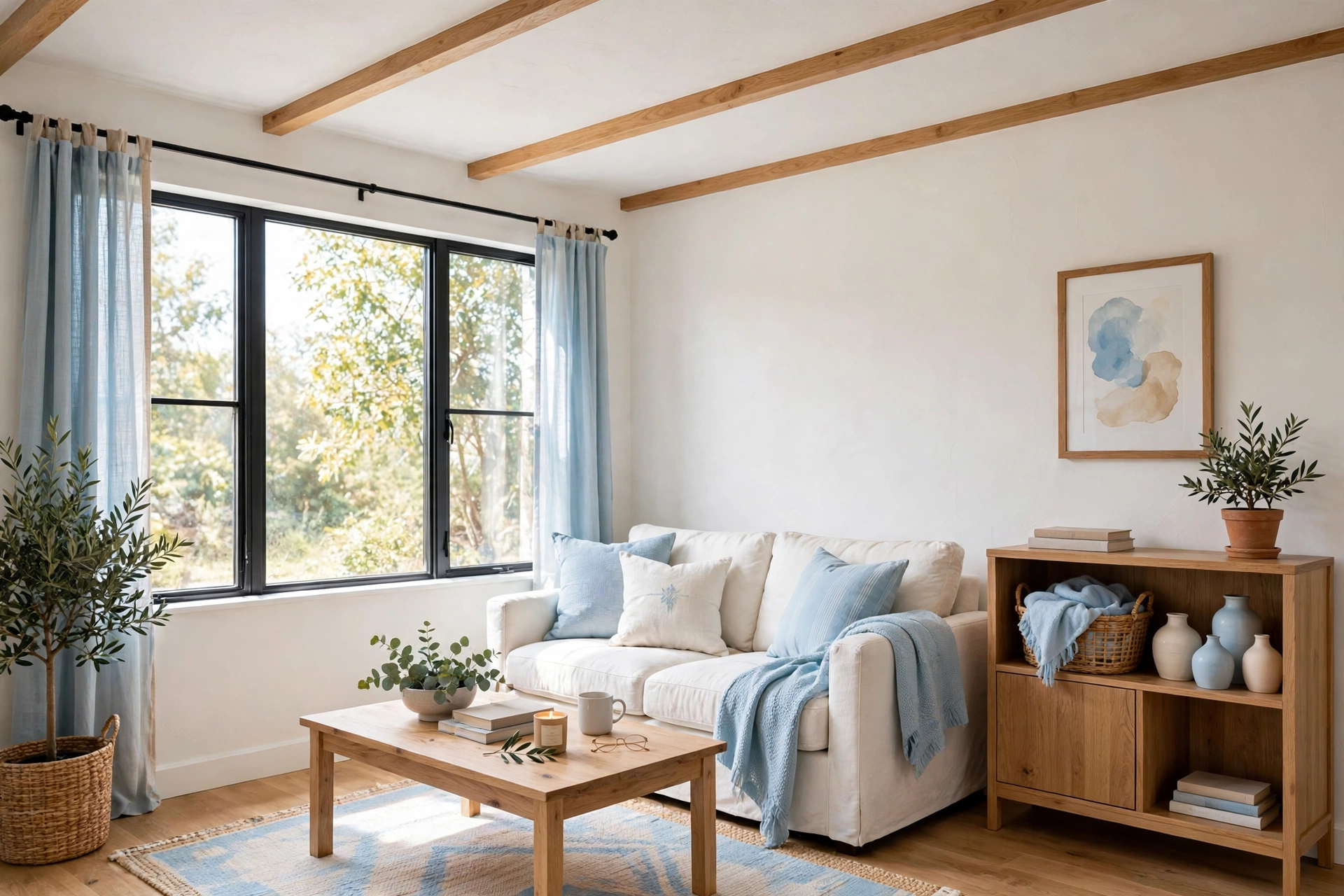
Wood beams in a small room sound like a mistake, but slim, light-colored faux beams do the opposite of what you’d expect: the lines draw the eye along the room’s longest dimension, which reads as length. The rules are strict, though — keep them narrow, 4–6 inches (10–15 cm) wide, space them 3–4 feet (90–120 cm) apart, and stain them no darker than the floor.
Hollow faux beams weigh almost nothing and screw straight into the ceiling joists, and in a room where small living room layouts already pull double duty, slim beams add character without stealing an inch of headroom. Chunky dark beams below an 8-foot (240 cm) ceiling are the mistake version — same idea, wrong proportions.
6. Take the Dark Ceiling Gamble
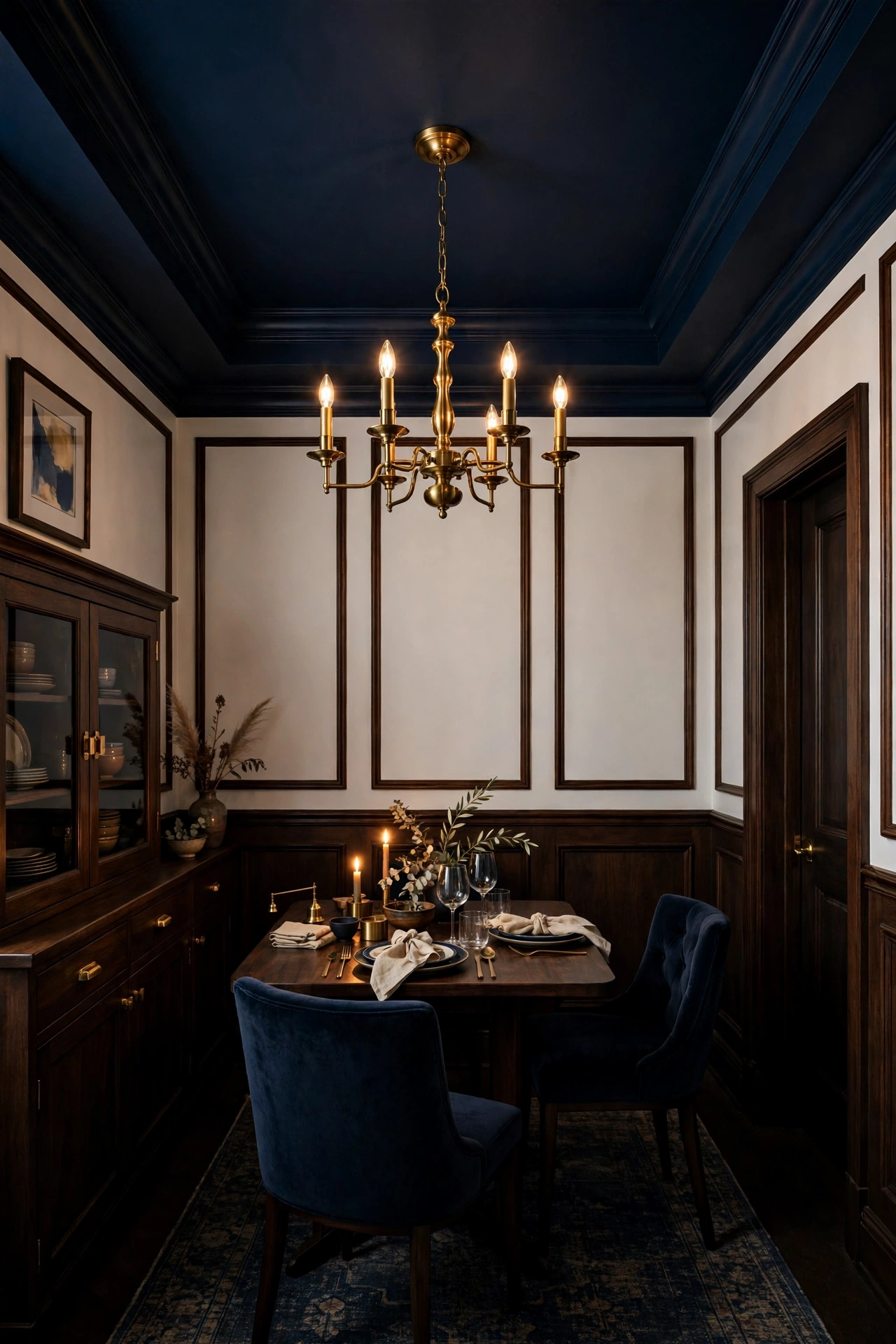
Painting a small-room ceiling inky navy or espresso brown sounds like a cave. Done right, it’s the jewel-box effect: a dark plane overhead recedes from the eye, so the ceiling feels farther away, and everything pale beneath it glows. The non-negotiable rule is that all four walls stay light — the ceiling gets to be the single dark plane in the room.
This is where the supporting cast matters: get the curtain and wall color pairings right, keep the furniture light, and the room reads as moody and expensive instead of small and dark. Start with a powder room or a small study before committing the bedroom.
7. Try the Striped Ceiling Moment
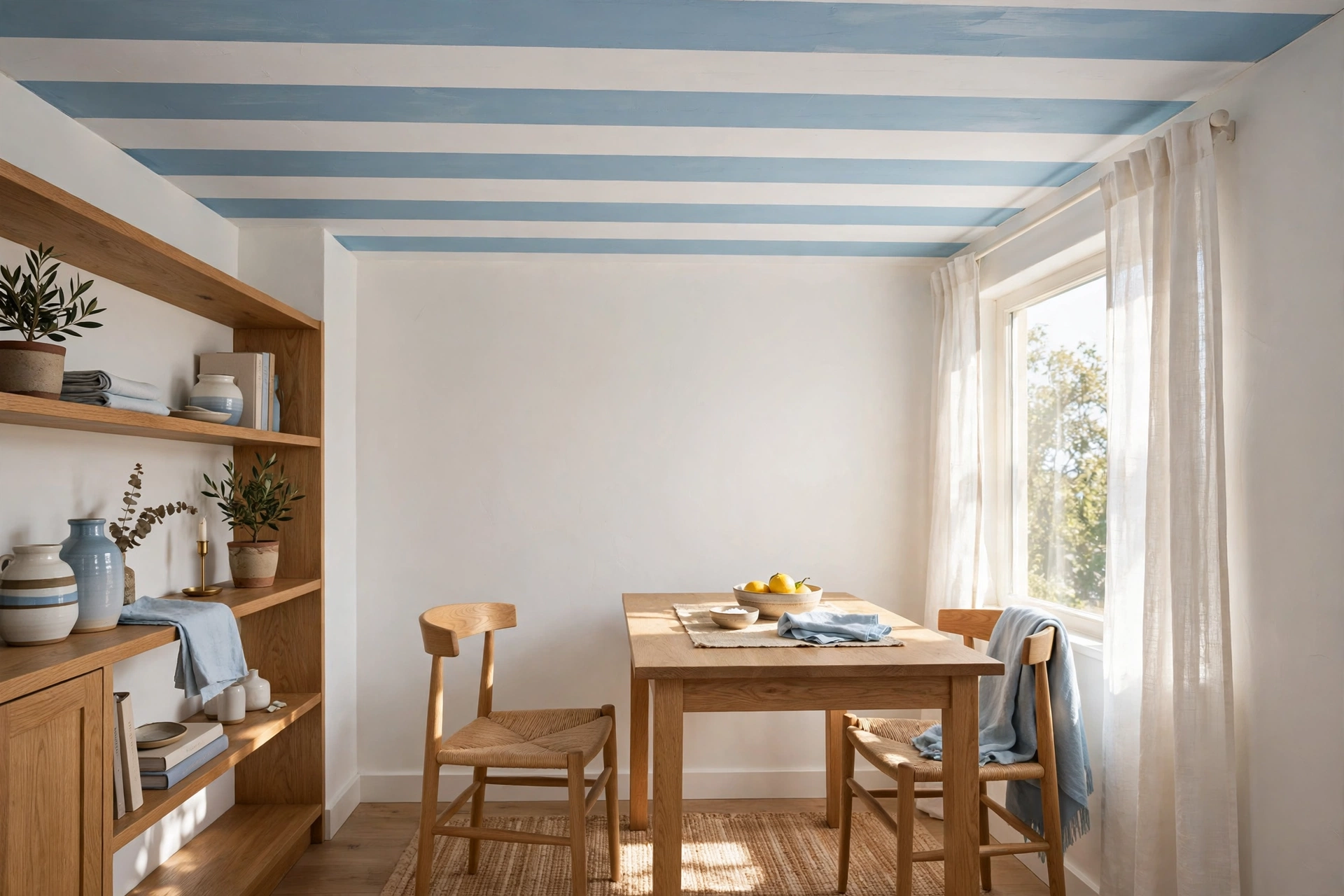
Pinterest searches for striped ceilings jumped about 40% in the 2026 trend reports, and this is the one ceiling trend renters can genuinely play with. Painted stripes — or removable striped wallpaper on the ceiling — stretch the room along the direction of the stripes: run them toward the window to make the room feel longer, across it to make it feel wider.
Keep the contrast soft (warm white and pale blue, not black and white) and the stripes wide, 6–8 inches (15–20 cm), so the effect stays elegant rather than circus-tent. Peel-and-stick wallpaper versions come off clean when the lease ends, which makes this the highest-impact reversible ceiling design on the list.
8. Wallpaper the Fifth Wall
A small powder room, entryway, or laundry corner is the perfect place to wallpaper the ceiling, because one roll usually covers it and there’s nowhere for the pattern to get boring. A soft grasscloth, a pale botanical, or even a subtle mural turns the overhead plane into art — and in a room with no wall space to spare, the ceiling is the only wall you haven’t used yet.
The trick is scale: small, busy patterns feel rich overhead (you see them at a glance, never up close), while large-scale murals need enough ceiling to breathe. Either way, paste-the-wall wallpaper on a primed ceiling is a one-day job that photographs like a renovation.
9. The Slim “Drop Ceiling” — Recessed Light Done Right
The old office drop ceiling (called a suspended ceiling in the UK) earned its bad name from 2×4-foot acoustic tiles and fluorescent panels. The modern version is a slim gypsum — drywall — soffit around the perimeter of the room, what builders in South Asia call a false ceiling or POP ceiling, kept just 4–6 inches (10–15 cm) deep. Inside it sit slim LED recessed cans and a hidden LED strip that washes the center of the ceiling with light.
In US and UK terms, ask a contractor for a “perimeter tray” or “cove ceiling” rather than a full drop, and the lit cove makes an 8-foot ceiling feel a foot taller because the light source is invisible. It’s the priciest idea on this list — $1,500–3,000 professionally — but it’s also the one that changes how the room feels at night, when small rooms usually feel smallest.
The through-line in all nine is simple: the ceiling is the largest uninterrupted surface in a small room, and right now it’s probably doing nothing. One gallon of paint, one weekend of trim, or one bold roll of wallpaper is all it takes to put it to work.
Frequently Asked Questions
Can a ceiling design really make a small room look bigger?
Yes — anything that draws the eye upward or blurs the line where the wall meets the ceiling makes the eye read more volume. A painted ceiling, a tray detail, or slim beams all work this way, and they cost far less than moving a wall.
What’s the best ceiling design for a low ceiling?
A tray detail or a painted ceiling color, both of which add perceived height without taking any. Below 8 feet (240 cm), skip deep coffers and chunky beams — they eat headroom and make the ceiling feel closer.
Is painting the ceiling dark a bad idea in a small room?
Only if the walls go dark too. One dark plane overhead with light walls creates depth and makes the ceiling recede; dark walls plus a dark ceiling in a small room is what creates the cave feeling.
Can renters do any of these ceiling ideas?
Paint is only an option if the lease allows it and you can repaint white on the way out. For everyone else: removable striped or patterned wallpaper, peel-and-stick ceiling tiles, and tension-rod fabric canopies all come off clean and need no drilling — check the lease wording first.