Small Home Office Organization: 11 Ways to Make a Tiny Desk Zone Work Hard
The best way to organize a small home office is to give every work item a home within arm’s reach: a desk that fits the footprint, wall storage above it, one drawer system for supplies, and a cable setup you never have to look at. You do not need a spare room or a big budget — you need a system, and a system is exactly what a tiny desk zone rewards, because there is nowhere for clutter to hide.
If you work from a corner of a bedroom, a living-room wall, or a closet you converted last weekend, this guide is for you. These 11 ideas are organized the way you should organize the space itself: spot first, furniture second, walls third, then the daily habits that keep it all working.
Claim the Right Spot First
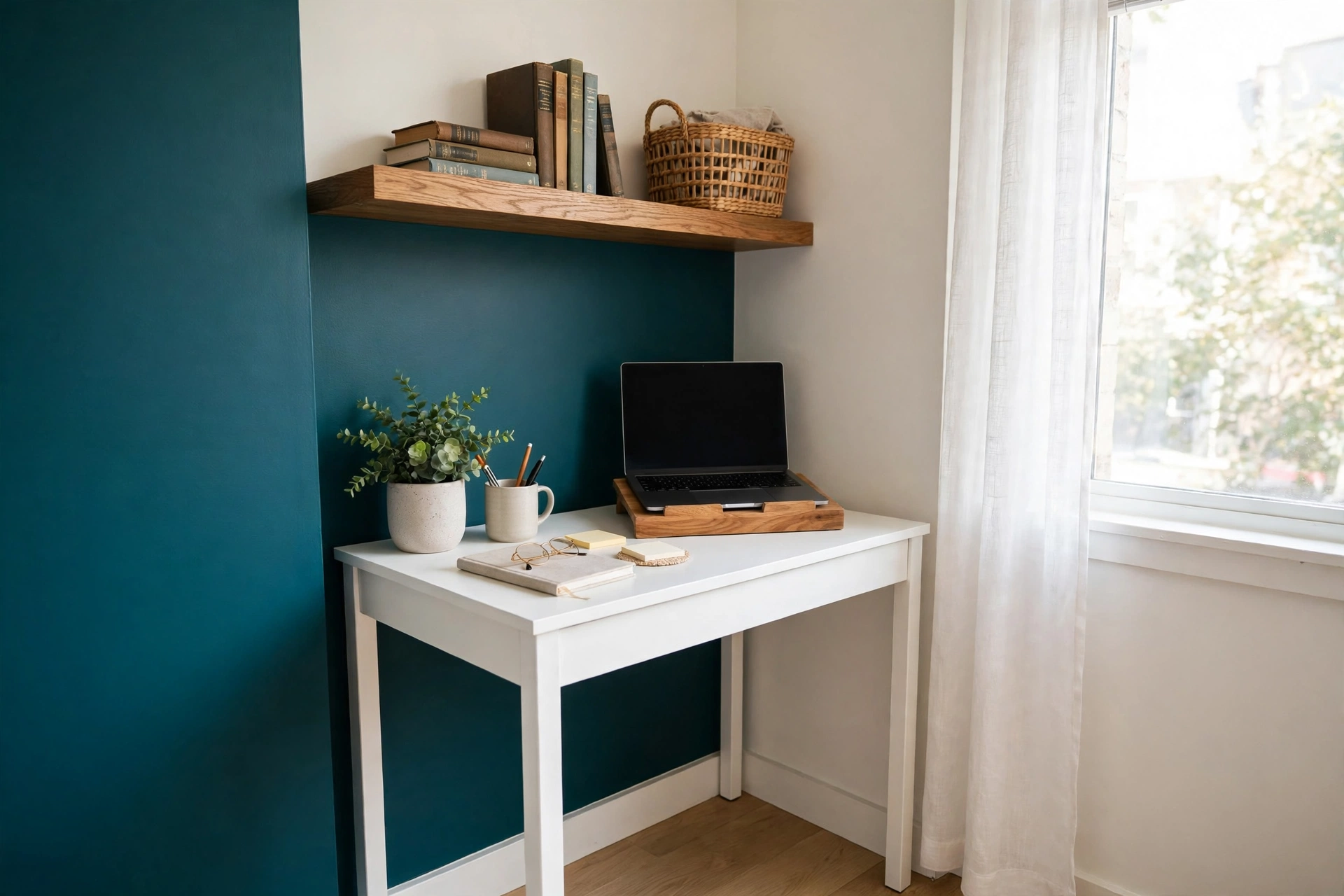
1. Take a corner, not the middle of a room. A desk pushed into a corner borrows two walls for free, which means nothing slides off the back and you gain a natural boundary between work and living. A corner also leaves the center of the room open, so the space still feels like a bedroom or living room after you log off. When you are zoning one room into living and working areas, a corner desk plus a small rug underneath it reads as a ‘room’ all on its own, no partition needed.
2. Steal an alcove, a nook, or the wall beside a window. The best small-office spots are the ones nobody else wants: the dead wall beside a wardrobe, the recess next to a fireplace, the 3-foot (91 cm) stretch under a window. Natural light matters more here than square footage — a desk facing a window beats a bigger desk facing a blank wall, because daylight keeps the zone pleasant and keeps you from needing a lamp at noon. If the only free wall is noisy or dark, add a small task lamp and a pair of headphones; noise control is part of the setup, not an afterthought.
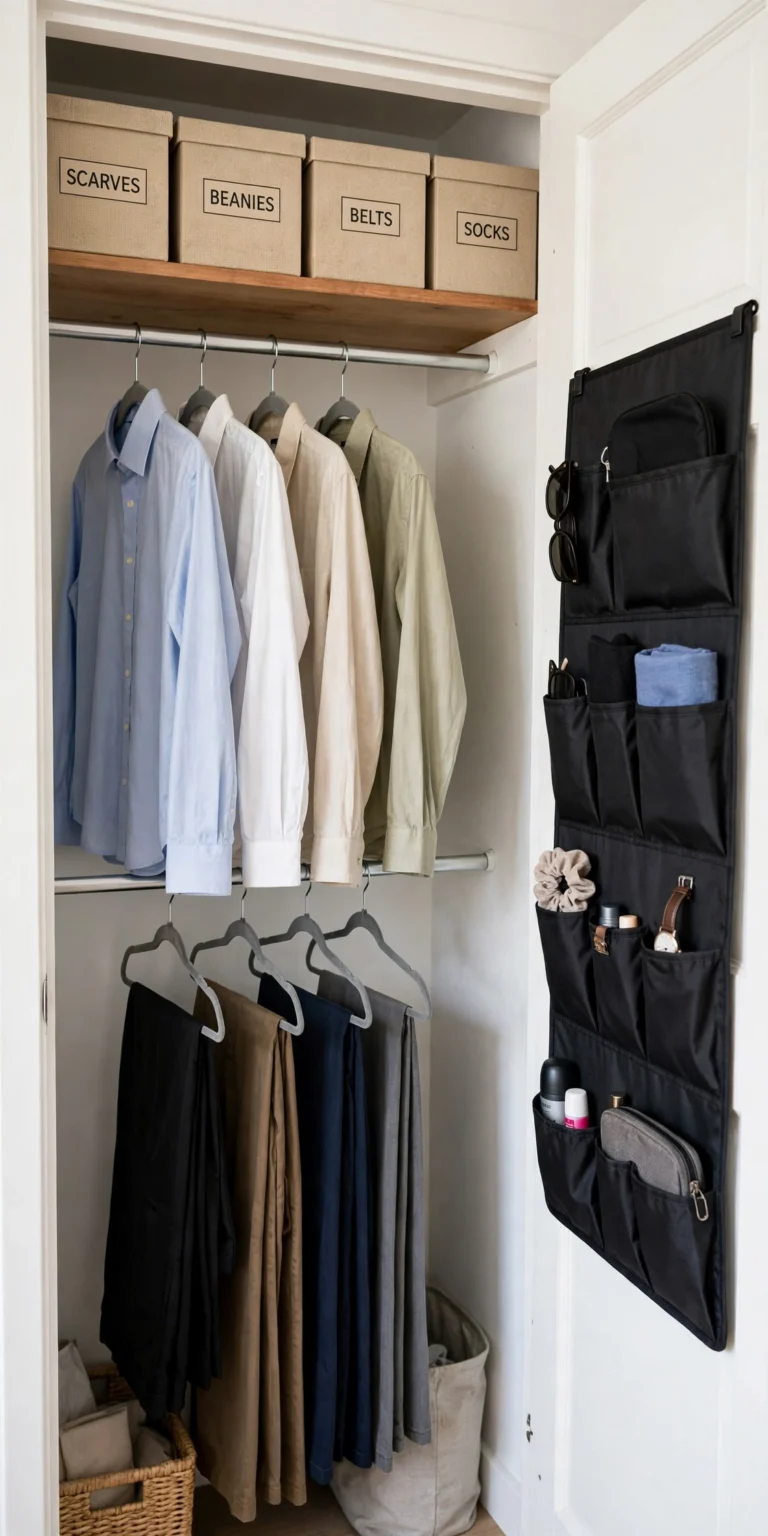
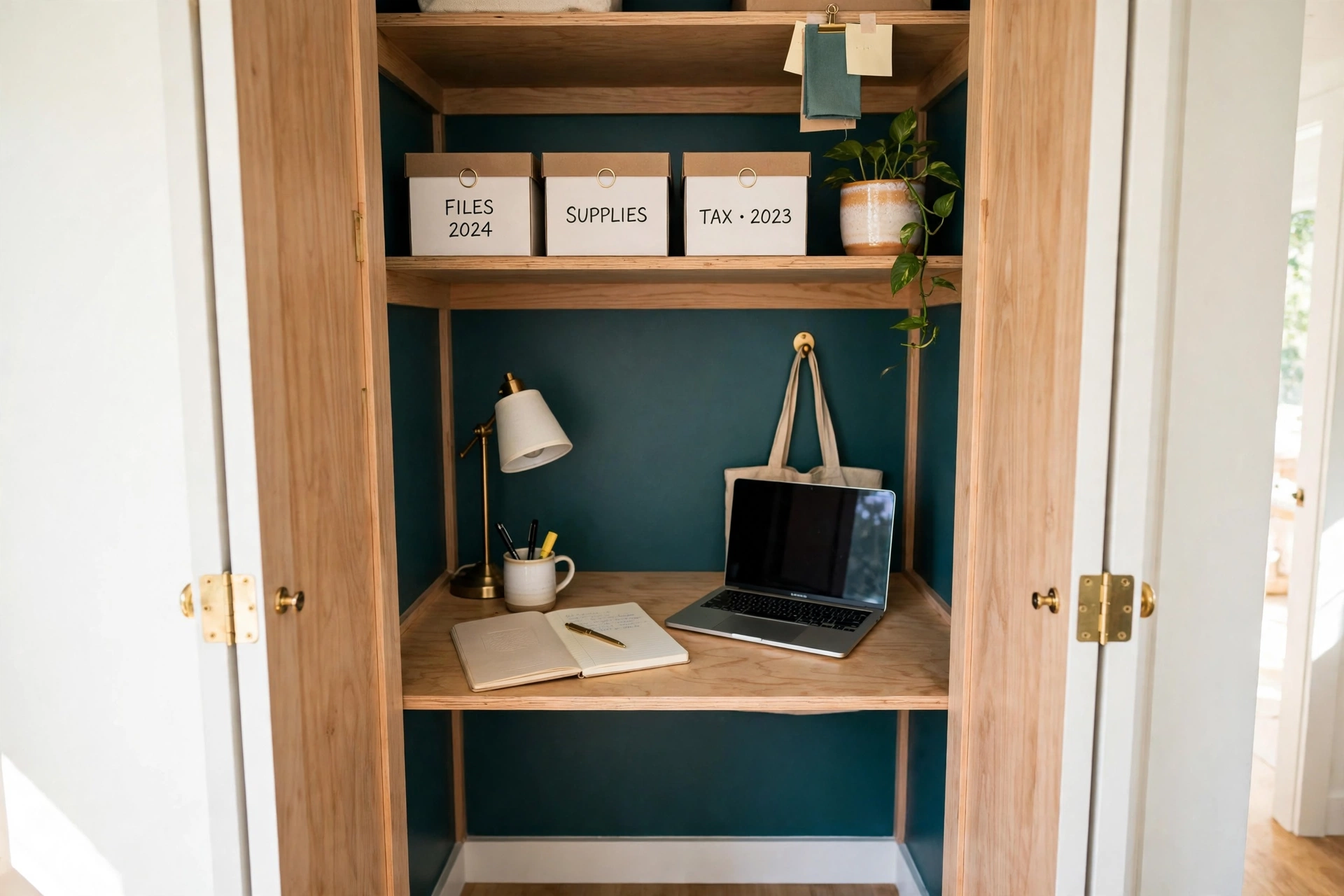
3. Consider a cloffice — a closet turned into an office. If you have a spare closet, even a shallow reach-in one, you have a nearly perfect tiny office: the doors close at 5 p.m. and the mess disappears. Remove the door or keep it, add a shelf at desk height (about 29 to 30 inches, or 74 to 76 cm), and mount a shelf above for supplies. Good closet organization ideas translate directly here, because a cloffice is really a closet that changed jobs. Keep the rod if you can: it holds a hanging file or a small basket for chargers and keeps the floor clear.
Pick a Desk and Chair That Fit the Footprint
4. Choose a desk sized for the work, not the room you wish you had. A writing desk 40 to 48 inches (102 to 122 cm) wide holds a laptop, a notebook, and a coffee mug — that is the whole job for most people. If even that is too wide, a fold-down wall desk gives you a work surface that vanishes after hours, and a narrow console table can double as a desk in a hallway nook. Measure the chair’s push-back space too: you need about 30 inches (76 cm) behind the desk to sit and stand comfortably, and forgetting that clearance is the most common small-office mistake.
5. Buy the chair for your back, then make it disappear. An ergonomic chair with lumbar support is worth more than a prettier desk, because a bad chair ends the workday early. The trick in a small space is a chair that tucks fully under the desk or folds flat against the wall when you are done. Armless chairs slide under desks more easily, and a chair with a small footprint keeps the zone from swallowing the room. If your budget is tight, a well-chosen budget home office setup can still get the chair right — comfort first, looks second.
Build Up: Shelves, Pegboards and Wall Storage
6. Put a shelf above the desk, at eye level or just above. The wall above a desk is the most underused storage in a small home. One shelf at about 18 inches (46 cm) above the desk surface holds reference books, a plant, and a small bin for supplies, all without costing a single inch of floor. Two shelves turn the zone into a proper workstation, but keep the lowest shelf high enough that your monitor or laptop screen is never blocked. This is the same logic as floating shelves elsewhere in a small home: the wall does the work the floor cannot.
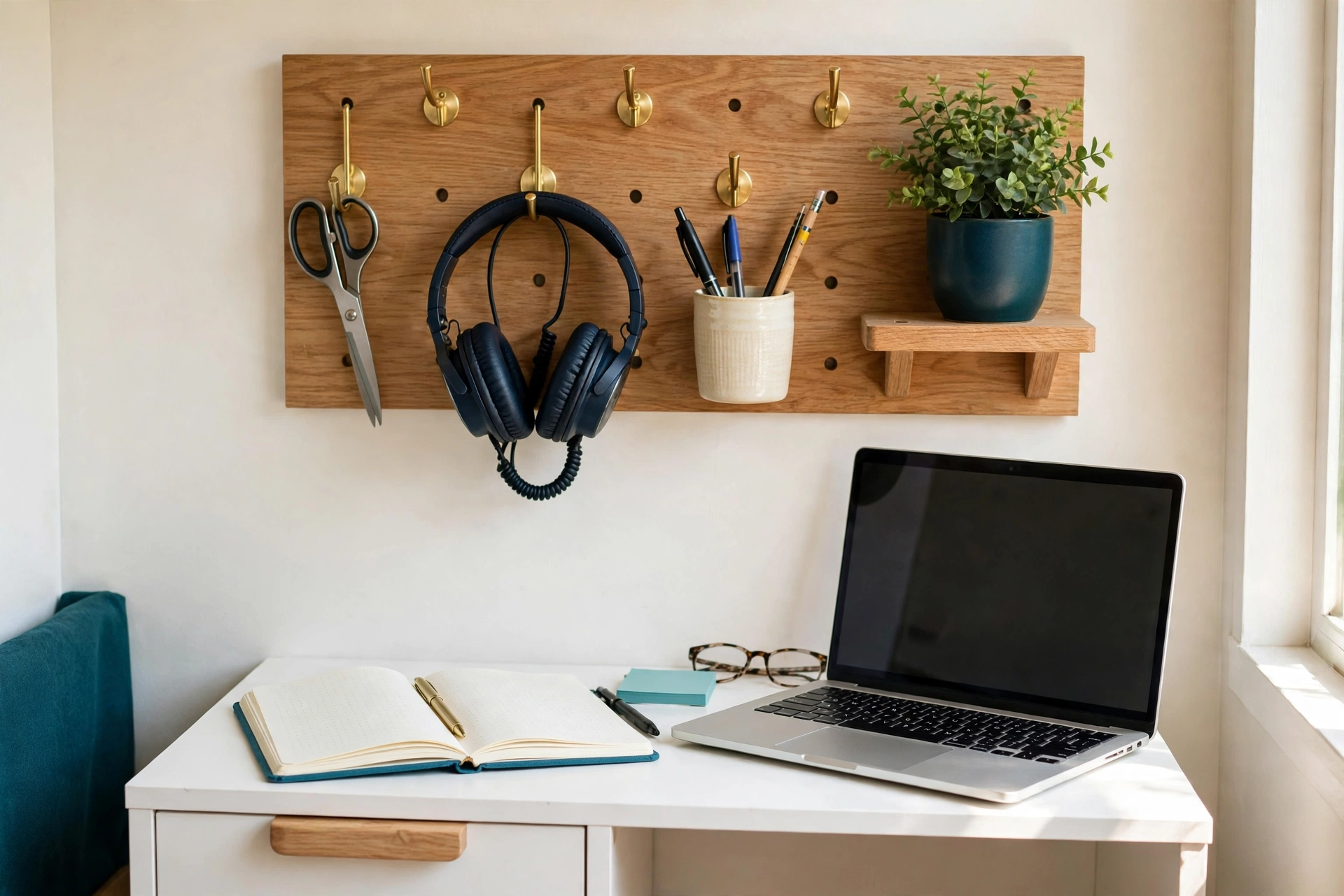
7. Hang a pegboard or wall grid for the small stuff. Scissors, cables, headphones, tape, and pens are exactly the items that colonize a desk surface, and a pegboard gets all of them onto the wall where you can see them. A 24-by-36-inch (61-by-91 cm) pegboard above the desk, fitted with a few hooks, cups, and a small shelf, replaces a whole drawer of junk. A wall grid works the same way and looks a little softer if pegboard feels too workshop-like. Either way, the rule is simple: if you reach for it daily, it lives on the wall; if you reach for it weekly, it lives in a drawer.
Tame the Desk Surface, Drawers and Paper
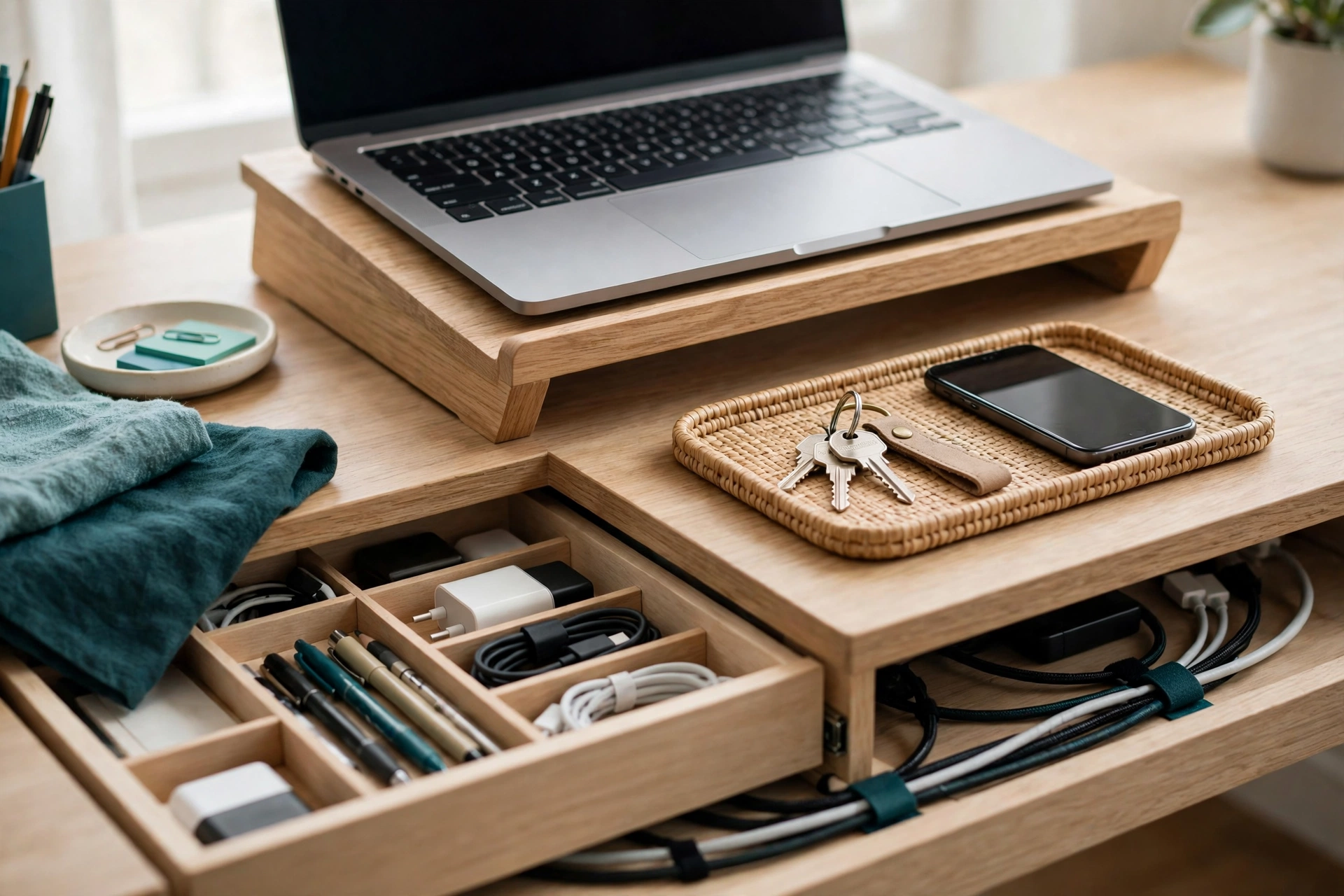
8. Give the desk one landing zone and defend it. Every desk needs a single spot where keys, phone, and wallet land — a small tray or a shallow bowl at the desk’s corner. Without it, those items spread across the whole surface by lunchtime. Keep the rest of the surface to three things: the computer, one notebook, and one pen. Everything else earns its place on the wall or in a drawer, or it leaves the desk entirely.
9. Divide one drawer and fix paper once a week. A single drawer with dividers beats a desk full of organizers: pens in one section, chargers in another, notebooks stacked flat in a third. Paper needs its own weekly habit, not a filing cabinet — an in-tray for incoming paper, a small file for the few pages worth keeping, and a Friday rule that anything unfiled gets scanned or recycled. The end-of-day reset below only works if paper has somewhere to go, and a drawer with dividers is that somewhere.
Hide the Cables and Corral the Tech
10. Mount the power strip and tray the cables out of sight. Cable mess is the fastest way a tidy desk looks chaotic, and it is the easiest to fix permanently. Screw or stick a power strip under the desk, run cables through an under-desk tray or a few adhesive clips, and coil the slack with reusable ties. A laptop stand helps twice over: it lifts the screen to eye level for better posture, and it hides the charger brick underneath. Add a small charging station — one strip, one spot — so phones and headphones never colonize the desk surface.
11. End every workday with a two-minute reset. Organization systems fail without a closing habit, and this one takes two minutes: clear the surface to the three essentials, return wall items to their hooks, plug in anything that needs charging, and close the notebook. Done daily, the reset means Monday morning starts at a clean desk instead of last week’s mess. It is the same discipline that makes organizing your whole home room by room actually stick — small systems, repeated daily, beat big reorganizations every time.
A small home office does not need more space. It needs a spot with light, furniture that fits, walls that work, and two minutes of maintenance a day. Set those four things up this weekend, and the tiniest desk zone will start feeling like a real office — one you actually want to sit down at on Monday morning.
How do I organize my office with limited space?
Start with the spot, then the furniture, then the walls: claim a corner or nook, pick a desk that fits the footprint, add one shelf and a pegboard above it, and finish with a drawer system and a cable tray. The order matters — storage bought before the spot is chosen usually ends up in the wrong place.
What is a cloffice and how do I make one?
A cloffice is a closet converted into an office. Remove or keep the closet door, install a shelf at desk height (about 29 to 30 inches, or 74 to 76 cm), add a shelf above for supplies, and use the rod for a hanging basket or file. It works best in a closet at least 24 inches (61 cm) deep so your knees fit under the desk shelf.
What desk is best for a small space?
A writing desk 40 to 48 inches (102 to 122 cm) wide suits most laptop work. If floor space is very tight, a fold-down wall desk or a narrow console table works better, as long as you keep about 30 inches (76 cm) of push-back space behind it for the chair.
How can I hide messy cables on my desk?
Mount a power strip under the desk, run cables through an under-desk tray or adhesive clips, coil slack with reusable ties, and keep one charging station for phones and headphones. A laptop stand also hides the charger brick and improves posture at the same time.