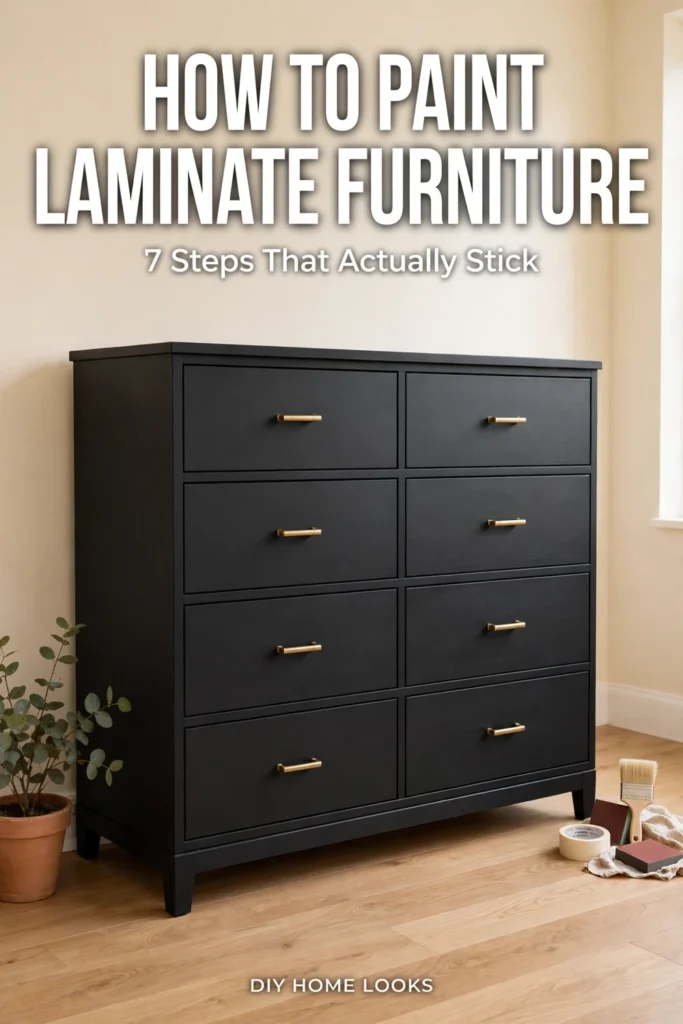
How to Paint Laminate Furniture: 7 Steps That Actually Stick
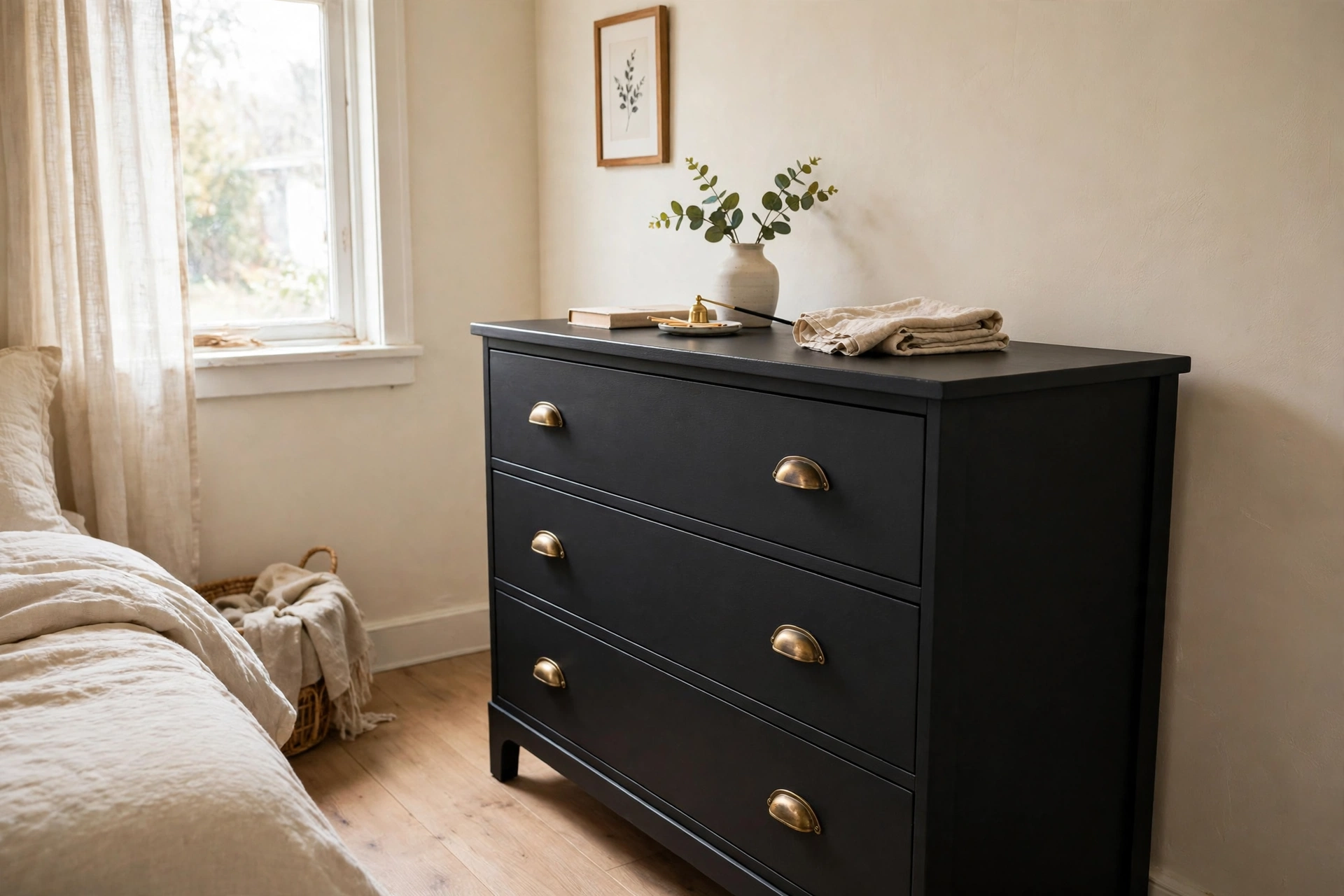
If you want to know how to paint laminate furniture so the finish lasts for years, the answer is simple. The trick is not the paint. It is the prep and the primer. Laminate is plastic on the surface, so ordinary paint slides off it. A bonding primer is what makes the paint grab hold.
Here is the number that decides your shopping list. One quart of primer and one quart of paint cover any single piece in this guide, from a nightstand to a six drawer dresser. I worked that out from the manufacturers own coverage figures, and the table below shows the math for four common pieces. That means a thrifted flat pack dresser can get a whole new life for about $59 to $76 in supplies, as of November 2026.
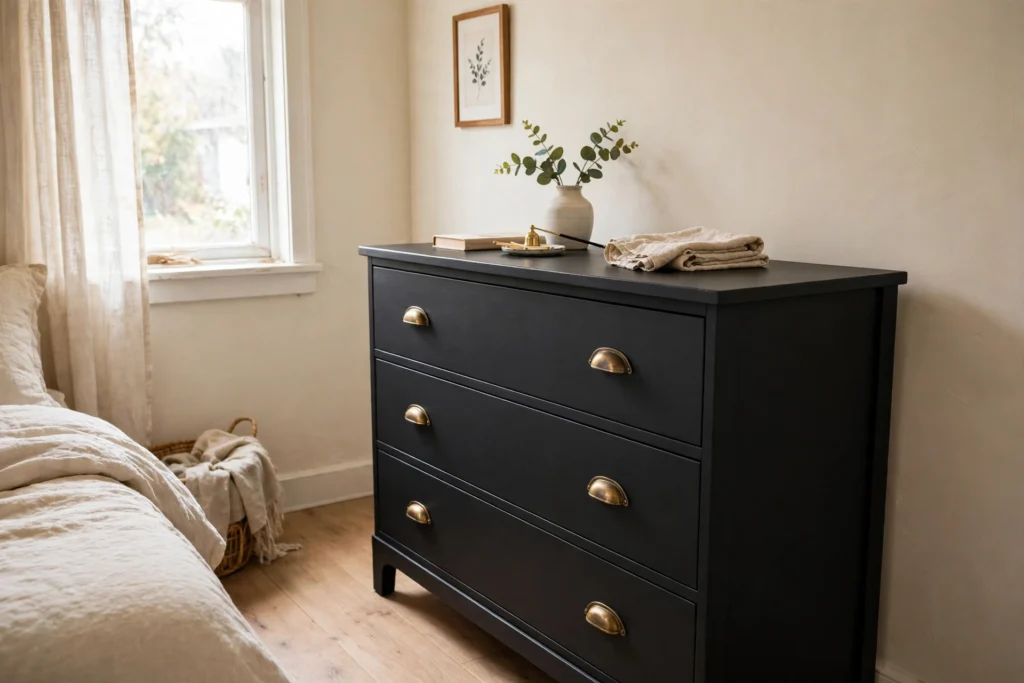
What is laminate furniture, really? Start by naming your surface
Before you buy anything, work out what you are actually painting. Three different surfaces hide under the word laminate, and each one behaves differently.
Plastic laminate (high pressure laminate) is the hard, slick sheet you see on countertop style furniture and older dressers. It sometimes has a visible seam at the edges. It takes paint well once it is scuffed and primed.
Melamine is a resin coated panel, common on flat pack furniture. It is very smooth and uniform, often with edge banding tape. It is the slickest of the three, so the bonding primer matters most here.
Thermofoil is a thin vinyl layer heat wrapped over MDF, common on cabinet doors with routed or shaped profiles. This one is the trickiest. If it is peeling at corners and edges, paint will not glue it back down for long. Re adhere loose sections first, or remove the foil and refinish the MDF underneath. If thermofoil is actively peeling, that is often a sign to pick a different piece.
| Surface | How to spot it | Paints well? |
|---|---|---|
| Plastic laminate | Hard, slick, visible seam at edges | Yes, with scuff sand and bonding primer |
| Melamine | Very smooth, uniform, edge banding tape | Yes, but needs the strongest bonding primer |
| Thermofoil | Vinyl wrapped, shaped profiles, can peel | Only if firmly stuck; peeling foil should be removed first |
A quick test helps. Press a fingernail into a hidden edge. If the surface is hard and glossy and your nail slides, it is laminate or melamine. If the edge feels like a thin plastic skin that lifts, it is thermofoil. Knowing this before you start saves you from painting a piece that was always going to fail. If your piece turns out to be real wood instead, the process is different, and our guide to painted kitchen cabinets for under $200 shows the wood route.
Can you paint laminate furniture without sanding?
Yes, but only if the bonding primer does the work sanding would have done. This is the question every reader asks first, and the honest answer has two parts.
You can skip sanding when the finish is in good condition, with no peeling or deep gouges, and you use a true bonding primer made for slick surfaces. Products like Zinsser B-I-N or INSL-X Stix are built to grip non porous factory finishes. Clean the piece thoroughly first, because grease and silicone polish will defeat even the best primer.
You should not skip sanding when the surface is glossy enough to reflect like a mirror, when there are stains or old paint spots, or when you want the longest lasting finish you can get. A light scuff sand takes 20 minutes on a dresser and it is the cheapest insurance in this whole project. Sanding is always recommended for a professional finish that stands the test of time, and the no sand route is a time saver, not a better finish.
Two more no sand options exist. Liquid sandpaper, also called a deglosser, chemically dulls the surface so primer can grip. It is faster than sanding a large piece and it works well on flat panels. Chalk paint also sticks to laminate with little prep, but it needs a wax or sealer on top, and it is not the toughest finish for a dresser top that gets daily use. More on both in the paint section below.
Which primer actually sticks to laminate?
Primer is the whole project. Paint is just the color on top. A regular primer is made for porous wood, and it slides off laminate the same way paint does. You need a bonding primer, and there are three honest choices.
| Primer | Base | Recoat time | Cleanup | Stain blocking | Quart price, Nov 2026 |
|---|---|---|---|---|---|
| Zinsser B-I-N | Shellac | 45 minutes | Denatured alcohol | Excellent | About $25 |
| INSL-X Stix | Waterborne bonding | 1 to 2 hours | Soap and water | Good | About $11 to $14 |
| Zinsser Bulls Eye 1-2-3 | Water based | About 1 hour | Soap and water | Good | About $8 |
Zinsser B-I-N. Best for: the hardest cases, stained pieces, and dark to light color changes. Main advantage: the strongest grip of the three, and it blocks stains and odors nothing else on the shelf can touch. Watch out for: strong alcohol smell, so ventilation is not optional, and cleanup needs denatured alcohol. It dries to the touch in 15 to 20 minutes and reaches full cure in about 7 days. Verdict: buy this one if the piece is stained, smells of smoke, or you are going from dark to white.
INSL-X Stix. Best for: clean laminate and thermofoil in good condition. Main advantage: made specifically to bond to slick surfaces, low odor, and it cleans up with soap and water, so you can use it in a lived in room. Watch out for: weaker stain blocking than shellac, and a longer recoat wait of 1 to 2 hours. Verdict: the best default pick for most laminate furniture, and the one I would hand a first timer.
Zinsser Bulls Eye 1-2-3. Best for: budget jobs on clean, light colored laminate. Main advantage: the cheapest of the three and widely available. Watch out for: it is a good all surface primer, not a dedicated bonding primer, so it is the weakest grip here. Verdict: fine for a low use piece like a bookshelf, but not the pick for a dresser top that takes daily abuse.
One rule covers all three. Apply one thin, even coat. Thick primer stays soft longer, textures badly, and actually holds worse than a thin coat. Brush the corners first, then roll the flat areas with a foam roller for the smoothest finish.
How much paint and primer does one piece need?
This is the table no top result gives you, and it is the reason you should buy quarts, not gallons. I measured four common pieces from their outside dimensions and worked out the paintable surface, then checked it against the manufacturers coverage figures. Zinsser B-I-N covers about 125 sq ft per quart in practice, and a cabinet enamel covers about 90 to 100 sq ft per quart.
| Piece | Size (inches) | Paintable surface | Primer (1 coat) | Paint (2 coats) | Buy |
|---|---|---|---|---|---|
| Nightstand | 18 x 16 x 24 | About 10 sq ft | 10 sq ft | 20 sq ft | 1 qt primer, 1 qt paint |
| 6-drawer dresser | 60 x 18 x 30 | About 28 sq ft | 28 sq ft | 56 sq ft | 1 qt primer, 1 qt paint |
| Bookshelf | 36 x 12 x 72 | About 30 sq ft | 30 sq ft | 60 sq ft | 1 qt primer, 1 qt paint |
| Desk | 48 x 24 x 30 | About 18 sq ft | 18 sq ft | 36 sq ft | 1 qt primer, 1 qt paint |
Two useful facts fall out of this table. First, one quart of primer covers three to four average pieces, because a single coat on a dresser uses only 28 of its 125 sq ft. Second, one quart of paint covers two average pieces, because a dresser plus a nightstand need 76 sq ft for two coats, and a quart covers about 90. So if you are painting a bedroom set, buy one quart of primer and two quarts of paint, not a gallon of either. The numbers above count the outside faces and drawer fronts. If you paint the inside of drawers too, add about a third more paint.
How to paint laminate furniture in 7 steps
Each of the 7 steps below answers one part of how to paint laminate furniture, from naming the surface to letting the paint cure.
Materials you need: degreaser or TSP substitute, 220 grit sandpaper and a sanding sponge, tack cloth, bonding primer, cabinet or trim enamel, a foam roller and a 2 inch brush, painter’s tape, a drop cloth, a screwdriver, and wood filler for chips. Time: about 4 to 5 hours of active work spread across a weekend, plus drying time. Light use after 24 to 48 hours. Full cure takes about 7 days for shellac primer, and waterborne enamel keeps hardening for weeks, so treat the piece gently for the first month.
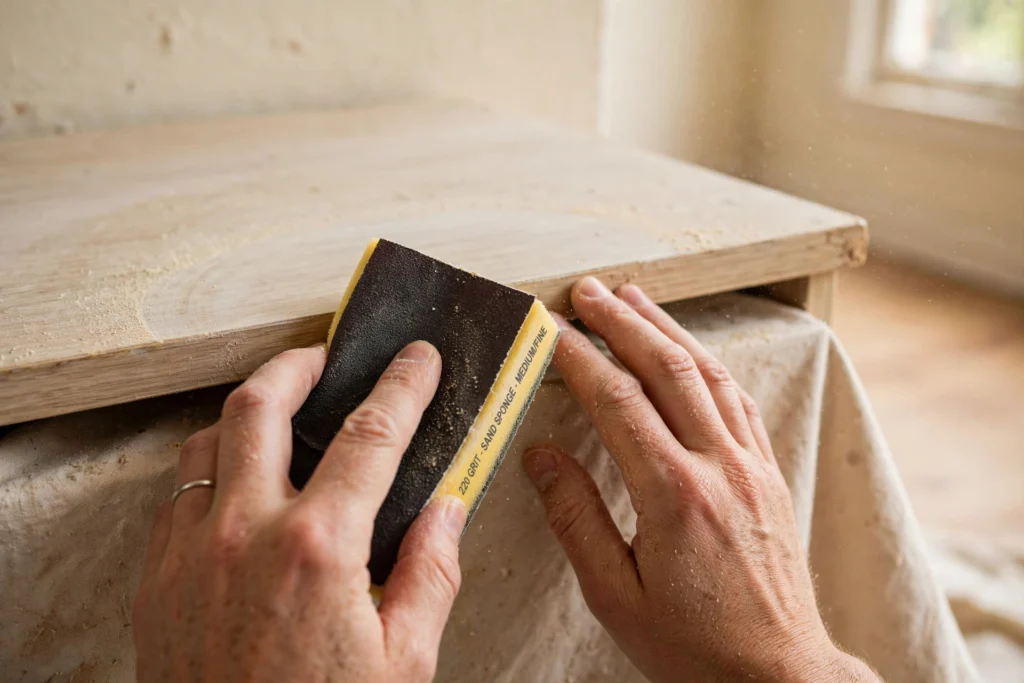
Step 1: Identify the surface. Use the table above. Laminate and melamine go ahead. Peeling thermofoil gets repaired or removed first. Remove the hardware and label every drawer and door so it goes back in the right place.
Step 2: Clean like it is your job. Most laminate paint failures start with oils, wax, silicone polish, or kitchen grease. Wash the whole piece with a degreaser, rinse, and let it dry fully. A dirty surface is the one mistake no primer can fix.
Step 3: Fix chips, lifted edges, and dents. Fill chips with wood filler, let it dry, and sand it flush. Press lifted edge banding back down with wood glue and tape it until it sets. Paint will not hide a chip. It will highlight it.
Step 4: Scuff sand by hand. Use 180 to 220 grit sandpaper and dull the shine. Your mission is to remove the gloss, not to remove the laminate. Never use a power sander here. It cuts through the thin laminate layer in seconds and leaves a patch that will never match. Wipe all dust away with a vacuum, then a tack cloth.
Step 5: Prime with a bonding primer. One thin, even coat. Brush the corners, then roll the flats with a foam roller. Let it dry for the full recoat time on the can. If the piece was dark and you are going light, a second thin coat of primer is cheaper than a third coat of paint.
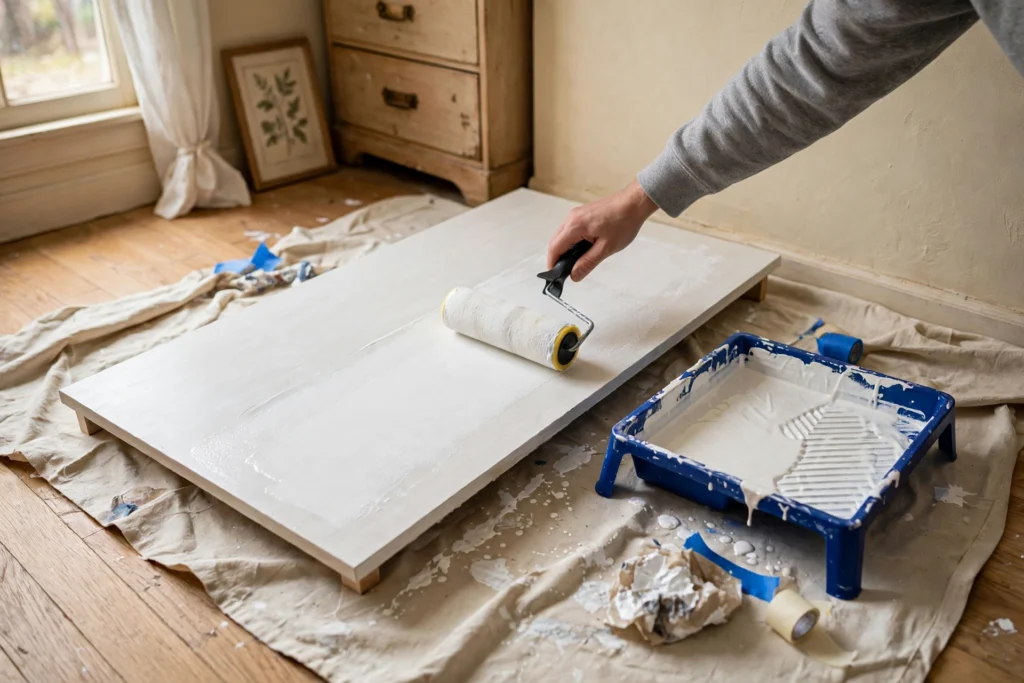
Step 6: Paint two thin coats of enamel. Use a cabinet or trim enamel, not wall paint. Thin coats dry harder and smoother than one thick coat. Sand very lightly with 220 grit between coats if you see brush marks, then wipe the dust off. Wait the full recoat time between coats, even if the paint feels dry to the touch.
Step 7: Seal high use tops and let it cure. A clear water based topcoat on a dresser or desk top protects against coffee rings and keys. Then leave the piece alone. Light use after 24 to 48 hours. Full hardness takes weeks, so do not stack heavy objects on it in week one.
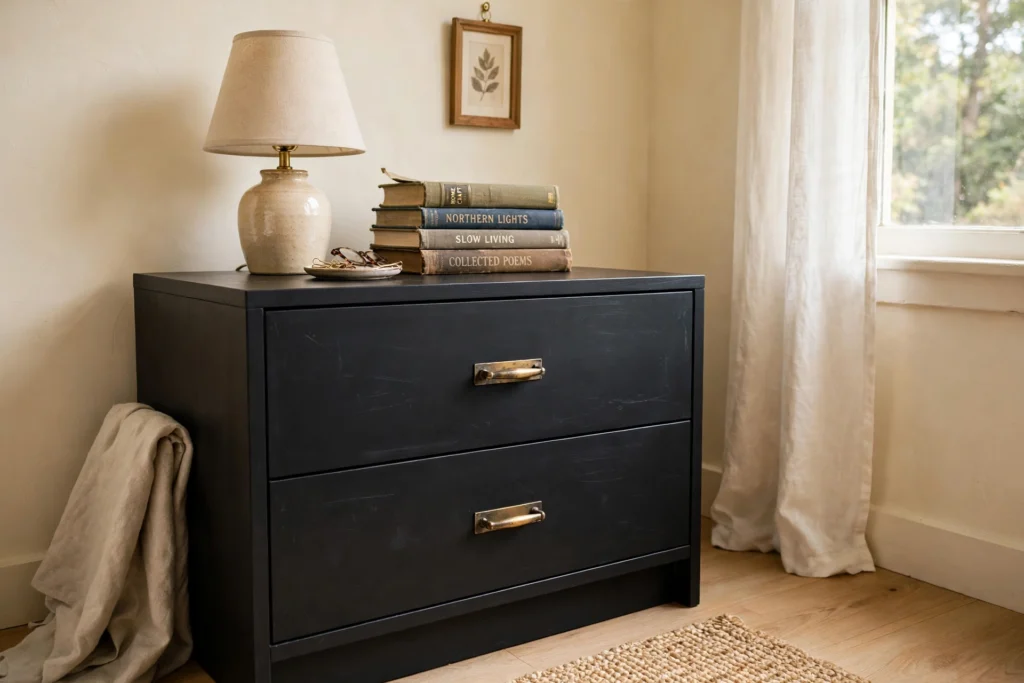
What paint should you use on laminate furniture?
Once you know how to paint laminate furniture, the paint choice is the easy part. The paint matters less than the primer, but it still matters. Here is how the four common choices compare on laminate.
Cabinet and trim enamel. Best for: dressers, desks, and anything that gets touched daily. Main advantage: urethane reinforced acrylic enamel dries hard and resists scuffs. Benjamin Moore Advance and Sherwin Williams Emerald Urethane Trim Enamel are the usual picks. Watch out for: longer dry and cure times than wall paint, and it shows brush marks if you lay it on thick. Verdict: the durable default. This is what belongs on a dresser top.
Chalk paint. Best for: decorative pieces and a matte, vintage look. Main advantage: sticks to laminate with almost no prep and dries fast. Watch out for: it is soft without a wax or sealer on top, and that sealer needs reapplying on high use surfaces. Verdict: lovely for a side table, the wrong pick for a desk you write on every day.
Spray paint. Best for: small pieces, chairs, and fiddly shapes with spindles. Main advantage: a smooth, brush mark free finish with almost no effort, and plastic rated formulas like Krylon Fusion grip laminate well over primer. Watch out for: overspray goes everywhere, so you need outdoor space or a spray shelter, and large flat pieces drink cans fast. Verdict: the most underrated route for small pieces, the most expensive route for a big dresser.
All in one paint and primer. Best for: almost nothing on laminate. Main advantage: one step instead of two. Watch out for: the primer in the can is a standard primer, not a bonding primer, so it slides off slick laminate the same way plain paint does. Verdict: skip it. The two step route costs one extra hour and saves the whole project.
What does it cost? The two routes, priced as of November 2026
Prices below are live checked November 2026. The budget route uses the cheapest bonding capable primer. The premium route uses shellac primer for the hardest grip. Both routes paint one dresser. If you own no sandpaper, foam roller, or drop cloth at all, budget another $8 to $10 for those.
| Item | Budget route | Premium route |
|---|---|---|
| Bonding primer, 1 quart | Zinsser Bulls Eye 1-2-3, about $8.00 | Zinsser B-I-N, about $25.00 |
| Cabinet enamel, 1 quart | Benjamin Moore Advance satin, $35.99 | Benjamin Moore Advance satin, $35.99 |
| Painter’s tape | ScotchBlue, $7.79 | ScotchBlue, $7.79 |
| Brush, 2 inch | Wooster, $7.05 | Wooster, $7.05 |
| Total | $58.83 | $75.83 |
A gallon of primer would cost more and sit on your shelf for years. A quart is the right buy for one or two pieces. And if you have half a can of enamel left from another project, check our guide on what to do with leftover paint before you buy a fresh quart.
Mistakes to avoid
Skipping the clean. Grease, wax, and silicone polish are invisible, and they are the top reason paint peels off laminate. Wash first, every time.
Sanding through the laminate. Scuff sanding means dulling the shine. If you see brown particleboard showing through, you went too far, and that spot will never match. Hand sand only, 180 to 220 grit.
Laying paint on thick. Thick coats run, stay soft, and peel in sheets. Two thin coats always beat one thick coat on laminate.
Using the wrong primer. A standard primer is made for wood pores. Laminate has no pores. Only a bonding primer, shellac, or a dedicated waterborne bonding primer will hold.
Using the piece too soon. Paint feels dry long before it is cured. Putting books and lamps back after one day is how you get permanent dents in week two. Wait 24 to 48 hours for light use, and a week before heavy use.
Painting peeling thermofoil. Paint cannot glue lifting vinyl back down. Fix it or remove it first, or the paint will peel with the foil underneath it.
What to skip
All in one paint and primer on laminate. It sounds like a shortcut and it fails the same way plain paint fails. Buy the bonding primer separately.
Staining laminate. Stain needs to soak into wood pores. Laminate has none, so stain just sits on top and wipes off. Paint is the only finish here.
A power sander. It is too aggressive for a surface that is often less than a millimeter thick. Hand sanding is slower and safer.
Painting the backer board. The thin fabric board on the back of most flat pack furniture does not take paint. Leave it, or replace it with a painted hardboard panel if it bothers you.
Buying a gallon for one piece. One quart of primer covers three to four pieces, and one quart of paint covers two. A gallon is money sitting on a shelf.
A note for renters
Only paint furniture you own. A thrifted flat pack dresser is yours to paint. Your landlord’s built in cabinets and the laminate wardrobe that came with the flat are not. Paint on laminate is not reversible, and repainting a landlord owned piece back to its original finish is not a realistic move out job. If the piece belongs to the landlord, ask first in writing, and expect the answer to be no.
The renter friendly route is to buy second hand. Flat pack furniture is cheap used precisely because it looks dated, and a $30 thrifted dresser plus a $59 supply kit is a whole room upgrade you take with you when you move. The same thinking works for walls: if you want color without paint, our guide to the best peel and stick wallpaper for renters covers the removable route. And if you do pick up a thrifted cabinet for another job, a hidden litter box cabinet build shows how far a second hand piece can go.
Sources
Painting steps, grit guidance, and the laminate identification notes follow the detailed guide at homeroomfix.com. The primer comparison, recoat times, and prices follow the primer guide at thepaintedhinge.com and the Zinsser data sheet coverage figures. Prices are as of November 2026.
Can you paint laminate furniture without sanding?
Yes. Learning how to paint laminate furniture without sanding comes down to one thing: a true bonding primer. Clean the piece thoroughly, then apply a bonding primer like Zinsser B-I-N or INSL-X Stix straight onto the laminate. Sanding is still recommended for the longest lasting finish, and it only takes about 20 minutes on a dresser.
What kind of paint do you use on laminate furniture?
Use a cabinet or trim enamel, which is a urethane reinforced acrylic paint that dries hard. Benjamin Moore Advance and Sherwin Williams Emerald Urethane Trim Enamel are the common picks. Always use it over a bonding primer. Wall paint is too soft for furniture that gets touched daily.
Will chalk paint stick to laminate furniture?
Yes, chalk paint sticks to laminate with very little prep, and it dries fast with a matte finish. It needs a wax or clear sealer on top, and it is not the toughest finish for high use surfaces like a desk or a dresser top. For those, a cabinet enamel over bonding primer lasts longer.
Do you need to prime laminate furniture before painting?
Yes. Primer is not optional on laminate. The surface is non porous plastic, so paint has nothing to grip. A bonding primer creates the grip. Skipping primer is the single biggest cause of paint peeling off laminate furniture.
How this was made
This guide was researched from live search results and manufacturer data sheets in November 2026. The paint quantity table was computed from piece dimensions and the manufacturers published coverage figures. No piece of furniture was painted as a test for this article, and no claim in it comes from a hands on test.