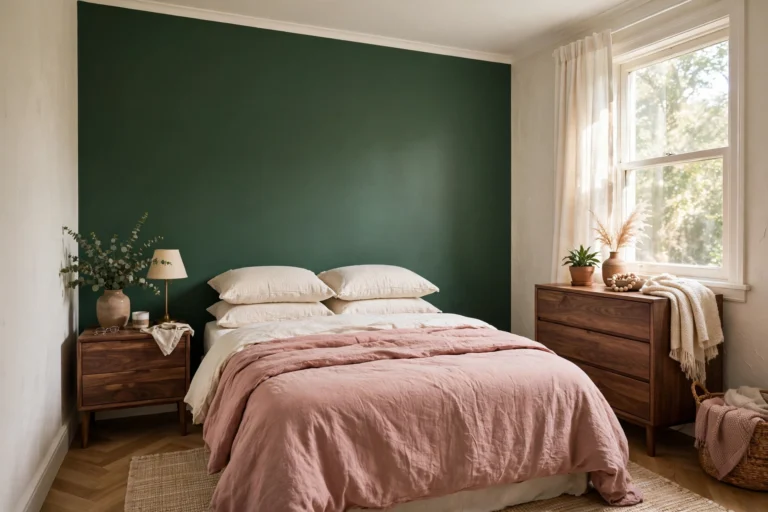
DIY Wall Paneling Ideas for Small Rooms: 7 Builds That Add Character Without Eating Space
Intro (direct answer)
The short answer to diy wall paneling ideas for small rooms is this: panel only the lower third of one wall, keep the trim thin, and paint it the same warm cream as the rest of the room or one deep navy accent. That gives you the character of a designed room without losing a single inch of floor space, and the cheapest route costs $47.40 in materials for a 10 foot wall. In my experience, the paneling jobs that fail in small rooms all make the same mistake. They treat a small wall like a big one, wrap all four walls, and use trim so wide it eats the room visually before it eats it physically.
Here is the original math that drives this post, worked from the rule of thirds and checked against three independent guides. An 8 foot ceiling is 96 inches tall. One third of 96 is 32, so paneling at 32 to 36 inches high sits at the lower third and leaves two thirds of open wall above it. That proportion is the whole game. Get it right and the room feels taller. Get it wrong, panel at 48 inches, and you have cut the wall exactly in half, which every guide I read calls the one height never to use.
How high should DIY wall paneling go in a small room?
This is the question that decides whether diy wall paneling ideas for small rooms work or backfire, so it comes before any style. The rule of thirds says never split a wall 50/50. An unequal split reads as deliberate. A wall cut in half reads as a mistake, and it makes the ceiling look lower. The table below scales the rule to the ceiling you actually have, not the 8 foot ceiling every guide assumes.
| Ceiling height | Lower-third height | Two-thirds height | Best for |
|---|---|---|---|
| 7 ft (84 in / 213 cm) | 28 in (71 cm) | 56 in (142 cm) | Low-ceiling flats, basements |
| 8 ft (96 in / 244 cm) | 32-36 in (81-91 cm) | 60-64 in (152-163 cm) | The standard small room |
| 9 ft (108 in / 274 cm) | 36-42 in (91-107 cm) | 68-72 in (173-183 cm) | Older homes, taller rentals |
| 10 ft (120 in / 305 cm) | 40-48 in (102-122 cm) | 80 in (203 cm) | Tall rooms only |
Two details the table does not show. First, board and batten breaks the rule more gracefully than other styles, because its vertical battens read as rhythm rather than a band, so 48 to 60 inches often looks fine where flat paneling would not. Second, always sit the cap rail at least 3 to 4 inches above or below any window sill. Lining them up exactly creates an awkward visual tangent that draws the eye straight to the mismatch.
7 DIY wall paneling ideas for small rooms
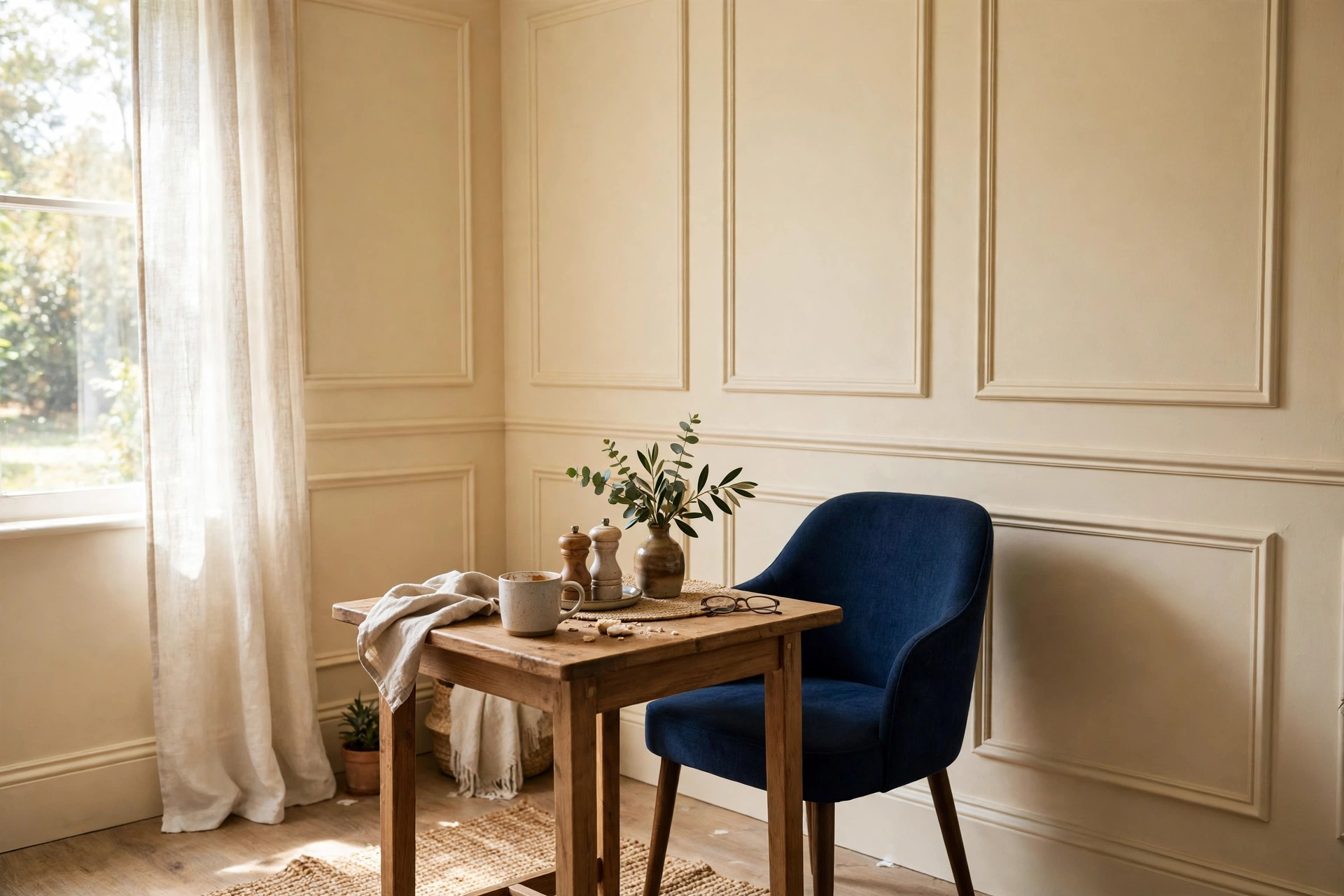
1. Paint-only picture frame molding
Best for: renters and first-time DIYers who want the look with zero depth lost. Main advantage: it is the cheapest route in this post, $47.40 for a 10 foot wall, and it adds nothing to the wall except thin trim and paint. Watch out for: it only works on a smooth, flat wall. Textured walls show every gap under the trim. Verdict: the most underrated idea in this whole post. It costs the least, takes an afternoon, and reads as custom millwork from across the room.
2. Board and batten
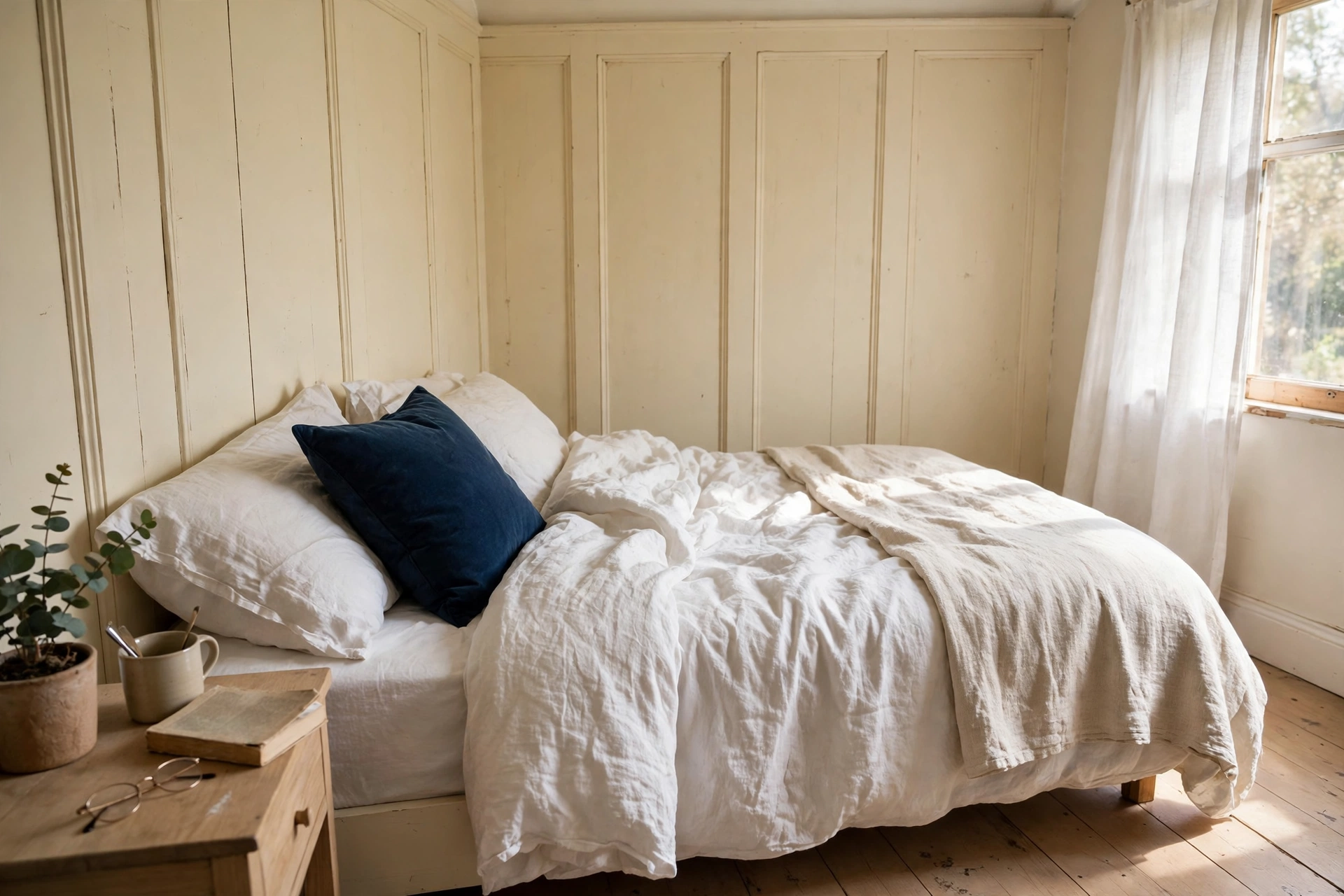
Best for: dining rooms, entryways, and bedrooms that need structure. Main advantage: the most forgiving build for a beginner, because the layout math is simple and caulk hides small mistakes. Watch out for: wide battens and tight spacing make a small room feel caged. Keep battens 3 inches wide and panels 14 to 16 inches wide. Verdict: the classic for a reason, and the safest first paneling project in a small room.
3. Beadboard wainscot
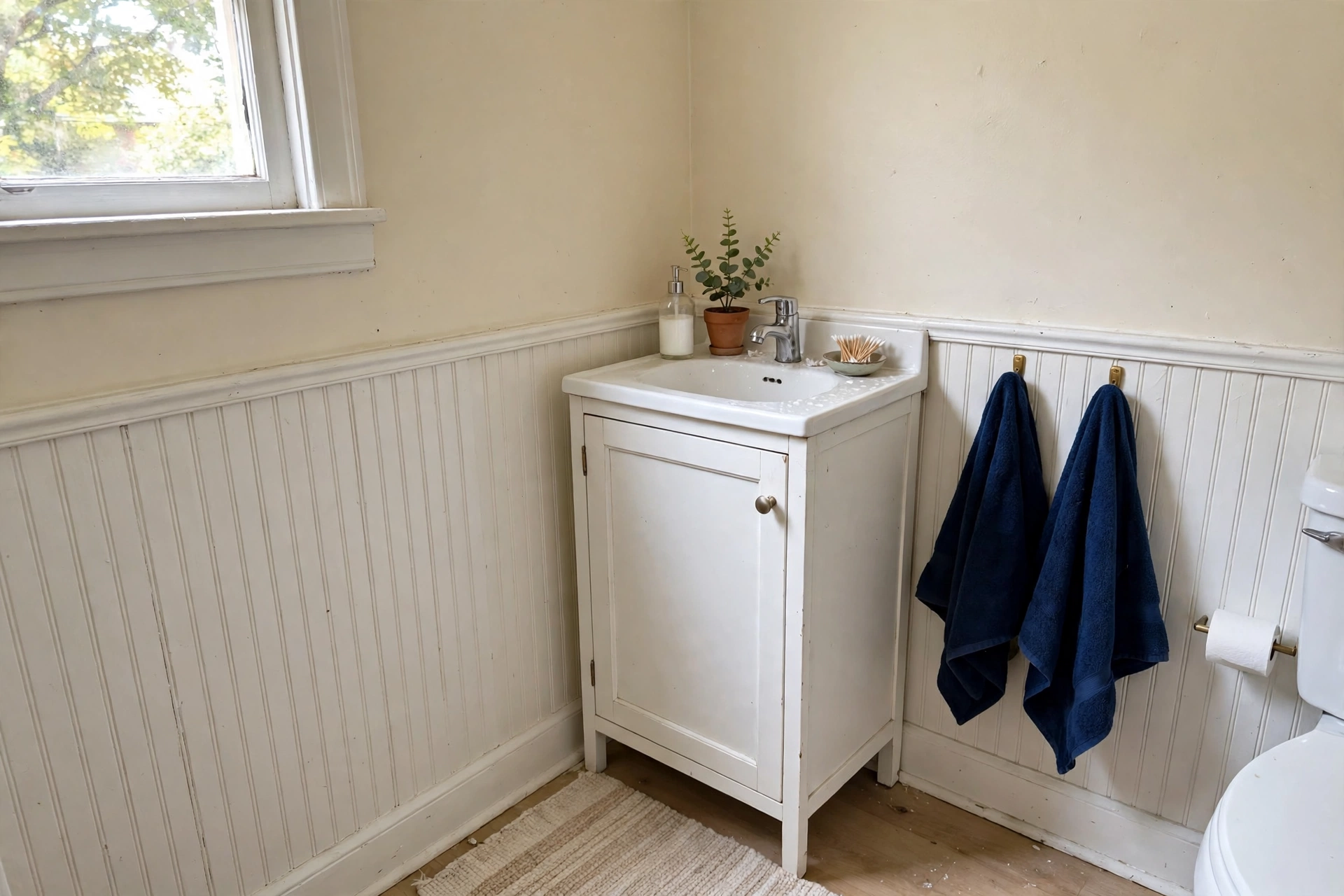
Best for: bathrooms, hallways, and anywhere walls take abuse. Main advantage: sheets cover large areas fast, and PVC beadboard handles humidity that would swell MDF. Watch out for: the grooves collect dust and are slower to clean, and MDF beadboard must never go in a wet zone. Use PVC or moisture-resistant MDF near showers and sinks. Verdict: the hardest-working style here. Choose it for function first, looks second.
4. Horizontal shiplap half wall
Best for: narrow rooms that need to feel wider. Main advantage: horizontal lines pull the eye side to side, so a long thin room reads wider than it is. Watch out for: full-height horizontal shiplap in a small room can feel like a cabin. Stop at the lower third. Verdict: the best optical trick in this post, but only as a half wall, never floor to ceiling.
5. Vertical slat wall on one feature wall
Best for: one living room or bedroom wall behind a sofa or bed. Main advantage: vertical slats draw the eye up and make low ceilings feel taller, and slim slats look expensive for very little material. Watch out for: slats on all four walls overwhelm a small room. One wall is the rule. Verdict: the most modern look here, and the one most likely to date. Keep it to a single wall so it is easy to remove later.
6. Peel-and-stick panels, the renter route
Best for: renters who cannot drill, nail, or glue anything permanent. Main advantage: a 3D wood slat set covers a 10 foot half wall for $114.99 with zero tools and peels off at move-out. Watch out for: peel-and-stick only works on smooth, clean walls. Textured paint, fresh paint under 30 days old, and damp walls all defeat the adhesive. Patch-test a hidden spot first. Verdict: the only route in this post with a deposit risk near zero, and the right answer for most renters. Our guide to the best peel and stick wallpaper for renters uses the same patch-test rule, and it applies here too.
7. Color-drenched paneling
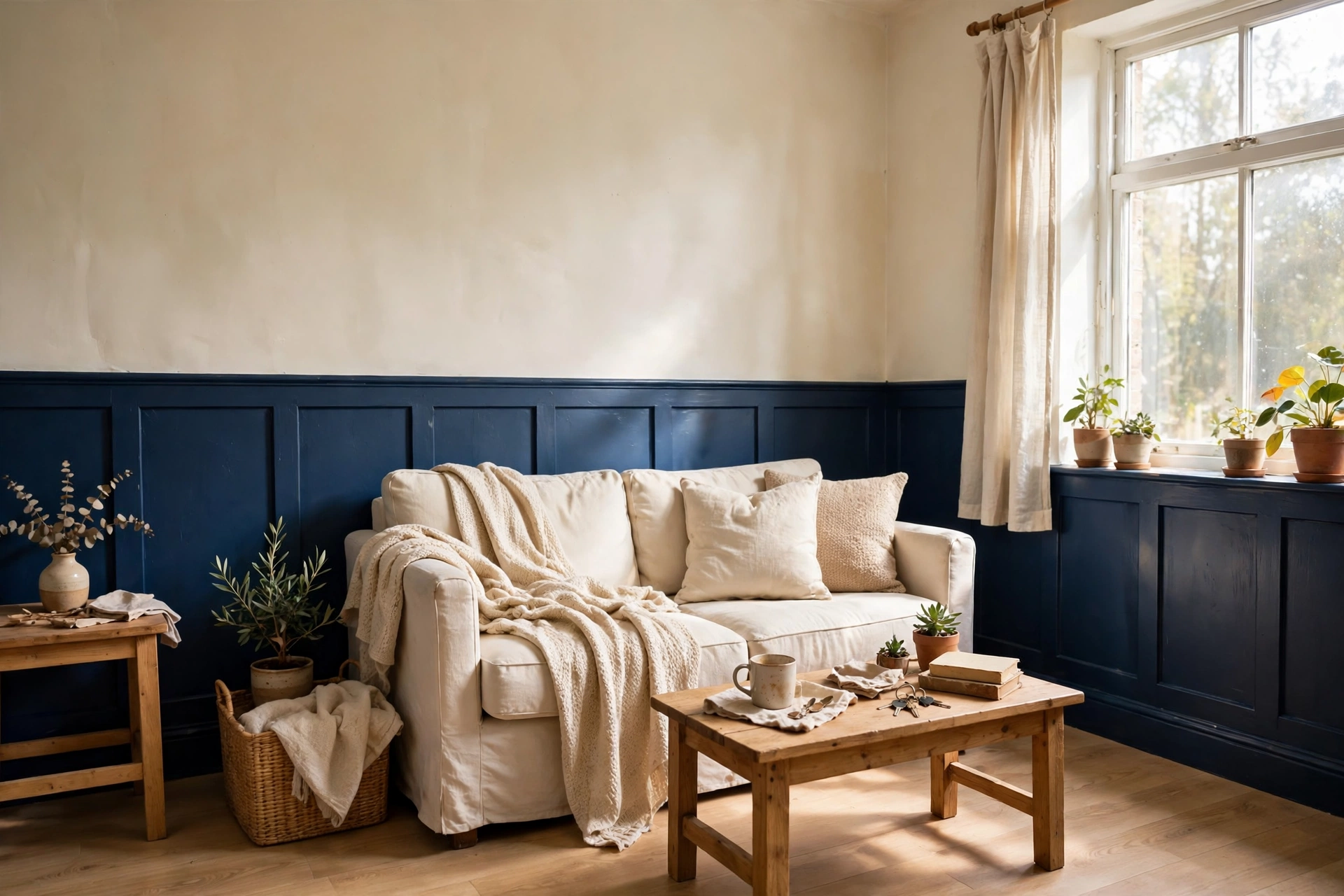
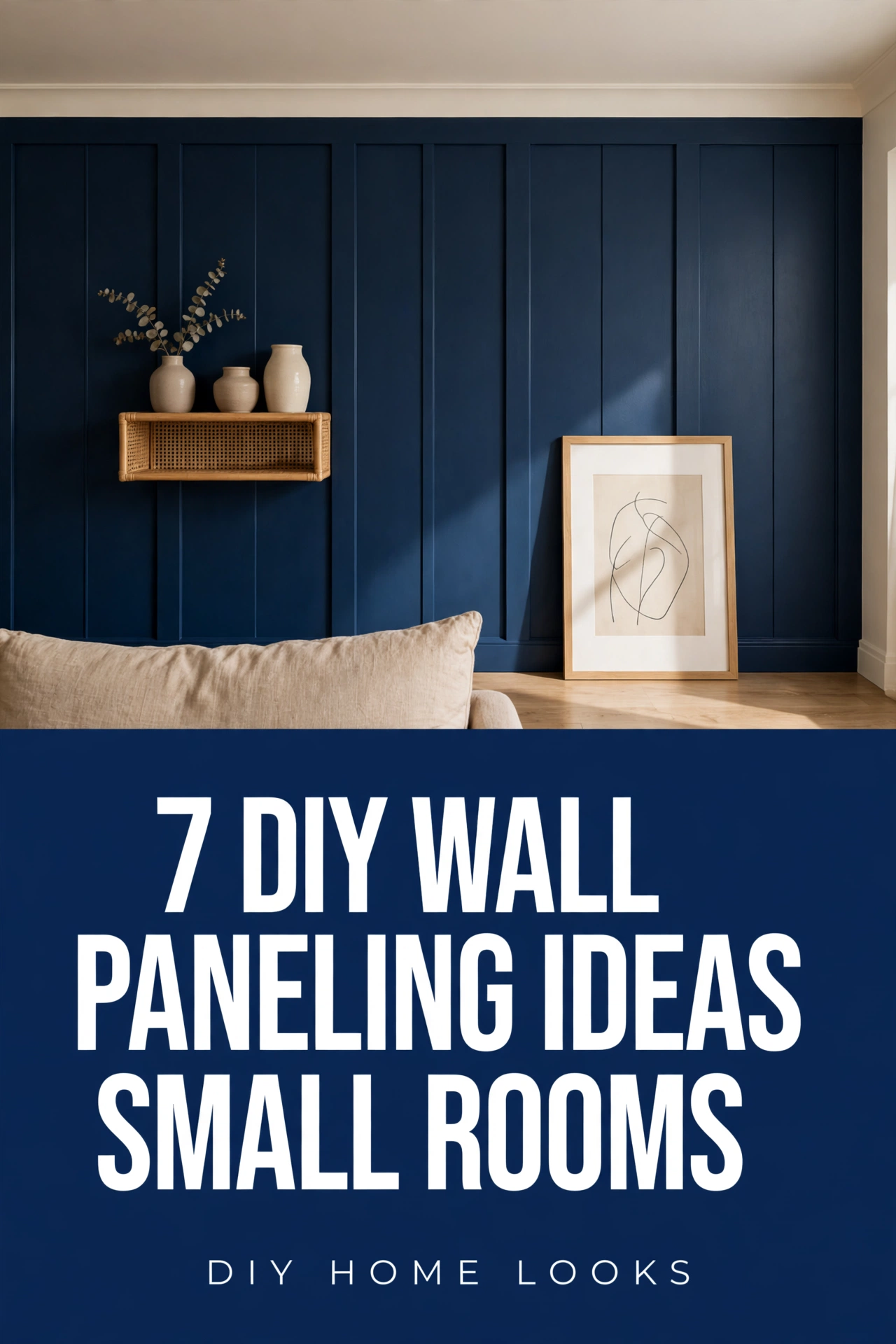
Best for: powder rooms, small home offices, and bedrooms that want drama. Main advantage: painting the paneling, the upper wall, the baseboards, and even the trim the same deep navy turns a small room into a jewelry box. The texture does the work, not the contrast. Watch out for: dark colors need good light. A north-facing room with one small window will feel smaller, not cozier. Verdict: the boldest idea here, and the one that most rewards a room with decent natural light. If your room is dark, our ceiling designs for small rooms show how a pale ceiling can balance a dark wall.
How many battens and panels does your wall need?
Count before you buy, because trim is sold by the foot and guessing wastes money. The formula is simple. Decide your edge gap first, 4 inches from each end of the wall is the standard, then your batten width, 3 inches, then solve for panel width.
Panel width = (wall width minus 2 x edge gap minus battens x batten width) / panels, and battens always equal panels plus one.
Worked for a 10 foot wall, 120 inches: 6 panels, 7 battens, 4.5 inch edge gaps. (120 – 9 – 21) / 6 = 15 inches per panel. That is the whole calculation, and it scales to any wall.
| Wall width | Panels | Battens | Panel width | Edge gap |
|---|---|---|---|---|
| 8 ft (96 in / 244 cm) | 5 | 6 | 14 in (36 cm) | 4 in (10 cm) |
| 10 ft (120 in / 305 cm) | 6 | 7 | 15 in (38 cm) | 4.5 in (11 cm) |
| 12 ft (144 in / 366 cm) | 7 | 8 | 16 in (41 cm) | 4 in (10 cm) |
What does DIY wall paneling cost?
Prices below are market prices checked against live retailer listings as of November 2026, not personal receipts. Every route covers one 10 foot wide wall at 34 inches high, about 28 square feet. Paint prices assume one quart of satin enamel, which covers up to 100 square feet, so one quart finishes the wall with paint left over for touch-ups.
| Route | Materials | Cost |
|---|---|---|
| A. Paint-only picture frame molding | Primed MDF trim 24 ft at $0.60-$1.50/ft ($14.40-$36.00) + satin enamel quart $25-$40 + caulk, nails, filler $8.00 | $47.40-$84.00 |
| B. MDF board and batten | 1/4 in MDF sheet $15-$25 + trim 24 ft $14.40-$36.00 + satin quart $25-$40 + consumables $8.00 | $62.40-$109.00 |
| C. Beadboard sheets | 2 beadboard panels at $8-$20 ($16-$40) + cap rail trim 10 ft $6.00-$15.00 + satin quart $25-$40 + consumables $8.00 | $55.00-$103.00 |
| D. Renter peel-and-stick | 3D wood slat panel set of 4, $114.99 for 31 sq ft + no tools needed | $114.99 |
Time estimates: route A takes 3 to 4 hours, route B takes 5 to 6 hours, route C takes 4 to 5 hours, route D takes 1 to 2 hours. A professional would charge $10 to $25 per square foot installed for wainscoting, which is $280 to $700 for this same wall, so every DIY route here saves at least half.
How to install DIY wall paneling, step by step
Materials you need: a tape measure, a level, a miter saw or hand saw, a nail gun or hammer and finishing nails, construction adhesive, caulk and a caulk gun, wood filler, 120-grit and 220-grit sandpaper, primer, satin or semigloss paint, a brush and a small roller, and painter’s tape.
- Measure the wall and mark the height. Measure the ceiling height first, then mark the panel height from the proportion table above with a level line across the whole wall. Mark every stud with painter’s tape.
- Dry-fit the layout on the floor. Lay the battens out in the panel count from the table above and check the edge gaps look even before anything touches the wall.
- Cut the battens and rails. Cut the horizontal rails first, then the vertical battens. A miter saw gives the cleanest ends, but a hand saw and a miter box work fine for trim this thin.
- Attach the rails, then the battens. Glue and nail the top rail and base rail level, then the battens, nailing into studs where you can. Check level after every third batten, not at the end.
- Fill, caulk, and sand. Fill nail holes with wood filler, caulk every seam where trim meets the wall, and sand smooth once dry. This step is what separates a DIY-looking job from a built-in-looking one.
- Prime, then paint two coats. Prime all MDF edges first, because raw MDF drinks paint. Then two coats of satin or semigloss. Never use flat or matte paint on paneling, it scuffs the first time a chair touches it.
- Peel the tape and live with it for a week. Remove painter’s tape while the last coat is still slightly tacky for the cleanest edge, then wait a week before hanging anything on the new trim so the paint fully cures.
What paint finish and color work best on paneling?
Satin or semigloss, always. Flat paint scuffs instantly on a surface that chairs, shoes, and vacuum cleaners touch every day. Satin wipes clean and still looks soft, while semigloss is tougher still and suits bathrooms and hallways. For color, two rules cover most small rooms, and choosing the right paint colors for small rooms is what makes the paneling feel intentional rather than heavy. First, painting the paneling the same color as the upper wall keeps the room airy and makes the texture, not the color, do the work. Second, if you go bold, go bold on one wall only and keep the ceiling pale. A deep navy half wall with a white ceiling feels designed. A deep navy room with a dark ceiling feels like a box. Our guide to half-painted walls for small rooms uses the same stop-line logic, and the two projects pair well on the same wall.
A note if you rent
Paneling is the easy part of a lease, but the fixing method is not. Nails and construction adhesive both leave marks a landlord can charge for, so check your lease before you attach anything. The safe routes are route D, peel-and-stick panels, or route A done with removable adhesive strips on lightweight trim, and even then patch-test first. Keep the original paint color on file so you can repaint the wall back at move-out, and photograph the wall before you start so you have proof of its original condition.
Mistakes to avoid
Paneling at 48 inches on an 8 foot wall. The exact-half split is the single most common error, and every guide I read agrees on it. Use the lower third or the upper two thirds, never the middle.
Wrapping all four walls. One well-composed feature wall does more than four crowded ones, and it costs a quarter as much. Full-height paneling on every wall is the most overrated move in this niche.
Skipping the primer on MDF. Raw MDF edges absorb paint unevenly and look fuzzy forever. One coat of primer is the difference between a pro finish and a craft-project finish.
Ignoring moisture. Standard MDF swells in a bathroom. Use PVC beadboard or moisture-resistant MDF near water, and never panel inside a shower surround.
Measuring once, cutting everything. Walls are rarely square. Measure each batten run separately and cut as you go, or the last panel will not fit.
What to skip
Raised-panel wainscoting in a small room. It is the most expensive style, $15 to $25 per square foot installed, and its deep profiles crowd a small wall. Flat paneling gives you 90 percent of the look for a third of the cost.
Full-height shiplap on every wall. It reads as a cabin, not a cottage, in a room under 120 square feet. Half-height shiplap on one wall is the better spend.
Pre-finished beadboard at $40 a sheet when paintable MDF does the same job. Pre-finished panels save one coat of paint and cost double. If you are painting anyway, buy the cheaper sheet.
Herringbone paneling as a first project. Every angle has to be cut precisely, and a small error compounds across the wall. Save it for a second project.
FAQ
Can I install paneling in a small room?
Yes. Paneling can make a small room feel larger, not smaller, when you follow two rules. Use vertical lines like beadboard or board and batten to draw the eye up, and keep the paneling at the lower third of the wall. Avoid dark, heavy colors unless the room has excellent natural light, and panel one feature wall rather than all four.
Will paneling make a small room look smaller?
It can, if you get the proportion or the coverage wrong. Paneling at exactly half the wall height cuts the room visually in two, and wrapping all four walls in a dark color closes the room in. Paneling at the lower third, in a light color or the same color as the upper wall, usually makes the room feel taller and more finished.
How high should wainscoting be?
For a standard 8 foot ceiling, install wainscoting 32 to 36 inches high, which is about one third of the wall. For a 7 foot ceiling use 28 inches, for 9 feet use 36 to 42 inches, and for 10 feet use 40 to 48 inches. Board and batten can go taller, 48 to 60 inches, because its vertical lines read as rhythm rather than a band.
What is the cheapest way to panel a wall?
Paint-only picture frame molding is the cheapest route. For a 10 foot wall it costs $47.40 to $84.00 in materials as of November 2026, which is primed MDF trim, one quart of satin enamel, and caulk and nails. It adds no depth to the wall, takes 3 to 4 hours, and needs only basic tools.
Sources
- Rule of thirds and height tables: Mais Only Interior Design, “Fresh Half Wall Paneling Ideas for Your Home” (maisonlyinteriordesign.com); Rob Carpentry, “Wainscoting Height Guide” (robcarpentry.com); Koffler Sales, “Wainscoting Height Guide” (kofflersales.com)
- Half-wall ideas and style profiles: Your Home Glam, “Half Wall Paneling Ideas” (yourhomeglam.com); San Diego Home Remodeling, “Half Wall Paneling Ideas to Upgrade Your Home” (sandiegohomeremodeling.com)
- Small-room paneling angles: Wood Panel Wall, “Wood Wall Paneling Ideas for Small Living Rooms” (woodpanelwall.com)
- Prices: Woodworking Advisor MDF price guides (woodworkingadvisor.com); HowMuchFlooring baseboard calculator (howmuchflooring.com); The Pricer paint cost guide (thepricer.org); Wayfair peel-and-stick paneling listings (wayfair.com)