Best Peel and Stick Wallpaper for Renters: 7 Picks That Come Off Clean
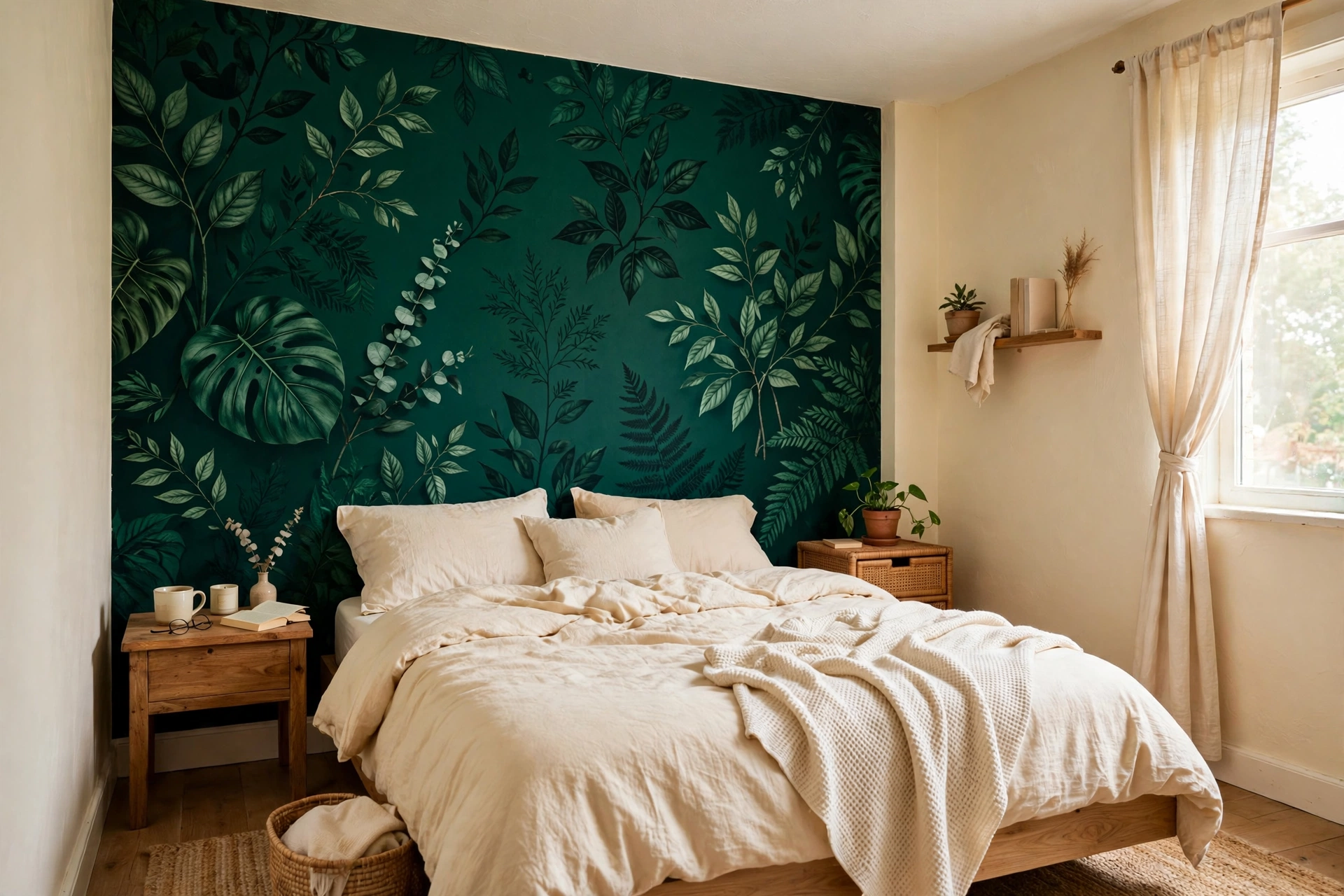
The best peel and stick wallpaper for renters is low-tack vinyl on a smooth, fully cured wall, bought after a 48-hour patch test. That is the whole secret. Pattern matters far less than adhesive, and the price that matters is not per roll but per wall. A standard roll covers about 28 square feet, so a typical 10 by 8 foot accent wall (3.05 by 2.44 m, 80 sq ft) needs 3 rolls, 4 if the pattern has a large repeat. At $29.99 a roll, that is $89.97 for the wall, not the $29.99 the listing shouts at you. This guide ranks 7 real brands by what a renter actually cares about: clean removal, honest coverage math, and the price of a finished wall, all checked against live listings in November 2026.
How do you choose the best peel and stick wallpaper for renters?
Start with the wall, not the pattern. The best peel and stick wallpaper for renters fails or succeeds on three things you can check before spending a dollar: the paint finish, the paint age, and the wall texture. Satin and eggshell paint release peel-and-stick adhesive cleanly. Flat or matte builder-grade paint can come off with the paper, so it needs a patch test even more. Paint must have cured for at least 30 days before you stick anything to it. And orange-peel, knockdown, or sand texture is a hard no: the pattern telegraphs through the vinyl within weeks and the adhesive fails at the high points, because it only grips the bumps. Smooth, primed drywall is the only reliable surface.
Then pick the material by room. Vinyl is the most durable and moisture resistant, so it suits kitchens and bathrooms, though cheap thin vinyl can look plasticky up close. Poly-woven fabric installs with less bubbling than stiff vinyl and reads like real wallpaper, but it costs far more per square foot. Paper-based peel-and-stick looks the most like traditional wallpaper and takes fine print beautifully, yet it hates steam, so keep it in bedrooms and living rooms. One rule covers all three: buy a sample first, stick a 10 by 10 cm patch on a hidden spot, and leave it 48 hours to a week. If it peels off clean, the wall is safe. If paint lifts, you just saved your deposit for the price of a sample.
How many rolls of peel and stick wallpaper do I need?
Count in square feet, then add one roll for pattern matching. Most standard rolls are 20.5 inches (52 cm) wide and 16.5 feet (5.03 m) long, which covers 28.18 sq ft (2.62 sq m). Some brands sell 18 foot rolls, which cover 30.75 sq ft. Always check the label, because roll length is where the cheap listing hides its real price.
| Accent wall size | Wall area | Rolls (no repeat) | Rolls (large repeat) |
|---|---|---|---|
| 6 ft wide x 8 ft high (1.83 x 2.44 m) | 48 sq ft | 2 | 3 |
| 8 ft wide x 8 ft high (2.44 x 2.44 m) | 64 sq ft | 3 | 3 |
| 10 ft wide x 8 ft high (3.05 x 2.44 m) | 80 sq ft | 3 | 4 |
| 12 ft wide x 8 ft high (3.66 x 2.44 m) | 96 sq ft | 4 | 5 |
Two traps catch first-time buyers. First, panel brands do not sell rolls at all: Chasing Paper and Spoonflower sell 2 foot wide panels in fixed lengths, so a 10 foot wall needs 5 panels, not 3 rolls. Second, a large pattern repeat eats a full extra roll on a wide wall, because every strip must start at the same point in the pattern. Order all rolls from the same batch, and keep one spare roll unopened until the wall is done. Wallpaper gets discontinued without warning, and a spare roll is cheaper than a half-finished wall.
The 7 best peel and stick wallpaper for renters, ranked
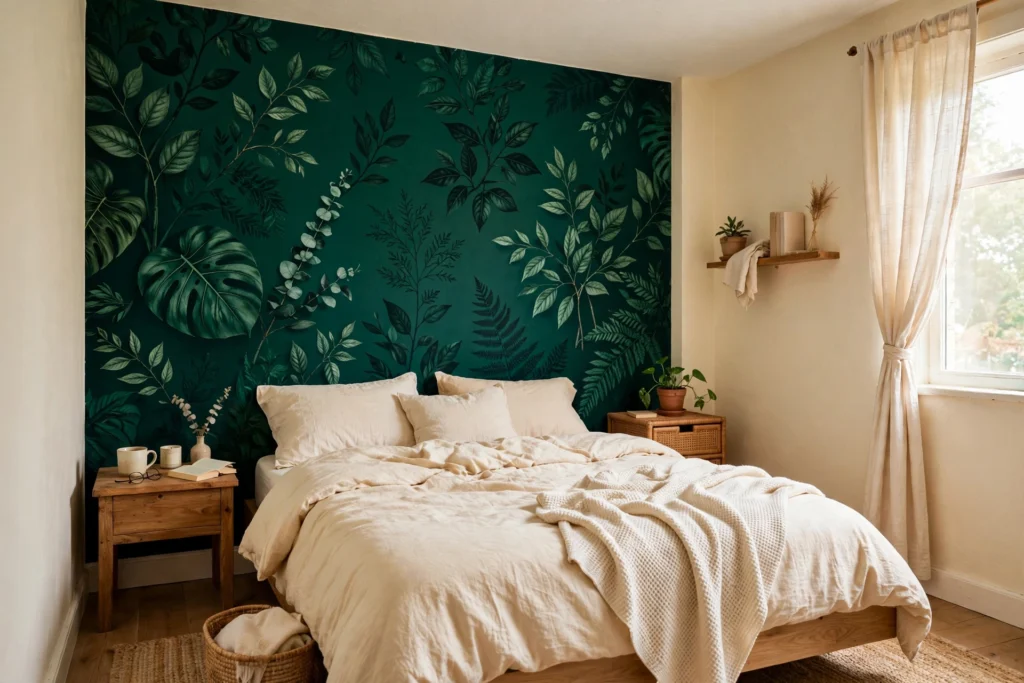
Every pick below was ranked by removal safety first, price second, and looks third. Each one carries a Deposit-Risk rating from 1 (safest) to 5 (expect paint repair). Prices are live-checked November 2026 and dated in the cost table below.
1. Tempaper: the safest all-around pick
Best for: a first accent wall in a bedroom or living room. Main advantage: the most established removable adhesive in this list, with vinyl thick enough to peel off in one piece after a year or more on the wall. Independent testers who tried six types on real rental walls call it the premium pick for clean removal, and a dedicated review of six brands ranks it the safest all-around renter choice. Watch out for: designer collections run $45 to $96 a roll, so a big wall adds up fast. Buy the Target line instead if the budget is tight. Verdict: the default answer. If you only buy one brand, buy this one. Deposit-Risk: 1/5.
2. NuWallpaper: the best value
Best for: a first-timer who wants the Tempaper experience at a lower price. Main advantage: about $29 to $30 a roll, with good grip and clean removal on cured satin or eggshell paint. Testers used it for a shiplap bedroom wall and got their full deposit back. Watch out for: pattern matching is fiddly on the third panel, so budget an extra hour and keep your spare roll handy. Verdict: the smartest spend on this list. Same wall, same clean removal, half the designer price. Deposit-Risk: 1/5.
3. RoomMates: the best budget buy
Best for: kids rooms, dorms, and renters who want to buy in a store today. Main advantage: the widest retail availability of any brand here, at $29.99 a roll at Target for a 28.2 sq ft roll, with some patterns on sale for $16.80 to $19.99 on Amazon in November 2026. The vinyl is formulated to remove without damaging paint or drywall underneath. Watch out for: one Target buyer reports a panel falling down after a few months and losing its stick, so press the edges firmly on day one and skip steamy rooms. Verdict: the cheapest safe route to a finished wall, with one honest caveat about edges. Deposit-Risk: 1/5.
4. Chasing Paper: the best design-forward fabric
Best for: a visible living room wall where the wallpaper has to look intentional, not temporary. Main advantage: poly-woven fabric that installs with noticeably less bubbling than stiff vinyl, with strong color stories and designer collaborations. A six-brand review calls it the best design-forward choice. Watch out for: the price. Panels are 2 feet wide and cost $66 for 2 by 4 feet, $131 for 2 by 8 feet, and $181 for 2 by 12 feet on the brand’s own site, checked November 2026. That is $8.19 per sq ft for the 2 by 8 foot panel, against about $1.06 for a RoomMates roll. A 10 foot wall needs 5 panels, which is $655. Verdict: gorgeous, and honest about it. Buy it for one small wall, not a whole room. Deposit-Risk: 2/5. Still run the 48-hour test, because fabric holds well and you want proof on your exact paint.
5. Spoonflower: the best for the exact pattern
Best for: nurseries, home offices, and anyone who has one specific pattern in mind. Main advantage: the largest catalog anywhere, with hundreds of designs from independent artists and the option to print your own. Panels cost $29 for 2 by 3 feet, $53 for 2 by 6 feet, $77 for 2 by 9 feet, and $101 for 2 by 12 feet, with a $9 swatch. The woven peel-and-stick version is repositionable while you work. Watch out for: panel math again. A 10 foot wide, 8 foot high wall needs five 2 by 9 foot panels, which is $385, and the paper version is less forgiving of moisture than vinyl. Verdict: unbeatable when the pattern matters more than the price. Order the swatch first, because print-on-demand orders cannot be returned. Deposit-Risk: 2/5.
6. Threshold: the best in-store pickup
Best for: renters who want to see the pattern in person before committing. Main advantage: Target’s own line at about $34 a roll, sold in stores you can walk into today, with the same low-tack vinyl approach as the bigger names. Testers group it with Tempaper and NuWallpaper as the safest choices for smooth rental walls. Watch out for: the range is smaller than the online brands, so the perfect pattern may not exist here. Verdict: the low-friction pick. Walk in, buy two rolls, patch test tonight. Deposit-Risk: 1/5.
7. WallPops: the best for fast change
Best for: kids rooms and renters who redecorate every year. Main advantage: the lowest entry price on this list, from about $12 a roll on sale to $59 at full price, with PVC-free removable options and a huge range of geometric and botanical prints. Watch out for: budget vinyl is the thinnest material here, so it shows wall flaws more and needs a smoother wall than the rest. Verdict: the right pick when the wall is small and the stay is short. For a full lease on a main wall, spend the extra $17 a roll on NuWallpaper instead. Deposit-Risk: 2/5.

What does peel and stick wallpaper cost per wall?
Prices checked November 2026. The wall is a standard 10 by 8 foot accent wall, 80 sq ft, with 3 rolls or 5 panels as the material requires. Samples are worth every cent: $6 to $9 each, and they are the only thing standing between you and a paint repair bill.
| Pick | Price per roll or panel | Coverage | Cost for a 10 x 8 ft wall | Cost per sq ft |
|---|---|---|---|---|
| WallPops | $12 to $30 per roll | ~28 sq ft | $36 to $90 | $0.43 to $1.07 |
| NuWallpaper | ~$29 per roll | ~28 sq ft | $87.00 | ~$1.03 |
| RoomMates | $29.99 per roll (Target) | 28.2 sq ft | $89.97 | $1.06 |
| Tempaper & Co. (Target) | $29.99 per roll | 28 sq ft | $89.97 | $1.07 |
| Threshold | ~$34 per roll | ~28 sq ft | $102.00 | ~$1.21 |
| Tempaper designer | $45 to $96 per roll | ~28 sq ft | $135 to $288 | $1.60 to $3.41 |
| Spoonflower | $77 per 2 x 9 ft panel | 18 sq ft | $385.00 (5 panels) | $4.28 |
| Chasing Paper | $131 per 2 x 8 ft panel | 16 sq ft | $655.00 (5 panels) | $8.19 |
Add $25 for an install kit if you own no tools (smoother, knife, and level in one box), and $6 to $9 for a sample per pattern you are considering. Time estimate: an afternoon, 2 to 4 hours, for a first 10 by 8 foot wall with two people, plus the 48-hour patch test before you start. Two people matter: solo installs cause most failures, because one person cannot hold a 2 foot wide strip level while smoothing it. Do the patch test a week before the weekend you plan to hang the paper, so the wait costs you nothing.
How to hang peel and stick wallpaper in 5 steps
- Patch test first. Stick a 10 by 10 cm sample on a hidden spot, wait 48 hours, then peel it off slowly at a low angle. Clean removal means go. Paint lift means stop and pick a different wall treatment.
- Measure and cut. Measure the wall height, add 5 cm (2 inches) top and bottom for trimming, and cut all strips before you start. Number the backs so the pattern order stays right.
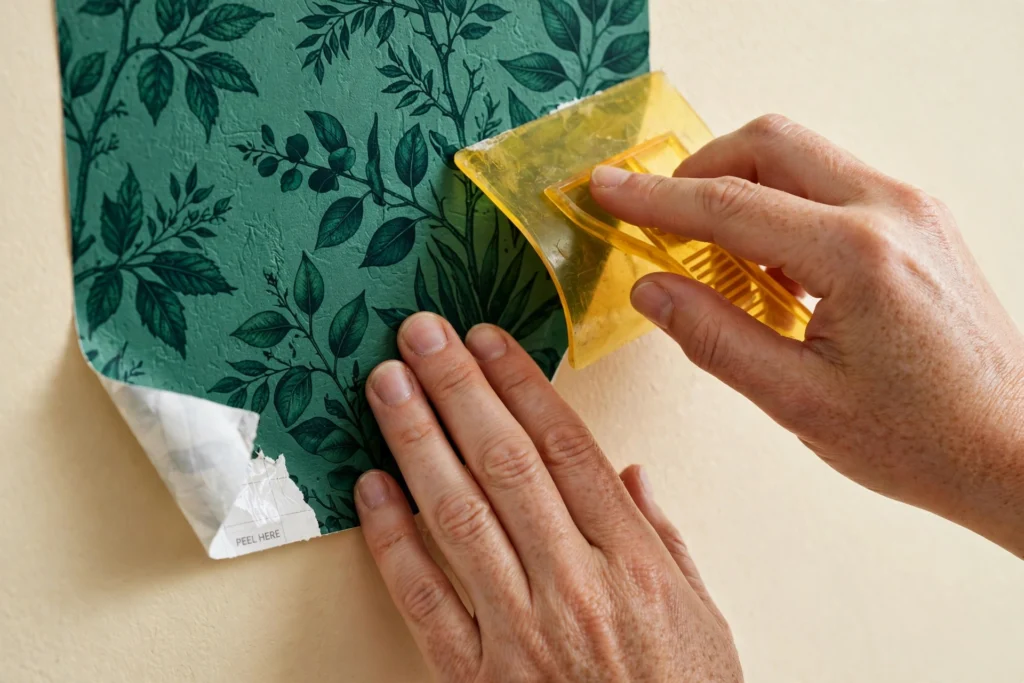
- Start at the top corner. Peel back 30 cm (12 inches) of backing, press the top edge level, then smooth downward with the smoother in slow strokes. Peel the backing as you go, never all at once.
- Match the pattern strip by strip. Butt each new strip tight against the last with no overlap. Overlapped seams show as a dark line and peel first.
- Trim and press the edges. Cut the top and bottom with a sharp knife, then press every edge firmly with the smoother. Edges that are not pressed on day one are the edges that lift in month three.
Mistakes to avoid with peel and stick wallpaper
Sticking it on fresh paint. Paint needs 30 days to cure. Wallpaper stuck to two-week-old paint can pull the paint off in sheets at move-out, and that is a deposit repair, not a cleaning fee.
Skipping the patch test. Every wall in this guide has a different paint history, and the test costs $9 and two days. The one wall you skip it on is the one that fails.
Papering a textured wall. Orange-peel texture shows through within weeks and the adhesive lets go at the high points. If your wall has texture, this product is not your product. Paint or fabric panels are the safer route, and our guide to renter friendly wall ideas has both.
Buying exactly the math. The rolls table gives the minimum. One miscut strip or one bad match and you are short a roll, in a discontinued pattern, with a half-papered wall. Buy the spare roll.
Hanging it in a steamy bathroom. Even good vinyl lasts 6 to 12 months in steam against 12 to 24 months in a dry room. A bathroom accent wall is a short-term decoration, not a lease-long feature. If the bathroom is your target, read our guide on whether peel and stick wallpaper damages walls first, because moisture changes the removal math completely.
What to skip
Permanent-adhesive peel-and-stick. Some cheap rolls use a high-tack adhesive that bonds harder the longer it sits. It can lift paint after a few months. If the listing does not say removable, do not buy it for a rental.
Ultra-cheap unbranded PVC rolls. The $6 roll from a marketplace seller is tempting until it bubbles in week three or leaves residue in year one. The $17 difference to a RoomMates roll is less than one hour of wall repair.
Full-room papering on a short lease. A six to twelve month stay does not justify the install effort or the removal risk of a whole room. One accent wall gives you 80 percent of the look for a third of the risk, and the removal takes an hour instead of a day.
Wallpaper over peeling paint. No adhesive fixes a failing paint layer. It will take the loose paint with it when it comes off. Fix the paint first, or choose a different wall.
The renter check: lease, paint, and your deposit
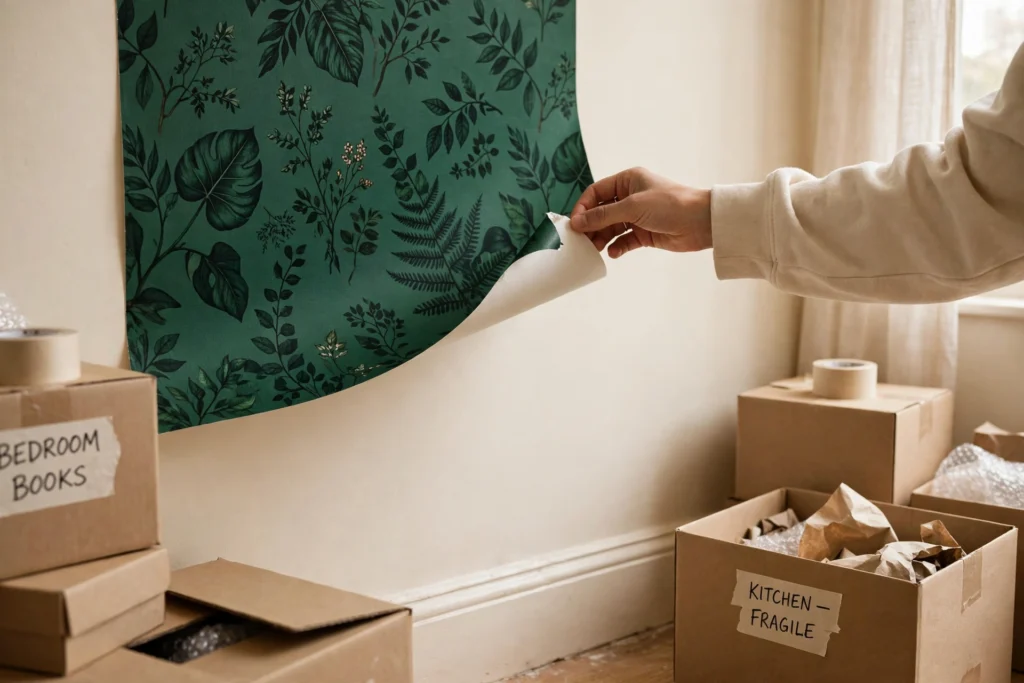
Check the lease before you order. Most leases allow temporary decoration, but some ban adhesive products outright, and a ban you ignored is a deposit deduction you cannot argue. Photograph the wall before you start, and keep the sample and receipt. At move-out, peel slowly at a low angle with a hairdryer on warm for stubborn spots, and never yank a strip straight off the wall. That slow peel is the difference between a clean wall and a paint repair. The same deposit logic applies to the rest of the room: our renter friendly living room upgrades guide covers the damage-free changes that pair well with one papered wall, and our peel and stick vs paint for renters comparison helps if you are still deciding between the two.

FAQ
Does peel and stick wallpaper damage walls?
On cured satin or eggshell paint, quality low-tack wallpaper usually removes cleanly. Flat or matte paint, fresh paint under 30 days old, and textured walls are the three cases where damage happens. A 48-hour patch test on a hidden spot tells you which case your wall is, before you commit to a full wall.
How long does peel and stick wallpaper last in a rental?
Expect 12 to 24 months on a quality install in a low-humidity room. Bathrooms and kitchens drop to 6 to 12 months because steam and grease wear the adhesive down faster. Plan the removal for before the adhesive ages past two years, because very old adhesive can bond harder.
Can you put peel and stick wallpaper on textured walls?
No, not reliably. Orange-peel, knockdown, or sand texture shows through the vinyl within weeks, and the adhesive fails where it only touches the high points. Smooth, primed drywall is the only reliable surface. If your walls are textured, paint or fabric wall panels are the safer renter option.
How many rolls of peel and stick wallpaper do I need for an accent wall?
A standard roll covers about 28 square feet. A 10 by 8 foot wall (80 sq ft) needs 3 rolls, or 4 if the pattern has a large repeat. A smaller 6 by 8 foot wall needs 2 rolls. Panel brands are different: they sell 2 foot wide panels, so the same 10 foot wall needs 5 panels. Always buy one spare roll.
How this was made: prices, roll sizes, and removal guidance were checked against live brand listings and independent brand reviews in November 2026. No wallpaper was installed or tested for this guide, and no brand paid for placement.
Sources: Re-Design’s six-brand removable wallpaper review (re-design.app); Chasing Paper’s own panel pricing (chasingpaper.com); StealTheDecor’s renter wallpaper test on Medium; Target and Tractor Supply listings for RoomMates and Tempaper and Co., checked November 2026.