Best Mini Fridge for Small Apartments: 6 Picks Sized by Real Space, Not the Box
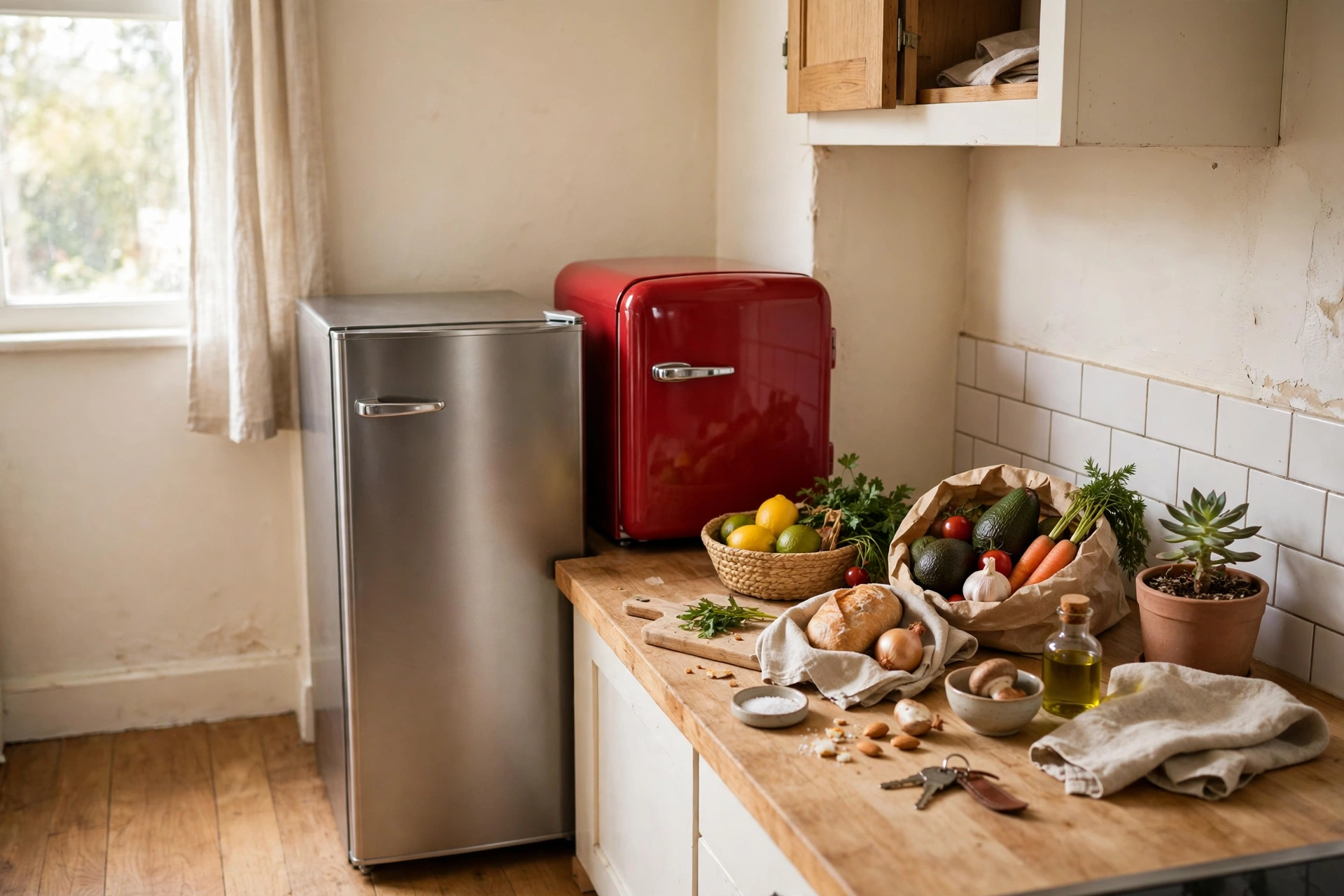
The best mini fridge for small apartment living is the one that fits your gap, not the one with the biggest number on the box. A 3.2 cubic foot fridge sounds like twice the fridge of a 1.6 cube, but at 33 inches tall it will not slide under a desk, it will not fit in a nightstand nook, and it still costs about $40 a year to run. Measure first, then pick. That is the whole method behind this guide, and it is also the original work in it: a computed fit table from real manufacturer dimensions, a bedroom noise rule in decibels, and a year one running cost table built from ENERGY STAR’s own energy figures, with every price live checked in November 2026.
How to pick the best mini fridge for small apartment living
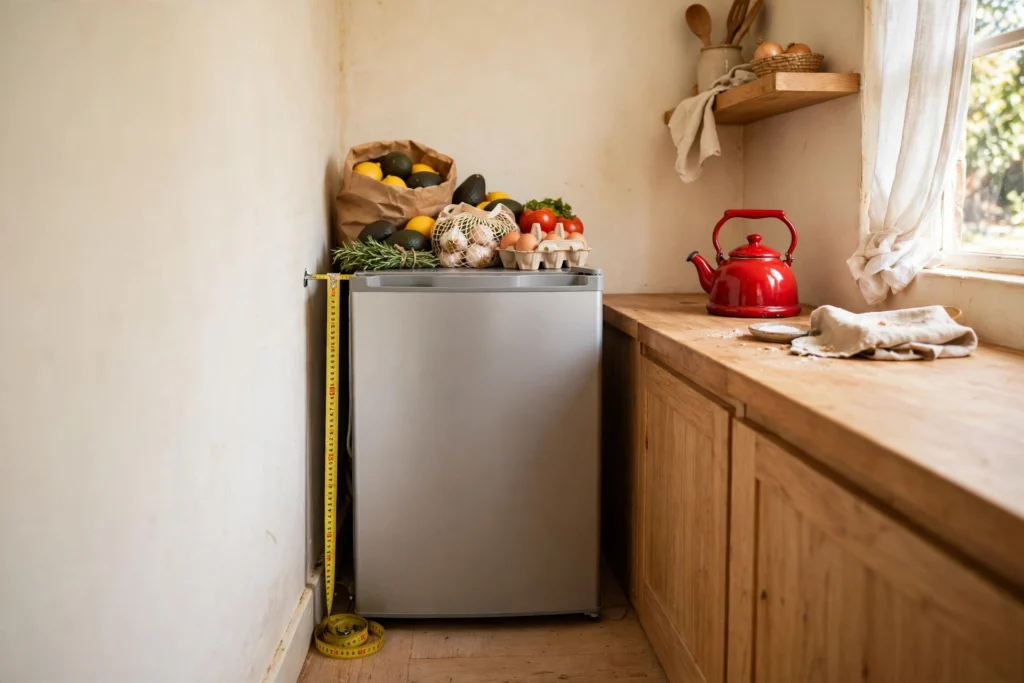
Start with a tape measure, not a shopping page. Measure the width, depth, and height of the exact spot, then add the door swing in front and two inches of air space behind and at the sides so the compressor can breathe. A fridge squeezed tight against a wall runs longer, hums louder, and dies sooner. In a studio apartment layout, the fridge often sits in the living zone rather than a kitchen, so the spot you measure might be beside the sofa, not beside a counter. Then answer three questions in this order. First, where does it go: under a desk, beside a bed, or in a kitchen corner? That decides the height. Second, what goes inside: drinks and snacks only, or real food with a freezer? That decides the size and the freezer type. Third, does it sleep in your bedroom? That decides the noise limit. Price comes last. A cheap fridge that does not fit is not cheap, it is a return trip.
What size mini fridge fits a small apartment?
There are really only two sizes that matter in a small apartment, and they behave very differently.
| Size | Typical dimensions (W x D x H) | Fits under a desk? | What it holds | Floor space |
|---|---|---|---|---|
| Cube, 1.6 to 1.7 cu ft | 17.5 to 18.6 in x 17.7 to 18.5 in x 19.4 to 19.8 in (44 to 47 cm x 45 to 47 cm x 49 to 50 cm) | Yes, with about 10 in to spare | 20 to 30 cans, a week of drinks, a few meals | About 2.2 sq ft |
| Compact, 3.1 to 3.2 cu ft | 17.4 to 19.7 in x 18.7 to 19.3 in x 32.7 to 33.1 in (44 to 50 cm x 47 to 49 cm x 83 to 84 cm) | No, it is 33 in tall | A gallon jug, several meal prep containers, produce, door condiments | About 2.3 sq ft |
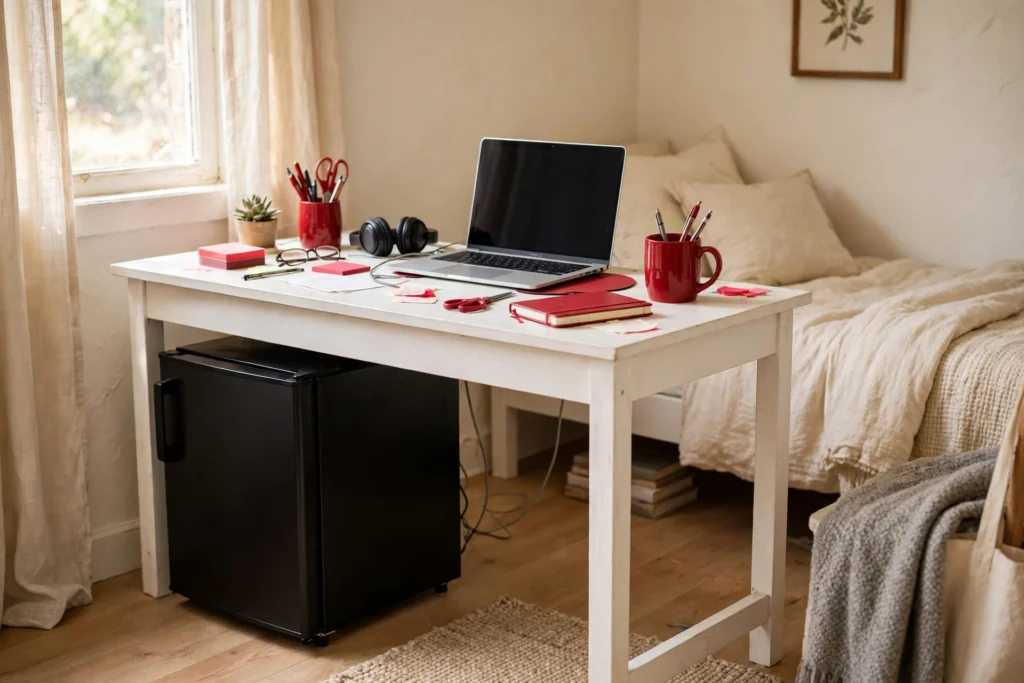
The surprise is the last column. A 3.2 cubic foot fridge takes barely more floor than a cube. It takes the same footprint and grows upward instead. So the question is never floor space, it is height. A standard desk underside sits at about 29 to 30 inches (74 to 76 cm), which swallows a 19.4 inch cube with room to spare and stops a 33 inch compact cold. If your spot is under a desk or inside a dresser cutout, you are buying a cube whether you like it or not. If you have a free corner, the 3.2 earns its keep with a real freezer and room for a gallon jug upright.
For one person, a 1.7 cubic foot cube is plenty for drinks and a few meals for a week. For a couple, or for one person who cooks and freezes portions, the 3.1 to 3.2 size is the comfortable pick. And if you are storing groceries for more than two people every day, a compact fridge will frustrate you within a week, no matter which one you buy. That is not a flaw in the fridge, it is the wrong tool for the job. Once the fridge is placed, a slim rolling cart beside it holds the overflow that never fits inside: cans, snacks, and the extra bottles that would otherwise crowd the door bins.
How loud is a mini fridge in a bedroom?
This is the question most roundups skip, and it is the one that sends fridges back to the store. Mini fridges mostly hum between 35 and 46 decibels. A whisper sits near 30 decibels and a normal conversation near 60, so a fridge at 37 decibels is much closer to a whisper than to a chat. But decibels are logarithmic, and a difference of just 3 decibels doubles the sound energy. A 32 decibel unit is effectively silent from a few feet away. A 42 decibel unit is a soft hum you will notice in a silent room at 2 a.m.
The rule for a bedroom is simple: 38 decibels or under. Every pick below that is meant for a bedroom meets it, and the ones that do not are flagged as kitchen only. Two more things matter. First, compressor fridges cycle on and off, so you hear a click and a short run, then silence. Thermoelectric coolers have no compressor, so they are quieter in one sense, but their fan runs all the time and they cool weakly, which brings us to the trap in the mistakes section. Second, a fridge with blocked airflow works harder and runs longer, which is louder. That two inches of air space is a noise decision as much as a cooling one.
How much does a mini fridge cost to run?
A mini fridge runs 24 hours a day, 365 days a year, so the running cost is part of the price whether the listing mentions it or not. ENERGY STAR’s certified compact refrigerator dataset, 1,714 models as of October 2026, puts the median mini fridge at 246 kWh a year. At the US average residential rate of about 18 cents per kWh, that is roughly $44 a year. Smaller cubes do better: under 2 cubic feet models median 208 kWh a year, about $37, and 2 to 4 cubic feet models median 222 kWh a year, about $40.
| Pick | Price, Nov 2026 | Energy use | Running cost per year | Year one total |
|---|---|---|---|---|
| Midea WHD-113FSS1, 3.1 cu ft | $279.99 | 2 to 4 cu ft median, 222 kWh | About $40 | $319.84 |
| EUHOMY CRF006-31, 3.2 cu ft | $199.99 | 2 to 4 cu ft median, 222 kWh | About $40 | $239.84 |
| Upstreman BR321, 3.2 cu ft | $149.99 | 2 to 4 cu ft median, 222 kWh | About $40 | $189.84 |
| Midea WHS-65LB1, 1.6 cu ft | $113.33 | 207 kWh (ENERGY STAR listing) | About $37 | $150.57 |
| Frestec 1.7 cu ft, FTC16RE | $119.99 | 0.55 kWh a day, about 201 kWh | About $36 | $156.13 |
| BLACK+DECKER BCRK17B, 1.7 cu ft | $139.99 | Under 2 cu ft median, 208 kWh | About $37 | $177.41 |
Two things jump out. First, the running cost gap between the cheapest cube and the biggest compact is only about $3 a year, so energy use should never decide the size. Fit and freezer decide the size. Second, an old dorm fridge over ten years old can use 30 to 60 percent more electricity than a current ENERGY STAR model of the same size, so a free hand me down is often the most expensive fridge in this table.
The 6 best mini fridge picks for small apartments
Every pick below passed the same test for the best mini fridge for small apartment buyers: real dimensions that fit a real gap, a stated noise level or a clear bedroom verdict, an honest freezer, and a price checked in November 2026. No affiliate links anywhere in this post. Prices are what the listings showed when checked, and they move, so treat them as checked prices, not promises.
1. Midea WHD-113FSS1, 3.1 cu ft: best overall
Best for: One person or a couple who wants a real freezer in a small apartment. Main advantage: A true 0.92 cubic foot separate freezer compartment, not a frost shelf, plus ENERGY STAR certification from an established brand. At 32.95 inches tall it needs a dedicated corner, and that is the point: this is the pick when you have the height. Watch out for: Manual defrost, so frost builds up in the freezer and you will need to empty it and let it melt a few times a year. The stainless finish costs more than the black version, which was listed at $252.38. Verdict: The most complete small apartment fridge in this guide. 4.5 out of 5.
2. EUHOMY CRF006-31, 3.2 cu ft: best real freezer
Best for: Anyone who freezes food for real: ice cream, frozen meals, a week of portions. Main advantage: A two door design with a separate freezer that reaches minus 7.6 degrees Fahrenheit, cold enough to keep things properly frozen, with about 0.96 cubic feet of freezer space and 2.24 of fridge. Watch out for: EUHOMY sells several 3.2 cubic foot versions that look alike, some single door with a tiny micro freezer, so check the door configuration on the listing before you buy. The two door version is the one reviewed here. Verdict: The best freezer in this guide for the money. 4.5 out of 5.
3. Upstreman BR321, 3.2 cu ft: best value
Best for: The tightest budget that still needs full size storage. Main advantage: Full 3.2 cubic feet, 2.9 fridge plus 0.3 freezer, at $149.99, with a 38 decibel rating that keeps it bedroom legal. It was also seen on sale at $139.99 in October 2026. Watch out for: The freezer is a small frost box, not a real separate freezer. It will not reliably keep ice cream solid or make ice cubes, and it needs manual defrost. Verdict: The best price per cubic foot here, as long as you buy it for the fridge, not the freezer. 4 out of 5.
4. Midea WHS-65LB1, 1.6 cu ft: best bedroom cube
Best for: A bedroom, a home office, or under a desk. Main advantage: At 18.6 by 17.7 by 19.4 inches it slides under a desk or into a dresser cutout without a fight, it is ENERGY STAR certified at 207 kWh a year, and it runs under 42 decibels. This is the quietest lifestyle fit in the guide, and at $113.33 it is also the cheapest pick. Watch out for: No freezer compartment at all, just a small chiller area that cools items fast but will not hold frozen food. One shelf and door bins mean you organize vertically or not at all. Verdict: The cube to buy when the fridge sleeps in your room. 4.5 out of 5.
5. Frestec 1.7 cu ft, FTC16RE: best under desk pick
Best for: Light sleepers and the tightest under desk gaps. Main advantage: The quietest pick in this guide at a stated 37 decibels, with a light freeze area for ice cubes, a one touch defrost button, and a 0.55 kWh a day draw. At 17.83 by 18.05 by 19.8 inches and 30 pounds, it is the easiest to move and the easiest to fit. Watch out for: The grey FTC17SS version is out of stock, and the in stock black FTC16RE is the same parent listing, so buy by the dimensions and the 37 decibel rating, not by the color name. Verdict: The best bedroom numbers in this guide for the least money. 4.5 out of 5.
6. BLACK+DECKER BCRK17B, 1.7 cu ft: best brand name cube
Best for: Anyone who wants a familiar brand and a two year compressor warranty on a cube. Main advantage: ENERGY STAR certified, R600a refrigerant, reversible door, leveling legs, and a chiller compartment, in a 17.5 by 18.5 by 19.7 inch box that weighs 34.2 pounds. At $139.99 it sits between the budget cubes and the big compacts. Watch out for: The chiller compartment is not a freezer, so do not plan frozen meals around it. One removable glass shelf means tall bottles need the shelf out. Verdict: The safe, boring, reliable cube, and sometimes that is exactly the right buy. 4 out of 5.
What about the freezer? The honest truth about mini fridge freezers
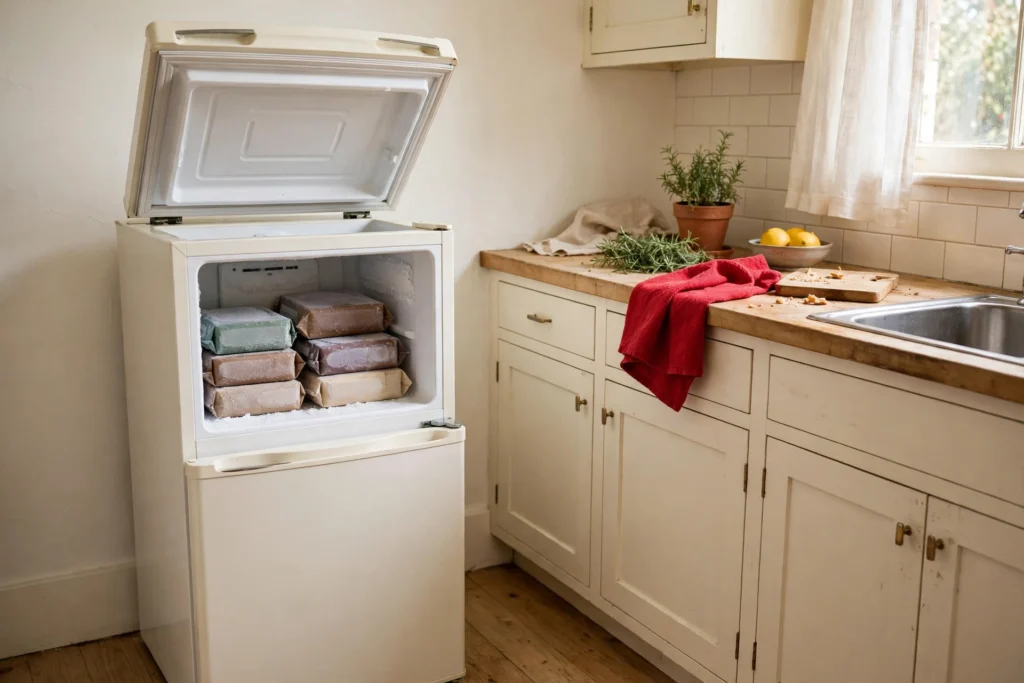
Mini fridge freezers fall into three honest categories, and the listing rarely says which one you are getting. A real separate freezer has its own door and its own cold, like the Midea WHD-113FSS1 and the EUHOMY dual door. It keeps ice cream solid and frozen meals safe. A frost box is a small compartment inside the fridge door with a wire shelf, like the Upstreman BR321. It keeps things cold and makes a few ice cubes on a good day, but it does not hold a steady sub zero temperature. A chiller compartment is not a freezer at all. It is a cold shelf that chills drinks fast, and every cube in this guide has one instead of a freezer.
Then there is the drinks only cooler, which is a fourth category pretending to be a fridge. Thermoelectric coolers chill to about 40 degrees below the room temperature, so in a warm room one may only reach 55 to 60 degrees Fahrenheit. The USDA safe line for perishable food is 40 degrees Fahrenheit or below. A drinks cooler is fine for cans. It is not safe for milk, yogurt, or leftovers, and no price makes it a food fridge. If a listing does not say compressor cooling, assume it is not a real fridge.
Mistakes to avoid with a mini fridge in a small apartment
Buying by cubic feet alone. Two fridges can both say 3.2 cubic feet and differ by 13 inches in height. Measure the gap first, then check the height, then check the door swing. A fridge you cannot open fully is a fridge you cannot use.
Skipping the ventilation gap. Pushing a mini fridge tight against the wall or into a cabinet with no air space makes the compressor run longer and louder, and shortens its life. Leave two inches behind and at the sides, and never block the back grille with a bin or a bag.
Putting it on carpet with nothing under it. Condensation drips happen, and a defrost day happens too. A cheap tray or a small mat under the fridge protects wood floors and carpet, and it costs less than one stain.
Forgetting the defrost chore. Every pick in this guide except the cubes’ chiller setup needs manual defrost, and the real freezer picks need it most. Plan a towel, a bucket, and a cooler bag for the food, and do it before the frost eats a shelf of space.
Placing it next to the radiator or the oven. Heat next door makes the compressor work overtime. If your only free spot is beside a heat source, pick a smaller cube for the bedroom instead and keep the kitchen corner for something that does not refrigerate.
What to skip
A thermoelectric drinks cooler as a food fridge. It is quiet and cheap and it will let your milk go bad. Buy it for cans only, or skip it entirely.
A 4.5 cubic foot compact for a studio. It sounds like a bargain upgrade until you measure it. At that size you are buying a second full fridge, not a mini one, and the floor space and the running cost both jump.
A glass door beverage center for food. Glass doors look great in photos and leak cold all day. They are built for display, not for keeping leftovers at 40 degrees.
The cheapest no name cube with no stated decibels and no ENERGY STAR badge. If the maker will not state the noise or the energy use, you are the test lab, and the test costs $100 plus a return trip.
A quick note for renters
A mini fridge is one of the most renter friendly appliances you can buy. It is freestanding, it needs no drilling, no brackets, and no permission in most leases. Check the lease only in two cases: if your landlord supplied a fridge and you are replacing it, ask first and keep the original somewhere safe, and if the only spot blocks a vent or a radiator, pick another spot. On move out day, defrost it, wipe it dry, and leave the door open a crack so it does not smell in storage. There is nothing here that touches your deposit, which is more than most small apartment upgrades can say.
Sources
Fit and capacity figures come from manufacturer dimensions quoted in the tlbox.com and homedif.com roundups and the fridge.com size guides. Noise figures come from airfryerbite.com and kitchprep.com bedroom fridge guides and manufacturer listings. Energy figures come from ENERGY STAR‘s certified compact refrigerator dataset via energycosthub.com and productbible.com, October 2026, and the EIA US average residential electricity rate. Food safety guidance comes from the USDA 40 degrees Fahrenheit rule for perishable foods. Prices were live checked on November 12, 2026: Midea WHD-113FSS1 $279.99 and EUHOMY single door $169.99 via fridge.com price tracking, Midea WHS-65LB1 $113.33 at Lowe’s via ShopSavvy, EUHOMY CRF006-31 $199.99 on euhomy.com, Upstreman BR321 $149.99 via pricehistory.app, BLACK+DECKER BCRK17B $139.99 via pricehistory.app, and Frestec 1.7 cu ft $119.99 via fridge.com. Organize the inside once it arrives with our small fridge organization ideas, and if your small kitchen has no pantry, the fridge is only half the storage story.
How this was made: this guide was researched from live search results, manufacturer specifications, and ENERGY STAR energy data, then written in our own words. Prices and dimensions were checked against live listings on November 12, 2026. No product was tested by us, and no hands on testing is claimed.

What size mini fridge do I need for a small apartment?
For one person, a 1.6 to 1.7 cubic foot cube is plenty for drinks and a few meals for a week. For a couple, or for one person who cooks and freezes portions, go with 3.1 to 3.2 cubic feet. Measure the height of your spot first: cubes are about 19 to 20 inches tall and slide under a desk, while 3.2 cubic foot models are about 33 inches tall and need a dedicated corner.
Is 3.2 cu ft big enough for one person?
Yes, 3.2 cubic feet is generous for one person and comfortable for a couple who cooks at home sometimes. At this size you get room for a gallon jug, several meal prep containers, produce, and door bins for condiments. The only thing it cannot do is replace a full size fridge for a household that shops in bulk every week.
How much electricity does a mini fridge use?
The median ENERGY STAR certified compact refrigerator uses 246 kWh a year, about $44 a year at the US average residential rate of 18 cents per kWh. Cubes under 2 cubic feet median 208 kWh a year, about $37, and 2 to 4 cubic foot models median 222 kWh a year, about $40. Check the yellow EnergyGuide label for the exact figure on the model you buy.
Are mini fridges loud enough to disturb sleep in a bedroom?
Most mini fridges hum between 35 and 46 decibels, and in a silent bedroom a 42 decibel hum is noticeable. For a bedroom, pick a model rated at 38 decibels or under, like the Frestec at 37 decibels or the Upstreman at 38. A difference of 3 decibels doubles the sound energy, so the gap between 38 and 42 matters more than it looks.