Best Budget Standing Desk for Small Apartments: 6 Picks That Fit
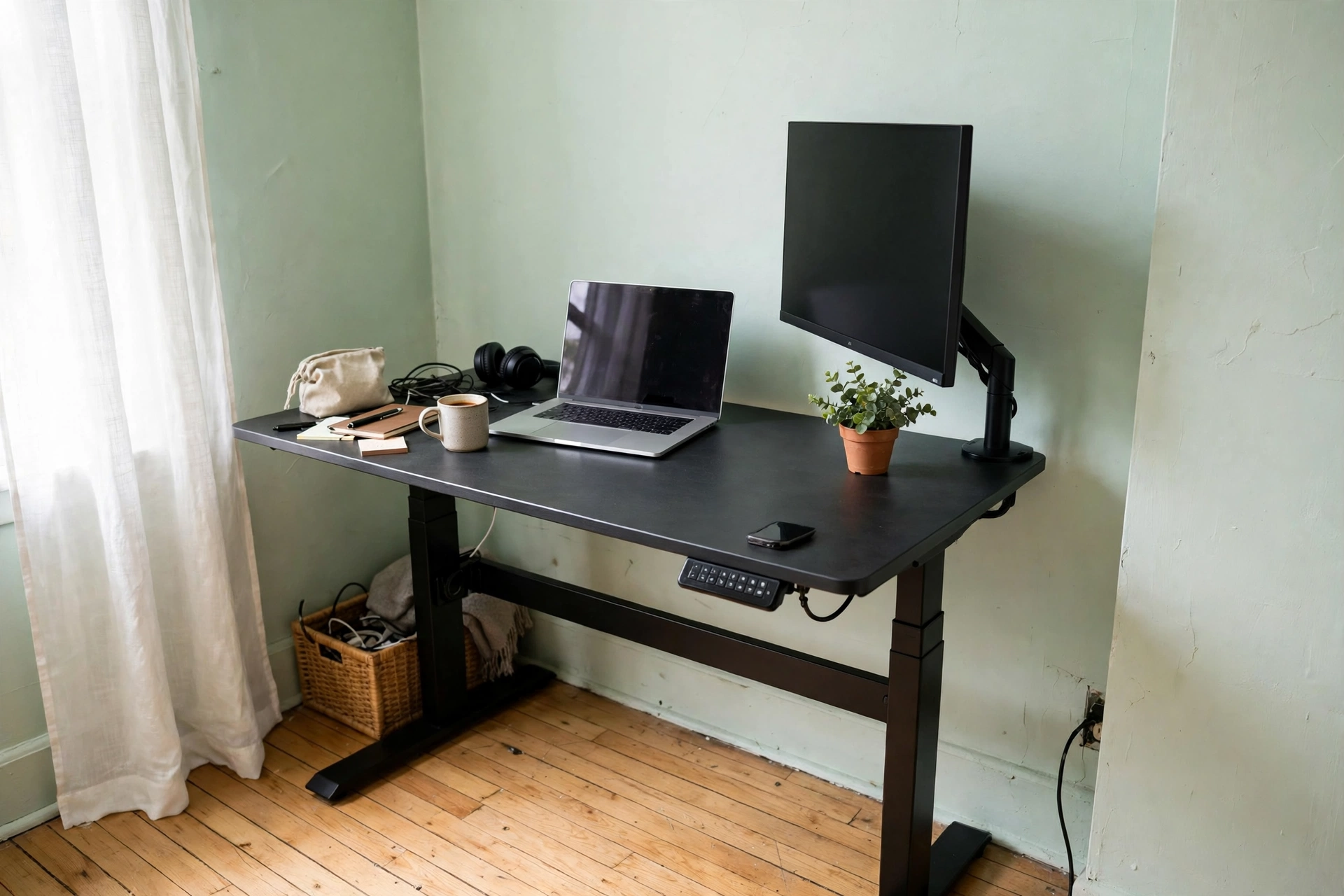
The best budget standing desk for small apartments is the one that fits your wall, your chair, and your walkway before it fits your budget. That sounds obvious, but most guides rank desks by price alone and never ask how wide your alcove is. After comparing the current small-space picks, the sweet spot is clear: a desk 40 to 48 inches wide (102 to 122 cm) and 24 inches deep (61 cm), with at least 30 inches (76 cm) of clearance behind the chair. The cheapest desk that clears that bar is the FlexiSpot EN1 at $169.99, the best all-rounder is the FlexiSpot Comhar EG8 at $239.99, and the narrowest quality pick is the Branch Duo at 36 inches wide. Every price in this guide was checked in November 2026, and every desk below was judged on fit first, price second.
What size standing desk fits a small apartment?
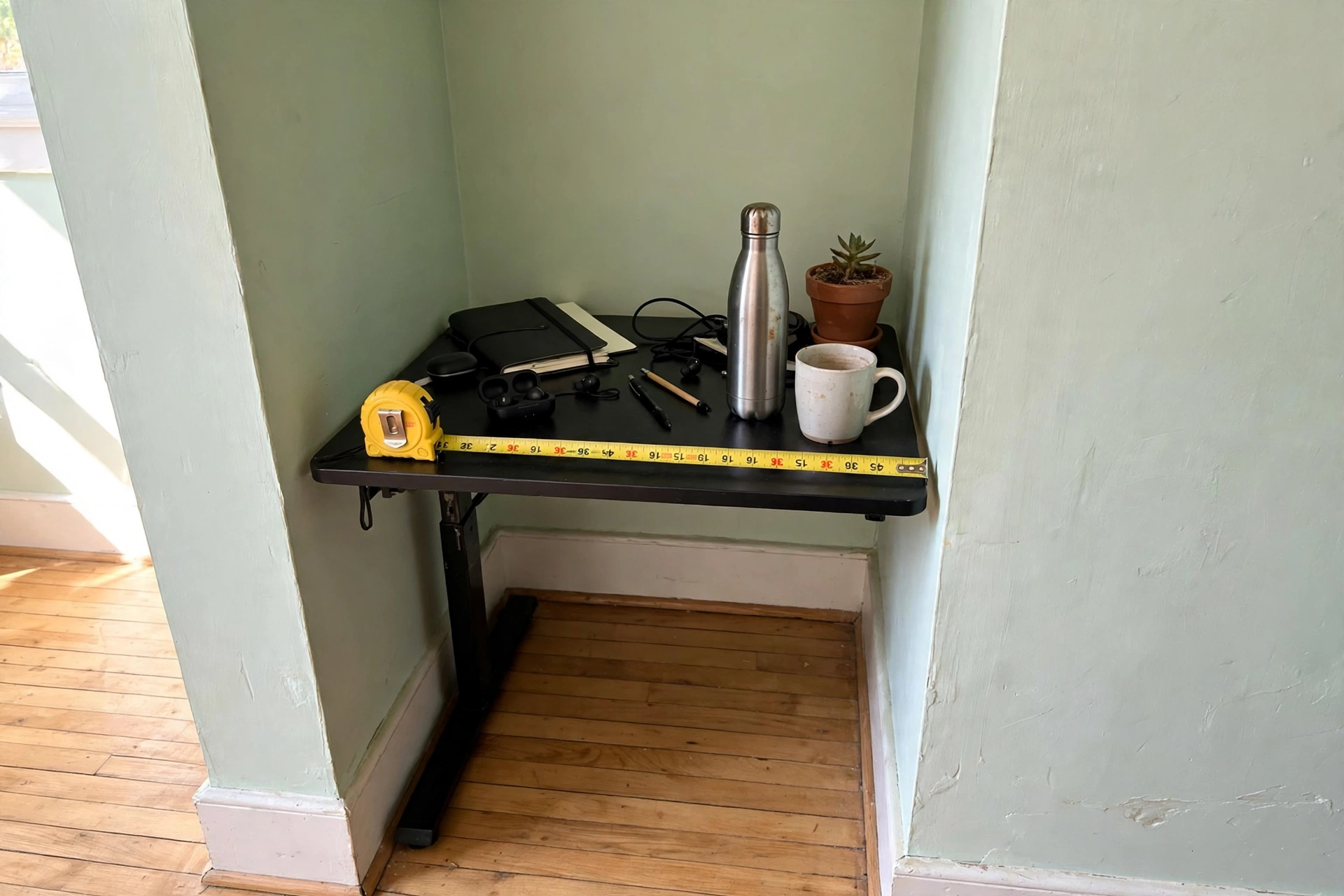
Start with the tape measure, not the shopping cart. A standard standing desk is 60 inches wide (152 cm), which eats a full wall in a studio. Compact desks run 36 to 48 inches wide (91 to 122 cm), and that range is where small apartments live.
Here is the fit math that decides everything. Measure your wall or alcove, then subtract 2 inches (5 cm) for cable access behind the desk. A 48-inch desk in a 50-inch alcove leaves no room for cables, so it does not fit even though the numbers look close. Then measure the chair zone. You need 30 inches (76 cm) behind the chair to sit down comfortably, and about 36 inches (91 cm) to stand up and walk past it. Depth matters as much as width: a 48-inch-wide desk at 30 inches deep covers 10 square feet (0.93 sq m), while the same width at 24 inches deep saves nearly 2 square feet (0.19 sq m), and for most setups you will not miss those 6 inches.
The smallest usable standing desk is roughly 32 inches wide by 24 inches deep (81 by 61 cm). Below that, a monitor, keyboard, and mouse stop fitting together. The average US studio runs about 457 square feet (RentCafe 2025 data), so every inch you give a desk comes out of the bed, the couch, or the walkway. And one rule most guides skip: check the minimum height, not just the maximum. A desk that only drops to 28.9 inches (73 cm) is too tall for many shorter users when seated, and that flaw shows up on day one. Once the size is settled, the rest of the room follows the same measure-first logic as a budget home office setup.
How to pick the best budget standing desk for small apartments
This table is the whole guide in one place. Footprints are width by depth, prices are as of November 2026, and every number comes from the manufacturers’ listings as quoted in the small-space guides checked for this post.
| Desk | Smallest top | Height range | Lift capacity | Warranty | Price (Nov 2026) |
|---|---|---|---|---|---|
| Huano / Juanuo small electric | 32 x 19 in (81 x 48 cm) | 28.3 to 46.5 in (72 to 118 cm) | 176 lb (80 kg) | Varies | $100 |
| FEZIBO 40 in | 40 x 24 in (102 x 61 cm) | About 27 to 47 in (69 to 119 cm) | About 176 lb (80 kg) | Short | $160 to $200 |
| FlexiSpot EN1 | 48 x 30 in (122 x 76 cm) | 28.1 to 45.7 in (71 to 116 cm) | 176 lb (80 kg) | Standard | $169.99 |
| FlexiSpot Comhar EG8 | 48 x 24 in (122 x 61 cm) | 28.9 to 46.5 in (73 to 118 cm) | 100 lb (45 kg) | Standard | $239.99 |
| Desky Dual Mini | 40 x 24 in (102 x 61 cm), also 32 x 20 in (81 x 51 cm) | 23.6 to 49.2 in (60 to 125 cm) | 308 lb (140 kg) | Long | $450 |
| Branch Duo | 36 x 24 in (91 x 61 cm) | 28 to 47.3 in (71 to 120 cm) | 275 lb (125 kg) | 10 years | $499 to $599 |
Two stretch picks sit just above this table, and they are worth knowing about even though they are not counted in the six. The FlexiSpot E7 Pro in its 48-inch configuration costs $479 and is the value pick if you want dual motors and a 355 lb (161 kg) capacity in a compact top. The UPLIFT V3 with a 42 x 30 inch top lists at $648, drops to 22.6 inches (57 cm), and carries a 15-year warranty. If either fits your budget, they are the buy-once options.
Under $200: the three cheapest desks that still work
The best budget standing desk for small apartments under $200 is the FlexiSpot EN1 if your wall takes its size, or the FEZIBO if your nook is tighter. All three desks below clear the fit bar, and all three cost less than a single month of a coworking desk.
1. Huano / Juanuo small electric standing desk, $100
Best for: dorms, tight budgets, and laptop-only setups in the smallest rooms.
Main advantage: at 32 x 19 inches (81 x 48 cm), this is the smallest real electric desk in the guide, and it still packs 4 memory presets and a 176 lb (80 kg) rating for $100.
Watch out for: thinner two-stage legs wobble at maximum height, so it suits a light laptop setup, not a heavy multi-monitor rig. The single motor is louder than dual-motor desks, around 50 to 58 dB, which you will hear on video calls in a studio.
Verdict: the cheapest way into a real sit-stand desk. Buy it if $100 is the ceiling and your setup is light. Skip it if you run two monitors.
Renter-Friendliness: 5/5. Light, cheap, and easy to carry out at move-out.
2. FEZIBO 40 x 24 inch standing desk, $160 to $200
Best for: renters who want a drawer and a proper 40-inch work surface without paying $400.
Main advantage: a 40 x 24 inch (102 x 61 cm) top with a drawer included, at roughly half the price of the dual-motor desks. It covers the sweet-spot size for most studios.
Watch out for: shorter warranty and lower weight capacity than the dual-motor picks, and the single motor is slower, about 25 to 30 seconds for a full travel. Check the exact height range on the listing before you buy, because budget models vary by batch.
Verdict: the best value in the under-$200 tier for a daily laptop-and-one-monitor setup. The drawer is genuinely useful in a small room, where the desk often doubles as a side table.
Renter-Friendliness: 5/5. Standard size, standard weight, no wall fixing needed.
3. FlexiSpot EN1, $169.99
Best for: anyone who wants a full-size 48-inch top at the lowest brand-name price.
Main advantage: the cheapest full-size electric desk from a major brand, with the desktop included. One-piece 48 x 30 inch (122 x 76 cm) top, 1 inch thick, four memory presets, rated under 50 dB, and a 176 lb (80 kg) capacity.
Watch out for: at 30 inches deep (76 cm), it is the deepest desk in this guide, so it needs a real wall, not a tight alcove. The single motor is fine for one monitor but slower than dual-motor frames.
Verdict: our budget pick if your wall can take 48 inches of width and 30 inches of depth. If your nook is tighter, the FEZIBO above fits better for the same money.
Renter-Friendliness: 4/5. Bigger and heavier to move, but still freestanding.
$200 to $500: the sweet spot
The best budget standing desk for small apartments in this tier is the Comhar EG8 for most people, and the Desky Dual Mini if you work from home full time and need quiet dual motors.
4. FlexiSpot Comhar EG8, $239.99
Best for: most apartment dwellers. This is the best overall compact desk in the guide.
Main advantage: a one-piece 48-inch desktop with a built-in drawer and USB-A and USB-C charging at the surface, so it can stand in for a side table too. No separate frame and top to match up, which keeps assembly quick. Four programmable height presets.
Watch out for: the 28.9-inch (73 cm) minimum height is too tall for many shorter users when seated, so check your seated elbow height first. Rated for 100 lb (45 kg), which is fine for a laptop and one monitor, not a heavy multi-monitor rig.
Verdict: the best mix of compact size, storage, and price for most apartment dwellers. Buy this one if you want a desk that disappears into the room and charges your phone while you work.
Renter-Friendliness: 5/5. One-piece top, fast assembly, drawer replaces a side table.
5. Desky Dual Mini, $450
Best for: small rooms where stability and quiet matter, and for anyone who runs two monitors in 40 inches.
Main advantage: dual motors and 308 lb (140 kg) capacity in a truly compact frame, with rare 40 x 24 inch and 32 x 20 inch tops available out of the box. Height range 23.6 to 49.2 inches (60 to 125 cm), the widest in this guide, and a built-in power channel that drops just one cord to the floor. Near-silent operation, below 50 dB.
Watch out for: at $450 it costs more than double the budget tier, and the 32-inch top is laptop-only territory. You are paying for the dual motors and the low minimum height.
Verdict: the pick if you work from home full time in a small room. The low minimum height alone is worth it if you are shorter than average, and the dual motors stay quiet on calls.
Renter-Friendliness: 4/5. Heavier frame, but the integrated cable tray keeps the floor clear, which matters in a studio.
Over $500: the narrow buy-once pick
The best budget standing desk for small apartments at the narrow end is the Branch Duo, because nothing else this narrow is built this well.
6. Branch Duo, 36 x 24 inches, $499 to $599
Best for: the narrowest room in the guide, and anyone who wants a desk they will keep for a decade.
Main advantage: at 36 x 24 inches (91 x 61 cm), this is the smallest quality standing desk in the guide, with dual motors, anti-collision sensors, and a 10-year warranty. Frameless design, 275 lb (125 kg) capacity.
Watch out for: it starts at 28 inches (71 cm), so shorter users should check seated elbow height before buying. At $499 to $599 it is the priciest pick here, and 36 inches of width means a laptop plus one monitor, not two.
Verdict: buy it once if your room only gives you 36 inches. Nothing else this narrow is built this well.
Renter-Friendliness: 4/5. Light for its class and freestanding, but the price stings if you move every year.
Standing desk converter vs a full standing desk: which wins in a small apartment?
A converter sits on top of your existing desk and rises to standing height. It works, but it adds bulk to your desk surface and often wobbles at full height. In a small apartment, a dedicated compact standing desk is the cleaner solution, because the converter eats the very surface you are short of, and you still need a desk underneath it.
Buy a converter only if you already own a desk you love and cannot replace it, or if your lease forbids bringing in new furniture (rare, but check). Otherwise, the $100 Huano beats any converter on stability, and the $170 EN1 beats it on surface space. The converter’s one real win is zero assembly and zero commitment, which matters if you move in three months.
How to set up a standing desk in a small apartment in 7 steps
What you need: tape measure, painter’s tape, monitor arm (about $30 to $60), cable tray or cable sleeves, anti-fatigue mat (optional, about $25 to $40), furniture pads for hard floors, and a power strip with a long cord.
- Measure the wall or alcove, then subtract 2 inches (5 cm) for cable access. Mark the desk footprint on the floor with painter’s tape and live with it for a day.
- Measure the chair zone: 30 inches (76 cm) behind the chair to sit, 36 inches (91 cm) to stand and walk past. If the tape crosses a walkway, pick a narrower desk.
- Check your seated elbow height and compare it with the desk’s minimum height. If the desk cannot drop low enough, cross it off, no matter how good the price is.
- Assemble the desk in the room, not in the hallway. A 48-inch top does not turn corners easily in a small apartment.
- Put the monitor on a clamp arm, not a stand base. The arm frees about 8 inches (20 cm) of desk depth, which is the difference between cramped and comfortable.
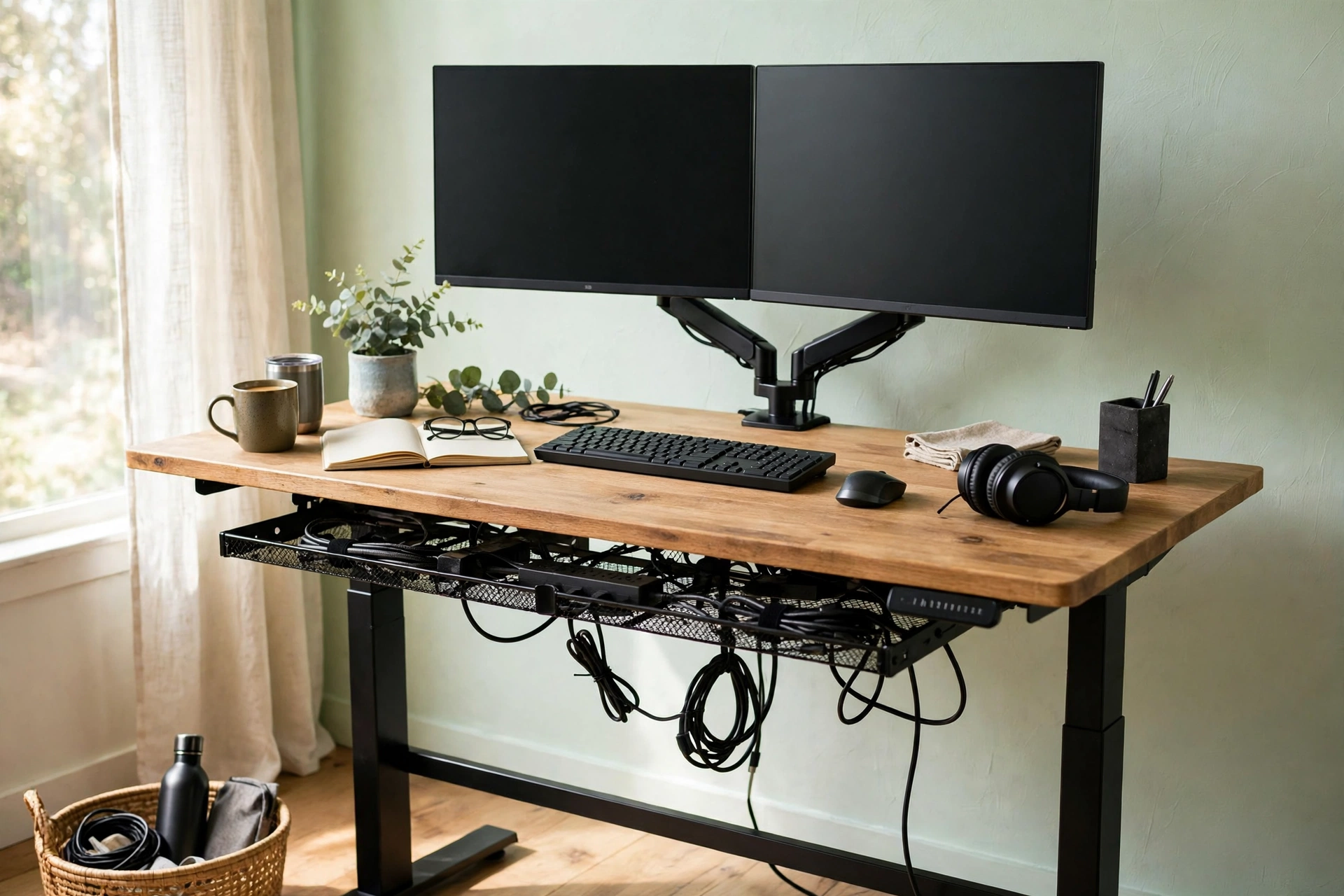
- Run cables through the tray or sleeves before you plug anything in. In a studio apartment with a home office, cables are visible from the bed and the couch, so this step is not cosmetic. The same small home office organization rule applies here: tray first, sleeves second, nothing loose on the floor.
- Set the standing height so your elbows sit at 90 degrees, then save the preset. Test the full travel once with everything on the desk, and listen for wobble at the top.
Mistakes to avoid
Buying width before measuring the walkway. The desk fits the wall but blocks the path to the bathroom. Tape the footprint first, every time.
Ignoring the minimum height. Most buyers check the maximum and forget the minimum. If you are under 5 foot 5 inches (165 cm), a 28.9-inch minimum can leave your shoulders up around your ears when seated.
Going under 40 inches with two monitors. A 36-inch top holds a laptop and one monitor comfortably. Two monitors need 42 to 48 inches, or a monitor arm and a lot of patience.
Skipping cable management. A standing desk moves, and loose cables snag, pull, and look terrible in a studio. Budget $20 for a tray.
Forgetting the floor. Hardwood and laminate scratch under desk feet. Furniture pads cost a few dollars and save the deposit.
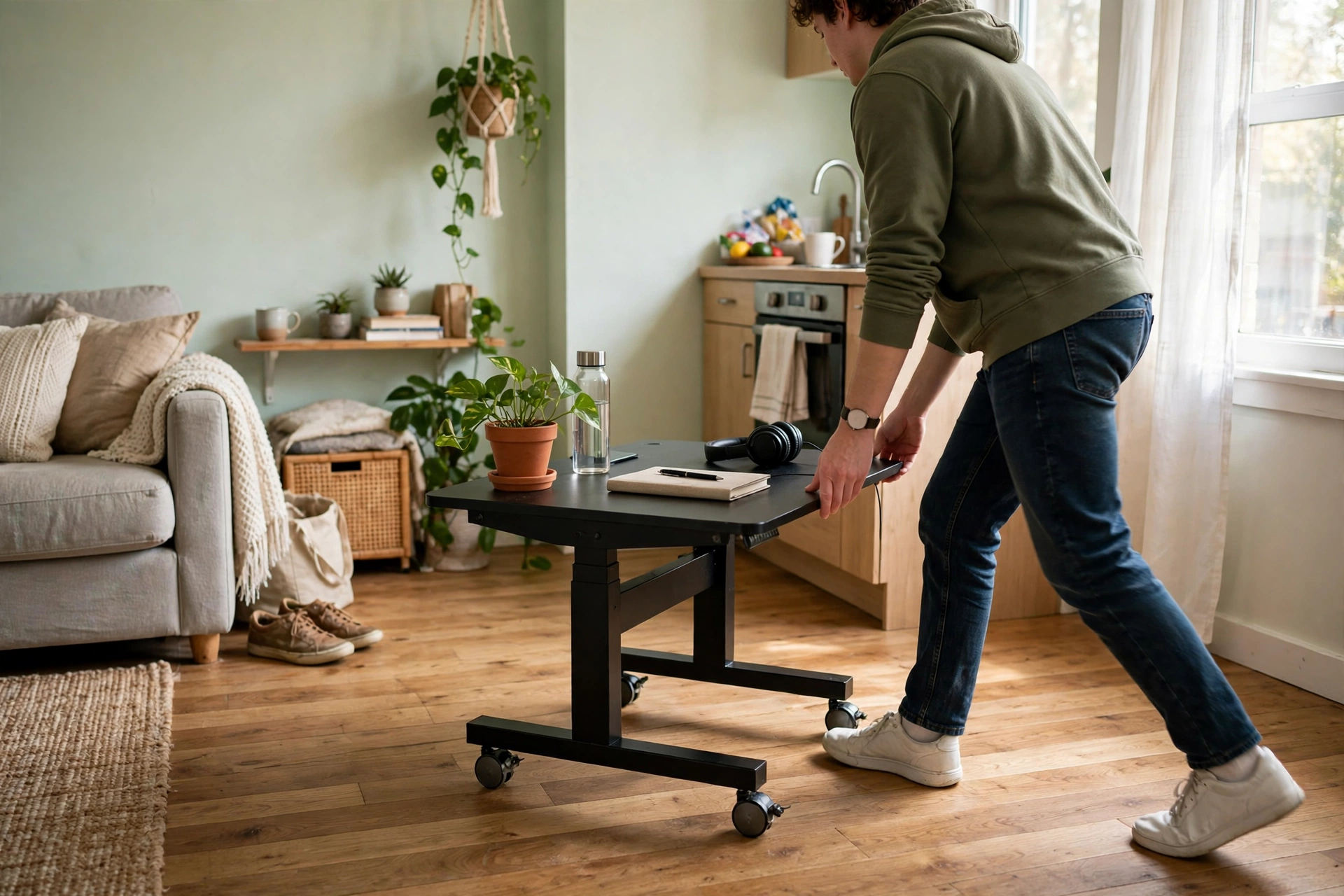
Renter check before you buy: this is a freestanding purchase, so most leases have nothing to say about it, but check two things anyway. First, confirm the desk fits through your front door and, if you have one, the lift, because a 48-inch box does not turn corners in a narrow hallway. Second, if your desk has casters, check that they will not mark the floor, and use pads under them. A standing desk is one of the safest renter friendly home office ideas there is: no drilling, no wall fixing, and it leaves with you. If your landlord ever asks, the answer is simple, it stands on the floor and plugs into a wall socket, nothing more.
What to skip
Desks under 32 inches wide with a monitor. A 30-inch square top works for a laptop and a notebook, not for a real workstation. The floor is 32 by 24 inches, and going smaller is a false economy.
Single-motor desks over $300. Above that price, dual motors buy you quiet, speed, and stability. Paying $350 for a single motor is paying for the brand, not the desk.
Glass tops in small rooms. They show every fingerprint, every cable, and every crumb, and they chip at the corners in tight spaces. A laminate or wood top hides daily life better.
Built-in treadmills and desk bikes. They sound fun, they eat the floor space you do not have, and they are the first thing to go in a move. Walk around the block instead.
What size standing desk is best for a small apartment?
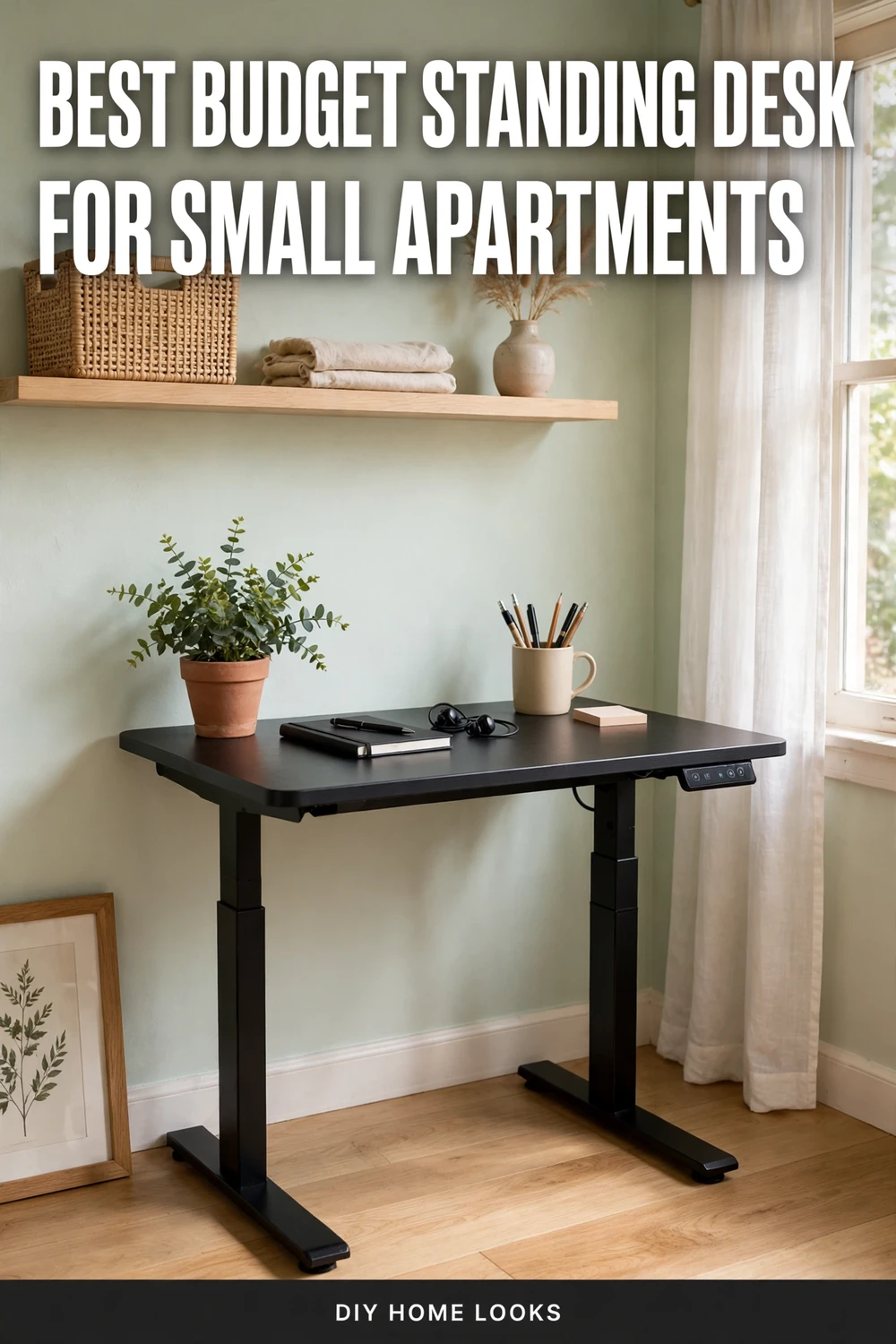
For most small apartments, target a desktop 40 to 48 inches wide (102 to 122 cm) and 24 inches deep (61 cm). Choose 24 inches of depth if the desk must sit against a wall in a tight corner. Drop to 36 inches only if you work mostly from a laptop, and go to 30 inches deep for a 32-inch screen.
Are small standing desks worth it?
Yes, if you work from home in a small space. The best budget standing desk for small apartments is worth it when the fit math works: 40 to 48 inches of width, 24 inches of depth, and 30 inches of clearance behind the chair. A compact desk builds movement into a day that otherwise has almost no incidental walking, and the small-space models in this guide cost $100 to $450, not the $800 a full-size premium desk costs.
Will a standing desk damage my rental apartment?
No, as long as you buy freestanding. A standing desk stands on the floor and plugs into a socket, so there is nothing to drill and nothing to patch at move-out. The only deposit risk is scratched floors, which furniture pads under the feet prevent. Casters can mark soft floors, so use pads under them too.
How much clearance do I need behind a standing desk?
Allow 30 inches (76 cm) behind the chair to sit down, and about 36 inches (91 cm) to stand up and walk past. Leave about 2 inches (5 cm) between the desk and the wall for cable access, because most desks move slightly forward and back as they rise and lower.
Sources: prices and size numbers in this guide were checked in November 2026 against the small-space desk guides at WFH Lounge and Workspace Tested, and the viewing-distance rule (20 to 40 inches, 50 to 100 cm) comes from OSHA’s computer workstation guidance as quoted there. No affiliate links are used in this post.
How this was made: this guide compares manufacturer specs and listing prices checked in November 2026, plus computed fit and clearance math for small rooms. No desk was tested in person, and no claim here is based on hands-on testing.