Studio Apartment with a Home Office: 10 Setups That Let You Clock Out
Yes, a studio apartment with home office space can work, and it does not need a spare room. You need one measured zone, about 12 square feet, a desk that disappears when work ends, and a small shutdown ritual. I measured the zone before writing this: a 32 inch desk (81 cm) plus 30 inches (76 cm) of chair pull-out plus a 24 inch (61 cm) walkway gives a work zone 86 inches deep (218 cm) and 32 inches wide. If your wall cannot spare that, pick a folding setup, not a bigger desk.
Where does a desk actually fit in a studio apartment with home office space?
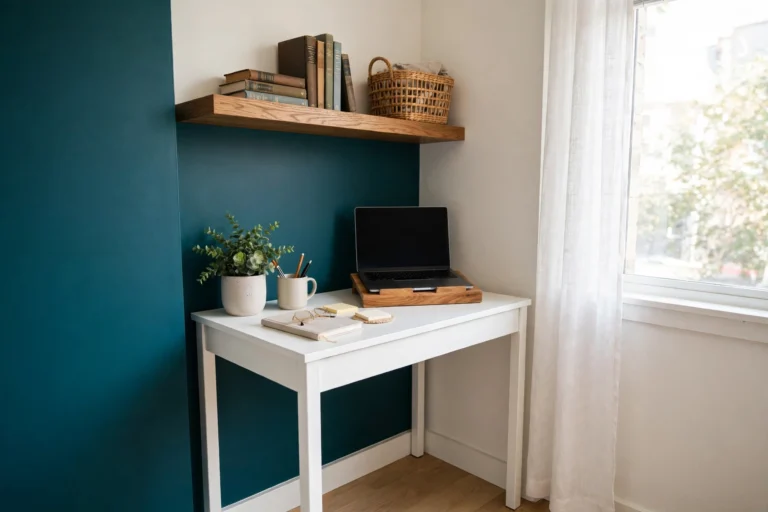
The desk fits where three things meet: a wall you can sit against, an outlet within reach, and light that does not hit your screen. Measure first. A 32 inch desk needs 86 inches of depth once you add chair space and a walkway. A corner, a closet, or the wall behind your sofa usually passes that test. The middle of the room almost never does, because it steals the walkway your bed and kitchen need. Our full studio apartment layout ideas guide shows how the zones fit together, and this post fills in the work zone alone. For more measured floor plans, see these studio room layout ideas that show how a work zone fits into a small floor plan.
What a studio home office costs (as of November 2026)
A studio apartment with home office gear does not need expensive furniture. Prices below are live-checked US street prices, not what anyone paid. They are the cheapest workable version of each piece, checked in November 2026.
| Item | Product | Price |
|---|---|---|
| Fold-down desk | HOOBRO wall-mounted folding desk | $29.99 |
| Laptop stand | Nexstand folding laptop stand | $25.00 |
| Monitor arm | VIVO single monitor arm | $35.00 |
| Folding screen | Target 3-panel folding divider | $39.98 |
| Total | A complete close-away setup | $129.97 |
A chair and a lamp are not in the total. Use the chair you already own and any lamp with a warm bulb. A fixed setup costs more: a Prepac floating desk runs $140 to $200 and a South Shore Axess fold-down runs $85 to $130, both checked in October 2026. Expect about one afternoon to set it all up.
10 setups for a studio apartment with home office space
1. The fold-down wall desk
Best for: renters who can drill two brackets. Main advantage: it folds to about 5 inches deep, so the room gets its floor back at 5 pm. Watch out for: it needs a stud or a proper wall anchor, never a bare drywall screw. Verdict: the best first pick for most studios.
2. The corner desk
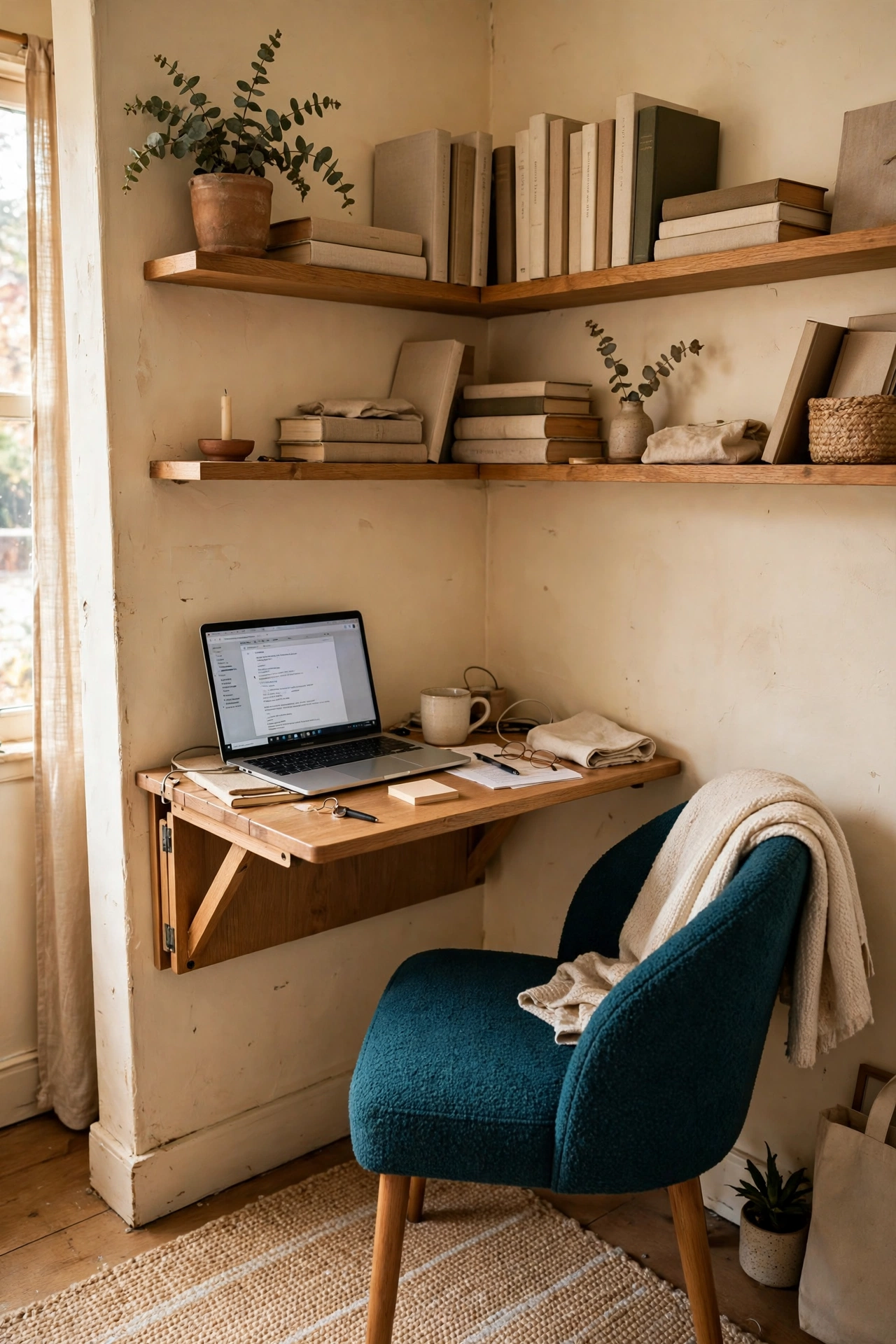
Best for: studios with a dead corner near a window. Main advantage: corners waste no walkway, and the two walls hold shelves above the desk. Watch out for: you face the wall, so video calls show a blank wall behind you. Verdict: great for focus work, weak for calls unless you turn the chair.
3. The cloffice
Best for: studios with a shallow closet you barely use. Main advantage: close the door, or hang a curtain, and the office vanishes completely. Watch out for: closets get hot and dark, so add a task lamp and leave the door open while you work. Verdict: the cleanest separation without building a wall. Our small home office organization guide covers the storage side of a desk zone like this.
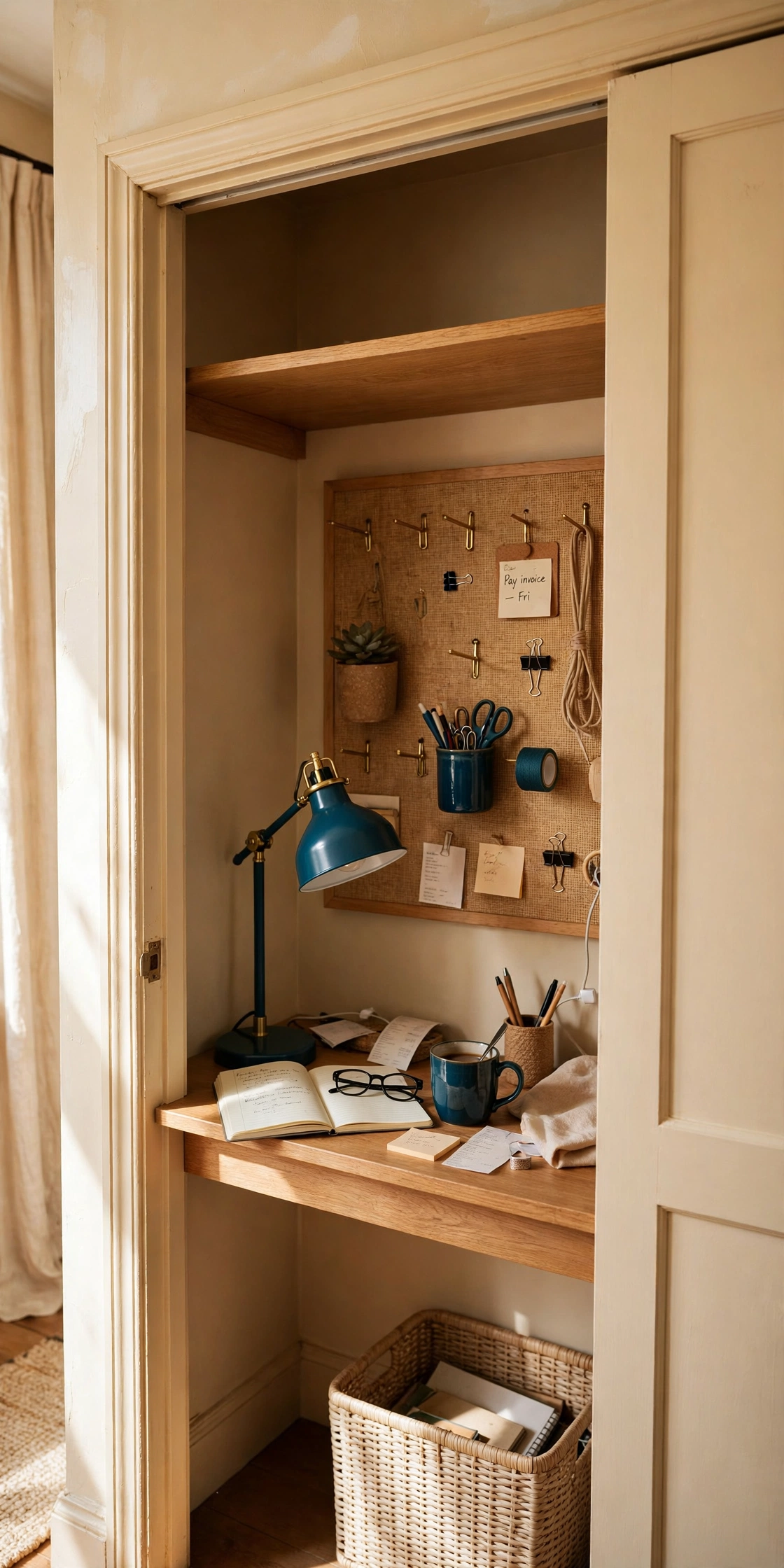
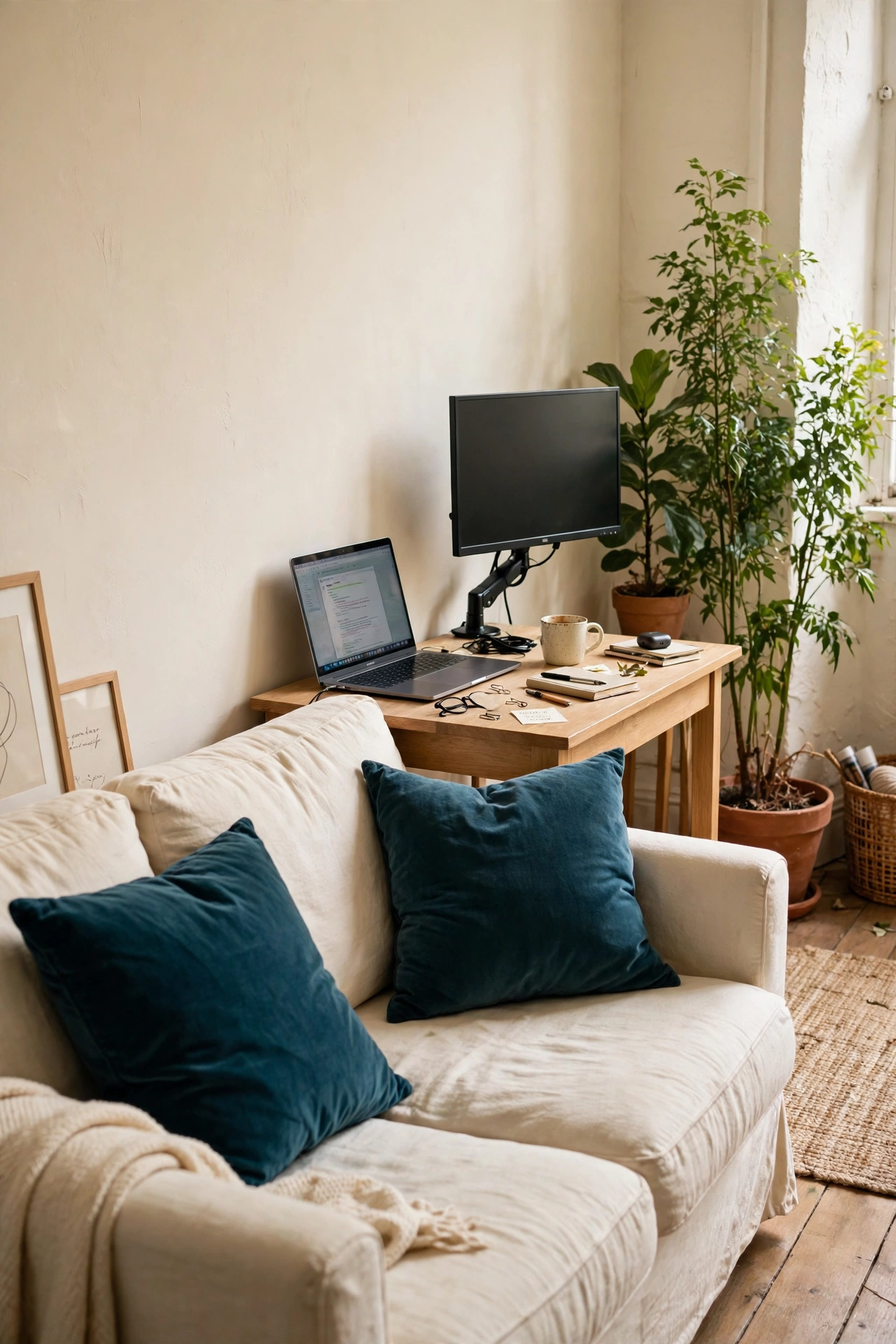
4. The desk behind the sofa
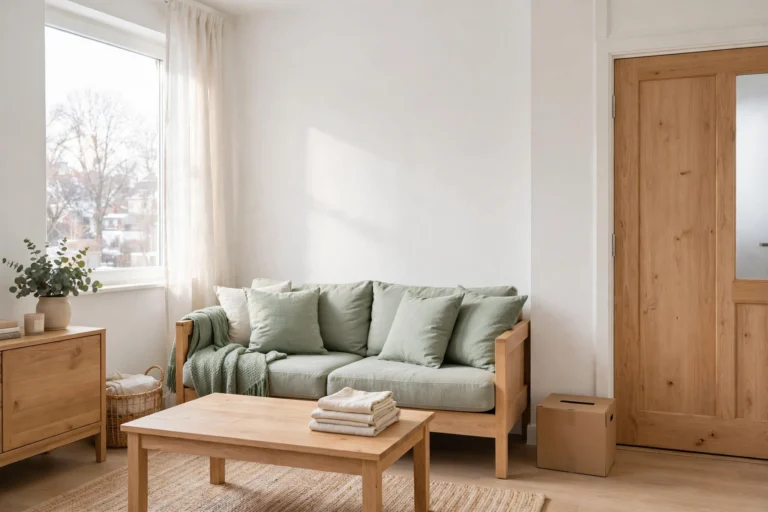
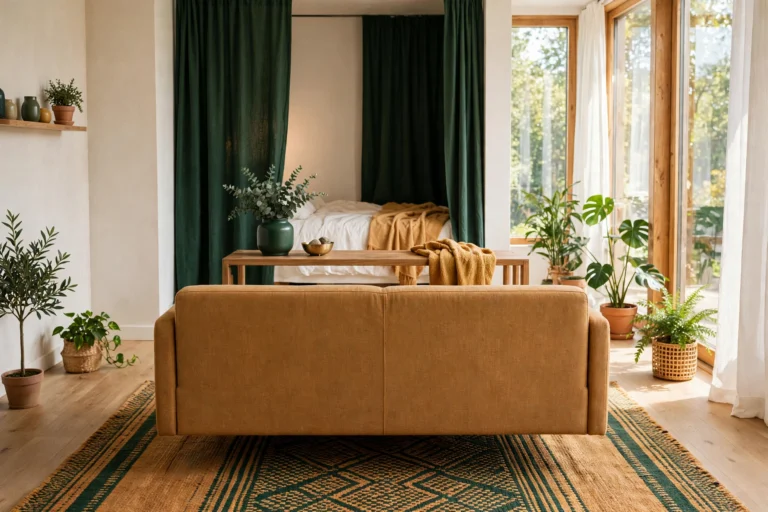
Best for: open studios where the sofa already divides the room. Main advantage: the sofa back hides the desk from the bed, and the desk gets the living room’s light. Watch out for: desk depth plus sofa depth can block the walkway, so measure both first. Verdict: the easiest setup to try, because it needs no drilling at all.
5. The dining table double shift
Best for: people who work from a laptop and eat at the same table. Main advantage: zero new furniture and zero floor lost. Watch out for: it only works with a real shutdown step. Clear the table every day, or work never ends. Verdict: fine as a starter, but most people outgrow it within a month.
6. The rolling cart office
Best for: people who move between the desk, the sofa, and the kitchen counter. Main advantage: a small cart holds the laptop, charger, and papers, and it rolls into a closet at night. Watch out for: carts invite clutter, so keep one rule. If it does not fit on the cart, it does not live in the office. Verdict: the most flexible option, and the messiest if you skip the rule.
7. The call-ready corner
Best for: anyone on video calls most of the day. Main advantage: a plain wall or a bookshelf behind you, light on your face, and a quiet corner away from the kitchen. Watch out for: never sit with a window behind you. Your camera sees a dark shape, not a person. Verdict: set this up once and your calls look professional from day one.
8. The ergonomic corner, done cheap
Best for: people who sit for six or more hours. Main advantage: the numbers are simple. Keyboard surface 23 to 28 inches (58 to 71 cm) high, screen 20 to 28 inches (51 to 71 cm) from your eyes with the top at eye level, and 36 inches (91 cm) behind the chair. Watch out for: a laptop flat on a desk breaks all three numbers, so a $25 stand plus a separate keyboard fixes it. Verdict: the cheapest upgrade here, and the one your neck will notice first. A budget home office setup does not need to be expensive to be comfortable. For another small-space guide, see this how to set up a home office in a small space walkthrough.
9. The under-loft office
Best for: studios with a loft bed or a high sleeper. Main advantage: the space under the bed becomes a real room, with a desk, a chair, and shelves. Watch out for: check the headroom before you buy anything. You need room to sit up straight, not just to slide in. Verdict: the best use of dead space in a studio, if your ceiling allows it.
10. The two-person split
Best for: couples sharing one studio where both work from home. Main advantage: two small zones beat one big shared desk, because calls never overlap. Watch out for: sound travels in one room, so one person takes calls with headphones while the other takes the quiet corner. Verdict: hard but doable, and our studio apartment for two people guide covers the rest of the shared-room system.
Materials list
- A desk: fold-down wall desk, compact 32 inch desk, or a shelf at desk height
- A chair you can sit in for hours, with adjustable height if possible
- A laptop stand and a separate keyboard and mouse
- A task lamp with a warm bulb
- A power strip with a short cord, plus cable clips or a small cable tray
- A folding screen, curtain, or tall plant for visual separation
- A wall shelf or pegboard for supplies, so the desk stays clear
How to set up your studio home office in 7 steps
- Measure the wall. You need 32 inches of width and 86 inches of depth for a standard setup.
- Check the outlet. The desk goes near an outlet. An extension cord across a walkway is a trip hazard.
- Pick the desk type. Folding if you need the floor back, fixed if you work full time and the wall can spare it.
- Set the heights. Desk surface 23 to 28 inches high, screen top at eye level, feet flat on the floor.
- Add the light. Sit beside a window, not facing it and not with it behind you. Add the task lamp for evenings.
- Hide the cables. Clip the power strip under the desk and run cables in a tray.
- Build the shutdown ritual. Close the laptop, fold the desk if it folds, and put the papers away. Five minutes a day, and the room turns back into a home.
Mistakes to avoid
- Buying the desk before measuring. A 48 inch desk eats the walkway and you will hate it within a week.
- Facing the window. Glare kills your screen and your eyes by noon. Sit beside the window instead.
- Skipping the chair. A dining chair for eight hours a day is a back problem, not a saving.
- Letting the desk collect everything. Clear it nightly or the office spreads across the room.
- Working from the bed. It wrecks your sleep and your focus at the same time.
What to skip
- A second monitor on a 24 inch desk. The laptop screen plus a stand does the job.
- A big office chair with arms. It needs more pull-out space and bumps the wall every time.
- Expensive acoustic panels. A bookshelf, a rug, and a curtain cut echo for far less money.
- A standing desk converter on a folding desk. The weight and the wobble are not worth it. Stand up and walk around instead.
A quick note for renters
Check your lease before you drill. Most leases allow small holes if you fill them before moving out, but some ban wall mounting outright. If drilling is not allowed, use a freestanding desk, a leaning desk, or a tension-rod curtain to mark the zone. Photograph the wall before you mount anything, and keep the anchors and screws in a labeled bag for move-out day.
How do you add a home office to a studio apartment?
Pick one wall near an outlet and a window, measure a zone 32 inches wide and 86 inches deep, and put a fold-down or compact desk there. Add a laptop stand, a task lamp, and a screen or curtain for separation. The whole setup costs about $130 at the cheapest workable level, as of November 2026.
Where should a desk go in a studio apartment?
Against a wall, beside a window, and near an outlet. The best spots are a dead corner, the wall behind the sofa, or inside a shallow closet. Avoid the middle of the room, because it blocks the walkway between the bed and the kitchen.
Can you work from home in a studio apartment?
Yes, and most people do it with a single measured zone rather than a separate room. The keys are a desk that folds or closes away, a real shutdown ritual at the end of the day, and a video-call setup with light on your face. Without the ritual, work spreads across the whole room.
What size desk fits a studio apartment?
A desk 30 to 40 inches wide (76 to 102 cm) and 16 to 20 inches deep (41 to 51 cm) fits most studios. A 32 inch desk with a laptop stand leaves room for a keyboard and a notebook. Anything wider than 40 inches usually blocks the walkway or crowds the bed.
How this was made: the zone sizes in this post were computed from standard desk and chair dimensions and the prices were checked live in November 2026. No product was tested by us and no purchase was made for this post.