What to Do With Leftover Paint: 7 Small Projects That Use Half a Can
If you have ever painted a room, you know the ending. The walls look great, and one half-full can sits on the floor with nowhere to go. The average American household keeps three to five partly used paint cans in storage, according to MyHomeRead, and most of them are never opened again. So what to do with leftover paint? Use it on small projects that need ounces, not gallons. A quart covers about 100 sq ft, and the seven projects in this post need about 34 fl oz between them, just over one quart. The paint is free, the supplies cost $27.12 as of November 2026, and one afternoon is enough for the lot.
Is Your Leftover Paint Still Good?
Before you plan anything, check the can. Paint does not last forever, and a bad can ruins a good project. Use the three-step test that paint pros use. First, look. Peel off any skin on top and look for lumps, rust, or mold. Second, stir. Stir for a full minute. Good paint goes smooth again. If lumps stay, or it feels like cottage cheese, it is done. Third, smell. A sour or sharp chemical smell means bacteria got into the water in latex paint. Toss it. Good paint smells like paint, faint and normal.
How long paint keeps depends on the type and whether the can was opened. These are the consensus figures from five paint guides checked in November 2026. Angi and SoHo Painters give the cautious end of the latex range, one to two years opened, while other guides allow up to five.
| Paint type | Unopened | Opened, resealed well |
|---|---|---|
| Latex or acrylic (water based) | 2 to 10 years | 2 to 5 years |
| Oil based or alkyd | Up to 15 years | Up to 10 years |
| Primer | 2 to 3 years | 1 to 2 years |
| Chalk or milk paint | 1 to 2 years | Under 1 year |
Storage decides which end of the range you get. Keep cans in a cool, dry closet at a steady temperature, ideally 50 to 80 F (10 to 27 C). A garage that freezes in winter and bakes in summer kills latex paint, because freezing breaks the emulsion for good. Seal the lid tight, wipe the rim clean first so it seats properly, and write the room, brand, and date on the lid with a marker. A small jar decanted from the big can keeps better than a half-empty gallon, because less air sits above the paint.
What to Do With Leftover Paint When You Only Have Half a Can
This is where most guides stop helping. They list ideas but never say how much paint each one takes, so you cannot tell whether your can is enough. Here is the math, worked out from one rule: a quart (32 fl oz) covers about 100 sq ft, which is 0.32 fl oz per sq ft per coat. Every project below gets two coats.
| Project | Surface | Paint for 2 coats |
|---|---|---|
| Inside of a closet door | 16.7 sq ft (80 x 30 in, 203 x 76 cm) | About 11 fl oz (1 1/3 cups) |
| Backs of a bookcase | 8 sq ft (48 x 24 in, 122 x 61 cm) | About 5 fl oz (2/3 cup) |
| Stool or small chair | About 4 sq ft | About 2.5 fl oz (1/3 cup) |
| Wooden crate | About 6 sq ft | About 4 fl oz (1/2 cup) |
| Set of 4 picture frames | About 1 sq ft each | About 2.5 fl oz (1/3 cup) |
| Set of 3 terracotta planters | About 1.5 sq ft each | About 3 fl oz |
| Small color-block panel | 10 sq ft (5 x 2 ft, 152 x 61 cm) | About 6.5 fl oz (3/4 cup) |
| All seven together | About 53 sq ft | About 34 fl oz, just over 1 quart |
Read that last line twice. A half-full gallon can holds 64 fl oz, so it covers all seven projects and still leaves paint for touch-ups. A single quart covers six of the seven. That is the whole point. Leftover paint is not a waste problem. It is a small-projects budget you already own.
What You Need Besides the Paint
The paint costs nothing. The tools do not, but they are cheap, and you will reuse them on every paint job after this one. Buy the brush first and the roller second. A brush does six of the seven projects alone.
Materials list
- 2 in angled sash brush
- 4 in mini roller kit with tray
- Painter’s tape, 1.88 in wide
- Sanding sponge, medium/fine grit
- Small stir stick and a clean jar for decanting
- Drop cloth or an old sheet
- Painter’s tape and a marker for labeling the can when you are done
| Supply | Product and price checked | Price as of November 2026 |
|---|---|---|
| 2 in angled brush | Wooster Shortcut, Amazon | $7.05 |
| 4 in mini roller kit | Master Foam 4-piece with tray, Target | $8.29 |
| Painter’s tape | ScotchBlue Original 1.88 in x 60 yd, Target | $7.79 |
| Sanding sponge | Rust-Oleum Gator, med/fine grit, Target | $3.99 |
| Starter kit total | $27.12 | |
| Bare minimum (brush + tape only) | $14.84 | |
| Paint | Leftover from your last job | $0.00 |
Time estimate: about 3 to 4 hours for all seven projects, including drying time between coats. Most of that is waiting. The actual painting is under an hour. If you only do one or two projects, allow 30 to 45 minutes each.
1. Paint the Inside of a Closet Door
This is the best first project, because it uses the most paint and nobody sees it until you open the door. A bold color inside a white closet feels like a secret. It also uses up the biggest chunk of a leftover can in one go.
Best for: a can that is more than a third full. Main advantage: one door side takes about 11 fl oz, so it clears real space in the can. Watch out for: paint the door while it is still hung and it will drip at the bottom edge. Take it off its hinges and lay it flat on sawhorses or two chairs. Verdict: the highest-impact use of leftover paint per ounce. Renter-Friendliness: 2 out of 5. A painted door is hard to reverse, so ask your landlord first.
2. Paint the Backs of Your Shelves
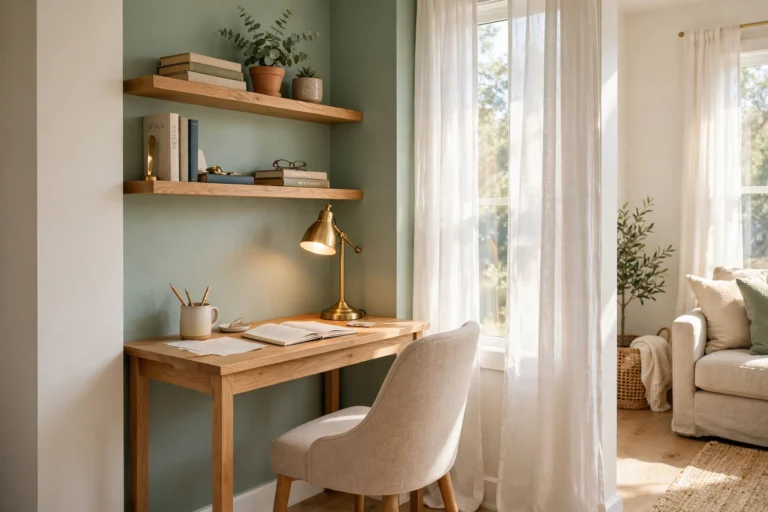
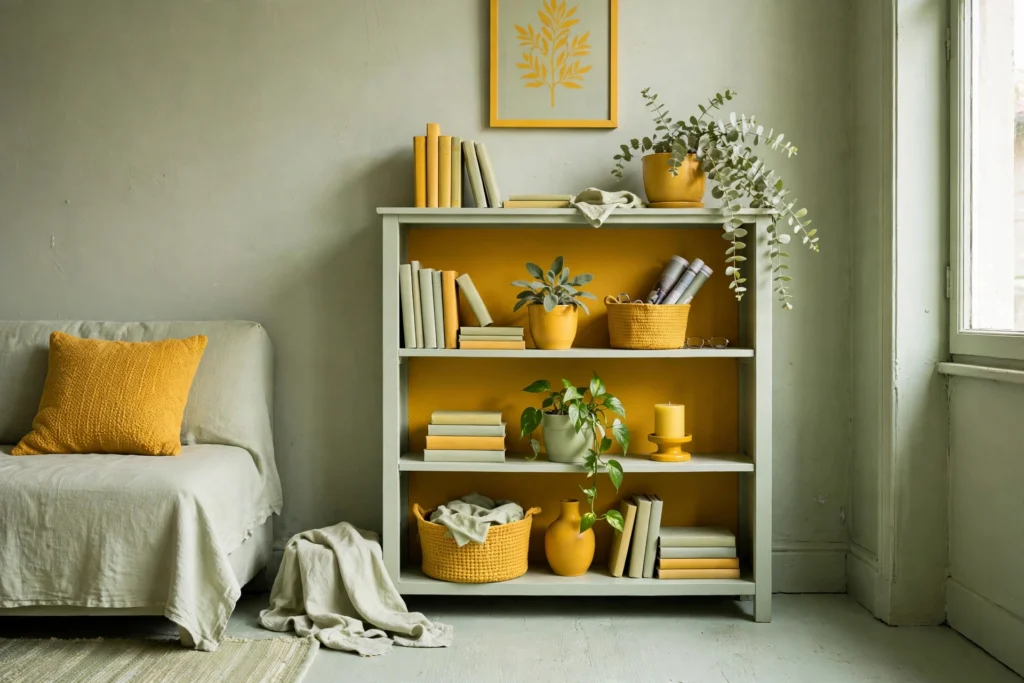
This is the most underrated project on this list. A bookcase with a colored back looks custom built, and the color shows between books and objects instead of across a whole wall. One shelf back is 8 sq ft and takes about 5 fl oz for two coats.
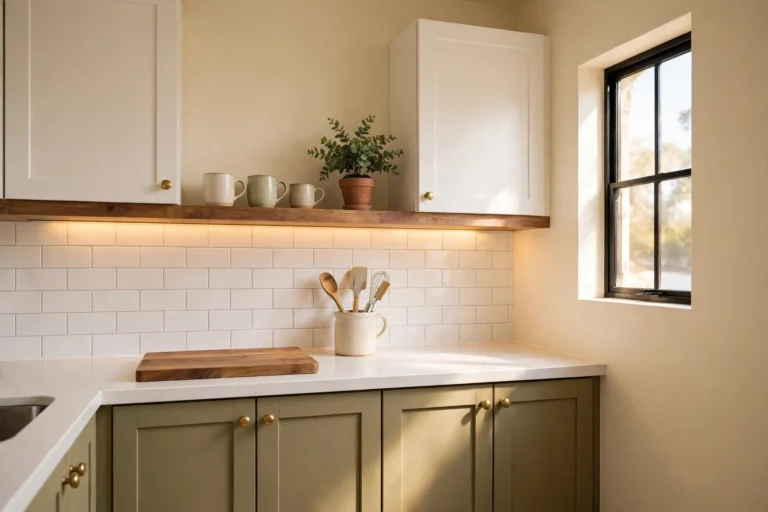
Best for: leftover cabinet or trim paint, which is tougher than wall paint. Main advantage: the biggest visual change per ounce of paint in this whole post. Watch out for: paint the back panel before you load the shelves, and let it dry a full day, or books will stick. Verdict: do this one first if your can is nearly empty. Renter-Friendliness: 5 out of 5. It is your furniture, so no permission is needed. If your leftover is cabinet paint, our kitchen cabinet colors guide is a good place to check whether the shade suits a kitchen shelf too.
3. Refresh a Stool or Small Chair
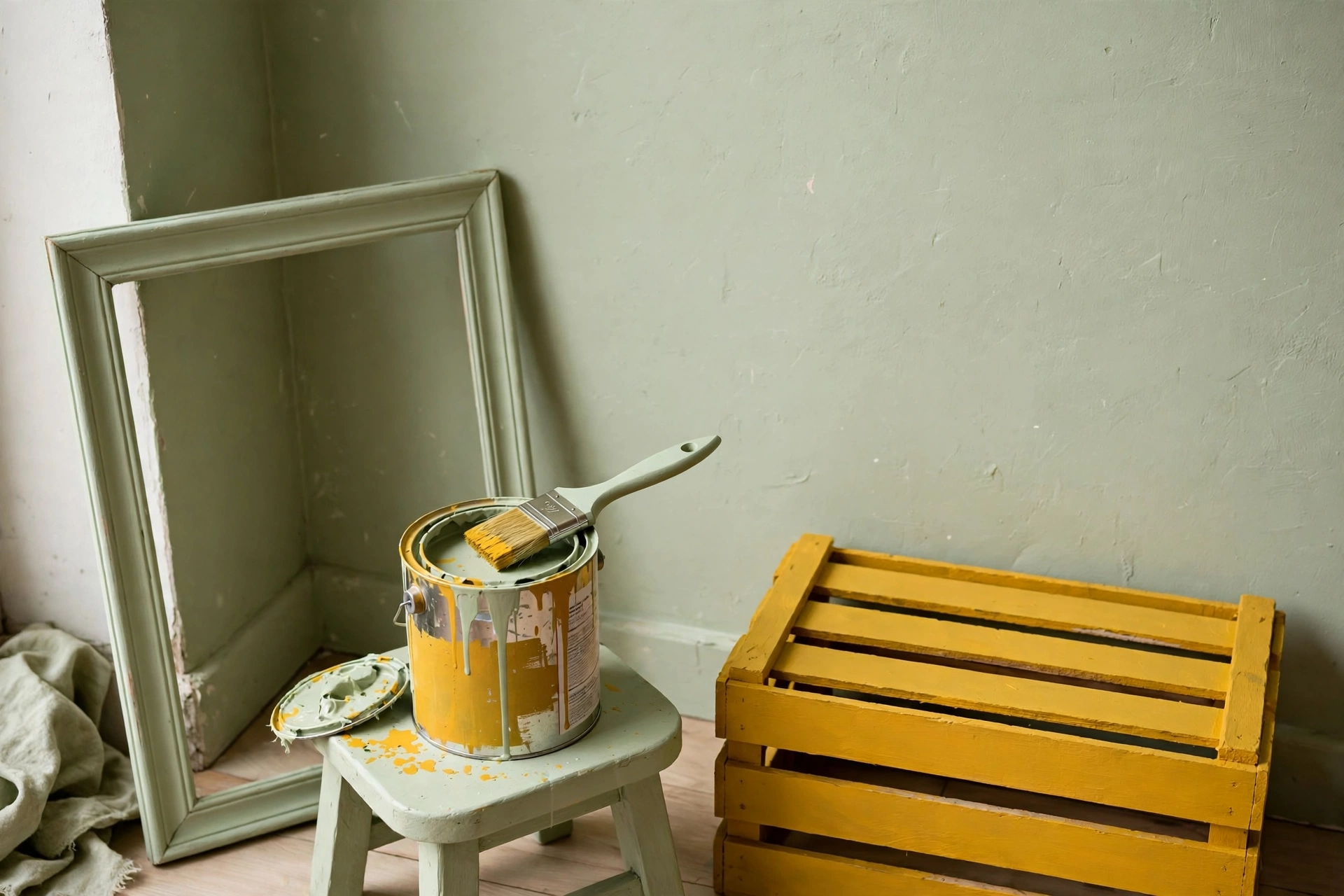
A plain wooden stool takes about 2.5 fl oz for two coats, which is less paint than a coffee mug holds. Two coats, a light sand between them, and a tired stool looks bought yesterday. Chairs work the same way, but a stool is faster and uses less paint.
Best for: the last cup in a can. Main advantage: the cheapest furniture upgrade that exists, since the paint was already paid for. Watch out for: sand glossy varnish first, or the paint peels off in sheets within weeks. A quick pass with the sanding sponge is enough. Verdict: the best project for a nearly empty can. Renter-Friendliness: 5 out of 5. It is your furniture.
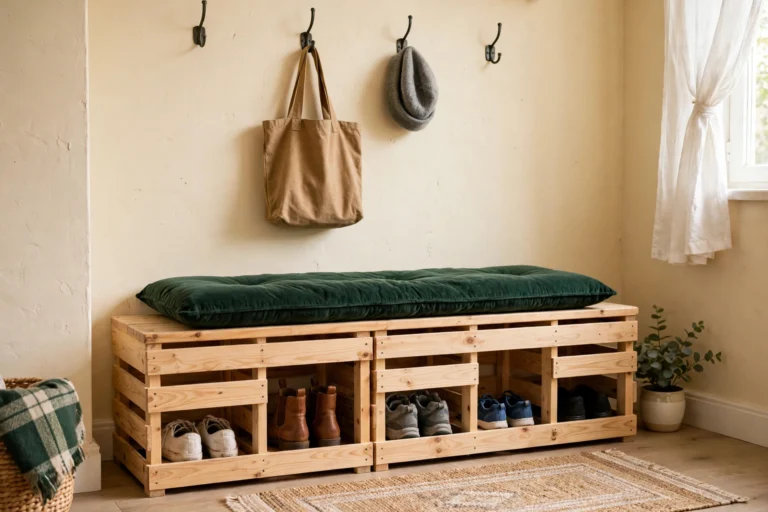
4. Turn a Wooden Crate Into a Storage Box
A plain wooden crate, the kind fruit and wine come in, takes about 4 fl oz for two coats and becomes a storage box that matches your room. Paint the outside one color and the inside rim another if you have two leftovers. Add a stencil or a painted label on the front and it stops looking like a crate.
Best for: entryway shoes, craft supplies, or kids’ toys. Main advantage: a matching set of two or three crates costs nothing but paint and looks intentional. Watch out for: rough crate wood drinks paint. Sand it smooth first, or the first coat vanishes into the grain. Verdict: the most useful project here, because it adds storage as well as color. Renter-Friendliness: 5 out of 5. It is your crate.
5. Paint a Mismatched Set of Picture Frames
Four thrifted or mismatched frames take about 2.5 fl oz for two coats, and one color turns them into a set. This is the project for the very bottom of the can. Paint the frames, hang them as a small gallery wall, and the wall looks planned instead of accidental.
Best for: sample pots and the last spoonfuls of two or three colors. Main advantage: uses almost no paint and fixes the most common gallery-wall mistake, which is frames that do not match. Watch out for: remove the glass and backing before you paint, and tape the inner edge, or paint will creep onto the glass. Verdict: the best use of a nearly empty can. Renter-Friendliness: 5 out of 5. Frames hang on hooks you already have.
6. Paint Terracotta Planters
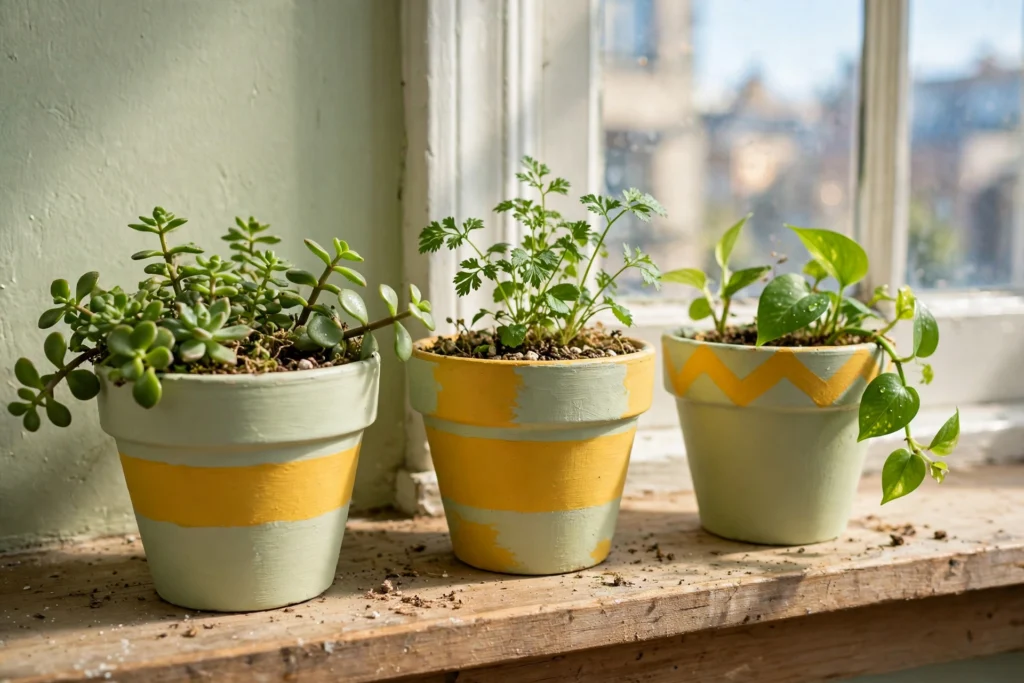
Three small terracotta pots take about 3 fl oz for two coats. Terracotta is thirsty, so seal the inside first with a thin coat, or the paint on the outside will bubble as water soaks through. One color for all three looks calmer than three different colors.
Best for: a sunny windowsill that needs color without new furniture. Main advantage: the fastest project on this list, about 15 minutes of painting per pot. Watch out for: do not paint the drainage hole shut, and let the pots dry fully before you fill them, or damp soil will lift the paint. Verdict: a small win, but a real one, and it uses the paint you would otherwise throw away. Renter-Friendliness: 5 out of 5. Pots move with you.
7. Paint a Small Color-Block Panel
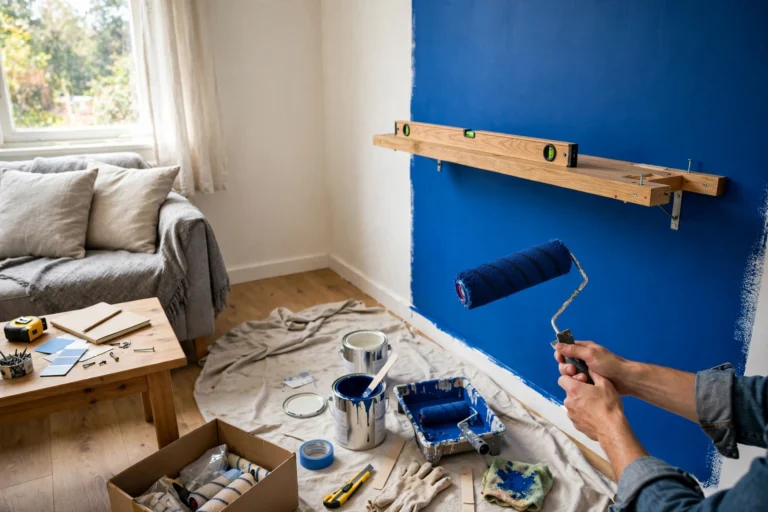
If you still have paint left, paint a rectangle on the wall behind a shelf, a bed, or a desk. A 5 x 2 ft panel (152 x 61 cm) takes about 6.5 fl oz for two coats, and it reads like a headboard or a backdrop without any furniture. Tape the edges, paint two coats, and peel the tape while the second coat is still slightly wet for the sharpest line.
Best for: renters who want color on a wall without painting the whole wall. Main advantage: it frames the furniture in front of it and hides scuffs behind a shelf. Watch out for: a panel that is too small looks like a mistake. Keep it at least as wide as the furniture in front of it. Verdict: the boldest project here, and the only one that touches a wall, so it needs the most thought. Renter-Friendliness: 2 out of 5. It is paint on a wall, so it needs permission and a repaint before you move out. If you want the color to flatter a small room, start from our list of the best wall colors for small rooms before you pick a shade.
How to Use Up a Can in One Afternoon
Follow these steps in order and you will finish with an empty can instead of a half-full one.
- Check the paint with the look, stir, and smell test above. Toss any can that fails.
- Measure how much you have. Pour it into a marked jar or weigh the can. A quart is 32 fl oz.
- Pick your projects from the coverage table, smallest paint need first, so the can empties in order.
- Prep everything at once. Sand, tape, and lay the drop cloth before you open the paint.
- Paint the smallest projects first, frames and planters, while the brush is clean.
- Paint the medium projects next, crate, stool, and shelf backs.
- Paint the biggest project last, the door or the panel, then seal what is left in a small labeled jar, or donate the rest.
Mistakes to Avoid
Painting over glossy varnish without sanding. Paint needs something to grip, and the same rule applies when you learn how to paint laminate furniture. A two-minute sand saves a peeling mess a month later.
Skipping the stir. Pigment sinks to the bottom of a stored can. Paint straight from the top and the color comes out wrong, thin and pale.
Painting a damp surface. Terracotta, bathroom doors, and basement walls hold moisture. Paint over dampness and it bubbles and lifts.
Storing the can half empty. Air is what kills stored paint. Decant what is left into a smaller jar so less air sits above it, and the paint keeps months longer.
Mixing two paint types. Never mix water based and oil based paint in one can. The result cannot be used for anything.
Forgetting the label. Write the room, brand, color name, and date on the lid. A mystery can is a can you will never trust enough to use.
What to Skip
A full accent wall from leftovers. It uses the whole can for one trick, and it is the most overrated move in this niche. A color-block panel gives you the same effect for a third of the paint, and a full-room drench is a different job entirely, with its own paint math in our guide to color drenching a small room.
Painting the ceiling with leftovers. Ceilings need flat paint and a roller on a pole, and if you want pattern overhead, striped ceiling ideas for small rooms show what actually works up there. A half can of eggshell wall paint up there looks patchy and drips on everything below.
Spray painting indoors to use up spray cans. Leftover spray paint belongs outside or in a ventilated garage, never in a small apartment.
Painting over wallpaper. Leftover paint will not fix bad wallpaper. It bubbles the seams and makes the eventual removal twice as hard.
Keeping paint you will never use. If the color is wrong for your home and you have no project for it, the can is clutter, not savings. Donate it and free the shelf.
Renter Check: What to Ask Before You Paint Anything Fixed
Five of the seven projects here are your own movable things, frames, planters, a stool, a crate, and shelf backs on furniture you own. Those need no permission. The other two, a door and a wall panel, are fixed to the flat, and those need a landlord’s yes in writing before you start. Check your lease for the painting clause first, then ask in a message you can keep. Offer to repaint before you move out, and keep the original paint details so the repaint matches. A door painted without permission can cost $200 to $400 from a deposit, which is more than every project in this post costs together. When in doubt, paint the movable things and leave the walls alone.
What to Do With the Paint You Truly Cannot Use
Some paint has no project. It failed the smell test, it is the wrong color for everything you own, or it is oil based and you have no oil project. Do not pour it down a drain or into the ground. Latex paint is not classed as hazardous waste in most areas, but it must be solid before the bin takes it. Stir in cat litter or a paint hardener until it sets hard, leave the lid off, and bin it with your normal trash. Oil based paint is hazardous waste and cannot be dried out. Take it to a household hazardous waste site. If the paint is still good, give it away instead. PaintCare runs more than 8,000 free drop-off sites in the US that take every paint type, Habitat for Humanity ReStores accept usable cans for resale, and community groups and schools take paint for their own projects. The same three exits work everywhere: use it, give it, or recycle it. This Old House’s leftover paint guide covers storage and donation in the same order, and Resene’s cleanup and disposal page is the clearest manufacturer source for the storage rules.
Frequently Asked Questions
How long does leftover paint last?
Unopened latex paint lasts 2 to 10 years, and opened latex lasts 2 to 5 years if it is sealed and stored well. Oil based paint lasts up to 15 years unopened and up to 10 years opened. Chalk and milk paints are shorter, one to two years unopened and under a year opened. The storage matters as much as the type. A can kept in a cool, dry closet outlasts the same can in a hot garage.
Can you use old paint that has been opened?
Yes, if it passes three checks. Look for skin, lumps, or mold, stir for a full minute and check it goes smooth again, and smell it. A sour smell means bacteria got into latex paint, and that can is done. If it stirs smooth and smells normal, strain it through a mesh strainer or an old stocking before you paint, and test it on a hidden spot first.
What can I do with a small amount of leftover paint?
Paint small things. A stool takes about 2.5 fl oz for two coats, a set of four picture frames takes about the same, and three terracotta planters take about 3 fl oz. Shelf backs, a crate, and a color-block panel take more, but every project in this post needs less than 11 fl oz. All seven together need about 34 fl oz, just over one quart, so a half-full gallon can covers the lot.
How do I dispose of leftover paint?
Dry latex paint solid with cat litter or paint hardener, leave the lid off, and put it in normal trash. Oil based paint goes to a household hazardous waste site, never in the bin and never down a drain. Usable paint is better donated. PaintCare runs more than 8,000 free drop-off sites, and Habitat ReStores accept usable cans.
Sources
Prices checked November 2026 from Target and Amazon listings: Wooster Shortcut 2 in brush $7.05, Master Foam mini roller kit $8.29, ScotchBlue Original tape $7.79, Rust-Oleum Gator sanding sponge $3.99. Shelf-life figures are the consensus of SD Custom Painting, Composite Paint, Angi, SoHo Painters, and Build-Construct, checked November 2026. Coverage basis of one quart per 100 sq ft is the standard manufacturer figure. Disposal and donation facts: PaintCare drop-off network and the latex drying rule via Sensible Digs; the three exits, use it, give it, or recycle it, via This Old House’s guide to paint leftovers and Resene’s cleanup and disposal page.