Best Pantry Organizers for Small Kitchens: 6 Types Compared by Fit, Not Hype
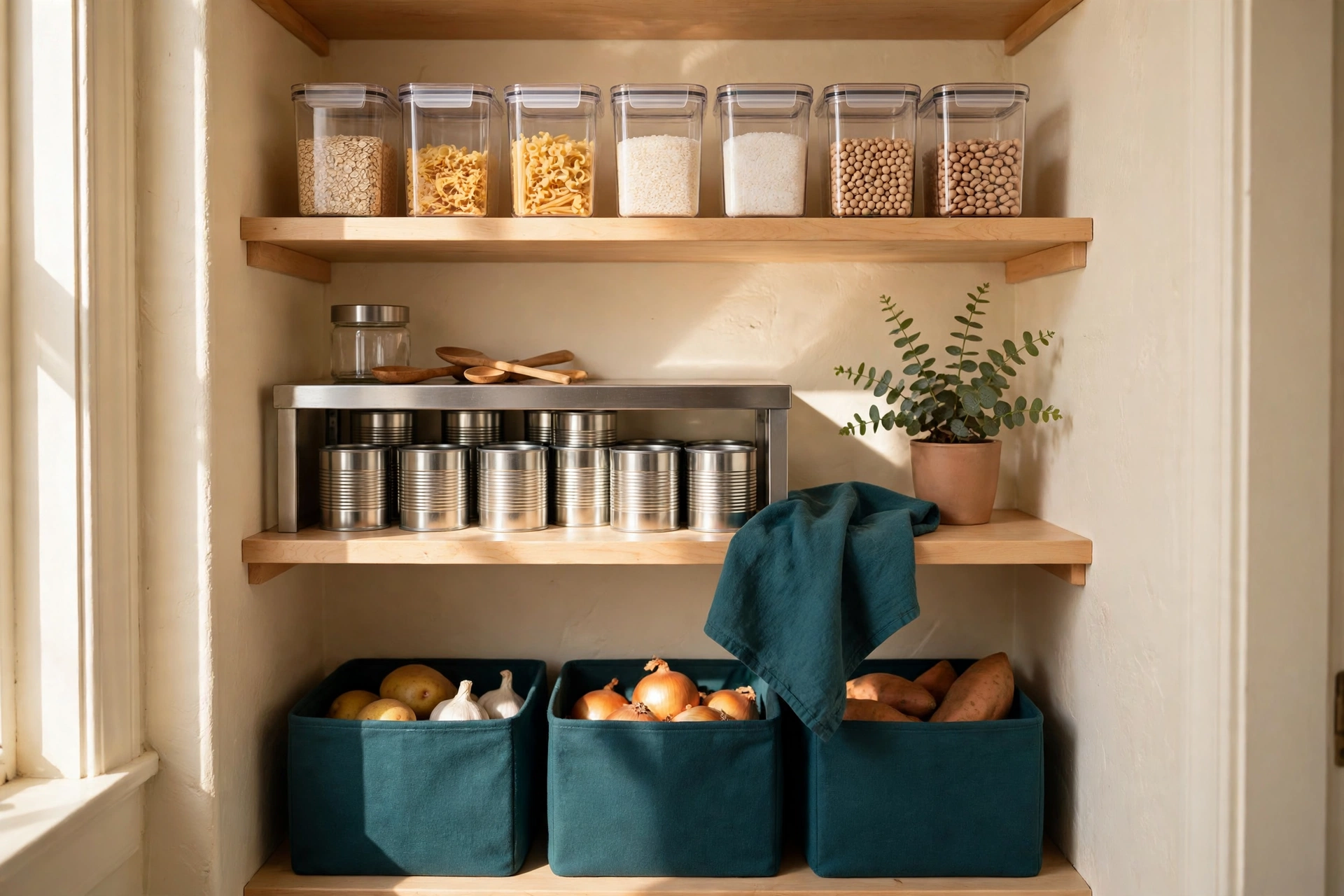
The best pantry organizers for small kitchens are not the prettiest ones. They are the ones that fit your actual shelves. A small pantry fails in predictable ways. Half of every shelf is empty air above short cans. The back corners hide food nobody can see. Loose packets slide around and spill. Each of those problems has one organizer type that fixes it, and buying the wrong type first is how a pantry ends up fuller and harder to use. This comparison covers all six types, with the measurements each one needs, a dated price table, and an honest verdict per type. Prices are as of November 2026.
Measure your pantry first: three numbers decide everything
Before you buy a single organizer, measure three things. Shelf depth, from the front edge to the back wall. Shelf height, from one shelf surface to the underside of the shelf above it. And door clearance, the gap between the closed door and the front of the shelves. Write the numbers down. Every verdict below is really a fit check against those three numbers, and our small pantry organization guide walks through the ten-step process of emptying, sorting and zoning once you have them.
Most reach-in pantries have shelves 12 to 14 inches deep (30 to 36 cm) and 12 to 18 inches of height between shelves (30 to 46 cm). If your numbers are smaller than that, half the products below will not fit, and that is useful to know before you spend anything. A tape measure costs nothing. A bin that is an inch too deep costs you a door that will not close.
The fit table: which organizer fits which shelf
| Organizer type | Footprint you need | Clearance it needs | Fails when |
|---|---|---|---|
| Shelf riser (stacking shelf) | Shelf at least 12 in wide (30 cm) | 5 to 6 in of height above your tallest can (13 to 15 cm) | Shelf gap under 10 in (25 cm); cans taller than the legs |
| Tiered can riser | Shelf at least 13 in wide (33 cm) | 6.5 in of height (17 cm) | Wire shelves (it wobbles); cans taller than the top tier |
| Turntable (lazy Susan) | Shelf 14 in deep (36 cm) for a 12 in turntable | 1.5 in of height (4 cm) plus bottle height | Shelf under 14 in deep; loads over 5 lb (2.3 kg) |
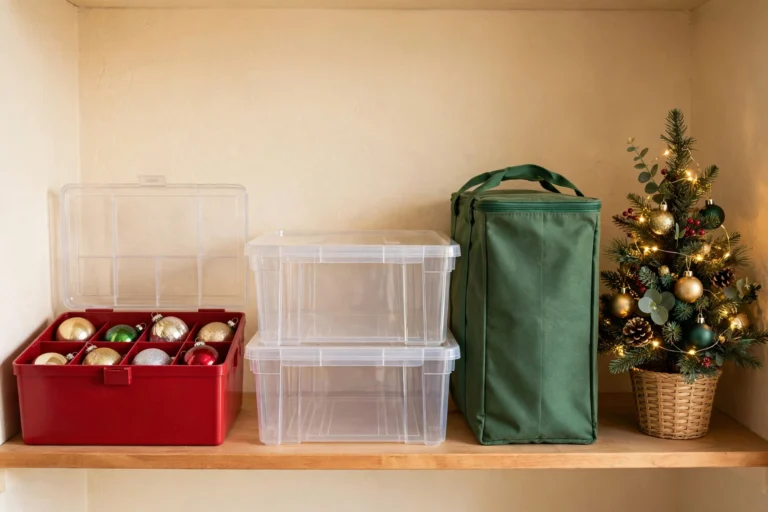
| Airtight containers | Shelf height taller than the tallest container | Room to lift the lid straight up | Short shelves under 10 in (25 cm); round containers waste corners |
| Open bins | Shelf 12 in deep (30 cm) for an 11 in bin | 6 in of height (15 cm) | Deep shelves over 16 in (41 cm) where bins hide things behind them |
| Over-the-door rack | Door at least 17 in wide (43 cm) | 2 to 3 in of gap with the door closed (5 to 8 cm) | Sliding doors; doors that hit a shelf when they swing |
The best pantry organizers for small kitchens: the six types, compared
Shelf risers: the best first buy for most small pantries
Best for: shelves where cans and jars leave a gap of air above them.
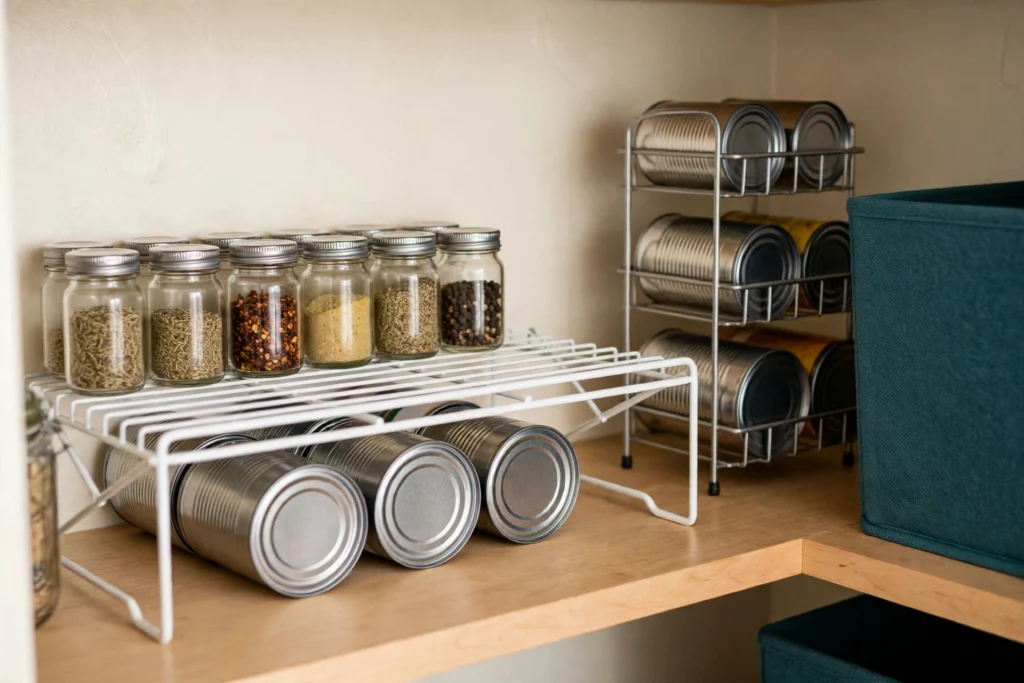
Main advantage: a riser adds a second level to a short shelf with no tools and no drilling. Cans go underneath, spice jars or small boxes go on top. The common two-pack gives you two sizes, so you can fill a wide shelf or split them between two shelves. Steel versions are rated for up to 30 lb (13.6 kg) per shelf.
Watch out for: fixed height. The legs do not adjust, so check your tallest cans fit underneath before you buy. At 9 inches deep (23 cm), the large size leaves dead space behind it on a 14 inch shelf.
Verdict: one of the best pantry organizers for small kitchens if you buy only one thing. It attacks the single biggest waste in a small pantry, which is empty air. Rating 4.5 out of 5.
Tiered can risers: the can problem, solved in a straight line
Best for: small pantries where a big rolling can rack will not fit.
Main advantage: three tiers, each 2.25 inches higher than the last, so every label shows. The depth expands from 4.8 to 12.6 inches (12 to 32 cm) to match the shelf, and the three steps split apart so you can use them on different shelves. It holds 16 to 24 cans and up to 30 lb (13.6 kg).
Watch out for: it is not made for wire shelves, where it rocks. It also holds fewer cans than a rolling can rack, so if you stock 36 cans of one thing, this is the wrong tool.
Verdict: buy it if cans are your clutter. Skip it if your cans already fit in one row. Rating 4 out of 5.
Turntables: the corner rescue
Best for: back corners and deep shelves where bottles get lost.
Main advantage: one spin brings the back row to the front. Oils, vinegars, sauces and jars are the right cargo. A 12 inch turntable (30 cm) suits most pantry shelves, and a 9 inch version exists for shelves that are only about 12 inches deep. The nonskid liner stops bottles sliding as it spins, and a raised rim keeps things from falling off.
Watch out for: the standard 12 inch model is rated for up to 5 lb (2.3 kg), so it is not for heavy stacks of cans. It is one level only, and it needs a shelf about 14 inches deep (36 cm) to turn freely. On a 12 inch shelf it will scrape the door frame.
Verdict: essential for deep shelves, useless on shallow ones. Measure first or do not buy it. Rating 4 out of 5.
Airtight containers: the decanting decision
Best for: flour, sugar, rice, pasta, cereal and snacks that arrive in bags and boxes.
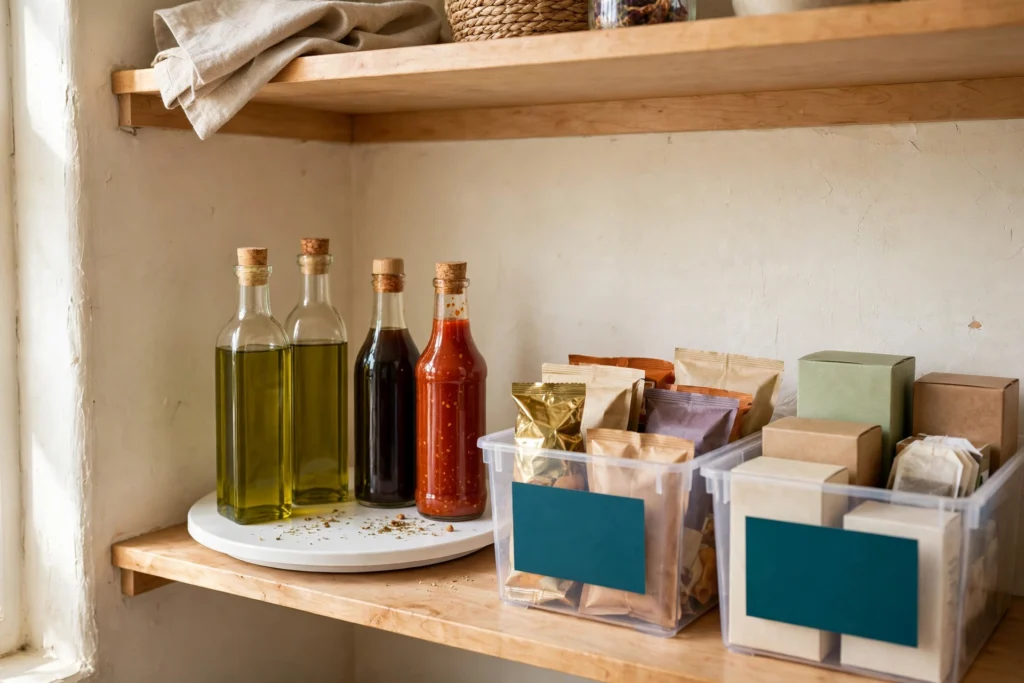
Main advantage: clear, square containers fit more food on a shelf than bags do, they stack, they sit edge to edge, and they show you when you are running low. Push-button lids seal airtight with one press, which also helps keep pantry pests out. The well-known 10-piece set covers sizes from 0.4 to 4.4 quarts.
Watch out for: this is the priciest type by far, and the tallest containers need real shelf height. Buy them for food that comes in bags. Cans and jars do not need decanting, and decanting everything is a weekend project, not a purchase.
Verdict: the biggest visual payoff and the biggest bill. Start with a budget set and upgrade only the containers you open daily. Rating 4 out of 5.
Open bins: the packet corrals
Best for: seasoning packets, snack bags, tea and drink mixes, the little things that slide around and spill.
Main advantage: give each group its own bin, label the front, and pull the whole bin out like a drawer. Clear sides show what is inside. At 11 inches long (28 cm) they fill a typical pantry shelf front to back, so nothing gets pushed out of sight. The stackable storage bins we compared in our earlier guide use the same idea for closets and pantries alike.
Watch out for: most open bins have no lids, so they are wrong for anything that spills upward, and they are sized for packets and snacks, not tall bottles. On shelves deeper than 16 inches (41 cm), a bin hides things behind it just like the shelf did.
Verdict: the cheapest fix in this comparison and the one most pantries need first after a riser. Rating 4.5 out of 5.
Over-the-door racks: the free wall you already own
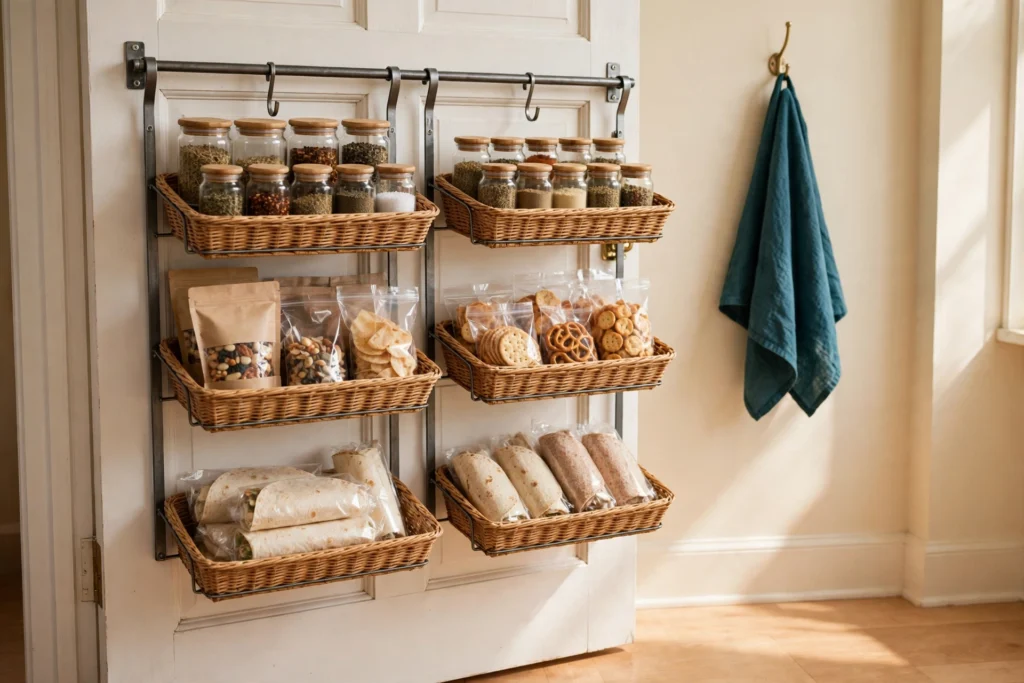
Best for: spices, small jars, snack bags and wraps, one row deep.
Main advantage: the back of the door is the biggest empty surface in most small pantries. A six-basket steel rack turns it into six shallow shelves, with large baskets rated for 25 lb (11.3 kg) and the rest for 10 lb (4.5 kg). No drilling, no screws in the wall, and the included hardware lets you mount it on a wall instead if you have no door or a sliding one. The over-the-door organizers we rated cover the same idea for closets, and the pantry version works the same way.
Watch out for: measure from the door to the front of the shelves with the door closed, loaded. If the rack is deeper than that gap, the door will not shut. Renters should check the hook style against the door thickness first.
Verdict: the best use of space nobody uses, as long as your door actually closes with it loaded. Rating 4 out of 5.
What does a full pantry outfit cost?
Prices checked November 2026. Ranges reflect sale prices and store differences. A full outfit means one of each type.
| Organizer | Example product | Price, as of November 2026 |
|---|---|---|
| Shelf riser, 2-pack | Simple Houseware Expandable Stackable Shelf Organizer | $16 to $20 |
| Tiered can riser | YouCopia ShelfSteps Can Organizer | $21 to $25 |
| Turntable, 12 in | Copco Non-Skid Lazy Susan (or similar 12 in turntable) | $8 to $20 |
| Airtight containers | Budget 8-pack ($30) or OXO 10-piece set ($113) | $30 to $113 |
| Open bins, 4-pack | Vtopmart 4-pack ($22) or ClearSpace 4-pack ($40) | $22 to $40 |
| Over-the-door rack, 6-tier | Smart Design Steel 6-Tier Organizer | $41 to $47 |
| Full outfit total | One of each type | $138 to $265 |
The budget route totals $138 (16 + 21 + 8 + 30 + 22 + 41). The premium route totals $265 (20 + 25 + 20 + 113 + 40 + 47). The difference is almost entirely the container set. That is the full price of the best pantry organizers for small kitchens when you buy one of each type. If your budget is tight, buy the riser and the bins first, then add one type per month. Expect 2 to 4 hours to measure, shop and set up a reach-in pantry, plus one shopping trip after measuring.
Which organizer should you buy first?
Start from your biggest problem, not from a shopping list. That is how you pick the best pantry organizers for small kitchens without buying all six at once. Wasted air above short cans means a shelf riser. Cans you cannot read mean a tiered can riser. Bottles lost at the back mean a turntable. Bags and boxes everywhere mean airtight containers. Loose packets mean open bins. Spices with nowhere to go mean a door rack. Buy the one that matches your problem, live with it for two weeks, then buy the next one. A pantry fixed one problem at a time stays fixed. A pantry bought all at once in one order usually gets half its organizers returned.
If you have no pantry at all, this comparison will not help you yet. Our guide to organizing a small kitchen with no pantry covers that problem first, and the organizers here slot into its zones once you have a cupboard to work with.
Mistakes to avoid
Buying before measuring. Every type above has a minimum shelf depth or height. Guessing wastes the return trip and the shipping. Measure the three numbers, then shop.
Buying matching sets for the whole pantry. A uniform set looks tidy in a photo and fits nothing perfectly. Different shelves have different heights and different food. Mix types by shelf.
Putting heavy cans on a turntable. The standard 12 inch turntable is rated for 5 lb. A full ring of canned tomatoes weighs far more than that, and the spin gets stiff and then stops.
Decanting everything on day one. Decant the five staples you open every week. The rest can stay in its box until you know the containers earn their shelf space.
Forgetting the door gap. A door rack that stops the door closing is not storage, it is a doorstop. Load it, close the door, and check before the return window closes.
What to skip
Rolling can racks in a small pantry. A popular 36-can model needs about 17.5 inches of width (44 cm) and a 12 inch deep shelf. Most small pantries do not have that width to spare, and the tiered riser does the same job in half the space.
Single-purpose spice racks that screw into a shelf. They cost as much as a riser, hold one thing, and leave screw holes a renter has to fill later.
Pretty baskets with no handles. A bin you cannot pull out like a drawer is a box you will stop using. Handles matter more than weave.
Glass containers for high shelves. Glass lasts for years, but it is heavy and it breaks when it falls from the top shelf. Keep glass low, plastic high.
A note for renters
Every organizer in this comparison is renter friendly. Risers, turntables, containers and bins sit on shelves. Door racks hook over the door. Nothing here needs a drill, a screw or an adhesive strip, so the deposit risk is about as low as it gets: 1 out of 5 for all six types. The one thing to check in your lease is whether the pantry door itself can take a rack. Some landlords object to hooks that mark the door edge. A felt pad on each hook costs pennies and answers that worry. When you move out, lift everything off the shelves and the pantry is exactly as you found it.
What are the best organizers for a small pantry?
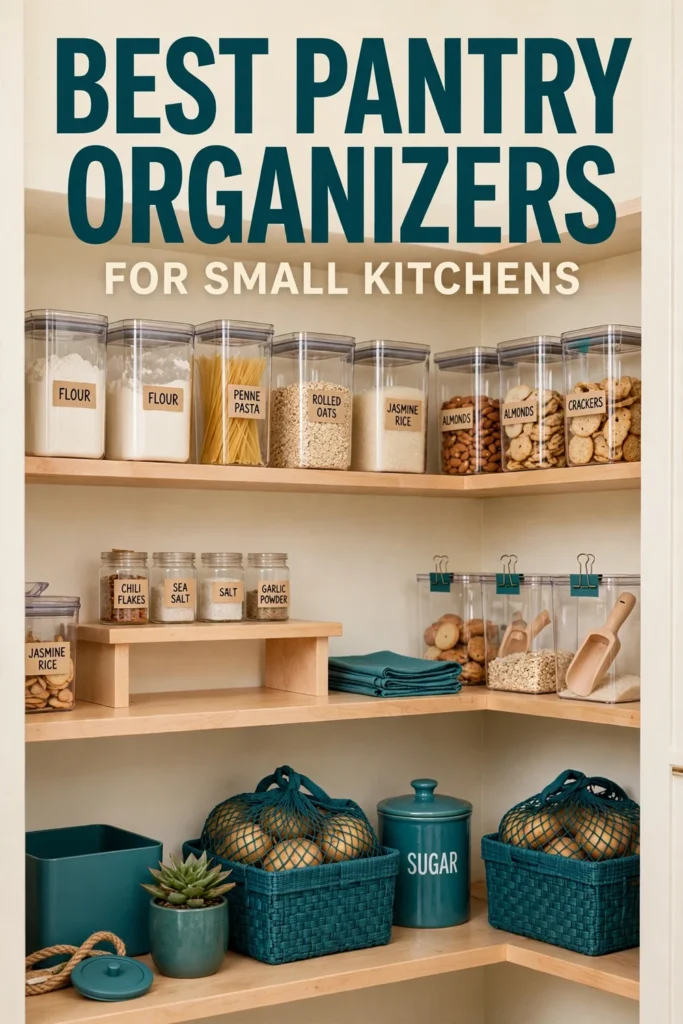
The best organizers for a small pantry are the ones that match your biggest problem. Shelf risers fix wasted height above cans, turntables rescue deep corners, open bins corral loose packets, and a door rack uses the empty back of the door. Measure shelf depth, shelf height and door clearance first, then buy the type that fits those numbers. That match of problem, measurement and type is what makes them the best pantry organizers for small kitchens.
How do I organize a small pantry on a budget?
Start with the two cheapest fixes: a shelf riser two-pack at about $16 to $20 and a four-pack of open bins at about $22 to $40. That pair fixes wasted height and loose packets, which are the two most common small pantry problems. Add one more type per month as the budget allows. A full six-type outfit runs $138 to $265 as of November 2026.
What size turntable fits a 12 inch pantry shelf?
A 9 inch turntable fits a 12 inch shelf. A 12 inch turntable needs a shelf about 14 inches deep to spin freely, because it needs roughly 2 inches of clearance beyond its own diameter. Measure the shelf depth before you buy, and remember the standard 12 inch turntable is rated for only 5 lb.
Do pantry organizers damage shelves?
No, not the six types in this comparison. Risers, turntables, containers and bins sit on the shelf, and door racks hook over the door, so nothing screws into or sticks to anything. The only risk is a heavy load denting a thin shelf or a door hook marking a door edge, and a felt pad on each hook prevents that.
Sources: the fit numbers and load limits in this comparison come from manufacturer specs quoted in the small pantry organization guide at PulseCrafted and from the Copco turntable coverage at The Kitchn. Prices were checked November 2026 at Amazon, Target and Walmart listings. Clemson University’s Home and Garden Information Center recommends insect-proof containers with tight-fitting lids for dry goods, which is why airtight containers earn their place here. This comparison names products and prices but contains no affiliate links.