Peel and Stick vs Paint for Renters: Which One Actually Saves Your Deposit?
If you rent, peel and stick usually wins the debate of peel and stick vs paint for renters, but not for the reason most guides give. Paint looks cheaper on day one, yet a renter pays for it twice: once to put it on, and once to paint it back. I ran the numbers on a real 10 ft by 9 ft accent wall (3.05 m by 2.74 m). Three rolls of NuWallpaper at $27.99 each come to $83.97, as of October 2026. Painting that same wall costs $50 to $120 in materials, and the move-out repaint costs another $50 to $120. So the renter totals are about $84 for peel and stick once, against $100 to $240 for paint.
Two claims in this niche are wrong. “Paint is always cheaper” is wrong once the move-out repaint is counted, and “peel and stick never damages paint” is wrong too: it can lift flat, chalky, or fresh paint. Decide by the removal column, not the install column.
Peel and Stick vs Paint for Renters: What Does Each One Really Cost?
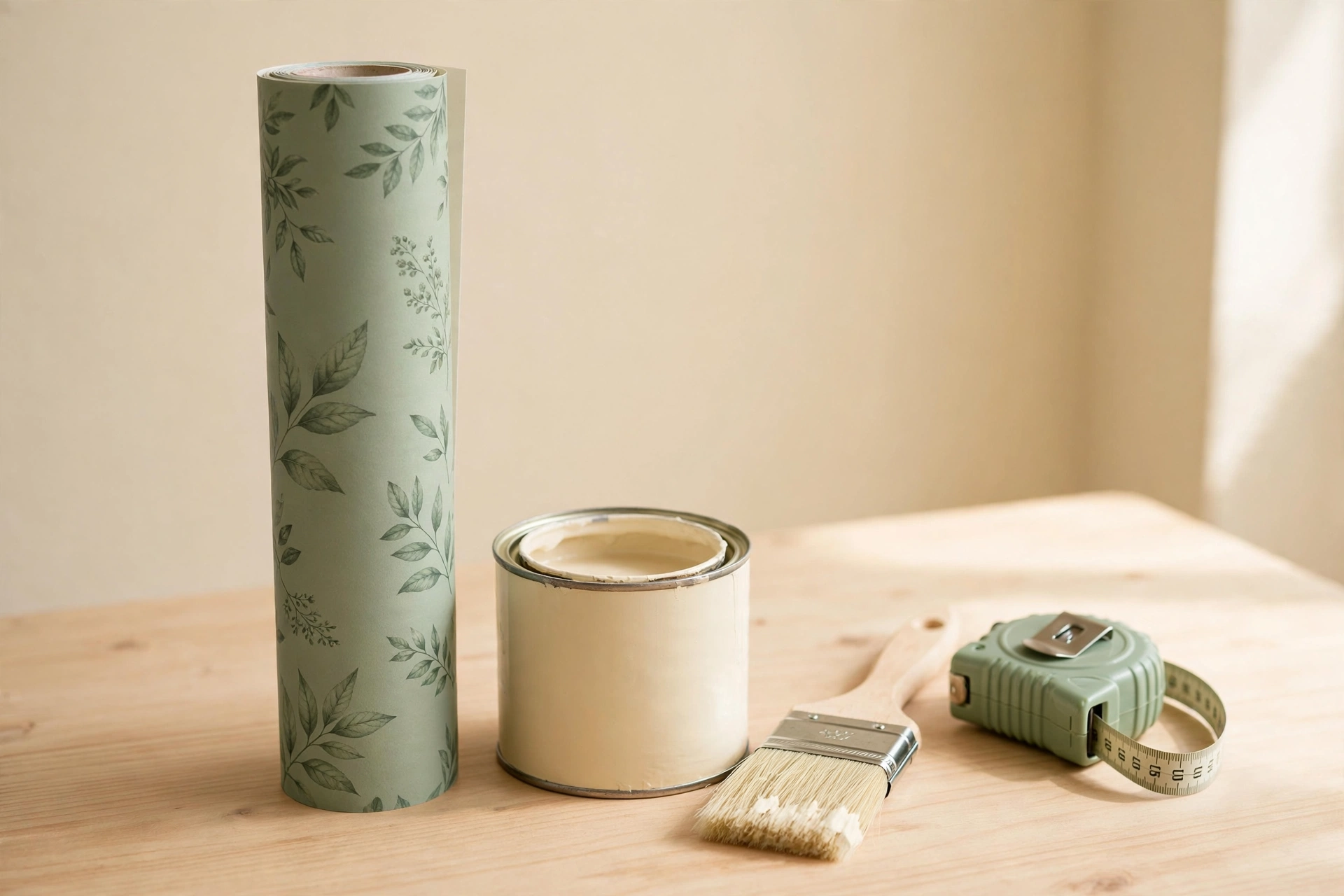
Peel and stick costs more per square foot, and less per tenancy. A standard NuWallpaper roll measures 20.5 in by 18 ft (52 cm by 5.5 m) and covers 30.75 sq ft. At Target, rolls run $25.49 to $37.49 as of October 2026; Canopy Black is $27.99. A 90 sq ft accent wall needs three rolls, so about $76 to $84 for a budget print. Tempaper costs more at $44.99 a roll for about 28.3 sq ft.
Paint is cheaper per square foot and dearer per renter. A gallon of basic paint costs $20 to $50 and covers about 400 sq ft, and painting a 90 sq ft wall runs $50 to $120 with primer, rollers, tape, and brushes, as of October 2026. But paint hides a second bill: most leases ask for the walls back as you found them, so you repaint before you leave, another $50 to $120. One accent wall takes one to three hours with peel and stick, and a weekend with paint. The peel and stick vs paint cost breakdown from Giffywalls puts paint under $2 per sq ft and its own paper at $4.99 per sq ft, so shop the roll price, not the brand name.
Peel and Stick Wallpaper for Renters: The Honest Case
Best for: short tenancies, pattern lovers, and anyone whose lease bans paint. Main advantage: it comes off. You peel it away on moving day and the wall underneath looks the way it did when you moved in. Watch out for: the wall underneath, not the paper. Flat and chalky paint bonds weakly, so adhesive can pull it off. Fresh paint needs about 30 days to cure first. Heavily textured walls are a problem too, because the adhesive cannot make full contact. Verdict: the best default for most renters. Deposit risk: 2 out of 5.
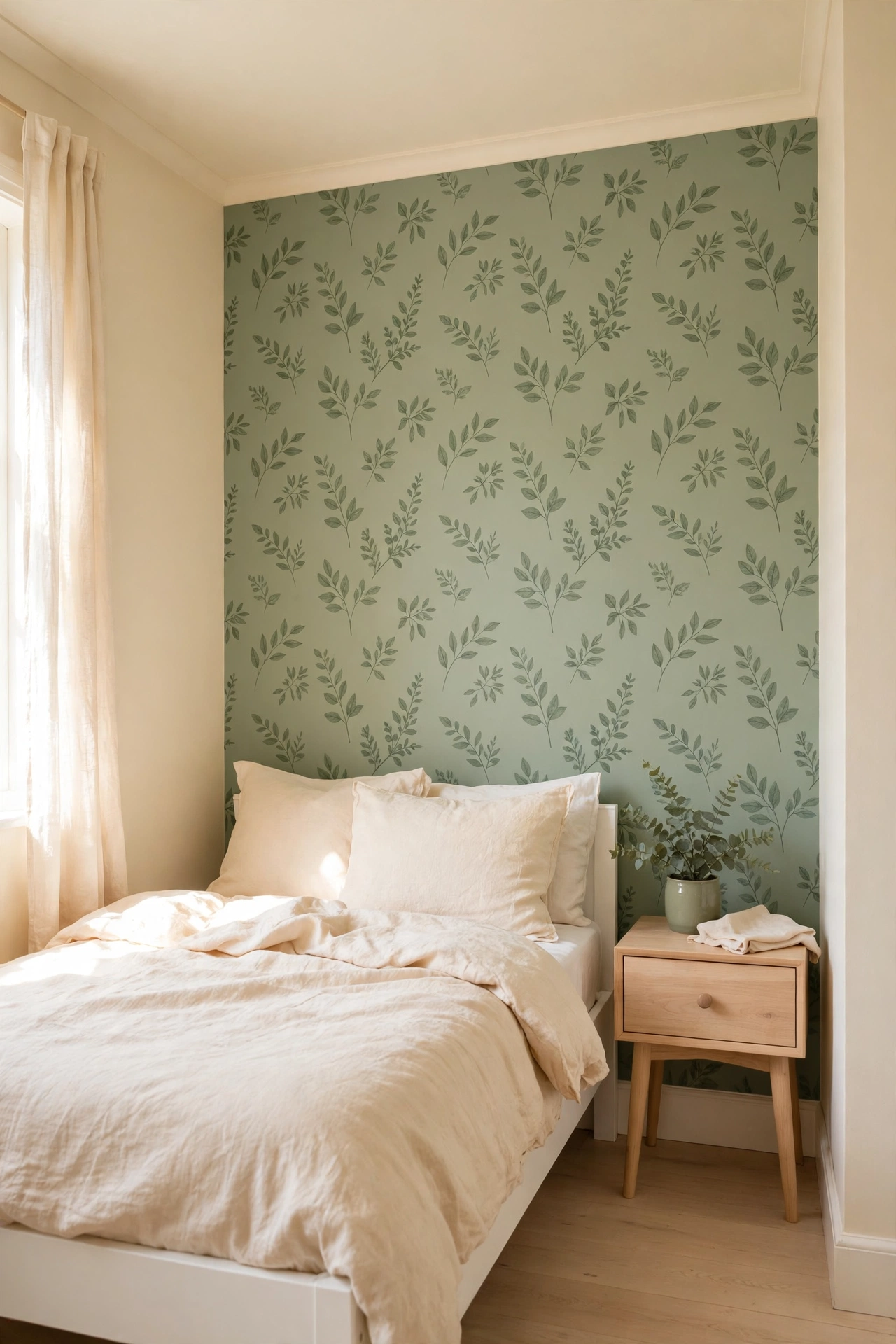
Peel and stick is also the only way to get a pattern without real skill: a botanical print would take days of stenciling to fake with paint. One feature wall behind a bed or a sofa delivers most of the visual change.
It is not only wallpaper, either. Peel-and-stick tiles and backsplash film play by the same rules, and they cover the spots paint handles badly, like a dated kitchen backsplash you are not allowed to tile. Our peel-and-stick backsplash guide walks through that install. If you want the wider menu first, our list of renter-friendly wall ideas that will not cost your deposit covers ten of them.
Paint for Renters: The Honest Case
Best for: long tenancies with written landlord permission, whole-room color changes, and textured or steamy walls. Main advantage: it is the toughest finish of the two. Paint handles humidity, scrubbing, and high-traffic hallways better than any adhesive product. Watch out for: the permission and the repaint. Without written permission, a bold color can cost you part of your deposit, and even with permission you must restore the original color. Dark colors are the worst: they need two or three coats of primer to cover. Verdict: the right pick when you have permission, plan to stay for years, and want a whole room in one color, not one patterned wall. Deposit risk: 4 out of 5 without written permission, 2 out of 5 with it.
Paint also wins where peel and stick cannot stick: steamy bathrooms, heavy texture, and peeling paint. On a textured wall, adhesive has nothing to grip. Paint also wins on whole rooms: covering four walls with paper costs three to four times what paint costs. If you do paint, keep the can and photograph the label on day one, because “close enough white” is a classic deposit argument. The same logic applies to cabinets: painting your kitchen cabinets for under $200 changes the whole room for less than a month of rent in most cities.
Which Rooms Does Each One Win?
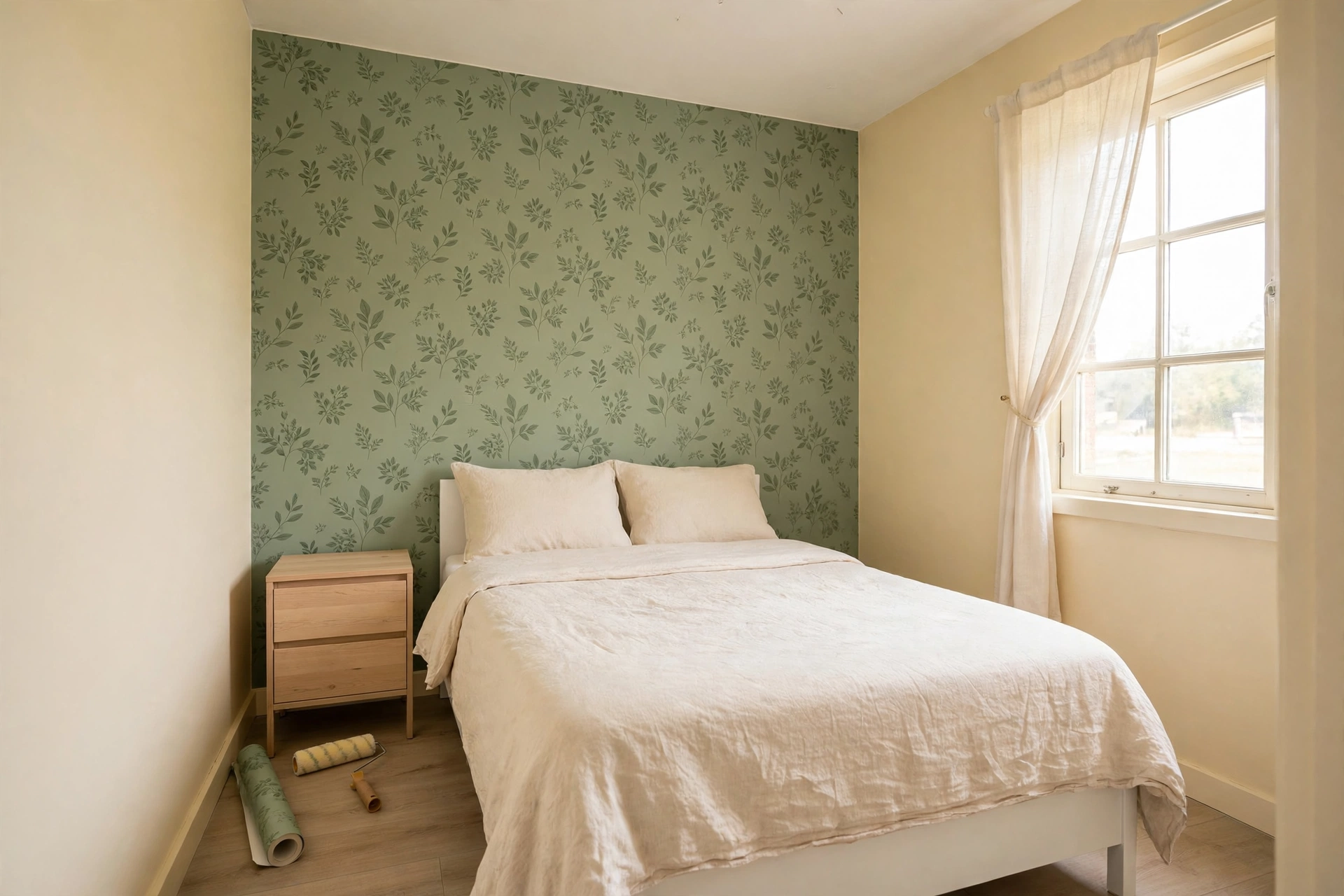
Bedroom: peel and stick wins. One patterned accent wall behind the bed changes the whole room, and bedrooms are dry and low traffic.
Living room: peel and stick wins for the feature wall, paint wins for the rest. A printed wall behind the sofa plus painted surrounding walls is the hybrid most designers actually use.
Kitchen: split decision. Peel and stick wins for the backsplash, a finished look in an afternoon with no landlord fight. Paint wins for the walls, because steam and grease lift adhesive edges over time. Keep paper away from the stove and the sink.
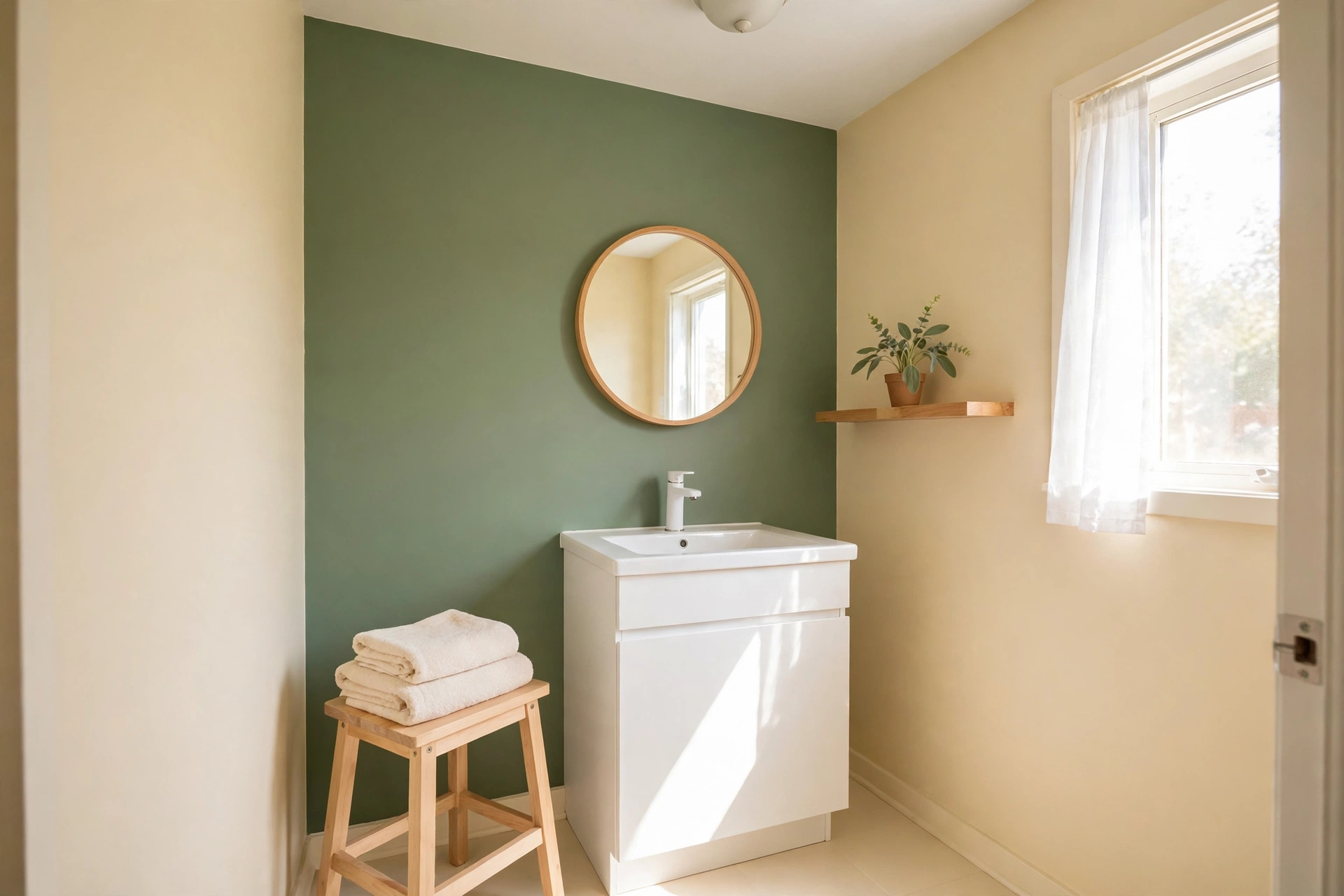
Bathroom: paint wins. Steam is the enemy of adhesive, and edges lift in humid rooms unless the product is rated for moisture. Our renter-friendly bathroom upgrades list has ten more deposit-safe ideas for this room.
Entryway: peel and stick wins. It is a small wall, it takes one roll, and it is the first thing guests see. A bold print in a hallway is a lot of style for about $28.
What Happens on Move-Out Day?
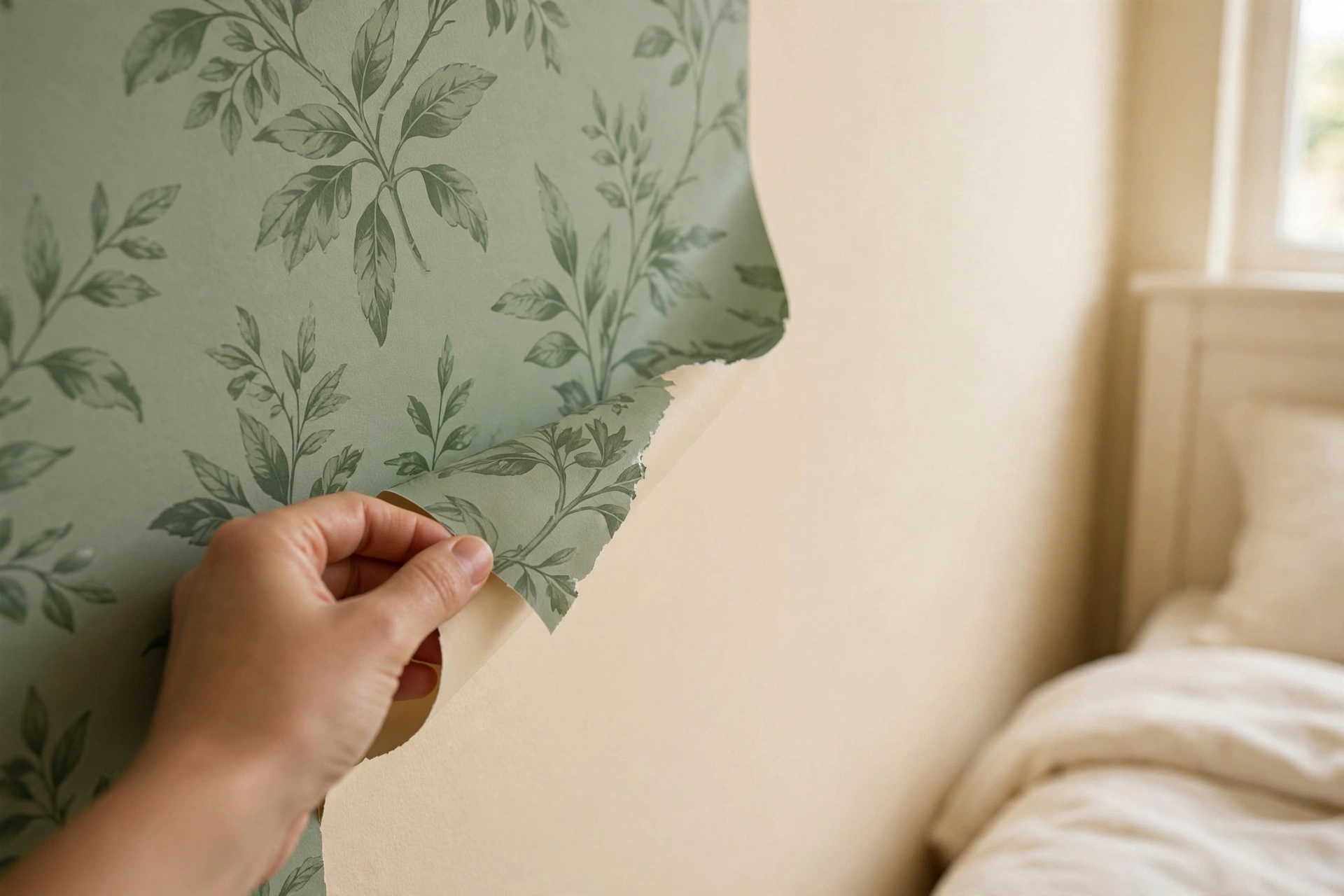
This is the section the top guides skip, and it is the one that decides your deposit. For peel and stick, start at a top corner and pull slowly at a low angle. Rushing is what lifts paint. A little warmth from a hairdryer loosens stubborn spots.
For paint, move-out day means repainting: primer plus two coats over a bold color. Photograph every wall before and after, because a dated photo is the best defense if a deduction is ever disputed.
In the peel and stick vs paint for renters decision, both options share one free rule: test first. Stick a sample on a hidden corner, leave it for a week, then peel it off. If the paint stays put, you are good. If it lifts, you learned your walls cannot take adhesive, and that lesson cost a sample, not a deposit. The removable wallpaper guide for renters gives the same advice: quality adhesive and careful removal make the real difference.
What to Skip: The Mistakes That Cost Renters Money
Skipping the test patch. Ten minutes of testing prevents the two classic failures: adhesive pulling weak paint off, and a “removable” product going on over uncured paint.
Papering a whole room. Peel and stick is an accent-wall product. Covering four walls costs three to four times what paint costs. One wall is the sweet spot.
Painting without written permission. A verbal “sure, go ahead” is worth nothing at move-out. Get it in writing, or do not open the can.
Ignoring the wall finish. Flat paint, chalky paint, and fresh paint are all bad bases for adhesive. If your walls are flat-finished, paint is the safer pick.
The Verdict: Which One Should You Pick?
For most renters, the answer to peel and stick vs paint for renters is peel and stick for the accent wall and paint for the rest, with permission. Short tenancy, deposit at stake, or a pattern you love: peel and stick wins at about $84. Written permission and years of staying: paint wins. Textured walls or a steamy bathroom: paint wins by default.
The cheapest mistake is choosing by the install column. Both go up in a day; only one comes down for free. Pick the one whose removal you can live with, test it first, and keep the paint can label. Your deposit will thank you.
Is peel and stick wallpaper cheaper than paint?
Per square foot, paint is cheaper: a $20 to $50 gallon covers about 400 sq ft, while budget peel and stick runs about $0.83 to $1.22 per sq ft. But for a renter, paint needs a second paint job at move-out, so the totals flip: about $84 for peel and stick against $100 to $240 for paint on a 10 ft by 9 ft accent wall, as of October 2026.
Does peel and stick wallpaper damage paint when removed?
It can, but it usually does not when the wall is right and the removal is slow. On sound satin or eggshell paint, it peels off cleanly if you pull slowly from a top corner at a low angle. On flat, chalky, or freshly painted walls (under 30 days cured), it can lift the paint. A one-week test patch on a hidden corner tells you which wall you have.
Will peel and stick wallpaper stick to textured walls?
It sticks best to smooth, clean, painted walls. Light texture usually works, but heavily textured or rough finishes weaken the grip and cause edges to lift. A matte finish helps hide minor texture, but no peel and stick product grips a heavily textured wall well. On those walls, paint is the better choice.
Can I reuse peel and stick wallpaper after taking it down?
Sometimes. If you remove it slowly and keep the backing, some prints can be repositioned or reused on another smooth surface. Reuse depends on the adhesive and how carefully it was taken down, so treat any second use as a bonus rather than a guarantee, and never plan a move around reusing it.