Cabinet and Countertop Color Combinations: 10 Pairings That Make Small Kitchens Look Expensive
Pick the cabinets first, then let the countertop answer them. That is the whole trick behind cabinet and countertop color combinations that actually work, and it matters more in a small kitchen than anywhere else. The cabinets cover most of the room, so they set the mood. The countertop is the reply.
I priced one 8 ft (2.4 m) countertop run three ways from live October 2026 prices, so you can see what the reply costs. A Hampton Bay 8 ft saman butcher block is $459 at Home Depot. The same run in entry-level quartz, installed, runs about $917. In premium quartz it runs about $2,000. Same cabinets, same kitchen. The countertop alone moves the bill by about $1,500. Here are the 10 pairings worth your money, each with an honest verdict, plus the ones to skip.
How do cabinet and countertop color combinations actually work?
Three rules do almost all the work. First, the 60-30-10 rule: cabinets take about 60% of the color in the room, the countertop about 30%, and hardware and accents the last 10%. Second, keep a clear gap in lightness between the two surfaces. Third, match the undertones, warm with warm and cool with cool.
The gap matters most. One light surface and one darker surface reads as a choice. Two surfaces one shade apart read as a mistake, like the order came in wrong. If you stand back and the cabinets and the countertop blur into one color, the pairing is too close.
Undertones are the quiet trap. A warm white cabinet next to a cool blue-grey countertop makes both look dirty, even though each looks fine on its own. Hold a sheet of plain white printer paper against each surface in daylight. If one looks yellow next to the paper and the other looks blue, they are fighting. Pick a countertop that leans the same way as your cabinets.
If you have not picked a cabinet color yet, start with the kitchen cabinet colors we rounded up for 2026. The pairing only works once the cabinet color is settled.
White cabinets: which countertop color works best?
White cabinets are the most forgiving starting point in the whole guide. Almost any countertop works, so the real question is how much contrast you want.
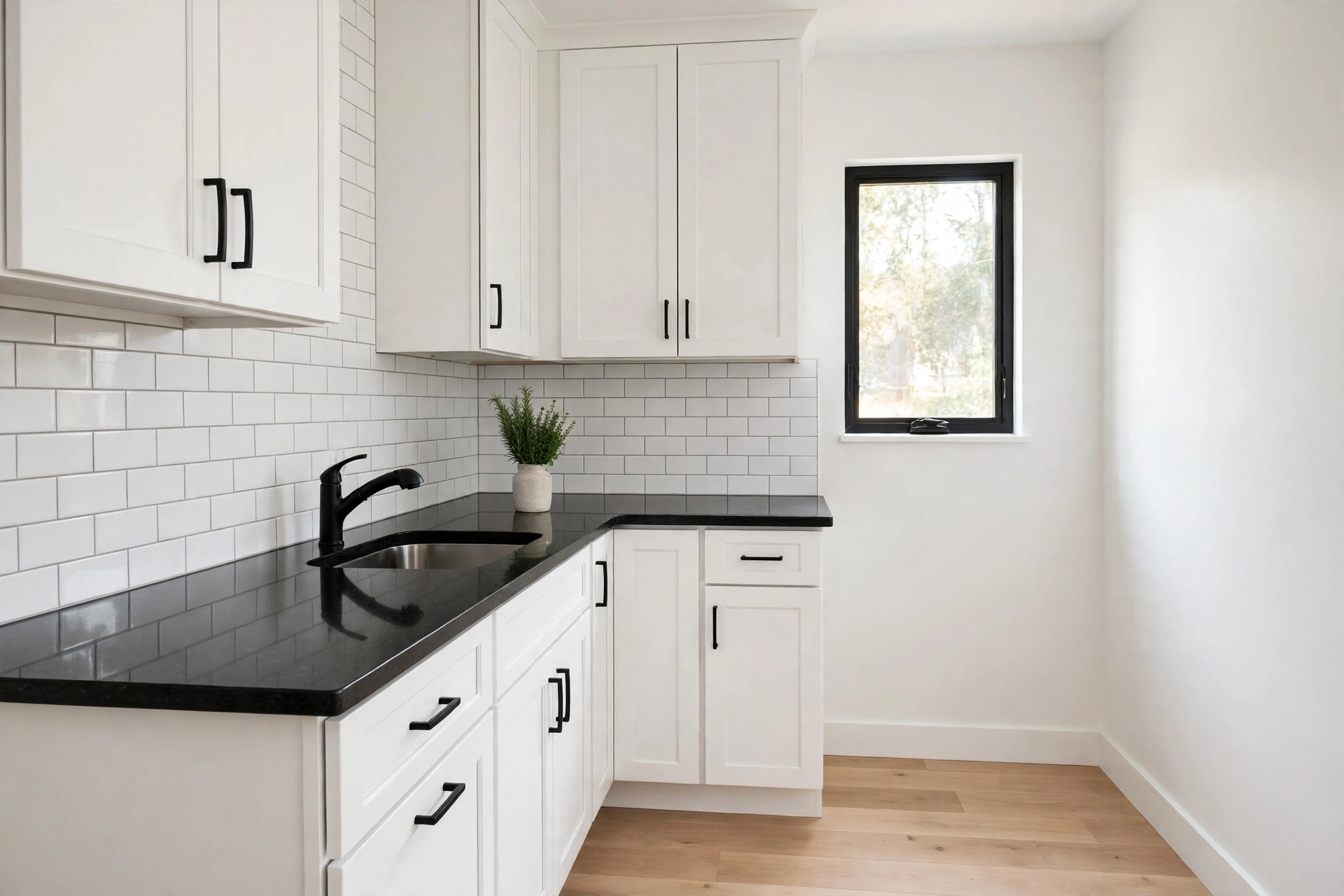
1. White cabinets + black quartz. Best for a small kitchen that needs drama without color. Main advantage: the hardest edge in the room, and it makes white cabinets look brighter by comparison. Watch out for: a polished black top shows every crumb, water spot and fingerprint. A honed or matte finish hides far more. Verdict: the classic for a reason, but only if you wipe the counters daily. If that sounds like a chore, skip to number 2.
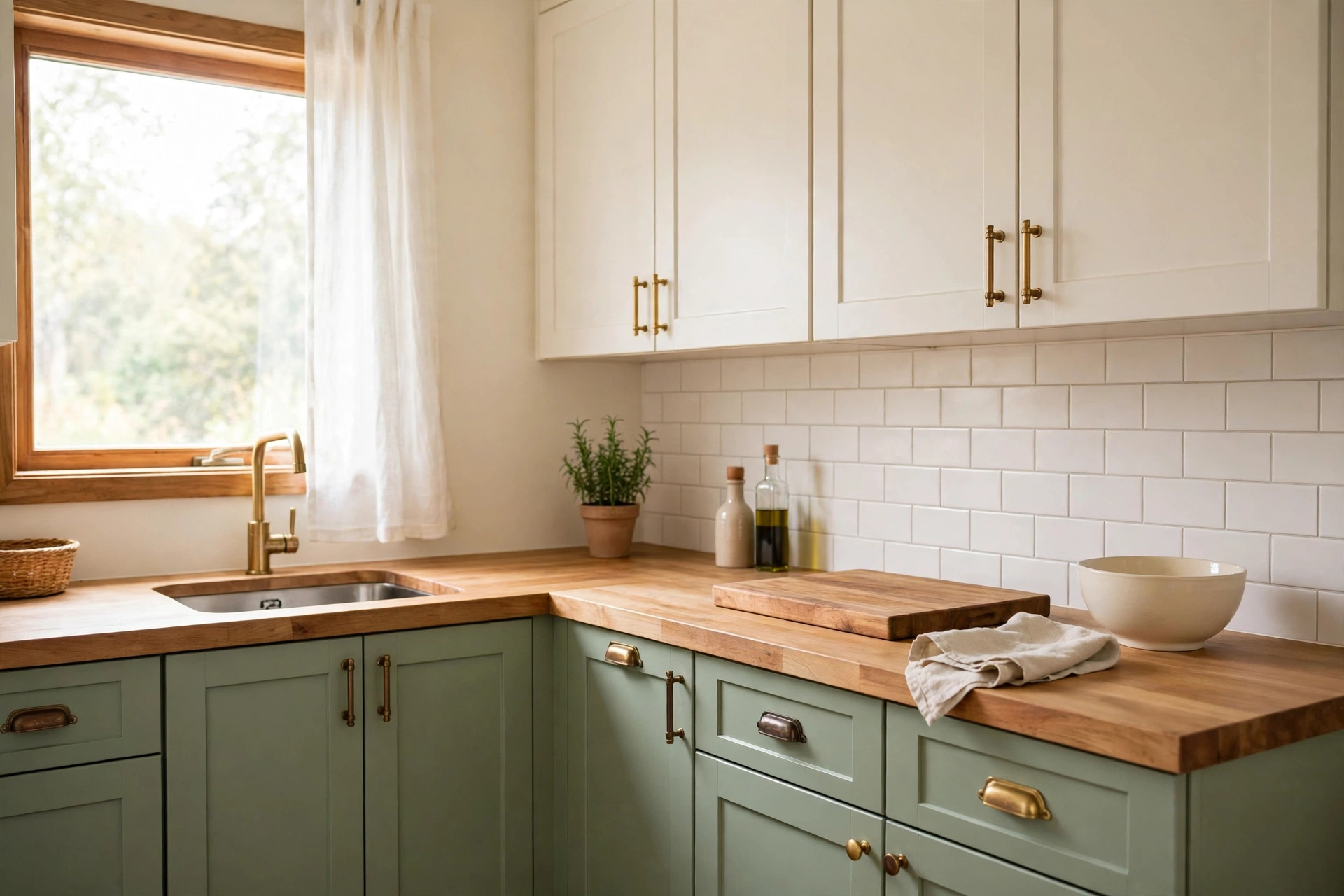
2. White cabinets + butcher block. Best for a warm, lived-in kitchen on a budget. Main advantage: wood is the only countertop that adds warmth by itself, and it is the cheapest real surface in this list. A finished 8 ft run costs $459 at Home Depot, as of October 2026. Watch out for: it needs oil about once a month, and it hates standing water by the sink. Verdict: my pick for renters and first kitchens. It looks expensive, costs little, and you can sand out the mistakes.
Dark cabinets with a light countertop: navy, charcoal and espresso
Dark cabinets are the fastest way to make a small kitchen feel designed. They are also the fastest way to make it feel like a cave. The light countertop is what saves them.
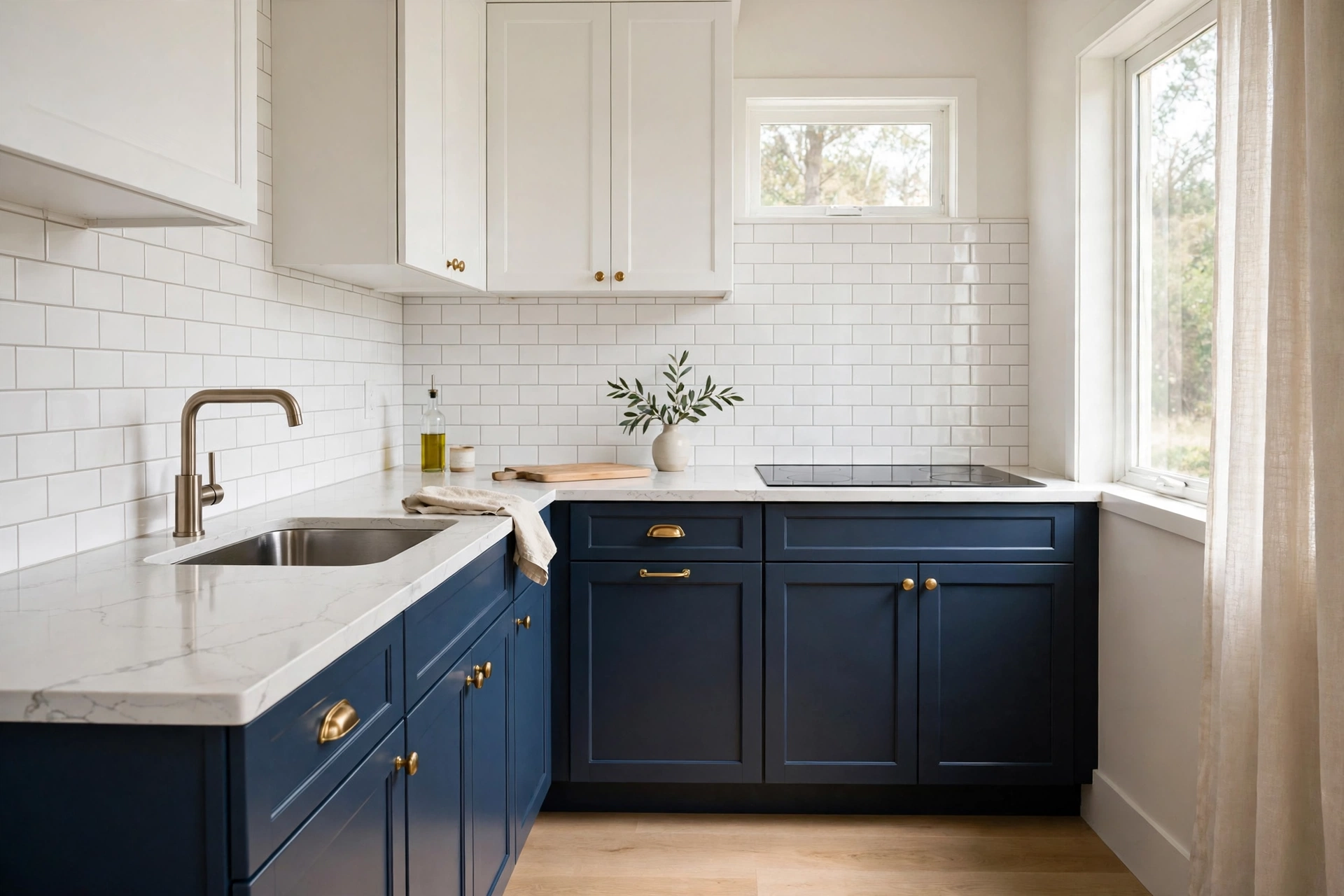
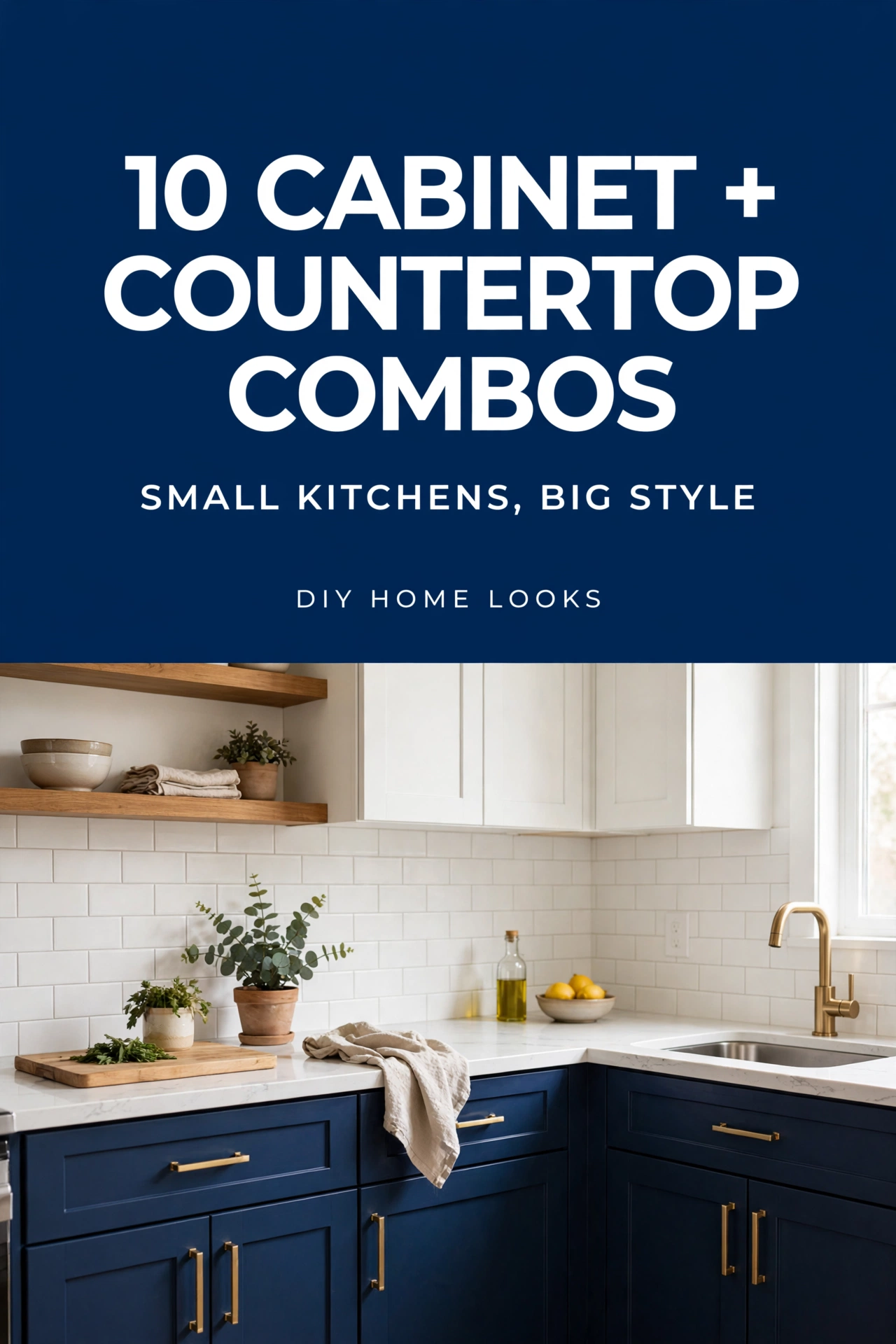
3. Navy cabinets + white quartz with warm veining. Best for a small kitchen with decent daylight. Main advantage: navy behaves like a dark neutral, so it pairs with almost anything, and the white top keeps the room bright. Watch out for: a cold blue-white top next to navy can feel icy. Pick a white with warm gold or brown veining instead. Verdict: the safest bold choice in this guide. If you want color but you are nervous, start here.
4. Charcoal or espresso cabinets + pale speckled granite. Best for a kitchen that gets used hard. Main advantage: the speckled top hides crumbs and coffee rings, and the dark doors hide fingerprints better than white ones do. Watch out for: in a kitchen with one small window, this pairing needs under-cabinet lighting or it goes gloomy after 4 pm. Verdict: great for cooks, bad for dark galley kitchens. Light is the deciding factor, not taste.
What countertop goes with wood cabinets?
Wood cabinets already have grain, movement and color. The countertop should stay quieter than the doors, or the two fight for attention.
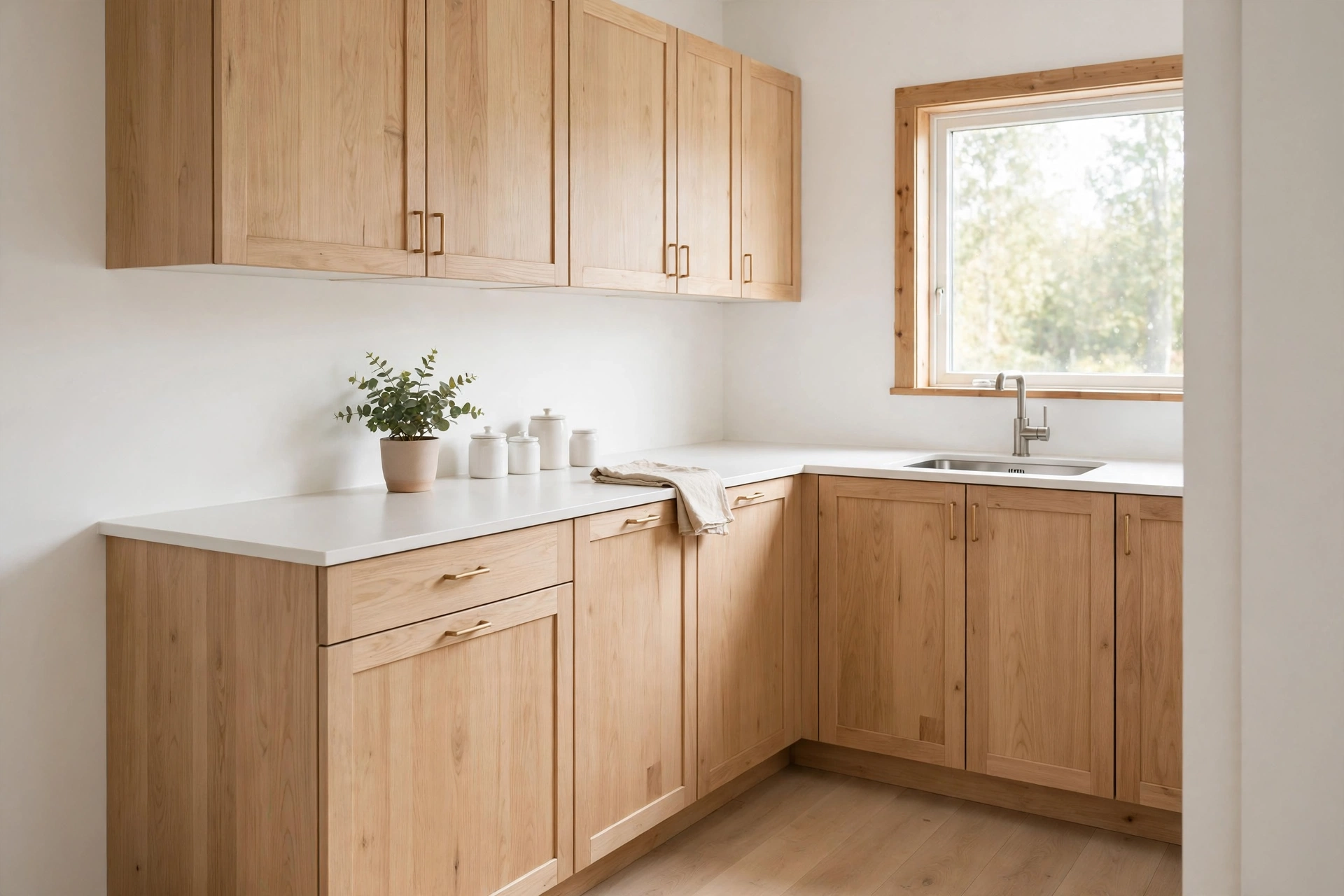
5. Light oak cabinets + plain white quartz. Best for a small kitchen that needs to feel bigger. Main advantage: the plain white top is the calm surface that lets the oak be the pattern in the room. Watch out for: a busy veined top next to oak grain is too much movement in one sightline. Keep the veining fine or skip it. Verdict: the easiest wood pairing to live with, and the one I would pick for a rental-friendly refresh.
6. Walnut cabinets + cream quartzite. Best for a warm, high-end look without marble prices. Main advantage: walnut is dark enough to feel rich, and the cream top stops the room closing in. Watch out for: quartzite costs more than quartz and needs sealing, so budget for both. Verdict: beautiful, but only if the sealing schedule does not scare you. If it does, white quartz gives you 90% of the look.
Grey and greige cabinets: the combos that don’t go muddy
Grey is the color people get wrong most often. The mistake is always the same: a grey countertop in the same value as grey doors.
7. Mid-grey cabinets + white quartz with grey veining. Best for a modern small kitchen. Main advantage: the veining in the top echoes the doors without matching them, so the room feels planned. Watch out for: go much lighter or much darker than the doors. A mid-grey top on mid-grey cabinets is the pairing to avoid. The two greys almost never match exactly, so the small difference reads as a mistake. Verdict: safe, clean, and hard to get wrong if you keep the gap wide.
8. Greige cabinets + warm beige stone. Best for a kitchen that leans warm and traditional. Main advantage: greige is the friendliest neutral in this guide, and a warm stone top keeps it from going flat. Watch out for: check the undertone before you commit. A greige with pink undertones next to a stone with green undertones will clash, even though both are “neutral”. Verdict: lovely when the undertones agree, and a mess when they do not. Bring the cabinet sample to the stone yard.
Two-tone cabinets and the island trick
Two-tone is the easiest way to use a bold color without drowning a small kitchen in it. The rule is simple: one top across both cabinet colors, and the top sits closer to the lighter door.
9. White uppers + navy lowers + one white quartz top. Best for a small kitchen where you want color but not commitment. Main advantage: the white uppers keep the room bright, the navy lowers ground it, and the single top stops the two colors arguing. Watch out for: if the island is also navy, the room tips dark. Keep the island white or wood. Verdict: the most practical two-tone in this guide. It photographs well and it is easy to live with.
10. Bold island + quiet perimeter. Best for an open-plan small kitchen with an island or peninsula. Main advantage: the loudest color sits on one surface only, so the room gets personality without chaos. A deep green island with white perimeter cabinets and a white top is the version I see working most often. Watch out for: the island color still needs to share an undertone with the perimeter. A cool green island with warm cream cabinets will look off. Verdict: the best way to use a color you love but would not want on every wall of cabinets.
If you own the place, painting is the cheapest way into a two-tone look. Our guide to how to paint kitchen cabinets for under $200 walks through the whole job, primer to topcoat.
Cabinet and countertop color combinations for small kitchens: the size rules
Small kitchens punish random contrast. Three size rules keep the pairings above working when the room is tight.
First, keep the big surfaces light. In a galley or a one-wall kitchen, a light countertop over dark lowers is the most forgiving direction. It bounces light up and makes the room feel taller.
Second, allow yourself one dark surface, not two. Dark cabinets plus a dark countertop plus a dark floor is how a small kitchen turns into a tunnel. If the cabinets are dark, the top stays light. If the top is dark, the cabinets stay light.
Third, use the backsplash as the bridge. When the cabinets and the countertop feel like strangers, a mid-tone backsplash pulls them together. A peel-and-stick backsplash is the cheapest way to test the bridge before you commit to tile, and it comes off clean if the color is wrong.
What it costs: one 8 ft run, three countertops
Prices are installed per square foot, as of October 2026, from HomeGuide’s 2026 cost guide and CostHelper. A standard small kitchen has about 30 sq ft (2.8 sq m) of countertop. An 8 ft run at 25 in deep is 16.7 sq ft.
| Material | Installed per sq ft | One 8 ft run | 30 sq ft kitchen |
|---|---|---|---|
| Laminate | $20-$60 | $334-$1,000 | $600-$1,800 |
| Butcher block | $40-$65 | $667-$1,083 | $1,200-$1,950 |
| Quartz | $55-$120 | $917-$2,000 | $1,650-$3,600 |
| Granite | $40-$120 | $667-$2,000 | $1,200-$3,600 |
The material-only price tells the same story more sharply. The Hampton Bay 8 ft saman butcher block is $459 at Home Depot, which works out to about $27.50 per sq ft of material. The same 8 ft run in entry-level quartz, installed at $55 per sq ft, is about $917. In premium quartz at $120 per sq ft, it is about $2,000. So the countertop alone can quadruple the cost of one run while the cabinets stay exactly the same.
That is why the pairing decision is also a budget decision. Pick the cabinets you love, then pick the cheapest countertop that still answers them well. A white quartz top on navy cabinets costs a fraction of a Calacatta marble top and looks just as intentional in a small room.
Renters: change the pairing without changing the cabinets
Renters cannot rip out cabinets or counters, but the pairing is still changeable. The trick is to change the surfaces you are allowed to touch.
Contact paper is the big one. Our contact paper countertops guide tested how long it actually lasts, and the honest answer is one to five years depending on the spot. It works best on a small run away from the sink, and it peels off with a hair dryer when you move out. A white marble-look contact paper over a dark laminate counter is the fastest pairing change a renter can make.
Peel-and-stick tile on the backsplash does the same job from the other side. It pulls a warm wood counter toward cool grey cabinets, or cools down a cream counter that fights your doors. Removable hardware helps too. Swap the knobs for matte black or brass, keep the old ones in a bag, and the whole pairing shifts for under $30.
What to skip
Four pairings are not worth your money, however good they look in a photo.
Skip the near-match. A countertop one shade from your cabinets reads as an ordering error, not a design choice. If you cannot see a clear step between the two, widen the gap or change one of them.
Skip a saturated color on every cabinet. A deep green or navy across a whole small kitchen dates faster than the same color on an island alone. Bold belongs on one surface, not all of them.
Skip the warm-cool clash. A cool blue-white cabinet next to a warm cream countertop makes both surfaces look wrong. This is the most common expensive mistake in the guide, and the printer-paper test catches it before you pay.
Skip dark on dark in a dim kitchen. Dark cabinets plus a dark countertop need strong natural light and good under-cabinet lighting. In a small kitchen with one north-facing window, the room will feel smaller every evening. Pick one dark surface and let the other one carry the light.
The short version
The best cabinet and countertop color combinations follow one idea: the cabinets lead, the countertop answers, and the two are clearly different in lightness with matching undertones. White cabinets take almost any top. Dark cabinets need a light top. Wood cabinets need a quiet top. Grey cabinets need a big gap, not a close match. And the countertop is the expensive half of the decision, so price it before you fall in love with it. One 8 ft run can cost $459 or $2,000, and the room will not know the difference if the pairing is right.
Should countertops be lighter or darker than cabinets?
Either works, as long as the two are clearly different. The combination that goes wrong is the near-match, where the countertop sits one shade from the doors and looks like an error. Lighter countertops over darker cabinets brighten a small kitchen. Darker countertops under white or linen cabinets look sharper in a room with good natural light.
What countertop color goes with white cabinets?
Almost any, which is why white is the most searched cabinet color. Black or charcoal gives the strongest contrast. White with grey veining keeps the room calm. Warm beige or a tan-flecked granite stops a white kitchen feeling clinical. A wood or butcher block top adds the only warmth in an all-white run.
What countertop goes with grey cabinets?
Go either much lighter or much darker than the doors. White quartz with grey veining is the safe pick, and a charcoal top is the bolder one. A mid-grey countertop against mid-grey cabinets is the pairing to avoid. The two greys almost never match exactly, so the small difference reads as a mistake.
Can cabinets and countertops be the same color?
Yes, but only as a deliberate tonal look, and it needs texture to work. A warm putty cabinet with a creamy quartzite top at a similar light value reads as intentional if one of them has enough surface movement to separate them. Add interest through a veined counter, a tile backsplash, varied hardware finishes, or a wood floor, or the kitchen will feel flat.