Floor and Wall Color Combinations: 10 Pairings That Make Small Rooms Feel Bigger
Your floor is the one surface you cannot repaint in an afternoon. That is why floor and wall color combinations matter more than wall color alone. Pick the wrong pair and a small room feels chopped up and dark. Pick the right one and the same room feels taller, wider, and calmer.
Here is the short answer. Match undertones, not colors. A warm floor needs a warm wall. A cool floor needs a cool wall. Then keep the wall lighter than the floor in most small rooms, so the light bounces up instead of sinking down.
And here is the part nobody tells you. Changing the floor color in a 10 by 12 ft room (3 by 3.7 m) with peel-and-stick vinyl tiles costs about $117, while repainting the walls costs about $76. The walls are the cheaper half of the pair, so test the wall color first and change the floor only when you are sure. Prices as of October 2026.
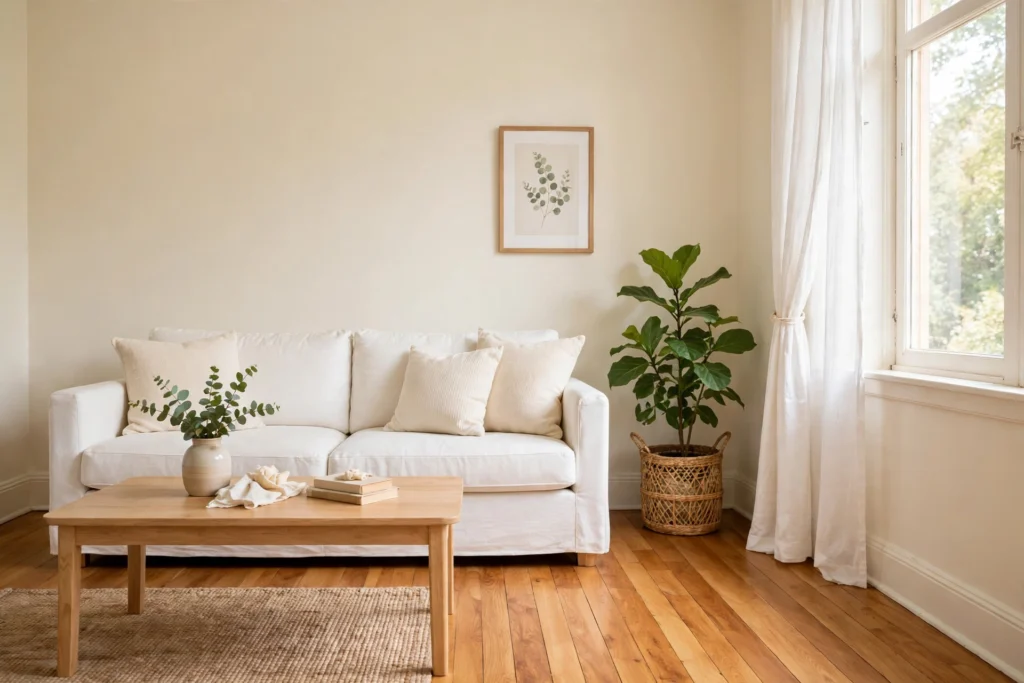
How do floor and wall color combinations actually work in a small room?
Every floor has an undertone. It is the faint color hiding under the main color. Oak can lean yellow. Walnut can lean red. Grey tile can lean blue. Your wall has one too.
The rule is simple. Match the undertone family, not the exact color. Warm with warm. Cool with cool. When the undertones fight, the room looks off even if both colors are pretty on their own.
There is a second rule that helps in small rooms. Keep the wall lighter than the floor. Light walls reflect light back into the room. Dark walls absorb it. A good test is LRV, the Light Reflectance Value printed on most paint chips. For dark floors, a wall paint with an LRV of 65 or higher is the most reliable match. That number comes from a wood flooring guide that tested it against real dark floors.
Then there is the 60-30-10 split. About 60 percent of the room is the walls, 30 percent is the floor and big furniture, and 10 percent is the accent color. Your floor and wall pair is the 60 plus the 30, so it sets the whole mood before you add a single cushion. The same thinking shapes our furniture and wall color combinations, where the sofa or bed leads instead of the floor.
Try the 5-minute test before you buy a gallon. Paint a big piece of cardboard, at least 2 by 3 ft (60 by 90 cm), and lean it against the wall with the floor in view. Look at it in morning light, then at night under your lamps. If the undertone still matches at night, you have a winner. A tiny chip lies. A big sample tells the truth.
Our guide to the best wall colors for small rooms covers the wall side in detail. This post covers the pair, floor plus wall, room by room.
What are the best floor and wall color combinations for light wood floors?
Light wood means maple, ash, pale pine, or bamboo. These floors are already bright, so the wall can carry a little color without darkening the room.
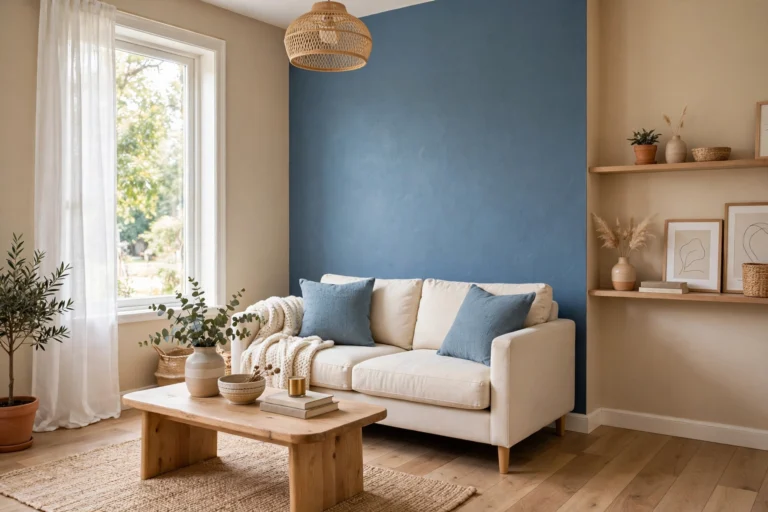
1. Pale blue walls with light natural wood floors
Best for: bedrooms and small living rooms that need to feel airy. Main advantage: pale blue reads like sky, so the walls seem to recede. The light wood warms it up so the room never feels cold. Watch out for: pick a blue with a grey base, not a bright one. Bright blue fights with pale wood and looks like a kids room. Verdict: the safest color pairing in this whole list. Start here if you are unsure.
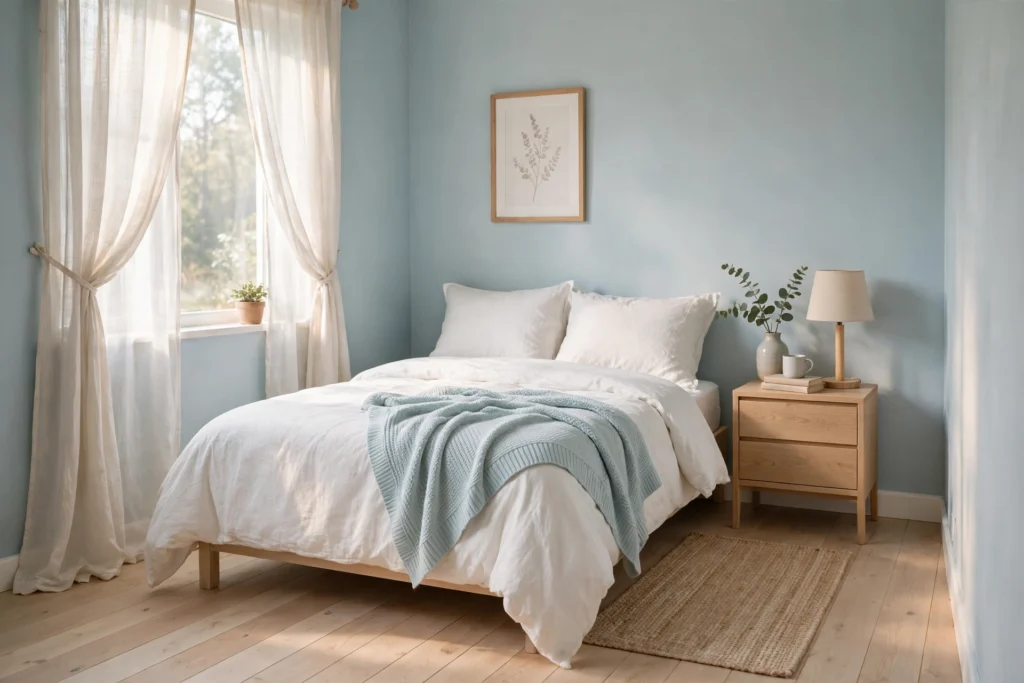
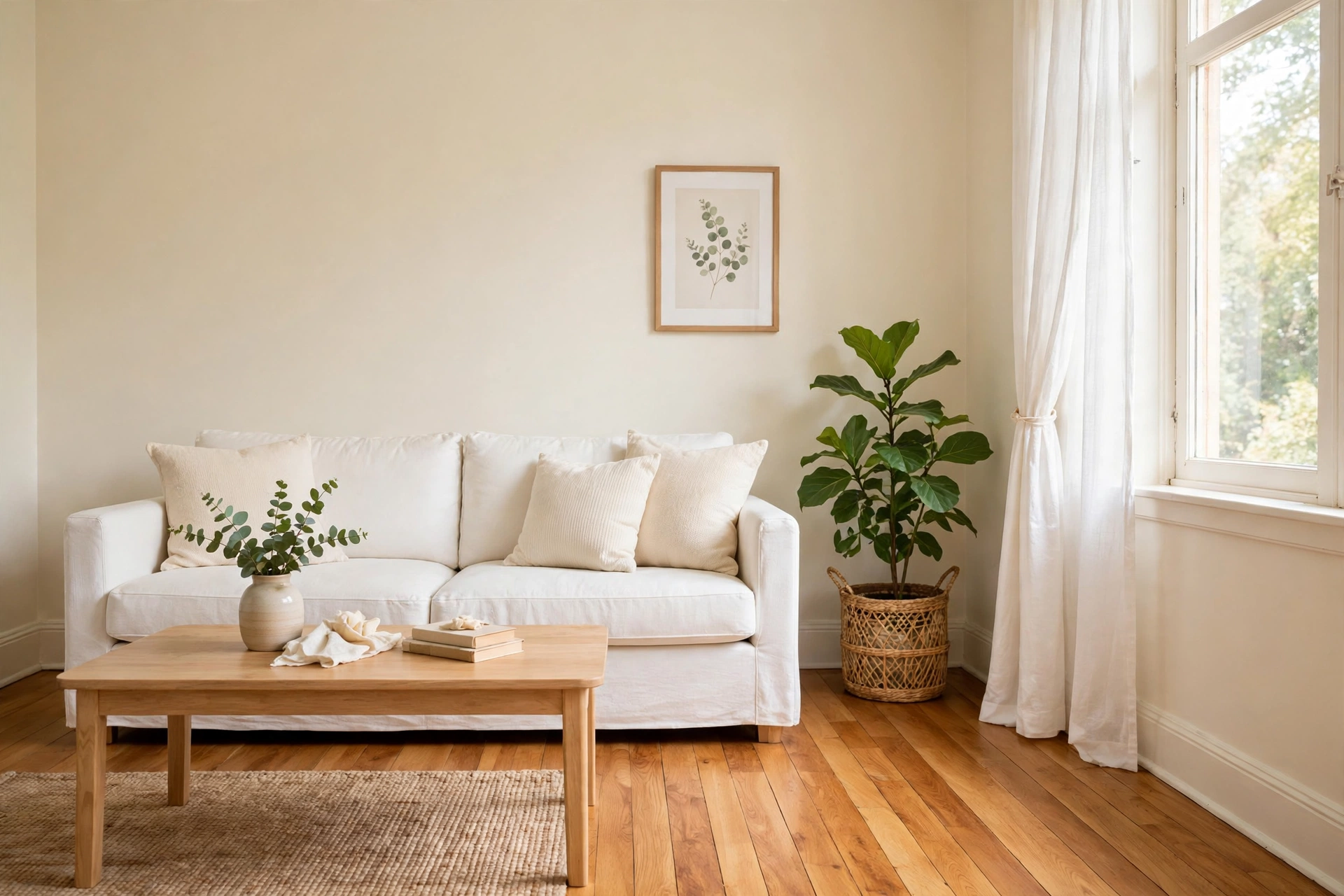
2. Warm ivory walls with honey-toned oak floors
Best for: living rooms with little natural light. Main advantage: ivory is warm without being yellow, and honey oak glows under it. The two share a warm undertone, so the eye moves across the room without stopping. Watch out for: keep the ivory light. A dark cream on top of honey oak turns the whole room beige and flat. Verdict: the best pairing for dark, north-facing rooms. It adds warmth without adding weight.
3. Light sage walls with natural bamboo floors
Best for: bedrooms, home offices, and calm corners. Main advantage: sage is green enough to feel alive and grey enough to stay quiet. Bamboo floors have a fine vertical grain that pulls the eye upward, which makes ceilings feel higher. Watch out for: sage goes muddy in rooms with warm yellow lamps. Test it at night before you commit. Verdict: the most relaxing pair on this list. Good for rooms where you sleep or focus.
What color walls go with dark wood floors in a small room?
Dark wood means walnut, mahogany, espresso, or dark-stained oak. The floor is the heavyweight here, so the wall has to do the lifting. Keep it light.
4. Cool white walls with dark espresso floors
Best for: small living rooms that need drama without darkness. Main advantage: the contrast is the point. White walls dominate what you see, so they reflect light everywhere. The dark floor grounds the room and makes it feel expensive. Watch out for: use a cool white, not a warm one. Warm white next to espresso can look muddy. And skip dark furniture on top of the dark floor, or the room turns into a cave. Verdict: the boldest pair that still works in a small room. High contrast, done right.
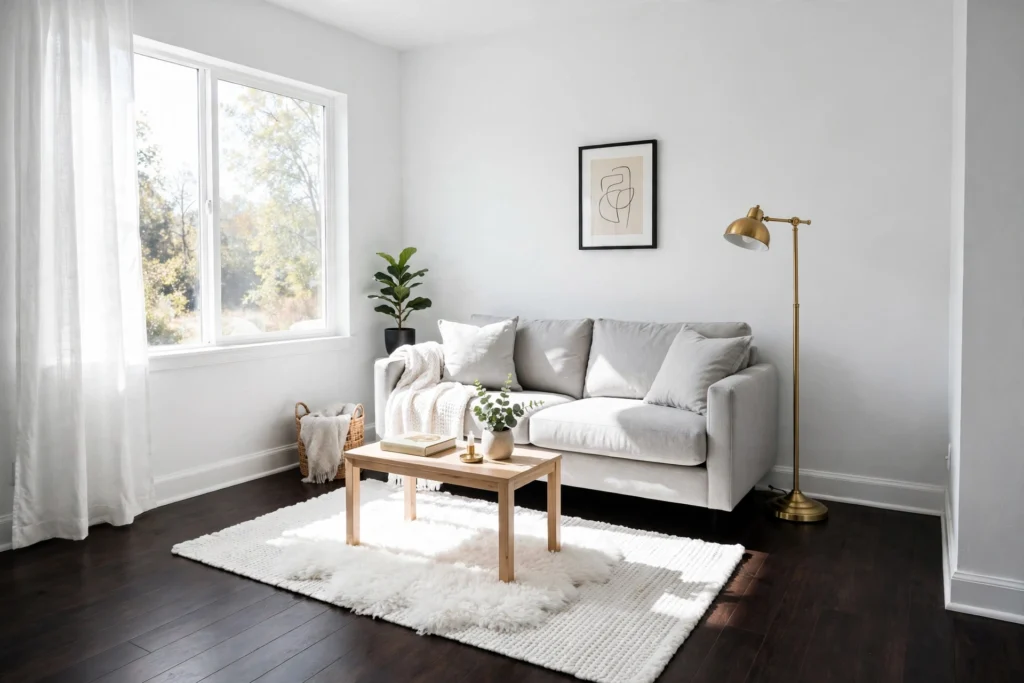
5. Warm taupe walls with medium walnut floors
Best for: bedrooms that should feel cozy, not stark. Main advantage: taupe sits between grey and beige, so it softens walnut without fighting it. The room feels warm and settled, like a hotel room. Watch out for: taupe needs good light. In a dim room it can read as plain brown. Add a light rug to break up the floor. Verdict: the coziest dark-floor pairing. Pick it when you want warmth over brightness.
6. Soft sage walls with dark walnut floors
Best for: living rooms and dining nooks. Main advantage: sage cools down the red in walnut, so the floor looks richer instead of louder. The pair feels organic, like a forest floor. Watch out for: keep the sage pale. A deep green wall plus a dark walnut floor is too much weight for a small room. Verdict: the best pair for taming red-toned wood. The green does quiet work.
What pairs work with grey and cool floors?
Grey floors are the trickiest. They look neutral, but most grey floors lean blue or green. Match that lean and the room clicks. Fight it and the room looks washed out.
7. Pale slate blue walls with ash grey wood floors
Best for: modern small living rooms and bedrooms. Main advantage: both surfaces share a cool undertone, so the room feels calm and pulled together. Slate blue is a blue that behaves like a neutral. Watch out for: do not add a third cool color. One more grey or blue and the room turns cold. Warm it up with wood furniture or brass. Verdict: the cleanest modern pair. Cool, but not cold, if you add one warm accent.
8. Mist grey walls with cerused oak floors
Best for: bedrooms and small studios. Main advantage: cerused oak is oak with white pigment rubbed into the grain, so the floor already has a misty look. A mist grey wall matches that texture and makes the room feel soft and open. Watch out for: this pair is very low contrast, so it can look flat in photos. Add texture, not color, to fix it. A woven rug or linen curtains do the job. Verdict: the most subtle pair here. It rewards texture more than color.
What pairs work with tile floors?
Tile floors change the rules a little. Tile is hard and shiny, so it reflects more light than wood. That helps small rooms, but it also means the grout lines and the tile size matter as much as the color.
9. Warm white walls with terracotta tile floors
Best for: kitchens, bathrooms, and sunny small rooms. Main advantage: terracotta brings warmth and texture, while warm white keeps the room bright. The pair feels Mediterranean without trying too hard. Watch out for: use large-format tiles with thin grout lines. Small tiles with dark grout chop the floor into a grid and shrink the room. Verdict: the warmest tile pairing. It makes a small kitchen feel like a place you want to cook in.
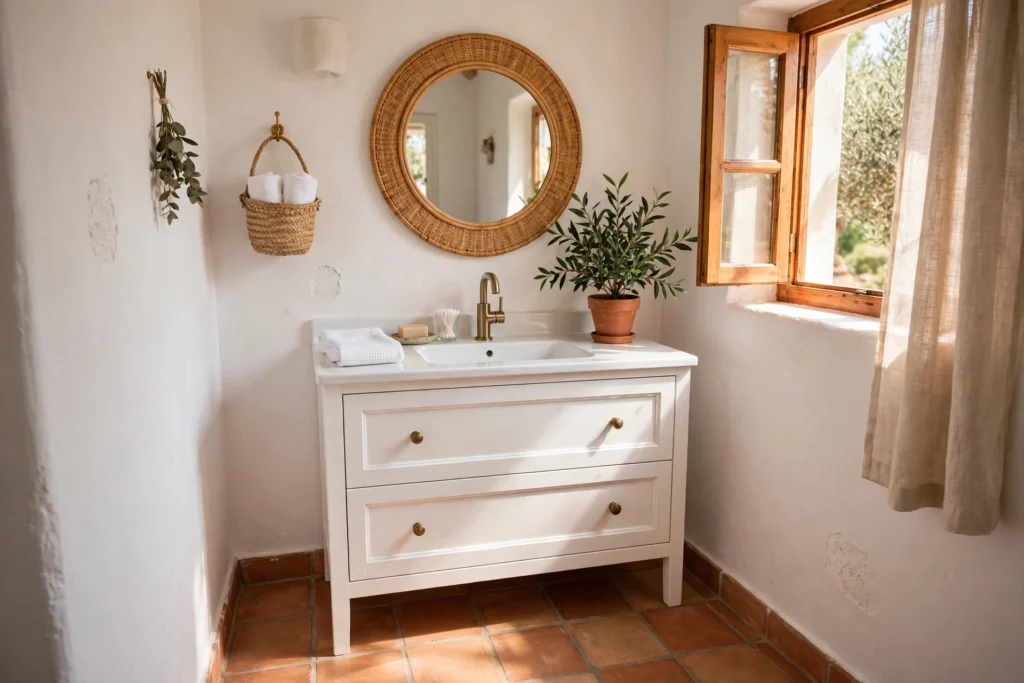
10. Warm cream walls with limestone tile floors
Best for: bathrooms and small entryways. Main advantage: cream and limestone share a warm, sandy tone, so the floor and wall flow into each other. The stone texture adds interest without any pattern. Watch out for: limestone-look tile can stain if it is not sealed, so check the tile specs before you buy. In a bathroom, pick a matte finish so wet feet do not slip. Verdict: the most timeless tile pair. It will not date, and it suits any style of furniture.
If you want more tile ideas, the tile colors we picked for small bathrooms go deeper on bathroom-only pairs. The pairs above work in any room with a tile floor.
Can renters change their floor and wall colors without losing the deposit?
Yes, but only the wall half is easy. Most landlords allow painting if you repaint white before you move out, and some allow it outright. The floor half needs a damage-free fix.
Peel-and-stick vinyl tiles are the renter move. A box of Achim Nexus 12 by 12 in (30 by 30 cm) tiles covers 20 sq ft (1.9 sq m) and costs about $19.56. A 10 by 12 ft room is 120 sq ft, so six boxes cover it for about $117. Add one extra box for cuts and mistakes and the total is about $137. That is the whole floor, done in an afternoon, with no glue and no tools beyond a utility knife. Prices as of October 2026.
Rugs are the even safer move. A large light rug over a dark floor does half the work of a new floor, and it moves with you. Our renter-friendly flooring ideas cover rugs, peel-and-stick tiles, and interlocking tiles in detail, with deposit-risk ratings for each.
Two renter rules. First, never stick tiles on a floor you cannot clean first. Dust kills the adhesive. Second, test one tile in a hidden corner for a week. If it lifts cleanly, the rest of the room is safe.
What floor and wall pairs should you skip in a small room?
Some pairs fail in small rooms even when they look good in a showroom. Skip these.
Dark walls plus dark floors. The room closes in from every side. Even good lighting cannot save it.
A wall color that exactly matches the floor. Same color top and bottom makes the room look flat, like a box. You need some contrast so the eye can tell where the wall ends.
High-gloss dark tile with dark walls. The shine doubles the darkness instead of bouncing light around. Matte is kinder in small rooms.
Clashing undertones. A warm yellow wall over a cool grey floor is the most common mistake. It looks wrong in a way people feel but cannot name. The undertone test in the first section catches it.
A tiny busy tile pattern with a bold wall. One pattern is enough in a small room. Two patterns fight, and the room feels smaller, not richer.
How much does it cost to change floor and wall color combinations?
Here is the honest math for a 10 by 12 ft room (3 by 3.7 m) with 8 ft (2.4 m) ceilings, as of October 2026.
Painting the walls costs about $76. The room has about 352 sq ft (33 sq m) of wall. One gallon covers 350 to 400 sq ft per coat, so two coats need two gallons. BEHR Premium Plus interior paint is $37.98 a gallon at Home Depot, so two gallons come to $75.96.
Changing the floor with peel-and-stick tiles costs about $117. Six boxes of Achim Nexus tiles at $19.56 a box cover the 120 sq ft floor. Add a seventh box for cuts and the total is about $137.
Testing first costs almost nothing. An 8 oz paint sample is $5.98. Testing all ten pairings in this post would cost $59.80 in samples, and you would still have paint left for touch-ups.
So the smart order is this. Test the wall color with samples first. Paint the walls. Then decide if the floor still needs changing. Most of the time, the new wall color fixes the room and the floor stays as it is.
The short version
All ten floor and wall color combinations in this guide follow the same rules. Match undertones, keep the wall lighter than the floor, and test big before you buy. Pale blue over light wood and warm ivory over honey oak are the safest bets. Cool white over dark espresso is the boldest pair that still works. Terracotta tile with warm white walls is the warmest tile option. And if you are a renter, peel-and-stick tiles and a big rug do the floor half without risking your deposit.
Your floor and wall are a team. When they agree, a small room feels bigger than it is. When they fight, no amount of furniture will fix it. Pick the pair first, then decorate around it.
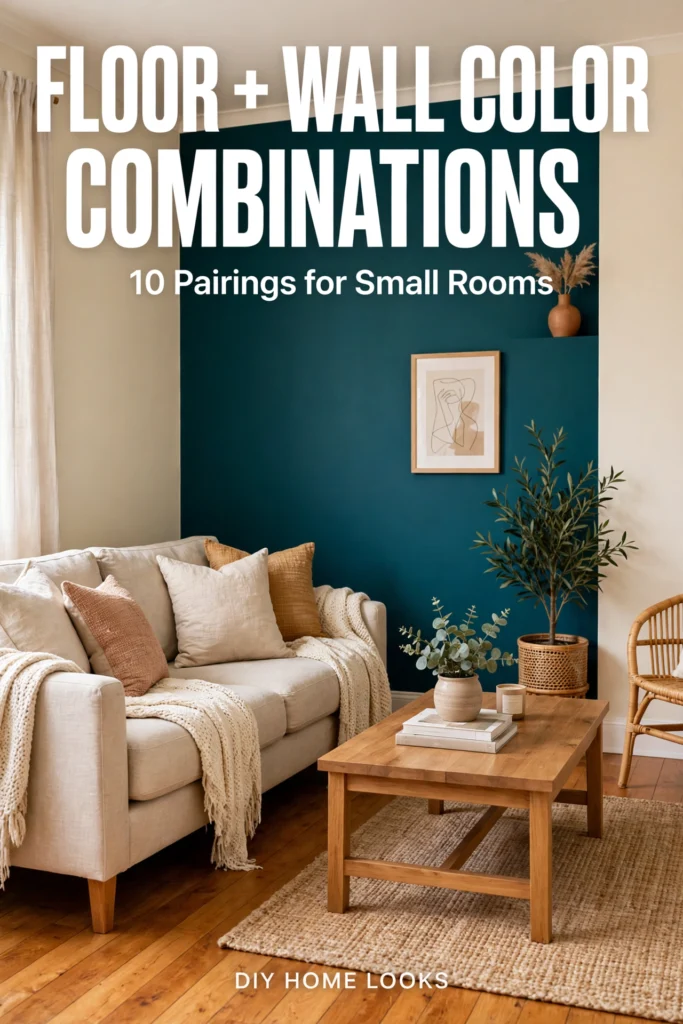
What color walls go with dark wood floors in a small room?
Cool white is the safest choice, because it reflects the most light and balances the dark floor. Warm taupe works when you want a cozier feel, and soft sage works when the wood leans red. Keep the wall paint at an LRV of 65 or higher. Never pair dark walls with dark floors in a small room, because the two dark surfaces close the room in.
What is the best wall color for a small room with light wood floors?
Pale blue, warm ivory, or light sage. All three keep the room bright while adding a little color. Pale blue makes walls seem to recede. Warm ivory adds warmth in rooms with little natural light. Light sage feels calm and works well in bedrooms. Pick the one whose undertone matches your floor, then test a big sample before you buy a gallon.
Do dark wood floors make a room look smaller?
Not on their own. Dark floors add depth, and depth can make a room feel richer. The problem starts when dark floors meet dark walls, because then the room has no light surface to bounce light around. Keep the walls light, add a light rug, and choose furniture in lighter tones. The floor then grounds the room instead of shrinking it.
How do I choose the right white for my walls to match my wood floors?
Start from the floor undertone. Warm floors like cherry, hickory, and honey oak need a creamy or off-white with a warm base. Cool floors like grey-stained oak need a crisp, bright white with a cool base. Paint a big cardboard sample, at least 2 by 3 ft, and check it in morning light and at night. If the white still matches the floor under both lights, buy the gallon.