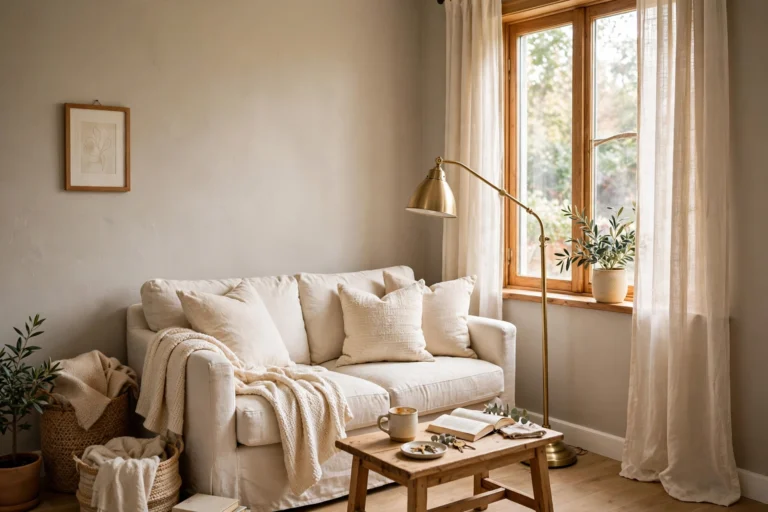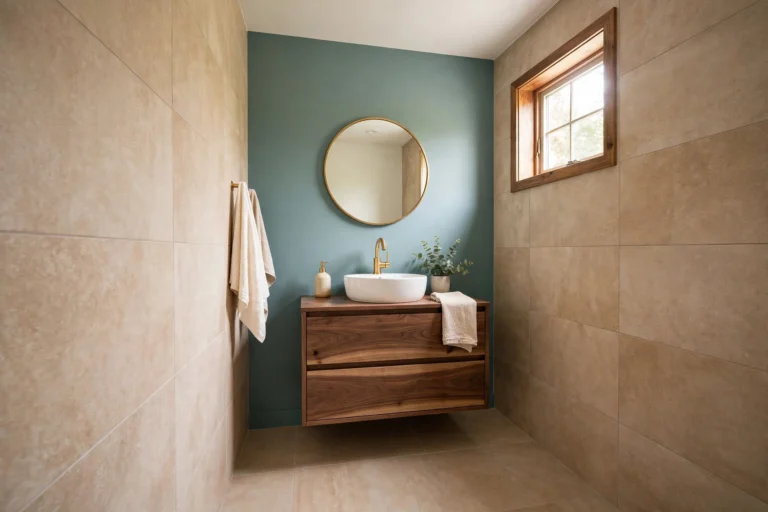
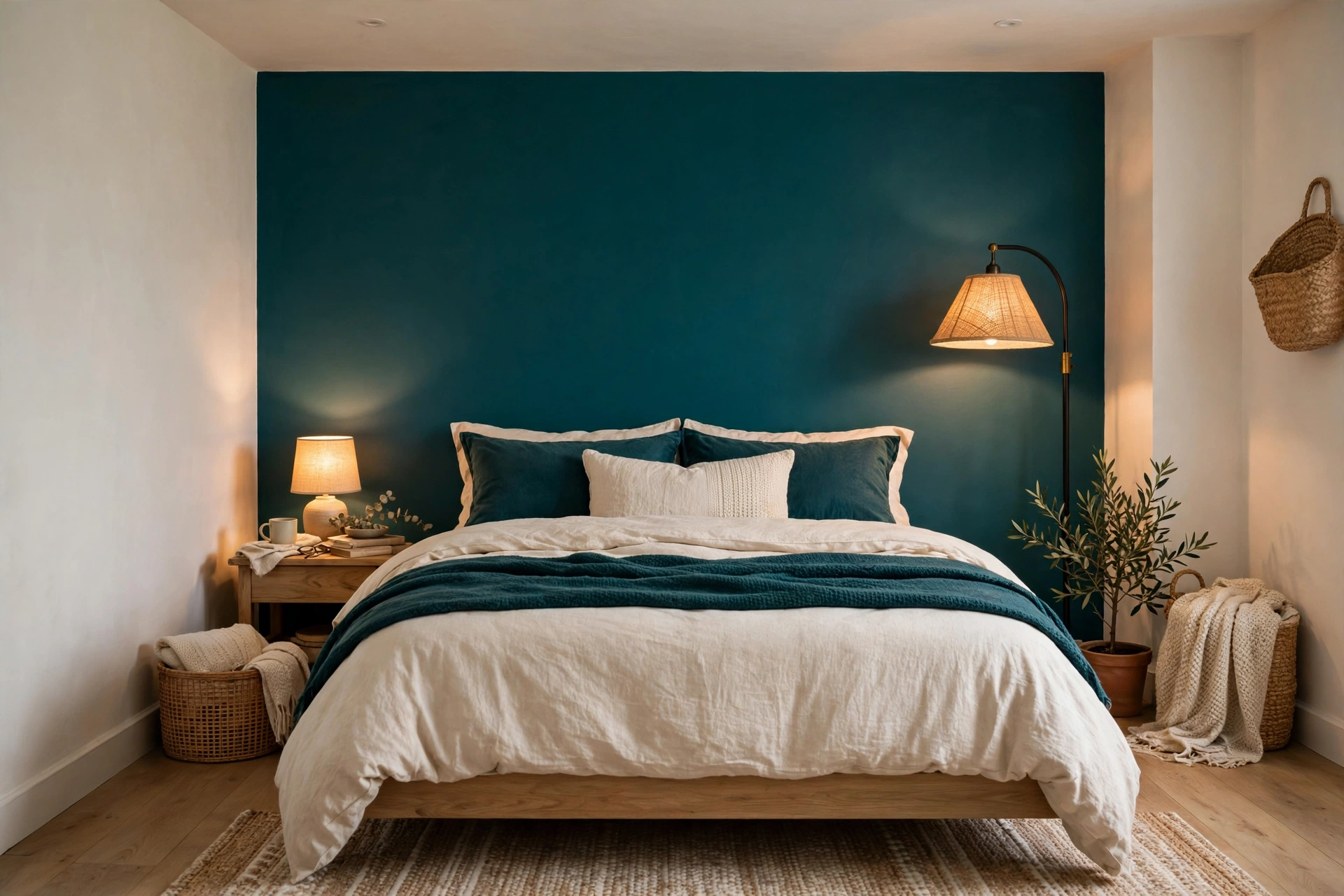
Best Paint Colors for Windowless Rooms: 7 Picks That Beat No Daylight
The best paint colors for windowless rooms are warm whites and pale colors with an LRV of 60 or higher, judged under your own bulbs at night, not under store lights. A windowless room has no daylight to correct a bad color, so the paint and the bulbs have to do the whole job together. This post gives you a verified LRV ladder for 7 picks, from Greek Villa at LRV 84 down to Hale Navy at 8.36, a bulb-temperature table that ties each color to 2700K, 3000K or 4000K, and paint math worked out for a real 10 by 12 ft room. Two gallons cover two coats.
That is the original work here, and it is the part the top-ranking guides do not own. Three of the five best guides for this query are bathroom-only, and none of them gives a bulb-temperature table, a sheen system, a paint-math table, or a dated cost table. This post covers bedrooms, home offices, hallways, and basements in one place, because a windowless bedroom and a windowless basement do not need the same color.
What is the best paint color for a windowless room?
A warm white with an LRV above 80, like Greek Villa or White Dove, is the safest pick for most windowless rooms. It reflects the most artificial light, it stays warm under warm bulbs, and it never fights the furniture. If white feels too plain, step down to a pale greige or a pale blue-green at LRV 60 or higher, and keep the bulbs at 3000K.
The LRV 60 line is the rule this post uses for its pale picks, and it is worth saying plainly what it is. It follows the method Paint Color HQ states for windowless rooms, and it is a recommendation, not a manufacturer rule. No paint maker publishes a minimum LRV for windowless rooms. The line works because a color at LRV 60 reflects about 60 percent of the light that hits it, while a mid-tone at LRV 30 reflects only about 30 percent. In a room with no windows, that gap is the difference between a room that feels lit and one that feels dim, even with the same bulbs.
The 7 best paint colors for windowless rooms
LRV, or Light Reflectance Value, runs from 0 (black) to 100 (pure white). It measures how much light a color reflects. The table below ranks the best paint colors for windowless rooms by verified LRV, highest first. Every number comes from manufacturer-published data. White Dove is 83.16 here, the current Benjamin Moore figure, verified live on the Benjamin Moore color page on 2026-11-21. The older figure of 85.38 that still appears in stale roundups is wrong, so do not use it.
| Rank | Color | Code | LRV | Undertone | Best room |
|---|---|---|---|---|---|
| 1 | Greek Villa | SW 7551 | 84 | Warm white, faint creamy yellow | Bedroom, hallway |
| 2 | White Dove | BM OC-17 | 83.16 | Soft warm white, faint yellow gray | Bedroom, office, hallway |
| 3 | Pale Oak | BM OC-20 | 68.64 | Warm greige, soft taupe | Bedroom, office |
| 4 | Sea Salt | SW 6204 | 63 | Soft green gray, cool sage | Office, bedroom |
| 5 | Agreeable Gray | SW 7029 | 60 | Warm greige, soft beige | Basement, hallway |
| 6 | Rainwashed | SW 6211 | 59 | Pale blue-green, soft gray | Office, bathroom |
| 7 | Hale Navy | BM HC-154 | 8.36 | Deep navy | One accent wall only |
1. Greek Villa SW 7551, LRV 84
Best for: windowless bedrooms and hallways that need the brightest safe white. Main advantage: the highest LRV here, so it bounces the most artificial light, with faint warmth that keeps it from going cold under LEDs. Watch out for: under 4000K cool bulbs it can read flat and gray, so pair it with 2700K or 3000K bulbs. Verdict: the brightest pick, best when the room has only one light source. Deposit-Risk: 1/5.
2. White Dove OC-17, LRV 83.16
Best for: bedrooms, home offices, and hallways, and rooms with mixed wood tones. Main advantage: reads white without going stark, and its soft warmth flatters wood and fabric alike while staying calm at night. Watch out for: it can look slightly creamy next to a bright white ceiling, so keep the ceiling a clean flat white. Verdict: the default pick when unsure. Deposit-Risk: 1/5.
3. Pale Oak OC-20, LRV 68.64
Best for: windowless bedrooms and home offices that need more color than white. Main advantage: reads like an off-white in bright light and a gentle greige in dim light, so the room never feels bare. Watch out for: a faint purple cast can show under cool 4000K bulbs, so use warm bulbs at 2700K to 3000K. Verdict: the best step up from white. Deposit-Risk: 2/5.
4. Sea Salt SW 6204, LRV 63
Best for: windowless home offices and bedrooms, especially on the wall behind a desk or a bed. Main advantage: its soft green calms the room and reads as a real color, not a tinted white, which helps a room with no view feel less plain. Watch out for: under dim light it can read more gray than green, so check it at night under your own bulbs. Verdict: the most underrated move here. A soft sage on one wall beats a whole room of safe white. Deposit-Risk: 2/5.
5. Agreeable Gray SW 7029, LRV 60
Best for: windowless basements and hallways in homes that lean gray. Main advantage: the most forgiving greige for mixed wood tones and gray furniture, and it never fights the room. Watch out for: it can show a faint green edge in low evening light, so test it at night. Verdict: the safe greige when the home leans gray. Deposit-Risk: 2/5.
6. Rainwashed SW 6211, LRV 59
Best for: windowless home offices and bathrooms that want a pale blue-green. Main advantage: a soft watery color that feels fresh under 3000K light, and it reads brighter than its LRV suggests because blue-green catches the eye. Watch out for: at LRV 59 it sits just under the 60 line in this post, so it needs good bulbs and a light ceiling to earn its place. Verdict: the closest call here, worth it when you want real color. Deposit-Risk: 2/5.
7. Hale Navy HC-154, LRV 8.36
Best for: one accent wall only, in a windowless room with layered light. Main advantage: the deepest color here, so it turns one wall into a real feature and makes the room feel intentional instead of forgotten. Watch out for: at LRV 8.36 it absorbs almost all light, so it needs a ceiling light plus two lamps, light bedding or cushions, and a light rug, or the corner goes dead. Verdict: the bold pick, one wall only, never all four. Deposit-Risk: 4/5.
Your bulbs decide the color: 2700K vs 3000K vs 4000K
In a windowless room the bulbs are the sun, so pick them before you pick the paint. Kelvin, written as K, measures how warm or cool a bulb looks. Lower numbers are warmer. The table below ties each temperature to the colors in this post.
| Bulb temperature | Feel | Best with | Avoid with |
|---|---|---|---|
| 2700K warm | Warm, cozy, evening light | Greek Villa, White Dove, Pale Oak, bedrooms | Cool blue-grays, which turn dingy |
| 3000K neutral | Clean, balanced, all-day light | All 7 picks, home offices, hallways | Nothing major, the safest default |
| 4000K cool | Crisp, daylight-like, bright | Sea Salt, Rainwashed, basements used in daytime | Warm whites, which can look gray; bedrooms at night |
If you can only change one thing, change the bulbs first. A pale color under bad bulbs feels worse than a dark color under good ones, and most windowless rooms I have seen fail on light, not on paint. Start with 3000K if you are unsure, since it suits every pick in the ladder. Use 2700K in bedrooms, where warm light helps the room feel restful at night. Save 4000K for a basement or a laundry corner used in the daytime, and keep it out of bedrooms. Layer the light too: one ceiling light plus one lamp is the minimum, and a desk lamp or a bedside lamp is the third layer that makes a dark accent wall work. Judge every sample at night under these bulbs, since a windowless room looks the same at noon and at midnight, and the store lighting will never match your room.
What paint finish works best in a windowless room?
Eggshell on the walls is the default, and the rest of the room follows a simple system. Flat paint absorbs light, which is the last thing a windowless room needs, and it marks fast. Satin reflects a little more light than eggshell, but it shows every flaw on the wall. Eggshell sits in the middle: it bounces a bit more light than flat, it wipes clean, and it forgives small flaws.
| Surface | Finish | Why |
|---|---|---|
| Ceiling | Flat white | Hides flaws overhead, no glare from below |
| Walls, bedroom and office | Eggshell | Bounces a little light, wipes clean, forgiving |
| Walls, hallway | Satin | Scuffs wipe off where people brush past daily |
| Walls, bathroom | Satin or semi-gloss | Moisture protection where steam lingers |
| Trim and doors | Satin or semi-gloss | Hard-wearing, and the slight sheen frames the walls |
| Basement walls | Eggshell or satin | Satin if the basement is damp, eggshell if it is dry |
Keep the ceiling white, and either the same warm white as the walls or one step lighter. A separate bright-white ceiling in a windowless room draws a hard line at the top and makes the room feel shorter. One continuous warm white, walls and ceiling together, reads taller. The one exception is the deliberate dark room in the next sections: there, painting the ceiling the same dark color as the accent wall makes the room feel like a cocoon instead of a box with a dark wall.
Best paint colors by room: bedroom, office, hallway, basement
A windowless bedroom, office, hallway, and basement do not need the same color, because they are used at different times and for different things. Each room below gets one rule.
Bedroom. Pick a warm white or a pale greige, Greek Villa, White Dove, or Pale Oak, with 2700K bulbs. A bedroom is used at night, so warm light matters more than brightness. Keep the wall behind the bed the palest color, since that is the wall you face when you wake up. If the same dark furniture sits in your bedroom too, the undertone rules still apply, and cool grays are the trap to avoid.
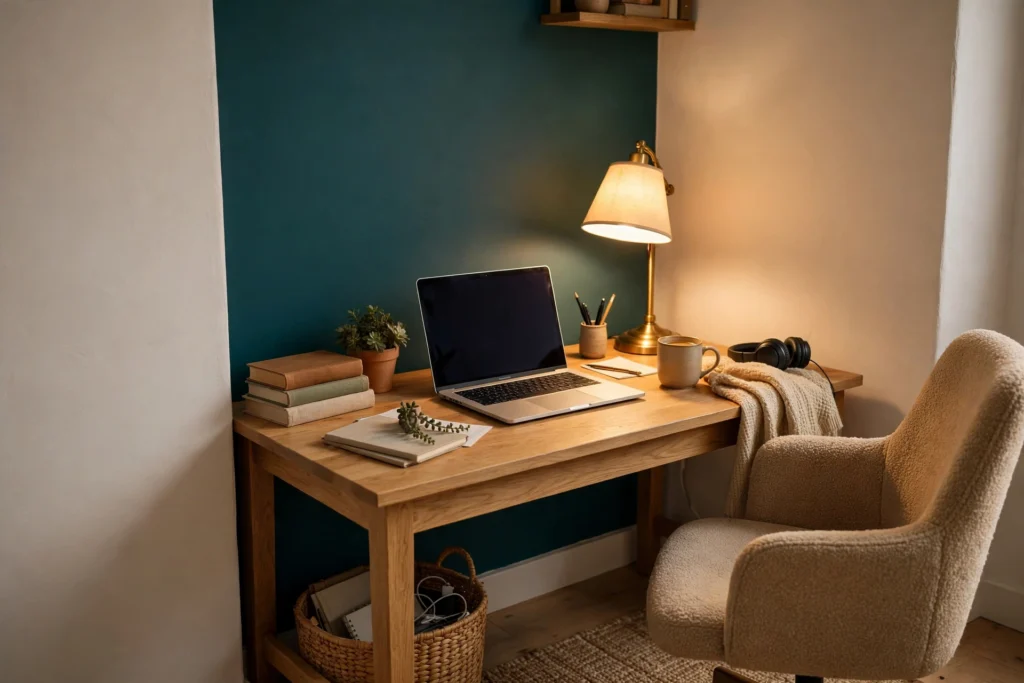
Home office. Pick a pale blue-green or a pale greige, Sea Salt, Rainwashed, or Pale Oak, with 3000K bulbs. Color helps focus here, and a plain white wall behind a video call looks washed out on camera. Our guide to best paint colors for small home offices ranks the same kind of ladder for a workspace you sit in all day, and its video-call background test applies here too: sit where you work, turn the camera on, and check the wall behind you before you commit.
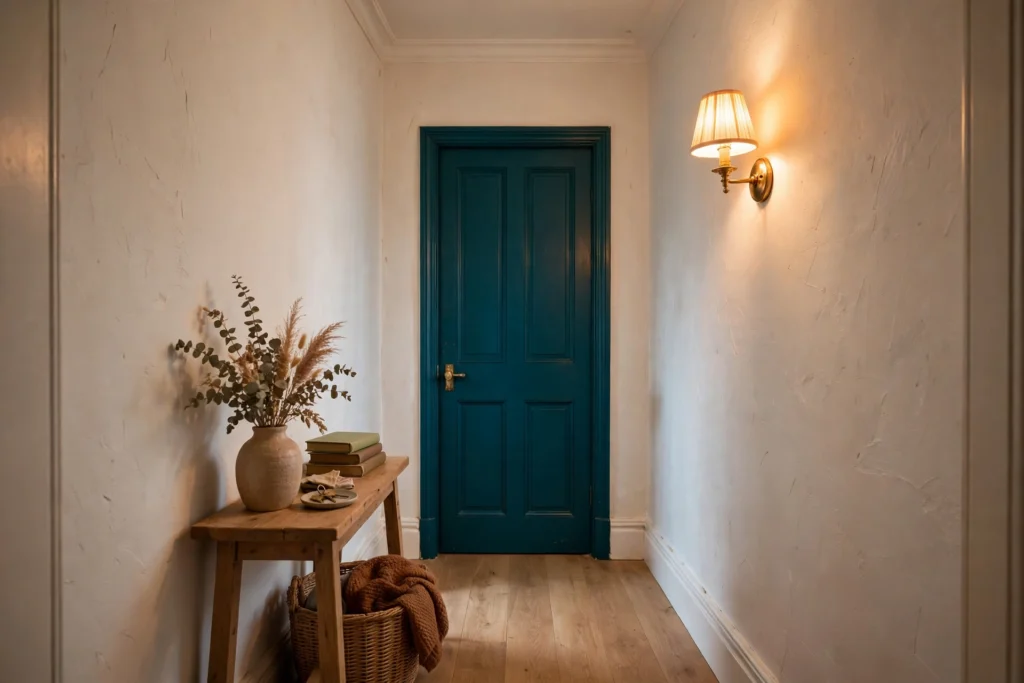
Hallway. Pick the brightest white, Greek Villa or White Dove, in satin, with 3000K bulbs and a mirror opposite the light. A hallway is a passage, not a room you sit in, so brightness and wipeable walls matter more than color. A mirror doubles the light for free, and a light runner rug keeps the floor from dragging the walls down.
Basement. Pick a warm greige, Agreeable Gray or Pale Oak, with 3000K bulbs, and avoid cool gray. Basements already feel cool from the concrete below, so a cool gray doubles the chill. Warm greige fights that. If the basement is used as a bedroom, follow the bedroom rule instead and go warmer. If the room is a bathroom, our guide to best paint colors for small bathrooms covers the windowless bathroom plan in full, including the moisture rules this post does not repeat.
Can you paint a windowless room a dark color?
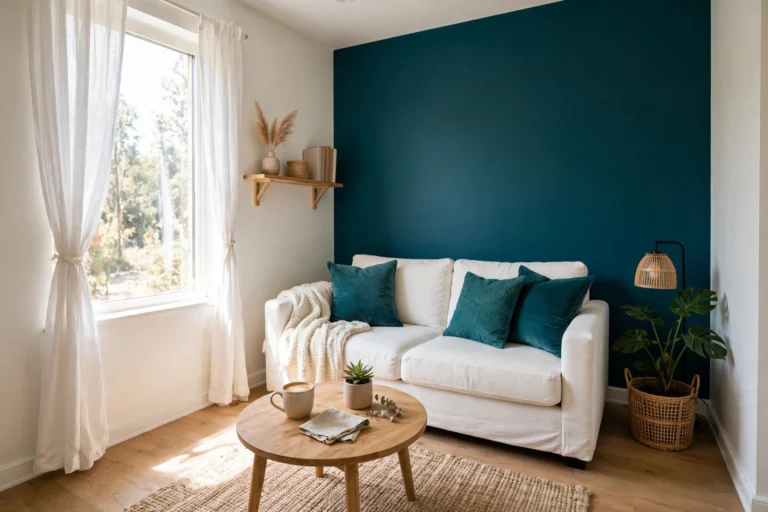
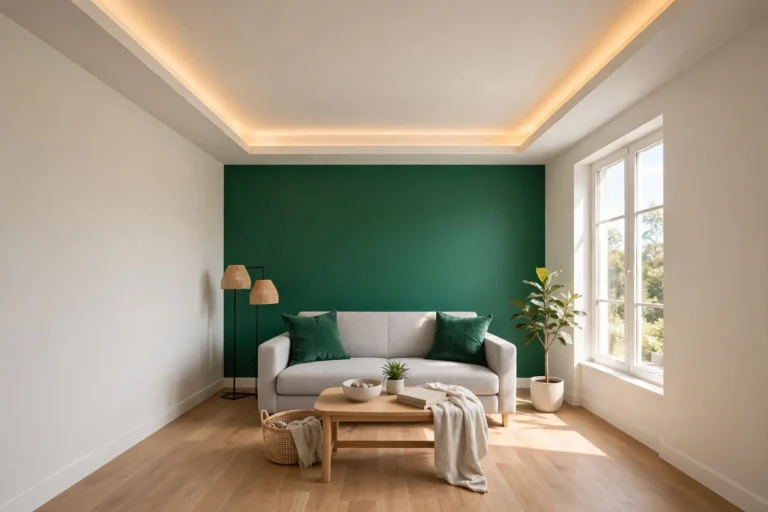
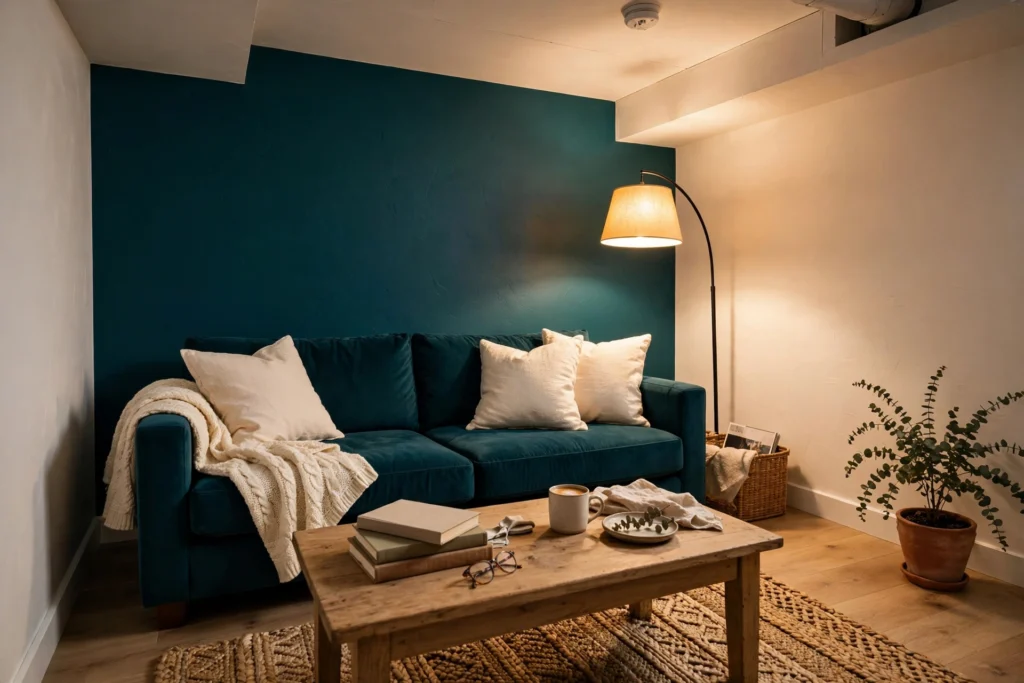
Yes, on one wall, with layered light. This is the counter-take most windowless-room advice gets wrong. The standard line says only pale colors, ever. I think that is overrated advice. A small windowless room painted deliberately dark, with a ceiling light plus two lamps and light bedding or cushions, can feel intentional and cozy, like a den. A pale color under bad bulbs feels worse: flat, gray, and unfinished, like a room nobody chose. The LRV plus lighting rule decides, not the color family.
Hale Navy at LRV 8.36 is the pick for this move, on one wall only, about a quarter of the wall area. The other three walls stay at LRV 60 or higher. In a 10 by 12 ft room the accent wall is 12 ft by 8 ft, which is 96 sq ft (8.9 sq m), about 27 percent of the 352 sq ft (32.7 sq m) of wall area. Paint the ceiling the same navy only if the room is a bedroom you want to feel like a cocoon, and only with three light sources. Keep the rug light, keep the bedding light, and do not put the dark wall behind a TV, since a black screen on a navy wall looks like a floating black box. Cold light direction makes this harder, so if your room also faces north, read our guide to paint colors for north-facing rooms first, since north light is already cool and weak before the bulbs even come on.
How much paint and what it costs
A 10 by 12 ft room (305 by 366 cm) with 8 ft (244 cm) ceilings has a wall perimeter of 2 times 10 plus 12, which is 44 ft (13.4 m). Multiply by the 8 ft ceiling height and the wall area is 352 sq ft (32.7 sq m). Doors take about 15 percent of that, so 352 times 0.85 is 299.2, about 299 sq ft (27.8 sq m) of paintable wall. Two coats means 299 times 2, which is 598 sq ft (55.6 sq m) of painting. One gallon covers about 350 sq ft per coat, so 598 divided by 350 is 1.71 gallons. Buy 2 gallons.
| Room size | Wall area | Paintable wall | Two coats | Gallons to buy |
|---|---|---|---|---|
| 10 by 10 ft (305 by 305 cm) | 320 sq ft (29.7 sq m) | 272 sq ft (25.3 sq m) | 544 sq ft (50.5 sq m) | 2 |
| 10 by 12 ft (305 by 366 cm) | 352 sq ft (32.7 sq m) | 299 sq ft (27.8 sq m) | 598 sq ft (55.6 sq m) | 2 |
| 12 by 12 ft (366 by 366 cm) | 384 sq ft (35.7 sq m) | 326 sq ft (30.3 sq m) | 653 sq ft (60.6 sq m) | 2 |
| 12 by 14 ft (366 by 427 cm) basement | 416 sq ft (38.6 sq m) | 354 sq ft (32.9 sq m) | 707 sq ft (65.7 sq m) | 2 gal + 1 qt |
Cost table, as of November 2026, from live-checked listings, per gallon at list before tax and before the frequent Sherwin-Williams 30 to 40 percent sales. The two sample prices were verified live on the Sherwin-Williams Color Tools page on 2026-11-21.
| Product | Price per gallon, as of November 2026 | Source |
|---|---|---|
| BEHR Premium Plus | $34.98 to $43.98 | Home Depot listings, re-verified 2026-11-21; price varies by sheen |
| Benjamin Moore ben | about $61 | PaintDeck, Benjamin Moore list prices Oct 2026, carried from 2026-11-19 |
| Benjamin Moore Regal Select | $79 to $85 | PaintDeck, Benjamin Moore list prices Oct 2026, carried from 2026-11-19 |
| Sherwin-Williams Cashmere | $78 to $88 | UseCalcPro $78 list; PaintDeck $83 to $88, carried from 2026-11-19 |
| Sherwin-Williams Duration Home | $88 | UseCalcPro $88 list, carried from 2026-11-19 |
| Sherwin-Williams Emerald Interior | $101 to $106 | PaintDeck, Sherwin-Williams list prices Oct 2026, carried from 2026-11-19 |
| Sherwin-Williams Color to Go sample, quart | $9.59 | sherwin-williams.com Color Tools page, re-verified live 2026-11-21 |
| Sherwin-Williams peel-and-stick sample | $3.95 | sherwin-williams.com Color Tools page, verified live 2026-11-20 |
| Example job, 10 by 12 ft room, 2 gallons + 2 samples | Total |
|---|---|
| BEHR Premium Plus, 2 gal + 2 samples | $89.14 to $107.14 |
| Benjamin Moore ben, 2 gal + 2 samples | $141.18 |
| Benjamin Moore Regal Select, 2 gal + 2 samples | $177.18 to $189.18 |
| Sherwin-Williams Cashmere, 2 gal + 2 samples | $175.18 to $195.18 |
| Sherwin-Williams Duration Home, 2 gal + 2 samples | $195.18 |
| Sherwin-Williams Emerald, 2 gal + 2 samples | $221.18 to $231.18 |
Two samples cost 2 times $9.59 = $19.18. Check the sums: 69.96 + 19.18 = 89.14; 87.96 + 19.18 = 107.14; 122 + 19.18 = 141.18; 158 + 19.18 = 177.18; 170 + 19.18 = 189.18; 156 + 19.18 = 175.18; 176 + 19.18 = 195.18; 202 + 19.18 = 221.18; 212 + 19.18 = 231.18. The real cost is your time: about 6 to 8 hours of work across one day, including moving the furniture, drying time between coats, and putting the room back.
How to test and paint a windowless room in 7 steps
Test at night, under your own bulbs, because a windowless room looks the same at noon and at midnight, and the store lighting will never match your room. Seven steps, one weekend, and the paint almost picks itself.
Materials: 2 samples (Color to Go quart or peel-and-stick), painter’s tape, 2 in angled brush, small roller, drop cloth, warm bulbs at 2700K to 3000K if your current bulbs are cool, primer if you are covering a dark wall.
Steps:
- Buy two samples in your top two colors from the ladder above, one light and one with more color, so the test compares real options.
- Swap the bulbs first to 3000K, or 2700K for a bedroom, so the test judges the paint under the light it will actually live in.
- Paint large swatches on two walls, at eye level where you actually look, one on the wall you face most and one on the wall opposite it.
- Live with the swatches for two evenings under your own bulbs, and check them again with only the lamps on.
- Check each swatch against the bedding, the desk, the floor, and the door, not against the chip, since the chip never shows the real neighbors.
- Pick a base color with an LRV of 60 or higher for the main walls, matched to the bulb table, and decide the accent wall separately if one goes dark.
- Prep the walls, wash, tape, prime dark walls, then paint the ceiling first and the walls in two coats, letting the first coat dry fully before the second.
Renters: what to check before you paint
Check your lease before you open a can. Most leases allow painting only with written permission, and some require you to repaint to the original color before you move out. Get the permission in writing, keep the receipt and leftover paint for the move-out repaint, and photograph the walls before you start. The Deposit-Risk ratings above matter here: the whites score 1 out of 5, the greiges and sage score 2, and Hale Navy scores 4, because a dark wall takes more coats to cover at move-out. If your lease is strict, stay with the whites and bring color in with bedding, a rug, and art you own. Peel-and-stick samples are the renter-safe test. Never paint over wallpaper, and never paint the landlord’s built-ins or trim without written permission. If painting is off the table entirely, removable color and better lighting still change the room, and our renter lighting ideas cover the no-paint route.
Mistakes to avoid
Picking the color in the store. Store lighting is bright and cool, and your windowless room is neither. A chip that looks fine under store lights can turn gray or green on your wall by 9 pm. Test it at night, under your own bulbs.
Cool gray in a windowless room. This is the most overrated move in the windowless-room paint world. Cool gray plus artificial light reads dingy and flat, like a room that was never finished. Warm greige is the answer.
Stark pure white as the fix. A pure white above LRV 90 with no warm undertone goes clinical under LEDs, and it makes wood look harsh and cold, not light. Warm whites above LRV 80 are the fix. Stark white is the problem wearing a disguise.
A dark color on all four walls without layered light. It can work in a big room with tall ceilings. In a 10 by 12 ft windowless room with one ceiling light, it just makes a box. Keep dark colors to one wall, with three light sources, or skip the dark entirely.
Skipping the bulb swap. New paint under old cool bulbs is money spent on half the job. The bulbs cost a few dollars and change the color more than the next shade up the chip.
Flat paint on the walls. Flat absorbs the little light there is, and it marks fast in a hallway or a bedroom. Eggshell bounces a little light back and wipes clean.
Painting over dirty walls. Windowless rooms still carry dust and hand grease near doors and light switches. Paint over it and the paint peels in a year. Wash first, always.
What to skip
Color drenching the whole room, ceiling included, in a pale color. It looks great in photos of large rooms. In a small windowless room it flattens everything into one tone, and the room loses its shape. Keep the ceiling white.
Gloss walls to bounce light. Gloss shows every flaw, and a small windowless room has plenty at eye level. Eggshell bounces enough light without the glare.
A bold accent wall on the side wall or behind the door. The accent wall belongs on the wall you face when you walk in, or behind the bed or desk. Anywhere else, the furniture hides it half the day.
Painting the ceiling dark to match a dark accent wall, unless the room is a bedroom cocoon. In an office or a hallway a dark ceiling drops the room on your head. Keep the ceiling white there.
The cheapest paint to save $20. The walls in a windowless room get touched daily, and you look at them under lamps every evening. A washable eggshell line costs more and lasts years longer. The saving is false.
Sources
- Benjamin Moore color pages (benjaminmoore.com): published LRVs for White Dove OC-17 (83.16), Pale Oak OC-20 (68.64), and Hale Navy HC-154 (8.36), verified live 2026-11-21. The White Dove page is at https://www.benjaminmoore.com/en-us/paint-colors/color/oc-17
- Sherwin-Williams published LRVs for Greek Villa SW 7551 (84), Sea Salt SW 6204 (63), Agreeable Gray SW 7029 (60), and Rainwashed SW 6211 (59), verified against Sherwin-Williams published specifications and the site’s own verified ladder in posts #207, #208, and #231.
- Sherwin-Williams Color Tools page (sherwin-williams.com): Color to Go sample $9.59 and peel-and-stick sample $3.95, re-verified live 2026-11-21. https://www.sherwin-williams.com/homeowners/find-and-explore-colors/color-tools
- Paint Color HQ, “Small Bathroom Paint Colors by Natural Light”: LRV 60 or higher recommendation for windowless rooms, and the deliberate-dark option with layered-lighting warning.
- Home Depot BEHR Premium Plus listings: $34.98 to $43.98 per gallon, re-verified 2026-11-21; price varies by sheen.
- Prices carried from posts #207, #208, and #231 (verified 2026-11-18 to 2026-11-20): Benjamin Moore ben about $61, Regal Select $79 to $85, Sherwin-Williams Cashmere $78 to $88, Duration Home $88, Emerald $101 to $106.
How this was made: I researched the top-ranking windowless-room paint guides, verified every LRV against manufacturer-published data, live-checked the paint and sample prices on the dates noted, and computed the paint quantities from the room dimensions shown. No real room was painted for this post, and no before and after photos exist.
By Wasim

What is the best paint color for a room with no windows?
A warm white with an LRV above 80, like Greek Villa or White Dove, is the safest pick. It reflects the most artificial light and stays warm under warm bulbs. If white feels too plain, step down to a pale greige or a pale blue-green at LRV 60 or higher, and keep the bulbs at 3000K.
What LRV should paint have in a windowless room?
Aim for an LRV of 60 or higher for the main walls. That line follows the method Paint Color HQ states for windowless rooms, and it is a recommendation, not a manufacturer rule. Of the best paint colors for windowless rooms, Greek Villa at LRV 84 and White Dove at 83.16 reflect the most light, while Agreeable Gray at LRV 60 is the lowest pale pick in this post. One accent wall can go dark, but only with layered light.
Can you paint a windowless room a dark color?
Yes, on one wall, with layered light. Hale Navy at LRV 8.36 works on a single accent wall when the room has a ceiling light plus two lamps, light bedding or cushions, and a light rug, and the other three walls stay at LRV 60 or higher. Never paint all four walls dark in a small windowless room with only one light source.
What color makes a windowless room look bigger?
A warm white with a high LRV makes a windowless room look biggest, because it reflects the most artificial light while staying warm. Greek Villa at LRV 84 and White Dove at 83.16 are the top two picks here. Pair them with 3000K bulbs, a light rug, and a mirror opposite the light, and keep the ceiling flat white.