Best Paint Colors for Small Bedrooms: 7 Shades That Make a Tiny Room Feel Bigger
The best paint colors for small bedrooms are warm whites, pale blue-greens, light greiges, and one dark cocoon shade used on a single wall, with the best paint colors for small bedrooms with dark furniture ranked separately for dark beds and dressers. I built this list from a verified LRV ladder, Alabaster at 82 up to Greek Villa at 84 and Iron Ore down at 6, and I worked out the paint math for a typical 10 by 12 ft bedroom: about 312 sq ft per coat, two coats, two gallons. Costs run about $211 to $267 for paint, primer, and samples, as of November 2026.
A small bedroom asks more of its paint than any other room. It has to bounce light around, calm you down at night, and still feel like a real room instead of a white box. The seven colors below do that job. Each one comes with a best-for line, a main advantage, a warning, and a verdict, so you can pick fast and stop second guessing the chip.
What Are the Best Paint Colors for Small Bedrooms?
Start with light reflectance value, or LRV. It runs from 0 (black) to 100 (white) and tells you how much light a color bounces back. In a small bedroom, LRV is the fastest way to sort a good pick from a dud. High LRV colors, 70 and up, open the room. Mid LRV colors, 55 to 70, add soft color without closing it in. Low LRV colors, under 10, swallow light, which is exactly why they work as one cocoon wall and fail as a four-wall job.
Here is the ladder I used for this post. Every number comes from the paint brands themselves or from our own Sherwin-Williams profiles on this site.
| Color | Brand and code | LRV | What it does in a small bedroom |
|---|---|---|---|
| Greek Villa | Sherwin-Williams SW 7551 | 84 | Brightest warm white here, reads clean in any light |
| White Dove | Benjamin Moore OC-17 | 83.16 | Soft warm white, a touch creamier than Greek Villa |
| Alabaster | Sherwin-Williams SW 7008 | 82 | Warm, lived-in white, never stark |
| Classic Gray | Benjamin Moore OC-23 | 73.67 | Barely-there warm gray, acts like an off-white |
| Sea Salt | Sherwin-Williams SW 6204 | 63 | Pale blue-green, calm and airy |
| Agreeable Gray | Sherwin-Williams SW 7029 | 60 | Light greige, warm enough for north light |
| Iron Ore | Sherwin-Williams SW 7069 | 6 | Deep charcoal, cocoon wall only |
One honest note on the numbers. Older roundups quote White Dove at 85.38 and Classic Gray at 74.78. Benjamin Moore’s own color pages currently list White Dove at 83.16 and Classic Gray at 73.67, so I used the brand’s current figures. The ranking does not change, and neither does the advice.
1. Warm White: Alabaster SW 7008
Best for: Any small bedroom, any light direction, and renters who need a safe pick.
Main advantage: At LRV 82, Alabaster bounces plenty of light without the cold, clinical feel of a brilliant white. It has a soft warm base that makes bedding, wood, and skin tones look better.
Watch out for: In a south-facing room with strong sun, it can read slightly creamy by midday. Test a sample on the wall that gets the most sun.
Verdict: The default pick. If you cannot decide, start here. Our full deep dive on Alabaster SW 7008 covers undertones, trim pairings, and what it looks like next to pure white. Benjamin Moore White Dove OC-17, LRV 83.16, is the closest rival, a touch softer and a touch cooler.
2. Pale Blue-Green: Sea Salt SW 6204
Best for: Bedrooms where sleep matters most, and rooms that feel stuffy or warm.
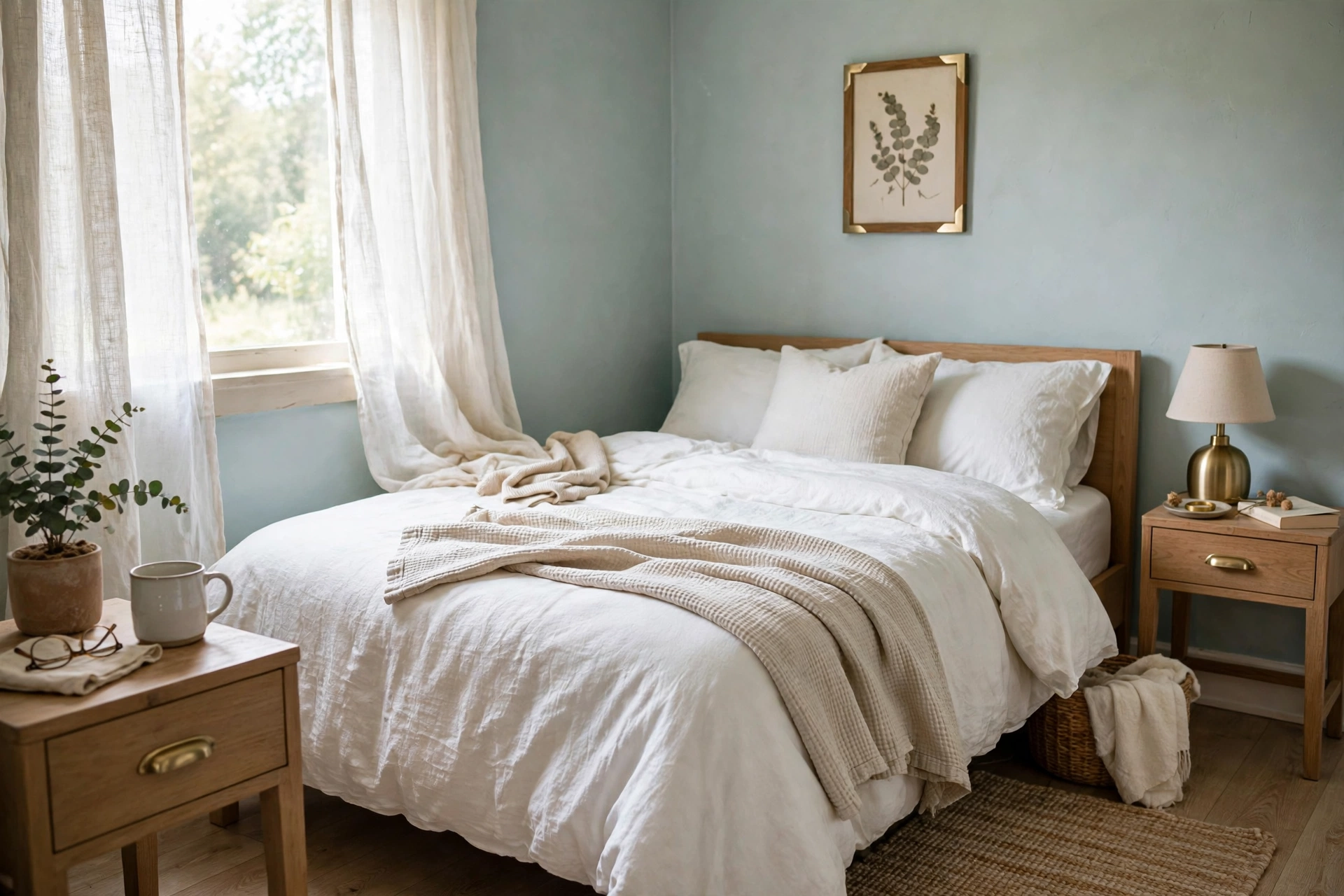
Main advantage: Sea Salt, LRV 63, is the calmest color on this list. Blue-green reads cool and restful, and it makes white bedding look crisp. It is the best paint color for small bedrooms that double as a place to unwind, not just sleep.
Watch out for: In a north-facing room it can turn chilly by evening. Pair it with warm wood and warm bulbs, or save it for south and west rooms.
Verdict: Pick this if your bedroom feels tense. It is gentle, it photographs well, and it never shouts.
3. Light Greige: Agreeable Gray SW 7029
Best for: Bedrooms with mixed furniture, gray bedding, or beige carpet you cannot change.
Main advantage: Agreeable Gray, LRV 60, sits right between gray and beige, so it ties clashing pieces together. It is warm enough for a north-facing room and light enough to keep a small space open.
Watch out for: In very dim rooms it can read a little flat, almost muddy, by lamplight. Keep the bedding light and add one warm accent.
Verdict: The peacemaker color. If your room has three different wood tones and a gray rug, this is the one that makes them get along.
4. Pale Sage Green
Best for: Small bedrooms with plants, natural wood, or a calm, outdoorsy mood.
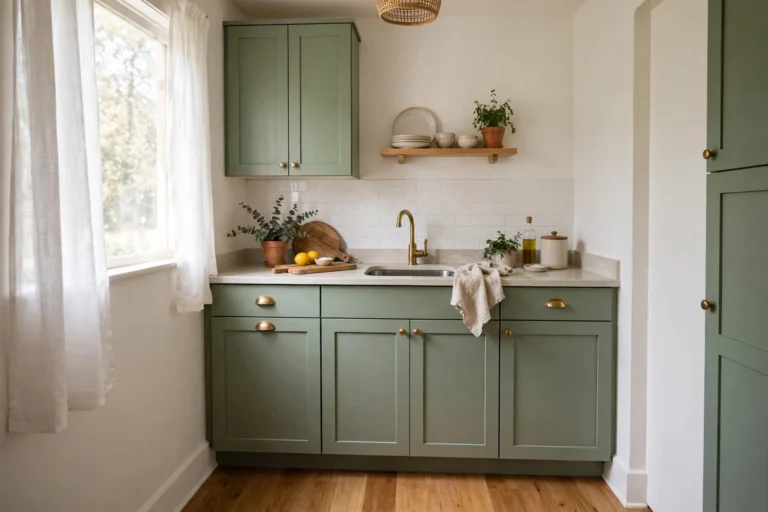
Main advantage: Pale sage brings the outside in without painting the room green. It is soft, it suits light oak and linen, and it reads fresh in the morning light. Try a pale sage such as Sherwin-Williams Clary Sage (SW 6178) and check the chip in your own light before you commit.
Watch out for: Sage shifts a lot with the light. A chip that looks soft in the store can look minty on a north wall. Sample it on two walls, not one.
Verdict: Underrated. It is the quietest way to add real color, and it suits a bedroom better than it suits a living room.
5. Misty Blue-Gray
Best for: Small bedrooms that get strong afternoon sun, and cool-toned bedding.
Main advantage: Misty blue-gray cools a hot room down. It pairs beautifully with white trim and brushed nickel, and it keeps a west-facing bedroom from feeling like a greenhouse at 5 pm.
Watch out for: It can feel cold in winter, especially with gray bedding. Warm it up with a brass lamp, a wood headboard, or cream pillows.
Verdict: A strong pick for sunny rooms. Skip it if your room is already cold and dark.
6. Soft Blush
Best for: Bedrooms that need warmth without yellow, and rooms with white or light furniture.
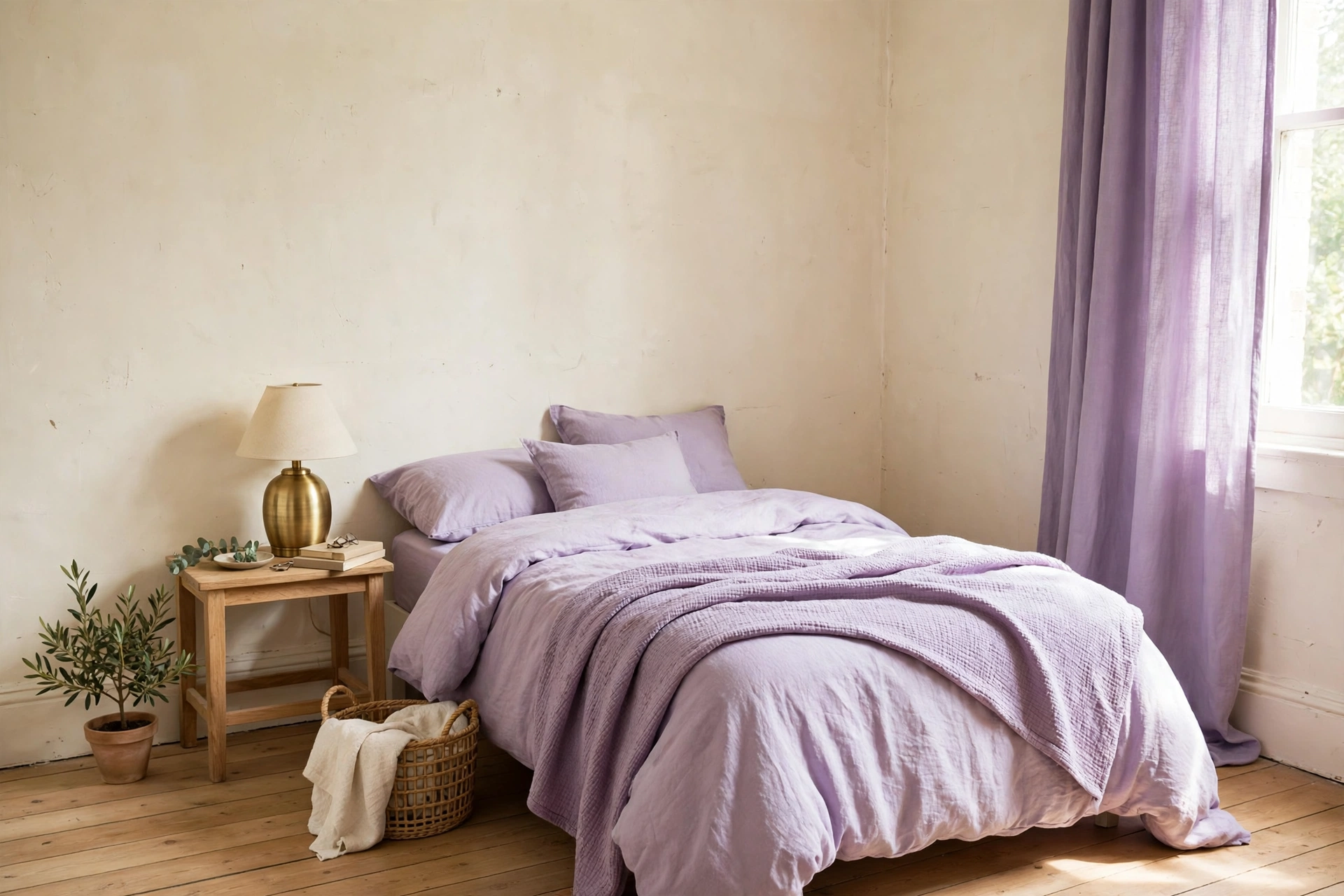
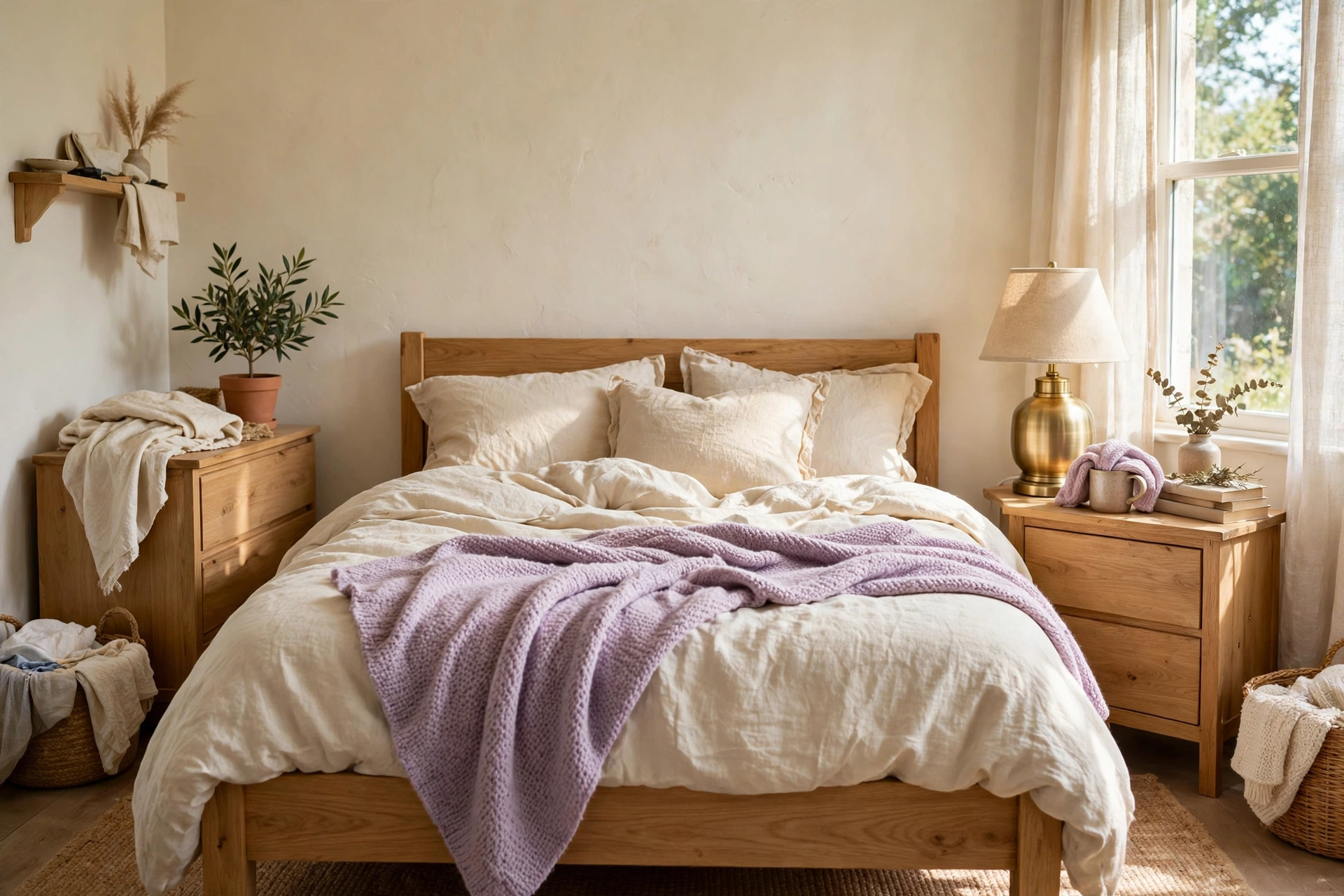
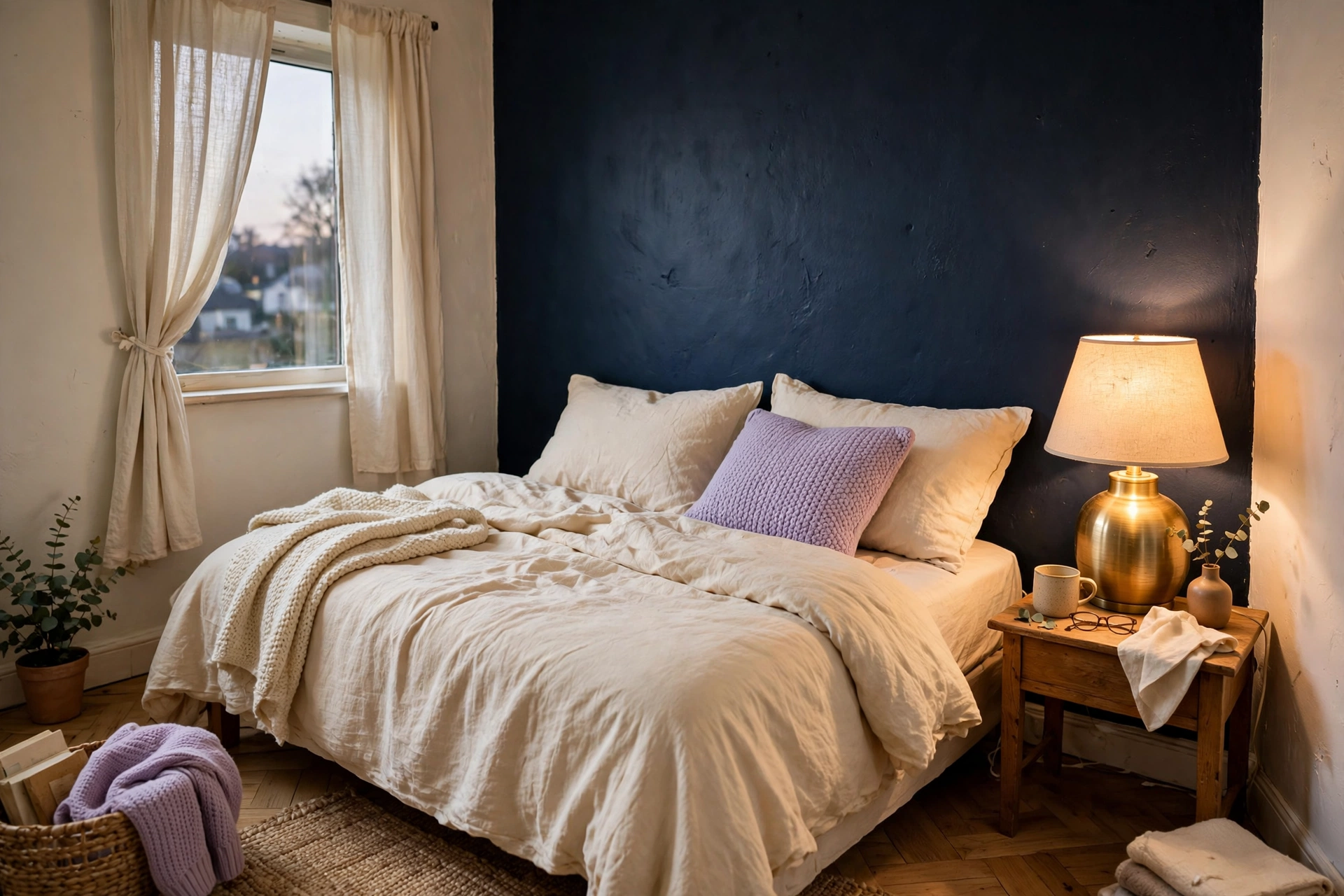
Main advantage: Soft blush is warm, gentle, and surprisingly grown up when it is pale. It glows under warm bulbs at night, which is when a bedroom matters most. It also pairs well with the lilac and brass accents in the room style we used for this post.
Watch out for: Go too pink and the room turns sweet in a way that is hard to live with. Keep it pale, almost a tinted white, and test it at night.
Verdict: The brave-but-safe color. Lovely in a small bedroom, risky only if you pick a shade darker than the chip suggests.
7. Dark Cocoon: Iron Ore SW 7069 (One Wall, or a Full Drench)
Best for: Sleepers who want a dark, cozy room, and small bedrooms with good lamps.
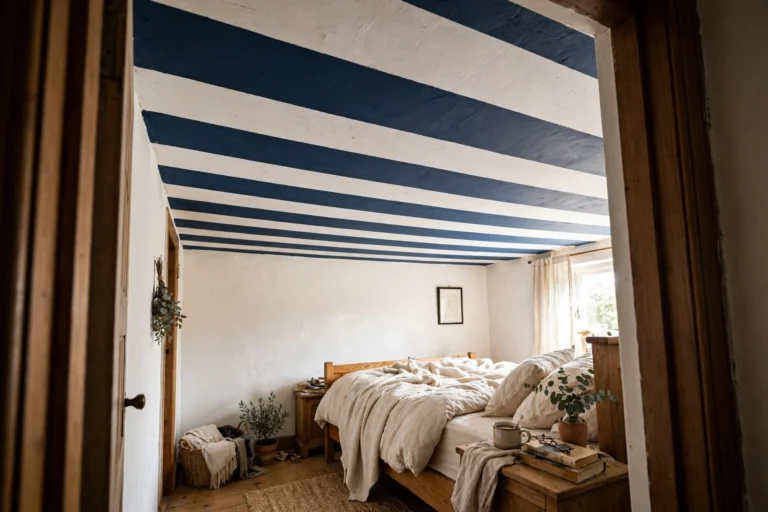
Main advantage: Iron Ore, LRV 6, absorbs light and wraps the room. One dark wall behind the bed makes the bed the focus and the room feel deeper, not smaller. Done as a full color drench, walls, trim, and ceiling in the same soft dark tone, it turns a tiny bedroom into a cocoon. The same idea works in a deep navy, and our guide to paint colors for small living rooms shows how the dark-wall trick plays in a bigger shared space.
Watch out for: Dark paint shows every roller mark and every patch. Prep matters more here than with any light color. And never paint all four walls dark in a room with one small window and weak lamps.
Verdict: The most underrated move in this post. One dark wall is low risk and high reward. If you love it, drench the whole room next time.
Best Paint Finish for a Small Bedroom
Color is half the job. Finish decides how the color looks at night and how it holds up. The best paint colors for small bedrooms still need the right finish, and the right finish depends on which way your windows face.
| Light direction | Best finish | Why it works |
|---|---|---|
| North-facing, cool and dim | Eggshell | Soft glow, hides small wall flaws, warms the light |
| South-facing, bright sun | Eggshell or matte | Tames glare, no shiny hot spots on the wall |
| West-facing, strong afternoon sun | Eggshell | Handles glare and still wipes clean |
| East-facing, bright mornings | Eggshell or satin | Satin suits rooms that get touched a lot |
| Low light, small window | Eggshell | Flat can look chalky, gloss shows every bump |
Eggshell is the safe pick for most small bedrooms. It has a soft sheen, it hides small flaws, and you can wipe a mark off without repainting. Use satin only if the room gets heavy use, like a kids’ bedroom. Save flat for the ceiling. Skip gloss on bedroom walls unless the walls are perfectly smooth, because gloss shows every bump. If your room faces north, read our note on why north-facing rooms need warmer whites before you buy.
How Much Paint and Money Does a Small Bedroom Take?
Here is the math for a typical 10 by 12 ft bedroom (3.05 by 3.66 m) with an 8 ft (2.44 m) ceiling. The walls run 44 linear ft (13.4 m) around the room. Multiply by the 8 ft ceiling and you get 352 sq ft (32.7 sq m) of wall. Take off about 40 sq ft (3.7 sq m) for the door and window, and one coat covers about 312 sq ft (29 sq m). Two coats come to about 624 sq ft (58 sq m). At 350 to 400 sq ft per gallon, that is 2 gallons. Buy two, not one, and keep the leftover for touch-ups.
| What you need | Cost, as of November 2026 |
|---|---|
| 2 gallons Sherwin-Williams Emerald | $202.98 to $212.98 |
| 2 gallons Sherwin-Williams Duration | $191.98 to $201.98 |
| 2 gallons Sherwin-Williams Cashmere | $166.98 to $176.98 |
| 1 gallon primer | About $30 to $40 |
| Color to Go sample quart | $9.59 |
| Peel-and-stick sample | $3.95 |
All up, paint, primer, and samples run about $211 to $267, depending on the paint line. That is before brushes, rollers, and tape, so add those if you do not own them already. Time-wise, plan a weekend: about 2 hours of prep and sample checks on day one, then 4 to 6 hours of painting across two coats on day two, with drying time between coats.
How to Paint a Small Bedroom in a Weekend
What you need: 2 gallons of paint, 1 gallon of primer, a 9-inch roller and covers, an angled brush, painter’s tape, drop cloths, a paint tray, an extension pole, spackle and a putty knife, sandpaper, and your samples.
- Test samples on the wall first. Stick a peel-and-stick sample or brush on a Color to Go quart, then live with it for 48 hours and check it in morning light, evening light, and lamplight.
- Clear the room. Move furniture to the center, take pictures and art off the walls, and cover the floor and the bed.
- Clean the walls, fill nail holes with spackle, and sand smooth once dry.
- Tape the trim, the ceiling line, and the outlets, and lay drop cloths along the baseboards.
- Cut in the edges with the angled brush, then roll the walls in a W pattern for even coverage.
- Let the first coat dry fully, usually 2 to 4 hours, then roll the second coat the same way.
- Pull the tape off while the last coat is still slightly wet, touch up any thin spots, and put the room back together.
Renting? Read This First
Check your lease before you open a can. Most leases allow painting only with written permission, and most landlords expect the walls back to the original color when you leave. Ask in writing, keep the reply, and note the exact original color code if your landlord shares it. Samples are the safe first step: a peel-and-stick sample leaves no mark at all, so its deposit risk is 1 out of 5. A light repaint with written permission, repainted back before you move out, is about 2 out of 5. A dark cocoon wall or a full color drench without a repaint plan is 4 out of 5, because dark paint takes an extra coat of primer to cover. If you do paint, keep the leftover paint and the color code so the move-out repaint is easy.
Mistakes to Avoid
- Skipping the sample step. A chip is the size of a stamp. Your wall is not.
- Testing a color in store light only. Check it in your room, at night, under your own bulbs.
- Painting everything stark brilliant white. It looks clean for a week, then cold and flat. Warm whites do the same job with far more life.
- Painting one thin coat and calling it done. Two coats are what make the color true.
- Painting over dirty walls. Dust and grease stop paint sticking, and the finish peels within months.
- Ignoring undertones. A gray with a blue undertone turns icy in a north room. A white with a yellow undertone turns creamy in a south room.
- Forgetting the ceiling. A bright white ceiling above a dark cocoon wall breaks the mood. Paint it the same tone or one step lighter.
What to Skip
- An accent wall in every room. One dark wall in the bedroom is enough. The trick loses its power when every room has one.
- Glossy finishes on bumpy walls. The shine finds every dent.
- The trend color of the month, bought without a sample. Trends fade, repainting does not.
- The most expensive paint line for a rental you will repaint in a year. Mid-range paint covers fine for a bedroom.
- Painting the radiator or the trim the same dark color unless you are drenching the whole room on purpose.
Sources
LRV figures come from the paint brands’ own published color pages: Sherwin-Williams lists Alabaster SW 7008 at LRV 82, Greek Villa SW 7551 at 84, Sea Salt SW 6204 at 63, Agreeable Gray SW 7029 at 60, and Iron Ore SW 7069 at 6, and Benjamin Moore lists White Dove OC-17 at 83.16 and Classic Gray OC-23 at 73.67. Sample prices come from Sherwin-Williams’ color tools page, Color to Go at $9.59 and peel-and-stick samples at $3.95. Paint prices per gallon are Sherwin-Williams list prices for Emerald, Duration, and Cashmere, as of November 2026. The room math is a straight calculation from a 10 by 12 ft bedroom with an 8 ft ceiling, not a measured test.

Frequently Asked Questions
What color makes a small bedroom look bigger?
A warm white makes a small bedroom look bigger. Among the best paint colors for small bedrooms, warm whites like Alabaster at LRV 82 and Greek Villa at LRV 84 bounce the most light back into the room. Pale blue-greens and light greiges work too, as long as the LRV stays above 60.
What is the best white paint for a small bedroom?
Alabaster SW 7008 is the best white paint for a small bedroom if you want warmth, and Benjamin Moore White Dove OC-17 is the closest rival at LRV 83.16. Both are soft, warm whites that never read stark. Skip brilliant white, which looks cold and flat in a small room.
Can you paint a small bedroom a dark color?
Yes, you can paint a small bedroom a dark color, but use it on one wall or as a full color drench, not as a random dark patch. A dark wall behind the bed, in Iron Ore or deep navy, makes the room feel deeper and helps sleep. Keep the lamps warm and bright so the room never feels like a cave.
What paint finish is best for a small bedroom?
Eggshell is the best paint finish for a small bedroom. It has a soft sheen that hides small wall flaws, bounces a little light, and wipes clean. Use satin only in a heavily used room, flat on the ceiling, and skip gloss on bedroom walls unless they are perfectly smooth.
How this was made: I researched the top-ranking pages for this keyword, pulled LRV and price figures from the paint brands’ own pages, and computed the room math from a standard 10 by 12 ft bedroom.