DIY Headboard Ideas for Small Bedrooms: 7 Builds That Fit the Wall, Not the Room
A headboard is the cheapest focal point a small bedroom can get, and it is also the easiest one to get wrong. Buy the wrong size and it swallows the wall. Buy a store one and you pay $300 to $800 for something that also eats floor space. These diy headboard ideas for small bedrooms fix both problems at once: every build below fits the wall, not the room, and the most useful one costs about $8 if you already have paint. The numbers in this post are worked out, not guessed: a width and height table for every bed size, a cost table with store prices checked in November 2026, and a renter path that tells you which builds need zero holes in the wall.
How to size diy headboard ideas for small bedrooms to your bed
Measure from the top of the mattress, not the floor. That is the mistake almost every first build makes, because a thick mattress hides a surprising amount of board. A 14-inch mattress plus a 3-inch topper eats 17 inches of any headboard you hang, so a board that looked tall in the store reads as a stub behind the bed.
Width is simple. Match the mattress exactly, or go 2 to 6 inches wider on each side for a custom look. Never go narrower than the bed, or the bed looks like it is floating in front of a panel that does not belong to it.
| Bed size | Mattress width | Headboard width | Visible height above mattress |
|---|---|---|---|
| Twin | 38 in (97 cm) | 38 to 46 in (97 to 117 cm) | 14 to 28 in (36 to 71 cm) |
| Full | 54 in (137 cm) | 54 to 62 in (137 to 157 cm) | 14 to 28 in (36 to 71 cm) |
| Queen | 60 in (152 cm) | 60 to 68 in (152 to 173 cm) | 24 to 30 in (61 to 76 cm) |
| King | 76 in (193 cm) | 76 to 84 in (193 to 213 cm) | 24 to 30 in (61 to 76 cm) |
Height is where taste and use meet. Standard headboards show 14 to 28 inches above the mattress, and that range suits most small rooms. If you read in bed, go taller: 24 to 30 inches above the mattress puts the board at shoulder height when you sit up, and it should clear your stacked pillows by at least 12 to 18 inches or the pillows will hide it completely. Under an 8-foot ceiling, keep the total height under one third of the wall, or the board starts to shrink the room instead of dressing it.
What does a diy headboard cost in November 2026?
Store-bought headboards run $300 to $800, and most DIY builds land between $8 and $150. The table below uses store prices checked in November 2026 for the big items, and DIY-blog reported ranges where a price came from a build write-up rather than a store listing. All seven diy headboard ideas for small bedrooms below sit inside that $8 to $150 band.
| Build | Typical cost | What the price covers |
|---|---|---|
| Painted arch | $8 to $30 | Painter’s tape $7.79 (checked Nov 2026); $0 paint if you have a leftover can, up to about $30 with a fresh quart |
| Fabric wall panel | $20 to $30 | Bargain fabric plus a thin board (blog-reported) |
| Plywood cutout | $15 to $20 | One cut sheet (blog-reported); a 4×8 BCX sheet is $28 at Home Depot (checked Nov 2026) |
| Wood slat panel | $25 to $40 | Slat lumber (blog-reported) |
| Upholstered panel | $60 to $150 | Foam $29.94 + plywood $28.00 + staple gun $25.99 = $83.93 before fabric (all checked Nov 2026) |
| Peel-and-stick panels | $40 to $120 | Panel packs (blog-reported) |
The upholstered panel is the flagship build in this post, and its math checks out against the range above: $83.93 of checked store prices plus $20 to $30 of fabric lands at $104 to $114, squarely inside the $60 to $150 band that DIY blogs report. The cheapest honest route is the painted arch at $7.79 of tape if the paint is already in your closet. Prices are as of November 2026.
7 diy headboard ideas for small bedrooms that fit the wall
1. Painted arch
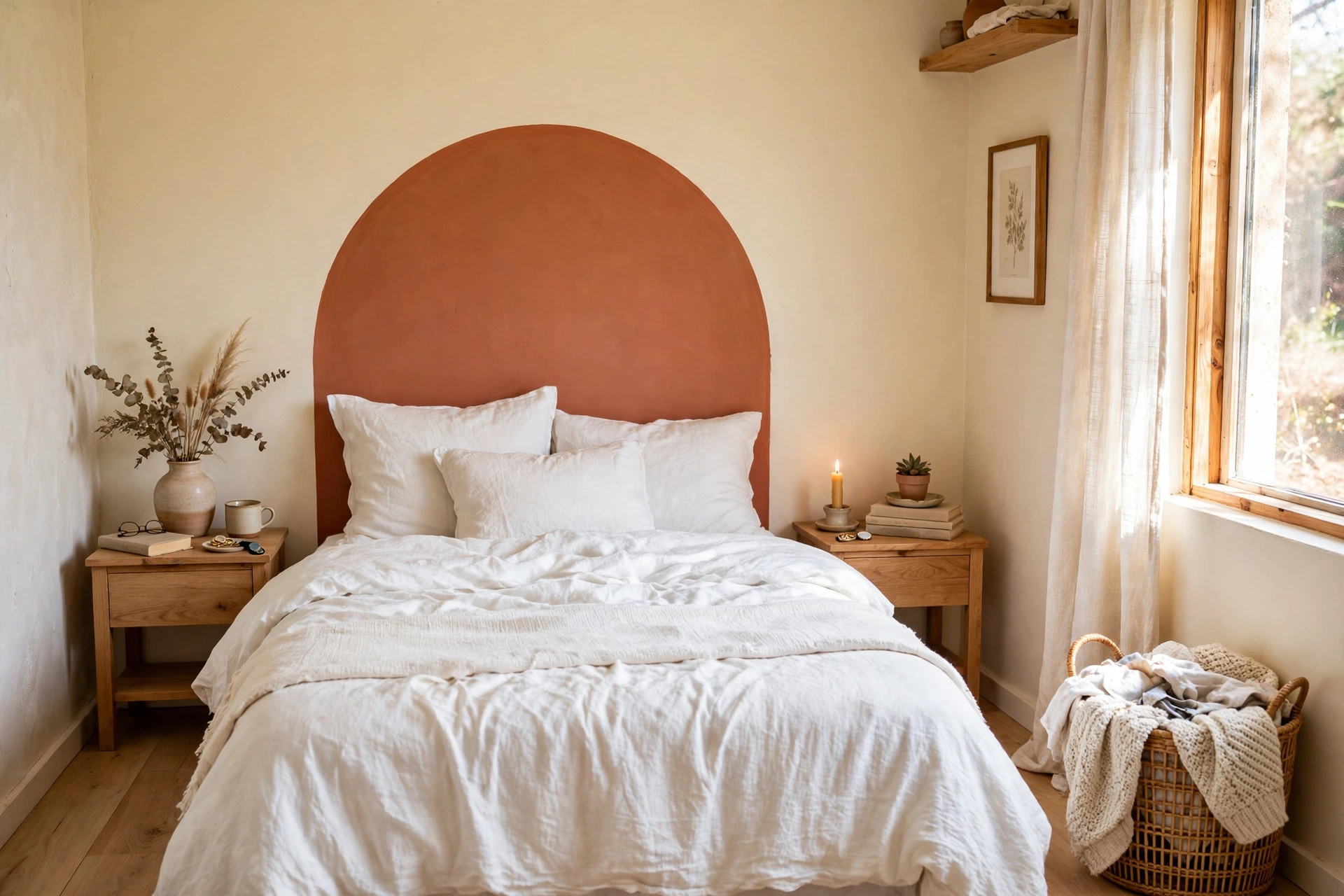
Paint a rounded arch, or a rectangle with soft corners, straight onto the wall behind the bed. It takes up zero floor space, zero depth, and about two hours. Use a level, a pencil, a piece of string, and painter’s tape to draw the shape, then fill it with a color a shade or two deeper than the wall.
Best for: renters and the smallest bedrooms. Main advantage: the cheapest focal point on this list, and the only one with no object to move later. Watch out for: a wobbly arch looks worse than no arch, so draw it twice before you paint once. Verdict: start here if you are unsure. It costs almost nothing and you can paint over it in an afternoon. Deposit risk: 1 out of 5, repaint before you move out and the wall is back to normal.
2. Upholstered panel
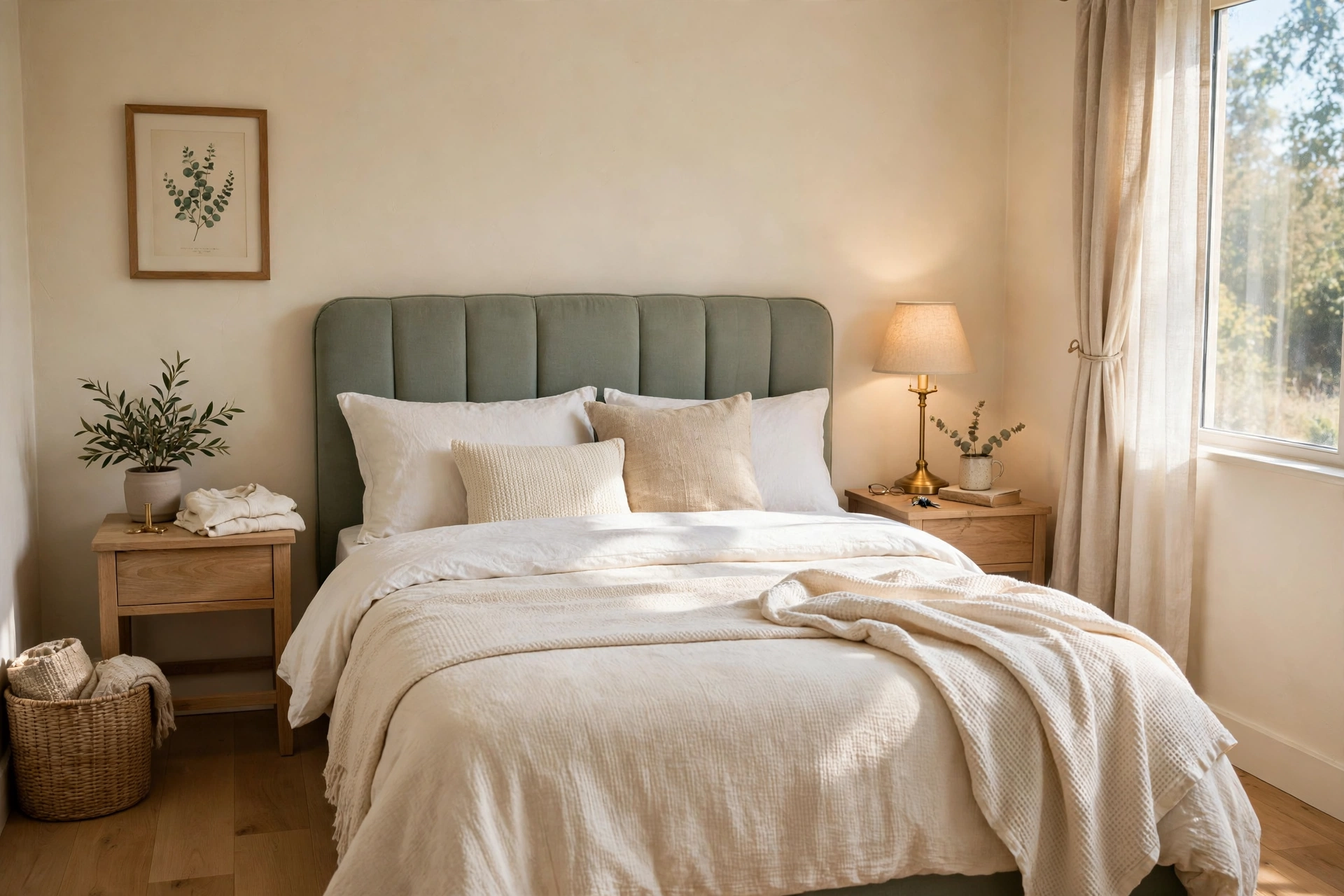
This is the build to choose if you read in bed. A plywood panel, 2 inches of high-density foam, a layer of batting, and fabric pulled tight and stapled at the back gives you a soft backrest that looks store-bought. It takes 3 to 4 hours for a beginner and it is the most comfortable board on this list.
Materials: 3/4-inch plywood cut to your headboard width, 2-inch high-density upholstery foam, batting, fabric (about 2 yards for a queen), a staple gun, and a French cleat or D-rings for hanging.
How to build it, step by step:
- Cut the plywood to size, or have the store cut it. Sand the edges smooth.
- Cut the foam to the same size and lay it on the plywood.
- Lay batting over the foam, wrapping it around the back by 2 inches on every side.
- Lay the fabric face down, center the panel on it, and pull the fabric tight over the top edge. Staple the center top first.
- Work outward from the center on each side, pulling the fabric taut and stapling every 2 to 3 inches. Fold the corners like wrapping a present.
- Trim the extra fabric and batting at the back, then cover the back with a dust cloth if you want a clean finish.
- Hang it on the wall with a French cleat screwed into studs, not drywall anchors alone. A queen panel with foam weighs enough to pull anchors out over time.
Best for: readers and anyone who wants the softest result. Main advantage: real comfort plus a high-end look for about $104 to $114 all in. Watch out for: cheap low-density foam goes flat within months, so buy high-density foam and check the density rating, not just the thickness. Verdict: the best build on this list if you have one weekend afternoon. Deposit risk: 2 out of 5, two cleat screws to fill when you leave.
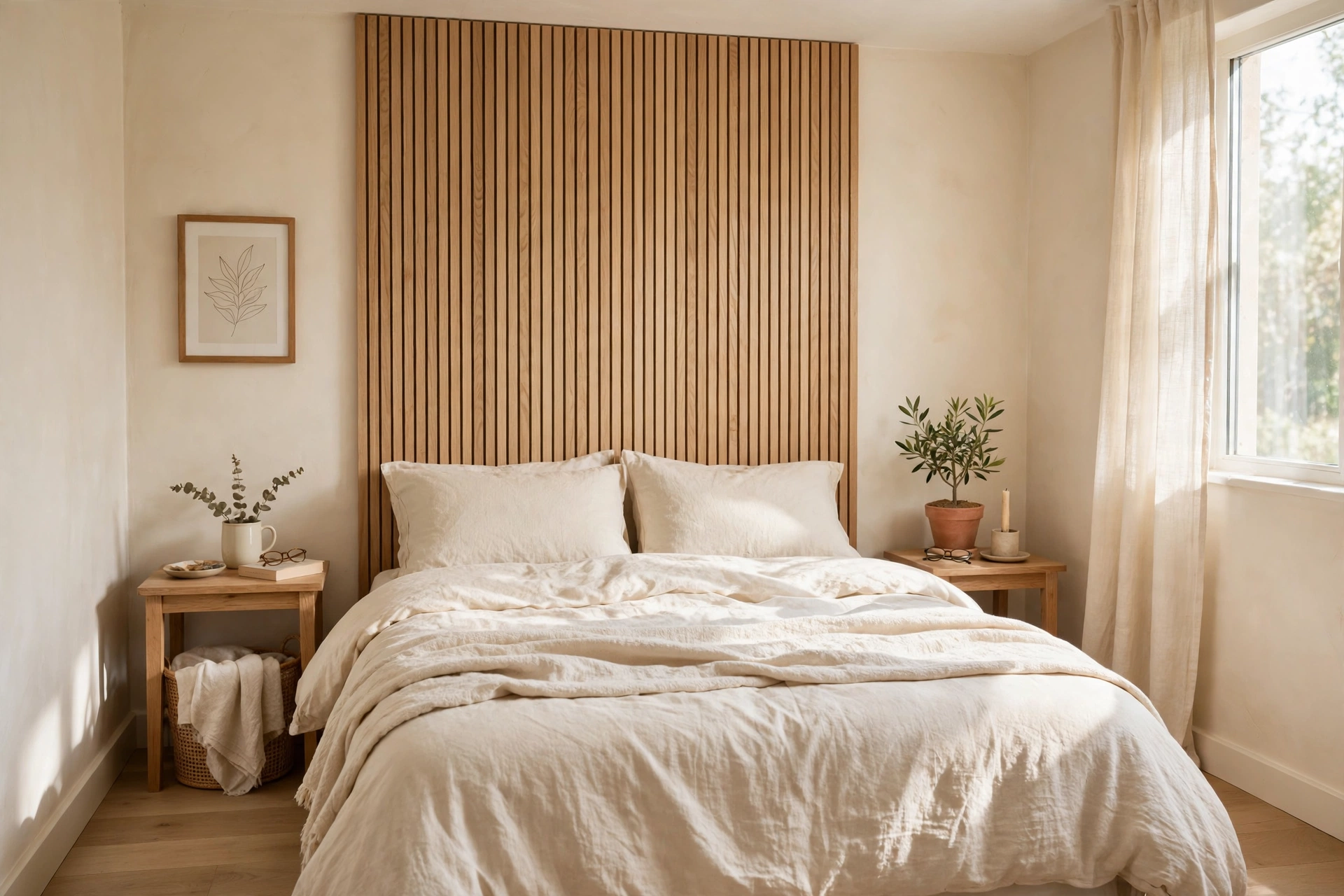
3. Wood slat panel
Vertical wood slats screwed to two horizontal battens give a warm, modern panel that never looks heavy, because the gaps let the wall show through. Use 1×2 or 1×3 boards, space them about half an inch apart, and stain or paint them to match the room. If you want the whole wall to carry the look, a board-and-batten accent wall behind the bed does the same job at a bigger scale.
Best for: warm modern and Scandinavian rooms. Main advantage: the gaps keep a small room feeling open while the wood adds texture. Watch out for: uneven spacing is obvious from across the room, so use a spacer block, one scrap cut to the gap width, and check it every few slats. Verdict: the best-looking wood build for the money. Deposit risk: 2 out of 5, the battens screw into studs and the holes fill easily.
4. Cane panel
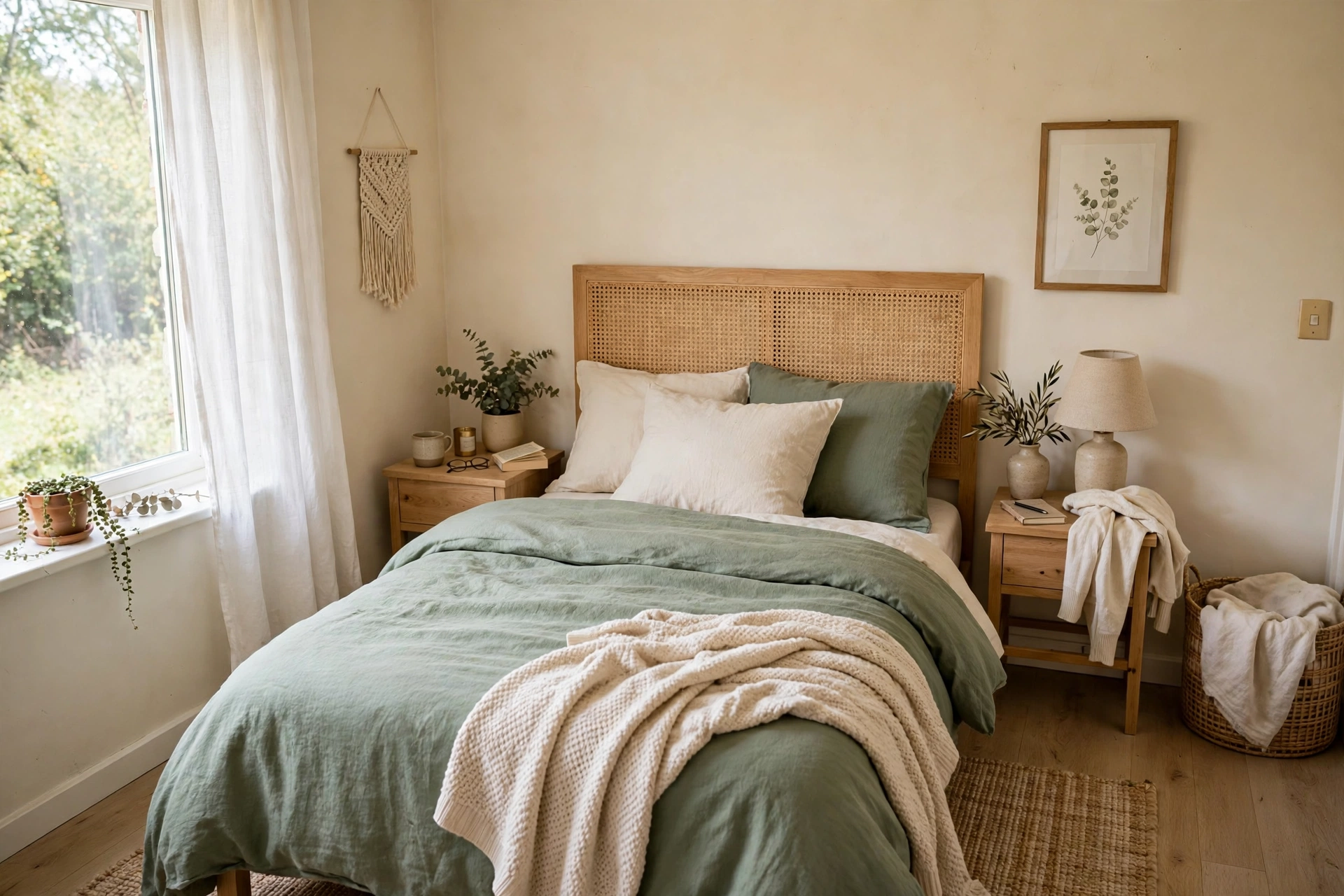
A cane webbing panel in a simple wood frame adds texture without visual weight, which is exactly what a small bedroom needs. Build a rectangular frame from 1×2 boards, staple the cane webbing into a rabbet or behind the frame, and hang it like a picture. It reads light and airy in a way solid wood never does.
Best for: boho and coastal rooms, and anyone who wants texture without bulk. Main advantage: the open weave keeps the wall feeling light. Watch out for: cane webbing tears if you pull it drum-tight while stapling, so keep it snug, not stretched, and soak it first if the maker says so. Verdict: the prettiest panel here, and the easiest to move between rentals. Deposit risk: 2 out of 5, two picture hooks or a cleat.
5. Peel-and-stick panels
Wood-look, fabric, or acoustic peel-and-stick panels stick straight to the wall in a grid or an arch shape, no tools at all. They work best behind platform beds and in rooms where a thick panel would steal space you do not have. Peel-and-stick wallpaper from a renter-friendly range can do the same job as a full-wall panel behind the bed, and it comes off clean if you pick a range made for rentals.
Best for: renters who want zero tools and zero holes. Main advantage: one hour, no drilling, no dust. Watch out for: quality varies a lot, so read removal reviews before you commit and test one panel behind the bed first, where a mark would hide. Verdict: the fastest route to a finished wall. Deposit risk: 1 out of 5, if the panels remove cleanly, which is why the test patch matters.
6. Pegboard headboard
A pegboard panel behind the bed turns the headboard into storage: hooks for bags and hats, small shelves for books, a planter or two. Buy a standard 4×8 sheet of hardboard pegboard, have the store cut it to your headboard width, paint it, and mount it on wood strips that leave an air gap for the hooks.
Best for: tiny bedrooms where every surface has to work. Main advantage: it replaces a nightstand. Watch out for: a fully loaded pegboard looks cluttered fast, so leave one section empty on purpose. If the pegboard feels too busy, a slim floating shelf above the headboard holds the same book and lamp with a cleaner line. Verdict: the most useful build here, and the only one that gives you storage. Deposit risk: 2 out of 5, the mounting strips screw into studs.
7. Freestanding leaning headboard
A solid panel that leans against the wall behind the bed needs no screws at all, just one anti-tip fixing at the top so it cannot fall forward. Build it like the upholstered panel or the slat panel, then set it on the floor and lean it back at a slight angle. It works with platform beds, divans, and even a mattress on the floor.
Best for: renters whose lease bans wall fixings entirely. Main advantage: zero holes, and it moves with you in one piece. Watch out for: a leaning panel without the anti-tip fixing is a safety risk, especially with kids or pets, so fit the one fixing even if your lease is strict. A tension rod and a length of fabric can frame the bed the same way, and hanging curtains without drilling uses the same no-hole logic. Verdict: the most renter-proof solid headboard you can build. Deposit risk: 1 out of 5, one small fixing to fill.
Which diy headboard idea is best for renters?
Pick by how long you will live there, not by what looks best in a photo. That one rule sorts all seven diy headboard ideas for small bedrooms into the right order for your lease. If you move within a year, take the painted arch or the peel-and-stick panels: both reverse in an afternoon. If you will stay two years or more, the upholstered panel or the wood slat panel is worth the two screw holes, because you get the comfort and the look every night for years.
Before you drill anything, check your lease first. Most leases allow small picture-hook holes but ban large anchors and anything that damages plaster. Ask your landlord in writing if the lease is unclear, keep the reply, and photograph the wall before you start so you can prove the condition it was in. That one photo has saved more deposits than any filler tub ever will. When you move out, fill every hole, sand it flat, and touch up the paint. A filled hole nobody can find is not a deduction.
Mistakes to avoid
Measuring from the floor. Measure from the top of the mattress, or your headboard will hide behind your pillows. This is the single most common error in every headboard guide, and it is the easiest to avoid.
Going narrower than the bed. A headboard even 2 inches narrower than the mattress looks like a mistake. Match the width or go wider, never narrower.
Mounting a heavy panel on drywall anchors alone. A queen upholstered panel is heavy. Screw the cleat into studs. Anchors hold pictures, not furniture above your head.
Using pallet wood without checking the stamp. Only reuse pallets stamped HT, for heat treated. Never use pallets stamped MB, for methyl bromide. The stamp is the difference between free lumber and a chemical treatment you do not want in a bedroom.
Skipping the test patch. Peel-and-stick panels and paint both deserve a test in a hidden spot. A panel that will not come off cleanly is a deposit problem you discover on moving day, which is the worst possible time.
What to skip
Oversized tufted panels in a room under 100 square feet. Deep tufting plus a thick frame eats 4 to 5 inches of depth and a lot of visual space. A flat upholstered panel gives you the same comfort in half the depth.
Mirror tile headboards behind the bed. They look bright in photos and they throw light around at night, which is the opposite of what a bedroom is for. They also show every fingerprint and every speck of dust.
A headboard taller than one third of the wall. Drama is fine in a big room. In a small one, a floor-to-ceiling panel makes the ceiling feel lower and the bed feel smaller.
Buying a store headboard to “save time” on a small room. The $300 to $800 price buys you a fixed size that was not designed for your wall. The $104 upholstered build fits your exact bed and your exact wall, and it costs a third of the cheapest store option.
Sources
Headboard sizes and heights follow the size charts published by Casper and the height guides from mattress retailers, and plywood prices follow the 2026 price guides from woodworking blogs that track Home Depot listings. Foam and staple gun prices are Amazon and Target listings checked in November 2026. For the full size chart, see Casper’s headboard dimensions guide. For current plywood prices by grade, see Woodworking Advisor’s 2026 price guide.
How this was made: the sizes, heights, and prices in this post were checked against live search results and store listings in November 2026, and the build costs were added up from those checked prices, not from a workshop test.
How tall should a headboard be?
Standard headboards show 14 to 28 inches above the mattress, and 24 to 30 inches is the sweet spot if you sit up and read in bed. Measure from the top of the mattress, not the floor, and leave at least 12 to 18 inches of board showing above your stacked pillows.
How wide should a headboard be?
Match the mattress width exactly, or extend it 2 to 6 inches past each side for a more finished look. A queen mattress is 60 inches wide, so a queen headboard runs 60 to 68 inches. Never go narrower than the bed.
Can I make a headboard without drilling?
Yes. A painted arch needs no drilling at all, peel-and-stick panels stick straight to the wall, and a freestanding panel leans against the wall with a single anti-tip fixing. All three reverse cleanly when you move out.
How much does a DIY headboard cost?
A painted arch costs about $8 if you already have paint, a fabric panel runs $20 to $30, and a full upholstered panel costs $104 to $114 with store prices checked in November 2026. Store-bought headboards run $300 to $800 for the same job.