Book Storage Ideas for Small Apartments: 10 Ways to Fit a Library in One Room
The best book storage ideas for small apartments start with a tape measure, not a shopping cart. Count your books, divide by 20 to 25 paperbacks per metre of shelf, and you will know exactly how many metres of shelf you need before you buy anything. A 20 cm deep shelf fits most paperbacks and hardbacks, so a slim bookcase gives back floor space a standard 30 cm case wastes. The ten ideas below cover slim cases, shelves that hold real weight, hidden spots, and renter-safe picks with no drilling. Every price is live-checked as of November 2026.
What are the best book storage ideas for small apartments? Start with a count
Pull every book off its pile and count it. Sort by height as you go: paperbacks in one stack, hardbacks in another, oversized art and cookbooks in a third. This count is the whole plan. A metre of shelf holds 20 to 25 paperbacks, and a metre of hardbacks weighs 20 to 30 kg (44 to 66 lb). Divide your paperback count by 22 and your hardback count by 15, and you have the metres of shelf to buy. No guessing, no second trip.
Use this shelf math before you shop. It comes from two small-space guides that agree on every number.
| Measurement | Number that works |
|---|---|
| Paperbacks per metre of shelf | 20 to 25 |
| Weight per metre of hardbacks | 20 to 30 kg (44 to 66 lb) |
| Shelf depth that fits most books | 20 cm (8 in) |
| Spacing between shelves, paperbacks | 25 cm (10 in) |
| Spacing between shelves, hardbacks | 30 to 35 cm (12 to 14 in) |
| Clearance above the tallest book | 2 to 3 cm (about 1 in) |
| Longest safe unsupported shelf run | About 90 cm (35 in) |
| How full to fill a shelf | About two thirds, leave a third empty |
A shelf longer than about 90 cm will bow in the middle under a full row of books. Books are heavier than they look, and a bowed shelf is the first sign the fixings are losing. Keep the count honest too. If a book has not been opened in two years, it goes into storage or out of the house, and that rule alone can cut a collection by a third.
What depth of bookcase actually fits a small apartment?
Standard bookcases run 30 to 40 cm deep. Most books need only 20 cm. That extra 10 to 20 cm is floor space you walk through every day, so the slim case is the single best buy in this whole post. It is also the most underrated one. A 20 cm deep case holds the same books as a 30 cm one and gives back a strip of floor you can actually feel.
1. A slim bookcase, 18 to 22 cm deep. Slide it into the gap beside a wardrobe, behind a door, or along a hallway wall where a normal case would block the path. Look for adjustable shelves so paperback rows sit at 25 cm and hardback rows at 30 to 35 cm. The Halle narrow bookshelf is only 8 inches deep and still needs wall anchors on every install, which tells you how seriously even slim cases take tipping.
Best for: renters and anyone with one spare strip of wall.
Main advantage: zero floor lost, holds a full row per shelf.
Watch out for: tall slim cases tip, so anchor the top to the wall or keep the heaviest books on the bottom shelf.
Verdict: buy this first, before any other book furniture.
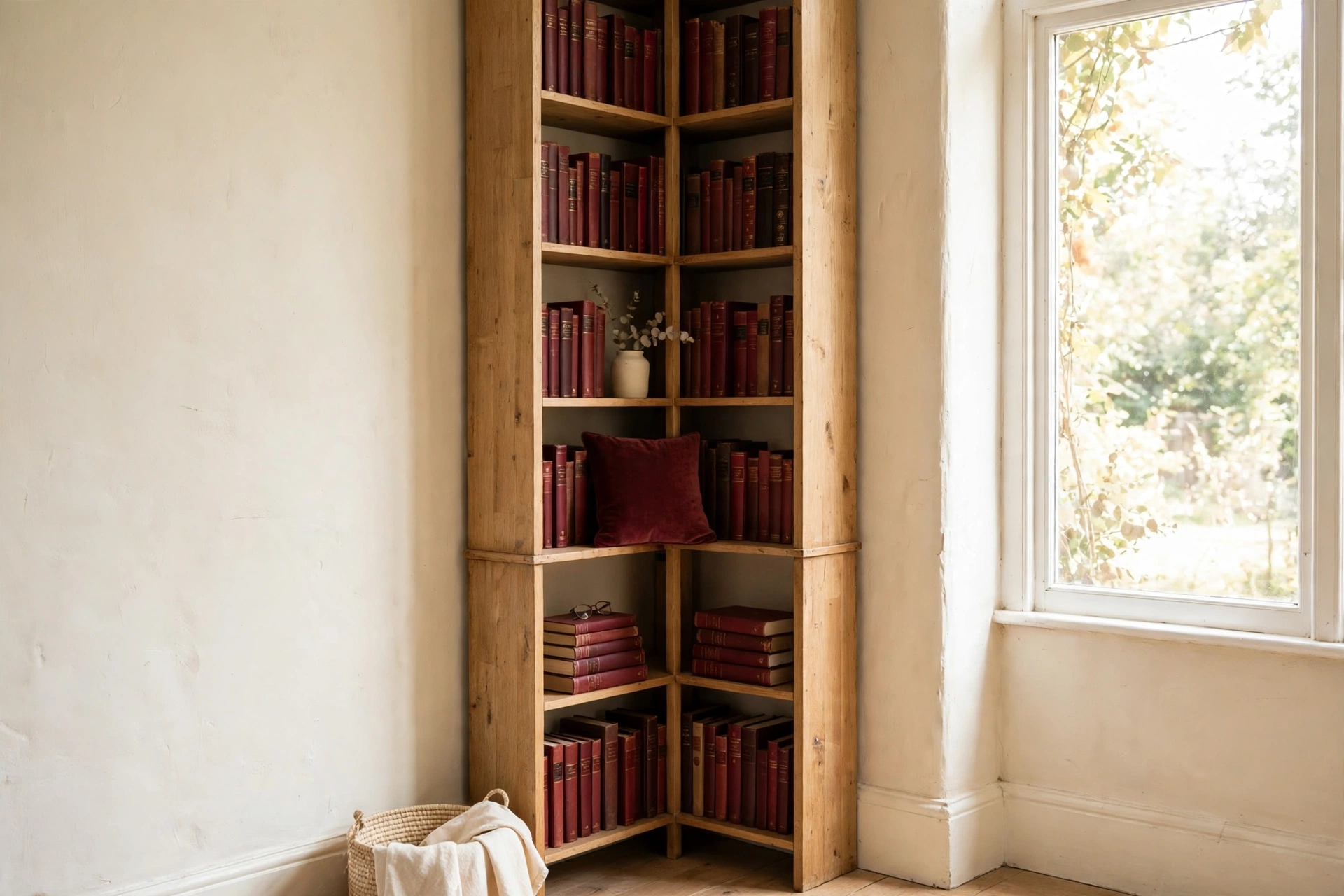
2. A corner tower bookcase. Corners are dead space in most small apartments, and a five tier corner tower turns one into 100 or more books of storage. The readandnest corner shelf lists at $99.98 to $109.99 as of November 2026, and it fits a true corner without eating into the walking path.
Best for: living rooms with one empty corner.
Main advantage: five shelves, no wall space used.
Watch out for: measure the corner first, because a tower that sticks out past the skirting board looks wrong and blocks the door swing.
Verdict: the best use of a corner you were ignoring.
Which floating shelves hold real hardbacks?
Floating shelves are the small-room workhorse, but only when they are fixed right. A shelf that holds decor will not always hold hardbacks. A metre of hardbacks weighs up to 30 kg, so the fixings decide everything. Screw into studs or a solid wall wherever you can. If the wall is plasterboard, use hollow-wall fixings rated well above the load, and spread the weight across more than one fixing. Our DIY floating shelves guide covers brackets, studs, and spacing in full detail, so read it before you drill.
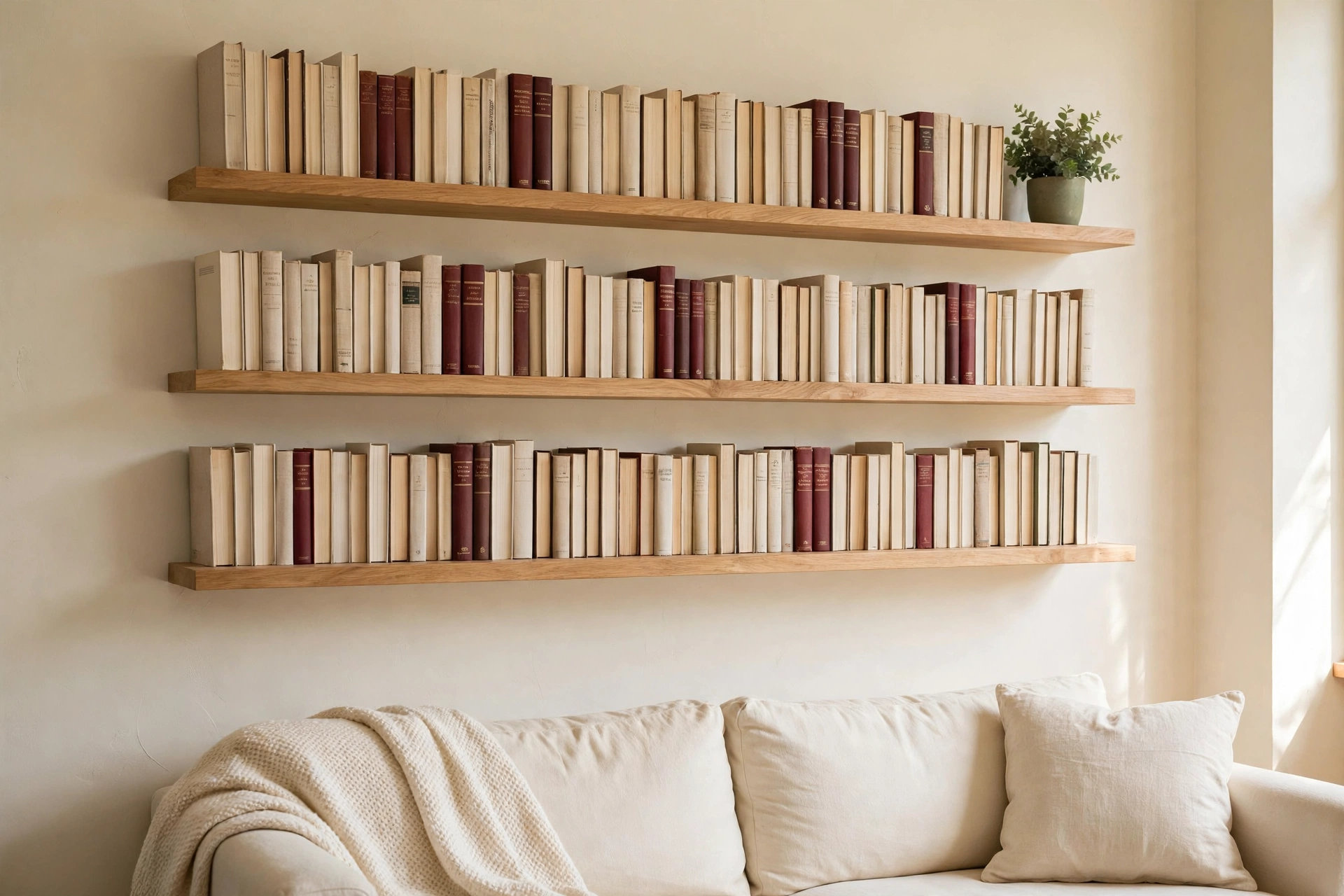
3. Floating shelves above furniture. Run a row above the sofa, over a desk, or along the wall behind a door. The space above furniture is dead air, and a shelf there costs no floor at all. A set of three wooden floating shelves lists at $31.97 as of November 2026, each rated to 30 lb, which is enough for a row of hardcovers.
Best for: display rows and daily reads.
Main advantage: no footprint, reads as decor.
Watch out for: keep each run under about 90 cm or the timber bows, and never hang a loaded shelf on plasterboard plugs alone.
Verdict: the cheapest real storage in this post, if the fixings are right.
4. Picture ledges for the books you are reading now. A shallow ledge, about 5 cm deep with a small lip, holds a row of books spine-out like a shop display. Use it for the four or five titles you genuinely intend to read next, and rotate the row when you finish one. A set of two walnut ledges lists at $30.99 as of November 2026.
Best for: the “next up” shelf and kids’ picture books.
Main advantage: books stay visible, so you actually read them.
Watch out for: ledges hold a single row only, so they are display, not bulk storage.
Verdict: small, cheap, and the best cure for a pile of unread books.
Where can books hide when the shelves are full?
Keep 20 to 40 books out on open shelves and store the rest. That rotation is the single change that makes the biggest difference in a small room. The books you are actually reading stay visible, and the rest wait in labelled boxes where they do not crowd the room. A bed that folds into the wall frees a whole wall for shelves, and the best murphy beds for small apartments show exactly how much space comes back when the bed disappears.
5. A rolling cart library. A slim rolling cart holds a stack of paperbacks, rolls beside your reading chair, and tucks into a gap when you need the floor. A slim rolling cart works the same way for books as it does for kitchen gear, and a slim 8-tier tower lists at $79.99 as of November 2026.
Best for: renters and anyone who reads in different chairs.
Main advantage: moves with you, no fixings at all.
Watch out for: carts tip if the top shelf is loaded and the bottom is empty, so keep heavy books low.
Verdict: the most flexible book storage you can buy.
6. Under-bed book boxes. A shallow lidded box on wheels slides under most beds and holds 30 to 40 paperbacks without anyone noticing. Under-bed storage ideas built for clothes work just as well for books in flat boxes, and the boxes keep dust off the pages.
Best for: the rotation stash and boxed sets.
Main advantage: invisible, holds a lot, costs almost nothing.
Watch out for: keep boxes out of damp spots and off cold floors, and label the ends so you can find a title without unpacking the whole box.
Verdict: the best free storage in your apartment, because the space is already there.
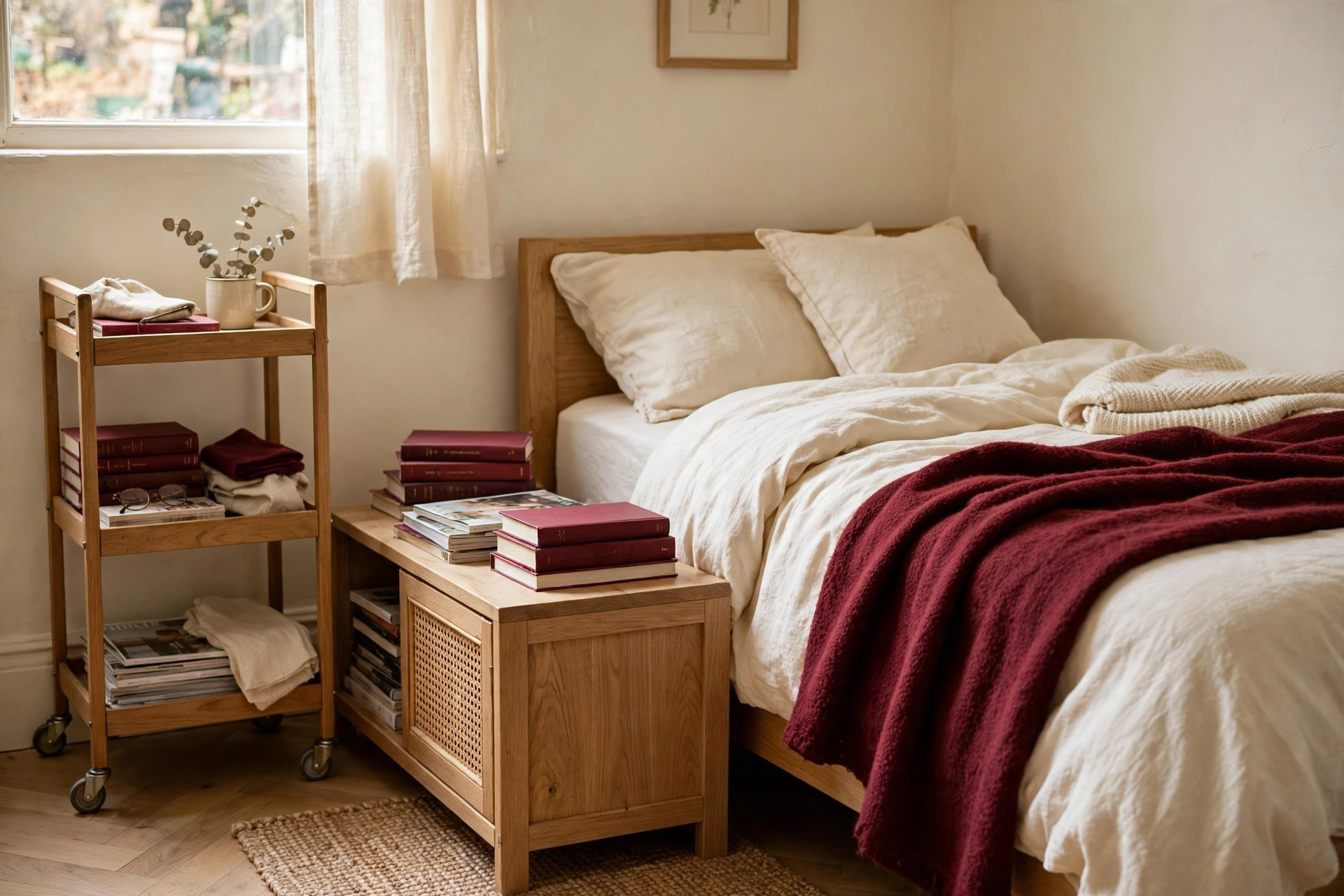
7. A storage ottoman or bench. A lidded ottoman at the foot of the bed or a bench in a bay window doubles as seating and holds a season of paperbacks. Use it for the books you have finished but want to keep, not the ones you are reading now.
Best for: living rooms and bedrooms that need seating anyway.
Main advantage: two jobs, one footprint.
Watch out for: check the lid weight rating, because a bench full of hardbacks is heavy to lift.
Verdict: buy it for the seating, enjoy the storage.
How do renters store books without drilling?
Check the lease first. Most leases allow freestanding furniture and forbid holes in the wall, and some charge per hole at move-out. Get permission in writing before you drill anything, keep the receipt for the fixings, and photograph the wall before and after. Everything below reverses in minutes, and the deposit-risk rating tells you how safe each one is, with 1 meaning no risk at all.
8. An over-door pocket organizer for paperbacks. A five-pocket organizer hangs over a bedroom or closet door and holds paperbacks upright, one per pocket. It lists at $18.99 as of November 2026. Deposit risk: 1 out of 5. It hangs on a hook, leaves no mark, and comes down in seconds.
Best for: paperbacks and magazines in a bedroom.
Main advantage: zero damage, zero tools.
Watch out for: pockets suit paperbacks only, so hardbacks stay on a shelf.
Verdict: the safest renter option in this post.
9. Stacked crates as a side table. Wooden or sturdy card crates around 30 cm square stack cleanly, hold a surprising amount, and double as a bedside table or footstool. Stack no more than four high and keep the heaviest box at the bottom. Deposit risk: 1 out of 5.
Best for: bedside reads and a first apartment on a tight budget.
Main advantage: cheap, movable, and the top crate is a table.
Watch out for: unlabelled crates become mystery boxes, so label the side of each one.
Verdict: the best under-$30 book storage there is.
10. An above-doorway shelf run. The strip above a doorway takes a short shelf for books you rarely need, like reference volumes and trophy books. Check head clearance first, and only do this one with written permission, because it needs screws. Deposit risk: 4 out of 5.
Best for: reference books and collections you show off more than read.
Main advantage: uses space nobody else wants.
Watch out for: you need a step stool to reach it, so daily reads do not belong up there.
Verdict: great for display, wrong for anything you grab every day.
The 5-step measure-first routine
Do this before you buy a single shelf. It takes 20 minutes and saves a wrong purchase.
- Count your books and sort them by height: paperbacks, hardbacks, oversized.
- Divide the paperback count by 22 and the hardback count by 15 to get the metres of shelf you need.
- Measure the wall, gap, or corner where the shelf will go, including skirting board depth and door swing.
- Pick the shelf depth: 20 cm for most books, 30 cm only for art and cookbooks.
- Check the fixing: stud or solid wall for floating shelves, freestanding or over-door for rentals with no drilling allowed.
What book storage costs (prices checked November 2026)
A full setup takes one weekend afternoon, about 3 to 4 hours including sorting and hanging. The starter kit below covers a small collection; add the tower when the count grows.
| Item | Price, as of November 2026 |
|---|---|
| Floating shelves, set of 3, 30 lb each | $31.97 |
| Over-door pocket organizer, 5 pockets | $18.99 |
| Picture ledges, set of 2 | $30.99 |
| Starter kit total | $81.95 |
| Slim 8-tier tower shelf | $79.99 |
| Corner 5-tier bookshelf | $99.98 to $109.99 |
| Tree bookshelf, Walmart | $30, was $50 |
| Full setup total (starter kit + tower) | $161.94 |
Prices are market prices checked in November 2026 from retailer and review listings, not personal receipts. Check the current price before you buy, because bookcase prices move with sales.
Mistakes to avoid
Buying the bookcase before counting the books. A case that holds 60 books is no help for a collection of 200. Count first, then buy the metres you need.
Hanging a loaded shelf on plasterboard plugs. A metre of hardbacks weighs up to 30 kg. Plugs pull out slowly, then all at once, usually at night. Find a stud or use proper hollow-wall fixings.
Filling every shelf to the edge. Leave about a third of each shelf empty. Full shelves look cramped, trap dust, and give you no room to pull a book out without a fight.
Storing books in direct sunlight. Books do best at room temperature, around 70F, with low humidity and out of direct sunlight, which fades spines and dries glue. Keep the sunny windowsill row short, or move it to a shaded wall.
Stacking hardbacks flat in tall piles. Flat stacks hide titles, crush the bottom spines, and topple when you pull one out. Stand books upright and stack flat only for oversized volumes that do not fit upright.
What to skip
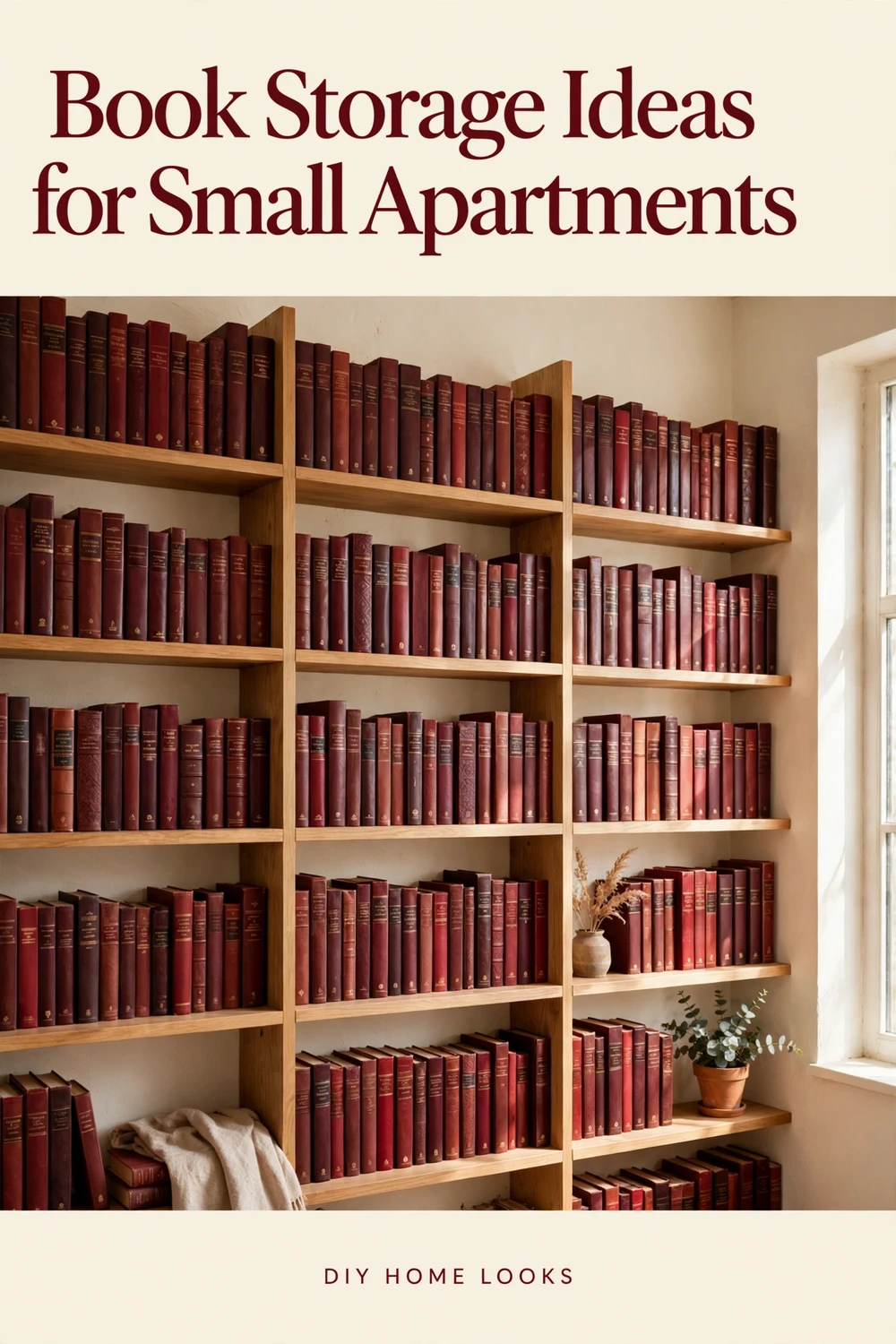
The floor-to-ceiling wall of books in a rental. It looks great in photos, but it needs anchoring, collects dust on the top rows, and turns move-out day into a repair bill. Renters should skip it and use slim cases and carts instead.
Deep 40 cm bookcases in a small room. Books need 20 cm. The extra depth holds nothing but dust and steals floor space you walk through daily.
Overloaded floating shelves. A shelf rated for 15 lb will not hold a row of hardbacks. Check the rating, check the fixing, and keep each run under 90 cm, or the shelf bows and the books slide.
The giant tree bookshelf as your only storage. It is a display piece, not a library. It holds a few dozen books at most, so pair it with a real case instead of letting it carry the whole collection.
These book storage ideas for small apartments work because they start with numbers, not shopping. Count first, buy the metres you need, and let the rest rotate.
FAQ
How do I store books without a bookshelf?
Use the furniture you already own. A rolling cart, a storage ottoman, under-bed boxes, and stacked crates all hold books with no shelf at all. Add a row of picture ledges for the books you are reading now, and keep the rest in labelled boxes under the bed or on top of a wardrobe.
How many books fit on a shelf?
A one-metre shelf holds 20 to 25 paperbacks standing upright. Hardbacks are thicker, so the same metre holds fewer, but the weight matters more: a metre of hardbacks weighs 20 to 30 kg. Leave about a third of the shelf empty so you can pull books out without a fight.
How deep should a bookshelf be for a small apartment?
20 cm deep is enough for most paperbacks and hardbacks, and it is the best depth for a small apartment because it wastes no floor space. Go to 30 cm only for oversized art books and cookbooks. Standard 30 to 40 cm bookcases hold the same books and eat up to twice the floor.
Can I store books under my bed?
Yes, in shallow lidded boxes that slide under the bed. One box holds 30 to 40 paperbacks and keeps dust off the pages. Keep the boxes out of damp spots, label the ends, and store the books flat or upright inside the box, never loose in a pile.
Written by Wasim. Prices checked November 2026.