12 Renter-Friendly Dining Room Ideas That Won’t Cost Your Deposit
The best renter friendly dining room ideas change the room without touching the lease. You do not need new walls, new wiring, or a landlord permission slip for most of them. You need a table that fits, light at the right height, and decor that comes down clean on moving day.
Here is the math behind this guide, worked out from standard room sizes and published product specs. A 36 by 60 inch table (91 by 152 cm) needs 24 inches (61 cm) of chair pull-out space on each side. That means the table really needs an 84 by 108 inch footprint (213 by 274 cm), about 63 square feet. If your corner is smaller than that, a round or drop-leaf table will serve you better than a big rectangle.
The biggest money waste in a rental dining room is the matching dining set. A good table plus chairs you actually like beats a seven piece set you will dread moving. The most underrated upgrade is a plug-in pendant. One light, hung low, turns a table in a corner into a real dining room.
Which renter friendly dining room ideas should you do first?
Do them in this order: table, rug, light, walls. The table decides everything else. The rug marks the zone. The light makes it feel like dinner, not a desk. The walls come last, because art is easy to move and hard to get wrong once the rest is set.
Pick a table that fits your room, not your dream room
Idea 1: Measure the pull-out space before you buy. A table that looks fine empty feels cramped once four chairs pull out. Leave 24 inches (61 cm) behind each chair and 36 inches (91 cm) on the side people walk past. If you cannot get both, pick a smaller table. A 36 inch round table (91 cm) seats four in a tight corner and leaves room to move. These numbers pair well with small dining room layout ideas when you are planning the whole room.
Best for: tiny corners and studio nooks. Watch out for: heavy glass tops, which are a pain to move upstairs. Deposit risk: 1/5.
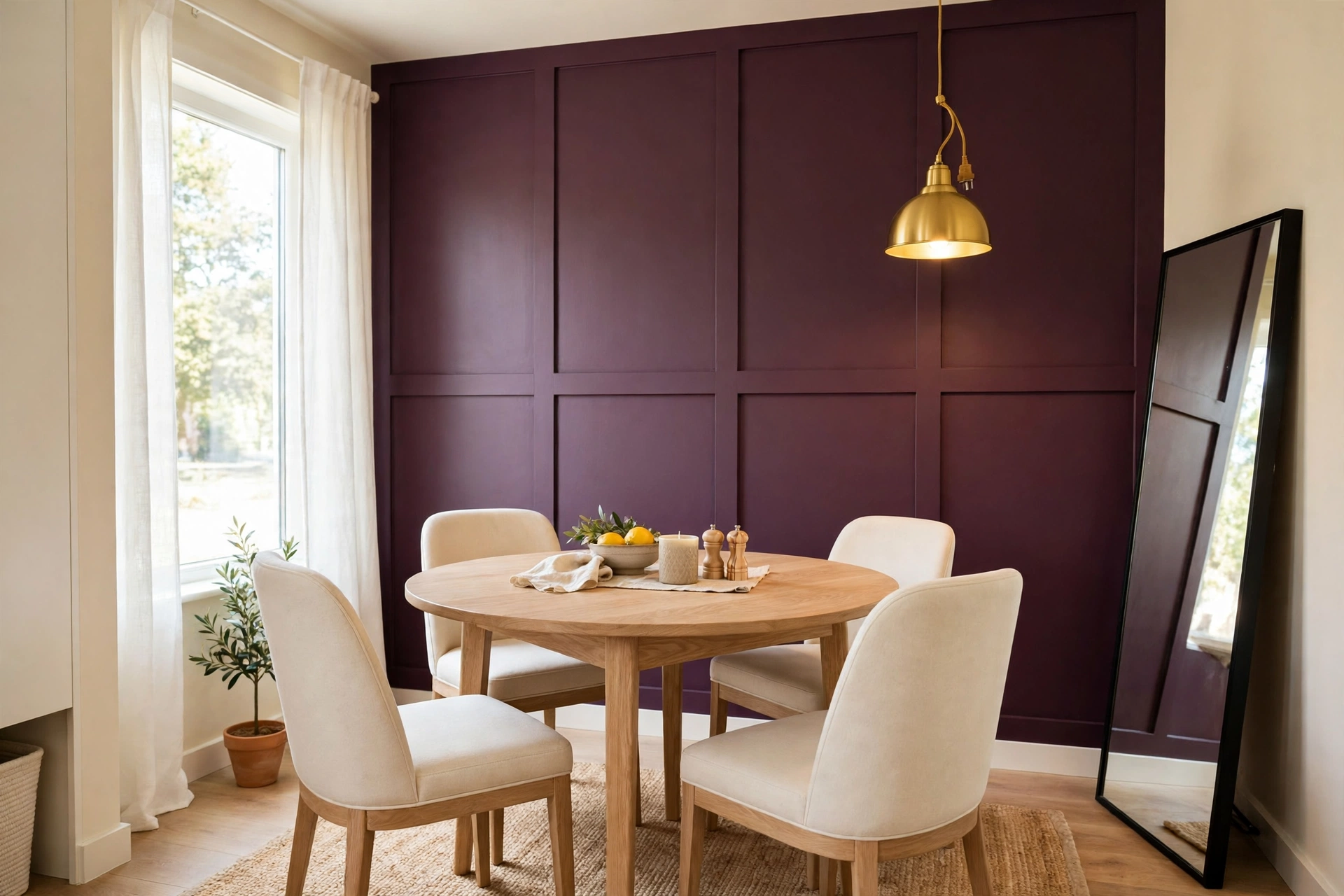
Idea 2: Let a rug define the dining zone. A rug under the table tells the eye where dinner happens, even in an open plan room. Size it so chairs stay on the rug when pulled out, about 24 inches (61 cm) of rug past the table edge on each side. Low pile works best, because chair legs slide on it and crumbs vacuum off it. If your floors are already a problem, see these renter friendly flooring ideas before you buy anything that sticks to them.
Best for: open plan rooms. Watch out for: thick shag, which grabs chair legs. Deposit risk: 1/5.
Hang dining room art without drilling a single hole
Idea 3: Hang art with adhesive strips, done properly. This is the one idea where the instructions matter more than the product. Clean the wall with rubbing alcohol, press the strip for 30 seconds, and wait a full hour before hanging. 3M’s own specs say four pairs of large picture hanging strips hold up to 15 lb (7 kg) for frames up to 24 by 36 inches (61 by 91 cm), as of October 2026. Stay well under the limit. A light frame that stays up beats a heavy mirror that falls down.
Best for: framed prints and light art. Watch out for: textured walls, fresh paint under seven days old, and wallpaper, where strips do not belong. Deposit risk: 2/5.
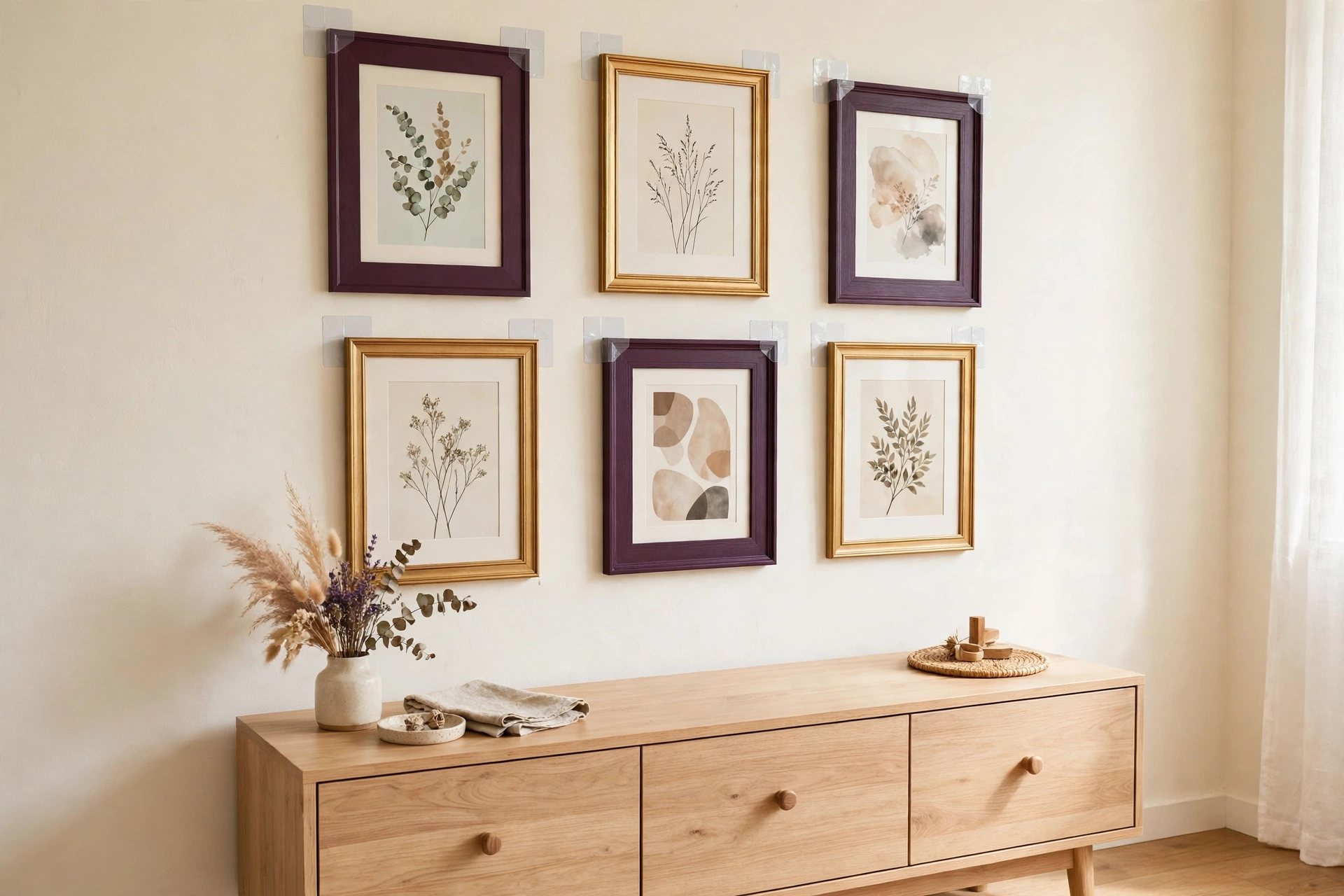
Idea 4: Lean a big mirror instead of hanging one. A leaning floor mirror needs zero hardware and does more for a small dining room than a row of small frames. Put it across from a window if you can. It bounces daylight back into the room and doubles how deep the room feels. Keep the bottom on a rug or a felt pad so it cannot slide on hard floors.
Best for: dark dining corners. Watch out for: homes with small kids or big dogs, where a leaning mirror needs a wall anchor you may not be allowed to fit. Deposit risk: 1/5.
Idea 5: Try one peel-and-stick accent wall, not four. One wall behind the table gives you the whole effect for a quarter of the removal work. Test a small piece in a hidden spot first, and leave it for a few days before you commit. Paint condition and humidity change how cleanly it comes off. Smooth, well painted walls are the safest bet, and one bold panel beats a busy pattern in a small room.
Best for: plain white rental walls. Watch out for: wrapping the whole room, which turns move-out day into a peeling marathon. Deposit risk: 3/5.
Light the table like a restaurant, not an office
Idea 6: Swag a plug-in pendant over the table. You do not need an electrician to get a pendant over your table. A plug-in pendant hangs from a ceiling hook or a wall hook, and the cord swags across to the nearest outlet. Hang it 30 to 36 inches (76 to 91 cm) above the table, centered on the table, not the ceiling. Use a warm 2700K bulb. That one change alone makes weeknight dinner feel like going out.
Best for: rentals with one sad ceiling light. Watch out for: cords crossing a walkway, which is a trip risk. Run them along the wall with a removable cord cover. Deposit risk: 2/5.
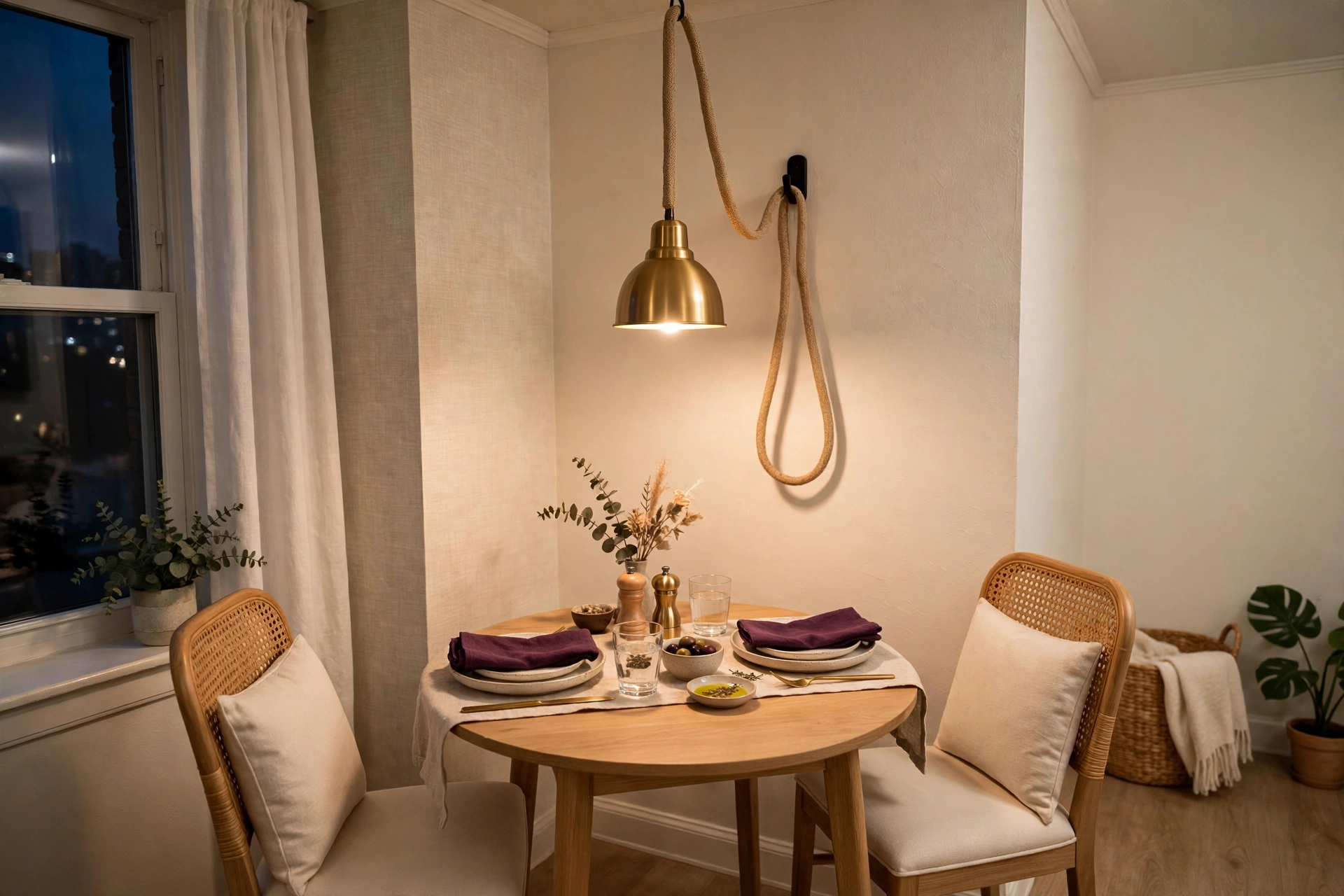
Idea 7: Layer two more lights, both movable. One overhead light flattens a room. Add a small table lamp on a sideboard and a pair of candles on the table itself. A plug-in dimmer on the lamp lets you drop the brightness for dinner without touching any wiring. Nothing here is fixed to the wall, so all of it moves with you.
Best for: dinner parties on a budget. Watch out for: open flames near curtains or trailing plants. Deposit risk: 1/5.
Buy furniture that moves with you
Idea 8: Choose seating that folds, stacks, or extends. Folding chairs have grown up. Good ones look like real dining chairs and stack in a closet when guests leave. A bench on one side seats three where two chairs would crowd, and it slides fully under the table. An extendable table seats two daily and six at holidays, which makes it the single smartest rental dining buy on this list.
Best for: small rooms that host big groups sometimes. Watch out for: chairs with arms, which need more elbow room than you think. Deposit risk: 1/5.
Idea 9: Roll in a bar cart for storage. A slim bar cart holds glasses, a carafe, folded napkins, and placemats, and it rolls away when you need floor space. It also fixes the classic rental problem: nowhere to put dining things except the table itself. Keep one tray on top and stop there. An overloaded cart reads as clutter, not storage. For the whole-room version of this thinking, see this damage-free guide for every room.
Best for: renters with no sideboard and no pantry space. Watch out for: carts wider than the gap they live in. Measure first. Deposit risk: 1/5.
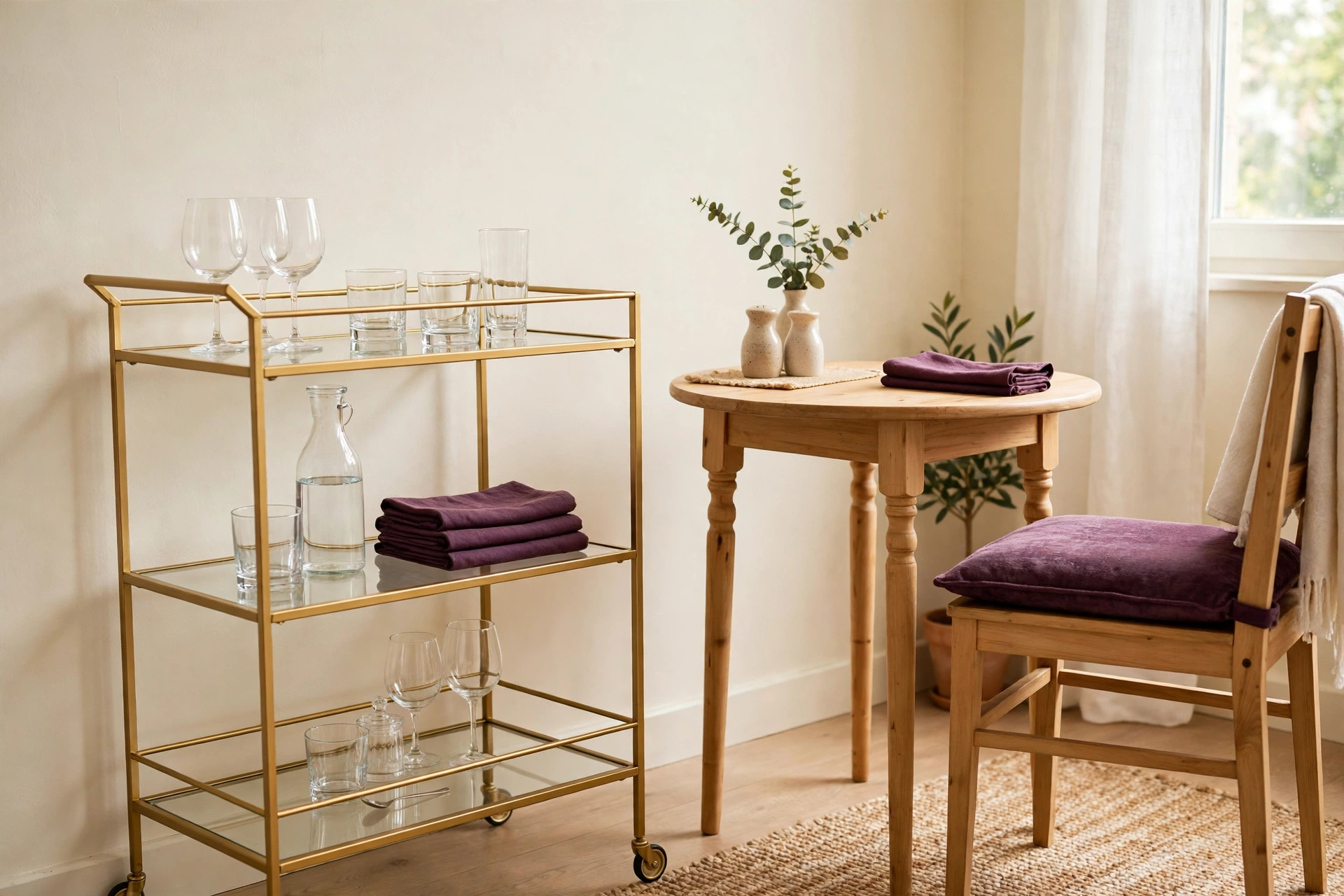
Idea 10: Slipcover or mix chairs instead of replacing the set. If your chairs are ugly but solid, a washable slipcover costs far less than a new set and survives spaghetti night. Mixing two chair styles around one table also works, as long as the seat heights match within an inch or two. Mismatched on purpose looks collected. Mismatched by accident looks like a yard sale.
Best for: inherited or thrifted sets. Watch out for: seat heights that differ, which makes the table feel wrong even if it looks fine. Deposit risk: 1/5.
Zone the dining corner and dress the table
Idea 11: Mark the dining zone without building a wall. In an open plan room, a folding screen, a narrow console behind the sofa, or a bookcase turned sideways all say “dining starts here” without a single screw. Keep the divider low and light so daylight still travels. One movable boundary beats a tall shelf that blocks the window and eats the room. A guide to splitting living and dining spaces without drilling uses the same movable-boundary approach. If your living area needs the same treatment, these renter friendly living room upgrades use the same no-drill logic.
Best for: studio and open plan rentals. Watch out for: dividers that block the chair path. Walk the route before you buy. Deposit risk: 1/5.
Idea 12: Dress the table so it looks designed every day. A table that only looks good at dinner parties is a table you avoid using. Keep a simple runner, two candlesticks, and one small vase on it between meals. Swap the napkins by season instead of buying new decor. It takes two minutes, it costs almost nothing, and it is the difference between a table you eat at and a table you love.
Best for: everyone, honestly. Watch out for: a centerpiece so tall that guests cannot see each other across it. Deposit risk: 1/5.
What to skip in a rental dining room
Not every renter friendly dining room idea is worth doing. Skip heavy shelves hung on adhesive strips, no matter what the packaging promises. Skip painting a dark accent wall without written permission, because repainting it later costs more than the paint did. Skip a seven piece matching set until you own a place, since moving it will cost more than buying it. And skip a rug that is too small for the chairs, which is the one mistake that makes the whole room look off.
These renter friendly dining room ideas all follow one rule: if it cannot come down clean, it does not go up. Start with the table, add light, then hang art you love. Your deposit will thank you at move-out time.
A note on how this was made: This guide is built on published manufacturer specs (3M Command, checked October 2026) and standard room-planning measurements, plus competitor gaps found in research. No lab tests were run and no hands-on trials are claimed. The room math in the intro is simple addition from the table and chair numbers stated there, so you can check it with a tape measure.
Can I hang art in a rental dining room without drilling?
Yes. Use removable adhesive strips rated for the frame’s weight, clean the wall with rubbing alcohol first, and wait an hour before hanging. Keep frames light, stay under the package limit, and pull the tab slowly straight down the wall when you remove them.
Will peel-and-stick wallpaper damage my rental walls?
Usually not on smooth, well painted walls, but test a hidden patch first. Results depend on the paint and the wall surface. Limit it to one accent wall so removal stays quick, and avoid textured walls, fresh paint, and wallpapered surfaces.
What furniture should renters buy for a dining room?
Buy portable pieces first: an extendable or drop-leaf table, seating that stacks or folds, a rug, a plug-in pendant, and a rolling cart. These improve the room now and move with you later, while built-ins and heavy sets do not.
How do I make a rental dining room look expensive without permanent changes?
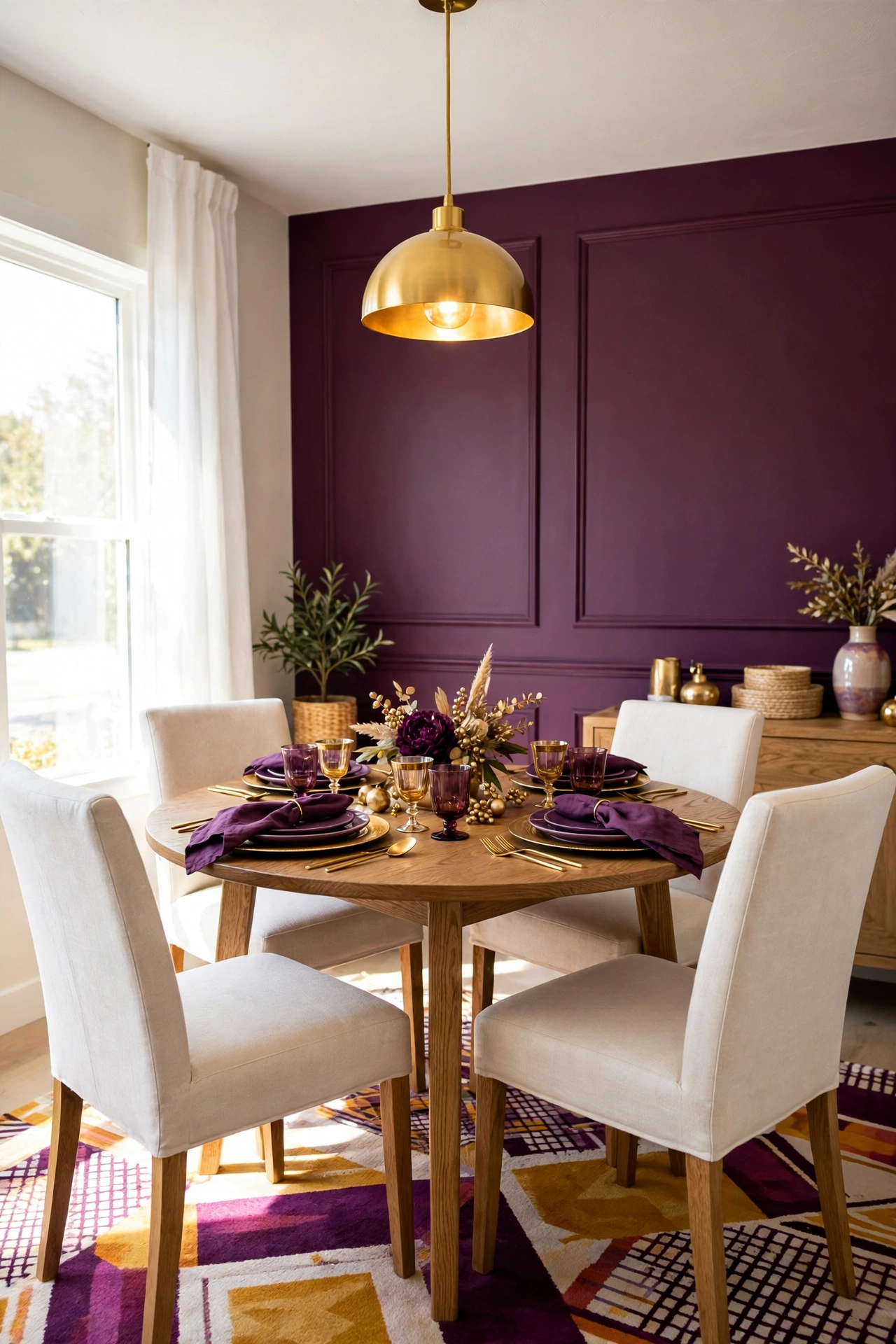
Start with light and scale. A pendant hung low over the table, a rug sized for pulled-out chairs, and one strong color repeated in napkins and art will do more than a full redecoration. Keep the biggest surfaces calm and spend on movable pieces.