Renter-Friendly Lighting Ideas: 12 Ways to Light a Rental Without an Electrician
Most rentals come with exactly one light per room: a sad ceiling fixture in the middle, holding whatever bulb the last tenant left behind. It is the cheapest way to prove a room has light — and the fastest way to make your furniture look flat, your walls look gray, and your evenings feel like a waiting room.
Yes, you can completely change how a rental feels with light alone, and none of it needs an electrician, a drill, or your landlord’s permission: swap every bulb to 2700K warm white, add three light sources at three different heights, and hang one plug-in pendant or rechargeable sconce where the room needs a focal point. Everything below plugs in, sticks on, or sits on a surface — and everything comes down clean on move-out day. Prices are as of October 2026.
1. Start with the bulb — it is the cheapest fix in the whole list
Before you buy a single lamp, unscrew the bulbs your landlord left. Most rentals ship with cool-white or daylight bulbs (4000K and up), which cast a blue, clinical light that makes warm wood and skin tones look washed out. Replace them with 2700K warm-white LEDs. An 800-lumen bulb (the old 60-watt equivalent) costs about $3–$5, and the U.S. Department of Energy notes that LEDs use roughly 80% less energy than incandescents and can last up to ten years under typical use — see the DOE’s guide to home energy savings.
Keep the old bulbs in a labeled bag. When you move out, swap them back and take your good bulbs with you — they are yours, and they work in the next place too.
2. Layer light at three heights — the rule that fixes every room
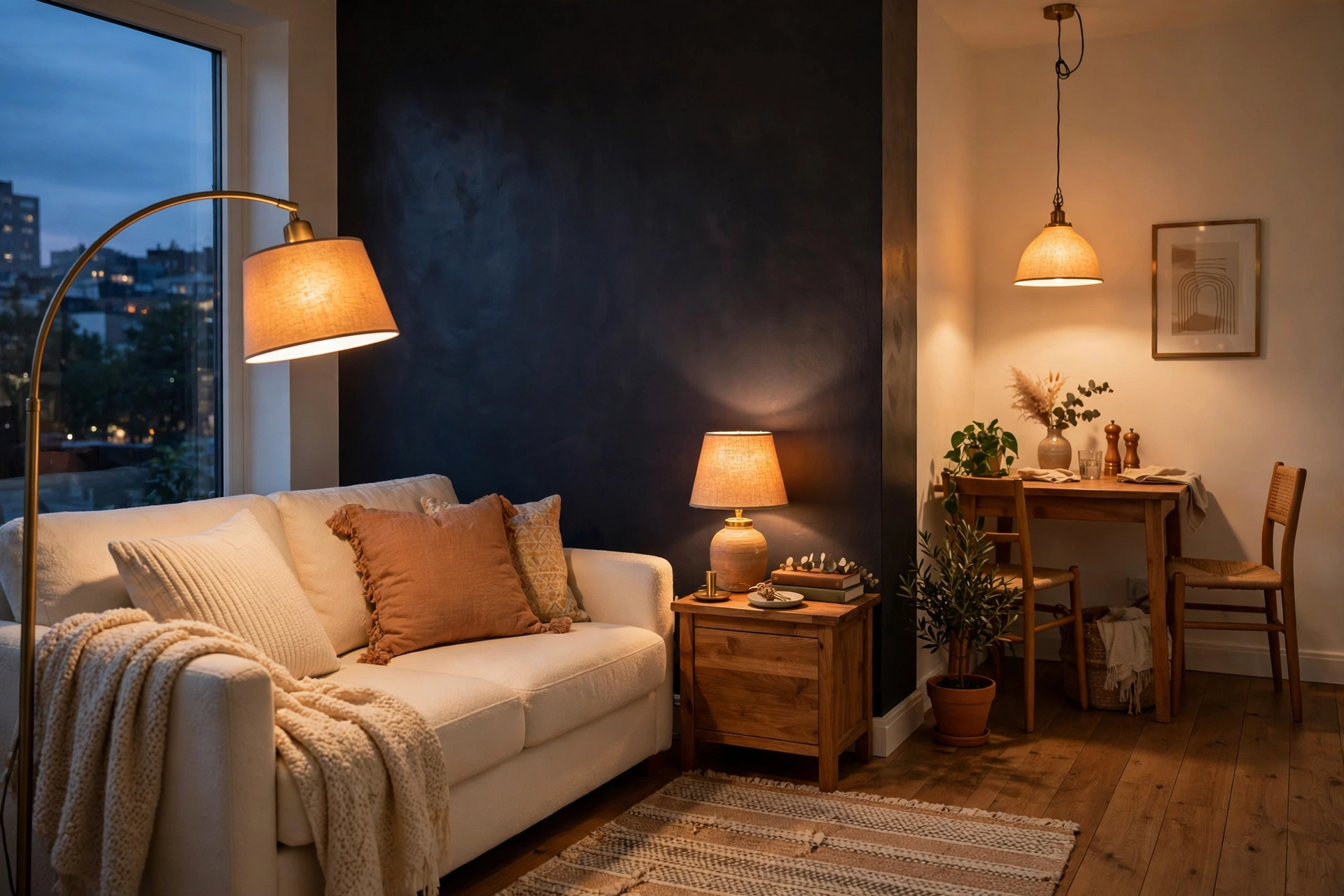
One overhead light flattens a room. Three light sources at three heights — high, middle, and low — give it depth. Aim for one source near the ceiling (a torchiere or an upward-facing floor lamp), one at sitting height (a table lamp or a sconce), and one low accent (an LED strip or a candle cluster). Most rooms feel right with three separate sources, and you will notice the difference the first evening you turn them all on instead of the ceiling fixture.
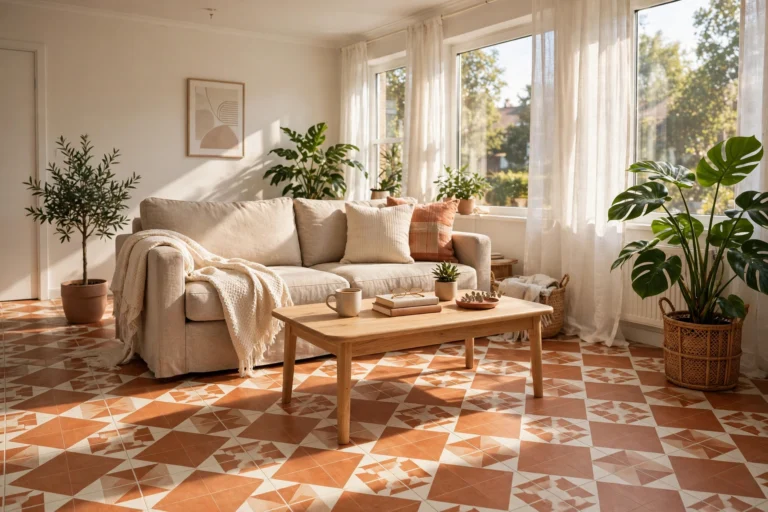
This is also why lighting is the multiplier for everything else you have already done to the place. The same rug and sofa read completely differently under warm layered light, which is why it pays to finish the big surfaces first — if you are still staring at stained carpet, fixing ugly rental floors without glue or nails makes the new light land on something worth looking at.
3. Plug-in pendant lights — fake a real overhead fixture
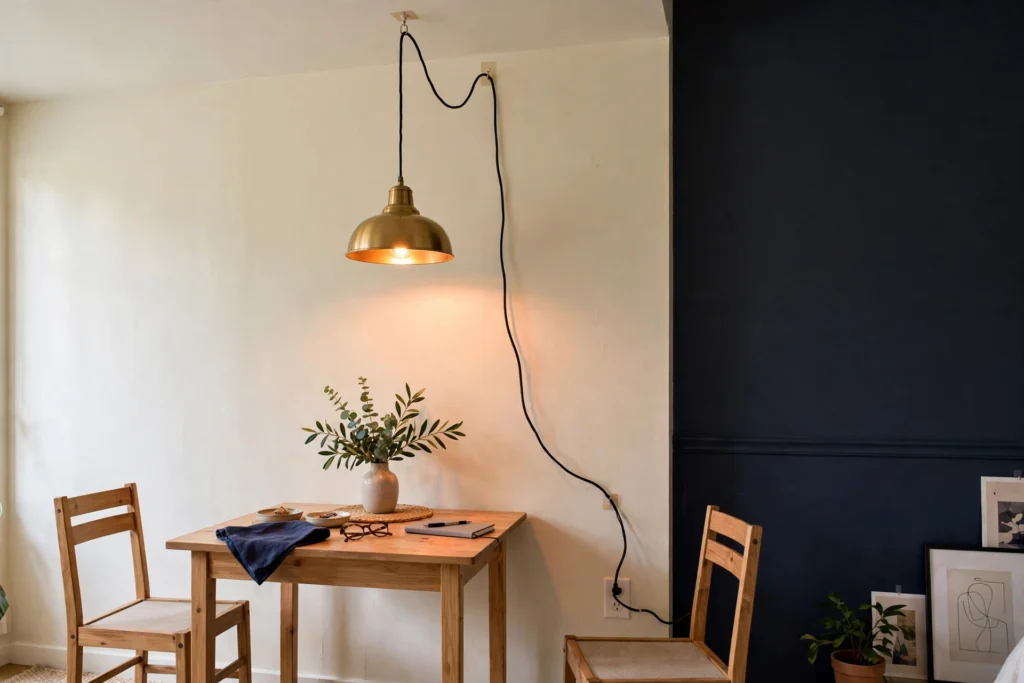
A plug-in pendant is the closest a renter gets to a real ceiling light. It hangs from a small adhesive ceiling hook (rated for the weight, usually 5–10 lb / 2–4.5 kg), the cord drapes across the ceiling and down the wall to the nearest outlet, and it plugs in like a lamp. Prices run $30–$120 as of October 2026, and the look is genuinely convincing over a dining table or a kitchen island.
Use a cord cover or a cable raceway down the wall if the drape bothers you, and keep the cord away from heat sources. At move-out, the hook peels off and the pendant packs flat — no holes, no patching, no deposit deduction.
4. Plug-in and rechargeable sconces — sconces without the wiring
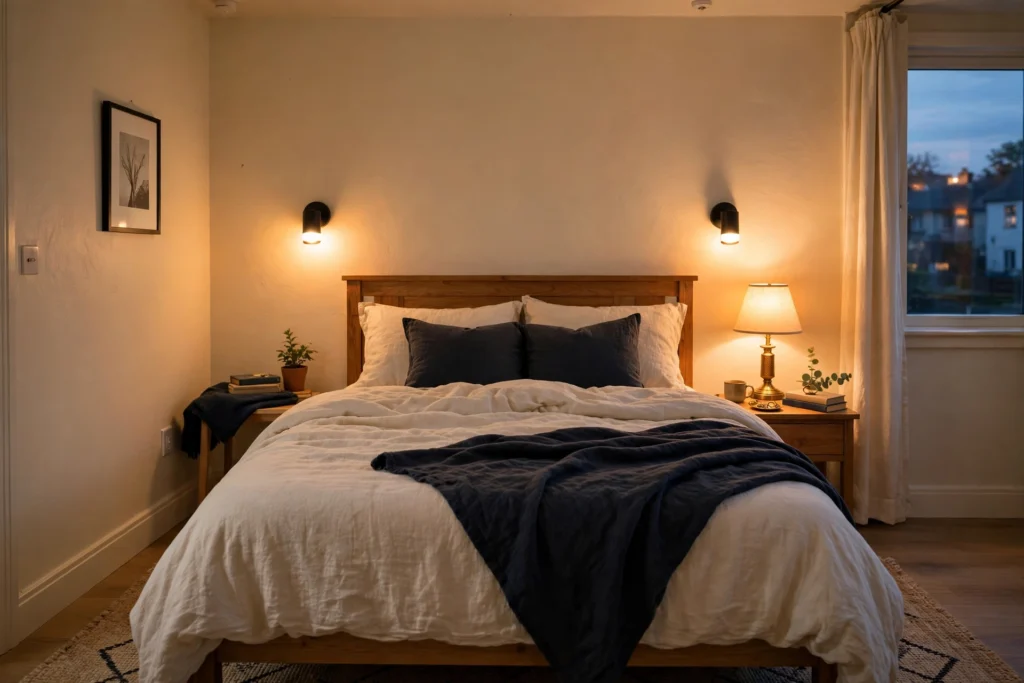
Wall sconces used to mean an electrician. Now they come in two renter versions: plug-in sconces ($25–$100) that mount with adhesive strips and run a thin cord to an outlet, and rechargeable sconces ($69–$99 for popular models as of October 2026) that stick on with a peel-and-stick base, charge over USB-C, and give up to 9 hours of light per charge at around 300 lumens and 2400–2700K.
Mount them 5.5–6 ft (168–183 cm) high, flanking a bed, a mirror, or a piece of art. They are the single fastest way to make a bedroom feel designed rather than furnished, and they travel with you to the next apartment. For a deeper dive into the format, Pooky’s renter-lighting guide covers rechargeable and plug-in options room by room.
5. Floor lamps that do the heavy lifting
If you buy only one lamp, make it a floor lamp — it is the workhorse. Three shapes cover almost every rental problem: an arc lamp that curves over a sofa for reading, a torchiere that bounces light off the ceiling and makes a low room feel taller, and a multi-head tree lamp that throws light in two or three directions at once. Budget $30–$200 as of October 2026; a shaded floor lamp in a corner plus one table lamp is the fastest $60 room transformation in this whole list.
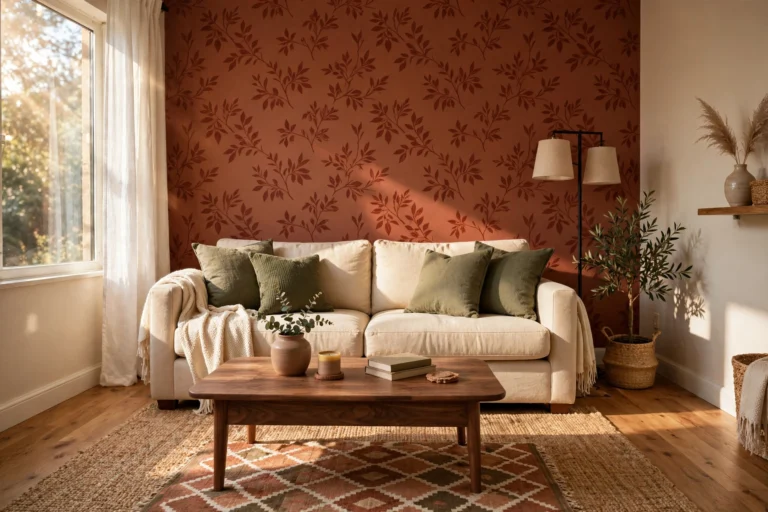
Place floor lamps where the ceiling fixture cannot reach — beside the sofa, in the dark corner by the bookshelf, next to the reading chair. And if your rental’s walls are still bare, remember that light needs something to land on: damage-free wall treatments like removable wallpaper and peel-and-stick art give those lamp pools a backdrop instead of blank beige.
6. Table lamps and cordless lamps — pools of light where you sit
Table lamps do the job floor lamps cannot: they put a warm pool of light exactly where you sit, read, and eat. One on each end of a sofa, one on the nightstand, one on the console by the door. Translucent shades spread light wider than opaque ones, and a 400–800 lumen bulb is plenty for a side table.
Cordless rechargeable table lamps are the newer trick — the same USB-C battery idea as the sconces, in a lamp you can carry from the desk to the balcony to the dinner table. They cost $25–$60 as of October 2026 and are perfect for spots with no outlet nearby, like the middle of a bookshelf or a window ledge.
7. LED strips — the $20 glow-up
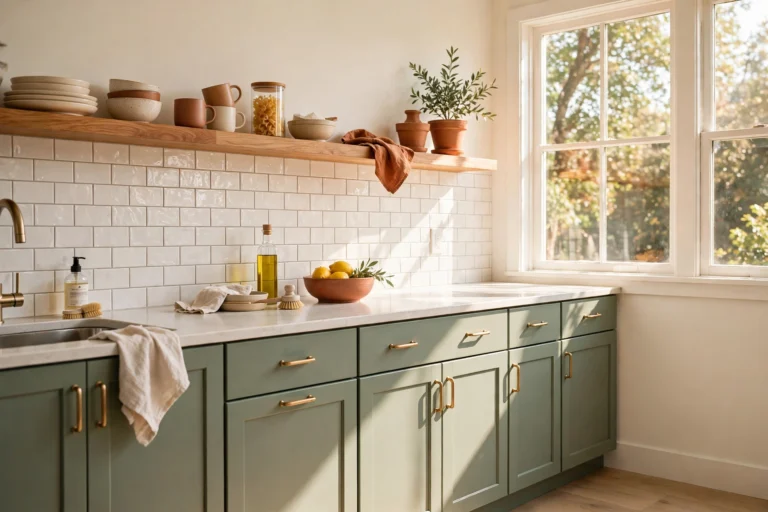
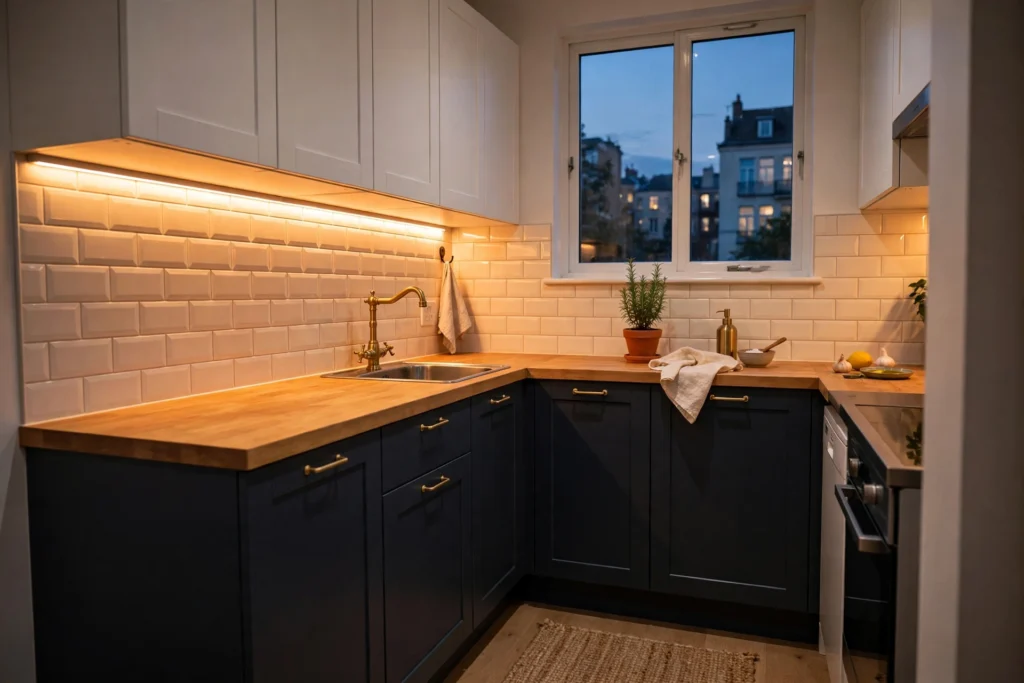
A $15–$40 LED strip, stuck under a kitchen cabinet, behind a TV, along a shelf, or behind a headboard, adds the indirect glow that makes a room look expensive after dark. Choose warm white (2700K) for living spaces and a dimmable strip if you can — full-brightness strips on a white wall look like a convenience store.
Mounting matters for your deposit: stick the strip to painter’s tape first, then the tape to the wall, or use Command-style clips. On removal, warm the adhesive with a hairdryer for 30 seconds and peel slowly. Test a hidden spot first if your paint is old or matte.
8. Battery puck and sensor lights — the dark corners, solved
Every rental has them: the closet with no light, the hallway that eats shoes, the cabinet under the sink where you grope for the detergent. Battery puck lights and motion-sensor strips cost $10–$25 for a pack as of October 2026, stick on with adhesive, and turn themselves on when you open the door or walk past. They run for months on a set of AA batteries or a USB charge.
Put one inside each closet, one under the kitchen cabinets, and one in the hallway. They are the smallest spend in this list and the one you will notice every single day.
9. Mirrors — bounce the light you already have
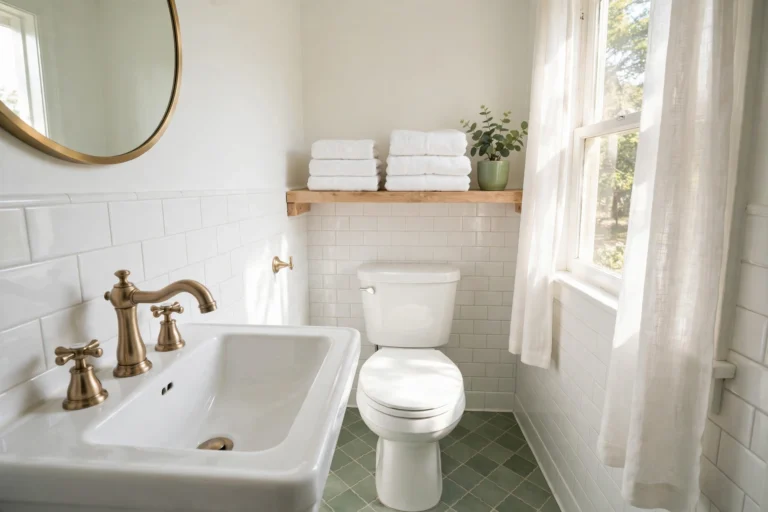
A mirror does not make light, but it doubles the light you have. Hang or lean a large mirror opposite a window and daylight reaches twice as far into the room; angle a lamp toward it at night and the glow spreads instead of pooling in one corner. A leaning floor mirror (36–48 in / 91–122 cm tall) needs no holes at all, and a mirror on the wall opposite the window is the cheapest fix for a dark north-facing room.
Check the angle at night before you commit — a mirror that glares straight at the sofa is worse than no mirror at all.
10. Smart bulbs and smart plugs — dimming without a dimmer switch
Your landlord will never let you install a dimmer switch. A smart bulb does the same job from your phone: dim it to 20% for movie night, warm it to 2200K at bedtime, schedule it to turn on before you get home. Smart bulbs run $10–$25 each as of October 2026 and screw in like any bulb — no hub needed for most Wi-Fi models.
Smart plugs ($10–$20) are the same trick for ordinary lamps: plug any lamp into one and it gains timers, schedules, and voice control. Put the living-room lamps on one schedule and the bedroom lamp on another, and the whole apartment lights itself while you are still on the stairs.
11. String and fairy lights, done like an adult
String lights have a dorm-room reputation, and they earn it when they are draped randomly across a ceiling. Done deliberately, they are one of the cheapest renter lights there are: a warm-white copper-wire strand ($8–$20) woven through a bookshelf, draped along the top of a curtain rod, or coiled inside a glass jar on a side table. Keep them to one defined line or container, warm white only, and never the color-cycling kind — those photograph like an internet café.
Command hooks hold them up; a timer plug turns them off at midnight. If you are styling a whole room around them, our renter-friendly living room upgrades show how one strand fits into a layered lighting plan instead of becoming the whole plan.
12. Flameless candles — glow without the lease violation
Most leases ban open flames outright, and a real candle in a rental is a deposit risk in two directions: fire and wax. Flameless LED candles ($10–$25 for a set as of October 2026) give the same flicker on a timer, in clusters on a mantel, a tray on the coffee table, or a shelf in the bathroom. They are the finishing touch, not a light source — use them where you want a glow, not where you need to see.
The move-out kit: leaving with your deposit intact
Every light in this list passes the same test: it comes down without a trace. Keep a small move-out box with the original bulbs, the adhesive-hook packaging, and a hairdryer for warming LED-strip adhesive. Photograph each wall on move-in day so you can prove the scuffs were already there. And when the whole apartment is done, the lighting ties the rooms together — the same warm-white, three-height rule works in every space, which is why it fits naturally into a room-by-room organization system for the whole home.
Start with the bulbs tonight. It costs less than a takeout dinner, takes ten minutes, and you will wonder why you lived under that blue ceiling light for so long.
Can I hang a plug-in pendant light without drilling?
Yes. Use an adhesive ceiling hook rated for the pendant’s weight (usually 5–10 lb / 2–4.5 kg), hang the cord from it, and run the cord to the nearest outlet. At move-out the hook peels off cleanly — no holes, no patching.
Do rechargeable wall sconces actually give enough light to read by?
Yes, for bedside and accent reading. Modern rechargeable sconces put out around 300 lumens at 2400–2700K, which is plenty for a book or a phone. They are task and accent lights, though — they will not light a whole room on their own, so pair them with a floor or table lamp.
What color temperature is best for a rental?
2700K warm white for living rooms and bedrooms — it flatters wood, skin, and fabric. Use 3000–4000K neutral white only in task zones like the kitchen counter or a desk, where you need to see clearly. Avoid 5000K+ daylight bulbs in living spaces; they read as cold and clinical.
Will LED strips damage the paint when I remove them?
They can, if you stick them straight to the wall and rip them off. Stick the strip to painter’s tape first, or use Command-style clips, and warm the adhesive with a hairdryer for 30 seconds before peeling slowly. Always test a hidden spot first, especially on old or matte paint.