Best Compact Vacuum for Small Apartments: 7 Stick Picks That Disappear Into a Closet
The short answer
The best compact vacuum for small apartments is the one that finishes a whole 500 sq ft flat on a single pass, then parks in a space no bigger than a pair of shoes. That is the test this guide uses, and it comes from a simple table we computed from manufacturer specs: weight, real runtime, parked footprint, and bin size for all seven picks. One pass over about 500 sq ft takes roughly 12 to 15 minutes, so any cordless pick needs at least 15 honest minutes with the floor head on, not just an Eco-mode headline number. The four corded picks never run out at all. Of the three cordless picks, the Levoit clears that bar with room to spare, the Tikom clears it on low power, and the Dyson clears it in Eco mode. If you want one name right now, the Tikom V500 at about $80 is the sweet spot for most renters: 40 kPa suction, a 32-minute max runtime, a big 1.3 L bin, and a wall dock in the box. If your budget is tight, the Eureka Blaze at about $36 does the same floors for less than half the price, as long as you accept a cord. A vacuum is one tool in a bigger system, so keep it near the rest of your whole-home organization system and it will actually get used.
How much vacuum does a small apartment actually need?
Start with the room, not the motor. A typical one-bedroom apartment is about 500 sq ft (46 sq m) of floor, and most of it is hard floor with one low-pile rug. One steady pass over that space takes about 12 to 15 minutes. That number is the whole buying decision in disguise.
A cordless stick that runs 30 minutes with the floor head on gives you two full cleans per charge. A stick that runs 15 minutes on max power gives you exactly one, and only if you never stop to move a chair. A corded stick never runs out, so the only question is whether its cord reaches across the room. That is the test every best compact vacuum for small apartments has to pass, and it is also why headline runtime numbers mislead people. Brands quote Eco mode with a crevice tool. You clean with a floor head, on real floors, so read the floor-head number every time.
Bin size matters just as much, and nobody talks about it. A 0.3 L bin on a 500 sq ft flat means emptying it after nearly every clean. A 1.3 L bin means emptying it every third or fourth clean. Small bins are fine if you empty them over the trash can every time. They are a chore if you forget, because a full bin kills suction fast.
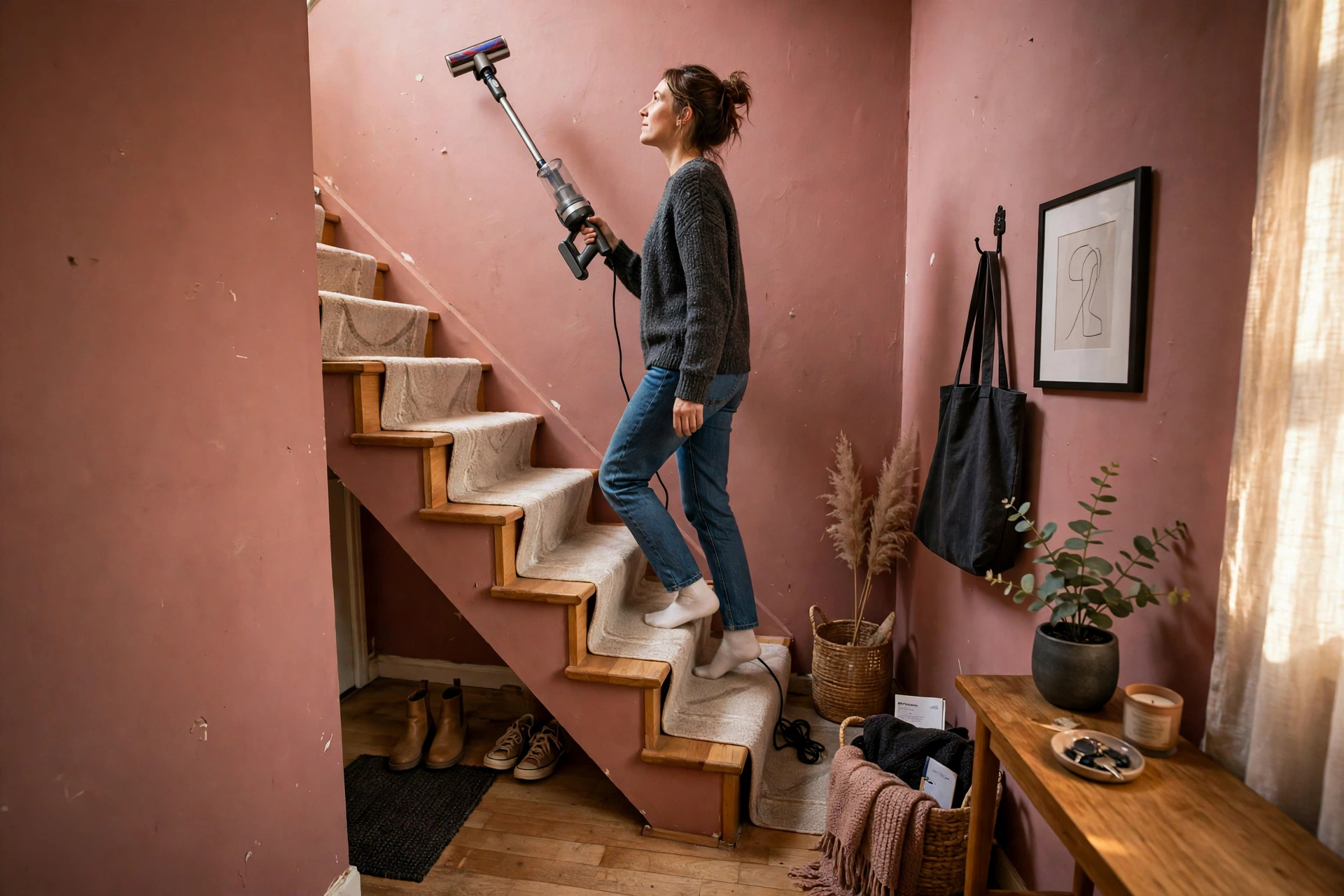
Weight is the third number that decides whether you reach for the vacuum or leave the crumbs. Anything under 4 lb (1.8 kg) feels like a broom. Anything over 7 lb (3.2 kg) feels like a workout by the second room. The lightest pick here is 2.6 lb (1.2 kg). The heaviest is under 9 lb (4.1 kg). Both clean, but only one of them gets grabbed daily.
The 7 picks at a glance
| Pick | Type | Weight | Runtime / power | Bin | Parked footprint | Price, as of November 2026 |
|---|---|---|---|---|---|---|
| Bissell Featherweight 20334 | Corded | 2.6 lb (1.2 kg) | Corded, 15 ft (4.6 m) cord | 0.67 L | 0.55 sq ft (79 sq in) | $39.99 |
| Eureka Blaze NES210 | Corded | 4 lb (1.8 kg) | Corded, 18 ft (5.5 m) cord | 0.6 L | 0.38 sq ft (55 sq in) | $35.99 |
| Vacmaster VSJ01 | Corded | 3.7 lb (1.7 kg) | Corded, 16 ft (4.9 m) cord | 0.5 L | TBC | $36.99 |
| Shark Rocket HV301 | Corded | Under 9 lb (4.1 kg) | Corded, 25 ft (7.6 m) cord | 0.29 L | 0.71 sq ft (103 sq in) | $109.99 |
| Levoit LVAC-200 | Cordless | 6.2 lb (2.8 kg) | Up to 50 min Eco, 30 min with floor head, 12 min Turbo | 0.75 L | 0.52 sq ft (75 sq in) | $139.93 |
| Tikom V500 | Cordless | 5.5 lb (2.5 kg) | Up to 32 min max | 1.3 L | 0.65 sq ft (93 sq in) | $79.94 |
| Dyson V12 Detect Slim | Cordless | 5.2 lb (2.4 kg) | Up to 60 min Eco, under 10 min on Boost | 0.35 L | 0 sq ft (wall dock) | $649.99 |
Prices are live-checked November 2026 list prices from manufacturer and retailer listings. Sale prices move often, so treat these as the band to expect, not a promise. Footprints are computed from published product dimensions (length x width at the floor). The Vacmaster footprint is TBC because its listing gives no full dimensions. The Dyson parks on its wall dock, so it takes zero floor space.
1. Bissell Featherweight 20334, the ultra-light grab-and-go
Best for: quick daily cleanups on hard floors, stairs, and crumbs under the table.
Main advantage: at 2.6 lb (1.2 kg) it is the lightest pick here, and it splits into a hand vacuum for stairs and upholstery. The 0.67 L cup is generous for the price.
Watch out for: the 15 ft (4.6 m) cord means re-plugging in a bigger flat, and there is no swivel head, so steering around chair legs takes more wrist work. BISSELL lists two weights on its own pages, 2.6 lb in the spec table and 2.9 lb in the FAQ, so treat 2.6 lb as the body-only figure.
Verdict: buy it if you want the cheapest, lightest stick that still works. It is a second vacuum that does a first vacuum’s daily job.
Deposit-Risk rating: 1 out of 5. No wall dock, no screws, washable filter, nothing to reverse.
2. Eureka Blaze NES210, the cheapest real vacuum here
Best for: renters on a tight budget who mostly have hard floors and one low-pile rug.
Main advantage: an 18 ft (5.5 m) cord, swivel steering, and a washable foam filter for $35.99 at Target (about $32 at Amazon as of November 2026). The 3-in-1 design turns into a hand vacuum with an onboard crevice tool.
Watch out for: it is loud. Eureka’s listing gives 84 dB, the loudest published figure in this guide. The 240 W motor is also the weakest here, so it suits surface dirt, not deep carpet.
Verdict: the best value in the whole list if noise does not bother you and your floors are mostly hard. Skip it if you clean while a baby naps.
Deposit-Risk rating: 1 out of 5. It leans in a closet corner and asks for nothing from your walls.
3. Vacmaster VSJ01, the quiet one
Best for: thin-walled apartments where the neighbours hear everything.
Main advantage: a published 70 dB noise level, the lowest in this guide, plus a washable HEPA filter and 14 kPa suction for $36.99. At 3.7 lb (1.7 kg) it is easy to carry one-handed.
Watch out for: the 0.5 L bin is small, so pet hair fills it fast, and the listing gives no full dimensions, so its parked footprint is TBC. The 16 ft (4.9 m) cord is a middle ground, not generous.
Verdict: buy it if quiet matters more than bin size. It is the only pick here that solves the neighbour problem with a published number instead of a promise.
Deposit-Risk rating: 1 out of 5. Corded, dock-free, and the filter washes clean.
4. Shark Rocket HV301, the corded deep cleaner
Best for: homes with a real rug or carpet that a 240 W motor cannot handle.
Main advantage: nonstop corded suction with a HEPA filter, a 25 ft (7.6 m) cord, and a 2-in-1 design that converts to a handheld for stairs and sofas. Shark lists it at $109.99 at Target, down from a $199.99 list price as of November 2026.
Watch out for: it does not stand on its own. Shark says so plainly, and owners report the same top-heavy tip. You need a corner to lean it in or a hook to hang it from. The 0.29 L bin is also the smallest here, so empty it after every clean.
Verdict: the strongest corded cleaner in this list, but only if you have a parking spot planned. Power means little if the vacuum falls over every time you let go.
Deposit-Risk rating: 2 out of 5. No screws needed, but a falling vacuum can scuff a wall, and a hook is the tidy fix.
5. Levoit LVAC-200, the everyday cordless
Best for: daily cordless cleaning in a flat with a pet or long hair.
Main advantage: an anti-tangle brush roll, LED headlights, and a genuinely useful runtime split: up to 50 minutes with tools in Eco mode, 30 minutes with the floor head, and 12 minutes in Turbo. The battery comes out to charge, and a wall mount is in the box. Price as of November 2026 is $139.93 at Amazon, down from a $199.99 list.
Watch out for: at 6.2 lb (2.8 kg) as a full stick it is the heaviest cordless pick here, though the handheld body alone is only 3.2 lb (1.5 kg). Levoit publishes no kPa suction figure, and third-party roundups cite 70 AW, so compare it on runtime and features, not on a suction number.
Verdict: the best everyday cordless for most small apartments. It finishes 500 sq ft twice per charge with the floor head on, which is the margin that makes cordless feel effortless.
Deposit-Risk rating: 2 out of 5. The included wall mount uses screws and anchors, so use adhesive strips or a freestanding lean if your lease is strict.
6. Tikom V500, the budget cordless with flagship numbers
Best for: renters who want cordless freedom and strong suction without paying a premium brand price.
Main advantage: a 450 W motor with up to 40 kPa suction, a 1.3 L bin, a HEPA filter, an LED touch screen, and a charging wall dock in the box, for $79.94 at Amazon as of November 2026 (list $89.99). The 32-minute max runtime covers two full passes over 500 sq ft on low power, or about one pass on max.
Watch out for: 5.5 lb (2.5 kg) is not light for handheld use, and Tikom publishes no dB figure, so noise is an open question. The 32-minute headline assumes low power. On max, expect closer to 15 minutes.
Verdict: our top pick overall. It is the only pick under $100 that pairs big suction with a big bin and a dock, and that combination is what makes a small-apartment vacuum disappear into daily life.
Deposit-Risk rating: 2 out of 5. The dock needs screws, so plan an adhesive or lean-to alternative before you drill.
7. Dyson V12 Detect Slim, the premium pick
Best for: allergy households and anyone who wants the laser dust light and the longest runtime.
Main advantage: 150 AW suction, up to 60 minutes in Eco mode, a 0.35 L bin, whole-machine filtration, and a laser Fluffy head that shows dust you would otherwise miss. Dyson lists it at $649.99, with a $429.99 promotion that ended November 14, 2026.
Watch out for: the price. At $649.99 it costs more than the other six picks combined, and the 0.35 L bin needs emptying after nearly every clean. Boost mode drains the battery in under 10 minutes, so the 60-minute figure only applies in Eco mode.
Verdict: buy it if you have allergies, hate charging anxiety, and the budget is real. For most renters, the Tikom does 80 percent of this job for one eighth of the price.
Deposit-Risk rating: 2 out of 5. The docking station screws to the wall, and the battery is a wear item after a few years, not a deposit risk today.
If you also want upright and canister options alongside sticks, our broader vacuum guide for small apartments covers those in one place.
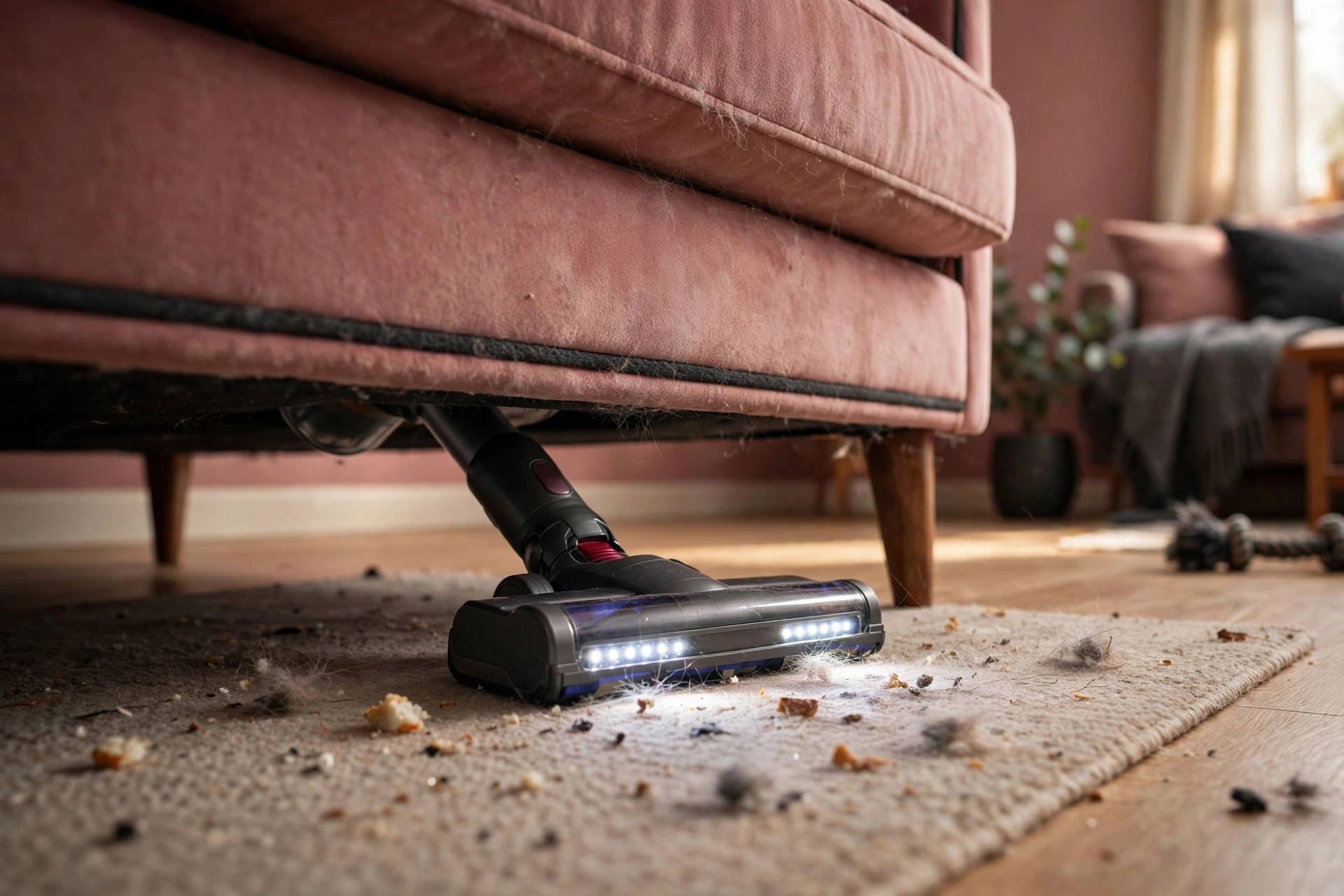
Corded vs cordless: which one fits a small apartment?
Corded wins on power and price. A $36 corded stick never runs out, never needs a new battery, and costs less than a dinner out. The trade is the cord. In a 500 sq ft flat, a 15 ft cord means one outlet per room, and an 18 ft cord usually covers a room and a half. If your flat has one outlet per room, corded is barely an inconvenience.
Cordless wins on habit. You grab it, clean for ten minutes, and dock it. No cord to wrap, no plug to hunt for. The trade is the battery. Budget cordless sticks give you 30 minutes of real cleaning, premium ones give you 60 in Eco mode, and every one of them fades after two or three years. A removable battery, like the Levoit’s, softens that blow because you can swap it instead of replacing the vacuum.
My take: if you clean once a week in a single session, corded is the smarter buy. If you clean in short bursts, cordless is the one you will actually use. The most overrated buy in this niche is the ultra-cheap corded stick bought as a “second vacuum” that then becomes the only vacuum, with a tiny bin and a short cord doing a job it was never sized for. Buy the corded stick that fits the whole flat, or buy cordless.
How loud is a stick vacuum, really?
Here is the honest answer: most brands do not tell you. Of the seven picks in this guide, only four publish a noise figure at all. Dyson, Shark, and Tikom publish none. That silence is the norm, not the exception, and it is why “quiet vacuum” claims in roundups are usually just vibes.
The published figures, as of November 2026, are:
| Pick | Published noise |
|---|---|
| Vacmaster VSJ01 | 70 dB |
| Levoit LVAC-200 | 77.5 dB (Amazon listing) |
| Bissell Featherweight 20334 | 80 dB (Amazon listing) |
| Eureka Blaze NES210 | 84 dB |
| Shark Rocket HV301 | Not published |
| Tikom V500 | Not published |
| Dyson V12 Detect Slim | Not published |
For scale, 70 dB is about the level of a normal conversation heard through a wall, and 84 dB is closer to busy traffic. A 14 dB gap sounds small on paper. In a thin-walled flat at 10 pm, it is the difference between a neighbour who notices and a neighbour who knocks. If you clean late, pick the Vacmaster and keep the sessions short. If you clean midday, any of these seven is fine.
One more note: a few roundups cite 84 dB for the Dirt Devil Power Express Lite, but the live November 2026 listings I checked give 78 dB for that model. I did not pick the Dirt Devil for this guide, and I am not repeating a number I could not verify on a live listing. That is the same rule I applied to every figure here.
Where to store it: the wall dock decision
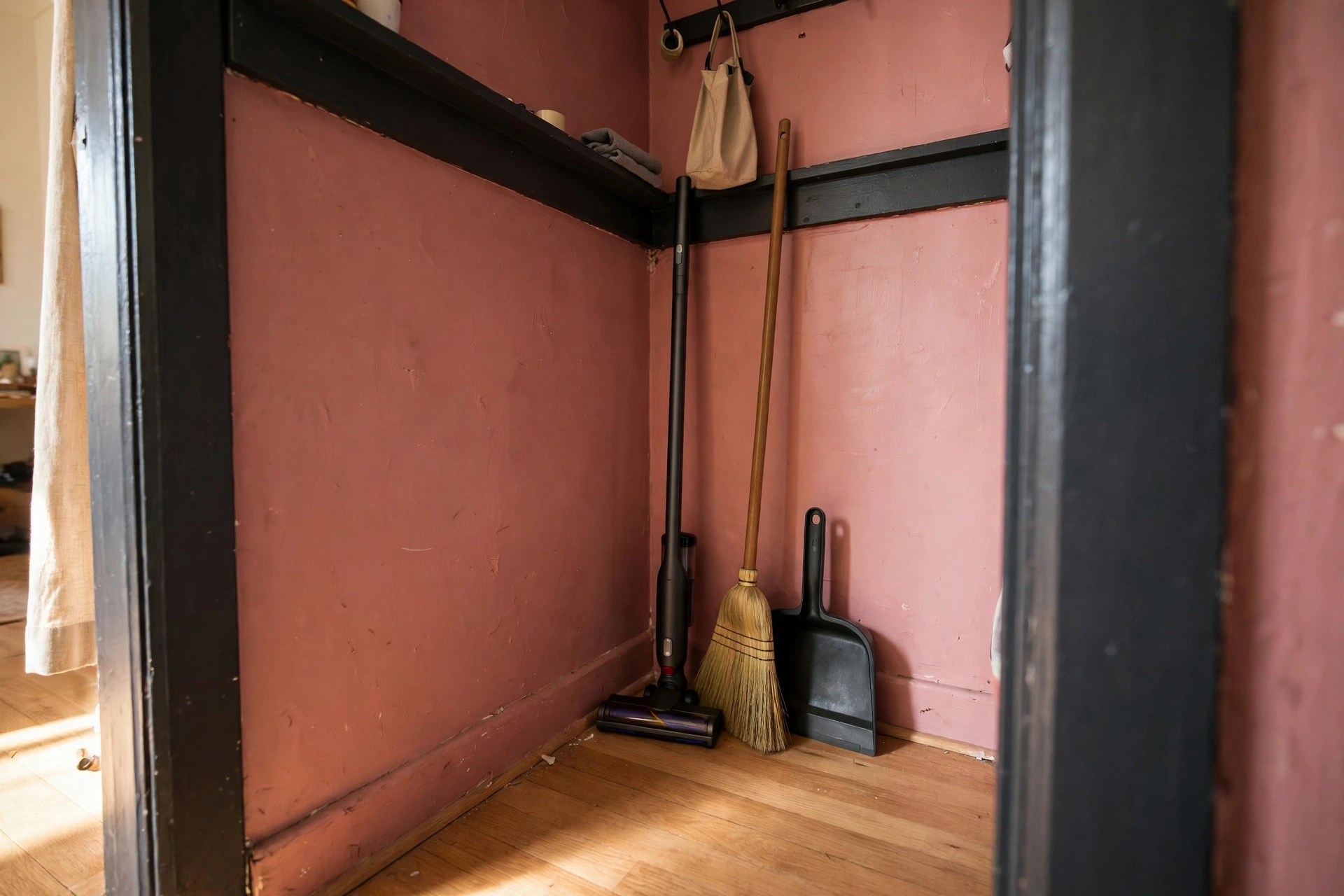
A stick vacuum only disappears into a closet if it has a parking spot. Otherwise it leans behind the door, falls over, and blocks the laundry basket. There are three ways to park one, and the renter-safe order is not the obvious one.
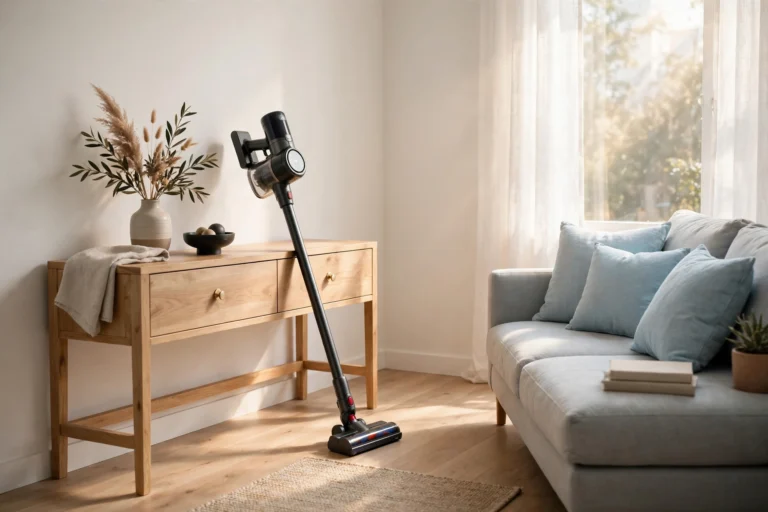
Freestanding lean. Cost: $0. Lean the vacuum in a closet corner or behind a door. Works for the Bissell, Eureka, and Vacmaster, which are light and bottom-heavy enough to stay put. Fails for the Shark Rocket, which is top-heavy and tips. Risk: a scuffed wall if it slides. Fix: a small felt pad on the wall where the handle rests.
Adhesive hook or strip mount. Cost: about $7 to $13 for a pack of large Command strips, based on a range previously checked on this site. Stick a heavy-duty hook to the wall, hang the vacuum by its loop or handle, and peel it off when you move. Works for every pick here except the Dyson, whose dock is too heavy for adhesive. Risk: almost zero, as long as you follow the strip’s weight limit and removal steps.
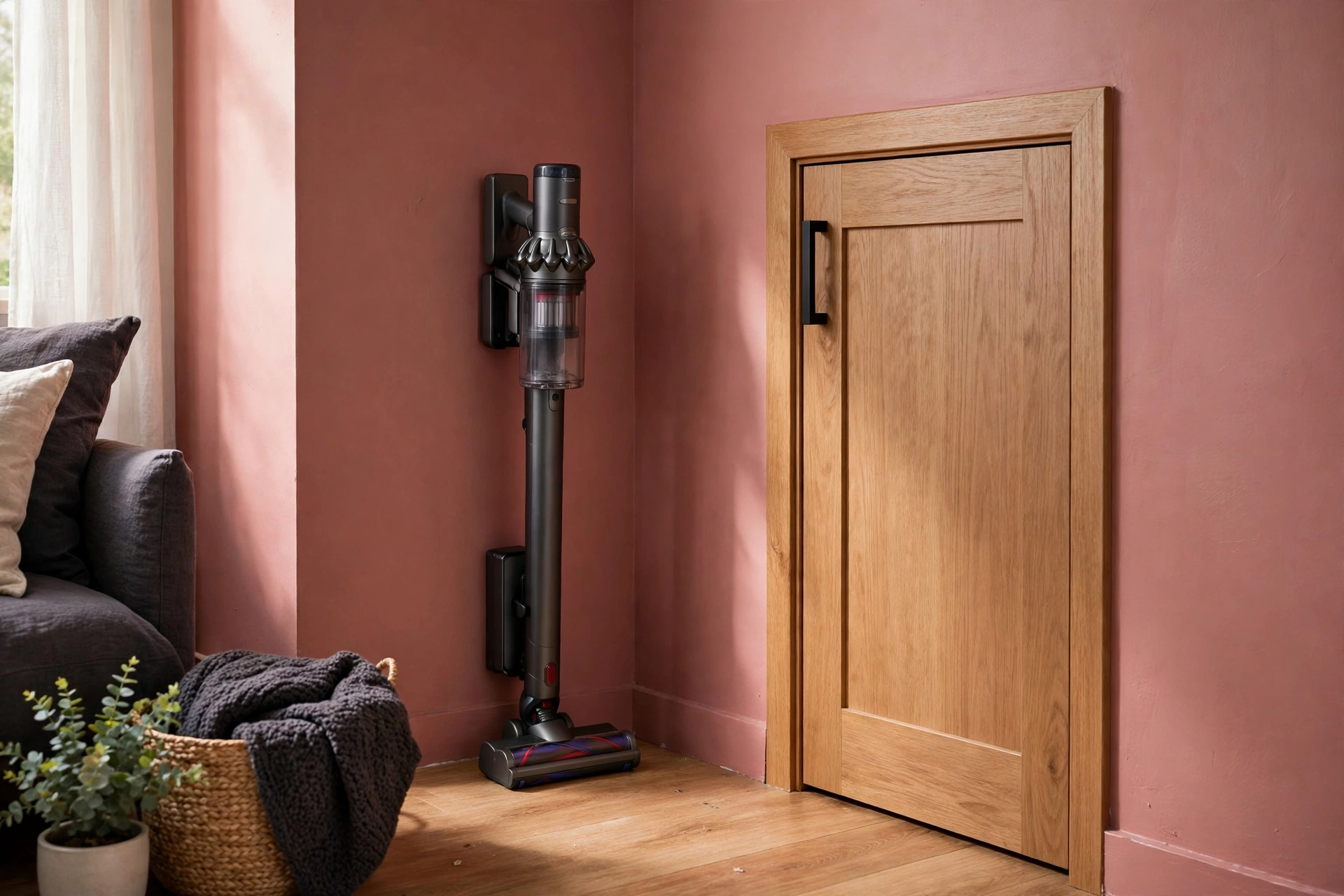
Screw-mount dock. Cost: $0, the hardware is in the box for the Levoit, Tikom, and Dyson. Two screws and two anchors hold the dock and charge the battery at the same time. This is the tidiest option and the one that makes cordless feel effortless. Risk: two small holes to fill at move-out, which is a normal wear repair in most leases but still worth checking first.
In a studio, the dock belongs on the one wall you never sit against, which is the same kind of zoning that makes studio apartment layouts that make one room feel bigger work. If the only free wall is inside the laundry closet, treat the dock like any other tool in your small laundry room organization ideas and keep the filter and attachments in a small basket beside it.
What it costs: the full picture, as of November 2026
| Pick | Purchase price | Year-1 running costs | Year-1 total |
|---|---|---|---|
| Eureka Blaze NES210 | $35.99 | $0 (washable foam filter) | $35.99 |
| Vacmaster VSJ01 | $36.99 | $0 (washable HEPA filter) | $36.99 |
| Bissell Featherweight 20334 | $39.99 | $0 (washable disk filter) | $39.99 |
| Tikom V500 | $79.94 | TBC (replacement HEPA filter price not verified) | $79.94 + TBC |
| Shark Rocket HV301 | $109.99 | $0 (washable HEPA filter; replacement filter kit price TBC) | $109.99 |
| Levoit LVAC-200 | $139.93 | TBC (Levoit suggests replacing the filter every 3 months; pack price not verified) | $139.93 + TBC |
| Dyson V12 Detect Slim | $649.99 | $0 (washable filter; battery is not a year-1 cost) | $649.99 |
| All seven together | $1,092.82 | ||
| Three cheapest corded picks | $112.97 |
Check the sums: 35.99 + 36.99 + 39.99 = 112.97. Add 79.94 + 109.99 + 139.93 + 649.99 = 979.85. Then 112.97 + 979.85 = 1,092.82. The point of the total is not to buy all seven. It is to show the gap: the three cheapest corded picks together cost $112.97, while the Dyson alone costs $649.99, which is nearly six times as much. Storage extras are small either way: a pack of large Command strips runs about $7 to $13, and a felt wall pad costs a dollar or two.
Time estimate: allow about 30 minutes to compare and order, 15 minutes to unbox and do a first clean, and about 20 minutes to fit a wall dock if you use one. A corded pick with no dock takes under 10 minutes from box to first clean.
How to pick the best compact vacuum for small apartments
Follow these seven steps in order. Each one rules something out, so by step seven there is usually one pick left.
- Measure your floor. Count the square feet and note how much is hard floor and how much is rug. Under 600 sq ft with mostly hard floors, any pick here works.
- Time one clean. Walk the flat at normal pace and count the minutes. If it takes more than 15 minutes, a cordless pick needs at least 30 minutes of floor-head runtime.
- Pick corded or cordless. Corded if you clean weekly in one session and want the lowest price. Cordless if you clean in short bursts and hate cords.
- Check the bin. Under 0.5 L means emptying after every clean. Over 1 L means emptying every third or fourth clean. Pet hair fills bins twice as fast.
- Check the weight in your hand, not on paper. Under 4 lb feels like a broom. Over 7 lb feels like a workout. If you carry it up stairs, stay under 5 lb.
- Check the noise figure, if one is published. Under 75 dB is neighbour-friendly. Over 80 dB is a daytime-only machine. No published figure means you are guessing.
- Plan the parking spot before you buy. A wall dock, a hook, or a closet corner. If the vacuum has nowhere to live, it will live behind the door and fall over.
Mistakes to avoid
Buying on Eco-mode runtime. The headline number assumes the lowest power with a crevice tool. Your real number is the floor-head runtime, which is usually half the headline. The Levoit is honest about this split. Most brands are not.
Ignoring the bin. A small bin on a pet-hair flat means stopping twice per clean to empty it. That kills the habit faster than a weak motor does.
Buying a stick for deep carpet. Stick vacuums are surface cleaners. If your flat is wall-to-wall medium-pile carpet, a stick will disappoint you no matter what the box says. That is an upright’s job.
Drilling first, reading the lease second. Two small holes are cheap to fill, but some leases ban wall fixings outright. Stick the dock plan to the lease, not the other way round.
Chasing the highest kPa. Suction numbers are measured differently by every brand, and some brands do not publish them at all. A 40 kPa Tikom and a 150 AW Dyson are not measured on the same scale, so do not rank picks by that number alone.
What to skip
A second ultra-cheap corded stick as a backup. One good stick beats two weak ones. The backup ends up in the closet, and the main vacuum still does all the work.
A stick with no replacement filters or batteries listed. If the brand does not sell spares, the vacuum is disposable. All seven picks here have washable filters, and the Levoit and Dyson sell spare batteries.
A “quiet” pick with no published dB figure. Quiet is a claim, not a spec. If the brand will not print the number, treat the claim as marketing.
A premium pick for a flat you will leave in a year. A $650 vacuum is a five-year buy. If your lease ends in twelve months, spend $80 and put the rest toward the move.
A quick word for renters
Check your lease before you screw anything to a wall. Most leases allow small picture hooks and require you to fill holes at move-out, but some ban wall fixings in bathrooms and kitchens outright. A wall dock is two small holes, and filling them takes ten minutes with filler and a dab of paint. An adhesive hook needs no filling at all. Either way, keep the dock hardware and the original screws in a labelled bag, photograph the wall before you mount anything, and reverse the whole setup on moving day. Your deposit is safer than your vacuum is.
Sources
Prices and specs in this guide were live-checked on November 15, 2026 from manufacturer and retailer listings: BISSELL’s Featherweight 20334 page (bissell.com), Target listings for the Dirt Devil Power Express Lite, Eureka Blaze, and Shark Rocket HV301, Amazon listings for the Levoit LVAC-200, Tikom V500, Vacmaster VSJ01, and Eureka Blaze, and Dyson’s V12 Detect Slim page (dyson.com). Noise figures are listing figures only: Eureka Blaze 84 dB, Vacmaster VSJ01 70 dB, Bissell Featherweight 80 dB, Levoit LVAC-200 77.5 dB. Dyson, Shark, and Tikom publish no dB figure. Runtime and suction figures are manufacturer claims, not independent measurements, and this guide states which mode each runtime figure applies to wherever the listing gives that detail.
How this was made: we compared manufacturer specs and live November 2026 retailer prices for seven stick vacuums, then computed the weight, runtime, footprint, and cost tables from those published figures. No products were tested hands-on.

What is the best vacuum for a small apartment?
The best compact vacuum for small apartments depends on your floors and your budget. For most renters, a cordless stick with at least 30 minutes of floor-head runtime and a bin over 0.75 L is the sweet spot. The Tikom V500 at about $80 is our top pick, and the Eureka Blaze at about $36 is the best budget choice.
How long should a cordless stick vacuum run?
It should run at least 15 minutes with the floor head on, because one pass over a 500 sq ft apartment takes about 12 to 15 minutes. A 30-minute floor-head runtime gives you two full cleans per charge, which is the comfortable margin. Ignore Eco-mode headlines and read the floor-head number.
Are stick vacuums good for apartments?
Yes, for hard floors and low-pile rugs, which is what most small apartments have. Stick vacuums are light, store in a closet corner or on a wall dock, and handle daily dirt well. They struggle with deep medium-pile carpet, where a full-size upright does a better job.
Can a stick vacuum replace a full-size vacuum?
In a small apartment with hard floors, yes, for most people. A good stick handles daily cleaning and pet hair on hard floors and low-pile rugs. If your flat is mostly medium-pile carpet, keep a full-size vacuum for a weekly deep clean and use the stick for daily touch-ups.