Small Laundry Room Organization: 12 Ideas That Make a Cramped Laundry Closet Feel Like a Real Room
A tiny laundry room organizes best when every surface earns its keep: shelves above the machines, a slim cart in the side gap, a compact sorting system, and a fold-down way to dry and fold. With the right 12 moves, even a 3-by-6-foot laundry closet can hold supplies, sorted laundry and a real folding station — no renovation needed.
Before buying a single bin, grab the tape measure. Note the exact gap between the machines (and beside them), the depth from the wall to the machine fronts, and the clearance behind for hoses and the dryer vent — 4 to 6 inches (10 to 15 cm) of dead space back there is normal, and a shelf that’s too deep will sit crooked on it — but that same slim gap beside the machines is also where the best vacuum for small apartments can stand upright. Everything below assumes a closet-sized laundry space, but the same moves work in a corner of a bathroom or garage.
How Do You Use the Wall Above the Washer and Dryer?
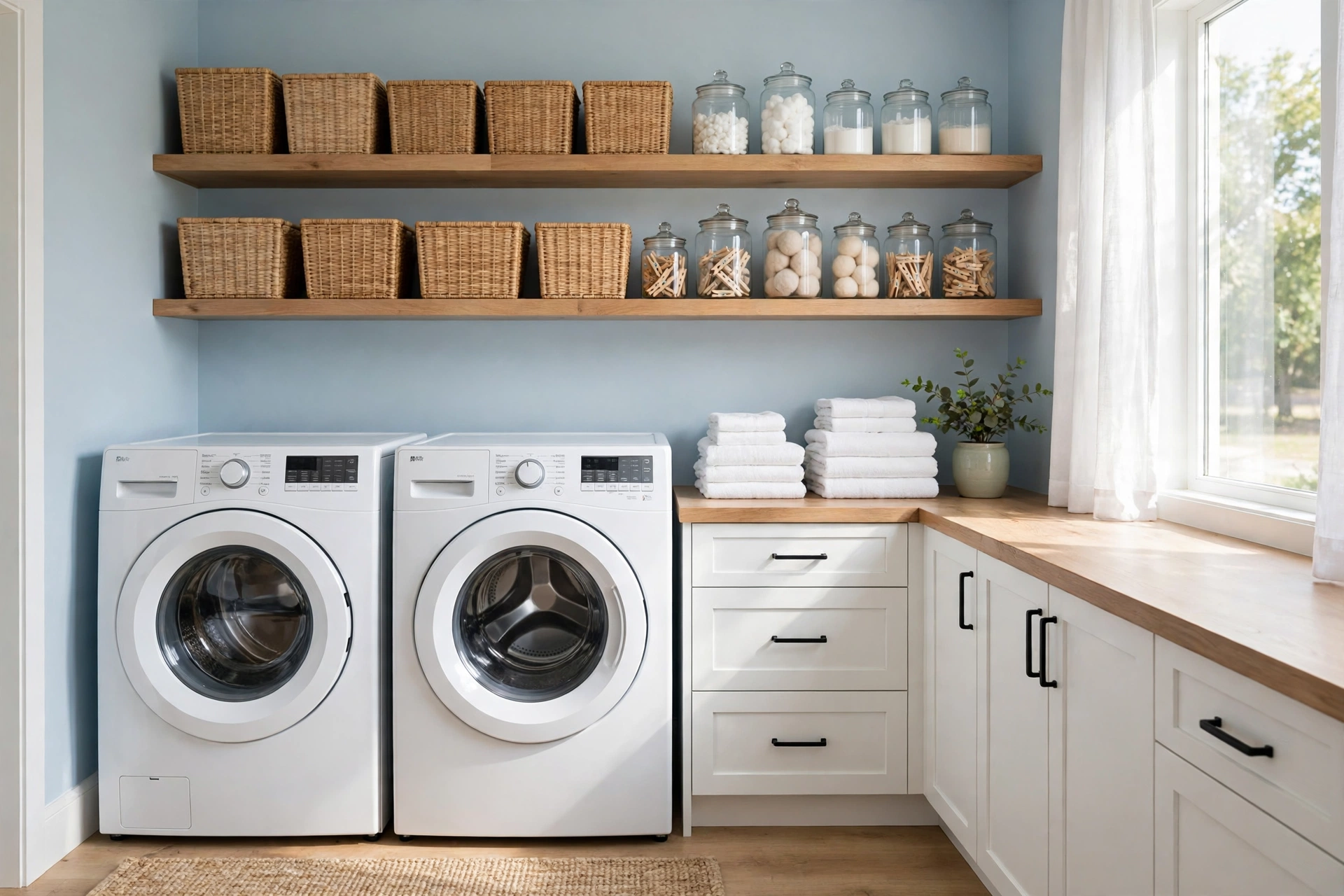
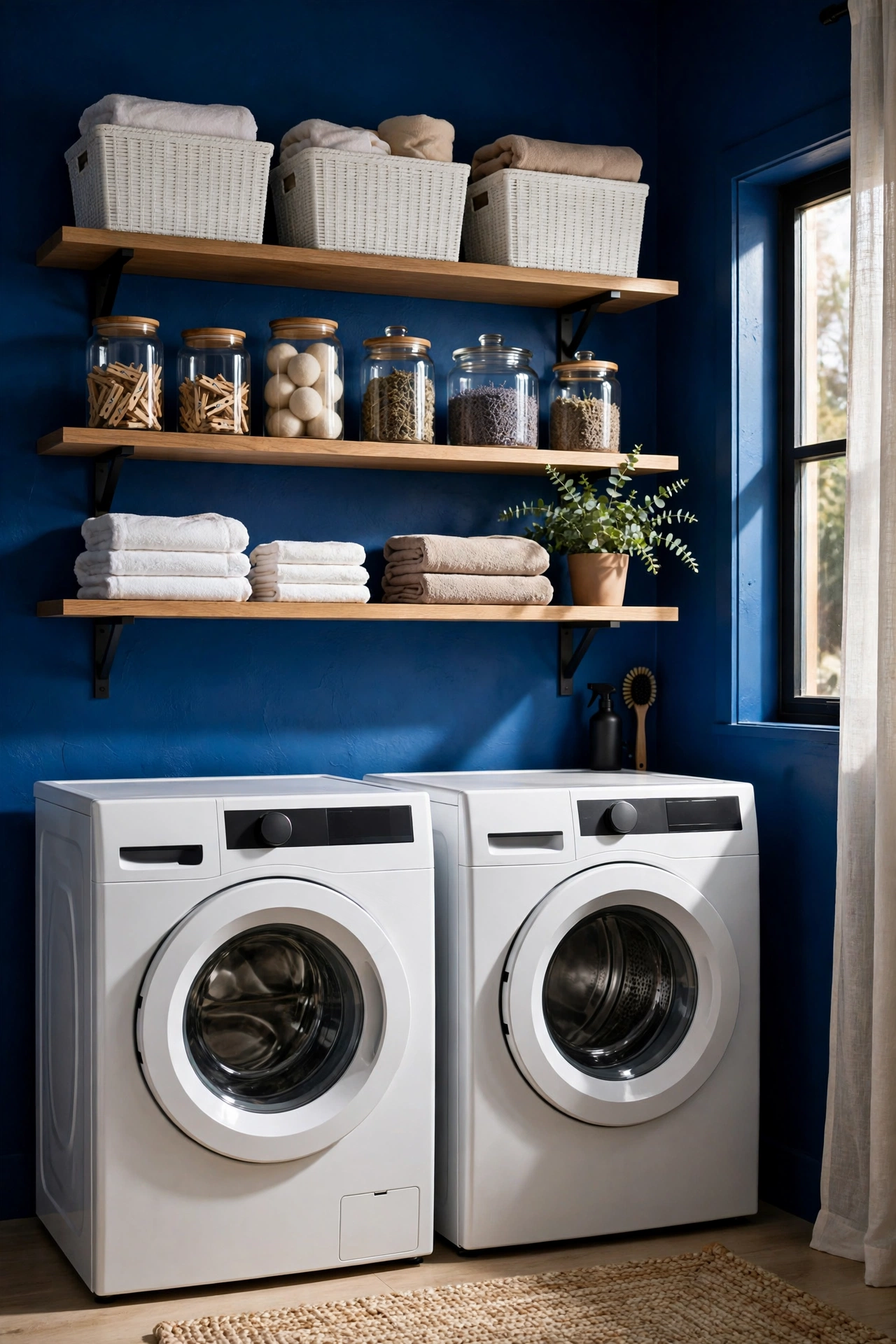
The wall above the machines is the single biggest storage win in a small laundry room — usually 6 to 8 square feet (0.5 to 0.75 sq m) of empty air begging for shelves. If you have a top-loader, leave 15 to 18 inches (38 to 46 cm) of clearance between the machine lid and the first shelf so the lid opens fully; with front-loaders, you can drop shelves to 12 inches (30 cm) above the machines. One 8-foot (244 cm) pine shelf board, two brackets, and a $12 tube of wood glue cost less than a fast-food dinner for two and hold detergent, mesh wash bags and the mystery-sock basket for years.
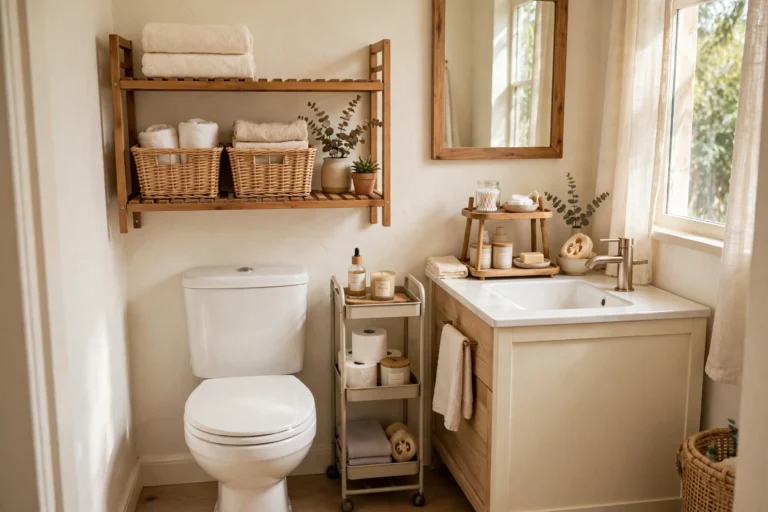
Renters and anyone who doesn’t want to drill: freestanding over-the-washer shelf units straddle the machines and lean on them for stability, no wall holes required. The same above-the-fixture shelving trick from our small bathroom storage ideas works here — vertical real estate is always cheaper than floor space. Mount a pegboard panel on the remaining wall and hang the lint roller, stain brush and a small basket of clothespins on S-hooks so nothing migrates onto the machines themselves.
What’s the Best Way to Shrink the Machines’ Footprint?
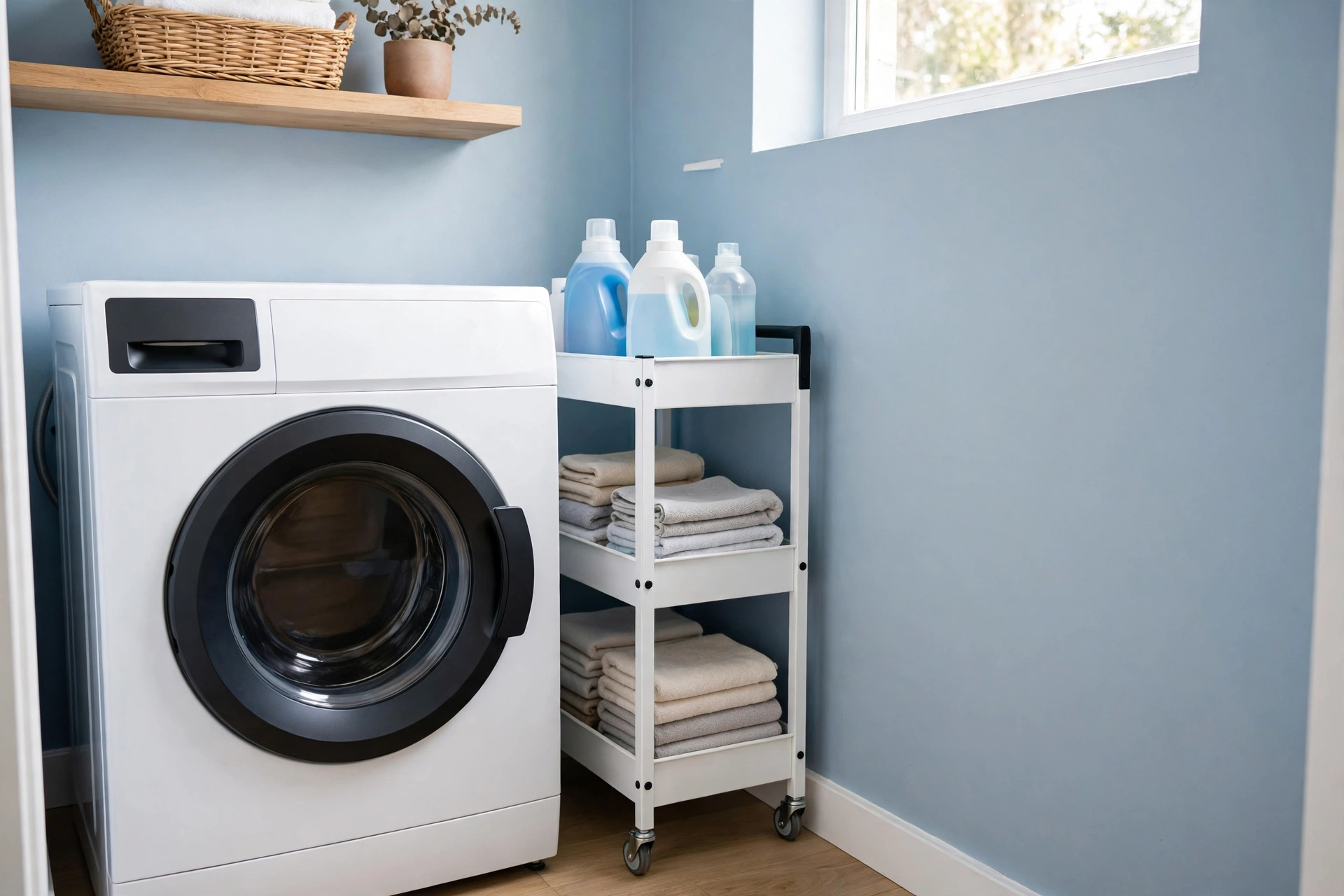
A stacking kit turns a side-by-side pair into a single tower and hands you back roughly 12 square feet (1.1 sq m) — enough for a sorting station or a folding cart. Only front-loaders stack, and the kit must match your machine brand, so check the model numbers before ordering. If stacking isn’t an option, slide a slim rolling cart into the 6-to-8-inch (15-to-20-cm) gap between or beside the machines; the three-tier ones hold detergent, dryer sheets and stain remover in about one square foot of floor space and roll out when you need them.
Laundry closets with bifold doors get an instant upgrade from a tension-rod curtain or a sliding panel — the clutter disappears and the hallway looks finished.
Where Does the Sorting Go in a Tiny Laundry Room?
Skip the triple-compartment rolling sorter that needs four square feet you don’t have. A tall, narrow hamper — the kind sold for closets — fits a 12-inch (30 cm) wide slot and holds a full whites load. Or hang three labeled laundry bags (whites, darks, delicates) from over-the-door hooks on the closet door’s inside face: sorting happens at the moment clothes go in, which is the only sorting system anyone actually maintains.
Small stackable bins that earned their shelf space in our storage bin comparison work brilliantly as the “in-between” stage — one bin for clothes waiting to be washed, one for the load that just came out of the dryer but hasn’t been folded. Keep one spare bin empty and it becomes your instant clutter catch-all when guests show up. The rule is simple: laundry in progress always has a home, so it never lands on the floor.
Can You Really Fold and Air-Dry Without Floor Space?
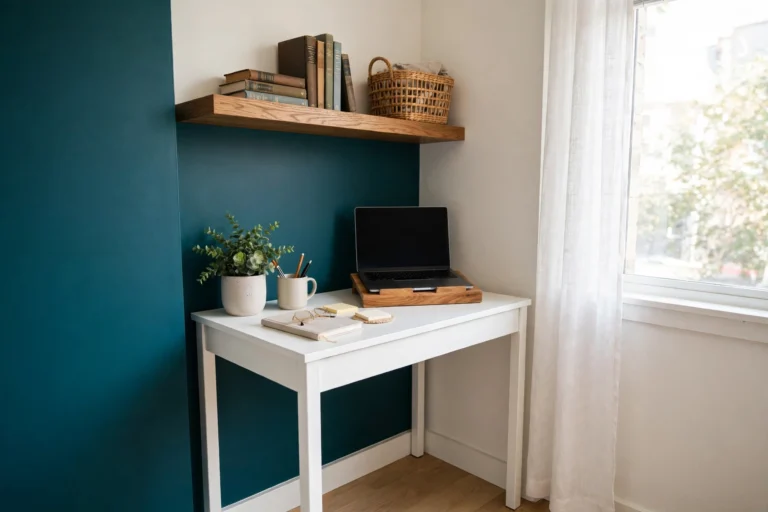
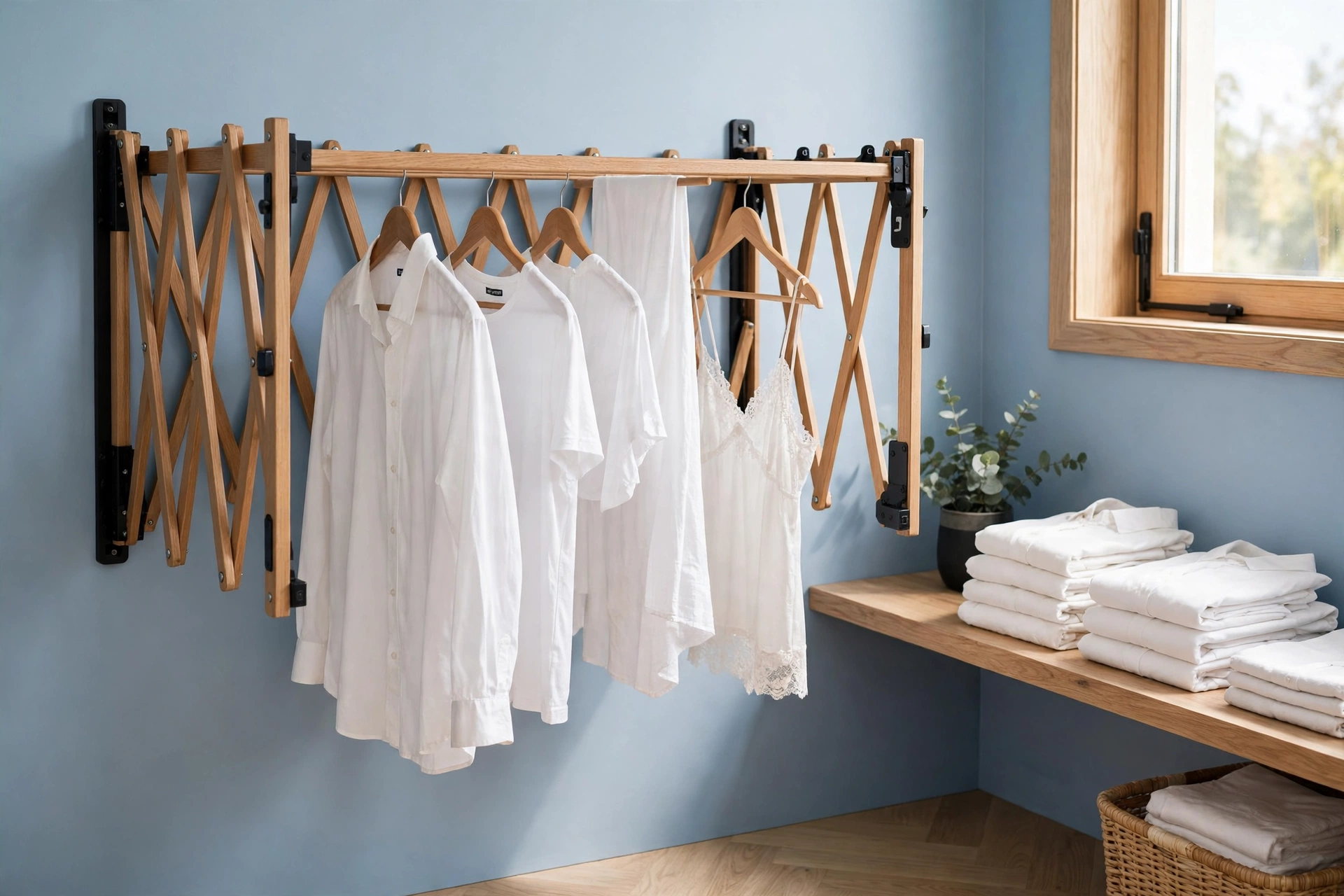
Yes — go vertical and go collapsible. A countertop laid across the top of a front-loader pair creates an instant 24-by-60-inch (61-by-152-cm) folding surface for about $40 of butcher-block offcut; add two side battens and it lifts off when you need machine access. Top-loaders can’t take a countertop, so a wall-mounted fold-down table (the 16-by-24-inch / 41-by-61-cm ones sold as laptop tables work perfectly) is the move — fold it flat against the wall when you’re done.
For air-drying, a wall-mounted accordion rack holds a full delicate load in 6 inches of folded depth, and a retractable clothesline strung across the room vanishes when guests come — though all that wet laundry pumps moisture into the air, so the best dehumidifier for small apartments is the piece that keeps a damp closet from turning musty. Mount a tension rod under the shelf above the machines and you get a hanging rod for drip-drying delicates for free. Wall-mount the ironing board in a slim holder behind the door too — leaning boards in small rooms are a tipping hazard waiting to happen.
How Do You Keep Detergent and Supplies Contained?
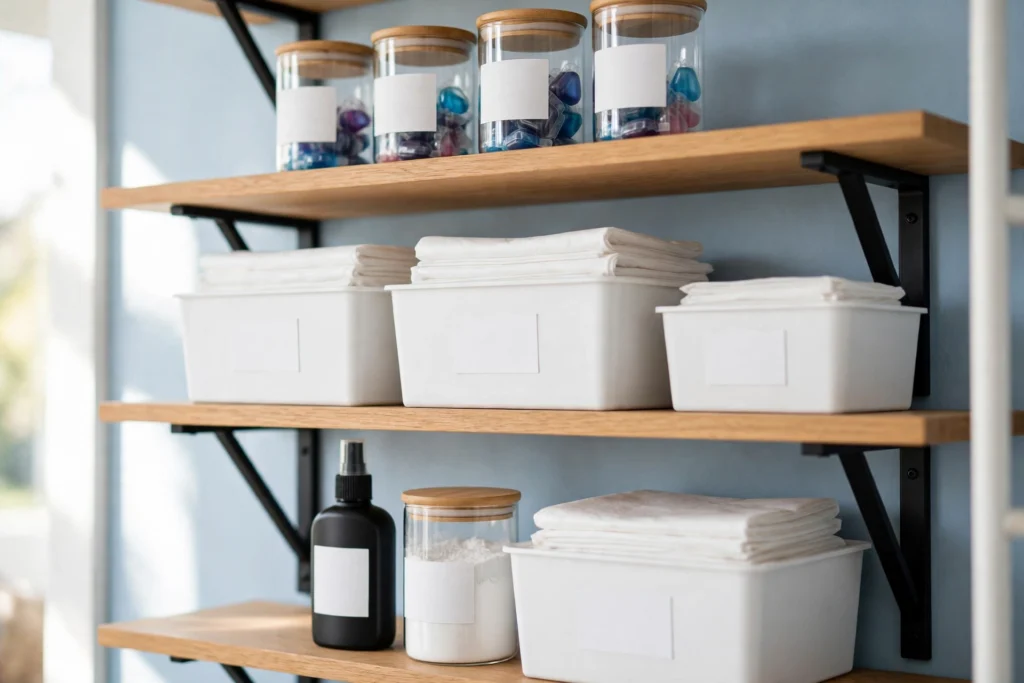
Decant everything. Detergent pods in a clear lidded jar, dryer sheets in a basket, stain sticks in a labeled cup — visible, labeled, and impossible to overbuy because you can see what’s running low. Use the same bottle-containment discipline we recommend in the under-sink storage guide: everything has a container, every container has a spot, and nothing lives on the machines.
An over-the-door organizer on the closet door (or the room’s door) holds the daily-use tier: this week’s detergent, the stain treatment station, dryer balls, a lint bin. Keep a “donation bag” hanging on one hook so single socks and outgrown delicates exit the house instead of breeding in a corner. And once the laundry room behaves, slot it into your bigger plan — it’s one small piece of organizing your whole home room by room, and it pays off every single laundry day.
How do you organize a laundry closet with no shelves?
Use the inside of the doors and the machines themselves: over-the-door organizers, magnetic baskets on the machine sides, a freestanding over-the-washer shelf unit that needs no wall holes, and a slim rolling cart in the side gap. No drilling, no shelves, and everything within reach.
What is the best laundry room space saver?
Stacking the washer and dryer saves the most space in one move — about 12 square feet (1.1 sq m). After that, the slim rolling cart for the 6-to-8-inch (15-to-20-cm) gap between machines gives you three tiers of supply storage in one square foot of floor.
How high should a shelf be above a washer?
Leave 15 to 18 inches (38 to 46 cm) above a top-loader so the lid opens fully, and at least 12 inches (30 cm) above front-loaders. Measure your lid’s swing before you drill — lids vary by brand.
What is the best way to store laundry detergent in a small space?
Decant it into clear, labeled, lidded containers on the shelf or cart closest to the machines, keep only one refill on hand, and store backup stock elsewhere. A small basket corrals the daily-use items (stain remover, dryer balls, mesh bags) in one grab-and-go spot.