Best Paint Colors for Small Dining Rooms With Dark Wood Furniture: 7 Colors That Let the Table Shine
The best paint colors for small dining rooms with dark wood furniture start with the wood, not the paint chart. Read your table first, match the paint undertone to it, and pick from the 7 colors below, each with a manufacturer-published LRV. The safest all-round pick is a warm cream at LRV 82. The most underrated is a muted sage at LRV 30. The one to skip is pure bright white, because it makes dark wood look yellow.
That is the short answer. The long answer is a method, and it takes about ten minutes. Dark wood is the darkest thing in the room, so the wall color has one job: give the table enough contrast to look rich without turning the room into a cave. A light wall does that by bouncing light back. A dark wall does it by making the table glow against it, but only on one wall, never on all four. This post shows you how to read your wood, then gives you 7 colors ranked by LRV, the paint math for a real 10 by 10 ft (3.05 by 3.05 m) dining room, and a cost table with prices checked in November 2026, and once the walls are done, the best rugs for small dining rooms finish the room under the table.
Read the wood first: warm walnut, cool espresso, or red cherry?
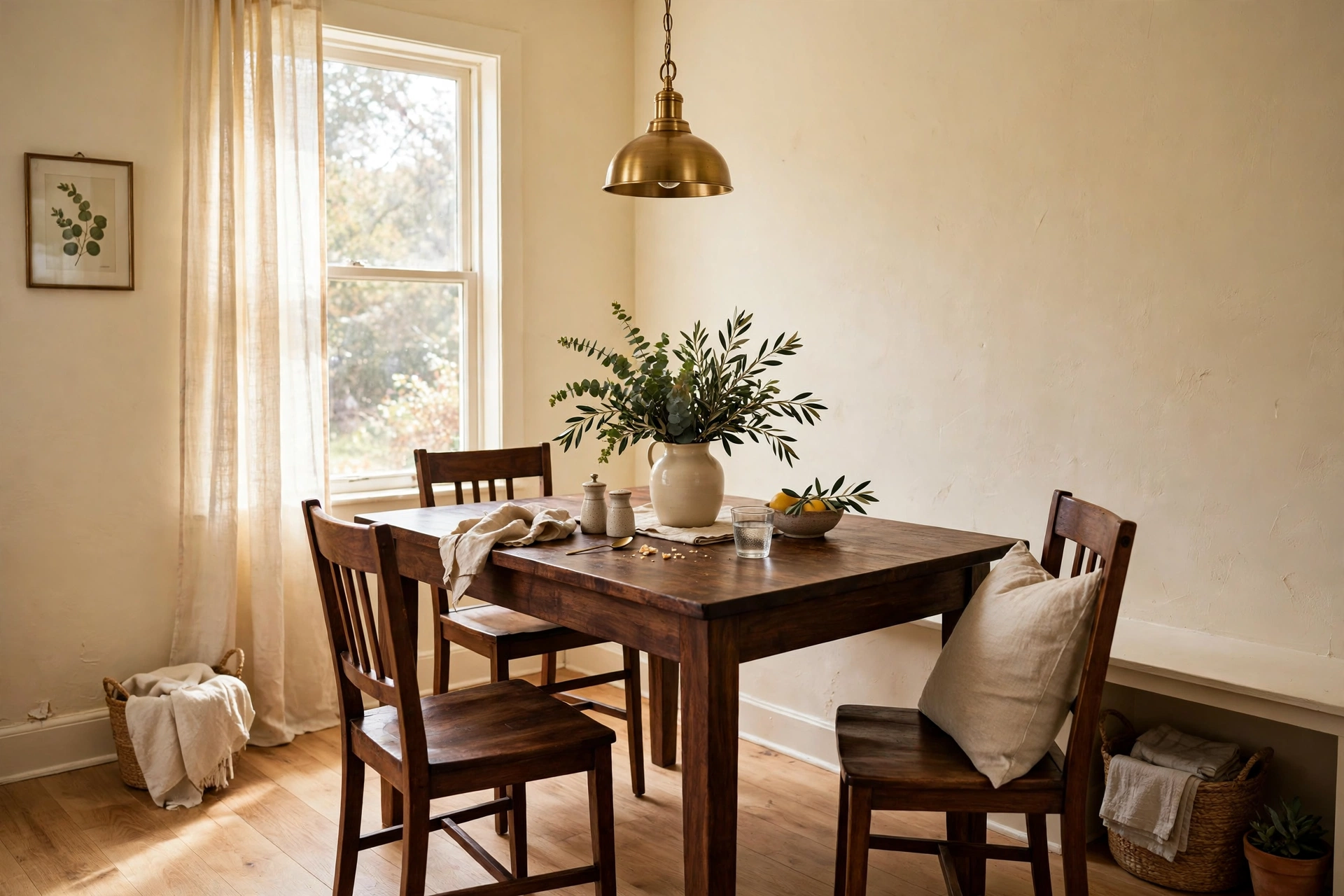
Every dark wood falls into one of three families, and the family decides the paint. Get this wrong and even a good color fights the table. Get it right and almost any color on the ladder below works.
Warm walnut and mahogany. The wood leans orange, honey, or reddish brown. Hold a white sheet of paper next to the table edge in daylight. If the wood looks golden or honeyed beside the paper, it is warm. Warm wood loves warm paint: cream, greige, sage, terracotta, and deep green. It hates cool gray, which turns it muddy and dull.
Cool espresso and ebony. The wood leans gray, charcoal, or near black, with almost no red in it. Beside white paper it looks ashy or smoky. Cool wood pairs best with muted blue-greens, soft greige, and warm cream. It can take a cool undertone in the paint, but keep the paint warm enough that the room does not feel like a cellar at night.
Red cherry. The wood has a clear red or burgundy cast, even in dim light. This is the trickiest family, because red in the wood plus red in the paint equals a room that feels like a steakhouse. Sage green is your friend here. Green sits opposite red on the color wheel, so it calms the red down without fighting it. Avoid terracotta and burgundy walls with a cherry table.
The 30-second test. Tape a paint chip to the wall right next to the table, at table height, not at eye level. Look at it in the evening with the dining light on, because that is when you actually eat in the room. If the chip and the wood look like they belong to the same family, you have a match. If the chip makes the wood look orange, yellow, or dirty, the undertone is wrong. Do this for every color on your shortlist, and trust what you see at 7 p.m. more than what you see at noon.
What are the best paint colors for small dining rooms with dark wood furniture?
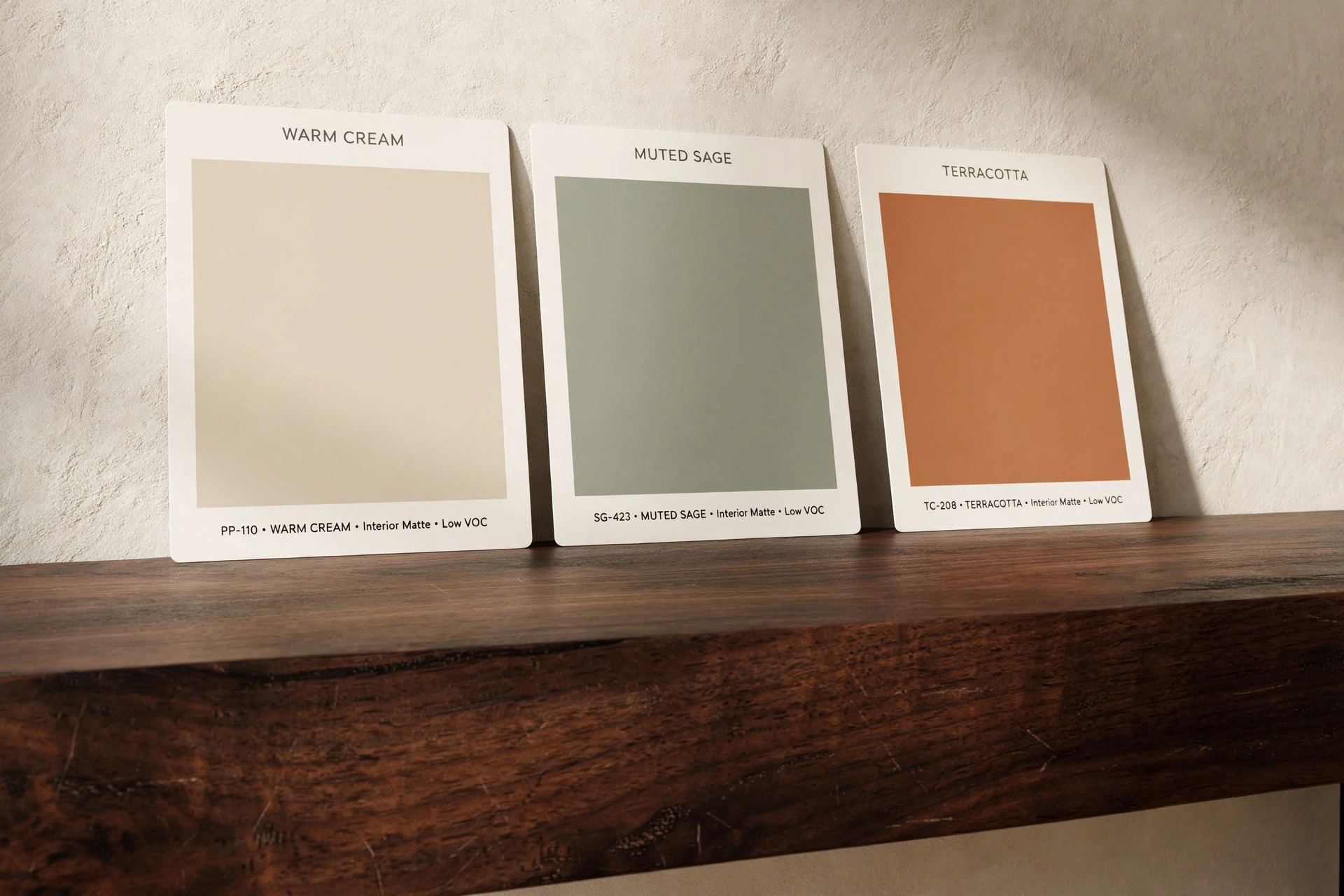
This is the part most guides skip: the best paint colors for small dining rooms with dark wood furniture are the ones whose undertone matches the table, not the ones that look best on a chip. The ladder below runs from the lightest color to the darkest, and every LRV comes from the manufacturer, Sherwin-Williams or Benjamin Moore, checked in November 2026. LRV, or Light Reflectance Value, runs from 0 (black) to 100 (white). It tells you how much light a color bounces back. A higher number means a brighter room. Use it as your brightness guide, then use the undertone test above as your color guide. The two together beat any single recommendation.
| # | Color | Brand and code | LRV | Best on |
|---|---|---|---|---|
| 1 | Alabaster | Sherwin-Williams SW 7008 | 82 | All four walls |
| 2 | Rainwashed | Sherwin-Williams SW 6211 | 59 | All four walls |
| 3 | Accessible Beige | Sherwin-Williams SW 7036 | 58 | All four walls |
| 4 | Evergreen Fog | Sherwin-Williams SW 9130 | 30 | All four walls in a bright room, one wall in a dim room |
| 5 | Cavern Clay | Sherwin-Williams SW 7701 | 20 | One accent wall |
| 6 | Rosemary | Sherwin-Williams SW 6187 | 14 | One accent wall |
| 7 | Hale Navy | Benjamin Moore HC-154 | 8.36 | One accent wall |
1. Alabaster SW 7008, LRV 82, warm cream
Alabaster is a soft, warm white with a faint cream undertone. Sherwin-Williams calls it a soft, warm but balanced white, and it was the brand’s 2016 Color of the Year. At LRV 82 it bounces back most of the light that hits it, which is exactly what a small dining room needs.
Best for: any small dining room, any wood family, and rooms with one small window or none. Main advantage: it is the brightest color on this ladder without going stark, so the dark table reads rich against it instead of swallowing the room. Watch out for: it can look flat next to a cool white ceiling, so paint the ceiling the same Alabaster or a shade warmer. Verdict: the safest pick on this list, and the one to choose if you only test one color.
2. Rainwashed SW 6211, LRV 59, muted blue-green
Rainwashed is a soft blue-green with gray in it, the kind of color that reads greener in warm light and bluer in cool light. At LRV 59 it sits in the medium-light band, bright enough for all four walls in most small dining rooms.
Best for: cool espresso and ebony tables, and rooms with gray flooring that would fight a warm cream. Main advantage: it is the only cool-leaning color on this ladder that still feels warm at dinner, because the green in it flatters wood instead of chilling it. Watch out for: in a north-facing or windowless room it can drift gray by evening, so test it under your own bulbs before you commit. Verdict: the best pick if your wood is cool and your floor is gray. If your living room needs the same treatment, the living room paint colors that work in small rooms in post #202 use the same LRV-first method, and Rainwashed appears there too.
3. Accessible Beige SW 7036, LRV 58, warm greige
Accessible Beige is a warm greige, a beige with enough gray to stop it reading gold. At LRV 58 it is one point below Rainwashed, so the two are the same brightness and the choice between them is purely about undertone: beige warmth or blue-green cool.
Best for: warm walnut and mahogany tables, and dining rooms that open into a living room or kitchen, because greige flows across connected spaces without a hard edge. Main advantage: it is the most forgiving neutral here. It hides scuffs from chair backs better than any white, and it never looks wrong next to brass, linen, or oak. Watch out for: in a genuinely dim room it can go flat and slightly muddy, so give it a warm bulb (2700K to 3000K) and a light ceiling. Verdict: the best all-rounder for open-plan dining spots.
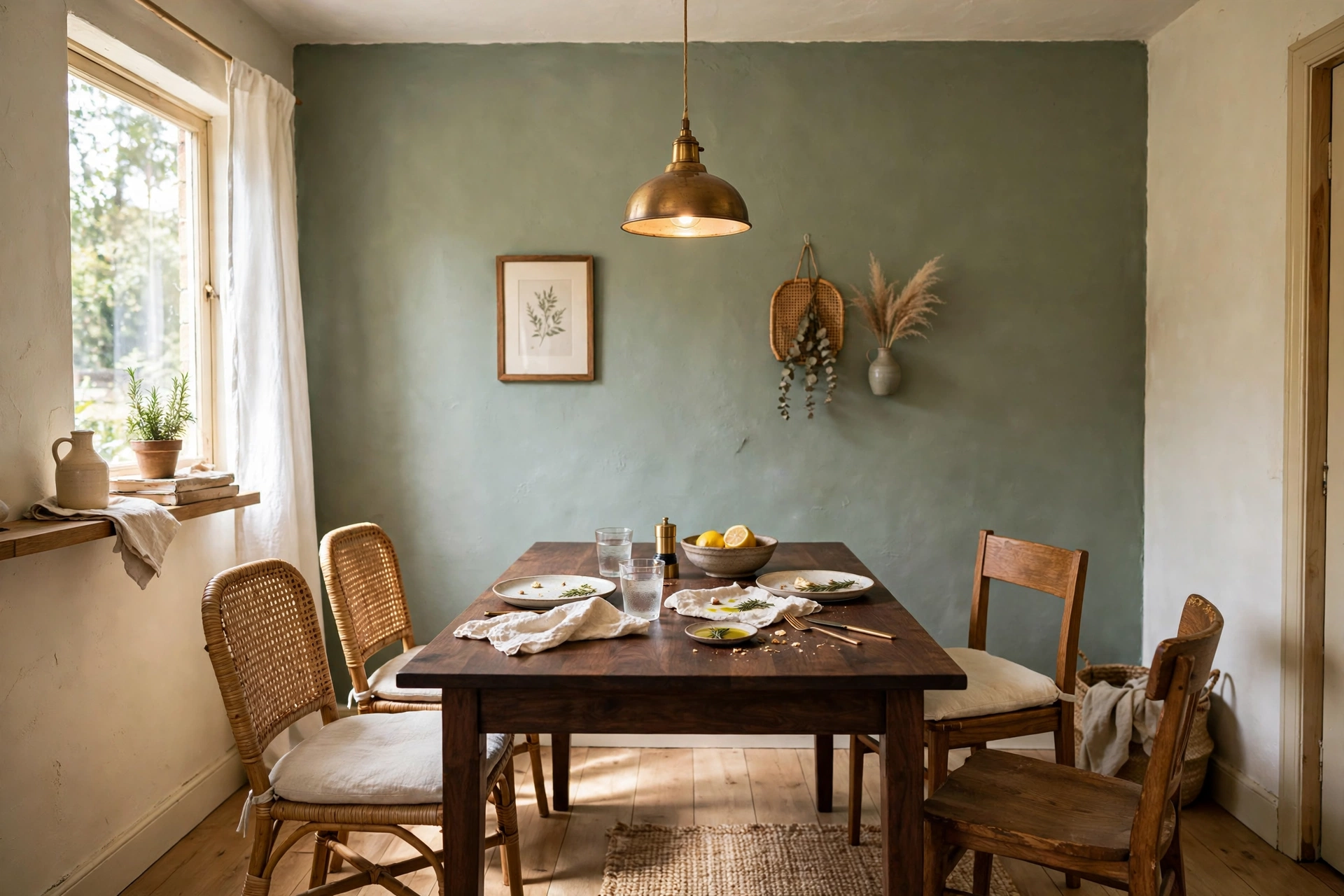
4. Evergreen Fog SW 9130, LRV 30, muted sage
Evergreen Fog is a gray-green with a hint of blue, Sherwin-Williams’ 2022 Color of the Year. At LRV 30 it is a true mid-tone: dark enough to feel like a real color, light enough not to shrink a room with decent windows. This is my underrated pick of the whole ladder. Sage cools the red in cherry wood without fighting it, and it makes walnut look richer instead of redder.
Best for: red cherry tables first, warm walnut second, and any dining room used mostly in the evening. Main advantage: it is the only color here that actively improves the wood it sits next to, by calming cherry’s red and warming walnut’s honey. Watch out for: it deepens a lot in low light, so in a windowless room use it on one wall only and keep the other three in Alabaster. Verdict: the most underrated color with dark wood, and the one I would pick for my own dining room.
5. Cavern Clay SW 7701, LRV 20, terracotta
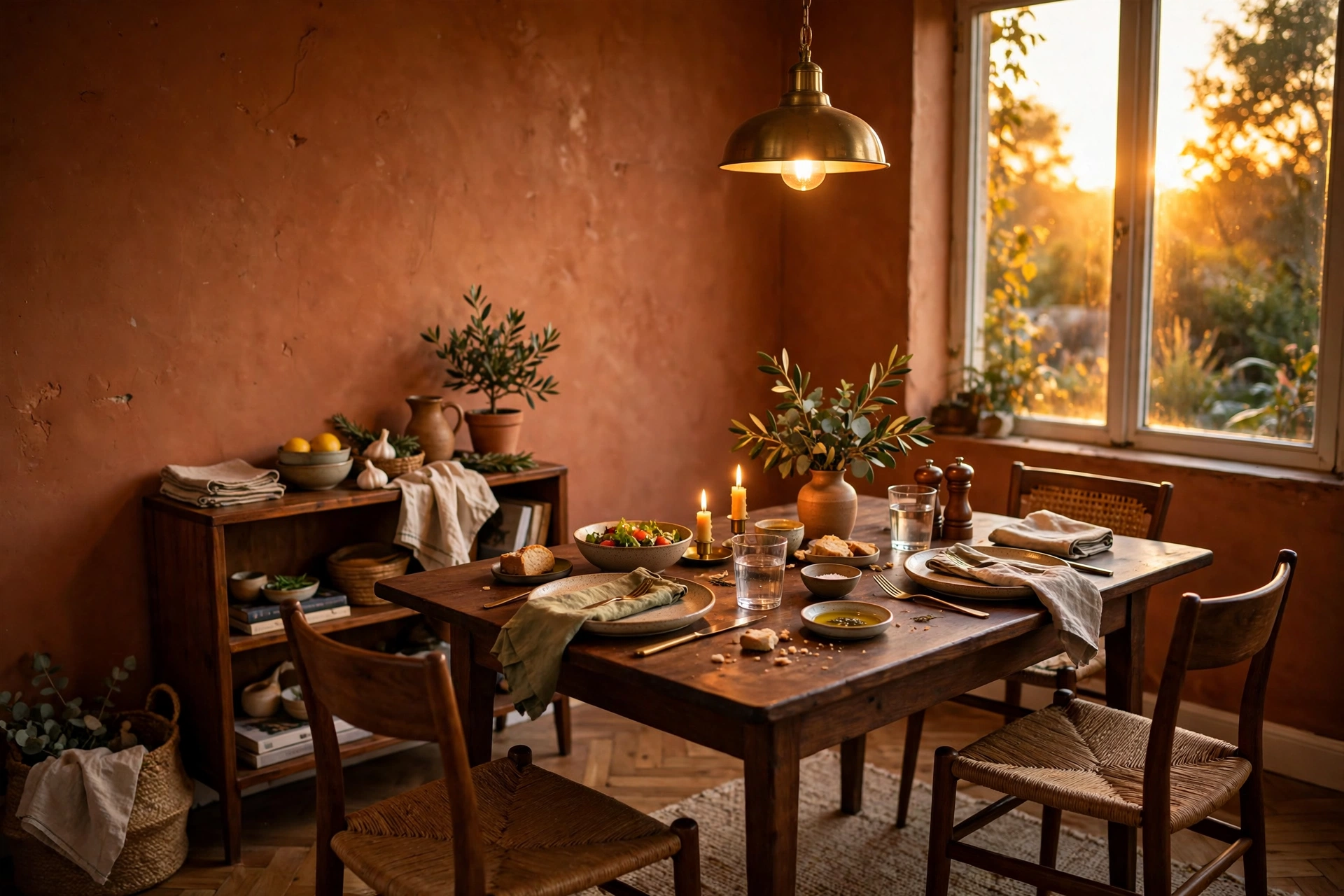
Cavern Clay is a warm terracotta, a muted red-orange with enough brown in it to read as fired clay instead of bright orange. Sherwin-Williams named it the 2019 Color of the Year. Its LRV is 19.94 on the Sherwin-Williams color page, rounded to 20 here. At that depth it belongs on one wall only in a small dining room.
Best for: one accent wall behind the sideboard or the table, in a room with warm walnut or mahogany. Main advantage: it is the warmest color on this ladder, and it makes evening meals feel like an occasion, especially under a brass pendant. Watch out for: it clashes with cool gray flooring and with red cherry wood, where the reds pile up. Keep the other three walls in Alabaster or Accessible Beige. Verdict: the best accent wall on this list, and the worst all-four-walls pick. One wall is the whole point.
6. Rosemary SW 6187, LRV 14, deep green
Rosemary is a deep, muted green with a gray base and a faint warm cast, a deeper green in the same family as Evergreen Fog. At LRV 14 it absorbs most of the light that hits it, so it is an accent-wall color in a small dining room, never a four-wall color.
Best for: one accent wall in a dining room with good daylight or strong evening lighting, behind a dark walnut table. Main advantage: it gives the most formal, restaurant-like mood on this ladder, and the gray in it stops it reading like a Christmas green. Watch out for: in a dim room it reads near charcoal-green by night, so it needs a light ceiling, light upholstery, or a large mirror on the opposite wall. Verdict: the most dramatic green here. Use it where you want dinner to feel like an event, not every day.
7. Hale Navy HC-154, LRV 8.36, deep navy
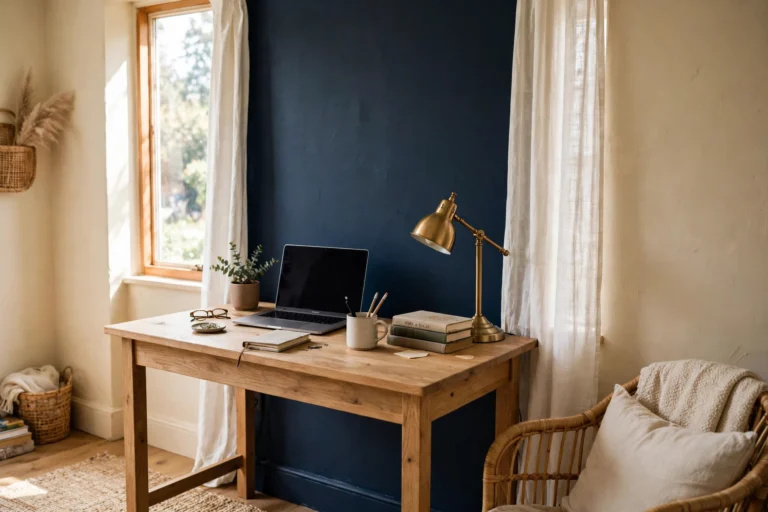
Hale Navy is Benjamin Moore’s classic deep navy, a use-anywhere shade with a maritime feel. At LRV 8.36 it is the darkest color on this ladder by a wide margin, and it reflects almost no light. That is not a flaw. It is the reason it works as an accent: the dark wall makes the wood table and brass fixtures glow against it.
Best for: one accent wall in a dining room with strong light, or a formal dining room used mainly at night. Main advantage: nothing on this list creates contrast like Hale Navy. The table stops being furniture and becomes the centerpiece. Watch out for: it shows every wall flaw, so prep is not optional, and it needs warm white trim to keep it from feeling like a cave. Verdict: the boldest pick here. One wall, warm trim, brass light. If the rest of the room needs the same calm treatment, the bedroom paint colors for small rooms in post #212 show how the same deep colors behave on four walls versus one.
How much paint does a small dining room need?
Take a real small dining room: 10 ft by 10 ft (3.05 m by 3.05 m), with an 8 ft (2.44 m) ceiling. Here is the arithmetic, step by step, so you can redo it for your own room.
Wall area. The perimeter is 10 plus 10 plus 10 plus 10, which is 40 ft (12.2 m). Multiply by the 8 ft (2.44 m) ceiling height and you get 320 sq ft (29.7 sq m) of wall.
Openings. Subtract one door at 21 sq ft (2 sq m) and one window at 15 sq ft (1.4 sq m). That leaves 284 sq ft (26.4 sq m) of paintable wall.
Two coats. Two coats means 284 times 2, which is 568 sq ft (52.8 sq m) of painting.
Gallons. A gallon of interior paint covers about 350 sq ft (32.5 sq m) per coat. Divide 568 by 350 and you get 1.62 gallons. You cannot buy 0.62 of a gallon, so buy 2 gallons. The spare paint covers touch-ups and the second coat on the accent wall.
Accent wall only. One 10 by 8 ft (3.05 by 2.44 m) wall is 80 sq ft (7.4 sq m). Two coats is 160 sq ft (14.9 sq m), which is about half a gallon. Buy one gallon and keep the rest for touch-ups, or buy two quarts if your store sells the color that way.
If your room is bigger, run the same math: perimeter times ceiling height, minus doors and windows, times two coats, divided by 350. That number is your gallons. Round up, always. Running out mid-wall is the one mistake that shows forever, because a new can never matches a dried edge exactly.
What does it cost? Prices checked in November 2026
Prices below were checked in November 2026. Sherwin-Williams does not show a public shelf price for Emerald, its product page asks you to sign in, so the Emerald row is a list-price range from 2026 price guides, and the brand runs 30 to 40 percent off sales every four to six weeks. Benjamin Moore publishes its price, and BEHR lists its price at Home Depot. Your store may differ by a few dollars, so check the shelf the week you buy.
| Item | Price, as of November 2026 |
|---|---|
| BEHR Premium Plus eggshell, 1 gallon | $37.98 (Home Depot) |
| Benjamin Moore Regal Select eggshell, 1 gallon | $84.99 (benjaminmoore.com) |
| Sherwin-Williams Emerald Interior, 1 gallon | $85 to $100 list, about $51 to $70 on a 30 to 40 percent sale |
| 2 gallons, BEHR route | $75.96 |
| 2 gallons, Benjamin Moore route | $169.98 |
| 2 gallons, Sherwin-Williams Emerald route | $170 to $200 list |
| Peel-and-stick samples (Samplize), each | $5.95 |
| 3 samples for your shortlist | $17.85 |
| Sherwin-Williams Color to Go quart sample | $9.59 |
| Supplies (tape, roller and tray, drop cloth, brushes), estimate | about $45 |
All-in totals for the full room, two coats: BEHR route about $139 (paint $75.96, 3 samples $17.85, supplies about $45). Benjamin Moore route about $233 (paint $169.98, 3 samples $17.85, supplies about $45). Sherwin-Williams Emerald route about $233 to $263 at list, or about $165 to $203 on a 30 to 40 percent sale. The accent-wall-only version costs one gallon plus samples and supplies, so roughly $100 to $165 depending on the brand.
Time estimate: one weekend, about 6 to 8 hours of work across two days. Prep and first coat on Saturday, second coat on Sunday after the first coat dries fully. Add a day of drying time before you push the table back against a fresh accent wall.
Which finish, and what light? Eggshell vs satin
Dining walls take fingerprints, chair scuffs, and the odd food mark, so finish matters as much as color. Eggshell and satin are the two finishes worth considering. Flat hides flaws but stains the first time someone spills curry. Semi-gloss wipes clean but shows every bump and brush mark, and it makes dark colors look more saturated than the chip promised.
| Room light | Finish | Why |
|---|---|---|
| Bright room, big window, daytime meals | Eggshell | Soft glow, hides small flaws, wipes well enough for a dining room |
| Low-light room, one small window | Satin | Bounces a little more light around the room, and the extra sheen keeps a dark color from going dead |
| Windowless dining room or dining nook | Satin | Same reason as above, plus it survives more scrubbing in a room with no daylight to hide marks |
| Evening-only room, chandelier or pendant light | Eggshell on light colors, satin on dark accent walls | Eggshell keeps pale walls calm under warm bulbs, satin keeps a dark accent wall from looking flat at night |
| Renter repainting over a dark color | Eggshell | Two coats of eggshell hide better than flat, and it touches up more invisibly when you move out |
One rule covers all five rows: never use flat paint in a dining room, and never use semi-gloss on all four walls. Eggshell is the default. Satin is the upgrade for dark colors and dim rooms.
How to test samples under your own evening light
Cover Pro Painting’s dining room guide says to test two to four large samples on your actual walls under both daylight and evening light before committing, and that is the right advice. Here is the method that makes it work in a dining room, where the evening light is the light that matters.
- Shortlist three colors, not seven. Pick one light, one mid-tone, and one dark from the ladder above, based on your wood family. Three samples is enough to decide. Seven is how you end up repainting twice.
- Use peel-and-stick samples or paint poster board, not the wall. Samplize peel-and-stick samples cost $5.95 each and move from wall to wall without damage, which matters for renters. Or paint two coats on a white poster board at least 12 by 12 in (30 by 30 cm). Never judge a color from a 2 in (5 cm) chip.
- Put the sample next to the table, at table height. Tape it to the wall right behind the table, where the color will actually live. A sample at eye level in the middle of a blank wall tells you nothing about how it meets the wood.
- Look at it three times: morning, afternoon, and evening with the dining light on. The evening look is the verdict. A color that is perfect at noon and muddy at 7 p.m. is the wrong color for a dining room, because dinner happens at 7 p.m.
- Live with the winner for two days before you buy gallons. Move the sample to the opposite wall on day two. If you still like it, buy the paint. If you are unsure, you just saved yourself a weekend and $140.
Materials list and the 5-step paint job
This list covers the full room, two coats, in the 10 by 10 ft (3.05 by 3.05 m) room from the math above. For an accent wall only, halve the paint and skip the second roller cover.
Materials: 2 gallons of your chosen paint in eggshell or satin, 1 gallon of primer only if you are painting over a dark color or bare patches, 3 peel-and-stick samples for testing, painter’s tape, a 9 in (23 cm) roller frame with two covers, a roller tray, a 2.5 in (6 cm) angled brush, a drop cloth, a stir stick, and a paint can opener. Tools: step ladder, putty knife, sanding sponge, and a damp rag.
- Test your three samples on poster board next to the table, under evening light, and pick the winner before you buy gallons.
- Prep the walls: fill holes with putty, sand smooth, wipe the dust off with a damp rag, tape the trim and ceiling line, and lay the drop cloth under the table area.
- Cut in the edges with the angled brush, about 2 to 3 in (5 to 8 cm) wide along the ceiling, corners, and trim, one wall at a time so the edge stays wet.
- Roll the wall in a W pattern with the 9 in (23 cm) roller, working top to bottom, and keep a wet edge so you do not leave lap marks.
- Let the first coat dry fully, then roll the second coat the same way, remove the tape while the paint is still slightly tacky, and let the room dry a full day before you push the table back.
Mistakes to avoid
Do not paint all four walls in a dark color in a small dining room. Hale Navy at LRV 8.36 on four walls is a cave, not a dining room. One dark wall is drama. Four dark walls is a basement. Do not match the wall to the table. A walnut-brown wall next to a walnut table erases the table, and the room loses its centerpiece. Contrast is the point. Do not skip the sample test under evening light. A color that looks right at noon can turn gray, green, or muddy under a 2700K bulb, and you will eat dinner under that bulb every night, so the small dining room lighting ideas in post #225 show how to pick the bulb and the fixture together. Do not use flat paint in a dining room, because the first chair scuff and the first splash will stay there. Do not paint over a dark color without primer and expect two coats to hide it. Dark reds and navies bleed through pale paint, and the third coat costs more than the primer would have. And do not buy one gallon for a two-coat room because the math said 1.62. The store is closed on Sunday, and a half-painted wall dries with a line you cannot hide.
What to skip
Skip pure bright white with dark wood. This is the most overrated pick in the whole category, and it is everywhere because it feels safe. A stark white next to a dark walnut table does not make the room bright. It makes the wood look yellow and dirty by contrast, and it makes the table look like it belongs in a different room. Warm cream does the same job without the punishment. Skip cool gray against warm walnut, for the same reason: the gray pulls the warmth out of the wood and leaves it looking muddy. Skip painting the ceiling dark in a small dining room, unless you have 10 ft (3.05 m) ceilings and strong light. A dark ceiling drops the room on your head. Skip the cheapest paint you can find for a dark accent color. Cheap paint needs three coats to hide, and the third coat wipes out the saving. Buy the mid-tier can once, and put the saving toward samples instead.
Renter caveat and deposit-risk ratings
If you rent, read your lease before you buy paint. Most leases allow repainting if you return the walls to the original color or get written permission first. Ask in writing, keep the reply, and photograph the walls before you start. That photo is your deposit insurance. Pale colors are easy to return to white with one coat of the landlord’s paint. Dark colors need primer plus two coats to disappear, and a navy accent wall that is not fully covered is the classic deposit deduction. Peel-and-stick samples are your best friend here: they test the color without touching the wall, and they leave no mark when you move them. If your lease bans painting outright, the same colors work as a large painted poster board leaned behind the sideboard, or as linen, art, and a table runner in the same tone. You get the mood without touching the wall.
Deposit-risk ratings, 1 is safest and 5 is riskiest: Alabaster 1 out of 5, one coat of white covers it. Accessible Beige 1 out of 5, pale enough to vanish under one coat. Rainwashed 2 out of 5, light but clearly colored, so budget one primer coat on the way out. Evergreen Fog 3 out of 5, a mid-tone that needs primer plus one coat to remove. Cavern Clay 4 out of 5, a dark accent that needs primer plus two coats. Rosemary 4 out of 5, same as Cavern Clay, and it stains light rollers. Hale Navy 5 out of 5, the hardest color on this list to remove, so use it only with written permission and a plan to prime it out.
If you remember one line from this guide, make it this: the best paint colors for small dining rooms with dark wood furniture are the ones that let the table stay the darkest thing in the room. Everything else is decoration.
Sources
The color families by room condition, including the dark-wood row (cream, sage, muted blue, terracotta, deep green), come from Cover Pro Painting’s dining room paint guide, which also sets the sample-test standard this post follows: test two to four large samples under daylight and evening light. The 15-color dining room LRV ladder used as the honest cross-check comes from Home Sentiment’s dining room guide, which lists Evergreen Fog at LRV 30 and Hale Navy at LRV 8.36, matching the manufacturer figures used here. Hale Navy’s LRV of 8.36 is printed on Benjamin Moore’s own Hale Navy page. Every LRV in the ladder above comes from the manufacturer’s own published data: Sherwin-Williams for Alabaster SW 7008 (82), Rainwashed SW 6211 (59), Accessible Beige SW 7036 (58), Evergreen Fog SW 9130 (30), Cavern Clay SW 7701 (19.94, rounded to 20), and Rosemary SW 6187 (14), and Benjamin Moore for Hale Navy HC-154 (8.36). One honest flag: most Sherwin-Williams reviews list Rosemary at LRV 14, while one source lists 12, so confirm it on the chip in the store before you buy gallons. Prices were checked in November 2026: BEHR Premium Plus eggshell at $37.98 a gallon from Home Depot, Benjamin Moore Regal Select eggshell at $84.99 a gallon from benjaminmoore.com, Sherwin-Williams Emerald Interior at $85 to $100 a gallon list from 2026 price guides, Samplize peel-and-stick samples at $5.95 each, and Sherwin-Williams Color to Go quart samples at $9.59. If you built the table yourself, the DIY dining table built for a small space in post #222 gives you seven builds with room-fit math, and this post picks up where that one ends: the walls around the table you just built.
What is the best paint color for a small dining room?
A warm white or a pale sage green, in most small dining rooms. Warm white keeps the room bright and lets dark wood stand out, while pale sage adds color without closing the room in. The best paint colors for small dining rooms with dark wood furniture start even narrower than that: match the paint undertone to your wood first, then pick the lightest color on that side of the ladder that you actually like.
What paint color goes with dark wood furniture?
Warm white, beige, cream, sage green, and dusty blue all go with dark wood furniture. The rule is undertone, not color name: warm wood takes warm paint, cool wood takes muted blue-greens, and red cherry takes sage. Cream and greige are the safest answers, sage is the most underrated, and terracotta is the warmest accent.
What color walls go with a dark wood dining table?
Cream, sage, muted blue, terracotta, and deep green, in that order from lightest to darkest. Cream and sage work on all four walls. Muted blue works on all four walls in a bright room. Terracotta and deep green belong on one accent wall only, with the other three walls in a pale neutral.
Can you paint a small dining room dark when the furniture is dark wood?
Yes, but only on one accent wall, never on all four. A dark wall behind the table makes the wood glow, while dark paint on every wall turns a small dining room into a cave. Keep the ceiling and trim light, add a mirror or light upholstery on the opposite wall, and test the dark color under your evening light before you commit.
Byline: Wasim
How this was made: I read the top 5 results for the dark-wood angle, checked every LRV against the manufacturers’ own published figures, verified every price in November 2026, and computed the paint math from a real 10 by 10 ft room.