Renter-Friendly Ceiling Ideas: 9 Damage-Free Ways to Fix an Ugly Rental Ceiling
Yes — renters can change a ceiling without drilling, painting, or losing the deposit. Peel-and-stick tiles, temporary wallpaper, ceiling decals, and a fabric canopy all come off clean when the lease ends, and most of them cost under $50. The ceiling is the biggest surface in the room and the one renters ignore most, usually because it feels untouchable. It isn’t. Every idea below is damage-free, needs no landlord permission beyond the usual “no permanent changes” clause, and comes off with nothing worse than a hair dryer and ten patient minutes. Prices are as of October 2026.
1. Peel-and-Stick Ceiling Tiles — The Fastest Cover-Up
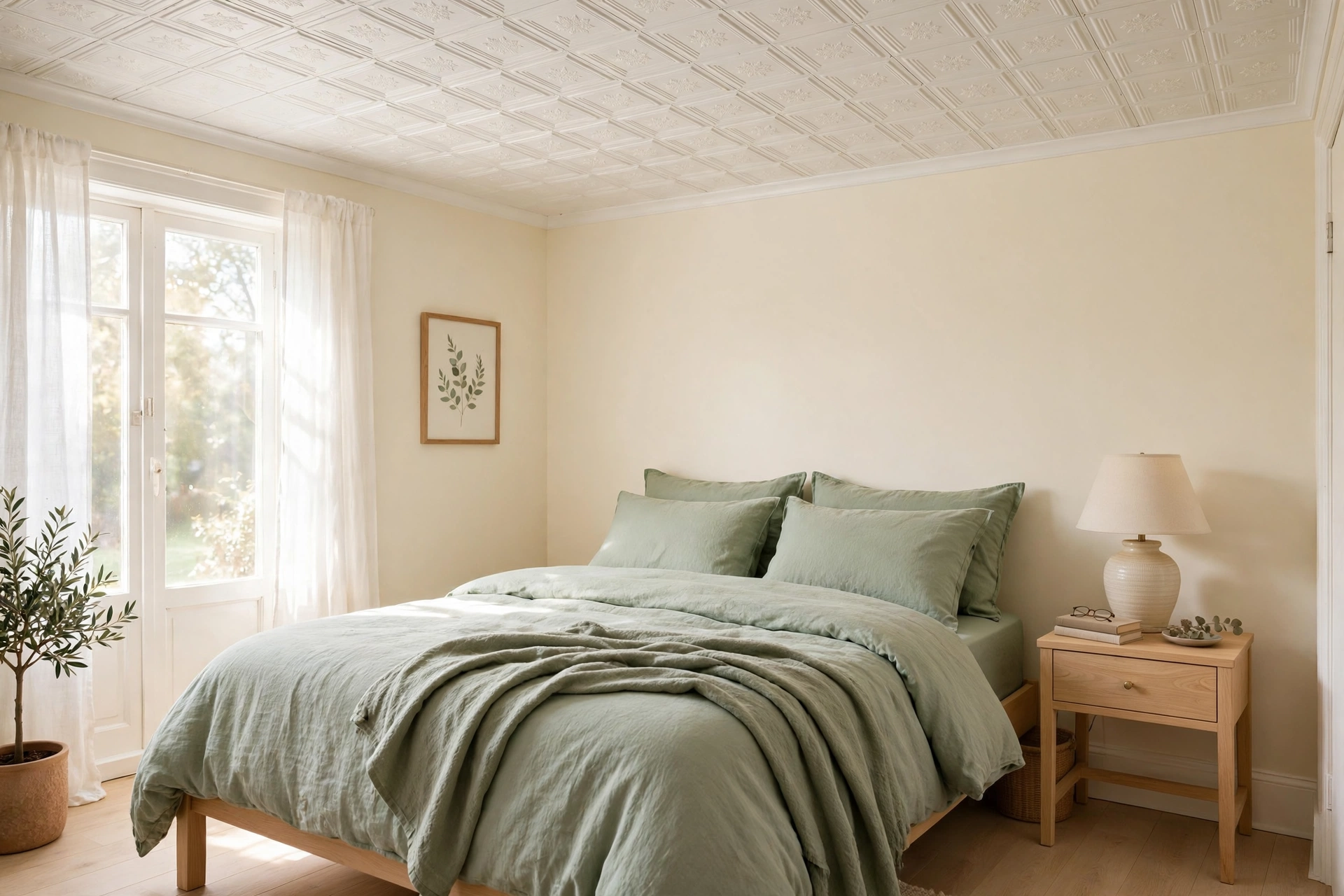
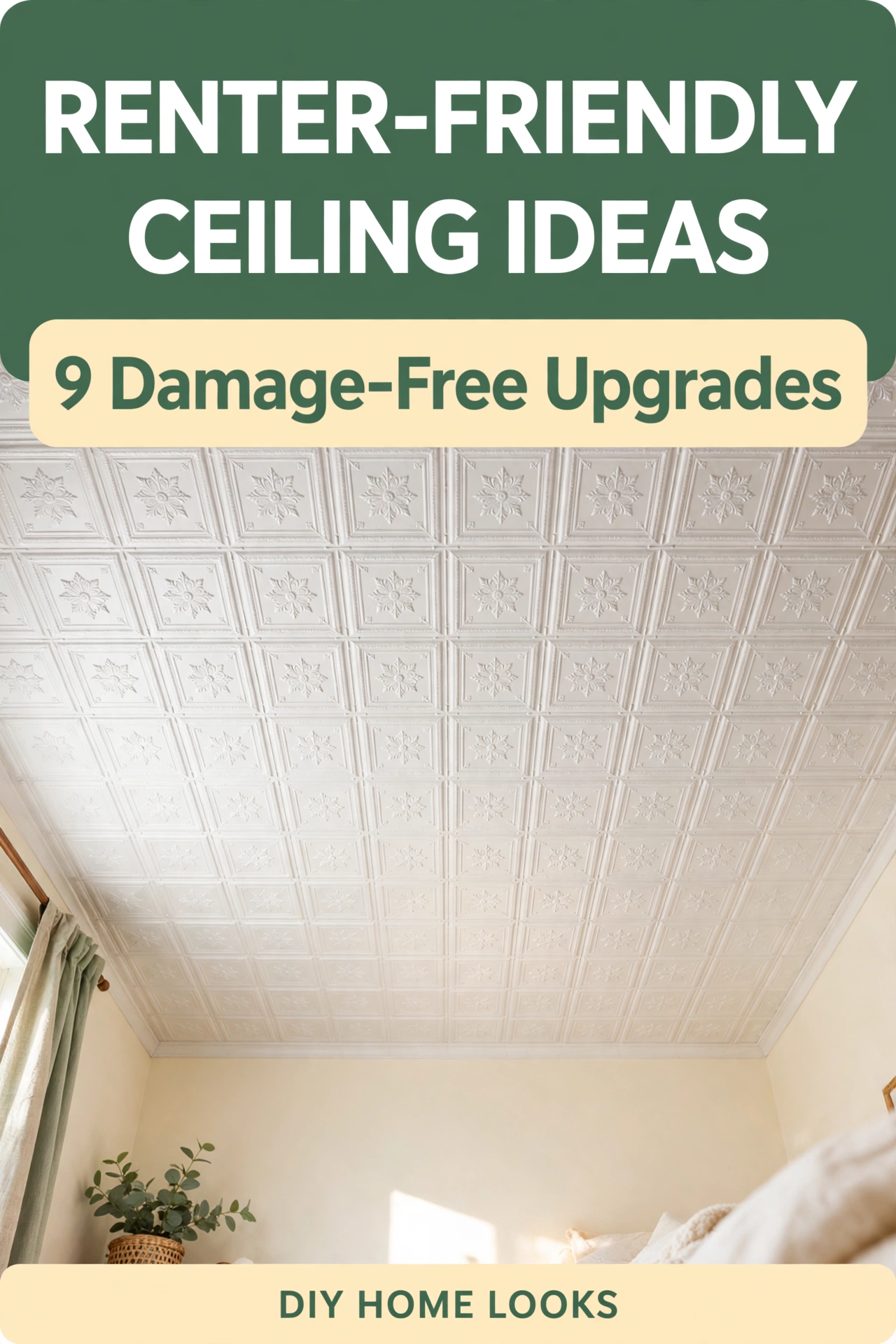
Peel-and-stick ceiling tiles are the renter’s single best ceiling move, and the one the search results keep putting first for a reason: a lightweight PVC or foam tile covers stains, cracks, and tired popcorn texture in an afternoon, with no tools beyond a utility knife and a tape measure. Faux-tin patterns read as vintage charm, wood-grain tiles warm up a cold white box, and 3D geometric tiles give a plain bedroom actual character.
Start from the center of the room with a chalk line, work outward in a grid, and cut edge tiles to fit — the same layout logic the tile guides describe for peel-and-stick ceiling tiles. A 10×10-foot (300×300 cm) bedroom needs roughly 100 square feet of tile, and packs run $1–$3 per square foot, so most rooms land at $30–$80. The removal trick: warm each tile with a hair dryer for 30 seconds before peeling, and it comes off in one piece instead of flaking paint with it.
2. Temporary Wallpaper on the Ceiling — Pattern Without Paint
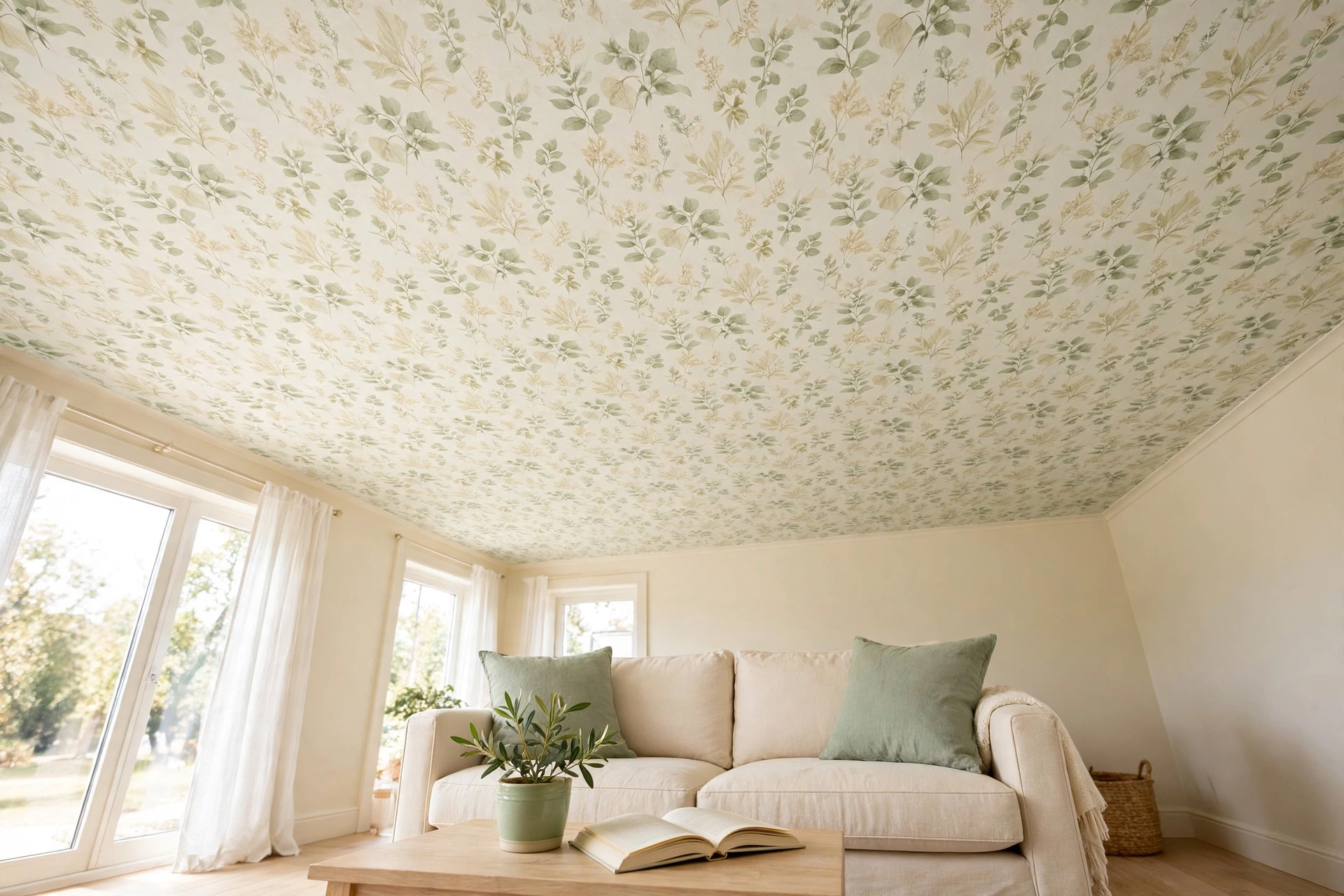
If the walls are already spoken for, the ceiling is the last blank canvas in the room. Temporary wallpaper — the peel-and-stick kind, not paste-the-wall — goes up on a smooth ceiling the same way it goes on a wall, and a soft pattern overhead does something paint can’t: it makes a low ceiling feel intentional instead of forgotten.
Pick small-scale patterns for small rooms (a tiny botanical, a pale geometric), because you see a ceiling at a glance, never up close, and busy small prints read as texture rather than noise. One roll usually covers a small bedroom ceiling, at $25–$45. Skip this one on popcorn ceilings — the adhesive needs a mostly smooth surface to hold, and heavy texture is the one thing temporary wallpaper can’t grip.
3. Ceiling Decals — The No-Commitment Statement
Ceiling decals are the lowest-effort idea on this list and the easiest to undo: matte vinyl shapes — stars over a kid’s bed, a botanical spray above the sofa, a big soft moon in a nursery corner — that stick to a clean, smooth ceiling and peel off without a trace. They are the one ceiling idea that works even in a room you will only live in for six months.
The two rules from the decal guides are worth following exactly: clean the ceiling first (dust is the reason decals fall), and if the ceiling was painted recently, wait at least 30 days for the paint to cure before applying anything — fresh paint peels with the decal. Decal sets run $10–$25, and a hair dryer on low loosens the adhesive at move-out. For the full removability details, the ceiling-decals guide covers how long decals last and how to take them down safely.
4. A Fabric Canopy — Soft, Cheap, Zero Ceiling Damage
A fabric canopy is the only ceiling idea here that touches the ceiling barely at all. Sheer curtain panels or a length of muslin, hung from tension rods wedged between two walls or from adhesive hooks at the corners, drape into a soft tent overhead — and when you take the rods down, there is literally nothing to repair.
This is the move for bedrooms and reading nooks, where the goal is cozy rather than architectural. Two 84-inch (213 cm) sheer panels cost $15–$30, and a pair of tension rods adds another $15–$25. Keep the fabric light and pale so it doesn’t darken the room, and leave a gap at the edges so the ceiling still breathes — a fully sealed canopy traps warm air and dust.

5. Faux Wood Planks — Warmth Overhead, No Nails
Peel-and-stick wood planks — the same lightweight foam or vinyl planks sold for renter-friendly accent walls — work just as well overhead, and they fix the coldest rental problem of all: a flat white ceiling in a room with cold white walls. Run the planks toward the window so the lines pull the eye outward, the same direction trick that makes beadboard ceilings read taller.
Planks cost $2–$4 per square foot, so a small room runs $50–$100, and they cut with a utility knife. They are heavier than decals, so this one needs a smooth, clean ceiling and a warm room — cold adhesive doesn’t bond. If your ceiling is heavily textured, test one plank for 48 hours before committing to the whole room.
6. An LED Strip Cove — Light as Decoration
You don’t have to cover the ceiling to change it — sometimes you just have to light it differently. A peel-and-stick LED strip tucked along the top edge of the wall, where wall meets ceiling, washes the ceiling with light and makes the whole room feel taller after dark. It is the cheapest lighting trick in the renter’s book, and it pairs naturally with the plug-in lighting ideas in our renter-friendly lighting guide — the same no-electrician rule applies: everything plugs in, nothing gets wired.
A 16-foot (5 m) strip costs $15–$25, and warm white (2700K) flatters a ceiling far better than cool daylight. Stick it to the wall, not the ceiling, so removal is a wall touch-up at worst — and keep the strip hidden behind a picture rail or a slim shelf so you see the glow, not the hardware.
7. A Plug-In Pendant — The Ceiling’s Jewelry
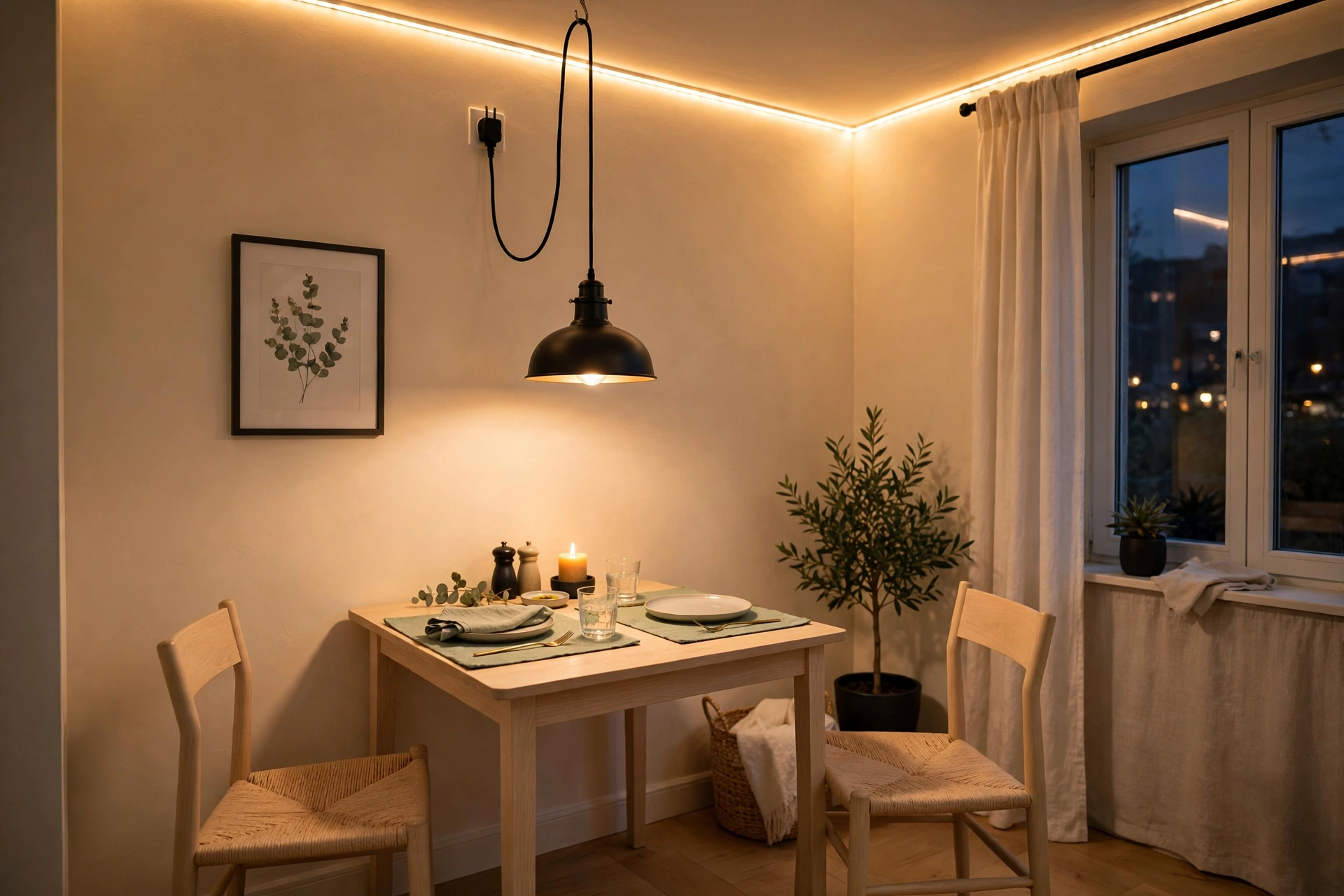
A swag pendant — a plug-in light that hangs from a hook and drapes its cord to the nearest outlet — is the one idea here that makes the ceiling a feature instead of a problem. The hook is the only thing that touches the ceiling, and a heavy-duty adhesive hook rated for the lamp’s weight does the job with no drilling at all.
Hang it low over a dining table or a reading chair, not in the middle of the room where you’ll walk into it: 30–36 inches (76–91 cm) above a table is the standard. Plug-in pendants run $25–$45, and a cord cover in the wall color hides the drape. Check the hook’s weight rating twice — a pendant that falls at 2 a.m. is a ceiling problem and a floor problem.
8. A Peel-and-Stick Medallion — Instant Architecture
A ceiling medallion is the small round ornament that sits where a light fixture meets the ceiling, and the peel-and-stick foam version gives a plain rental ceiling a finished, almost historic look for about $15 and twenty minutes. It is the smallest idea on this list and the one guests notice first, because the eye goes straight to the light.
Pair it with a slim peel-and-stick trim ring around the room’s edge and the ceiling reads as designed rather than decorated — the same logic as the permanent ceiling designs for small rooms guide, minus the drywall and the landlord’s phone call. Foam medallions paint easily, so match it to the ceiling color and it disappears into the architecture.
9. The Move-Out Kit — Removal, Repair, and the Lease Check
Every idea above only counts as renter-friendly if it comes off clean, so treat removal as part of the project, not an afterthought. Before you stick anything up, read the lease’s exact words on adhesives and “alterations” — most leases ban holes and paint, not removable adhesive, but a few ban all adhesive products outright, and that one sentence decides everything.
Keep a small move-out kit in a drawer: a hair dryer (warm adhesive peels clean), a plastic scraper (never metal on paint), a magic eraser for scuffs, and a tiny pot of the ceiling’s white paint for touch-ups — matched at the hardware store from a flaked chip, not guessed. Photograph the ceiling on move-in day, too: a dated photo is the cheapest deposit insurance there is, and it takes thirty seconds — one more small habit in organizing your whole home room by room.
The through-line in all nine is simple: a rental ceiling is not a surface you have to live with, it’s a surface you get to borrow. Tiles, wallpaper, decals, fabric, planks, light, and one small medallion — each one goes up without a drill and comes down without a repair bill. Pick the one that fits your ceiling’s texture, your room’s size, and your lease’s wording, and the fifth wall stops being the forgotten part of the room.
What is the best renter-friendly ceiling idea for a small room?
Peel-and-stick ceiling tiles, because they cover the most flaws for the least money — about $30–$80 for a small bedroom — and come off with a hair dryer at move-out. If the ceiling is smooth and you want pattern instead of texture, temporary wallpaper is the runner-up.
Will peel-and-stick ceiling tiles damage the paint when removed?
Not if the paint is fully cured and you warm the tile first. Heat each tile with a hair dryer for about 30 seconds, then peel slowly from one corner. Never apply adhesive products to paint less than 30 days old, and test one tile for 48 hours before doing the whole ceiling.
Can I cover a popcorn ceiling as a renter?
Lightweight peel-and-stick tiles and fabric canopies work over light popcorn texture, but temporary wallpaper and decals usually won’t — they need a mostly smooth surface to grip. For heavy popcorn, tiles with a thicker foam backing bridge the texture best; test a small area first.
Do I need my landlord’s permission for renter-friendly ceiling ideas?
For removable, no-damage ideas like decals, fabric canopies, and LED strips, most leases don’t require permission — but read the exact wording first, because a few leases ban all adhesives. Anything that involves paint, screws, or drilling always needs written permission.