Renter-Friendly Bedroom Upgrades: 12 Damage-Free Ideas That Make a Rental Bedroom Feel Like Yours
If your rental bedroom still looks like the day you moved in — blank walls, a bare bulb, a bed pushed against the wall — it is not because you lack taste. It is because every upgrade you can think of seems to need a drill, a paintbrush, or a landlord’s permission slip. The good news is that the best renter friendly bedroom upgrades need none of those. Everything in this guide peels off, unplugs, or walks out the door with you on moving day.
The short answer: start with the bed wall. One peel-and-stick wallpaper accent wall behind the bed, warm 2700K lighting, and hotel-style layered bedding transform a rental bedroom more than any other three changes — all for roughly $100–$150 as of October 2026, all removable in an afternoon, and none of it touches your deposit. The other nine renter friendly bedroom upgrades below build on that foundation, room by room, until the space finally feels like yours.
1. Give the bed wall a peel-and-stick accent
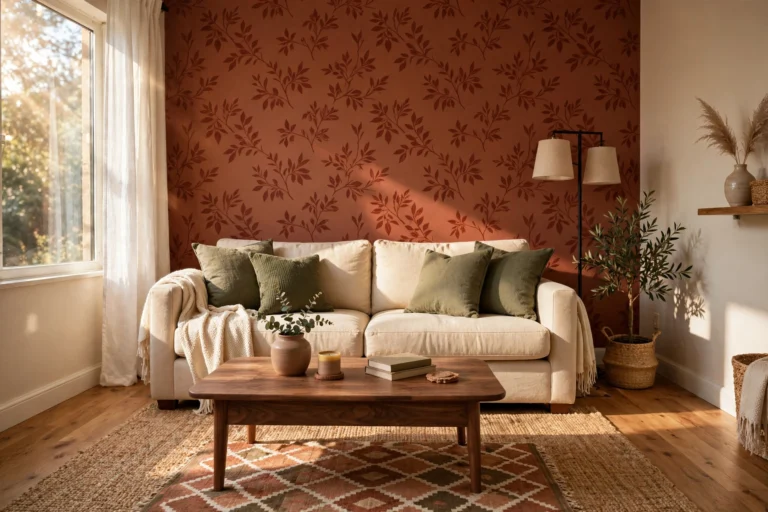
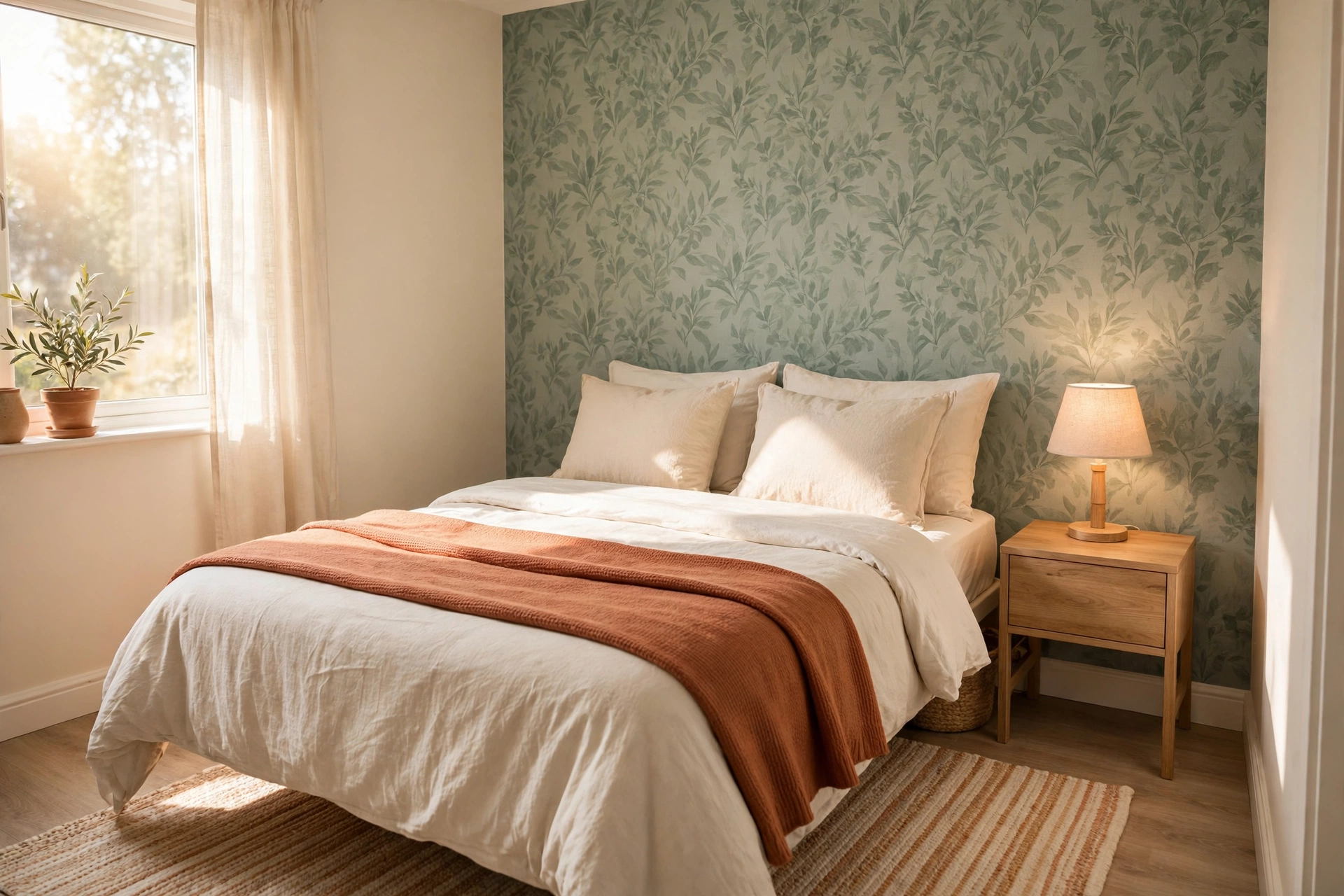
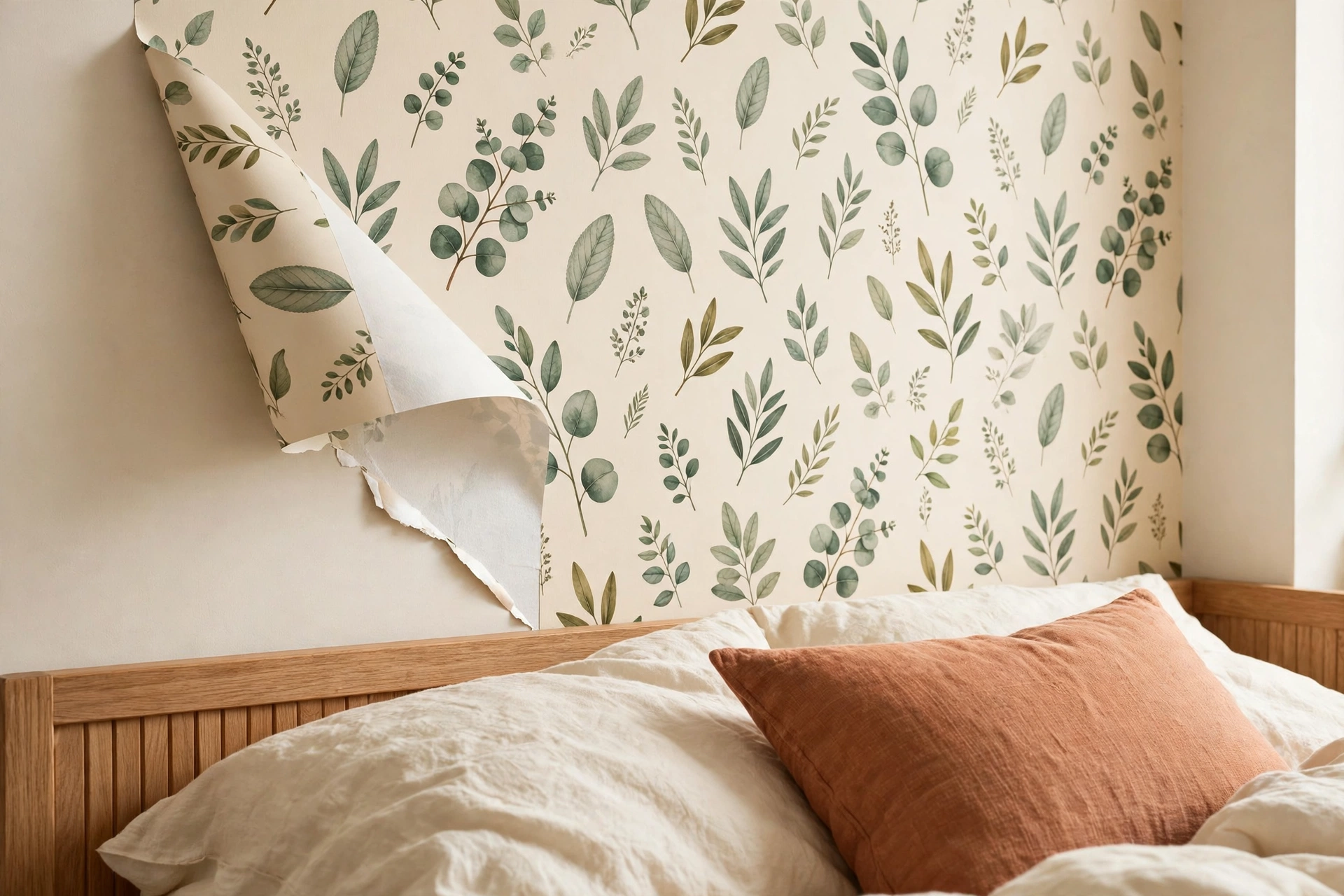
This is the single highest-impact, lowest-risk change a renter can make. One wall of peel-and-stick wallpaper behind the bed turns the beige box into the design anchor of the room. It takes about two hours to apply, and it comes off cleanly when you leave. As of October 2026, expect $30–$55 for enough to cover a standard accent wall; premium brands like Tempaper or Chasing Paper run $60–$80 a roll.
Pick a pattern that echoes your bedding: dark botanical prints for a cottagecore feel, terracotta and cream abstracts for warmth, or a linen-look texture that adds depth without committing to color. Before you commit to a full wall, buy one roll and test a hidden section first — removable wallpaper is designed to release cleanly from painted walls, but every wall surface behaves slightly differently, and a 10-minute test beats a move-out argument. If a full wall feels like too much, the same paper cut into a large framed panel gives you most of the effect for a third of the price.
2. Add a headboard that needs no wall at all
A bed without a headboard reads unfinished, like furniture you bought on moving day and forgot about. The renter fix is a freestanding headboard that bolts to the bed frame itself, not the wall. Look for one 55 to 60 inches (140–152 cm) tall — height is what reads as hotel, because most standard headboards stop around 45 inches (114 cm).
No budget for a real one? Two oversized framed art pieces hung side by side at headboard height fake the effect, or a large fabric wall hanging on adhesive hooks does the same job for under $30. Either way, the headboard zone is what your eye reads first when you walk in, so anything beats nothing. Our small bedroom organization ideas cover the rest of the room around the bed once the headboard is sorted.
3. Hang a gallery wall with zero nails
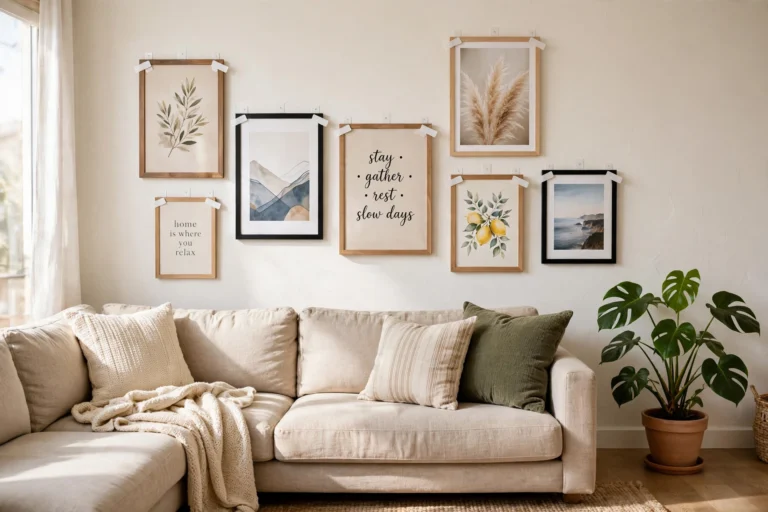
Command strips have changed what is possible for renters. A gallery wall — one of the simplest damage-free wall treatments — used to mean drilling holes you would have to patch when you left. Now it means spending about $8 on a pack of picture-hanging strips and hanging frames that hold real weight with zero damage. 3M’s own ratings put large picture-hanging strips at up to 16 lb (7.3 kg) per set, and the strips remove cleanly with their stretch-release tab — see 3M’s official Command FAQ for the weight limits by size.
Two rules from experience: plan the arrangement on the floor first, photograph it, then transfer it to the wall — twenty minutes of planning saves an hour of re-hanging. And never hang heavy frames directly over the bed; 3M itself warns against it. Keep the gallery on the side wall, and put something light (or nothing) above the pillows.
4. Swap in plug-in sconces
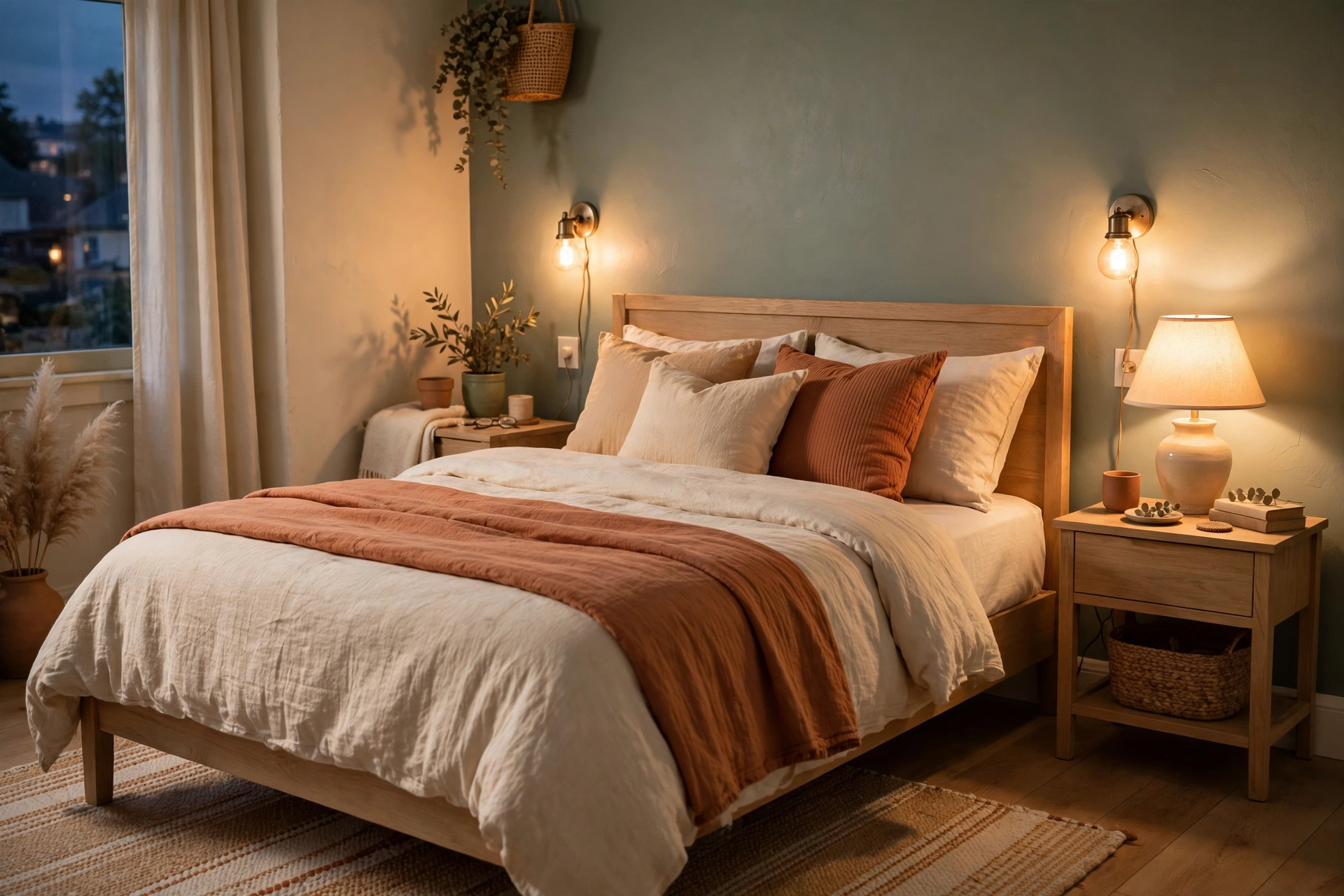
Hotel-style bedside lighting is as easy as plugging in a cord. Plug-in sconces in brass or matte black free up nightstand space, throw flattering light for reading, and travel with you to the next apartment. Hang them 24 to 30 inches (61–76 cm) above the top of the mattress on heavy-duty removable mounting strips rated for more than the lamp’s weight, and run the cords down the wall in adhesive cord covers so nothing dangles.
If sconces feel like too much hardware, a pair of clip-on shades on your existing lamps, or one tall tripod floor lamp in the corner, gives you the same layered effect. The point is three light sources at different heights — bedside, floor, and ceiling — because cozy bedrooms always have at least three.
5. Warm up every bulb to 2700K
This is the cheapest upgrade on the list and the one people notice without knowing why. Rental bedrooms usually come with a cold, blue-white bulb that makes the room feel like an office. Swap it for a warm 2700K bulb — the same color temperature as candlelight and late-afternoon sun — and add a 10-foot (3 m) plug-in LED strip along the back of the headboard with a dimmer. The strip sticks to the headboard, so there is no wall paint to peel when you leave, and the glow behind the bed makes the whole room feel designed at night.
Do the bulb swap first, before you buy anything else. If the room still feels cold after that, the problem is the light, not the furniture.
6. Hang curtains high and wide — on a tension rod
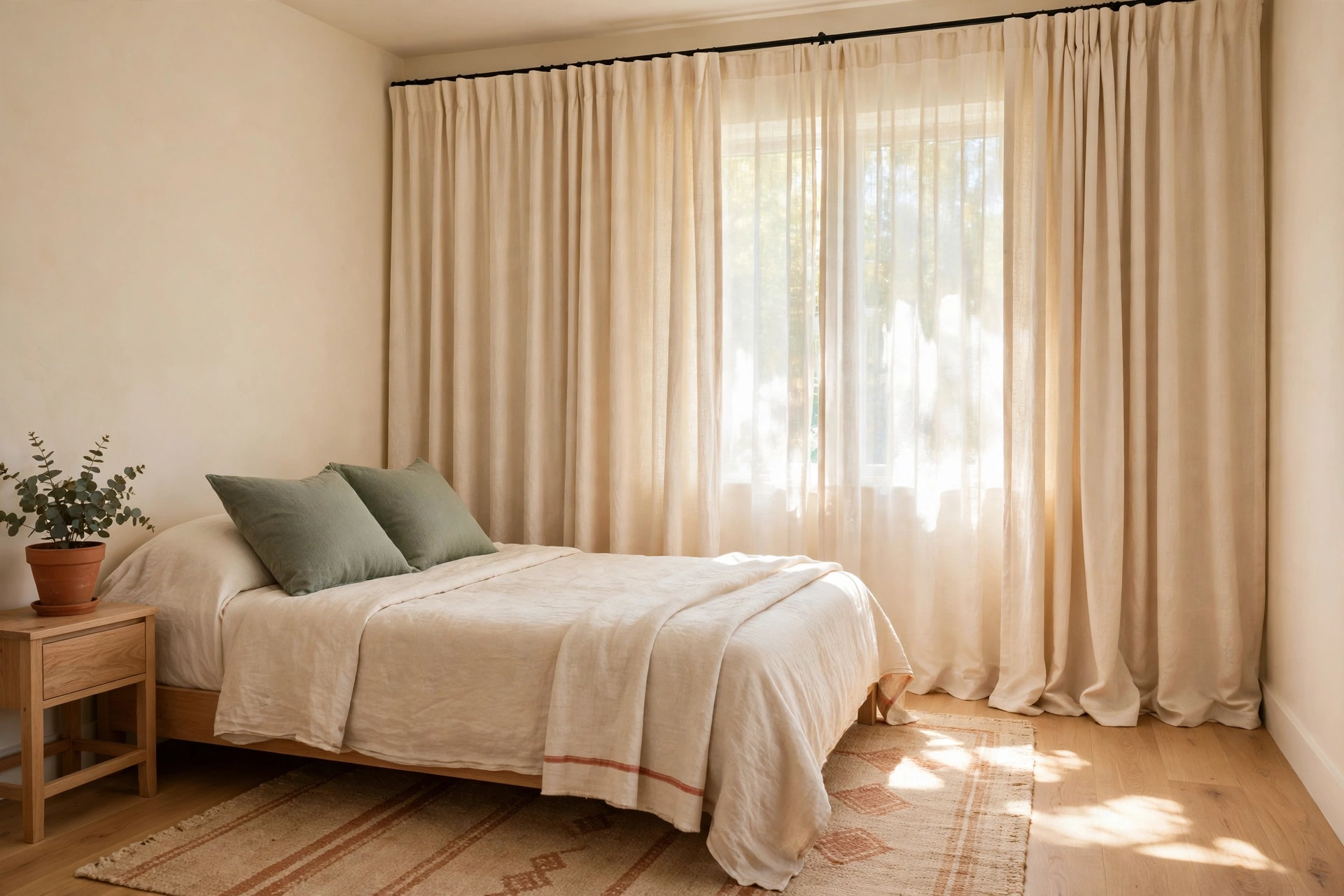
Floor-length curtains hung high and wide are the fastest way to make a small bedroom look taller and more expensive, and renters can do it without a single screw. A tension rod wedged inside the window frame holds light and medium-weight panels, and hanging the rod a few inches below the ceiling with the panels pooling just above the floor stretches the wall visually.
Two curtain panels and a tension rod total about $50 as of October 2026. Choose a color pulled from your bedding or your wallpaper accent wall so the room reads as one decision, not three. The same trick works in the living room — our renter-friendly living room upgrades use the identical high-and-wide method, so the two rooms feel connected.
7. Layer the bed like a hotel
The bed is half the room, so dressing it properly is an upgrade, not a chore. The hotel formula: white or cream percale sheets, a duvet one size larger than the bed so it drapes past the mattress, two sleeping pillows, two 26-inch (66 cm) euro shams in a solid color, and one folded throw across the foot. That is it. No new furniture, no wall work, and the room looks different the same afternoon.
If you buy one thing here, buy the duvet one size up — a queen duvet on a full bed, or a king on a queen. The overhang is what makes a bed look generous instead of skimpy, and it hides a multitude of mattress sins.
8. Lay a rug that makes the room feel finished
Bare rental floors make a bedroom feel temporary. A rug fixes that in ten minutes. Turn an 8 by 10 foot (2.4 by 3 m) rug sideways under the lower two-thirds of the bed, leaving 18 to 24 inches (46–61 cm) on each side so your feet land on something soft in the morning. In a room too small for that, a 5 by 7 foot (1.5 by 2.1 m) rug beside the bed does the same job.
Rugs are also the easiest way to hide ugly rental flooring without glue or nails — the same principle behind all the renter friendly bedroom upgrades in this guide, including the damage-free floor fixes that rescue ugly rental floors in any room.
9. Swap the hardware — and keep the originals
This is the upgrade landlords never notice and guests always do. Swapping the knobs and pulls on your dresser, nightstands, and closet doors for brass, matte black, or ceramic ones makes tired rental furniture feel chosen. Most drawers and cabinets use standard screw sizes, so the swap takes a screwdriver and twenty minutes.
The move-out rule is non-negotiable: put every original knob in a labeled zip bag and tape it inside the drawer it came from. You will need it when you move out, and hunting for a landlord’s original hardware at 11 p.m. on moving day is a special kind of misery.
10. Upgrade the closet and the door without drilling
The bedroom closet is where rental life gets messy, and the fix needs no tools. An over-the-door organizer on the closet door holds shoes, scarves, or accessories; a hanging shoe organizer on the bedroom door keeps the floor clear; and a couple of slim bins on the closet shelf corral the things that used to live on the chair. None of it mounts to anything, so all of it moves with you.
If the closet has a single wire shelf and a rod, add a freestanding shoe rack underneath and a small hanging shelf unit for folded clothes. The bedroom is the one room where storage you can’t see still counts — once the closet works, the rest of the room stays tidy almost by itself.
11. Steal one corner for a reading nook
A bedroom that is only a bed feels like a hotel room you never check out of. Steal one corner — even a 3 by 3 foot (0.9 by 0.9 m) one — for a reading chair, a small floor lamp, and a stack of books. A rattan chair with a white cushion needs nothing fixed to the wall and turns dead space into the best seat in the apartment.
Of all the renter friendly bedroom upgrades in this guide, this is also the cheapest way to make a small bedroom feel bigger: one defined corner with a purpose reads as more space than the same square footage left empty. If the chair needs a table, a small stool or a stack of books works — do not buy a side table until the chair has earned its corner.
12. Add plants — and pack a move-out kit
Plants are the only upgrade that is alive, and they forgive every other mistake in the room. A tall plant in the corner by the window, a trailing pothos on the dresser, and a small succulent on the nightstand make a rental bedroom feel inhabited in a way no object can. Choose low-light-tolerant varieties if your window faces north, and water on a schedule, not on a whim.
Then, before you forget, pack the move-out kit: the labeled bag of original hardware, spare peel-and-stick wallpaper for patches, the Command strip removal tabs, and a photo of every wall the day you moved in. When moving day comes, the wallpaper peels off, the strips stretch off, the sconces unplug, and the room goes back to exactly how you found it — which is how you get the full deposit back. A piece with no assigned contents becomes a junk drawer with a cushion on top, so give every upgrade a job and a place.
What renter friendly bedroom upgrades cost, as of October 2026
Doing all twelve ideas would realistically run $300–$600 total if you shop sales and discount stores — but you do not need all twelve. Most people see a dramatic difference from just three or four: the peel-and-stick accent wall ($30–$55), curtains hung high and wide (~$50), warm lighting (a bulb swap plus an LED strip, ~$25), and hotel-style bedding (a duvet one size up, ~$40–$80). That is roughly $150–$210 for a room that looks completely different, and every dollar of it is reversible. Check your lease before you start — a few leases restrict even removable wallpaper on large surfaces — and keep the move-out kit packed from day one.
What is the single best renter-friendly bedroom upgrade?
A peel-and-stick wallpaper accent wall behind the bed, or fresh hotel-style bedding. Both transform the room’s focal point — the bed wall — for well under $100 as of October 2026, and both take just an afternoon to complete.
Will peel-and-stick wallpaper damage rental walls?
Not if you use paper labeled “removable” or “repositionable” and follow the removal instructions — the adhesive is designed to release cleanly from painted walls. Always test a small hidden section first to check how your specific wall surface reacts, and wait at least 7 days after any fresh paint before applying strips or paper.
How do I hang things in a rental without drilling?
Use 3M Command picture-hanging strips, sized to the weight of the frame — large strips hold up to 16 lb (7.3 kg) per set according to 3M’s ratings. Apply them vertically, wait one hour before adding weight, and remove them by stretching the tab slowly along the wall, never pulling straight off. Never hang heavy frames over the bed.
Can I make a rental bedroom look expensive on a small budget?
Yes — focus on three things: lighting, textiles, and symmetry. Warm layered lighting (plug-in sconces or a 2700K LED strip), rich textures (a chunky throw, floor-length curtains, layered bedding), and balanced pairs (matching nightstands, matching sconces) are what make rooms look designed. None of them require expensive furniture or a single hole in the wall.