Move-Out Cleaning Checklist for Renters: 10 Steps That Protect Your Deposit
A move out cleaning checklist for renters is the cheapest deposit insurance you will ever buy. A professional clean for a two bedroom apartment runs $200 to $350 as of November 2026, while landlords commonly deduct $200 to $500 or more for cleaning when a unit is not handed back ready. Do the math and the clean pays for itself if it prevents even one $250 deduction. This guide gives you the whole job in inspection order, a realistic time budget by home size, and a deposit-risk rating for every room, so you spend your hours where the landlord actually looks.
The plan below works for a studio or a two bedroom. It assumes the home is empty, because cleaning around boxes is how the oven and the tops of the cabinets get skipped. Clean after the last box leaves and before you hand back the keys, ideally the morning of your walkthrough or the day before.
How long does a move out cleaning checklist for renters take?
Budget a full day for a two bedroom and half a day for a studio. The published figures agree on the range: Queen of Maids puts a solo two bedroom clean at 6 to 10 hours, HouseFly at 8 to 14 hours, and HomeStars at 6 to 10 hours with $30 to $60 in supplies. I split the difference into a per-room budget that adds up to those totals, so you can see where the hours go instead of guessing.
| Home size | Kitchen | Bathroom(s) | Bedrooms + living | Final finish + photos | Total |
|---|---|---|---|---|---|
| Studio, 400 to 500 sq ft (37 to 46 sq m) | 1.5 hrs | 1 hr | 1 hr | 0.5 to 1 hr | 4 to 5 hrs |
| 1 bedroom, 500 to 750 sq ft (46 to 70 sq m) | 2 hrs | 1.5 hrs | 2 hrs | 0.5 to 1.5 hrs | 6 to 8 hrs |
| 2 bedroom, 750 to 1,000 sq ft (70 to 93 sq m) | 2.5 to 3 hrs | 2 to 2.5 hrs | 3.5 hrs | 1 to 1.5 hrs | 8 to 12 hrs |
Two things make the budget real. First, the oven and the fridge eat the kitchen hours, so start them first and let the cleaner work while you do the rest of the room. Second, a second bathroom adds about an hour, and a home that was never deep cleaned adds two. If your total is over 12 hours for a two bedroom, that is the sign to hire it out instead of losing a weekend.
What should you check in your lease before you clean?
Read the cleaning clause before you buy a single spray bottle. Most leases say the home must come back in broom-clean condition or in the condition you received it, and some go further: professional carpet cleaning with a receipt, a professional oven clean, or a specific standard for the fridge. Vacuuming alone does not satisfy a clause that asks for a carpet shampoo receipt, and finding that out on walkthrough day is the most expensive lesson in renting.
Pull out your move-in photos and your condition report at the same time. They are the only fair record of what “clean” meant when you moved in, and they decide whether a mark is wear and tear or damage. Our lease and deposit guide walks through the seven clauses worth reading and the photo protocol that backs you up, and it is the companion to read before this checklist, not after.
Deposit-risk rating: 5 out of 5 if you skip this step. A missed lease clause is the one deduction you cannot argue your way out of, because you signed it.
Step 1. Kitchen first, because landlords inspect it first
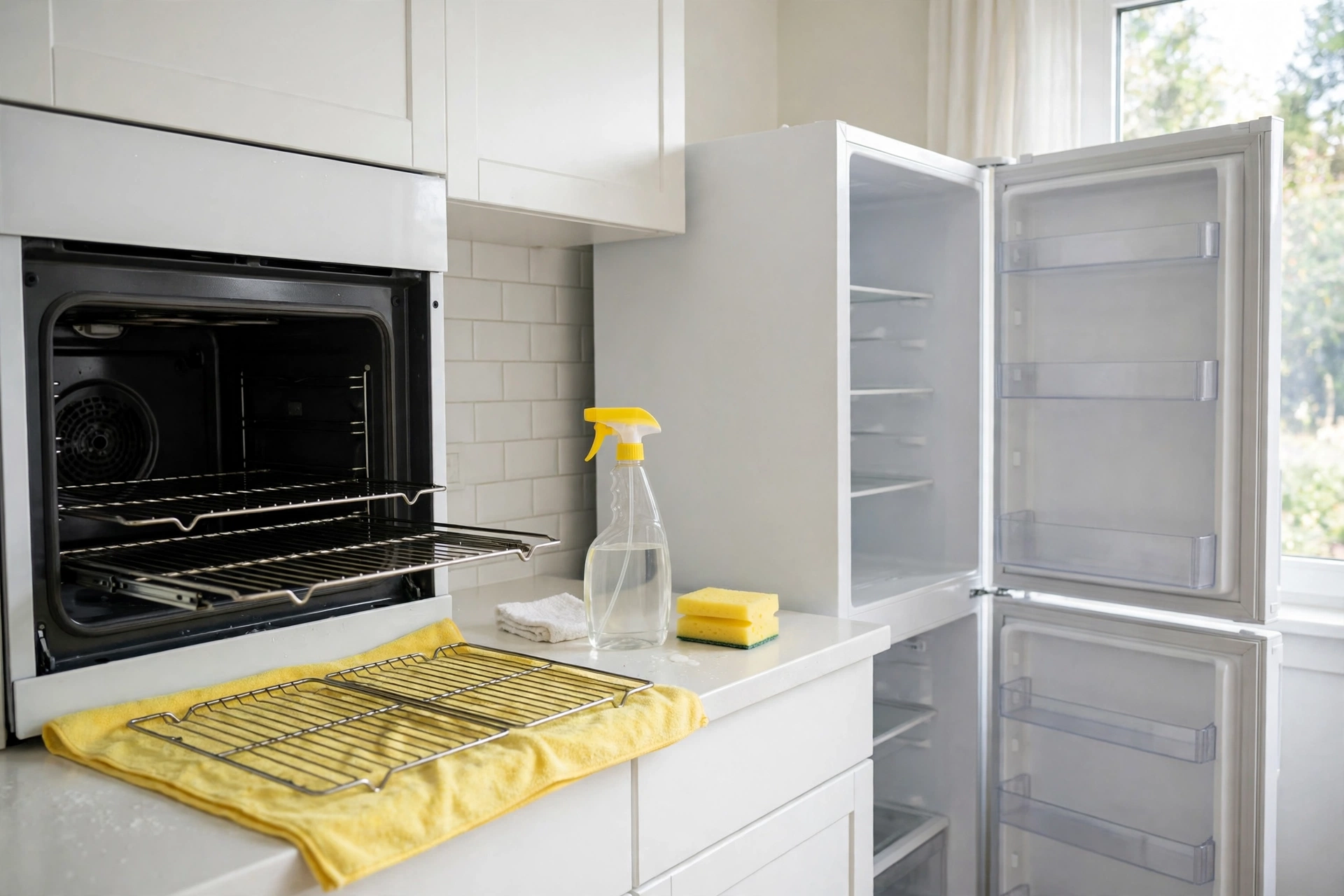
The kitchen carries the most visible buildup and the highest deduction risk in the whole home. Start here, and start with the appliances, because they need soaking time.
Inside the oven. Remove the racks and soak them in hot soapy water. Spray the oven interior with oven cleaner and leave it for the time on the label, usually 30 minutes, then wipe and rinse. Clean the door glass inside and out, the stovetop, burner caps or drip pans, and the knobs. One warning: never run oven cleaner through a self-clean cycle and never spray it on a hot oven. Let the oven cool first.
Inside the fridge and freezer. Empty everything, including the magnets and the shelf liners. Pull out the drawers and shelves and wash them in the sink. Wipe the interior walls, the door seals, and the handles. Defrost the freezer if it needs it, and leave both doors open to dry so no smell builds up before the walkthrough.
Cabinets and drawers. Empty every cabinet and drawer, then wipe inside and out, including the tops of the wall cabinets. That top edge is the most underrated deduction trap in the whole checklist. Nobody looks up there until the landlord does, and a year of grease dust is obvious in one glance. Wipe the range hood, inside and out, and the filter if it comes out.
Sink, counters, and floor. Descale the faucet, wipe the backsplash, and clean the sink until the drain smells fresh. Wipe the counters, then sweep and mop the floor last, after everything above it is done.
Best for: every renter, because no landlord skips the kitchen. Main advantage: it is the room where an hour of work prevents the biggest deduction. Watch out for: vinegar on stone counters, which can etch them, and oven cleaner on a self-cleaning oven. Verdict: do the oven and fridge properly or hire those two jobs out. Deposit risk: 5 out of 5.
Step 2. Bathroom, grout first
Bathrooms are the second inspection stop because soap scum, hair, and hard water buildup are easy to see and hard to argue with.
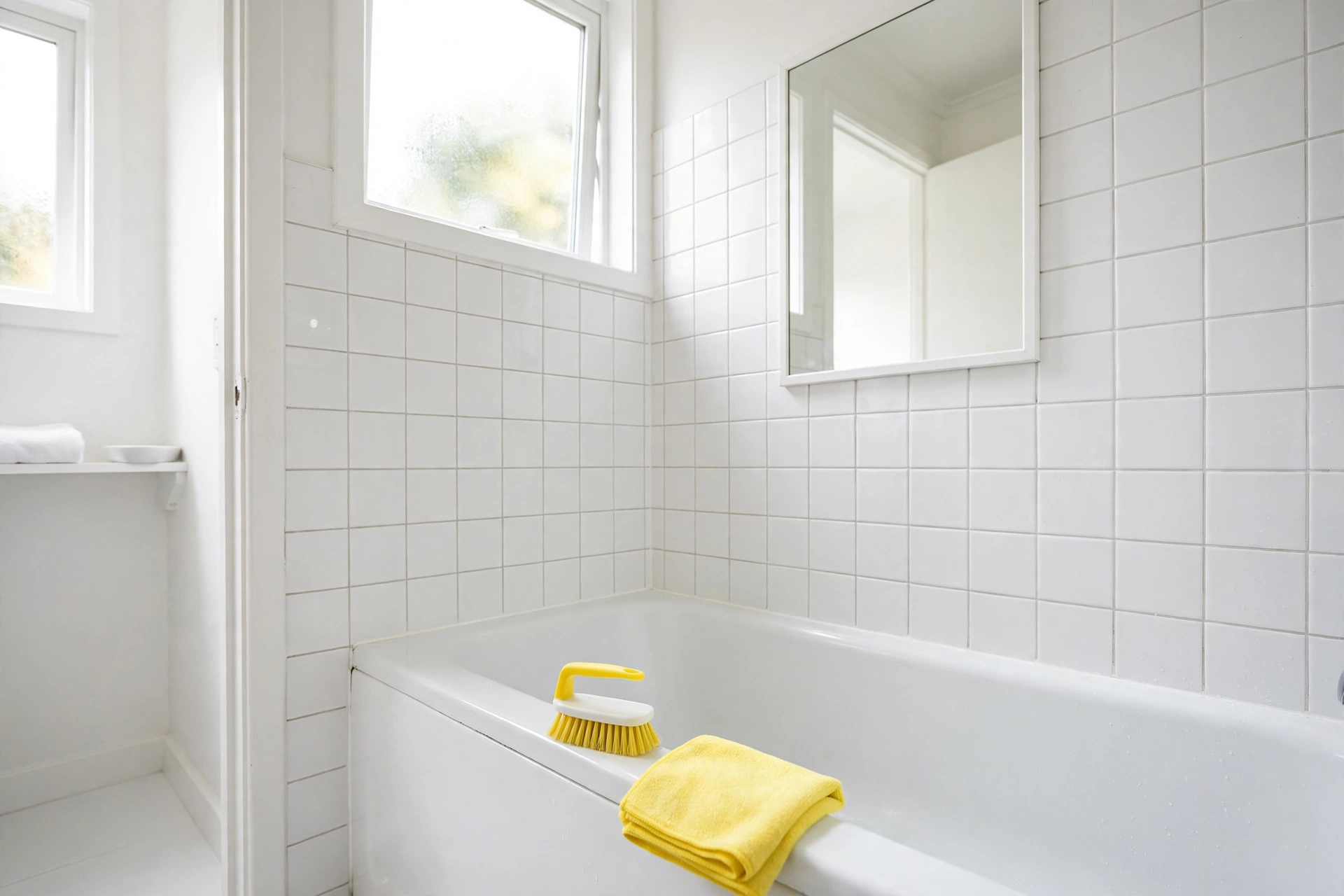
Spray the shower or tub and the grout lines first and let the cleaner sit while you work elsewhere. Scrub the grout with a stiff brush, then rinse and dry the tiles so you can see what is left. Clean the toilet inside and out, including the base, the lid, the seat hinges, and the floor around it. Wipe the sink, the faucet, the countertop, and the mirror. Empty the medicine cabinet and wipe inside it. Clean the exhaust fan cover, which collects a surprising amount of dust, and wipe the light fixtures.
If the grout is stained past cleaning, say so in writing instead of hiding it. Stained grout from normal use is usually wear and tear, and our wear and tear versus damage guide explains where that line sits, while a bleach-painted cover-up reads as damage and costs more.
Best for: every renter with a bathroom the landlord will open. Main advantage: a clean bathroom photographs well, and photos are your evidence. Watch out for: never mix bleach with vinegar, ammonia, or an acidic toilet cleaner. The CDC guidance is clear on this, and mixing is the one cleaning mistake that can hurt you, not just your deposit. Verdict: give the grout its full soak time. Rushing it is the reason most bathroom cleans fail inspection. Deposit risk: 4 out of 5.
Step 3. Bedrooms and living areas, top to bottom
Work top to bottom in every room, because dust falls onto surfaces you have not cleaned yet. Start with the ceiling corners and the light fixtures, then the walls, then the floors.
Dust the ceiling fans and the light fixtures. Wipe the walls where they are marked, using a damp cloth first and a magic eraser only on small scuffs, since it can dull paint if you scrub a whole wall. Wipe the baseboards, the door frames, and both sides of every door. Clean the window sills and the tracks, which collect dead insects and dust all year. Vacuum the carpets edge to edge, including inside the closets, and mop hard floors.
Empty every closet, shelf, and drawer one last time before you call the room done. A single forgotten item in a closet reads as “not emptied” on a walkthrough, and the landlord has to come back for it.
Filling nail holes is a ten minute job with a tub of spackle, and it is separate from cleaning, so do it before the final wipe, not after.
Best for: renters handing back any size home. Main advantage: top-to-bottom order means you only touch each surface once. Watch out for: a magic eraser on a full wall, and wet mopping a floor before the dust above it is gone. Verdict: the boring middle of the job, and the part most people rush. Slow down here. Deposit risk: 3 out of 5.
Step 4. The easy-to-miss finish
This is the pass that separates a clean home from a walkthrough-ready one. Walk every room with fresh eyes and catch what the room-by-room pass missed.
Wipe the switch plates and outlet covers. Clean the inside of the windows and the tracks. Wipe the tops of doors and the door frames. Check the tops of the kitchen cabinets again, the exhaust fan, and the light fixtures. Empty every cabinet, drawer, closet, and medicine cabinet one last time. Take out all trash, sweep the patio or balcony, and remove every personal item, including the ones under the sink and behind the doors.
Remove every adhesive strip and hook the way the manufacturer says to, slow pull straight down, not a yank. Our guide to removing adhesive hooks without damaging the walls covers the stretch-and-release method and the residue ladder, and it matters here because a torn patch of paint costs more than the hook ever saved.
Best for: the final hour before photos. Main advantage: it catches the five things landlords flag most. Watch out for: leaving the cleaning caddy itself behind. Take it with you or it reads as trash left in the home. Verdict: do not skip this pass. It is 30 minutes that protects the whole day. Deposit risk: 4 out of 5.
Step 5. DIY or hire a pro? The cost table as of November 2026
Here is the honest math. Prices below are the published 2026 ranges from HouseFly and HomeStars, checked November 2026. They are market rates, not quotes, and big-city prices run higher.
| Option | Studio / 1 bedroom | 2 bedroom | Time it takes you | Re-clean guarantee |
|---|---|---|---|---|
| Do it yourself | $30 to $80 in supplies | $40 to $80 in supplies | 4 to 12 hrs of your time | None |
| Professional clean | $150 to $280 | $200 to $380 | 2 to 5 hrs, you are not there | Usually yes |
The break-even is simple. A professional two bedroom clean costs $200 to $350, and landlords commonly deduct $200 to $500 or more for cleaning when a unit is not ready. If the pro clean prevents even one $250 deduction, it has paid for itself, and you get your weekend back. Hire it out when the oven, the bathroom, or the carpets need serious work, when you have less than a full day, or when you want an invoice and a re-clean guarantee to show the landlord. Do it yourself when the home is small, well kept, and you have a full free day.
One rule that surprises renters: in England and Wales, a landlord cannot require you to pay for a professional clean, though your lease can still require the home back to a professional standard. In the US, the lease clause decides, which is why the lease check in step 1 comes first.
Mistakes to avoid
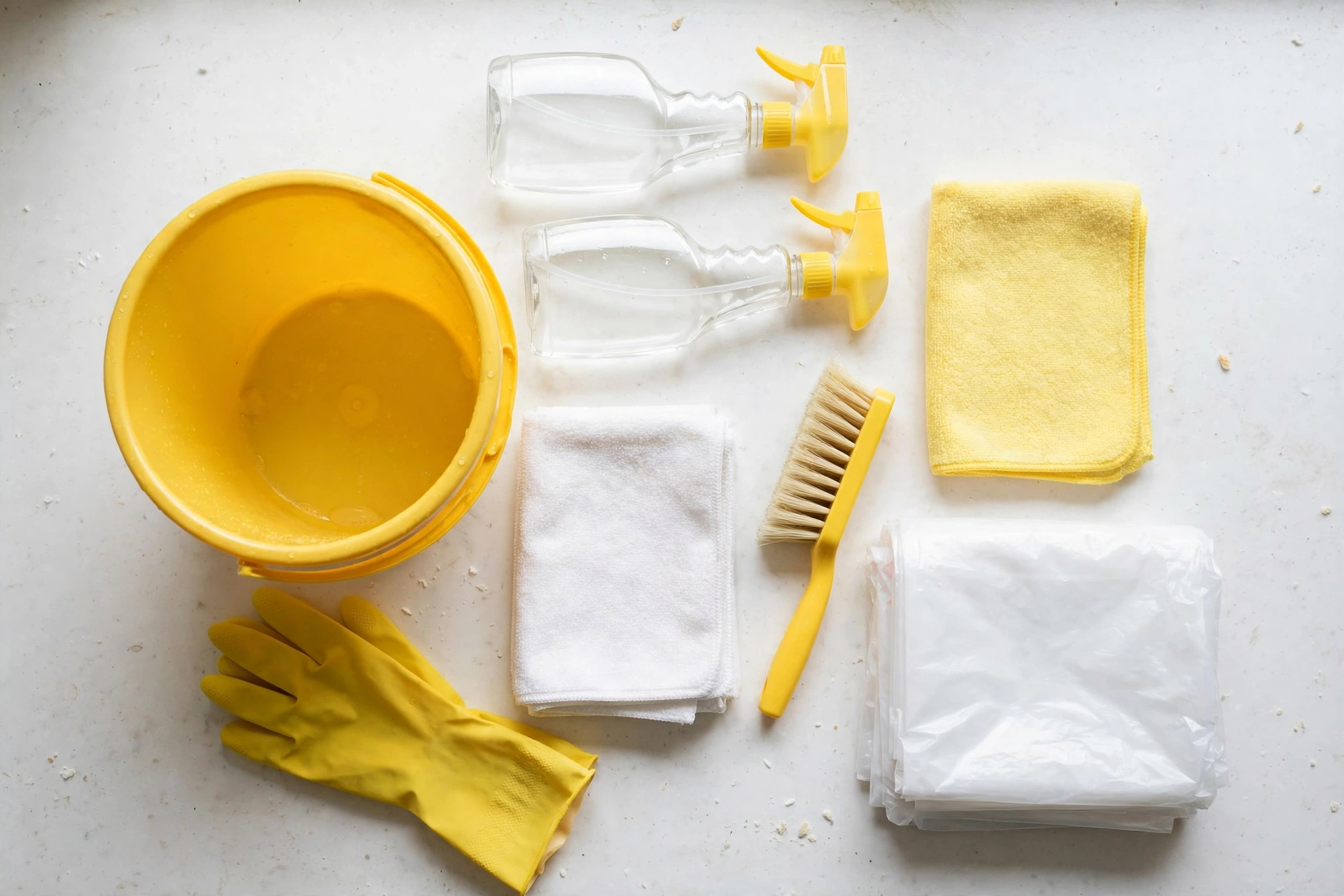
Cleaning before the home is empty. Every box you clean around hides a surface, and you will clean the same room twice.
Starting with the floors. Dust from above lands on a clean floor. Top to bottom, every room, every time.
Mixing cleaners. Never mix bleach with vinegar, ammonia, or acidic toilet cleaner. Use one product at a time and rinse between them.
Hiding damage with a quick cover-up. Bleach on grout, paint over a stain, or a rug over a mark all read worse than the honest problem. Report it in writing and photograph it.
Booking the clean before the movers leave. The right window is after the last box is out and before the walkthrough, ideally the morning of the walkthrough or the day before, so the home is photo-ready.
Turning off the utilities early. You need water, electricity, and hot water to clean. Do not schedule the shutoff for the morning of your move-out clean.
What to skip
Repainting the whole home. Unless your lease asks for it, repainting is the landlord’s job. Touch up scuffs you caused and leave the rest.
Replacing things that are worn, not damaged. Faded paint, a loose hinge that was loose when you moved in, carpet worn flat in a doorway, these are wear and tear, not damage. The line matters, and our wear and tear versus damage guide draws it room by room.
Deep cleaning the landlord’s appliances that were already broken. If the dishwasher never worked, note it in writing and photograph it. Do not pay to deep clean a machine you could never use.
Buying specialist products for one stain. A $40 enzyme cleaner for one carpet spot is worse value than a $200 professional carpet clean with a receipt, and the receipt is what the landlord wants anyway.
How to hand back the keys
When the home is empty and clean, take clear dated photos or a slow video of every room. Include wide views and close-ups of the oven, the fridge, the bathrooms, inside the cabinets, and the floors. Email the photos to your landlord with the date, and keep a copy for yourself. They are your record if a deposit question comes up later, and they cost you ten minutes.
Do a final walkthrough with your own checklist in hand, not from memory. Check the key-return date, the inspection arrangements, and when the movers finish. Leave a forwarding address in writing, return every key and access device, and keep the receipts for any professional cleaning or carpet cleaning in the same folder as your lease and your move-in photos. That folder is the whole deposit argument in one place.
How this was made: this checklist was built from the published 2026 move-out cleaning guides and cost tables cited below, with the time budget and the break-even math computed from their published figures. No home was cleaned for this article and no product was tested.
Sources
HouseFly, “Move Out Cleaning Cost: What to Budget in 2026” (https://housefly.com/move-out-cleaning-cost/) : 2026 US price ranges and DIY-vs-pro comparison used in the cost table.
Queen of Maids, “Move-Out Cleaning Checklist for Renters” (https://www.queenofmaids.com/articles/move-out-cleaning-checklist-renters) : lease-clause check, room-by-room order, and the 6 to 10 hour solo figure for a two bedroom.
HomeStars, “Move Out Cleaning Cost in Canada: 2026 Price Guide” (https://www.homestars.com/cleaning/price-guides/move-out-cleaning-cost) : studio to 4-bedroom ranges and the $30 to $65 per cleaner per hour band.
Tenancy Cleaning, “DIY vs Professional End of Tenancy Cleaning (UK)” (https://tenancy.cleaning/diy-vs-professional-end-of-tenancy-cleaning-which-should-you-choose/) : UK fixed prices and the England and Wales rule on professional cleaning.
FAQ
How long does move out cleaning take?
A studio takes 4 to 5 hours, a one bedroom 6 to 8 hours, and a two bedroom 8 to 12 hours when you clean alone. Queen of Maids puts a solo two bedroom clean at 6 to 10 hours and HouseFly at 8 to 14 hours. A second bathroom adds about an hour, and a home that was never deep cleaned adds two.
Do I have to hire a professional cleaner when I move out?
It depends on your lease. Some leases require professional carpet cleaning with a receipt, and some require a professional standard of clean. In England and Wales a landlord cannot require you to pay for a professional clean, but your lease can still require the home back to a professional standard. Read the cleaning clause first, then decide.
What do landlords check first during a move-out inspection?
The kitchen, then the bathroom. Inside the oven, inside the fridge, the grout lines, and the tops of the kitchen cabinets are the four spots landlords flag most, because they are the four spots renters skip most. Clean those first and photograph them when you finish.
How much does move-out cleaning cost?
As of November 2026, a professional clean runs $150 to $250 for a studio or one bedroom and $200 to $350 for a two bedroom, according to HouseFly. Doing it yourself costs $40 to $80 in supplies and 8 to 14 hours of your time for a two bedroom. Landlords commonly deduct $200 to $500 or more for cleaning, so the professional clean often pays for itself.