How to Remove Adhesive Hooks Without Damaging Walls (and Keep Your Deposit)
To learn how to remove adhesive hooks without damaging walls, start by finding the release tab, then pull it slowly straight down along the wall, never toward you. If the tab breaks, warm the strip with a hair dryer and cut through the foam with dental floss. Most hooks come off clean in 10 to 20 minutes each, and the original element of this guide is the triage table below, which rates the damage risk of each adhesive type before you pull anything.
Most renters lose deposit money on walls. Not on big holes. On small ones. A peeled patch of paint where a hook used to sit. A sticky gray rectangle that catches dust. A torn spot of drywall paper that looks worse than it is.
I have seen this pattern again and again in renter move-out stories. The hook did its job for a year. Then removal day turned a damage-free idea into a deduction. The fix is almost always the same. Slow down. Identify the adhesive first. Then use the method made for it.
This guide covers every common type. Stretch-release strips, foam tape with no tab, heavy mounting tape, and sticky putty. It also covers residue, tile and glass, and the rescue plan for when paint peels anyway.
What kind of adhesive are you removing?
Direct answer: Look for a pull tab first. If there is one, you have a stretch-release strip and the slow downward pull will work. If there is no tab, you have foam tape or mounting tape, and heat plus floss is the safer route.
| Adhesive type | How to spot it | Damage risk (1 low to 5 high) | First method |
|---|---|---|---|
| Stretch-release strip | A small tab sticks out below the hook | 1 | Slow downward pull |
| Foam tape, no tab | Thick white or gray foam pad, no tab | 3 | Heat, then floss cut |
| Heavy mounting tape | Thin, very strong tape, often clear or black | 4 | Heat, floss, then residue ladder |
| Sticky putty | Soft, reusable putty blob | 1 | Roll it off slowly |
| Suction hook | Rubber cup, no glue at all | 1 | Lift an edge to break the seal |
Best for: any renter facing a wall full of hooks a week before move-out. Watch out for: textured walls, wallpaper, and paint less than 7 days old. Adhesive makers warn against all three, because the bond can fail or the surface can lift. Verdict: never guess the type. Thirty seconds of looking saves a paint repair later.
The method for how to remove adhesive hooks without damaging walls depends on this table. Skip it and you are pulling blind.
How to remove adhesive hooks without damaging walls in 7 steps
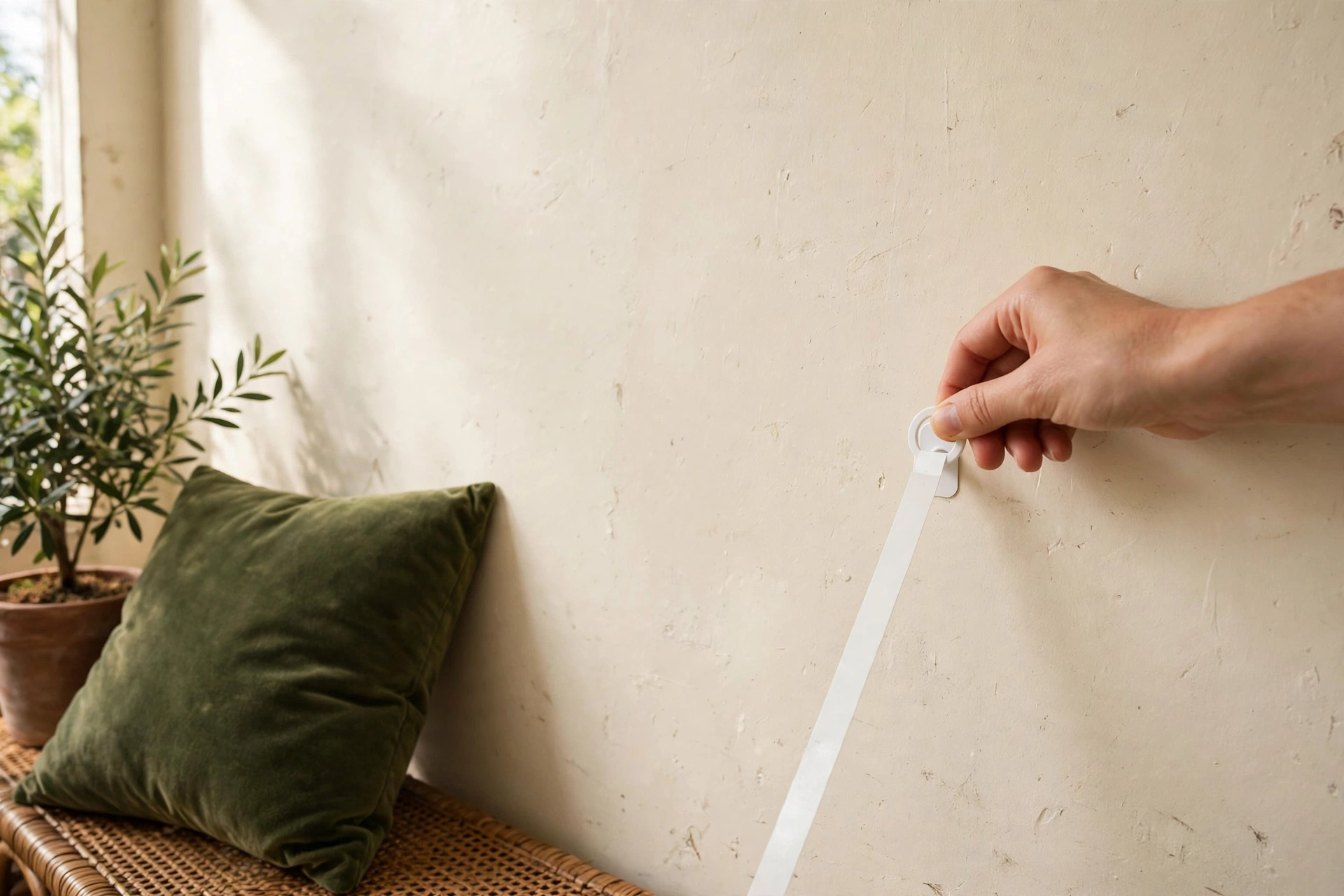
Direct answer: This is how to remove adhesive hooks without damaging walls when the tab is intact. Hold the hook steady, pull the tab slowly straight down, and let the strip stretch until it releases on its own.
Materials list: You need a hair dryer, dental floss or fishing line, an old plastic card, a soft cloth, warm soapy water, and rubbing alcohol. A citrus adhesive remover helps for stubborn residue. That is the whole kit. No scraper with a metal edge, and no razor blade on painted walls.
1. Take everything off the hook first. Lift items up and over the hook, not straight out, so you do not rip the strip off with them.
2. Slide the hook up and off its base if it is a two-piece hook. Keep the base flat against the wall.
3. Hold the base gently against the wall with one hand. Do not press it hard into the paint.
4. Grip the tab with your other hand. Pull it straight down, keeping it flat against the wall. Never pull it toward you.
5. Pull slowly and steadily. The strip will stretch long and thin. Maker guidance says to stretch hook strips at least 12 inches (30 cm) and picture hanging strips at least 15 inches (38 cm) before they release.
6. If the strip stops stretching, pause. Hold the tension for a few seconds, then keep pulling slowly. A fast yank turns a stretch into a peel, and a peel takes paint with it.
7. When the strip lets go, check the wall in raking light. Hold a lamp or phone light at a low angle across the wall. That light shows residue and lifted paint that straight-on light hides.
Time estimate: about 10 to 20 minutes per hook, including the light check. A whole flat of hooks is an afternoon job, not a weekend job. Work one room at a time, and photograph each wall when it is clean. Those photos join the move-in record in our lease and deposit guide for renters.
What if the tab breaks?
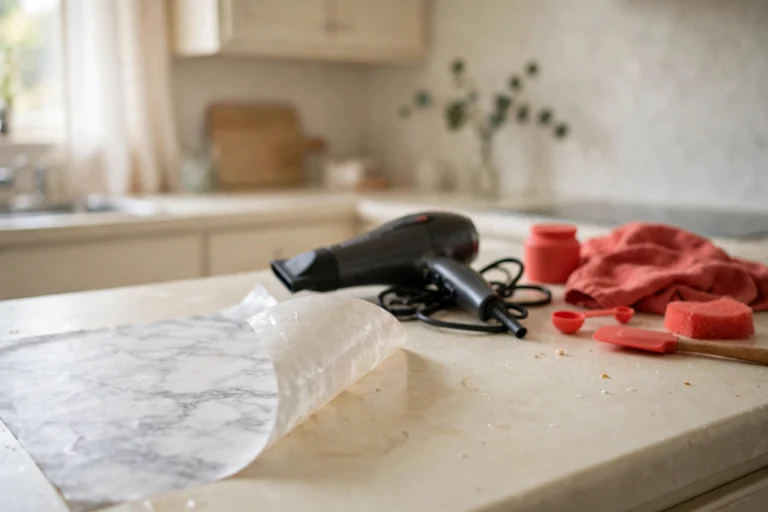
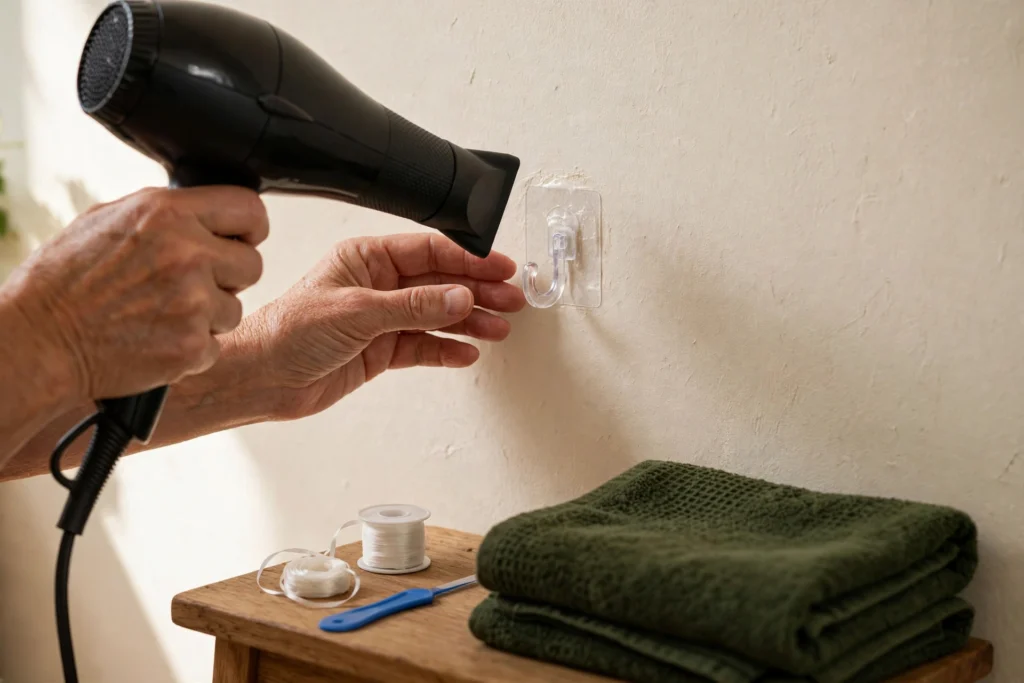
Direct answer: Do not pry the hook off. Warm the strip with a hair dryer for 30 to 60 seconds, then saw through the foam with dental floss held flat against the wall.
This is the most common rescue in this guide. Old strips go brittle. Tabs snap. The hook sits there, mocking you. Prying is the worst response. A putty knife under a stuck hook levers paint off in a neat little flap.
Heat first. Hold the dryer a few inches from the strip and move it back and forth. Do not hold it in one spot, and do not use high heat on fresh paint. Warm adhesive softens. Soft adhesive cuts clean.
Then take about 18 inches (46 cm) of dental floss. Wrap each end around your fingers. Slide it behind the hook and saw gently back and forth. Let the floss do the cutting. When the hook comes free, roll the leftover foam off with your thumb, or warm it again and roll it off in small bits.
Best for: any strip older than a year, and any hook in a hot room where adhesive has baked hard. Watch out for: fishing line cuts faster but can also cut into soft paint if you saw hard. Floss is the gentler first try. Verdict: heat plus floss fixes almost every broken tab. Patience fixes the rest.
If paint still lifts, do not panic. The rescue for that is later in this guide, and it links to our full patch method in how to fill nail holes before moving out.
How do you remove sticky residue without damaging paint?
Direct answer: Work up the ladder from mildest to strongest. Roll it off, then warm soapy water, then oil, then rubbing alcohol on a patch test, then a citrus remover. Stop at the first step that works.
Residue is the part most guides rush. They jump straight to a strong solvent. On latex paint, that is how a clean wall gets a dull spot or a color change. Start mild.
1. Roll it. Press the edge of the residue and roll it into a ball with your thumb. Fresh residue often comes off this way alone.
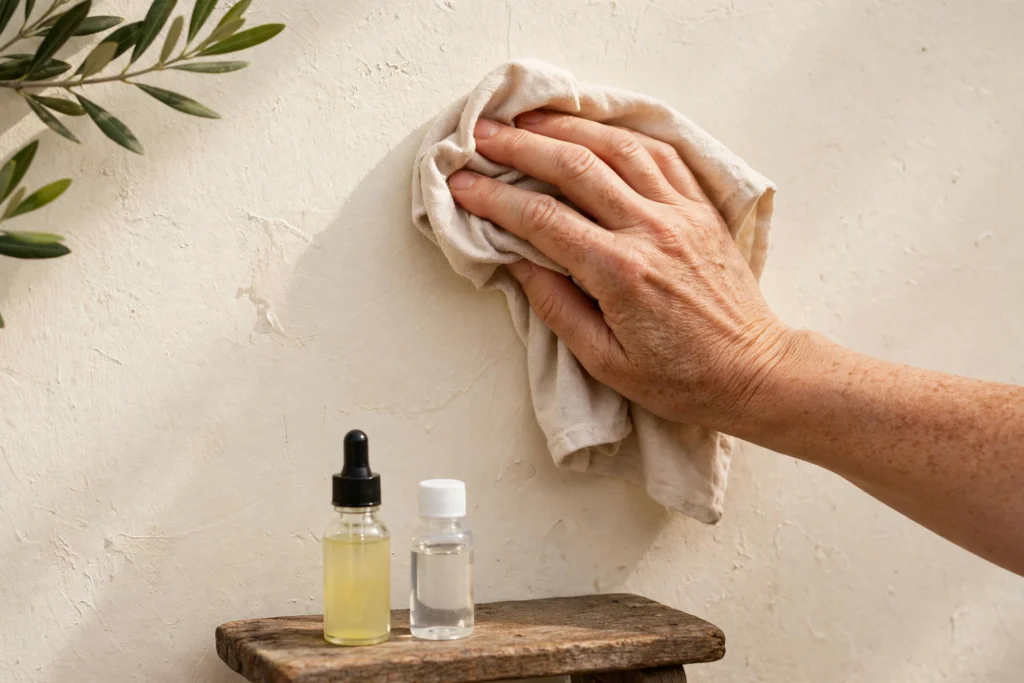
2. Warm soapy water. Dampen a soft cloth, not a dripping one, and rub in small circles. This handles light tape marks.
3. Oil. A thin layer of cooking oil or baby oil, left for 15 to 20 minutes, softens many adhesives. Wipe it off, then wash the spot with soapy water so the oil does not block future paint.
4. Rubbing alcohol. Dampen a corner of a cloth, never pour it on the wall, and rub gently. Patch test first on a hidden spot, behind furniture or near the baseboard, because alcohol can soften some latex paints.
5. Citrus remover. A product like Goo Gone uses a citrus solvent that dissolves adhesive well. Use a small amount on a cloth, wipe, then wash with soapy water. Check the label for your surface first.
What to avoid on painted walls: acetone and nail polish remover, metal scrapers, abrasive pads, and heat guns on high. Acetone can dissolve latex paint. Metal gouges drywall paper. Both turn a 5 minute cleanup into a repair.
Adhesive hooks on tile, glass, and mirrors
Direct answer: Hard surfaces forgive much more than paint does. Heat and a plastic card handle most hooks on tile and glass, and soapy water usually finishes the residue.
| Surface | Safe first method | Stronger method | Avoid |
|---|---|---|---|
| Glazed tile | Heat, then plastic card | Citrus remover or rubbing alcohol | Metal scraper on glossy glaze |
| Glass | Warm soapy water, plastic card | Rubbing alcohol | Pressure near edges or chips |
| Mirror | Heat, floss cut, gentle roll | Citrus remover on the frame only | Scraping the mirror backing |
| Painted wood trim | Slow tab pull | Warm soapy water | Acetone, which attacks many finishes |
| Wallpaper | Heat on low, very slow peel | Nothing stronger | Any solvent, and most hooks at all |
A note on mirrors deserves care. A mirror bonded with heavy tape is not a hook job. If the mirror is large, get a second person to hold it while you cut, and tape the face first so a crack does not shower glass. When in doubt, that is a job to ask about, not to force. Our guide on how to ask landlord for permission covers how to frame that question in an email.
Bathroom hooks deserve a special warning. Steam weakens adhesive over time, so a hook that held for a year can fail on its own. Check bathroom hooks before move-out week, not during it. A hook that falls and chips a tile costs far more than a hook you removed early.

What to do when the paint still peels
Direct answer: Small torn spots are fixable in under an hour. Seal the torn drywall paper, fill if needed, sand lightly, and touch up with matching paint.
First, judge the size. A peel smaller than a coin is a touch-up job. A torn patch larger than your palm, or a spot where the brown drywall paper shows through, needs a filler step first. The line matters because it decides whether a landlord can call it damage beyond normal use, which our wear and tear vs damage for renters guide explains in detail.
For a small peel, press any loose paint flap flat. Dab a thin coat of primer or sealer over exposed paper so filler and paint grip it instead of bubbling it. Let it dry fully. Then fill, sand with fine grit, wipe dust off, and touch up. If you do not have the original paint can, take a small paint chip to a paint store for a color match, and test the match on a hidden spot first.
Photograph the repair in the same raking light you used for the check. If the repair is invisible in that light, it will pass a walkthrough. If it still shows, say so in your move-out note and offer the photo. Honesty plus a photo beats a landlord discovering it alone.
What removing adhesive hooks costs (as of November 2026)
Direct answer: A basic adhesive removal kit costs about $9.58 using live-checked prices, and most renters already own the hair dryer and floss.
| Item | Checked price (November 2026) |
|---|---|
| Goo Gone citrus adhesive remover spray gel, 12 fl oz | $6.29 (Target listing) |
| Command refill strips, 16 pack | $3.29 (Target listing) |
| Hair dryer, dental floss, plastic card, cloth | Already at home, $0 |
| Kit total | $9.58 |
The math is simple: $6.29 plus $3.29 equals $9.58. Prices were checked in November 2026 and will vary by store and size, so treat the table as a planning figure, not a quote. Compare that with a single wall repair deduction, which our hub guide prices at $65 in its worked example. One avoided deduction pays for this kit six times over.
Time estimate for the whole job: a room with 6 to 8 hooks takes about 2 hours at a calm pace, including residue cleanup and photos. A full flat takes an afternoon. Do it the weekend before move-out week, not the morning of the walkthrough.
Renter caveat: check the lease before you remove anything
Direct answer: Read the alterations and move-out clauses before removal day. Check what needs written permission, what counts as damage, and how each change must be reversed.
Most leases say nothing about adhesive hooks by name. They say return the place to move-in condition and repair damage beyond normal wear. That is the clause that decides your refund. Photograph every wall after removal, keep the receipts for any filler or paint, and send the photo set to your landlord with your move-out notice. That paper trail is what turns the walls were damaged into here are the clean walls.
If a hook took paint with it and the wall needs a full repaint, ask before you paint. A mismatched repaint can draw a bigger charge than the peel itself. Permission by email, repair by the book, photos at the end. That order protects you.
Mistakes to avoid
Direct answer: The costliest mistakes are speed mistakes. Yanking, prying, and jumping to strong solvents all trade minutes now for repair hours later.
Yanking the tab outward instead of down is mistake one. It peels paint at a sharp angle instead of stretching the strip. Pressing the hook hard into the wall while you pull is mistake two, because it loads the paint under the hook. Skipping the patch test is mistake three. A solvent that is safe on tile can dull latex paint, and you only learn that on the most visible wall.
Leaving hooks up until move-out morning is mistake four. Heat, floss, and drying time all need a calm afternoon. The last mistake is cleaning residue with an oily product and then painting over it. Oil blocks paint. Wash every oiled spot with soapy water and let it dry before any touch-up.
What to skip
Direct answer: Skip metal scrapers on painted walls, skip acetone on latex paint, skip heat guns on high, and skip reusing old strips that look intact.
Old strips are a false saving. A strip that has baked on a wall for two years will not release like a new one, and a reused strip will not hold like a new one either. Fresh strips cost $3.29 for a 16 pack at the checked price. That is cheaper than one paint repair.
Skip miracle removal hacks that involve sanding the wall first. Sanding spreads the damage wider than the hook ever did. Skip painting over residue, too. Paint over sticky film peels in sheets, and then the problem is bigger than the hook was.
Learning how to remove adhesive hooks without damaging walls is really learning one habit. Match the method to the adhesive, work slowly, and check your work in raking light. Do that and most hooks leave nothing behind but a clean wall and a full deposit.

Do adhesive hooks damage walls?
They can, but usually only when removed wrong. A slow downward pull on a stretch-release strip rarely damages paint. A fast outward yank, a pry with a metal tool, or a strip left on fresh paint is what causes most damage.
How do you remove a Command strip if the tab breaks?
Warm it with a hair dryer for 30 to 60 seconds, then saw through the foam with dental floss held flat against the wall. Roll off the leftover foam with your thumb, warming it again if it resists.
How do you get sticky residue off a painted wall?
Start with rolling, then warm soapy water, then oil left for 15 to 20 minutes, then rubbing alcohol on a patch-tested spot, then a citrus remover. Stop at the first step that works, and wash off any oil before painting.
Can you use adhesive hooks on textured walls?
Light texture sometimes works if the strip makes full contact, but deep texture, wallpaper, brick, and rough concrete are poor surfaces for adhesive hooks. The strip cannot grip evenly, so it may fall, or removal may pull the texture with it.
How this was made: this guide was researched from maker instructions and top-ranking removal guides, with prices live-checked in November 2026. No products were tested by the author, and no wall damage was staged for this article.
Sources: Bob Vila guide to removing Command strips, Family Handyman guide to temporary hooks without damage.