7 Bold Paint Colors That Make Small Rooms Feel Bigger
Somewhere along the way, small rooms got sentenced to a life of white paint. The logic sounds sensible — light colors, bigger feel — but designers have been quietly breaking this rule for years, and their boldest small rooms are the ones everyone saves. Here’s the secret they know: a dark, saturated color doesn’t shrink a room; it blurs its edges. When you can’t quite see where the walls end, the eye reads depth instead of dimensions. These seven bold shades are the ones that work hardest in small spaces — and how to use each without turning your room into a cave. (If you’re starting from zero, our best wall colors for small rooms guide covers the light-and-airy end of the spectrum first.)
1. Inky navy — the small-room classic
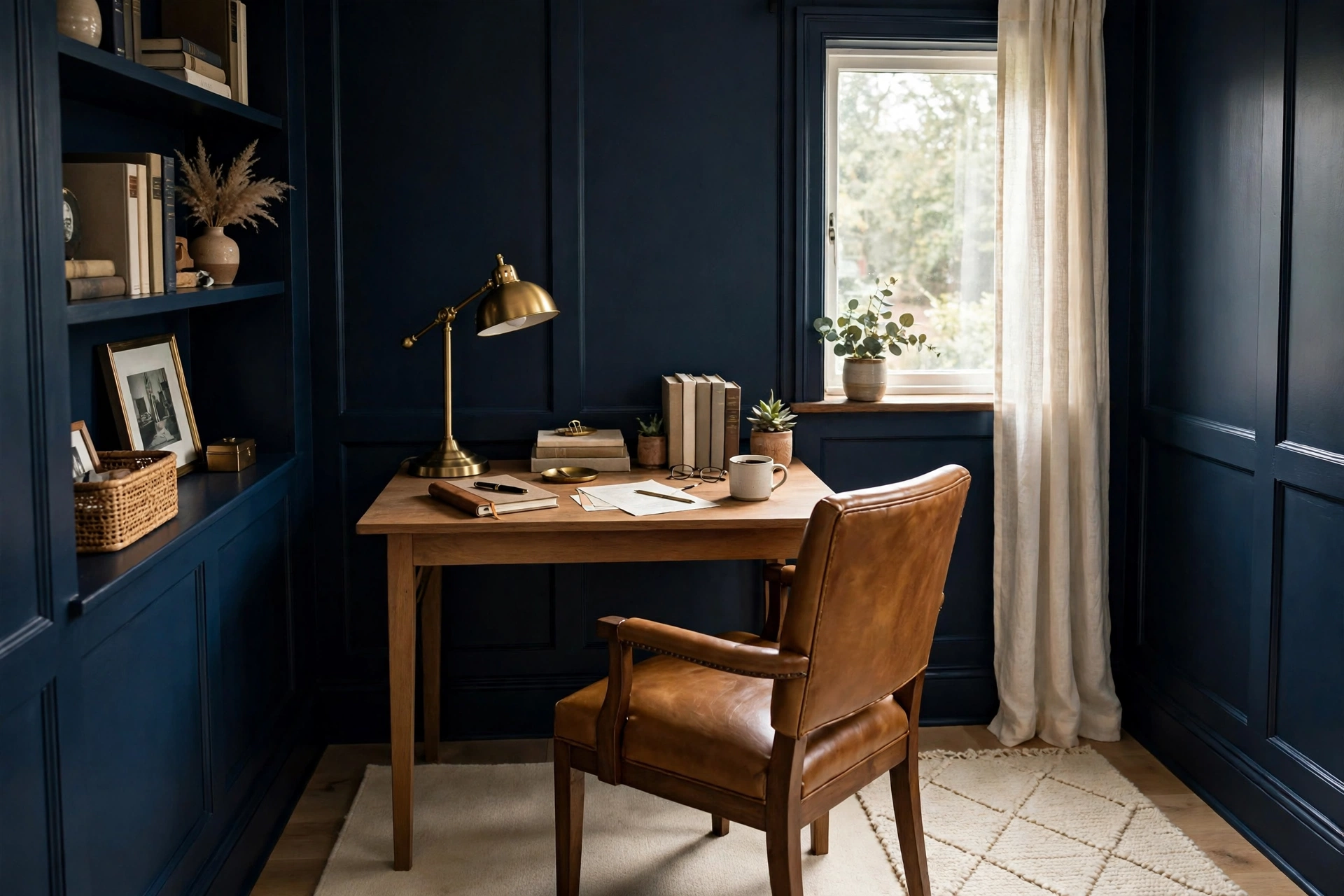
Navy is the gateway bold color: deep enough to feel dramatic, familiar enough to feel safe. In a small living room or home office it reads like a tailored suit — everything against it (cream sofas, tan leather, brass) looks more expensive. Choose a navy with a hint of black in it rather than a bright royal; the inkier it is, the calmer it behaves. Finish tip: a satin or eggshell sheen keeps navy luminous; flat matte can go chalky in low light.
2. Warm terracotta — sunshine, but grown up
Terracotta wraps a small room in permanent golden hour. It’s bold without being dark, which makes it perfect for north-facing rooms that turn blue-grey colors muddy. Small bedrooms and dining corners love it — appetite and conversation both improve under warm walls. Pair it with cream textiles and black accents, and avoid orange-toned wood furniture, which can push the whole room too far into sunset.

3. Emerald green — the jewel box effect
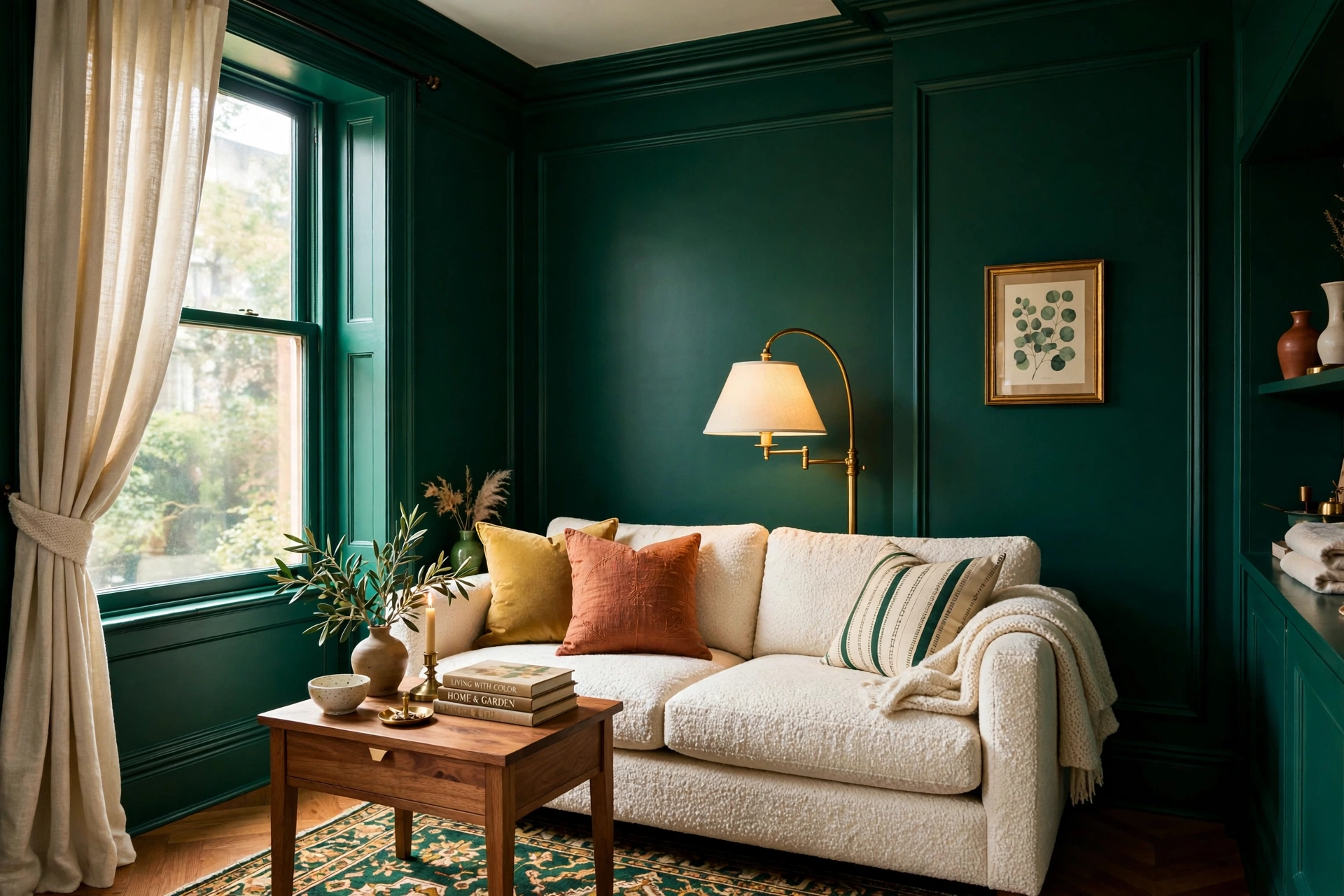
Emerald is the color-drenching champion: walls, trim and even the ceiling in one deep green turns a boxy small room into a jewel box — cocooning in the best way. It flatters wood tones, houseplants and warm metals, and it’s remarkably forgiving of scuffs and uneven old walls. In a bright south-facing room emerald stays vivid; in darker rooms it deepens into something closer to forest — lovely, but sample first.
4. Wine & plum — drama for the smallest rooms
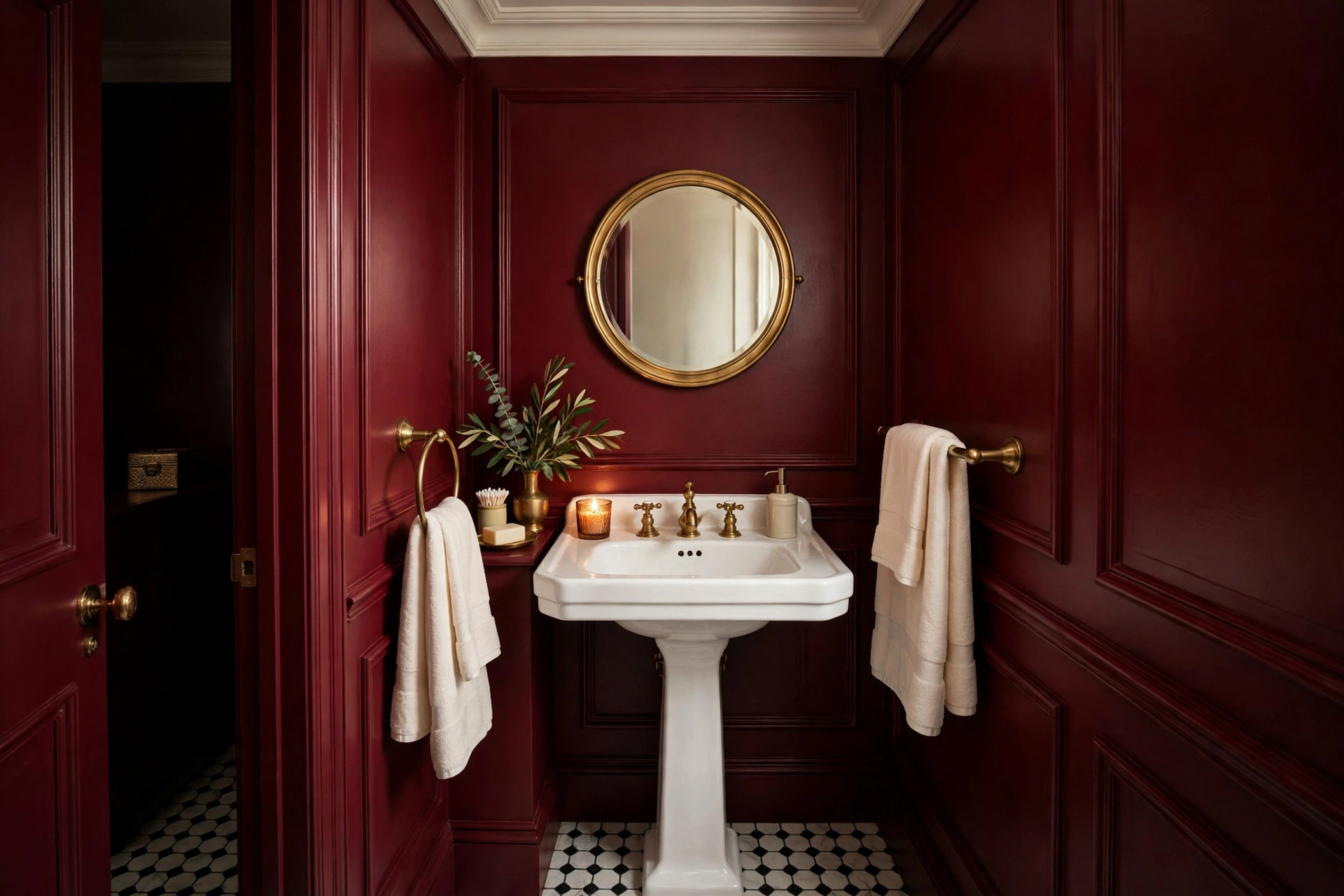
Powder rooms, laundry corners, reading nooks: the smallest, least-used rooms are where wine reds and plums earn their keep. A saturated berry shade turns a forgettable box into the room guests talk about. Because these rooms are moments, not marathons, the drama never wears out its welcome. Keep fixtures and textiles pale (white porcelain, cream towels) so the color reads intentional, and consider a glossier finish — lacquered wine walls have a depth flat paint can’t fake.
5. Jewel teal — between blue and green, all personality
Teal is the bold choice for people who can’t commit to either blue or green — and in small bathrooms and entryways it’s a show-off in the best sense. It makes white tiles and sanitaryware look crisper, skin tones warmer, and brass hardware glow. Matte teal feels modern and calm; gloss teal feels like a boutique hotel. Either way, it’s the shade most likely to get your smallest room onto someone’s saved board.

6. Olive green — bold, but whispering
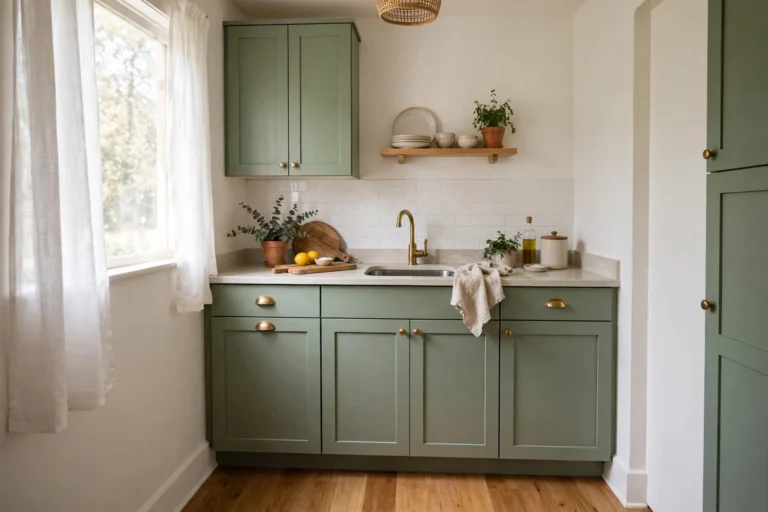
Not every bold color shouts. Olive is saturated and unmistakably a color, yet muted enough to live on all four walls of a small kitchen or bedroom without fatigue. It blurs a room’s boundaries the same way the darker shades do, while feeling earthy and grounded. Olive loves natural materials — pair it with the woven and bamboo textures from our natural storage baskets guide and the room composes itself.

7. Charcoal grey-blue — the edge softener
Charcoal with a blue undertone is the modern answer to black: nearly as dramatic, far more forgiving. In a small home office or bedroom it softens the room’s corners (dark colors visually recede, so edges stop announcing the room’s true size) and makes pale bedding, artwork and screens glow by contrast. Keep ceilings pale with charcoal unless you’re fully color-drenching — half measures are where dark colors get their bad reputation.
How to make bold work in a small room (the 4 rules)
- Commit to the color. One timid accent wall in a sea of white often looks like a mistake. Either drench (walls + trim, even doors) or confidently cover at least the main wall fully, edge to edge.
- Finish is half the color. Satin and semi-gloss bounce a little light and add movement to dark shades; reserve dead-flat matte for ceilings or very bright rooms.
- Light it warm. Bold colors are lit by their lamps. Warm-white bulbs (2700–3000K) and at least two light sources per room keep dark walls rich instead of murky.
- Sample at full scale. Bold shades lie on tiny swatches. Paint a poster-size area and live with it through a full day of changing light before committing — the same ritual from our 2026 colors of the year guide.
Bold or bright? The honest answer
Neither team wins. Bright colors genuinely suit small, low-light, north-facing rooms you’ll spend all day in. Bold colors shine in small rooms used in shorter bursts, rooms with decent windows, and anywhere you want mood over airiness. The smartest small homes mix both — which is exactly the approach across our color guides: start with the best wall colors for small rooms if you lean light, the 2026 shades if you lean trendy, and this list when you’re ready to be brave.
Going bold? Save this plum nook for courage later:

Bold Color FAQs
Do dark colors really make a small room look bigger?
They don’t add size — they hide it. Dark, saturated colors blur a room’s edges and corners, so the eye reads depth instead of exact dimensions. Combined with good warm lighting, many small rooms feel larger and always feel more designed in bold shades.
What is color drenching?
Painting everything one color — walls, trim, skirting and often the doors and ceiling too. In small rooms it removes the visual breaks that chop a space into pieces, making it feel calmer, bigger and more intentional.
Which bold color is safest for a first try?
Inky navy. It’s deep and dramatic but familiar, pairs with almost everything you already own, and is the easiest bold shade to live with in main rooms like living rooms and offices.
Can renters use bold colors?
Only with the landlord’s written permission for paint. Without it, get the same effect reversibly: bold curtains, a large rug, bedding and art carry deep color into a small room with zero deposit risk.
Keep Decorating
Color journey continues: compare the light side in our best wall colors for small rooms, see this year’s designer picks in the 2026 colors of the year guide, or watch color change a whole kitchen in our cabinet painting guide. Browse all Budget DIY Projects, or see everything new on the blog.