Does Peel and Stick Wallpaper Damage Walls? The Honest Renter Answer
Does peel and stick wallpaper damage walls? On a smooth, fully painted wall where the paint has cured for at least four weeks, usually no. On flat paint, fresh paint, bare drywall, or heavy texture, the risk is real, and it is the wall that decides, not the wallpaper brand. This guide gives you the honest answer wall by wall, with a deposit risk rating for each one, a time curve that explains why timing matters, and a repair kit priced as of November 2026. Original element: the wall-by-wall risk table below plus a computed accent wall plan. A 10 ft wide accent wall at 20 in panels is 6 panels, at 3 to 5 minutes each that is 18 to 30 minutes of peeling plus about 10 minutes for a residue check, so roughly 30 to 45 minutes in total.
Does peel and stick wallpaper damage walls on painted drywall?
On painted drywall in good condition, peel and stick wallpaper damage walls only rarely, and only when one of the risk factors below is present. The adhesive bonds to the paint layer, not to the wall itself. When the paint layer is strong, smooth, and fully cured, the paper peels away and the paint stays put. When the paint layer is weak, porous, or still curing, the adhesive can beat the paint, and flakes come away with the paper. That is why two renters can use the same product and get opposite results. One had satin paint from five years ago. The other had flat paint from five weeks ago. Same paper, different wall, different outcome.
The finish matters more than most people expect. Satin, eggshell, and semi-gloss paints have a smooth, sealed surface that releases cleanly. Flat and matte paints are porous, so the adhesive sinks in and grips hard. If your walls are flat paint, do not skip the test patch section below. It is the cheapest insurance in this whole guide. In short, does peel and stick wallpaper damage walls on painted drywall? Only when the paint or the timing works against you. So when renters ask, does peel and stick wallpaper damage walls, the honest answer starts with the paint finish.
Which walls does peel and stick wallpaper damage most?
Here is the table to check before you buy a single roll. Find your wall, read its rating, and follow its one precaution. Deposit Risk runs from 1 (lowest) to 5 (highest). Use the table to answer does peel and stick wallpaper damage walls for your own wall before you buy.
| Wall | Likely outcome on removal | Deposit Risk | The one precaution that matters most |
|---|---|---|---|
| Satin or eggshell paint, cured for months | Clean peel, little or no residue | 1 out of 5 | Peel slowly at a low angle and you are done |
| Semi-gloss paint, cured | Clean peel, easiest release of all | 1 out of 5 | Wipe light residue with a damp cloth |
| Flat or matte paint | Flakes of paint may lift in patches | 4 out of 5 | Test patch first, and seal fragile paint with a clear primer before hanging |
| Fresh paint, under 4 weeks old | Paint can lift in sheets, and trapped solvents can bubble the paper | 5 out of 5 | Wait the full 4 weeks before you hang anything |
| Bare or unprimed drywall | Drywall paper face can tear, which needs patching | 5 out of 5 | Do not hang it here at all until the wall is primed and painted |
| Lightly textured walls | Paper may hold but show the texture through, and edges may lift | 3 out of 5 | Test a full panel, not just a corner, and watch the edges for a week |
| Heavily textured walls, knockdown or popcorn | Poor grip, lifting edges, and residue in the texture | 4 out of 5 | Skip it, or smooth and seal the wall first |
| Humid rooms, bathroom walls with weak ventilation | Edges lift, and moisture can sit behind the paper | 3 out of 5 | Use it only in dry rooms, or a humidity rated product in a bathroom |
Best for: renters with satin or eggshell paint who want a pattern wall for a year or two. Main advantage: no paste, no steamer, and a clean peel on a sound wall. Watch out for: flat paint and fresh paint, the two walls that cause nearly every horror story. Verdict: safe on the right wall, risky on the wrong one, and the test patch below tells you which wall you have. For those renters, does peel and stick wallpaper damage walls is usually a no, provided the paint is cured.
If your wall matches the backsplash question, our sibling guide on does peel and stick backsplash damage walls covers small rigid tiles, which behave differently from full wall panels.
Does peel and stick wallpaper damage walls more the longer it stays up?
Yes, but not in a straight line, and this is the part most guides get wrong. A hands-on test by Wildfire Interiors, who tested 12 peel and stick wallpaper brands on smooth eggshell drywall, found a strange curve. After one week, about half the brands pulled paint or drywall on removal. After three months, 11 of 12 brands came off clean. After three years, the same paper that had passed at three months was very hard to peel, left residue, and took paint with it.
Here is the honest reading of that curve, in plain terms. In the first days, the adhesive has its strongest initial tack, and the paint is still settling under it, so a rushed reposition can lift paint. Over the following months the bond settles and the paper releases most cleanly. That is the sweet spot. Over years, the adhesive ages into the paint and the bond strengthens again, which is why guides that say “beyond 2 to 5 years the risk rises” and guides that say “keep it to 1 to 3 years for easiest removal” are both describing the same climb. For a renter, the practical rule is simple. Do not reposition panels constantly in week one, enjoy the clean middle window, and plan removal before the paper has been up for several years, not after. That timing curve is why does peel and stick wallpaper damage walls is a question about time as well as paint.
How do you test a wall before committing to peel and stick wallpaper?
Do this before you order full rolls. It takes ten minutes and it answers the only question that matters: will this paper leave my paint alone? The test below answers does peel and stick wallpaper damage walls on your wall, not in general.
Materials list: one sample or offcut of the exact paper you plan to buy, a clean damp cloth, a hair dryer you already own, and your phone camera.
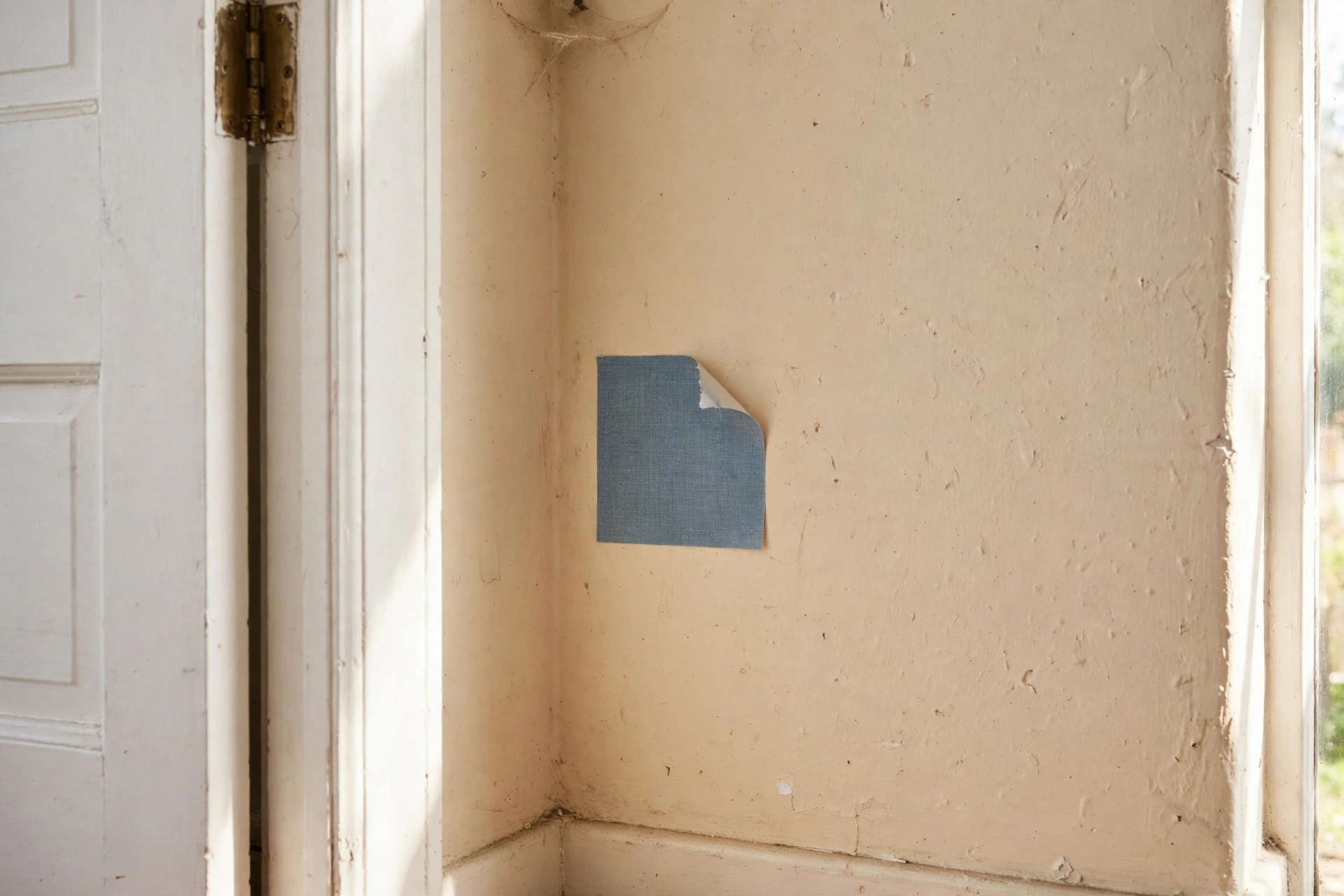
- Pick a hidden corner. Choose a spot behind a door or a piece of furniture, on the same wall and paint you plan to cover.
- Clean and dry the spot. Wipe it with the damp cloth and let it dry fully. Dust and grease are the top reasons a panel lifts later.
- Stick the sample down firmly. Press it flat with your hand or a credit card, pushing air out to the edges.
- Leave it for a full week. A one-day test is not enough. The Wildfire test above shows why: week one and month three can behave differently.
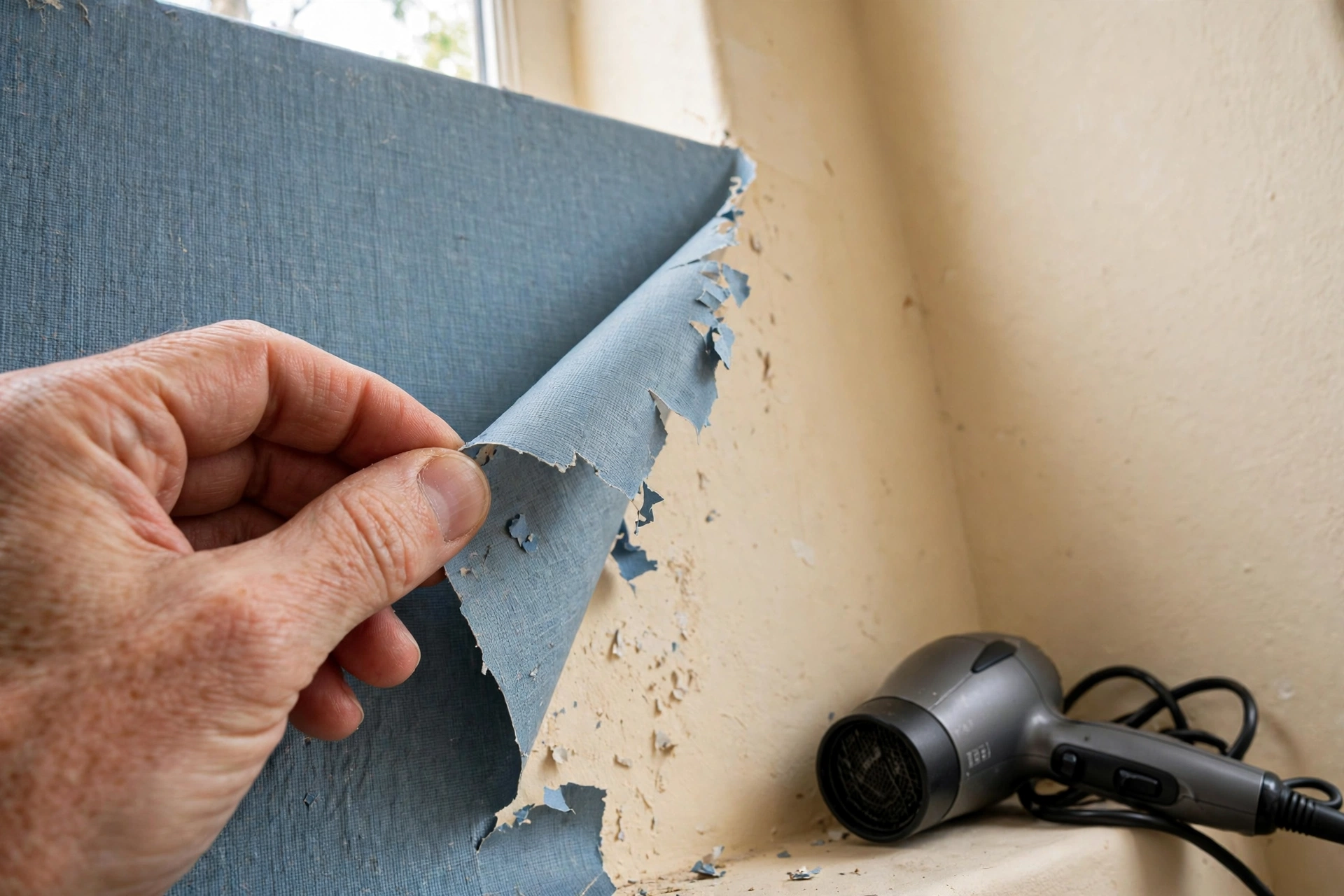
- Peel it slowly at a low angle. Start at a top corner, keep the paper close to the wall, and pull down steadily. Warm a stubborn section with the hair dryer on low first.
- Judge the result honestly. Pass means the paint is intact and only light residue wipes away. Fail means any paint flake, no matter how small, or a torn paper face. A fail means seal the wall with a clear primer first, or pick a different wall.
Take a photo of the test spot before and after. That photo joins the move-in photo file our guide to how to ask your landlord for permission recommends, and it is your evidence if anyone later questions the wall.
How do you remove peel and stick wallpaper without damaging walls?
This is the short safe-removal summary. For the full tile method, see our guide on how to remove peel and stick backsplash, which covers heat timing and residue steps in detail. Good removal is what keeps does peel and stick wallpaper damage walls from becoming a deposit problem.
Materials list: a hair dryer, a plastic scraper (never metal on painted drywall), a damp cloth, and Goo Gone only if residue remains.
- Start at a top corner and warm a section. Hold the hair dryer a few inches away on low until the paper feels slightly warm, not hot.
- Peel slowly at 30 to 45 degrees, close to the wall. Keep the paper near parallel with the wall. Pulling straight out puts the stress on the paint layer and tears it.
- Work in one panel at a time, top to bottom. If a section resists, warm it again instead of yanking it.
- Wipe light residue with warm water and dish soap. Save the solvent for stubborn spots, and patch test it first in a hidden corner.
- Stop if paint starts lifting. Do not keep pulling a panel that is taking paint with it. Warm it, slow down, and if it still lifts, switch to repair mode below. Quitting a bad peel early saves you a bigger patch later.
What does peel and stick wallpaper damage cost to fix?
Prices checked as of November 2026. Two totals, because the outcome splits two ways. Knowing the repair cost helps you judge whether does peel and stick wallpaper damage walls is a risk worth taking.
| Item | Price as of November 2026 | Notes |
|---|---|---|
| Damp cloth and warm water with dish soap | $0 | Already in your home, handles a clean peel |
| Hair dryer on low | $0 | Already in your home, softens stubborn sections |
| Goo Gone Spray Gel, 12 oz | $6.29 | Target, for stubborn residue only, patch test first |
| DAP DryDex Spackling, 8 oz | $5.47 | Target, fills torn drywall paper or paint chips |
| Plastic scraper set | $7.98 | Target, about this price, never use metal on paint |
| Total if the peel is clean | $0 | No repair needed |
| Total if paint lifts | $19.74 | 6.29 plus 5.47 plus 7.98 |
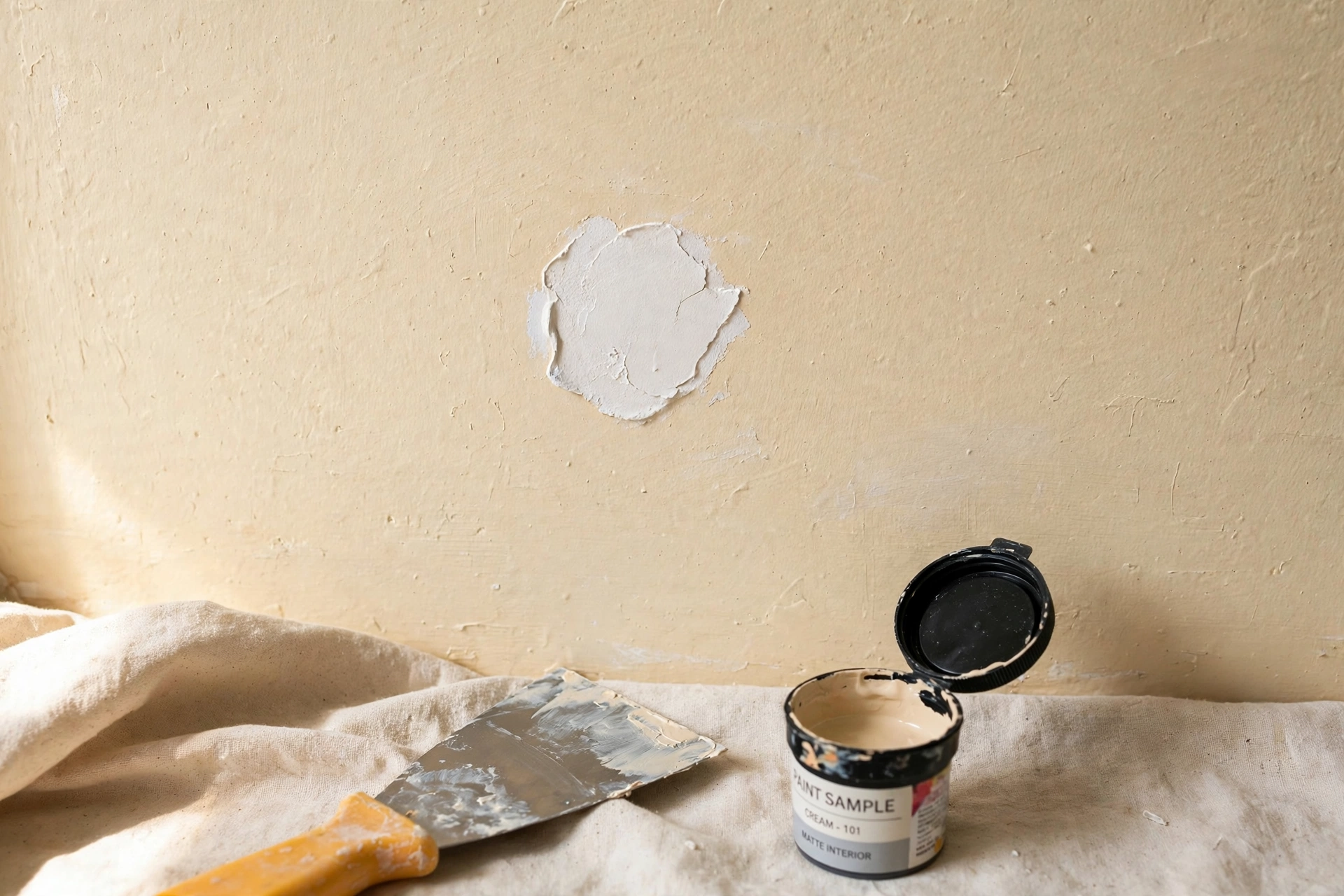
Time estimate: one 10 ft accent wall takes roughly 30 to 45 minutes to peel and check, as computed above. A paint-lift repair adds drying time for the spackle, so do the repair the day before your move-out inspection, not the morning of it.
Mistakes to avoid
Hanging it on paint under 4 weeks old. Dry to the touch is not cured. Four weeks is the minimum across the guides we checked, and some say 4 to 6 weeks. Wait it out.
Buying a “permanent” adhesive product by mistake. Some peel and stick products use a stronger glue that is not renter safe. Check the packaging for “removable” and “renter friendly” wording, and confirm the removal claim in the product instructions before you buy.
Repositioning panels over and over in week one. The initial tack is at its strongest, and every re-peel is a fresh chance to lift paint. Measure twice, hang once, and live with a small bubble rather than lifting a full panel.
Pulling straight out from the wall. The low, flat pull shears the adhesive. The straight-out pull loads the paint layer. Angle is the whole technique.
Skipping the test patch on flat paint. Flat paint is the single biggest risk factor in this guide. Ten minutes of testing beats a repair bill and a deposit argument.
Hanging it in a steamy bathroom with no ventilation. Moisture lifts edges and can sit behind the paper. Check behind the paper for damp or mold before you peel, and fix the ventilation problem before you hang anything new there.
What to skip
Skip the steamer for this job. Steamers belong to old pasted wallpaper. Peel and stick paper needs only a hair dryer on low and patience.
Skip reusing removed panels. Once the adhesive has aged on a wall, it does not re-stick reliably. Order a little extra if you think you may need to rehang a panel.
Skip metal scrapers and harsh solvents as a first step. They gouge paint and dissolve finishes. Start with warm water and soap, step up only if residue remains, and patch test every solvent.
Skip covering damaged or flaking paint. Paper over flaking paint does not hide the problem. It bonds to loose paint, and both come off together at removal.
Renter caveat: check your lease first
Before you hang anything, check what your lease says about wall coverings, permission, deposit, and how to reverse the change. Some leases ban wall coverings outright, even temporary ones. Others allow them with written permission. Get that permission in writing, keep the product name and the “removable” claim with it, and photograph the wall before you hang and after you remove. That photo pair is what turns “the wall was already like that” from an argument into evidence. Our comparison of peel and stick vs paint for renters shows why wallpaper usually wins that deposit argument: paint has to be repainted back, while paper just has to come off clean. In short, does peel and stick wallpaper damage walls only when the lease, the paint, or the timing is wrong.
Does peel and stick wallpaper damage walls?
Usually no on smooth, fully cured satin or eggshell paint. The risk rises sharply on flat paint, paint under 4 weeks old, bare drywall, and heavily textured walls, so test your exact wall first.
Will peel and stick wallpaper ruin paint?
It can lift flakes from flat, matte, or uncured paint, because the adhesive bonds to the paint layer and can beat a weak paint film on removal. On cured satin, eggshell, or semi-gloss paint it normally releases cleanly.
Can you put peel and stick wallpaper on textured walls?
Light texture can work, but the texture shows through the paper and edges may lift. Heavy texture like knockdown or popcorn grips poorly and traps residue, so smooth and seal the wall first or skip it.
How long should you leave peel and stick wallpaper up?
For the easiest removal, plan on 1 to 3 years. The bond is grabbiest in the first days, settles into its cleanest window over the following months, and strengthens again over several years, which raises the risk.
This article was researched from live search results and manufacturer-style guidance, then written in our own words. No product was tested by us, and no personal experience is claimed. The Wildfire Interiors 12-brand test is reported and credited as their test. Prices were checked in November 2026 and are dated above.
EngineerFix guide to peel and stick wallpaper wall damage, and the Angi guide to peel and stick wallpaper wall damage. Both are linked here as the authoritative background for the paint-finish and cure-time rules used in this article.
How to remove peel and stick wallpaper without damaging walls.
Start at a top corner and warm a section.
Hold the hair dryer a few inches away on low until the paper feels slightly warm, not hot.
Peel slowly at 30 to 45 degrees, close to the wall.
Keep the paper near parallel with the wall. Pulling straight out puts the stress on the paint layer and tears it.
Work in one panel at a time, top to bottom.
If a section resists, warm it again instead of yanking it.
Wipe light residue with warm water and dish soap.
Save the solvent for stubborn spots, and patch test it first in a hidden corner.
Stop if paint starts lifting.
Do not keep pulling a panel that is taking paint with it. Warm it, slow down, and if it still lifts, switch to repair mode below. Quitting a bad peel early saves you a bigger patch later.