Warm vs Cool Paint Colors for Small Rooms: Which One Makes Your Room Feel Bigger?
Cool paint colors usually make a small room feel bigger, but only if the room has decent light. In a dim room, a warm light neutral wins instead. The numbers prove it. The warmest white on this list, Benjamin Moore Simply White, reflects 89.5 percent of the light that hits it. The coolest gray, Benjamin Moore Gray Owl, reflects about 65 percent. That is a 24 point gap, and it decides how bright your room feels. Before you buy a gallon, test both sides on one wall. Four sample pots, two warm and two cool, cost $23.92 at $5.98 each, as of October 2026. That is the cheapest way to settle the warm vs cool paint colors for small rooms question in your own light.
Most guides give you one line: cool colors recede, warm colors advance. That line is true, and it is also not enough. It does not tell you what to do in a north-facing bedroom, or why a cool white can look gray and sad in a dim room, or when warm is actually the better pick. This post answers all three, with real paint names, real LRV numbers, and a pick for every room.
Warm vs Cool Paint Colors for Small Rooms: The Short Answer
Pick cool if your room gets good natural light. Pick warm if it does not. Cool colors like pale blue, soft sage, and cool gray push the walls back and make a small room feel wider. Warm colors like cream, warm beige, and soft peach pull the walls in and make it feel cozier. Lightness matters more than temperature. A pale warm white beats a mid-tone cool gray every time, because the pale color reflects more light. So the real rule is this. Go light first, then pick your temperature by your light.
That short answer hides one surprise. In a dim room, a stark cool white is often the worst choice of all. It reads gray and shadowy without strong sunlight, and the room feels colder and smaller, not bigger. A warm light neutral in the same dim room looks bright and soft instead. Keep that in mind as you read the rest, because it flips the usual advice on its head.
How Warm and Cool Paint Actually Works in a Small Room
Warm colors are the reds, oranges, yellows, and warm neutrals. Cool colors are the blues, greens, violets, and cool grays. The old painter’s rule says warm colors advance toward you and cool colors recede away from you. In a small room, that rule is genuinely useful. A cool blue on the farthest wall can make that wall feel slightly further away. A warm terracotta near the door makes the entrance feel welcoming. Use cool where you want distance, and warm where you want coziness.
Undertones decide everything. Two paints can both be called gray and look nothing alike on your wall. A warm gray has beige or yellow hiding inside it. A cool gray has blue or green hiding inside it. The trick is to check the undertone before you buy. Hold the paint chip next to a plain white sheet of paper. The hidden color jumps out at once. This one check prevents more repainting than any other step in this post.
Light direction matters just as much. North-facing rooms get cool, indirect light, so they need warm paint to balance it. If your bedroom faces north, our guide to paint colors for north-facing rooms covers the exact shades that fix the cold, gray light. South-facing rooms get strong warm sunlight, so they can take cool paint without feeling cold. East-facing rooms are bright in the morning and cooler by late afternoon, so a neutral that leans either way works. Dulux, the paint maker, puts it simply: warm hues work best in social rooms, cool hues in restful ones.
Light Reflectance Value, or LRV, is the number that tells you how much light a paint reflects. It runs from 0 for pure black to 100 for pure white. Any shade above 50 reflects more light than it absorbs. The LRV is printed on the back of most paint swatches, and it is the single most useful number in this whole decision. A high LRV means a brighter room. A low LRV means a moodier room. Temperature tells you the mood. LRV tells you the brightness. You need both.
The LRV Showdown: Warm vs Cool Paint Colors for Small Rooms by the Numbers
Here is the comparison the other guides skip. These are published LRV numbers for real paints you can buy today, warm side against cool side.
| Paint | Temperature | LRV | What it means |
|---|---|---|---|
| Benjamin Moore Simply White OC-117 | Warm white | 89.5 | Reflects almost 90 percent of light, soft and warm |
| Benjamin Moore Chantilly Lace OC-65 | Cool white | 90 | Reflects about 90 percent, crisp and clean |
| Benjamin Moore White Dove OC-17 | Warm white | 83.2 | Warm and soft, hides flaws well |
| Benjamin Moore Gray Owl OC-52 | Cool gray | 65 | Light cool gray, still bright, blue-green undertone |
| Sherwin-Williams Repose Gray SW 7015 | Cool greige | 60 | Light-medium, cool with a whisper of warmth |
| Sherwin-Williams Accessible Beige SW 7036 | Warm greige | 58 | Warm and cozy, the safest warm neutral |
Read the table sideways and the lesson is clear. At the top, warm and cool are nearly tied. Simply White at 89.5 and Chantilly Lace at 90 reflect almost the same light, so picking between them is a mood choice, not a brightness choice. The real gap opens in the mid-tones. Gray Owl at 65 and Accessible Beige at 58 both reflect a good amount of light, but each one sets a completely different mood in the same room.
Now the cost math. A gallon of flat interior paint costs $35 to $45 and covers about 350 square feet, as of October 2026. A 10 by 12 foot room has about 120 square feet of ceiling and roughly 300 square feet of wall, so one gallon covers the walls with paint left over. The smart spend is not the gallon. It is the test. Four sample pots, two warm and two cool, cost $23.92. Paint a two foot square of each on the wall you look at most, then check it at 9 in the morning, 2 in the afternoon, and 8 at night under your lamps. The winner is usually obvious by day two.
Warm vs Cool Paint Colors for Small Rooms, Room by Room
No single side wins every room. The room’s job and its light decide. Here is the pick for each one, with the honest trade-off.
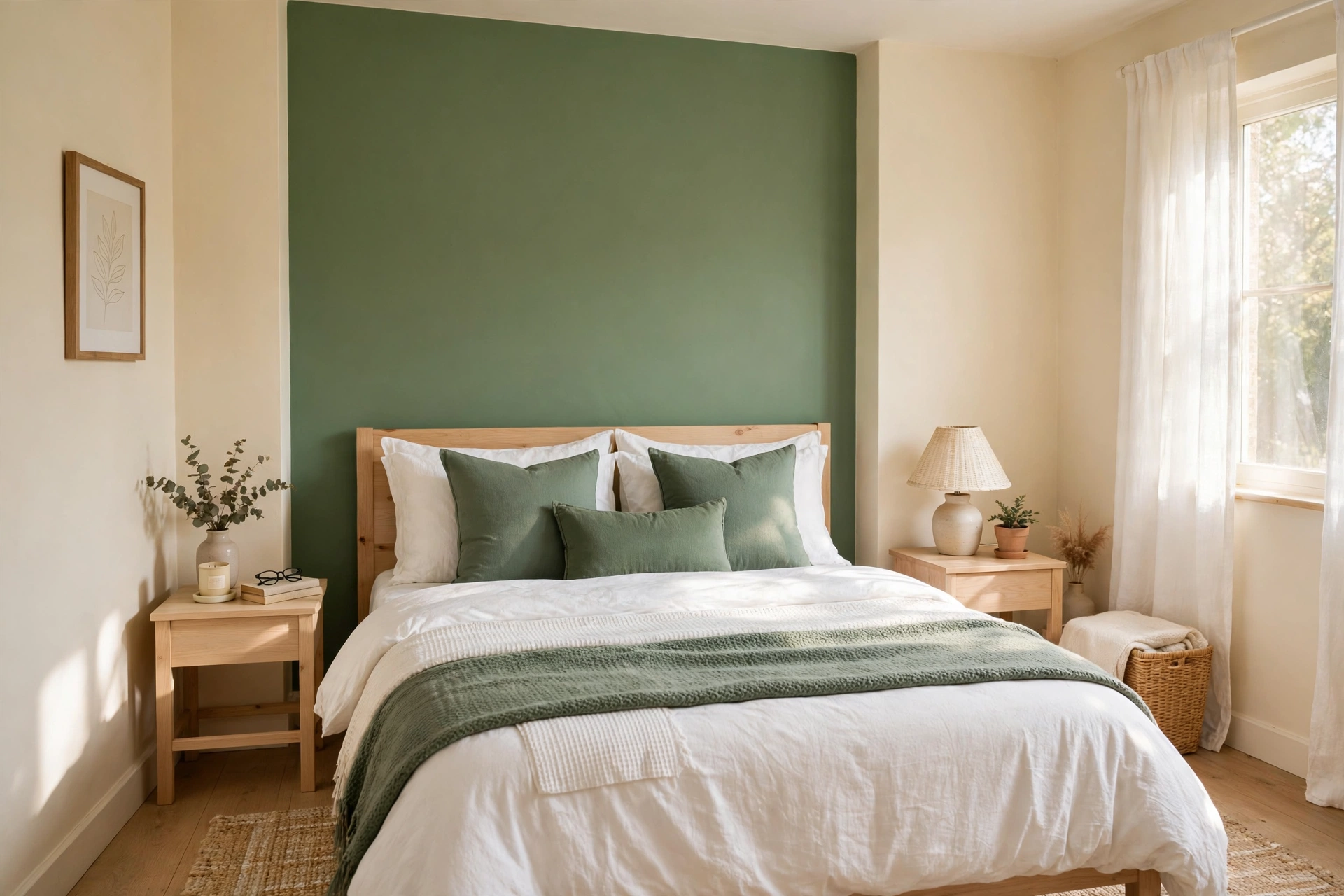
Bedroom: Warm Wins
Best for: Sleep, rest, and slow mornings. Main advantage: Warm walls make a small bedroom feel like a retreat instead of a box. Watch out for: Dark warm colors shrink the room fast, so stay light. Verdict: Warm, every time, unless the bedroom is bright and south-facing.
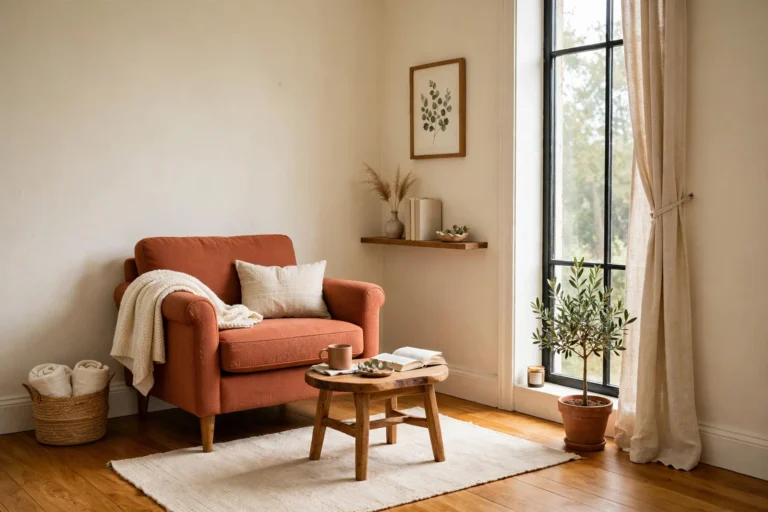
Paint it a warm greige like Accessible Beige, LRV 58, or a warm white like White Dove, LRV 83.2. Both keep the room bright while the warm undertone stops it feeling clinical at night. A cool gray bedroom can look smart in photos, but at 6 in the morning under a gray sky it often feels cold. If you love cool, use it on the bedding and the art, not the walls.
Living Room: It Depends on Your Light
Best for: Daytime gathering, reading, and TV. Main advantage: The right temperature makes the main room feel open all day. Watch out for: A cool white in a dim living room reads gray and shadowy. Verdict: Cool if the room is bright, warm if it is dim.
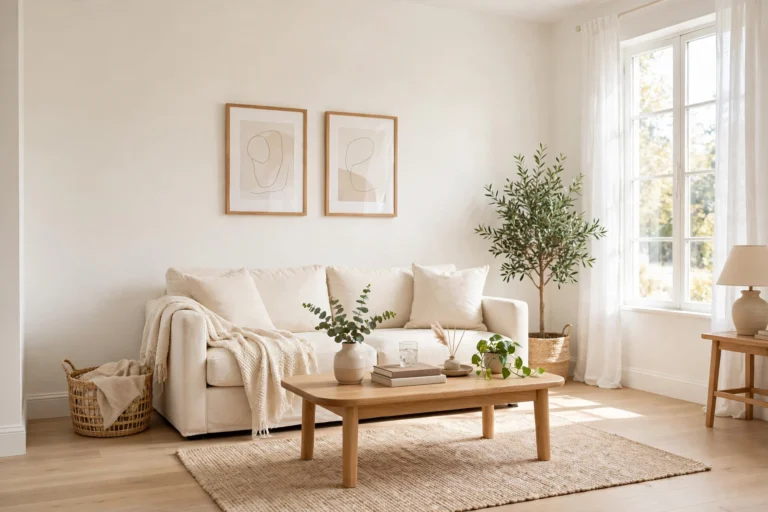
This is the room where most people get it wrong, because they pick by the paint name instead of the light. Stand in the room at noon. If the sun fills it, a cool pale blue or a cool gray like Gray Owl will make it feel wider. If the room stays dim, a warm light neutral like White Dove will look brighter than any cool white. For the full list of shades that open up a small living room, our guide to the best wall colors for small rooms has nine of them, with the LRV for each one.
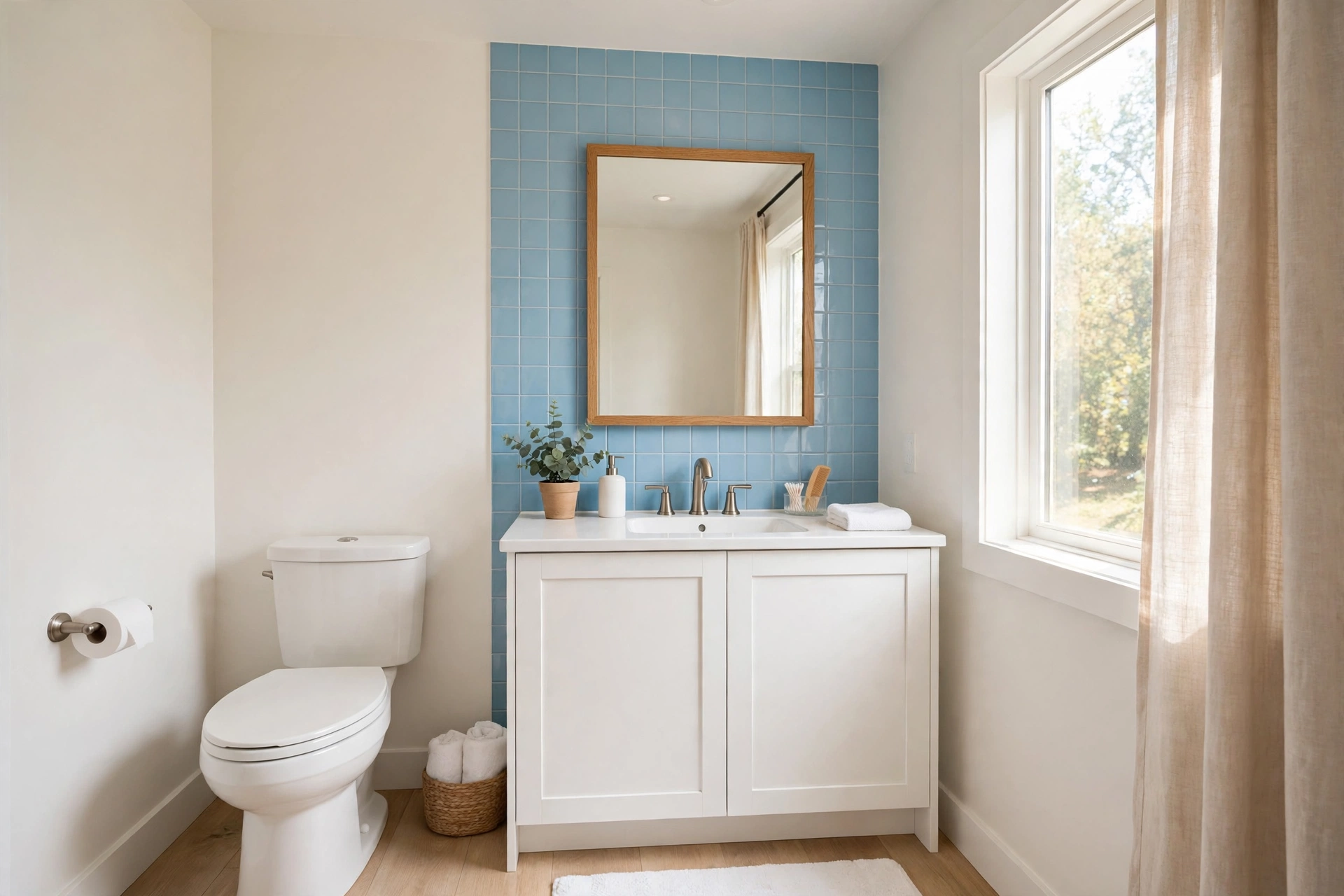
Bathroom: Cool Wins
Best for: Clean, fresh, spa-like mornings. Main advantage: Cool pale blue and soft sage make a tiny bathroom feel clean and bright. Watch out for: Cool colors need good light, so add a warm bulb if the bathroom has no window. Verdict: Cool, with warm light to balance it.
Paint it a pale sky blue or a soft sage green, both light and cool. These colors read as clean, which is exactly what a small bathroom needs. Warm colors in a bathroom can feel heavy and dated, especially under yellow bulbs. If the bathroom is windowless, swap the bulb for a warm white 2700K LED first, then paint cool. The warm light stops the cool walls feeling cold.
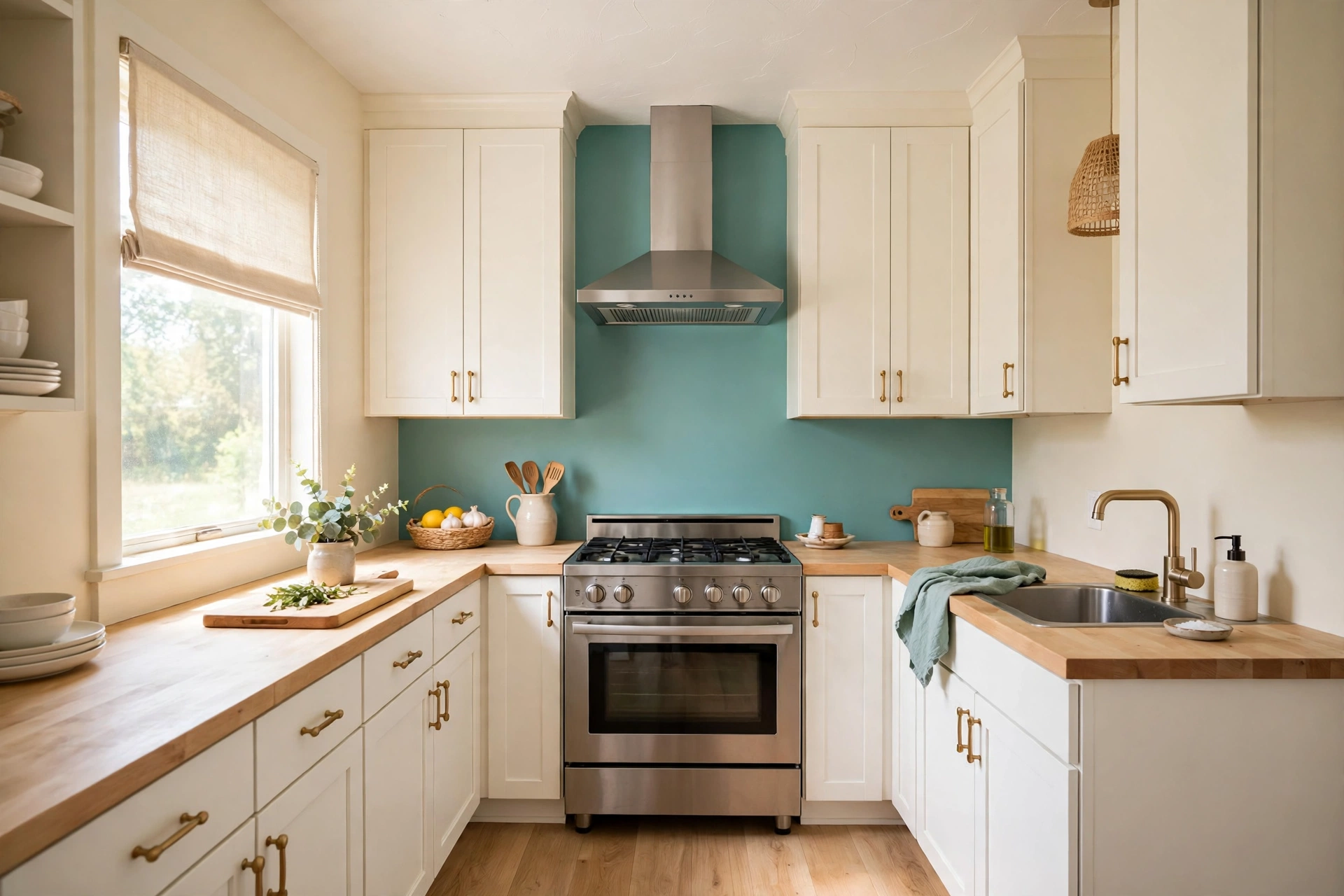
Kitchen: Warm Wins
Best for: Cooking, eating, and gathering. Main advantage: Warm cream and pale peach make a small kitchen feel inviting and appetizing. Watch out for: Warm colors show cooking grease faster, so pick a washable eggshell finish. Verdict: Warm, with white cabinets to keep it bright.
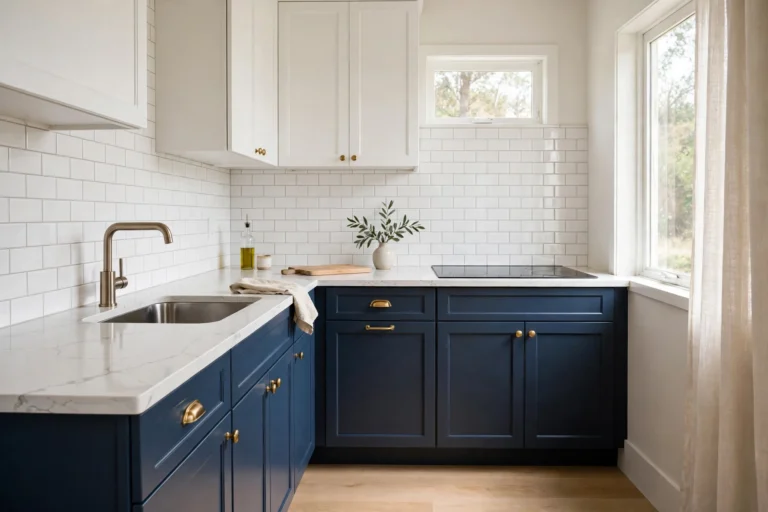
Paint it a warm cream or a pale peach. Kitchens are social rooms, and warm colors suit social rooms. A cool gray kitchen can look sleek, but it can also feel like a laboratory. Keep the cabinets white or very pale, and let the warm wall color do the welcoming. If the kitchen is dark, a warm white on the walls plus under-cabinet lights beats any cool shade.
Hallway: Cool Wins
Best for: Narrow passages and entries. Main advantage: A cool pale gray-blue pushes the walls apart and makes a tight hallway feel wider. Watch out for: Hallways have little light, so keep the LRV above 65. Verdict: Cool, but only a light cool.
Paint it a pale cool gray like Gray Owl, LRV 65, or a powder blue. Hallways are the one place where the receding effect of cool color does the most work, because you are always looking down a long, narrow space. Keep the ceiling white and the floor light, and the hallway will feel like a passage, not a tunnel.
Can You Mix Warm and Cool Paint Colors in a Small Room?
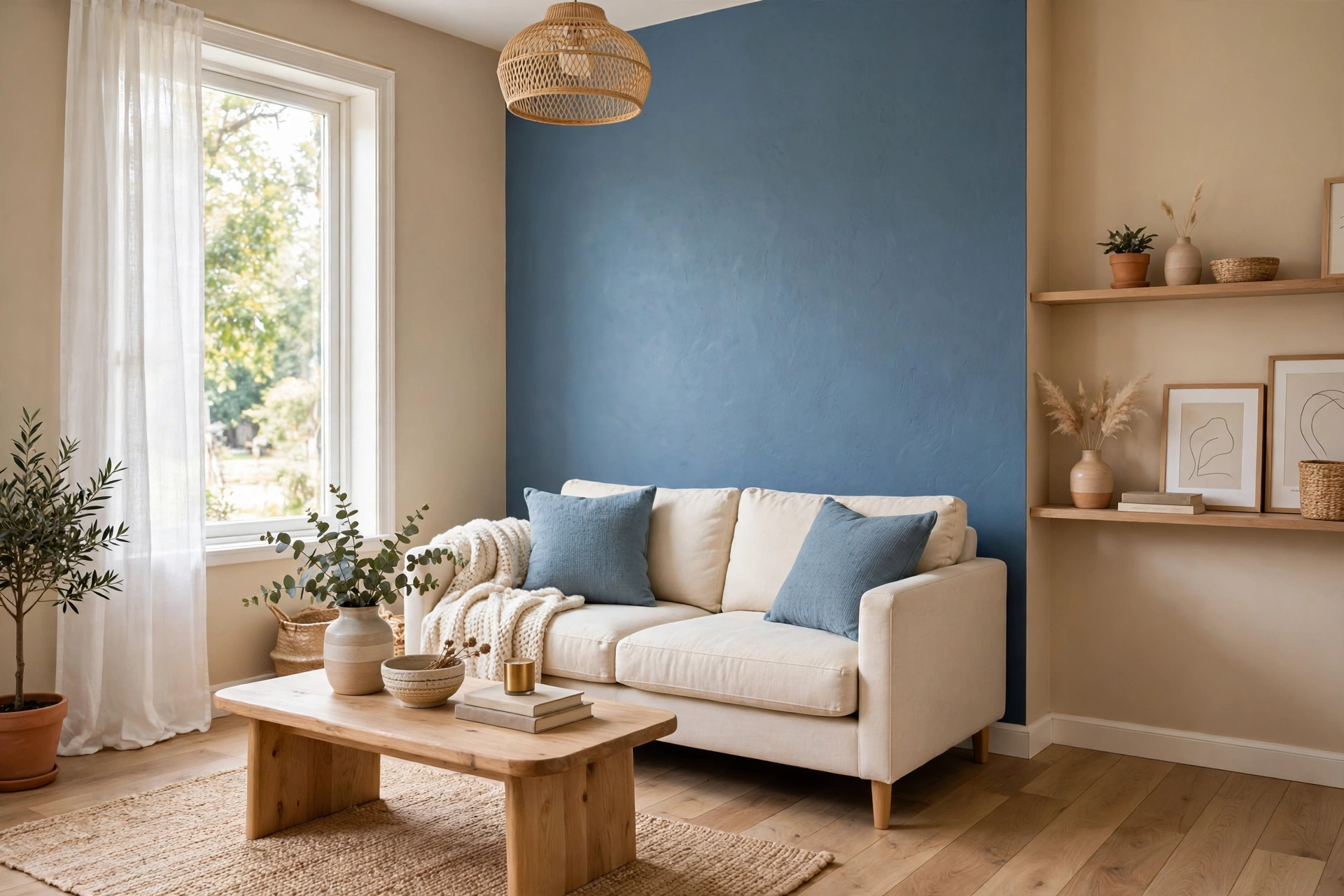
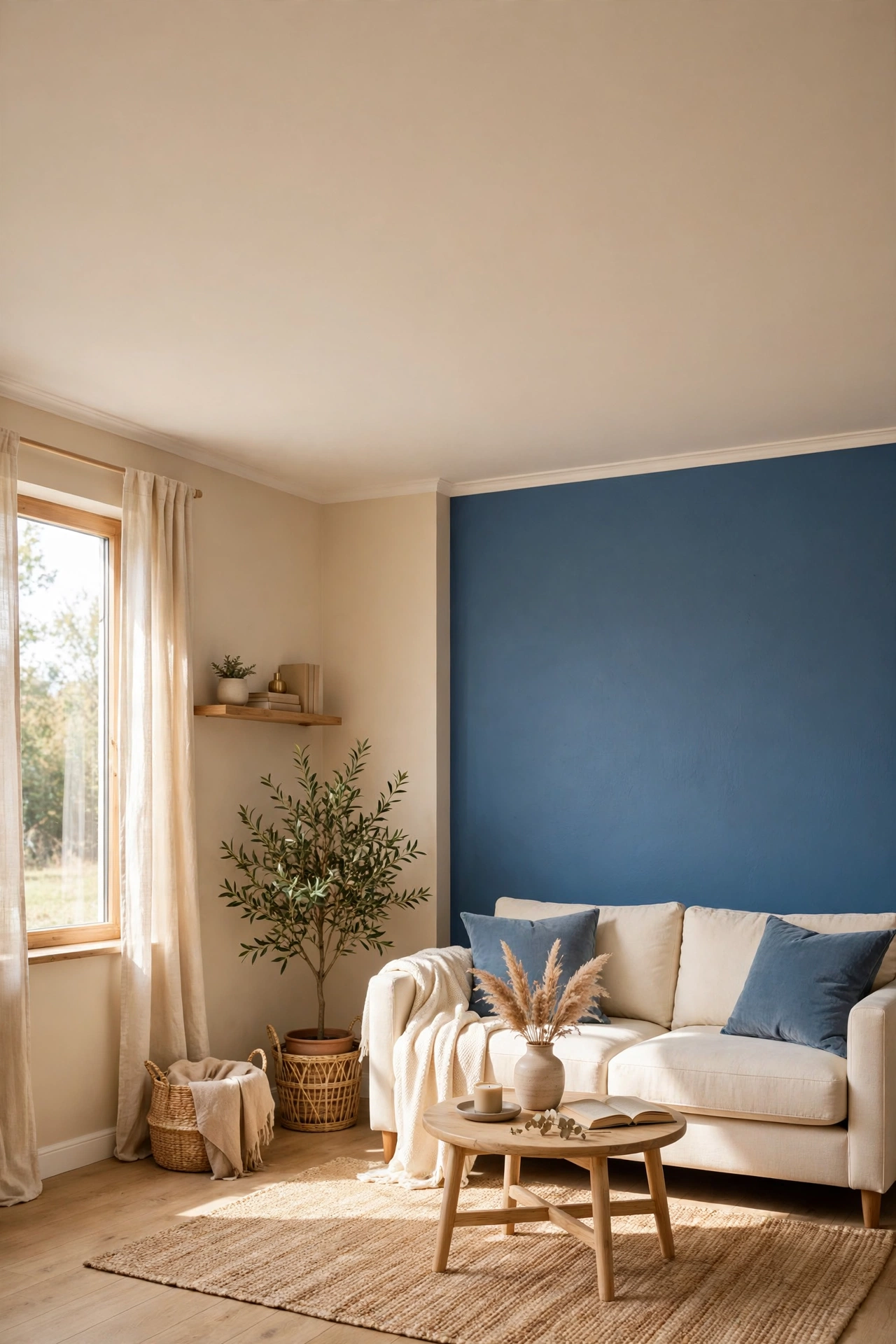
Yes, and the best small rooms do. Mixing warm and cool is a sophisticated move, not a mistake, as long as one side dominates. The rule that works is 70-20-10. Seventy percent of the room is one temperature, twenty percent is the other, and ten percent is a deep accent. A cool gray room with warm wood floors and a mustard cushion follows it. A warm cream room with a dusty blue accent wall follows it too.
Start with the walls. Pick your dominant temperature for the walls and the ceiling. Then bring in the other side through furniture, textiles, and one accent. A warm beige room with a cool dusty blue sofa is the classic version, and it works because the blue is one object, not a second wall color. The ceiling should always be the lightest color in the room, ideally a white that leans the same way as the walls. If you want the ceiling to disappear upward, our guide to ceiling colors for small rooms shows which whites actually lift a low ceiling.
The mistake is splitting the room 50-50. Half warm walls and half cool walls fight each other, and a small room cannot afford a fight. One side leads, the other supports. That is the whole secret.
The 3-Question Test That Picks Your Side
If you are still stuck, answer these three questions. Two warm answers means warm. Two cool answers means cool.
Question 1: Which way do the windows face? North or east facing means cool, indirect light, so answer warm. South or west facing means strong warm sunlight, so answer cool. No windows at all means answer warm, because you need all the warmth you can get.
Question 2: How much light does the room get? Dim or shaded means answer warm. A warm light neutral, LRV 60 to 75, looks brighter than a stark cool white in a dim room. Bright and sunny means answer cool. Strong light lets cool colors show their best without looking cold.
Question 3: What does the room do? Sleep, eat, and relax means answer warm. Work, bathe, and focus means answer cool. Bedrooms and kitchens lean warm. Bathrooms and home offices lean cool. Living rooms go by their light, not their job.
Add up the answers. If you get two warm, paint warm. If you get two cool, paint cool. If you get one of each plus a tie, go with the lightest shade on the side your windows point to. The test takes two minutes and it beats staring at fifty paint chips.
What to Skip
A stark cool white in a dim north-facing room. It reads gray, not white, and the room feels colder and smaller. A warm light neutral wins here every time.
Dark warm colors on all four walls of a tiny room. A deep terracotta or chocolate wall is beautiful in a big room. In a 10 by 10 foot room it closes in fast. Use dark warm colors on one accent wall only.
A dark ceiling. A deep shade overhead brings the ceiling visually closer. Keep the ceiling white or near-white and put the bold color on one wall instead.
Matching the wall and the trim exactly in a dark color. Color drenching works, but only when the color is light or when the room has strong light. In a dim small room, matching dark trim erases the edges and makes the room feel like a cave.
Skipping the sample test. A $23.92 test beats a $45 gallon of the wrong color. Paint two foot squares on two different walls and check them morning, noon, and night before you commit.
Forgetting the finish. Color temperature is half the decision. The finish decides how the color behaves in your light. A flat or matte finish hides flaws on a dark wall, while a washable eggshell is the right pick for a light wall you will wipe. Our guide to the best paint finish for small rooms has the full pick list for each room.
The Short Version
Warm vs cool paint colors for small rooms is not a contest with one winner. Cool wins where the light is strong, because cool colors recede and make the walls feel further away. Warm wins where the light is weak, because warm light neutrals look brighter than stark cool whites in a dim room. Lightness matters more than temperature, so start with a high LRV and then pick your side with the 3-question test. Test both sides for $23.92 before you buy the gallon, and paint the ceiling the lightest color in the room. Do that, and the small room will feel like the size you want it to be, not the size it is.
Do warm or cool paint colors make a room look bigger?
Cool colors make a room look bigger when the room has good natural light, because cool shades recede and push the walls back. But lightness matters more than temperature. In a dim room, a warm light neutral with an LRV of 60 to 75 looks brighter than a stark cool white, which can read gray and shadowy without strong light.
Do warm colors make a small room look smaller?
Only dark, saturated warm colors do. A deep terracotta or chocolate on all four walls will close a small room in. Light warm colors like cream, warm white, and pale beige do not shrink a room at all. They reflect plenty of light and make the room feel inviting instead of cold.
Can you mix warm and cool colors in the same room?
Yes. Use the 70-20-10 rule. Seventy percent of the room is one temperature, twenty percent is the other, and ten percent is a deep accent. Keep one side dominant and bring the other side in through furniture, textiles, or one accent wall. Never split the walls 50-50 between warm and cool.
What paint color brightens a dark small room?
A warm light neutral with an LRV between 60 and 75, like Sherwin-Williams Accessible Beige at 58 or Benjamin Moore White Dove at 83.2. Avoid stark cool whites in dark rooms, because they emphasize shadows instead of softening them. Add warm white 2700K bulbs to help the paint do its work.