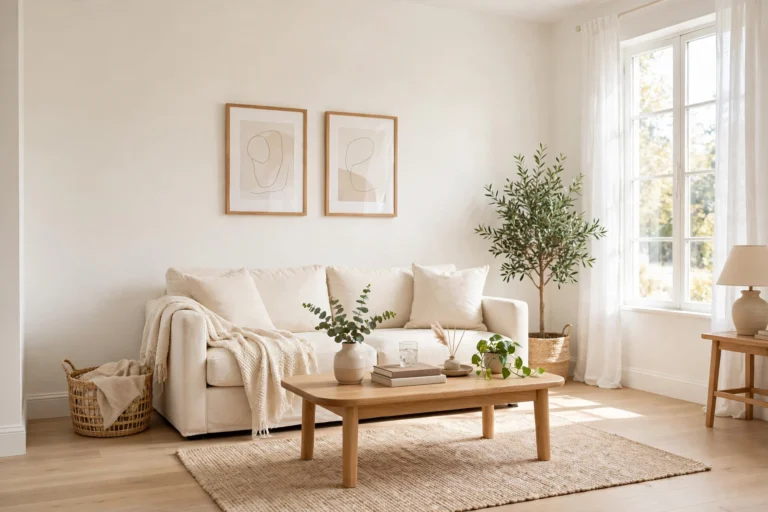
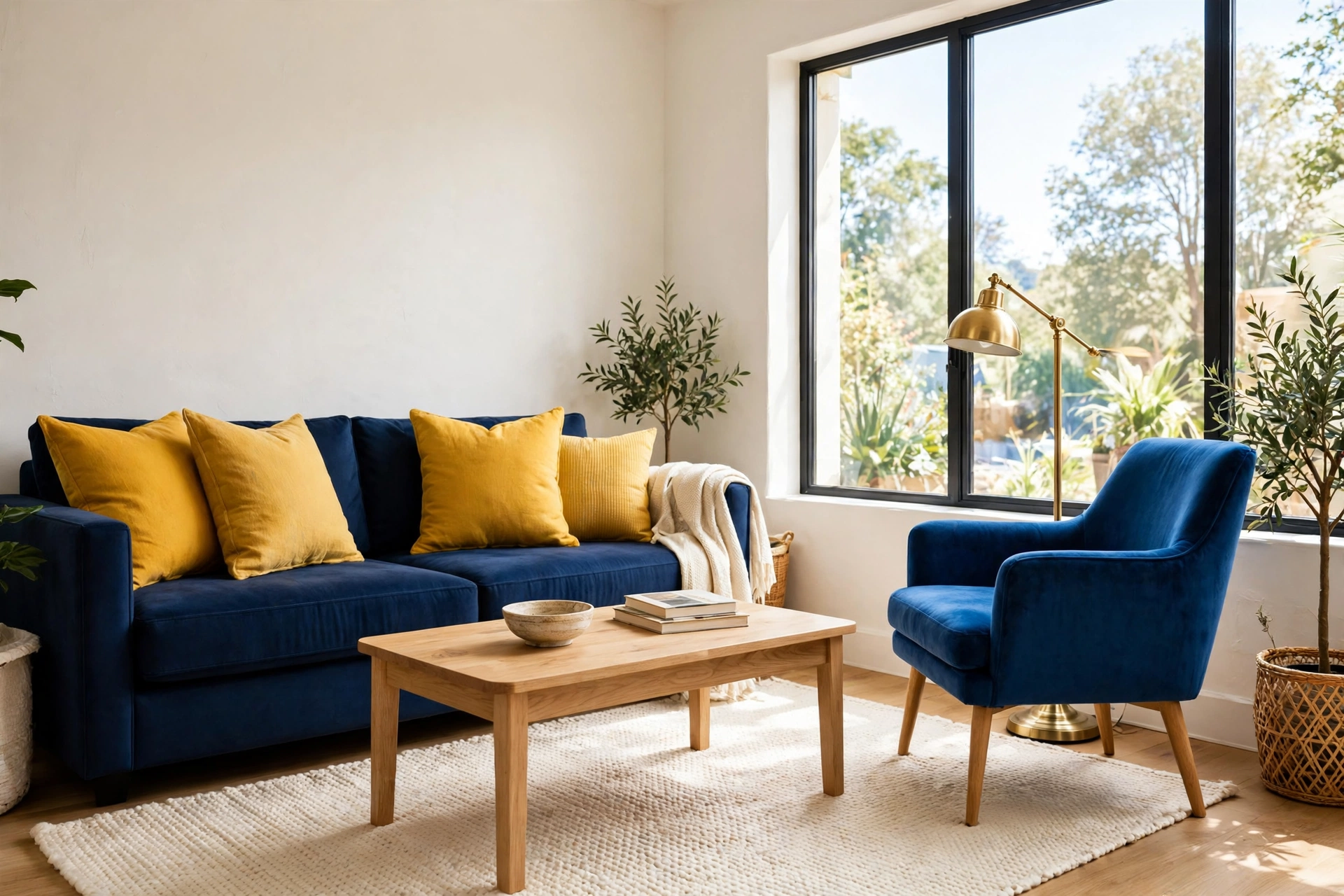
Furniture and Wall Color Combinations: 10 Pairings That Make Small Rooms Feel Designed
Most color advice starts with the wall. That is backwards. You already own a sofa, a bed, and probably a dark wood table you are not replacing. The best furniture and wall color combinations start with the furniture you have, then pick a wall color that makes it look intentional, just as floor and wall color combinations start with the floor you already have.
Here is the math that makes this post different. One 8 oz BEHR sample pot costs $5.98 at Home Depot, as of October 2026. That paints a 2 ft x 2 ft (60 x 60 cm) test patch with paint to spare. One 12 ft x 8 ft (3.7 x 2.4 m) accent wall is 96 sq ft, about a quarter of a $37.98 gallon. Testing all 10 pairings below with one sample each costs $59.80. That is less than $60 before you buy a single gallon.
How do furniture and wall color combinations work in a small room?
Start with the 60-30-10 rule. It is the oldest proportion trick in decorating. Your main color covers 60 percent of the room, usually the walls. Your second color covers 30 percent, usually the big furniture. Your accent covers 10 percent, the cushions, lamps, and art.
In a small room, flip the order in your head. Pick the 30 percent first, because that is the sofa or bed you already own. Then choose a wall color that flatters it. This one change kills most color mistakes before they start. The rule itself comes from classic interior design, and Homebuilding explains it well with examples from Benjamin Moore.
Check the undertone next. Every color leans warm or cool. Warm walls love cool furniture, and cool walls love warm furniture. That contrast is what keeps a small room from looking flat. If your room feels cold, add warmth through wood, leather, or cream fabric. If it feels heavy, cool it down with blue grey textiles or a pale green wall.
The wall colors that already work in small rooms are a good starting point, but a wall color alone never finishes a room. The furniture has to agree with it. That is what the 10 pairings below do.
What are the best furniture and wall color combinations for small rooms?
Each pairing below has a verdict. Read the “watch out for” line before you buy anything. It is the part that saves you from repainting.
1. Grey walls and warm oak furniture
Light grey walls, warm oak wood, and cream fabric. This is the safest pairing on the list, and it works because the warm wood stops the grey from feeling like an office.
Best for: living rooms and bedrooms with cool daylight. Main advantage: grey is forgiving, and oak warms it up fast. Watch out for: blue grey walls with grey furniture. That combo turns icy. Keep the furniture warm. Verdict: the default pick if you want calm without boring.
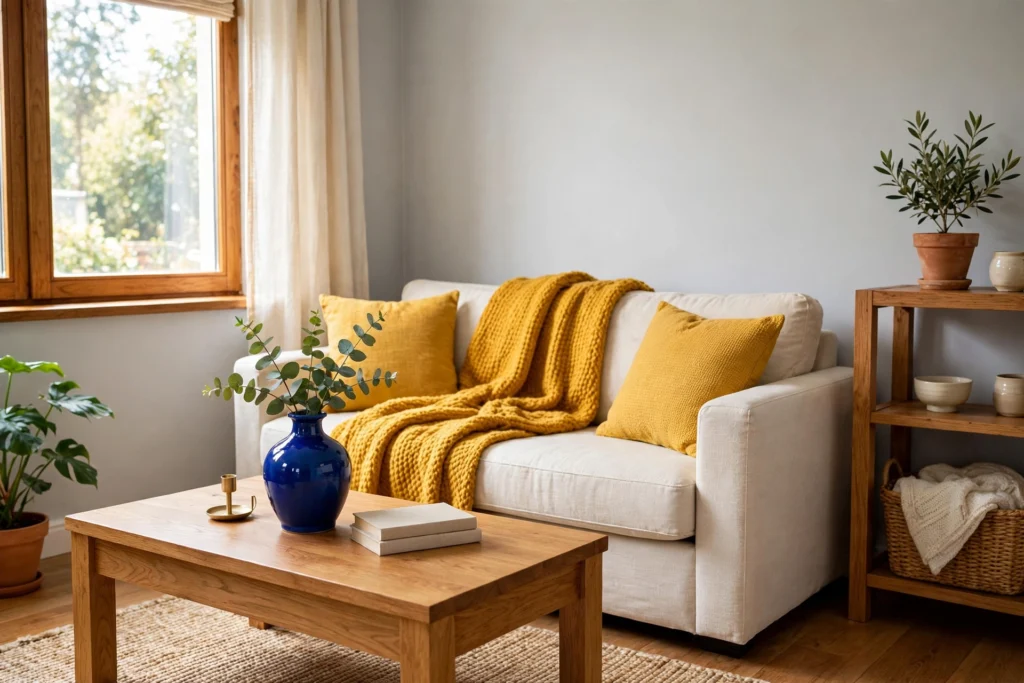
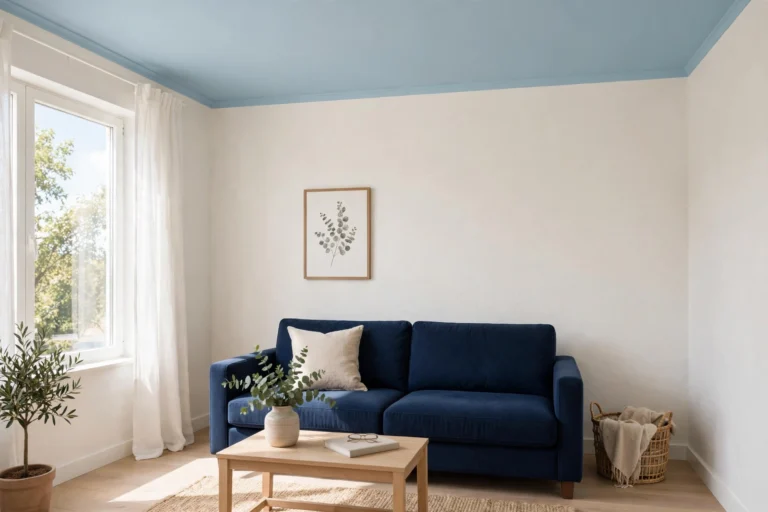
2. Warm white walls and a navy sofa
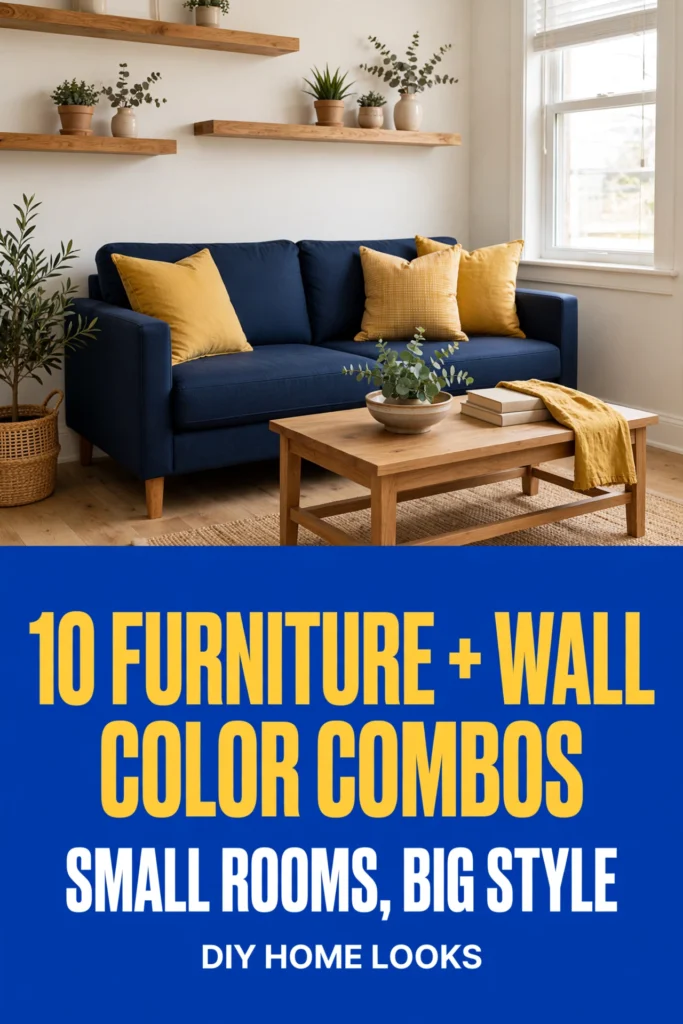
Warm white walls, a navy sofa, and light wood or brass details. Navy is the boldest color most small rooms can take, because it sits on one piece of furniture, not four walls.
Best for: small living rooms that need a focal point. Main advantage: the sofa does the decorating, so the walls stay simple. Watch out for: navy walls and a navy sofa together. That is too much dark in one room. Verdict: the best way to use a dark color in a small room. Hang curtains in the same color family as the walls to keep the look soft.
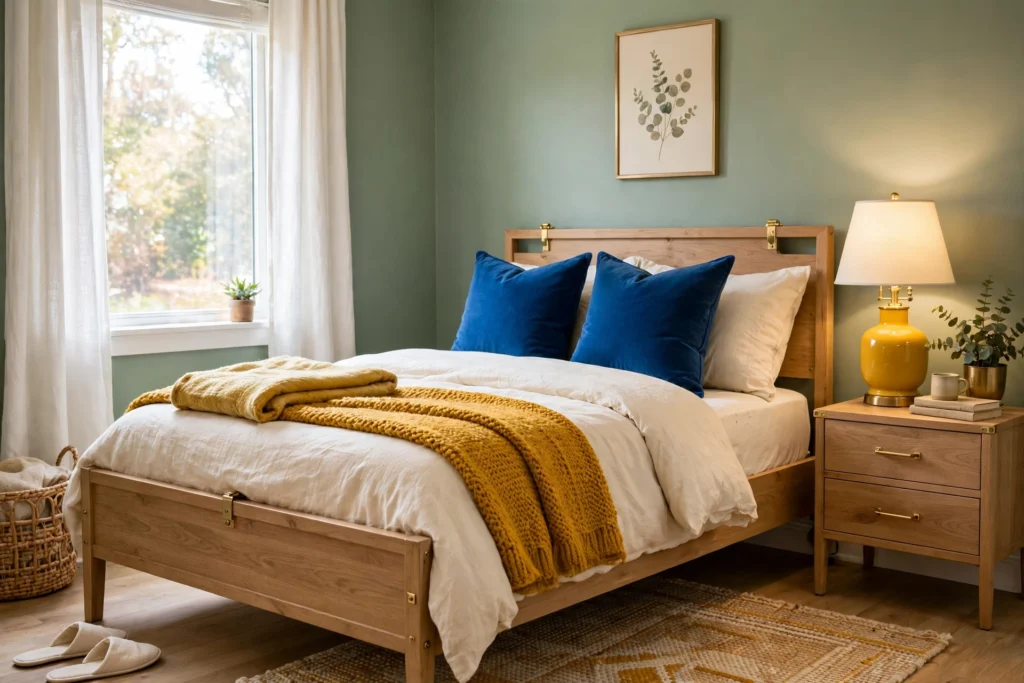
3. Sage green walls and light oak
Sage green walls, light oak furniture, and cream bedding or cushions. Sage is green without shouting about it. It reads calm in the morning and warm at night.
Best for: bedrooms and small living rooms. Main advantage: green hides dust and small marks better than white. Watch out for: sage with yellow oak. The yellow fights the green. Pick pale, natural oak. Verdict: the most relaxing pairing on this list.
4. Greige walls and cognac leather
Greige is grey plus beige. Pair it with cognac leather and black metal details. This is the pairing for people who want a room to feel grown up.
Best for: living rooms and home offices. Main advantage: leather ages well, and greige never dates. Watch out for: cheap orange fake leather. It reads orange, not cognac. Spend the money on one real piece instead of three fake ones. Verdict: the most expensive looking pairing for the least effort.
5. Pale blue walls and white furniture
Pale blue walls, white furniture, and natural wood touches. This is the airiest pairing here. Blue reads like sky, so the walls seem further away than they are.
Best for: bedrooms and north-facing rooms. Main advantage: it brightens rooms that get little sun. Watch out for: blue white trim. Use warm white trim, or the room feels cold. Verdict: the best pick for a dark or north-facing small room. If your room faces north, the pale blue still works, because cool northern light loves a cool wall.
6. Cream walls and dark walnut furniture
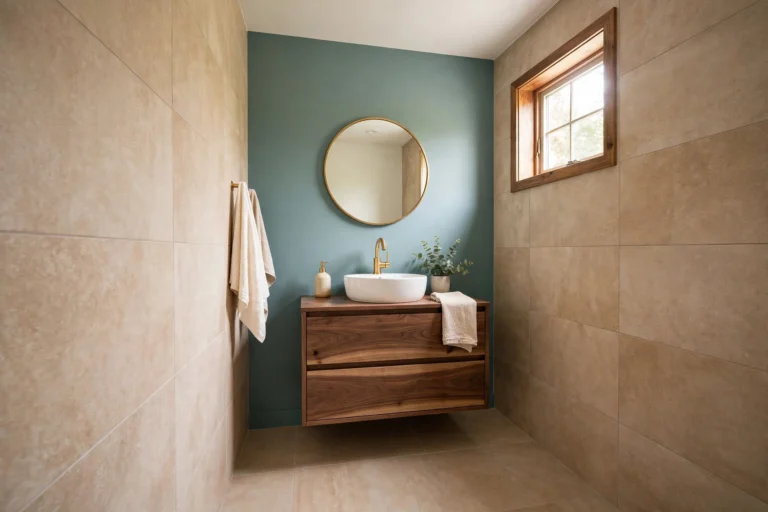
Cream walls, dark walnut furniture, and pale textiles. This is the pairing people fear most in a small room. Dark furniture does not shrink a room. Dark furniture with dark walls does.
Best for: bedrooms and dining corners with dark wood you already own. Main advantage: the contrast makes the furniture look like a feature, not a mistake. Watch out for: dark curtains and a dark rug on top. Keep the floor and textiles light. Verdict: keep the wood you have. Change the wall, not the furniture.
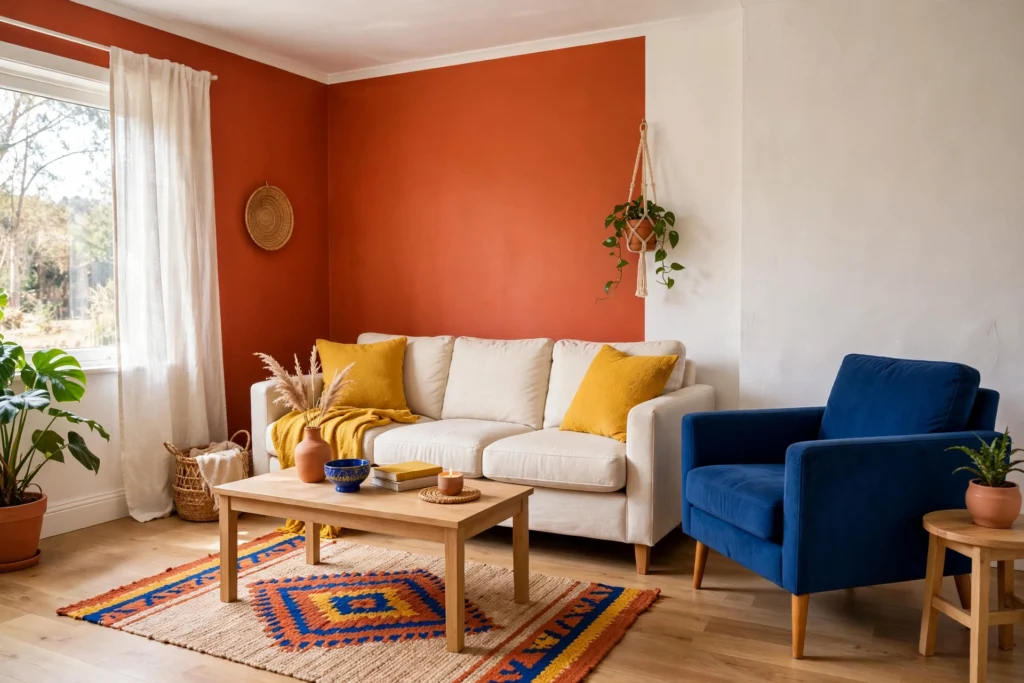
7. Terracotta accent wall and a cream sofa
One terracotta accent wall, cream walls elsewhere, and a cream sofa. Terracotta is warm clay, and one wall of it is enough. It makes a small living room feel like a place, not a box.
Best for: living rooms that feel too plain. Main advantage: one wall costs little and changes everything. Watch out for: terracotta on all four walls. That closes the room in fast. Verdict: the highest impact per dollar on this list.
8. Charcoal accent wall and pale bedding
One charcoal wall behind the bed, pale bedding, and light wood nightstands. This is the bedroom version of the navy sofa trick. The dark color sits behind you, not around you.
Best for: small bedrooms that need drama. Main advantage: you fall asleep facing pale walls, not dark ones. Watch out for: charcoal on the wall with the window. It eats the light. Put it on the wall opposite the window. Verdict: bold, but only where you cannot see it from the bed.
9. Blush pink and warm wood
Blush pink walls, warm wood furniture, and cream textiles. Blush is pink with the sugar taken out. It is warm, soft, and it works in rooms for adults, not just nurseries.
Best for: bedrooms and dressing areas. Main advantage: it flatters skin tones and lamplight. Watch out for: pink with chrome and white plastic. That reads cold and cheap. Stick to wood and brass. Verdict: the softest pairing here, and the easiest to live with.
10. Forest green and brass with cream
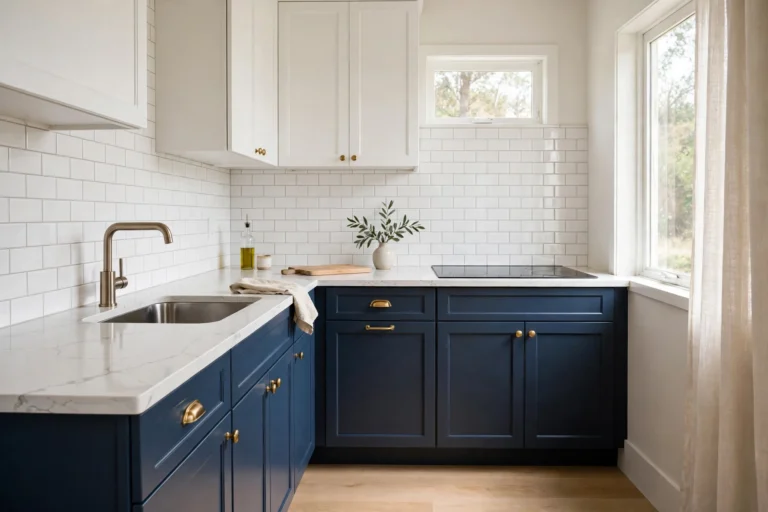
Forest green on one wall or on cabinets, brass details, and cream everywhere else. Green and brass is the classic rich pairing. Cream keeps it from getting heavy.
Best for: dining corners and small living rooms used mostly at night. Main advantage: it looks expensive with very little furniture. Watch out for: forest green in a room with poor light and no lamps. It will look black by 6 p.m. Verdict: the most dramatic pairing, but only with good lighting.
Can renters use furniture and wall color combinations without painting?
Yes, and renters have an advantage here. Furniture carries color better than walls anyway. A navy sofa against white rental walls is the same pairing as number 2 above, and you did not touch a paintbrush.
Start with the big piece. A colored sofa, a wood bed frame, or a bold rug sets the 30 percent. Then add the 10 percent through cushions, throws, and art. The walls stay as they are. If you want a wall color without painting, try peel-and-stick wallpaper on one wall, or a large fabric wall hanging in your accent color. These damage-free wall ideas are made for exactly this.
One renter rule: never buy a matching furniture set in one color. A sofa, loveseat, and chair in the same fabric eat a small room alive. Mix the big piece with a different chair color. The room will look bigger for it.
What should you skip?
Skip matching sets. As above, one color on every seat flattens a small room. Mix at least one piece.
Skip more than three colors. A small room with five colors looks like a shop, not a home. Walls, furniture, accent. That is enough.
Skip color drenching in a small room. Painting the walls, ceiling, and trim one dark color looks great in photos. Living in it is different. It makes a small room feel smaller at night.
Skip painting before you test. A color that looks perfect on your phone can look green or grey on your wall at 9 p.m. Test first. Always.
Skip high gloss walls in small rooms. Gloss shows every bump and patch. Flat or eggshell hides them. The right paint finish matters as much as the color.
How do you test a pairing before you commit?
Buy the sample, not the gallon. One 8 oz sample is $5.98 at Home Depot, as of October 2026. Paint a 2 ft x 2 ft (60 x 60 cm) patch on the wall next to your furniture. Not on a board. On the wall, next to the real sofa.
Look at it three times. In the morning, when the light is cool. In the afternoon, when the light is warm. At night, with your lamps on. If it still looks right all three times, buy the gallon. If it shifts green or grey at night, pick another shade.
Test the furniture color the same way. Hold the fabric swatch against the wall patch in daylight and lamplight. Undertones show up fast when two colors touch. Two samples and one swatch cost under $15 and save a $40 gallon mistake.
The short version
Good furniture and wall color combinations are not about talent. They are about order. Start with the furniture you own. Pick a wall color that flatters it. Keep it to three colors. Test with a $5.98 sample before you commit. Do that, and a small room stops looking like a compromise and starts looking like a choice.
Should furniture be lighter or darker than my walls?
Most of the time, furniture should be slightly darker than the walls. Light or mid-tone walls make a soft backdrop, and deeper sofas, beds, or tables anchor the room. The exception is a very small room, where pale furniture with pale walls together can make the space feel bigger and airier.
What color furniture goes with grey walls in a small apartment?
Pair grey walls with light, warm furniture. Pale oak, beige, cream, and soft greige upholstery brighten grey and keep the room from feeling cold. Add one or two deeper accents, like a charcoal chair or a black side table, so the space does not feel flat.
What color goes with brown furniture in a small room?
Cream, warm white, and soft greige brighten dark brown wood and brown leather. Sage and olive greens give a quiet, natural look. For a modern feel, use off-white or muted blue grey walls with black metal details. Keep the rug and curtains light so the brown does not weigh the room down.
Can I mix white furniture with wood furniture in the same room?
Yes. White and wood are a timeless pair. Keep either the white or the wood as the main hero, then repeat it at least three times in the space. For example, a white TV stand, white shelves, and a wood coffee table, side table, and chairs. That repetition makes the mix look intentional instead of random.