11 Small Entryway Organization Ideas for a Clutter-Free Entrance
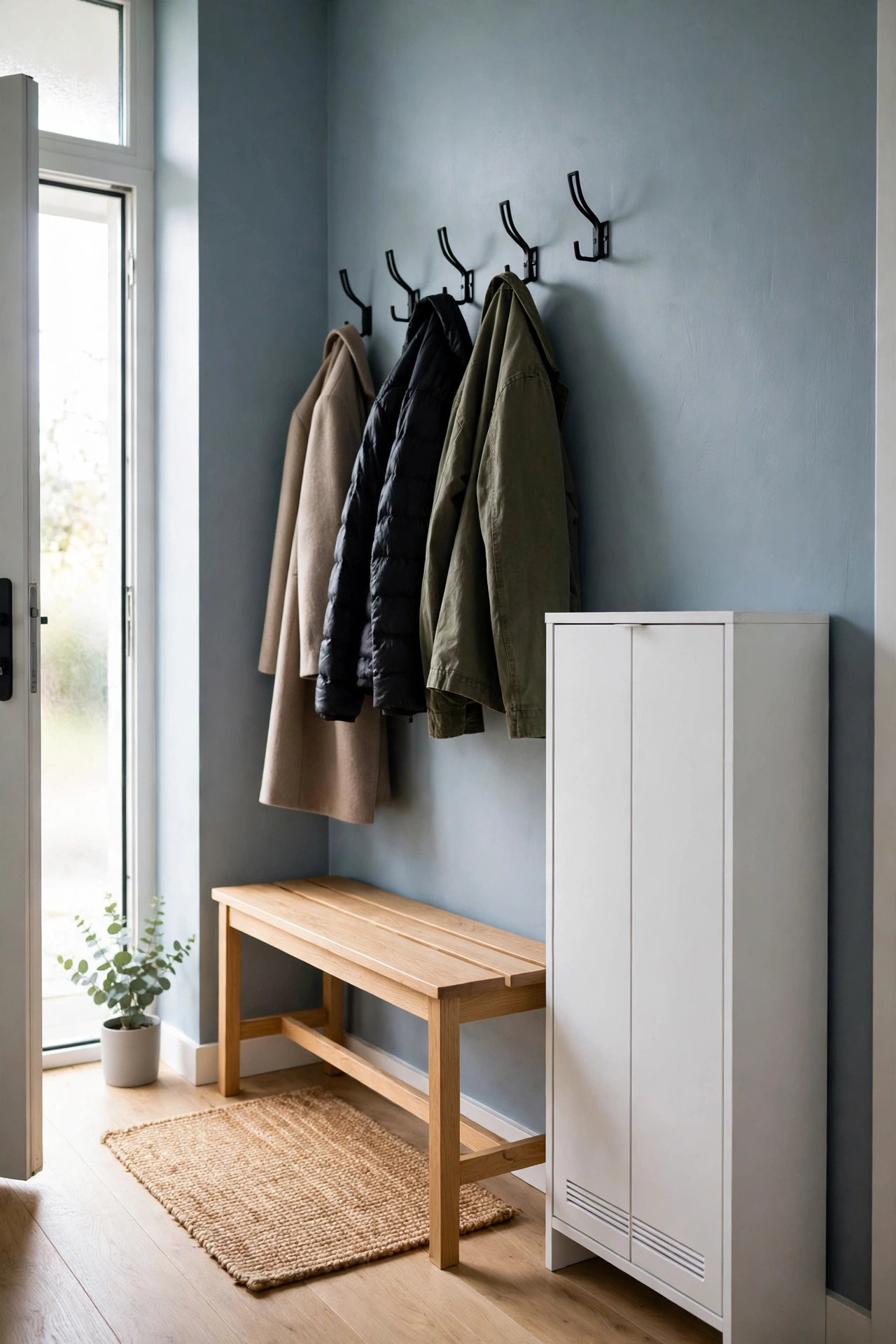
A small entryway has the hardest job in the home: every shoe, coat, bag, key and letter lands there — in about four square feet. Without a system it’s a trip hazard; with one, it’s the calmest spot in the house. These 11 small entryway organization ideas build that system around one rule: everything that enters needs a designated landing spot within arm’s reach of the door. It’s the same zone thinking behind our small bedroom organization ideas, applied to the busiest doorway you own.
1. A slim shoe cabinet (the closed-door miracle)
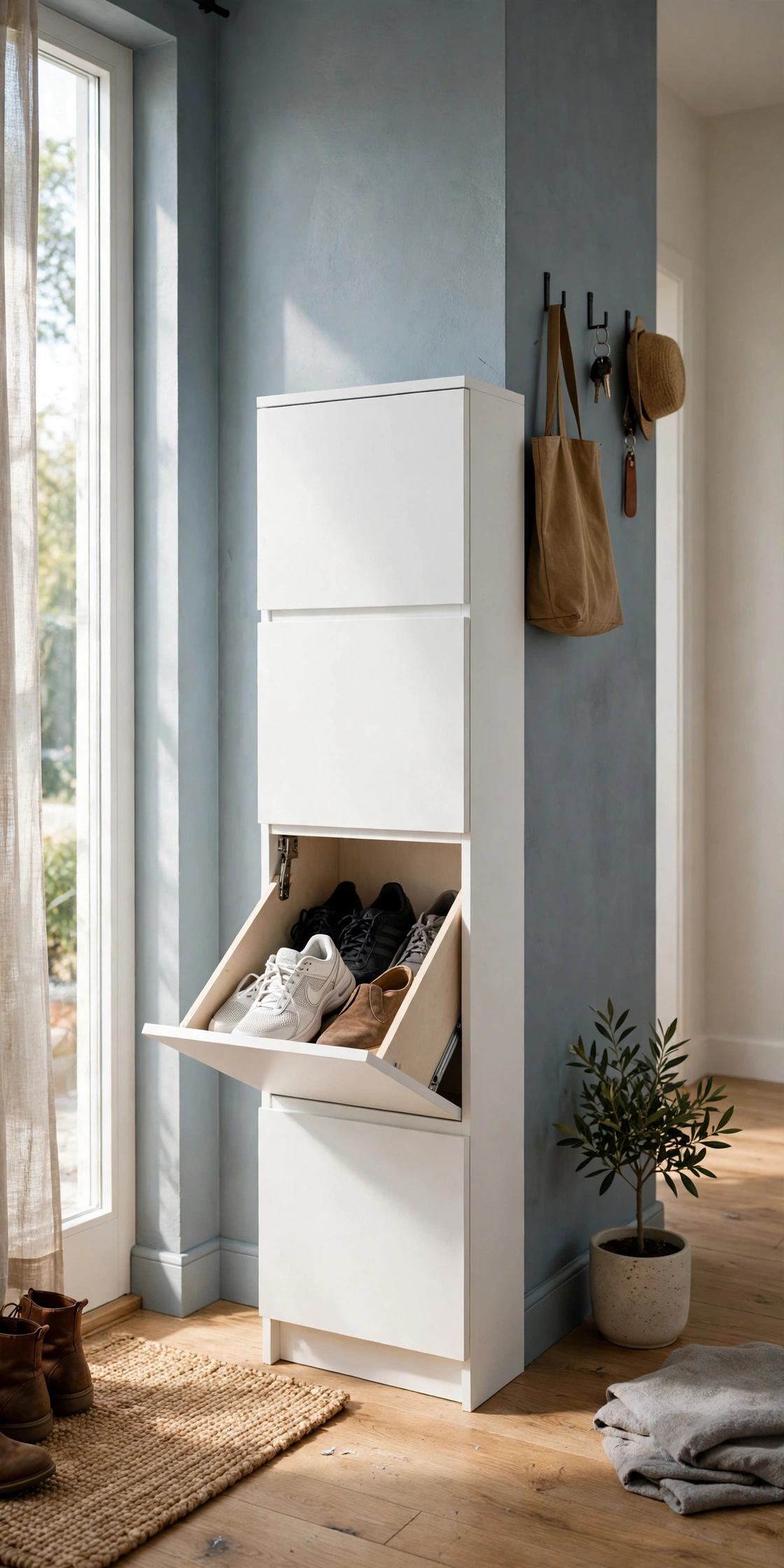
An ultra-slim tilt-out shoe cabinet (often under 7 inches deep) hides 8–12 pairs behind clean closed doors in the footprint of a shoe pile. Closed storage is the whole trick in an entryway: visual calm the second you walk in. Measure your hallway depth before ordering and anchor it to the wall — slim cabinets are tippy by design.
2. A hook rail at two heights
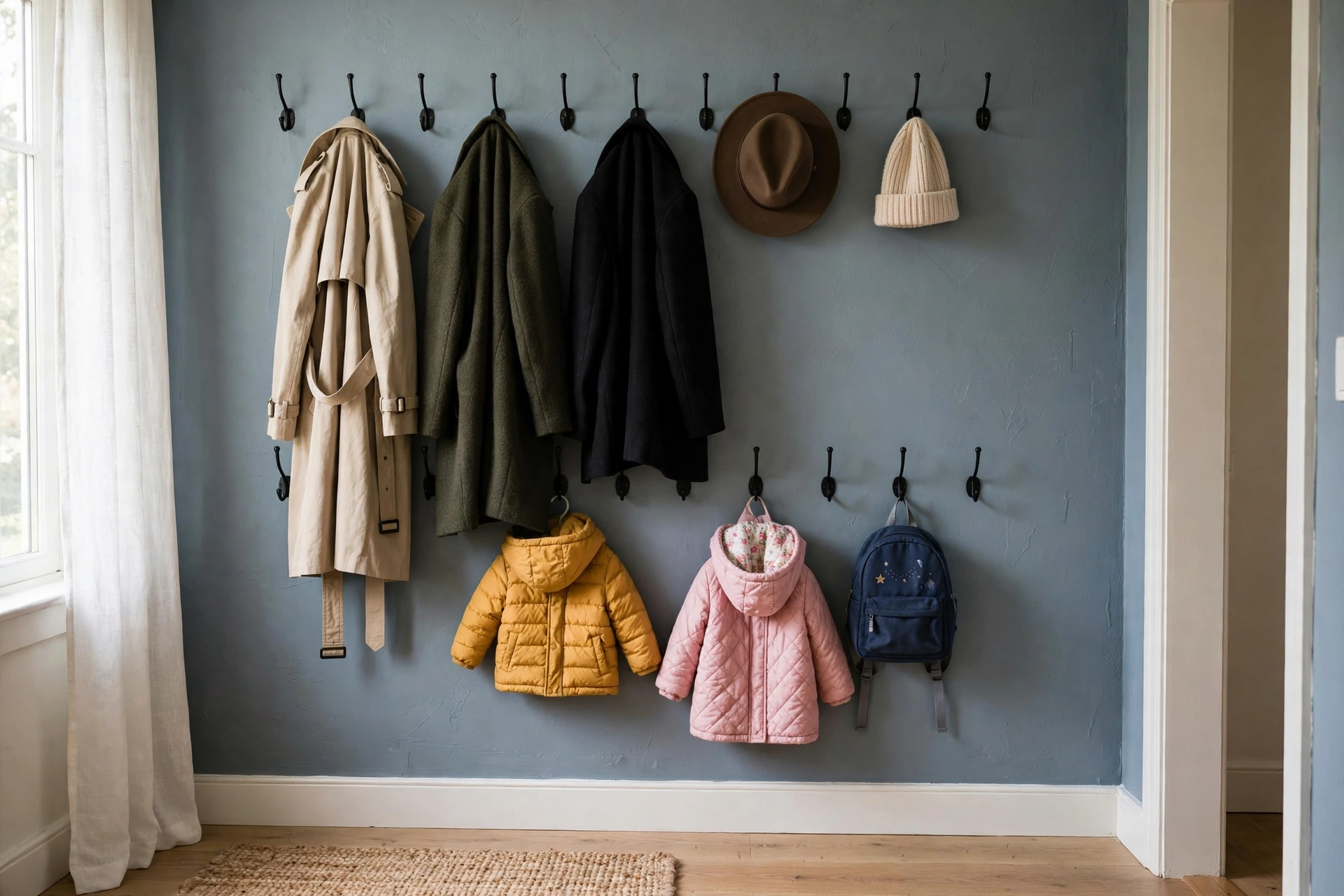
Coats at adult height, kids’ coats and bags at theirs. Two simple hook rails (or one rail plus a lower row of individual hooks) end the coat-on-a-chair migration and use pure wall, no floor. Renting? Our renter-friendly wall ideas cover the no-drill ways to hang all of this.
3. A narrow bench that earns its footprint
A bench under 14 inches deep gives you sitting-while-shoeing (life-changing in winter boots) plus storage: baskets beneath for scarves and gloves, or a hinged seat hiding the shoe overflow. If it doesn’t store something, it’s furniture in a hallway — it has to work twice to earn the space.
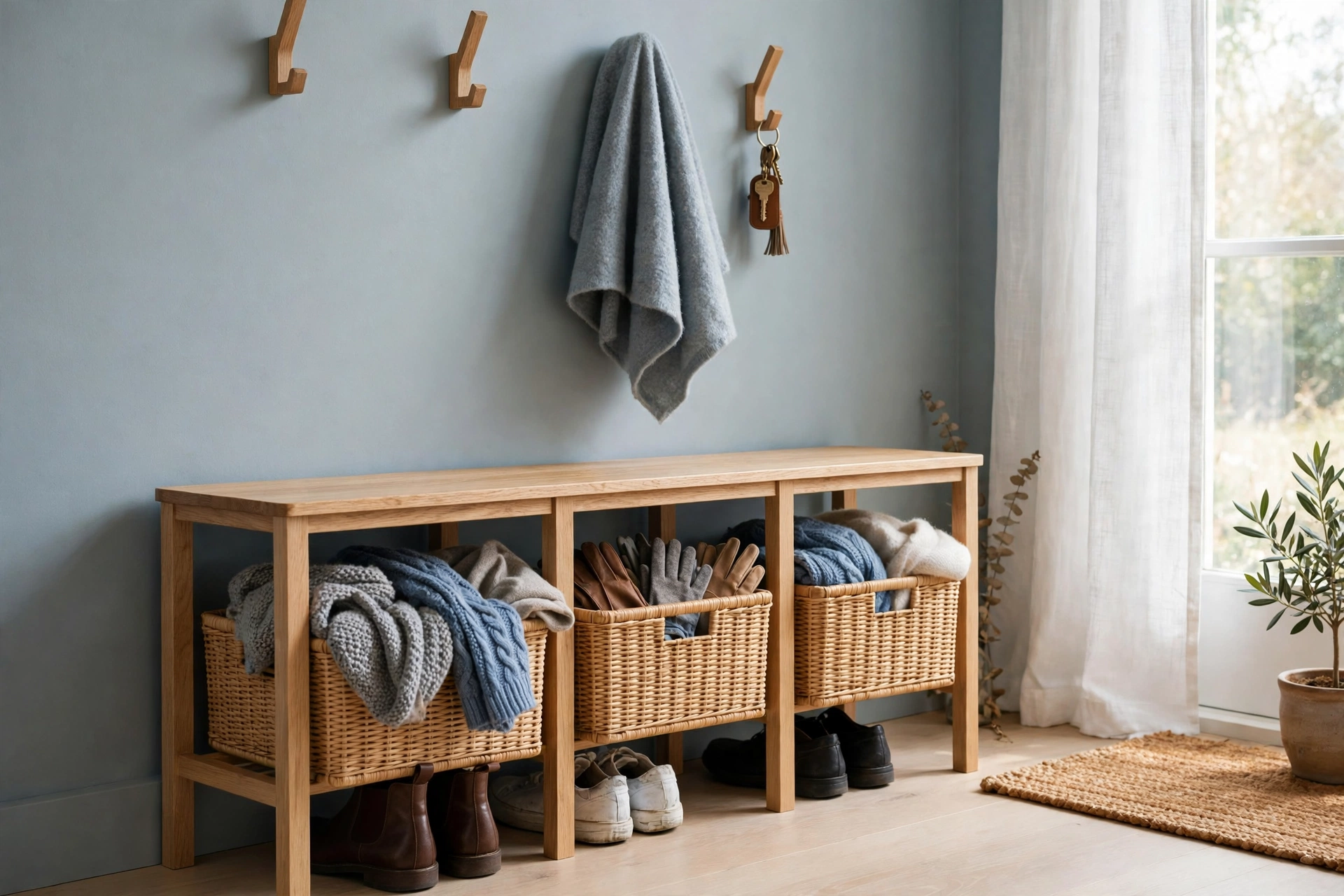
4. A key-and-mail landing strip
One small floating shelf or a wall-mounted organizer with a tray: keys, sunglasses, wallet, today’s mail. The rule is physical: these things land HERE, not on the kitchen counter, not in a pocket of a coat you won’t wear tomorrow. Add a tiny trash bowl or recycling slot for junk mail so it dies at the door.
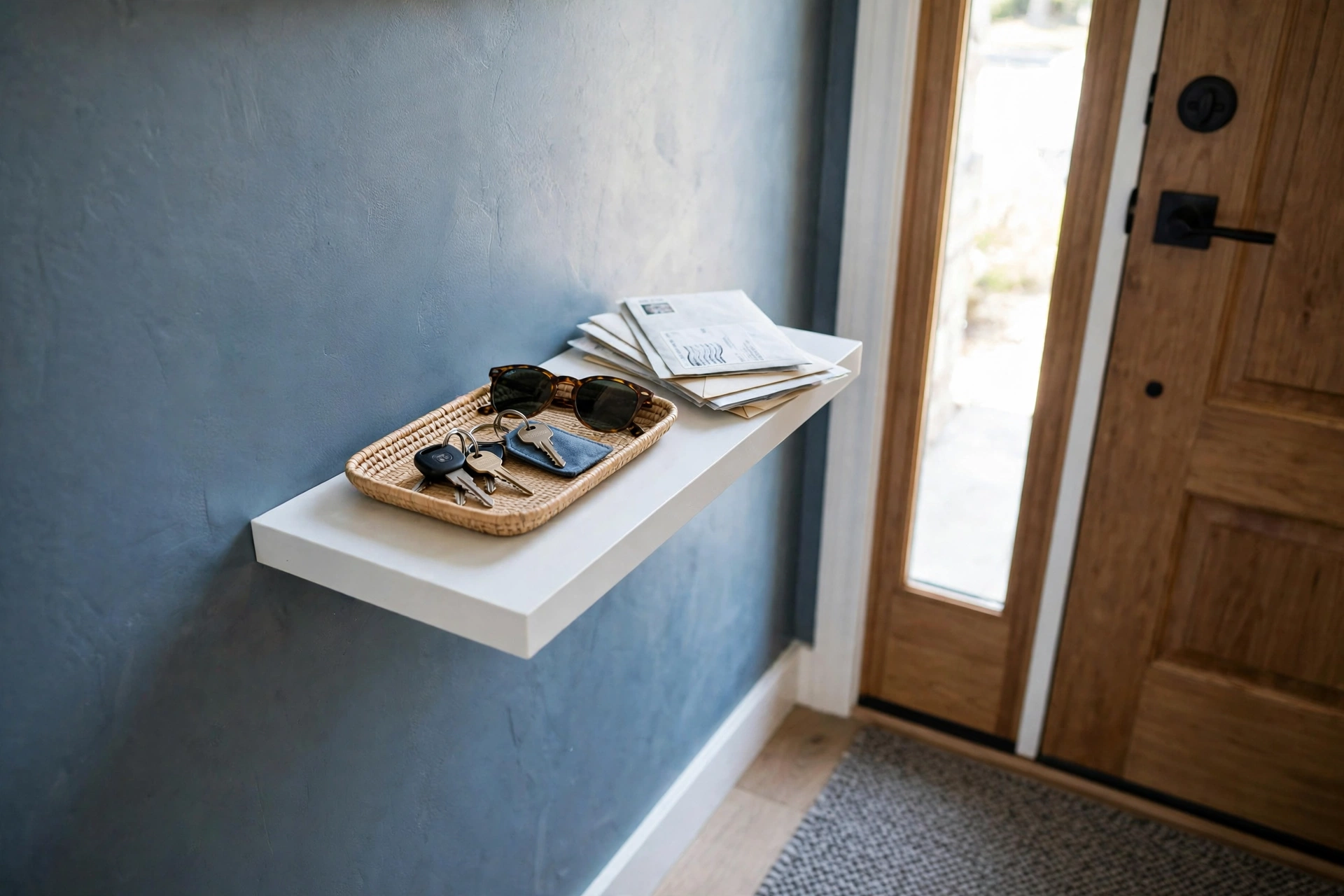
5. Go vertical with a tall narrow tower
Entryways are short on floor but tall on wall. A narrow tower shelf (12 inches wide is enough) stacks baskets and boxes to the ceiling: top for rarely used, eye level for daily, bottom for heavy. It turns a dead corner by the door into a storage column.
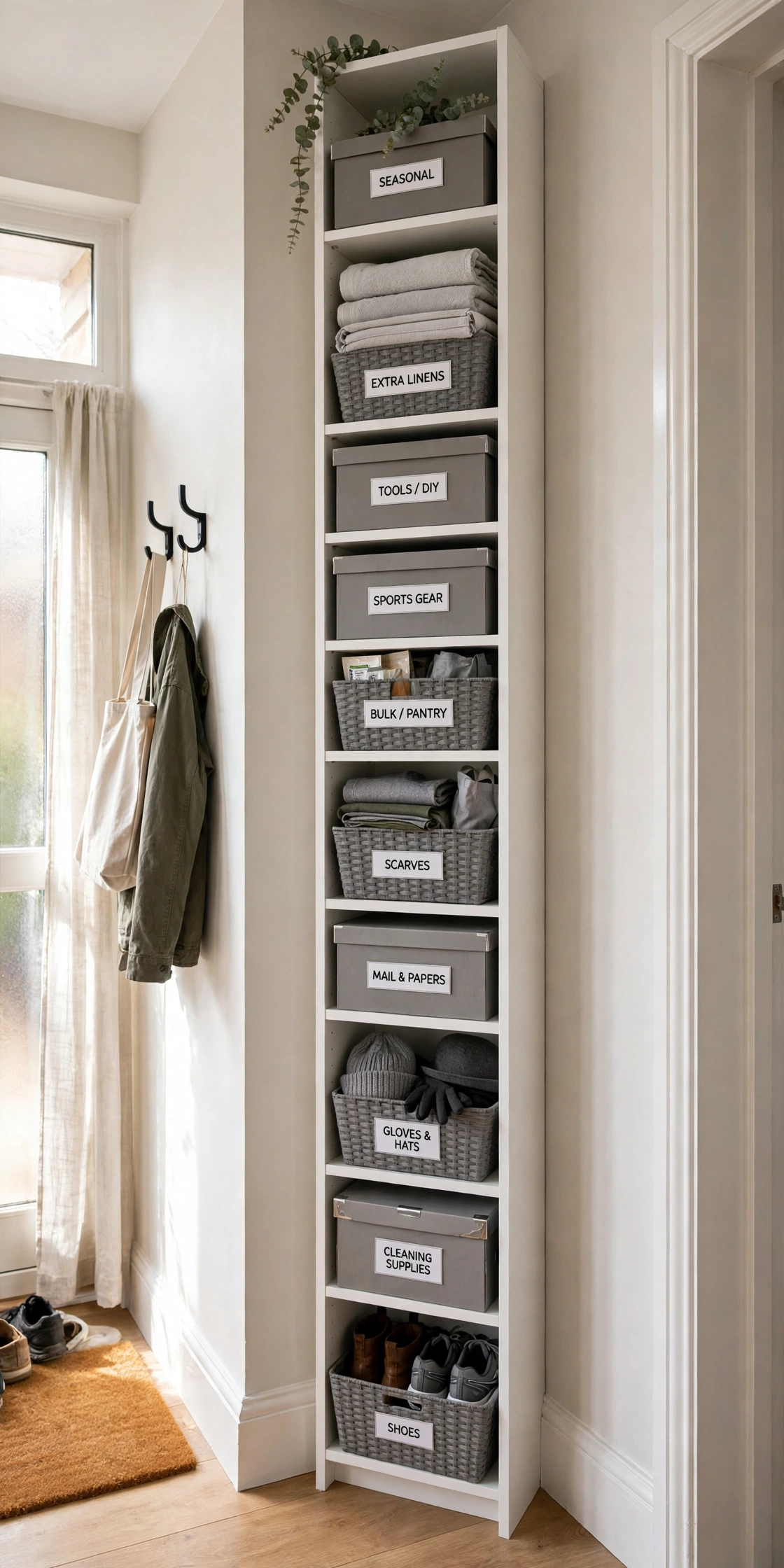
6. One basket per person
Assign every household member one entryway basket: gloves, hat, chargers, the random stuff that person generates. When a basket overflows, its owner edits it — the system polices itself. Label them; unlabeled baskets merge into one junk bin within a month.
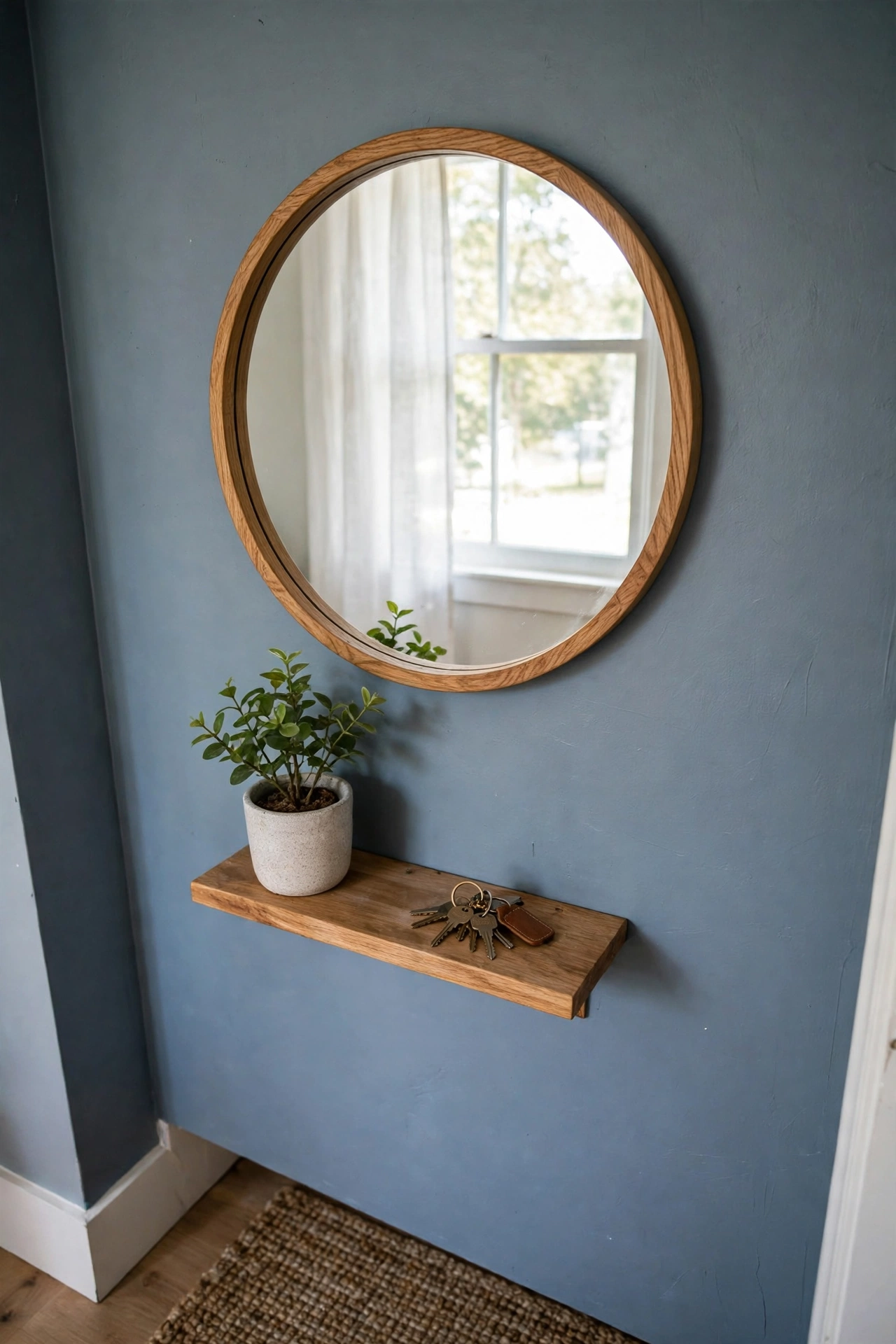
7. A mirror with a shelf (light + landing in one)
A mirror bounces scarce hallway light, gives you the last-check moment before leaving, and — with a small shelf beneath — doubles as the landing strip from idea #4. Round mirrors soften the boxy lines of narrow halls best.
8. The over-door organizer on the closet door
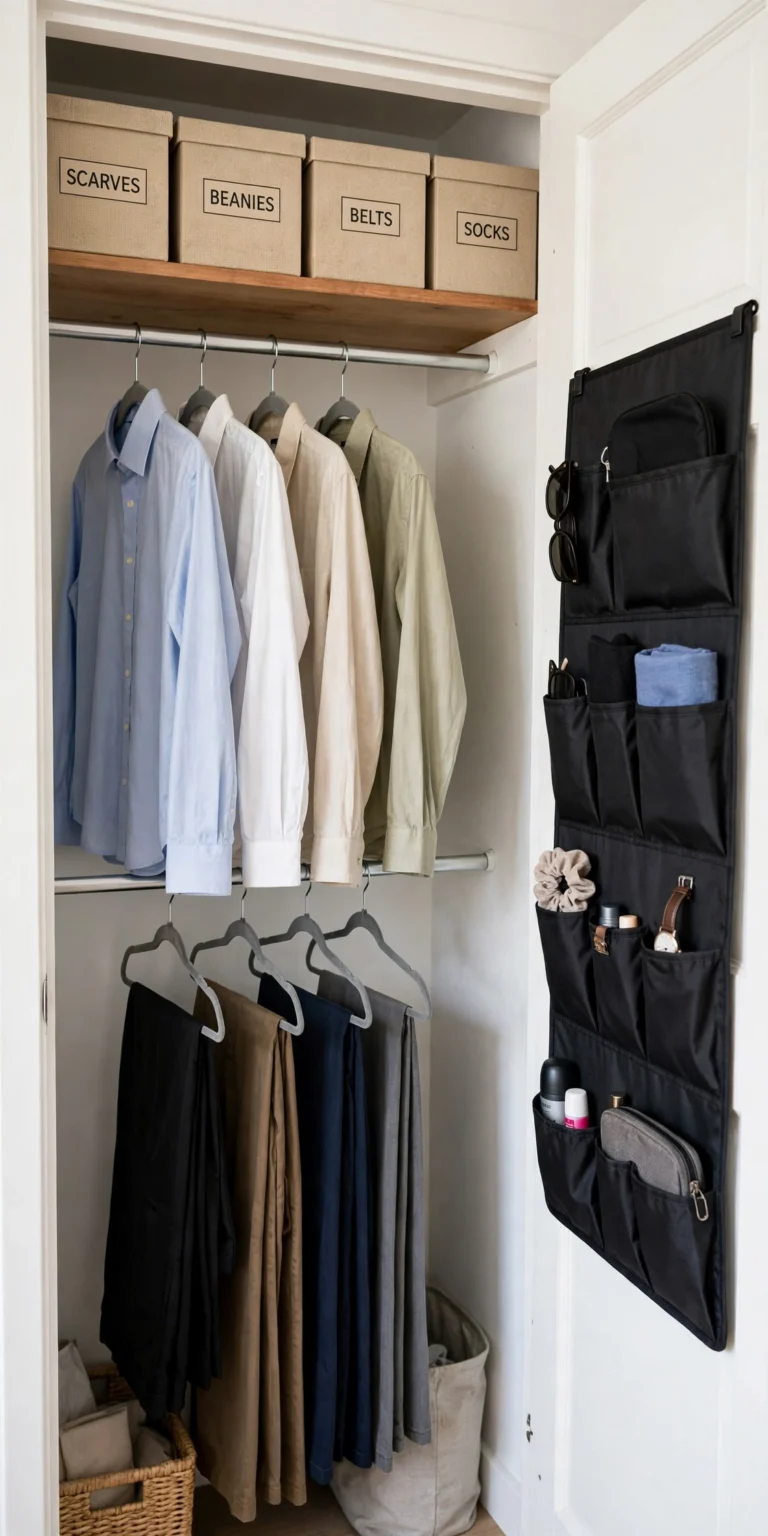
If your entryway has a coat closet, its door’s inner face is storage: clear pockets for gloves, sunscreen, dog leashes, umbrellas. If there’s no closet, the back of the front door itself can carry a slim rack — check swing clearance and your lease before screwing anything in.
9. A boot tray defines the drop zone
A low-lipped tray (or a washable mat with a border) under the shoe zone does psychological work: it draws a visible line that says “shoes live here.” Wet and muddy seasons stop migrating across the floor, and the boundary makes the tidy habit obvious for kids and guests.
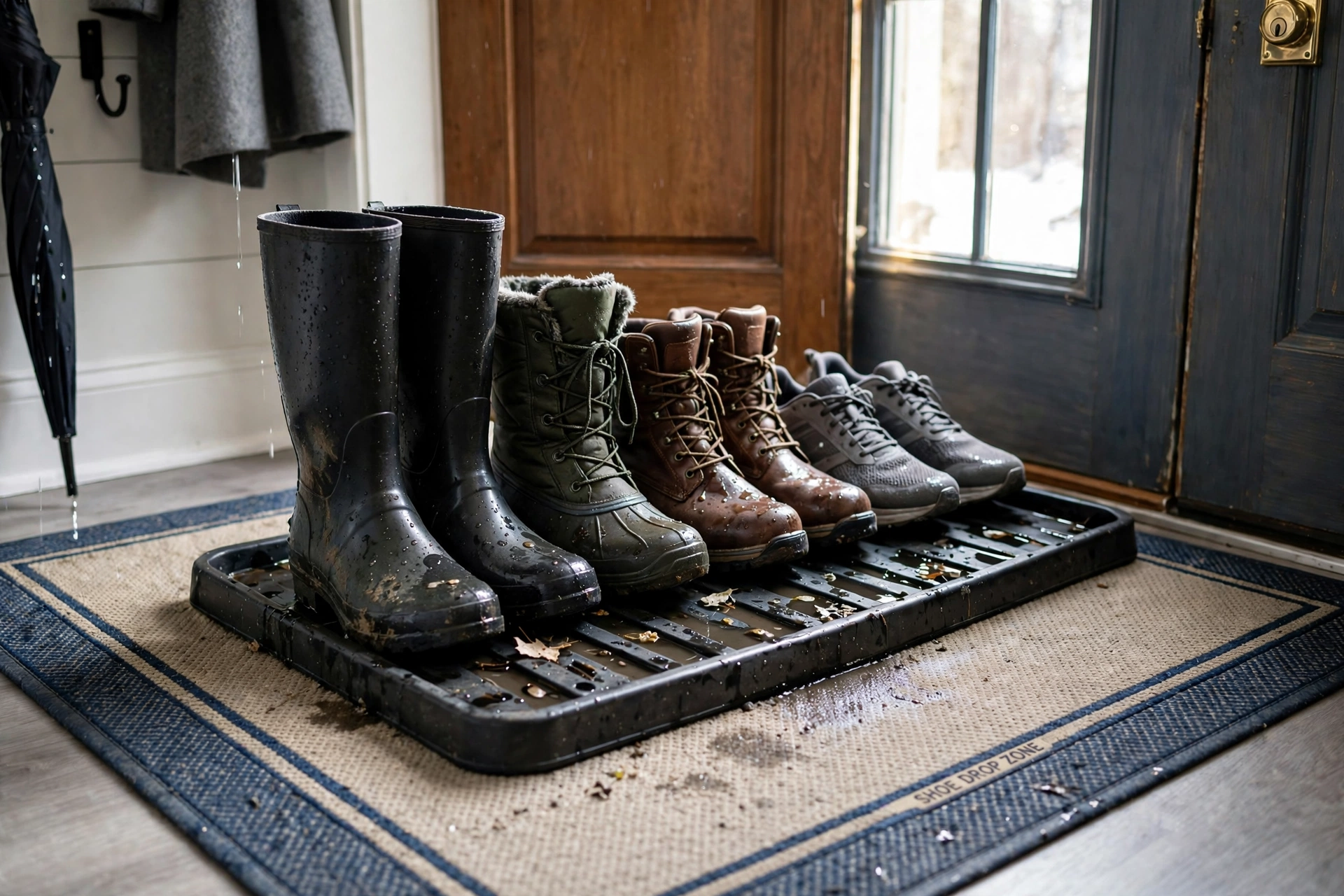
10. Rotate shoes seasonally, store the rest away
Four pairs per person at the door is plenty. The rest — sandals in January, snow boots in July — belong in storage: labeled boxes up high, or under the bed using the system in our under-bed storage ideas. The entryway holds the current season only, and suddenly there’s room.
11. The 2-minute nightly reset
Entryways don’t get messy in a day; they erode. A two-minute reset while the kettle boils — shoes paired, hooks hung, mail sorted — keeps the whole system at day-one tidy forever. Tie it to an existing habit and it costs no willpower at all.
The small-entryway formula
Closed shoe storage + two-height hooks + one landing strip + one basket per person + seasonal rotation. Five pieces, any hallway, and the first thing you see when you come home is a room that has its life together.
Tiny entrance? Save this bold little drop zone for later:

Entryway FAQs
How do I organize a small entryway with no closet?
Build the closet on the wall: a slim shoe cabinet, a hook rail at two heights, one landing-strip shelf for keys and mail, and a basket per person. That combination replaces a coat closet in about four square feet.
How many pairs of shoes should stay at the front door?
About four pairs per person — the ones in weekly rotation. Off-season pairs belong in storage boxes or under the bed, or the entryway drowns by mid-season.
What is a drop zone and why does it matter?
A drop zone is the designated landing spot for everything that enters with you — keys, mail, bags, shoes. Clutter happens when items have no assigned spot; a drop zone gives them one within arm’s reach of the door.
How do I keep an entryway tidy with kids?
Hooks at their height (not yours), one labeled basket per child, and a boot tray that draws the boundary visually. Systems kids can reach are systems kids actually use.
Keep Organizing
Entrance handled? The closet that feeds it is next: our small closet organization ideas double your hanging space, and the bedroom system in our small bedroom organization ideas ties the whole morning routine together. Browse all Small-Space Organization guides, or see everything new on the blog.
An entryway drop zone works best inside a daily system — our 15-minute home reset shows how fifteen minutes a day keeps the whole home (and this entrance) tidy.