Renter-Friendly Kitchen Upgrades: 12 Damage-Free Ideas (That Actually Look Permanent)
You can absolutely upgrade a rental kitchen without drilling a single hole — peel-and-stick backsplash tiles, cabinet-hardware swaps, plug-in lighting, and tension-rod curtains all transform a kitchen and reverse completely at move-out. The trick is choosing reversible products, patch-testing every adhesive, and photographing everything before you start.
A rental kitchen usually fails in three places: flat, lifeless surfaces; hardware that screams “builder grade”; and lighting that makes everything look gray. You can fix all three for under $200 total, and every fix below comes out cleanly when your lease ends. Before touching anything, check your lease’s alteration clause — many leases allow non-damaging changes but require written approval for paint or fixture work — and photograph every surface you plan to touch so move-out restoration is a checklist, not a guessing game.
How Do I Upgrade a Rental Kitchen Without Drilling? (Start With the Surfaces)
1. Peel-and-stick backsplash tiles
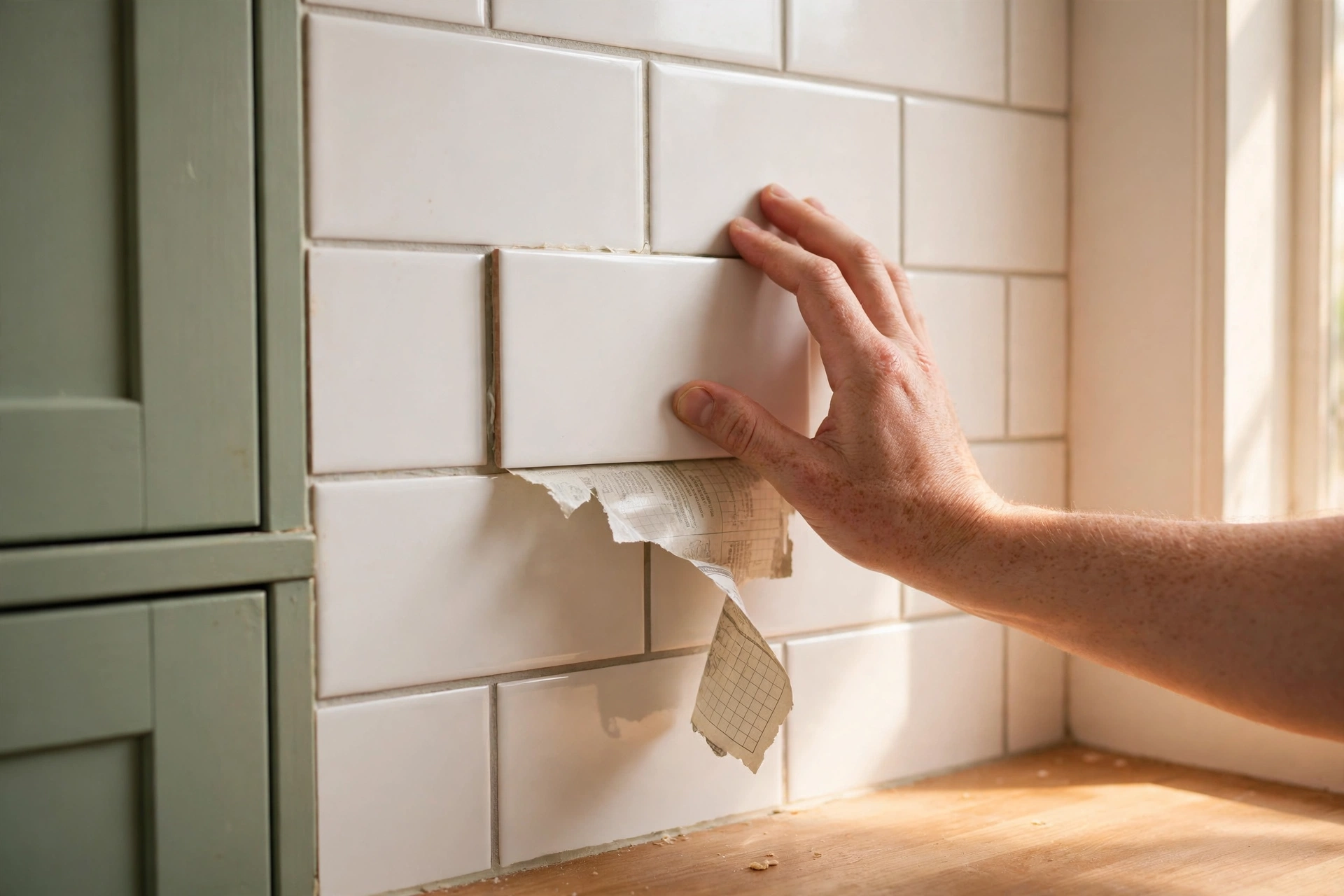
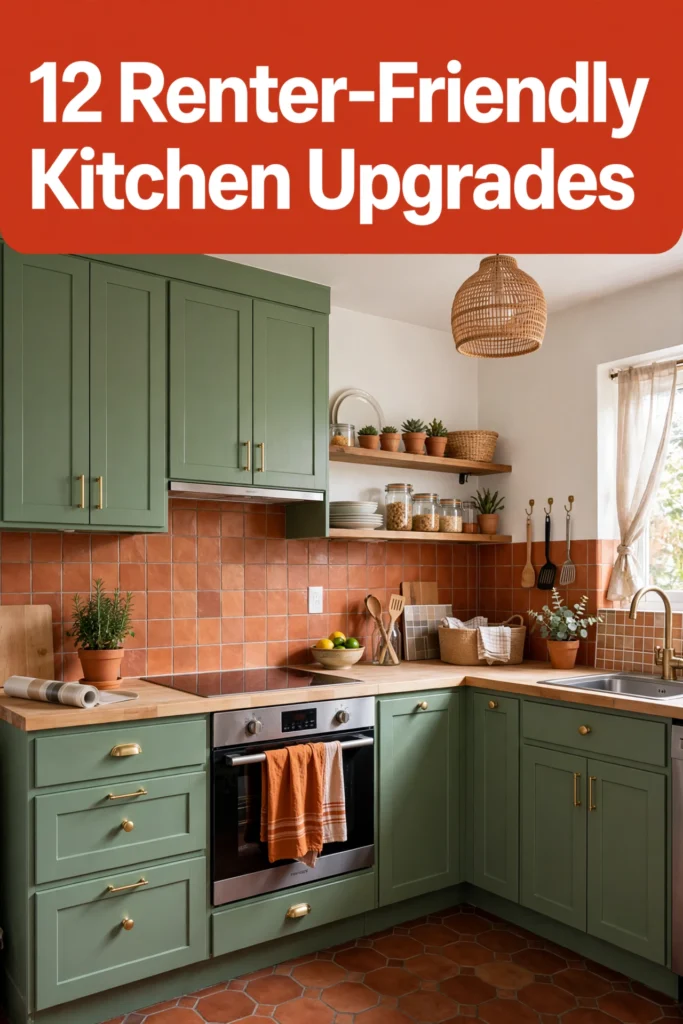
The backsplash is the largest unbroken surface in most kitchens, so it delivers the biggest visual return for the least effort. Modern peel-and-stick tiles — usually 10 × 10 in (25 × 25 cm) sheets of vinyl or gel composite — mimic subway tile, zellige, or mosaic convincingly from normal viewing distance. Expect to pay $15–$30 for enough to cover a standard 8-linear-foot run.
The “renter-friendly” label describes a product’s intent, not a guarantee on your particular wall, so patch-test a tile in a hidden spot for a full week before committing. Clean the wall with a degreaser first (kitchen grease is the #1 reason tiles peel), press each sheet firmly from center to edge to chase out air, and plan your removal: gentle heat from a hair dryer softens the adhesive so the tile releases without pulling paint.
2. Contact paper or removable vinyl on counters and cabinet fronts
For laminate counters that are stained or dated, a quality contact paper — sold in 17.7 in (45 cm) wide rolls — is a weekend makeover that costs about $20 per roll and lasts a year or more with care. Choose the thicker, heat-resistant grades marketed for countertops, wrap the vinyl around the counter edge rather than cutting flush at it (edges are where peeling starts), and keep hot pans on trivets. The same trick works on flat cabinet fronts: one roll re-skins a full run of upper cabinets.
Can I Change the Cabinet Hardware as a Renter?
3. Swap the cabinet knobs and pulls
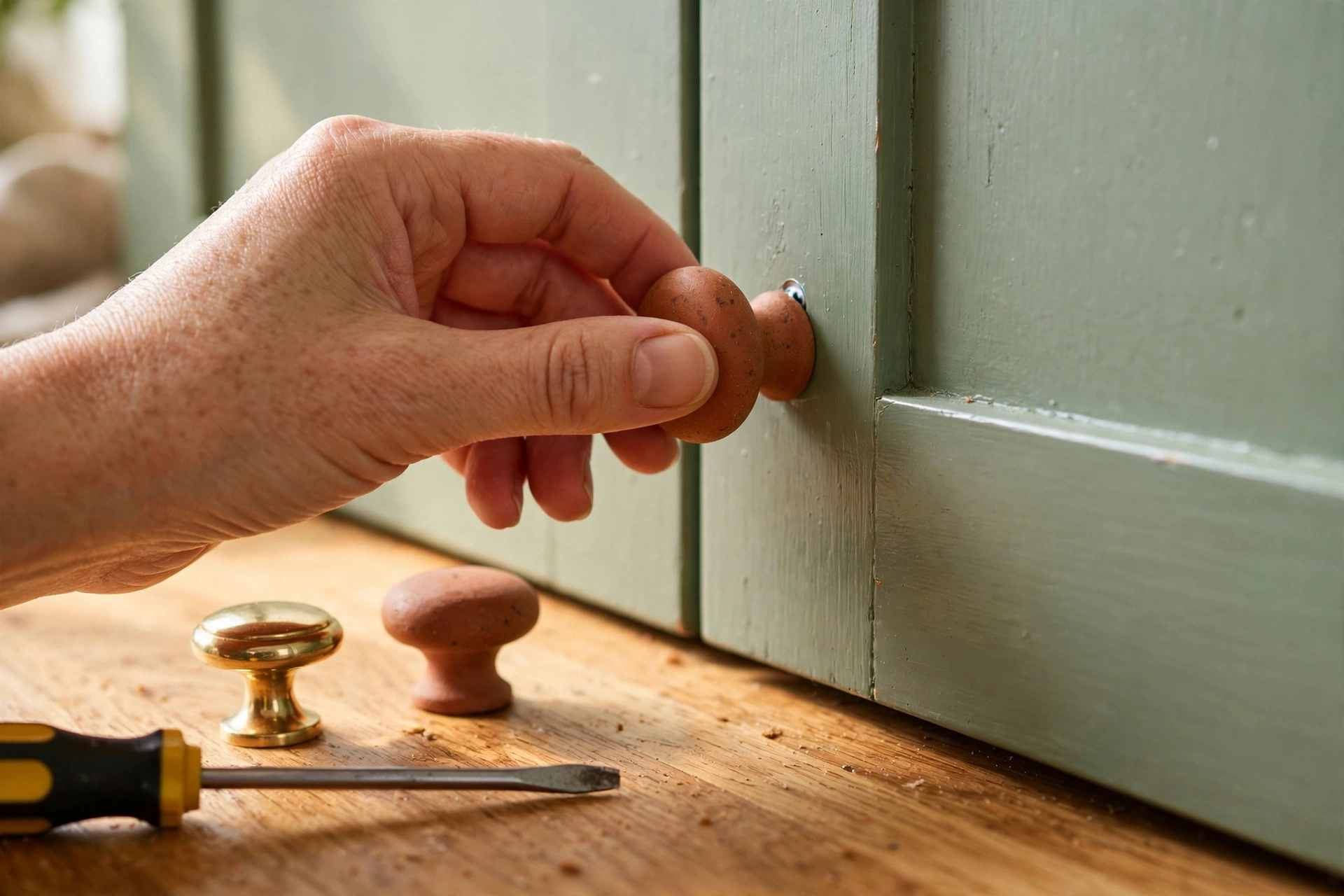
Yes — and this is the highest-ROI 30 minutes in a rental kitchen. Swapping builder-grade knobs for brass, matte-black, or ceramic pulls changes how the whole cabinet run reads, and it reverses in minutes. Measure the existing pull spacing (most are 3 in / 7.6 cm or 3.75 in / 9.5 cm center-to-center) and buy replacements that match it so no new holes are needed. Bag every original knob and screw in a labeled zip bag the day you remove them — reinstallation before move-out takes one screwdriver and one evening. A full kitchen’s hardware runs $30–$60 online.
4. Add removable shelf and drawer liners
Peel-and-stick shelf liner in a pattern you love turns every cabinet interior from “landlord beige” into something intentional for about $10 a roll. Line shelves, drawers, and the under-sink cabinet — it protects the wood from drips and wipes clean. It also quietly upgrades a kitchen’s functionality, much the way the systems in our guide to organizing a kitchen with no pantry turn dead space into working storage.
How Do I Add Better Lighting Without Wiring?
5. Plug-in pendant lights
Overhead “boob lights” are the fastest way a kitchen feels dated, and you don’t need an electrician to fix it. Plug-in pendant cords hang from a ceiling hook — a swag hook screws into the existing fixture canopy, not the ceiling — and drape to a wall outlet. A pair of pendants over a small island or peninsula costs $40–$80 and installs in under an hour. Choose warm-white bulbs (2700K–3000K); a warm bulb alone shifts the whole room’s baseline noticeably.
6. Under-cabinet LED strips
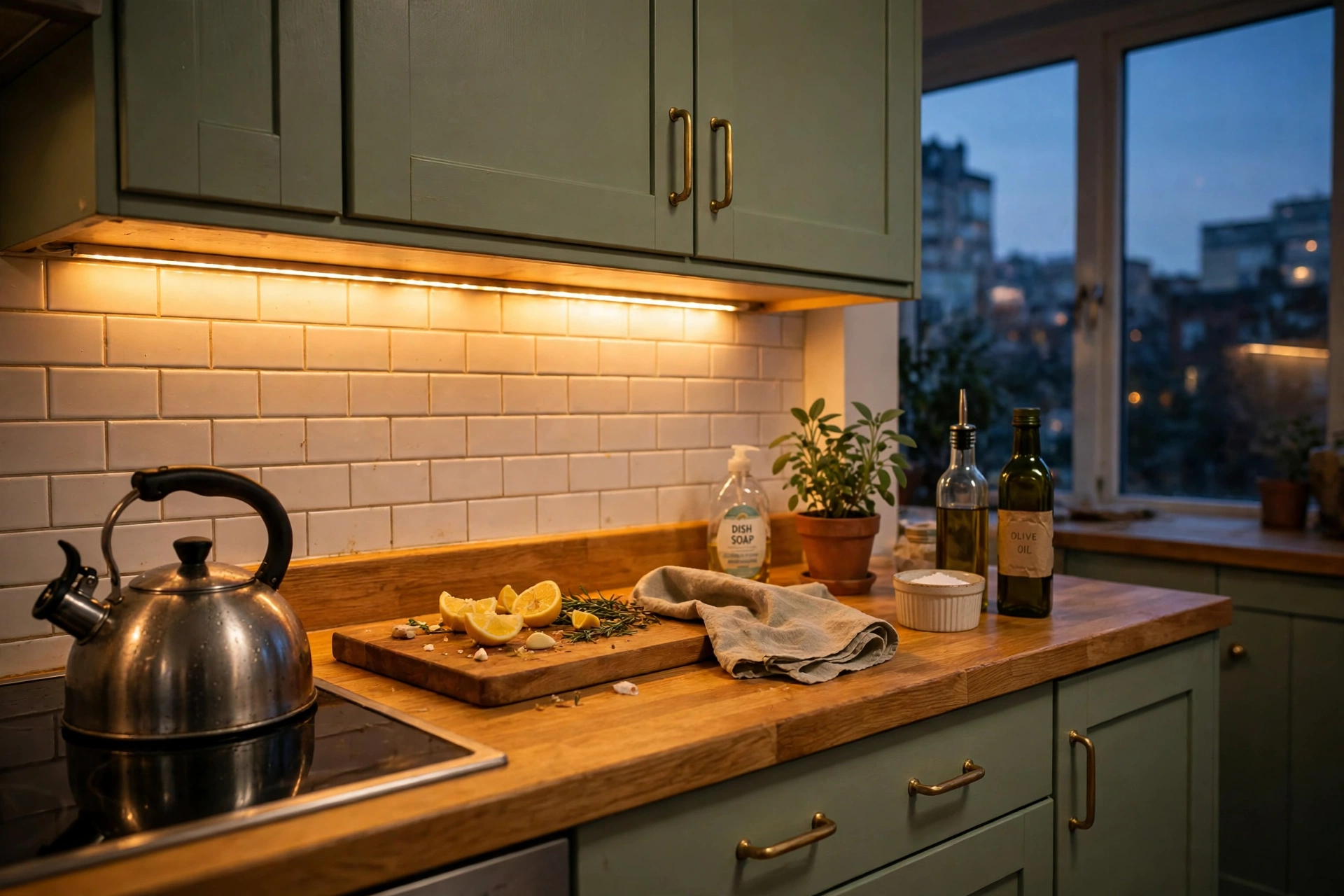
Under-cabinet shadows are what make a kitchen feel dark even at noon. USB- or battery-powered LED strips mount with their own adhesive backing, plug into an outlet inside a cabinet, and put task light exactly where you chop. A 6.5 ft (2 m) strip costs about $15–$25, and most have a remote or motion sensor so you never fumble for a switch. Keep the strips toward the front edge of the cabinet underside so the light washes the counter, not the backsplash.
7. Battery puck lights for the dark corners
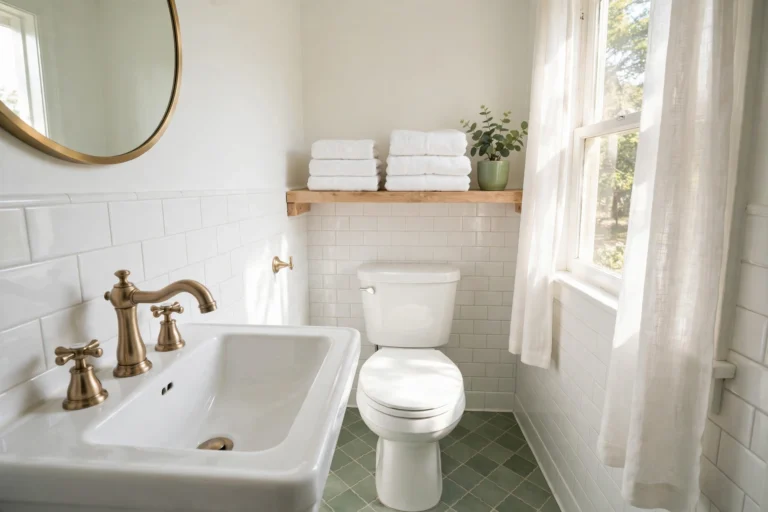
For the cabinet interior, the pantry shelf, or that one corner the overhead light never reaches, battery puck lights (about $3–$5 each) stick on with magnets or removable adhesive and last months per set of batteries. They are the same no-wire logic we used for our damage-free bathroom upgrades — light first, because it changes how every other upgrade reads.
What Window Treatments and Textiles Work in a Rental Kitchen?
8. Tension-rod café curtains
A spring-loaded tension rod needs zero hardware and instantly softens a bare rental window. Pair it with café curtains — or two of your favorite tea towels clipped on as an improvised set, which takes under five minutes — to get light plus privacy without drilling a bracket. Most kitchen windows fit rods that extend 28–48 in (71–122 cm).
9. Layer tea towels, runners, and a washable rug
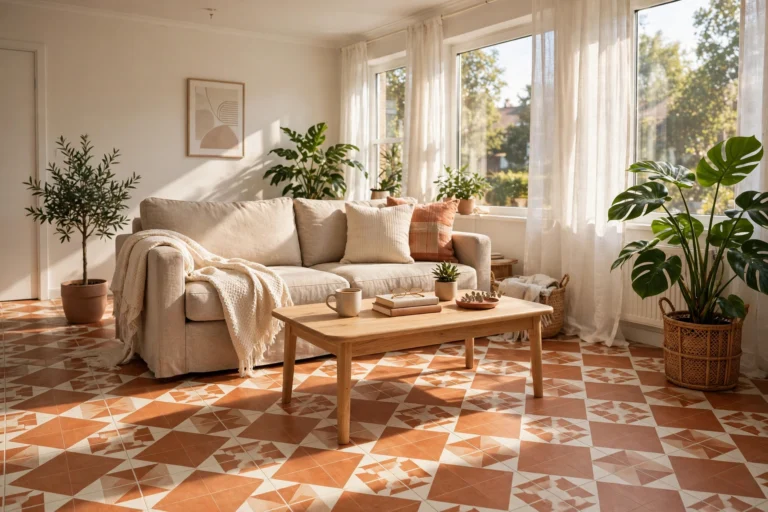
Textiles are the renter’s paint. A runner along a galley kitchen, a folded tea towel on the oven handle, and a tray on the counter add color that moves with you. For the floor, choose a low-pile washable rug (about $40–$70 for a runner) rather than anything that needs tape — and if you want more floor options, our rundown of renter-friendly flooring ideas covers what actually holds up in kitchens.
How Do I Add Storage and Style With Zero Damage?
10. Magnetic knife strip instead of a knife block
A magnetic knife strip mounts with heavy-duty removable adhesive strips rated for the load, frees an entire drawer or counter corner, and looks like a design choice rather than a workaround. Confirm the strip’s adhesive is rated for tile or painted drywall before you hang knives on it — a patch test applies to everything adhesive, not just backsplash.
11. Command hooks, shelves, and rail systems
The humble adhesive hook does more in a kitchen than anywhere else in the house: hang utensils, aprons, the dish brush, and measuring cups inside cabinet doors to keep counters clear. Adhesive-mounted rail systems (the kind with sliding hooks) mount under upper cabinets for mugs and small tools. Match the hook’s weight rating to the job — the strips hold their rated weight only on clean, smooth, dry surfaces.
12. A rolling cart and a styled vignette
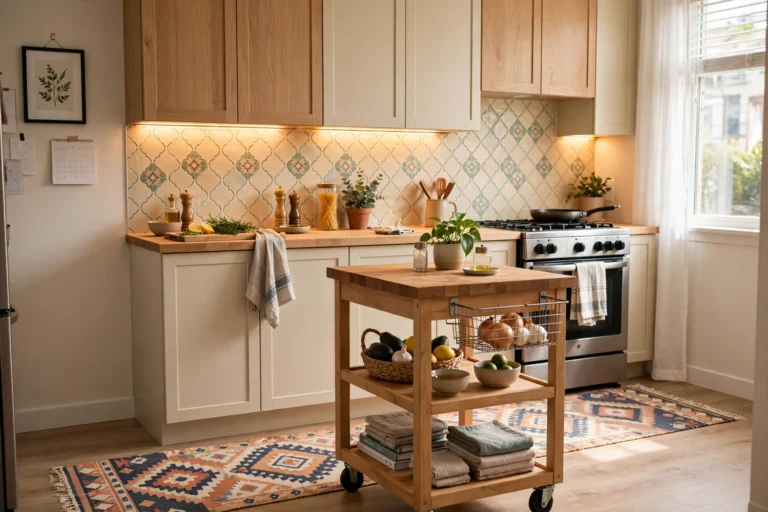
One slim rolling cart — 12–15 in (30–38 cm) wide — adds a work surface, a coffee station, or extra pantry storage that rolls wherever you need it and moves with you. Top it with a cutting board, a small plant, and a jar of utensils, and finish with one styled vignette on the counter (tray + plant + folded towels) so the eye lands somewhere intentional. Inside the base cabinet, an under-sink organizer pulls the cleaning chaos out of sight so the styled parts stay styled.
Your Move-Out Restoration Checklist
Plan the exit when you plan the project and your deposit stays safe: keep every original (hardware, knobs, light covers) in labeled bags; photograph each surface before and after installation; remove adhesives with gentle heat and a plastic scraper, never a metal blade; and budget one afternoon for the full reversal. If your landlord is actually open to paint, our guide to painting kitchen cabinets the permanent way walks through the full professional process — but everything above assumes you’ll never get that permission, and the kitchen still looks transformed.
Will peel-and-stick backsplash damage my rental walls?
It can, depending on the wall condition, paint type, product quality, and how long it stays up. Always test a small hidden area for a full week first, follow the manufacturer’s instructions, and remove it slowly with gentle heat (a hair dryer) to soften the adhesive.
What kitchen improvements will my landlord most likely approve?
Landlords typically approve removable, non-damaging improvements: peel-and-stick backsplash, magnetic strips, tension rods, freestanding shelving, plug-in lighting, and adhesive hooks for lightweight items. Most prohibit drilling, painting, or modifying fixtures. Always get written approval before starting.
What is the easiest renter-friendly kitchen upgrade?
Swapping the cabinet hardware is the fastest — about 30 minutes and $30–$60 for a full kitchen. Peel-and-stick backsplash and plug-in lighting are close behind; all three show a visible difference the same day with no special skills.
How do I remove adhesive upgrades without losing my security deposit?
Photograph every surface before installation, patch-test each adhesive in a hidden spot, and remove with gentle heat plus a plastic scraper — never a metal blade. Keep all originals (knobs, covers, curtains) in labeled bags so reinstallation is one evening’s work.