Renter-Friendly Flooring Ideas: 10 Ways to Fix Ugly Rental Floors With Zero Glue and Zero Drilling
Rental floors are where landlords’ taste goes to die: stained carpet from the previous decade, yellowing vinyl, scratched laminate in a wood tone nobody chose on purpose. And floors are the biggest visual surface in any room — change them and the whole space changes with them. The good news is you don’t need your landlord’s contractor to fix any of it. Every idea below goes down without glue, nails or drilling, and every one comes back up on moving day.
1. Peel-and-stick vinyl tiles
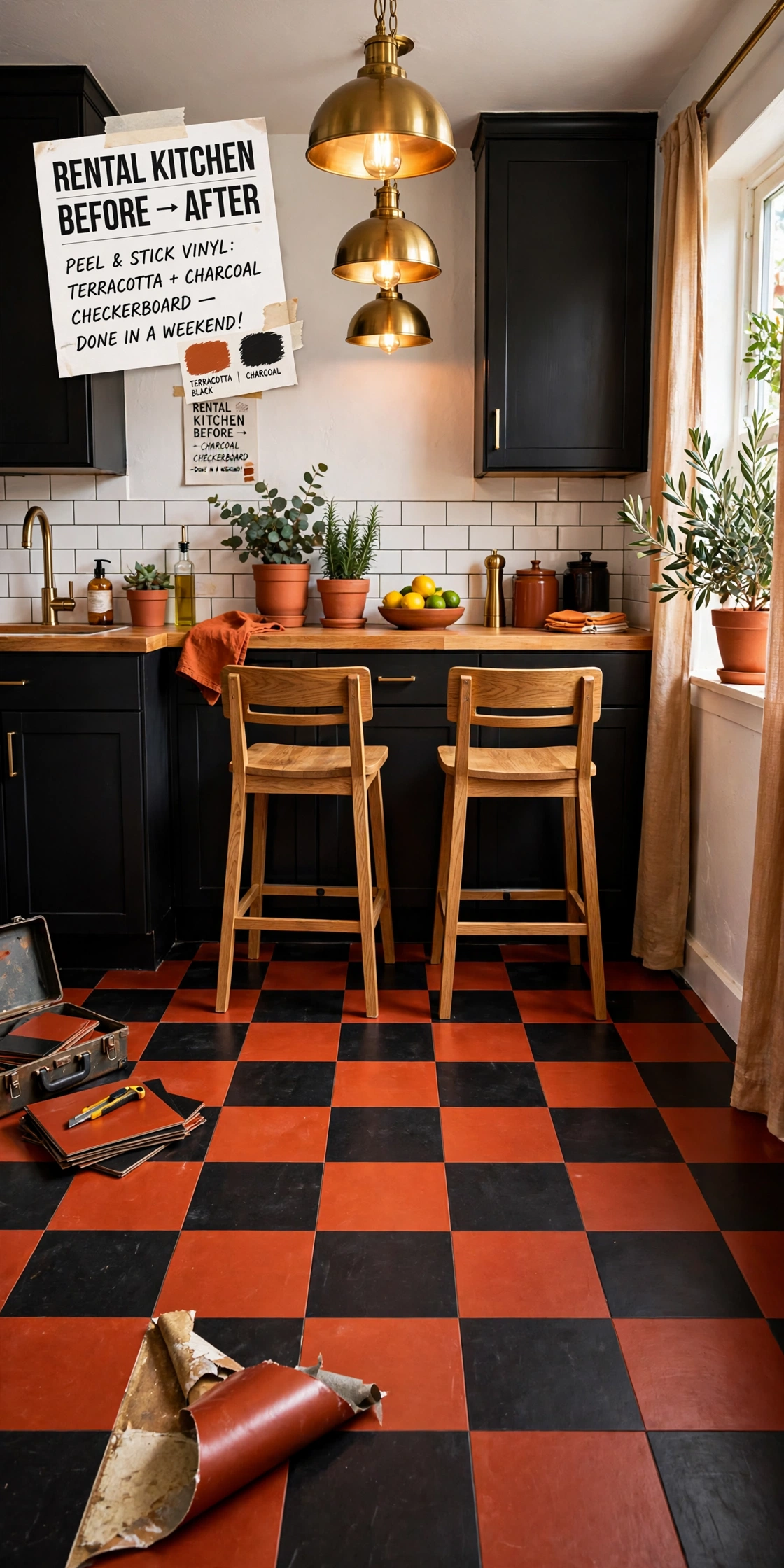
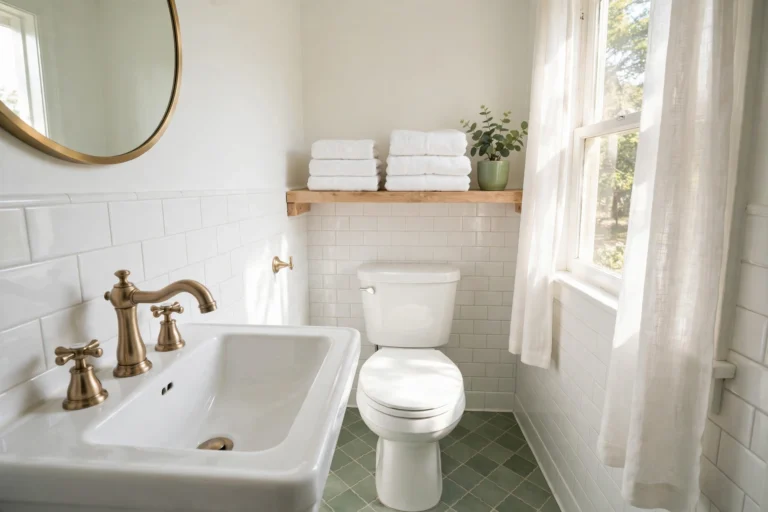
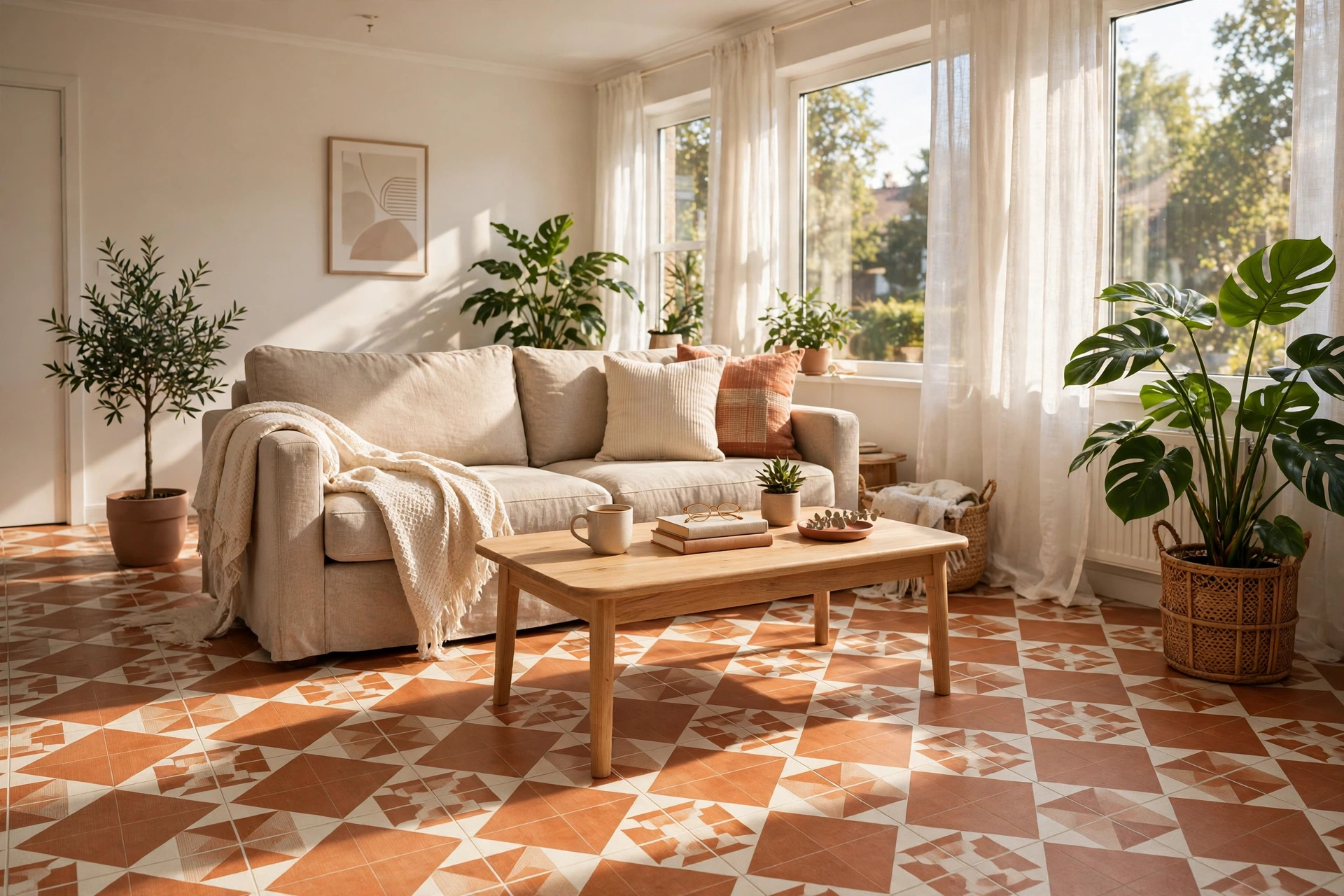
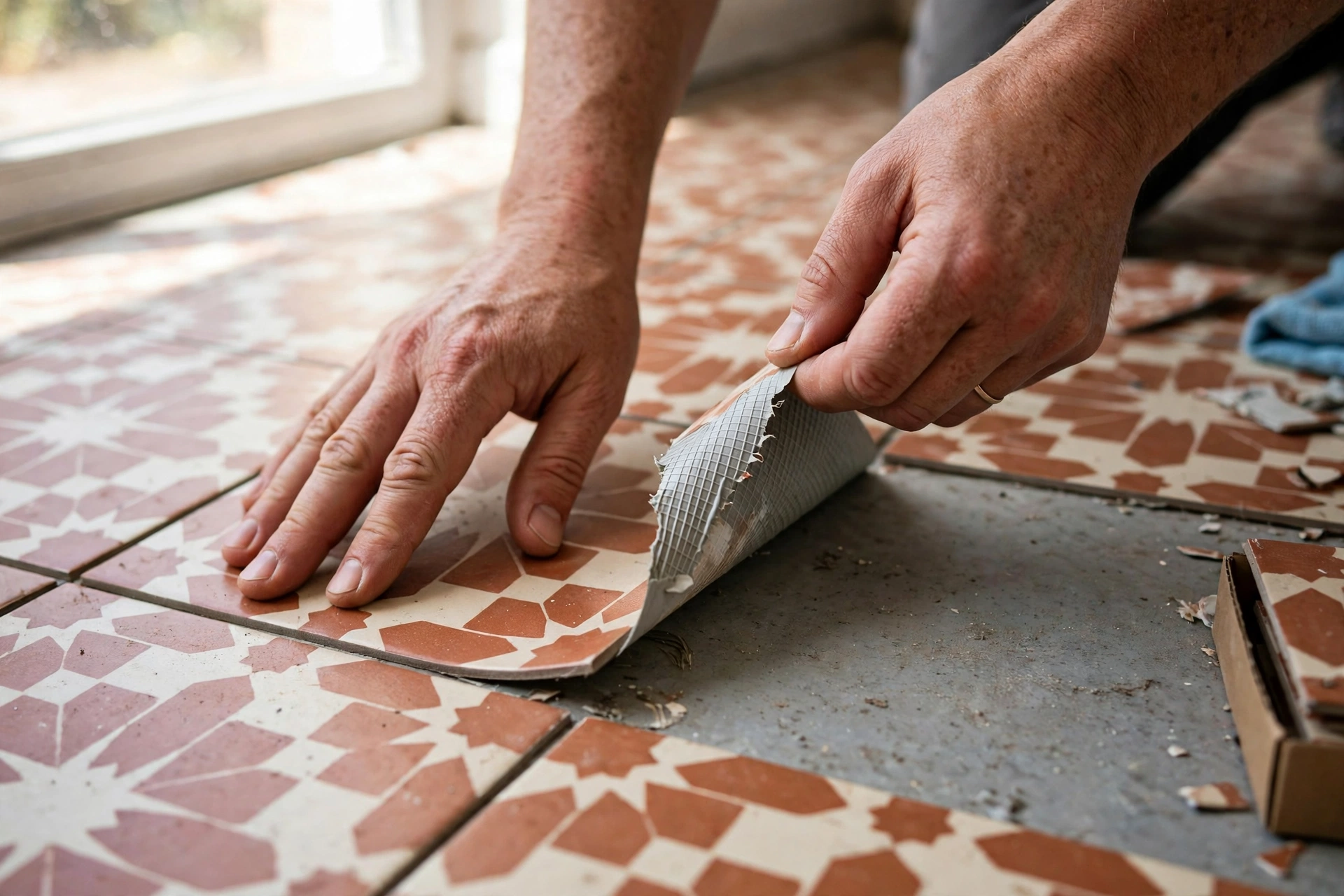
The workhorse of renter flooring. Standard tiles are 12-inch (30 cm) squares of vinyl with an adhesive backing; they lay directly over clean, dry existing floors — vinyl, tile, laminate, even sealed concrete. A living room needs surprisingly few of them, and patterned designs (terracotta encaustic looks, black-and-white checkerboard) read as real tile from standing height. Budget around $1–$3 per square foot. On moving day, warm each tile with a hairdryer and peel slowly; any adhesive residue comes off with a citrus-based remover. We covered the bathroom version in detail in our damage-free bathroom upgrades — the same technique, just scaled up for bigger rooms.
2. Peel-and-stick vinyl planks
Same idea as the tiles, different look: long planks (usually 36 by 6 inches / 91 by 15 cm) that mimic oak, walnut or weathered wood grain. Planks are the answer when you want the floor to look quieter and more expensive — big box patterns draw the eye, but wood-look planks just make the room feel calm and cohesive. They’re also more forgiving to install than tiles because the long seams are easier to align along a wall. Expect $1.50–$4 per square foot, and buy 10% extra for the cuts around doorways.
3. Layered rugs over wall-to-wall carpet
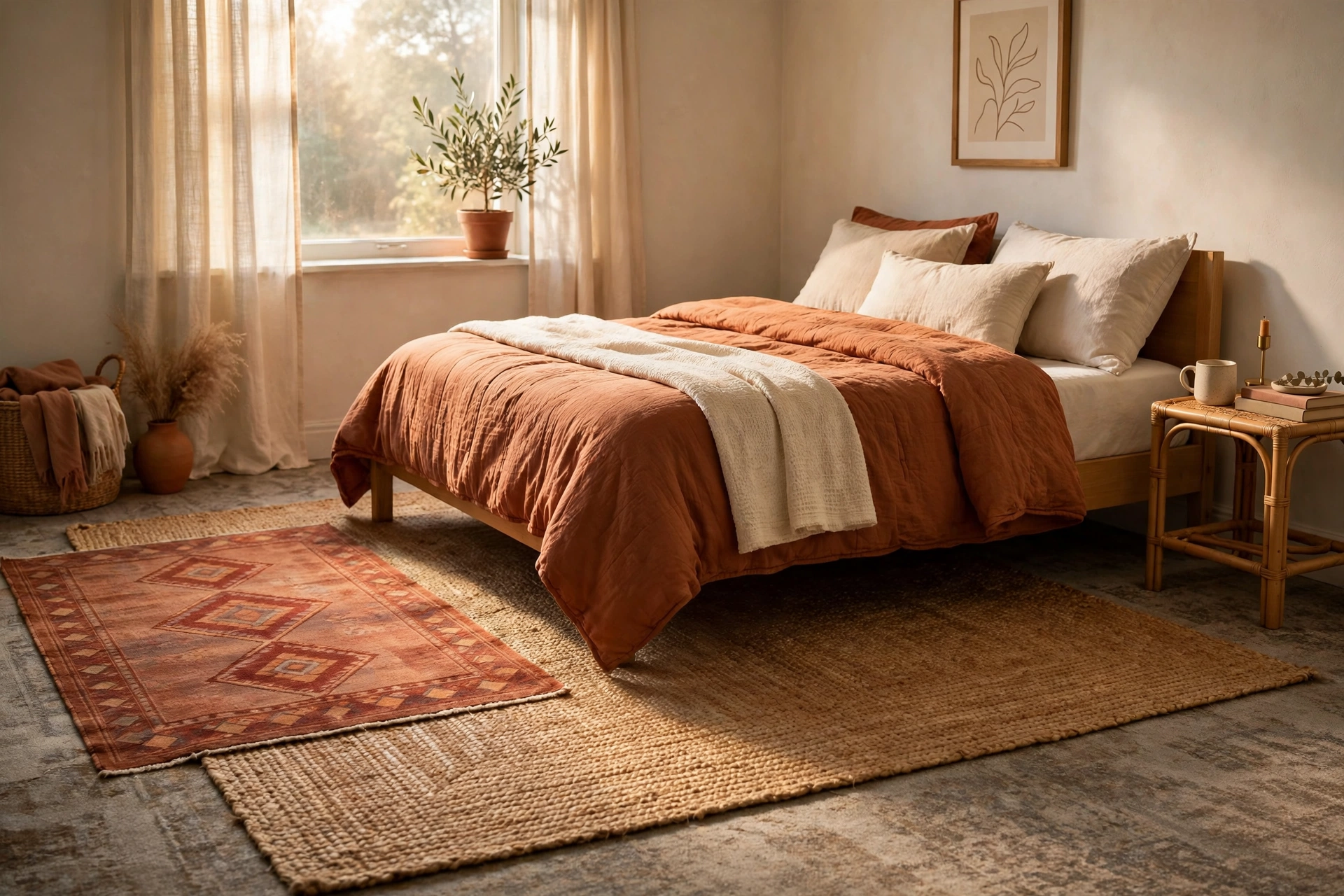
When the rental carpet is clean but ugly — that flat beige that swallows all personality — don’t fight it, bury it in style. Layering a large flat-weave rug (jute or low-pile cotton, 8 by 10 feet / 2.4 by 3 m for a living room) over the carpet, then a smaller patterned rug on top, turns the carpet into nothing more than padding. The bottom rug should be thin and grippy so nothing slides; the top one carries the pattern. This trick costs nothing in landlord negotiations because nothing touches the floor except fabric.
4. Washable rugs as the top layer
The top rug in any layered setup — or any high-traffic zone — should be washable. Modern machine-washable rugs (the two-layer kind with a separate pad) survive coffee, pets and mystery stains by going straight in the washing machine. A 5 by 7 foot (1.5 by 2.1 m) washable rug costs roughly $80–$200, which is less than the cleaning bill for one bad stain on a regular rug. If your rental has a dining area on carpet, this is the single highest-impact purchase you can make — it protects the landlord’s floor and looks intentional while doing it.
5. Rug tape and pads instead of nails
Area rugs on hard rental floors slide, bunch and curl — and the usual fix (rug grippers with adhesive, or worse, double-sided tape) can pull up floor finish. Use painter’s-tape-grade rug tape or a natural-rubber rug pad cut to size instead: full-room pads in felt-and-rubber cost about $0.50 per square foot and do double duty as cushioning. On carpet, skip the pad and use a thin non-slip mesh made for carpeted floors. Nothing here touches the floor with anything stronger than friction, which is exactly how a deposit stays intact.
6. Interlocking cork tiles
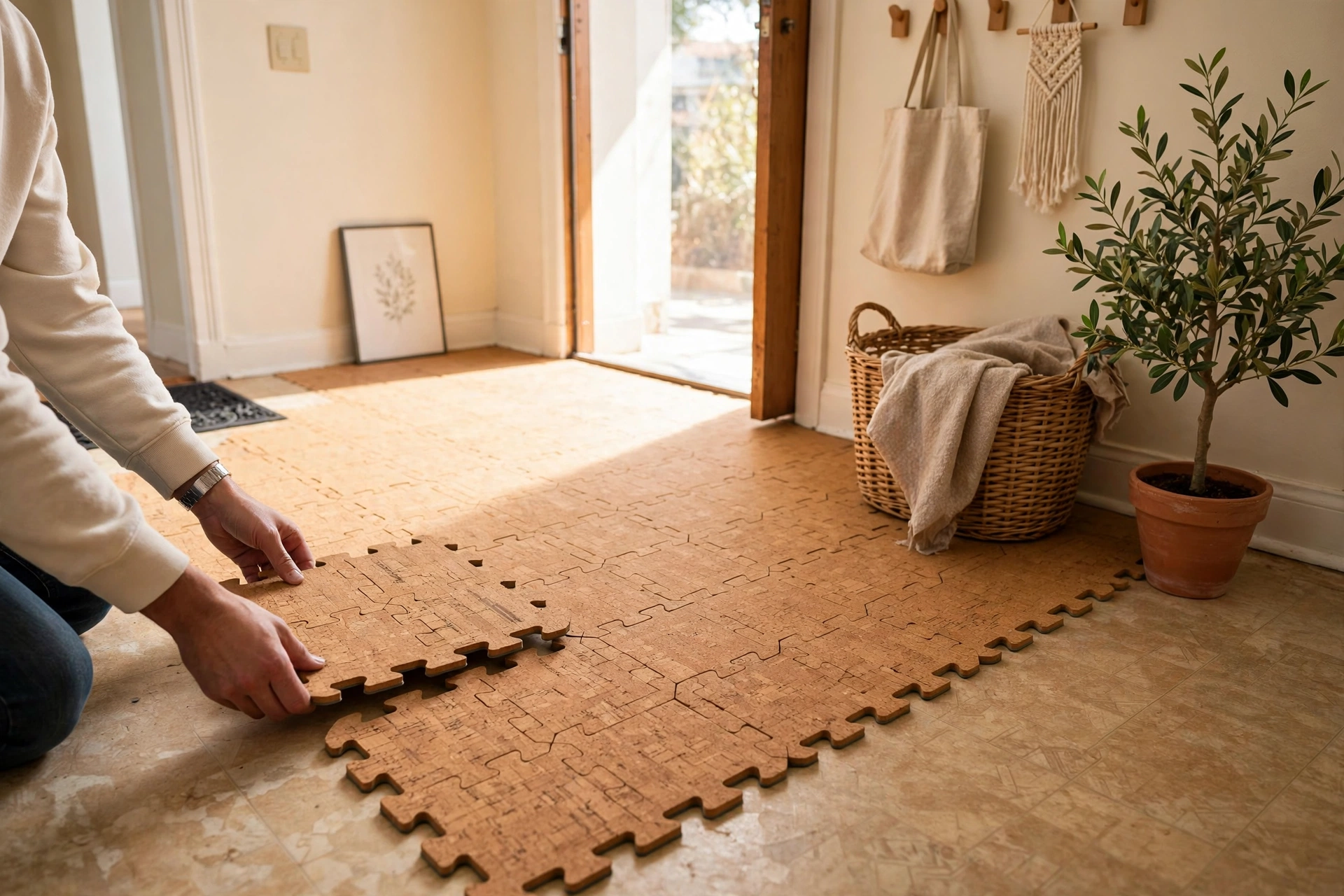
Cork tiles click together like puzzle pieces — no adhesive, no tools — and the result is a warm, quiet, slightly springy floor that’s genuinely pleasant barefoot. Tiles run about 12 inches (30 cm) square and 3/8 inch (1 cm) thick, and a bedroom floor goes down in an afternoon. Cork is naturally insulating, so it takes the chill off concrete-slab apartments, and it costs roughly $2–$4 per square foot. When you move, the tiles lift, stack and come with you to the next place. They work beautifully in home offices and bedrooms where you want warmth without a rug to vacuum.
7. Foam interlocking mats, upgraded
The gym-style foam tiles have a bad reputation because most people buy the cheapest grey ones. Buy the wood-look or marble-look EVA foam tiles instead — same 24-inch (61 cm) puzzle-piece format, a completely different result. They’re waterproof, dead quiet and kind to knees, which makes them ideal for a workout corner, a kids’ play zone, or the area in front of a standing desk. At $1–$2 per square foot they’re the cheapest full-coverage option on this list, and they roll up in minutes on moving day. Choose the 3/4-inch (2 cm) thickness for comfort; the thin ones shift around.
8. Deck tiles for the balcony and entry
Wooden interlocking deck tiles (12-inch / 30 cm squares, usually acacia) are sold for patios, but renters use them indoors too — over ugly entryway tile, in a mudroom corner, or on a concrete balcony. They snap together over any hard, level surface, and lifting them for cleaning underneath takes seconds. A 4 by 6 foot (1.2 by 1.8 m) entryway needs about 8 tiles and costs $30–$60. Acacia weathers to silver-grey outdoors; indoors it keeps its warm tone. Either way, it leaves the original floor untouched.
9. Carpet tiles for total control
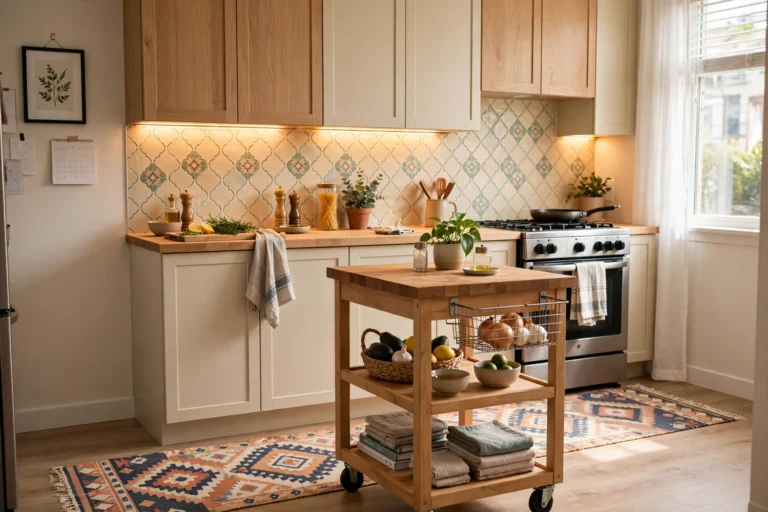
Carpet tiles (usually 20-inch / 50 cm squares) are the commercial-flooring industry’s answer to rentals: lay them tight without adhesive and they stay put through friction alone, or use the tiny peel-off adhesive dots made for them, which release cleanly. The genius of carpet tiles is repairability — stain one tile and you swap one tile, not the whole rug. They come in every color from quiet greige to full jewel-tone, cost $1–$3 per square foot, and they’re the most forgiving option for odd-shaped rooms because cutting a square is all the skill involved.
10. Stair treads and runners for the forgotten zones
Renters forget stairs and hallways, and landlords never upgrade them. Self-adhesive stair treads (9 by 28 inches / 23 by 71 cm) stick to each step with a removable adhesive that holds through daily traffic but releases with heat and patience. In hallways, a washable runner over a non-slip pad does the same job as idea 5, just narrower. These zones are small — a staircase needs 12–15 treads at $2–$4 each — so the whole project costs less than one area rug and fixes the part of the rental everyone actually walks on.
The moving-day rule
Before you buy anything, test reversibility in a closet or behind a door: stick one tile, one tread or one tape strip, wait 24 hours, remove it. If it comes up clean, the whole room will too. And photograph every original floor before you cover it — the photos are your proof when the deposit inspection happens. Floors are the biggest surface in the room, which means they’re also the biggest leverage you have: one weekend of peel-and-stick or rug layering changes how the entire apartment feels, and none of it costs you the deposit. For the rest of the room, our small living room organization ideas pick up where the floor leaves off — and if adhesive-backed products make you nervous, our peel-and-stick backsplash guide walks through the same stick-and-remove logic on walls, which pairs perfectly with a new floor.
Will peel-and-stick tiles damage my landlord’s floor?
On hard, sealed surfaces (vinyl, tile, sealed laminate), no — they peel off with gentle heat and leave at most a tacky residue that citrus adhesive remover dissolves. They should not go on unfinished hardwood, unsealed concrete or fresh paint. Always test one tile in a hidden spot for 24 hours first.
Can I put peel-and-stick flooring over carpet?
No — the adhesive needs a hard, flat surface to bond. Over carpet, use layered rugs (ideas 3 and 4) or interlocking foam or carpet tiles, which float on top instead of sticking.
How do I keep rugs from sliding without damaging the floor?
A felt-and-natural-rubber rug pad cut to the rug’s size, or painter’s-tape-grade rug tape around the edges. Avoid plastic grippers with aggressive adhesive and never use regular double-sided tape — both can pull up floor finish.
What’s the best renter-friendly flooring for a bathroom?
Peel-and-stick vinyl tiles rated for wet areas, over the existing floor — vinyl handles humidity far better than rugs or cork in a bathroom. Keep seams tight and the floor dry at install. Our small-bathroom storage tricks finish the job once the floor looks new.